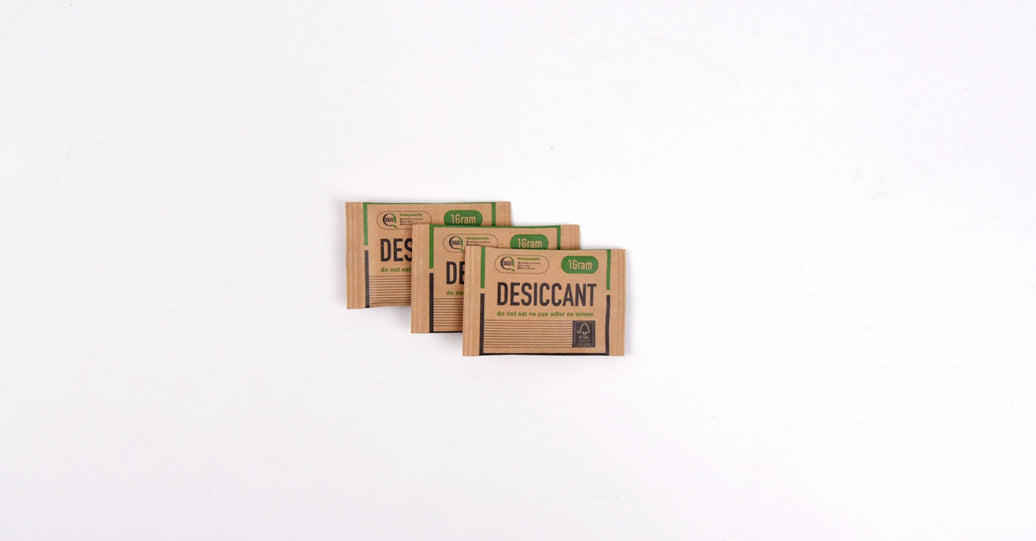
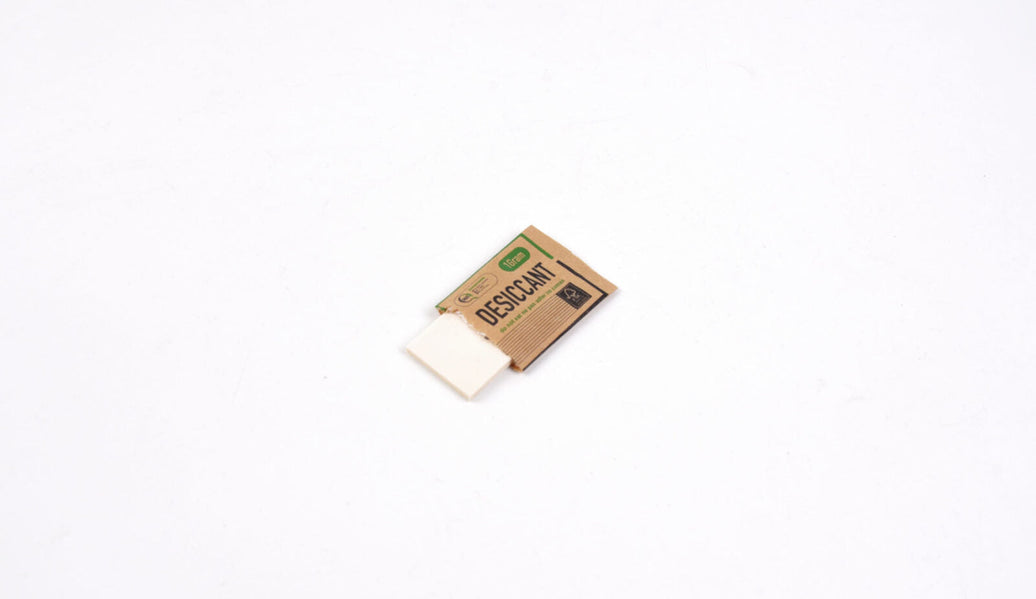
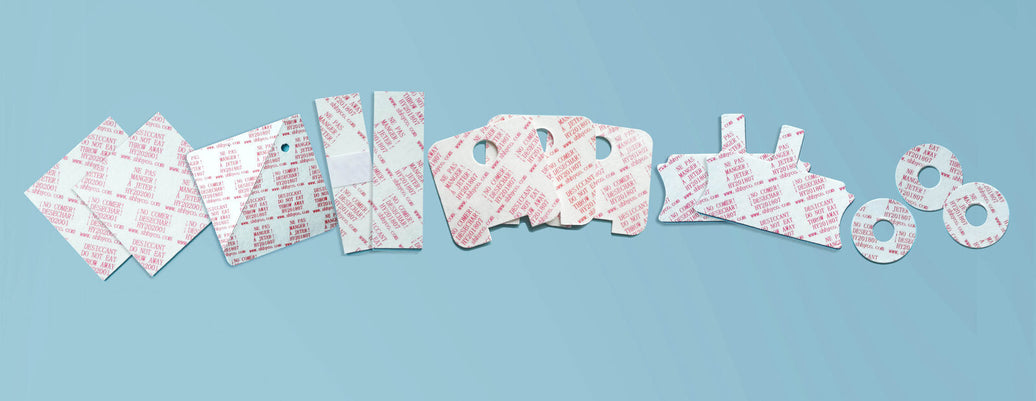
Quick answer: Dried fruit, jerky and semi-dried snacks are the one food category where adding a conventional desiccant usually makes the product worse. These items are formulated to sit at an intermediate water activity, and the eating quality customers pay for depends on staying there. A one-way desiccant pulls in one direction only — down — so it hardens fruit, toughens jerky and turns a premium snack into a complaint. The correct control is two-way: a material that adsorbs when the pack goes humid and releases when it goes dry, holding a band rather than chasing zero.
Two very different complaint patterns land on the same product team. One says the fruit went sticky and moulded. The other says it went hard as a rock. Both are moisture problems and they pull in opposite directions, which is precisely why a single-direction control cannot solve both.
What makes these products different
Powders want to be dry. Dried fruit and meat snacks want to be partly dry — dry enough to be shelf-stable, moist enough to stay pliable. Water activity is the parameter that governs both, and intermediate-moisture foods live in a narrow band where small shifts are noticeable.
Go too high and the risks are mould, yeast and a sticky surface. Go too low and the product hardens, sugars crystallise on the surface of fruit, and jerky becomes brittle rather than chewy. Neither end is recoverable once the pack is on shelf.
The distinction between water activity and moisture content matters a great deal here and is regularly confused — the difference is explained in water activity vs moisture content.

How two-way control works
A two-way humidity control material is engineered to equilibrate toward a set relative humidity rather than toward zero. When the enclosed air rises above that point it adsorbs; when the air falls below, it releases moisture back. The pack stabilises around a band instead of drifting.
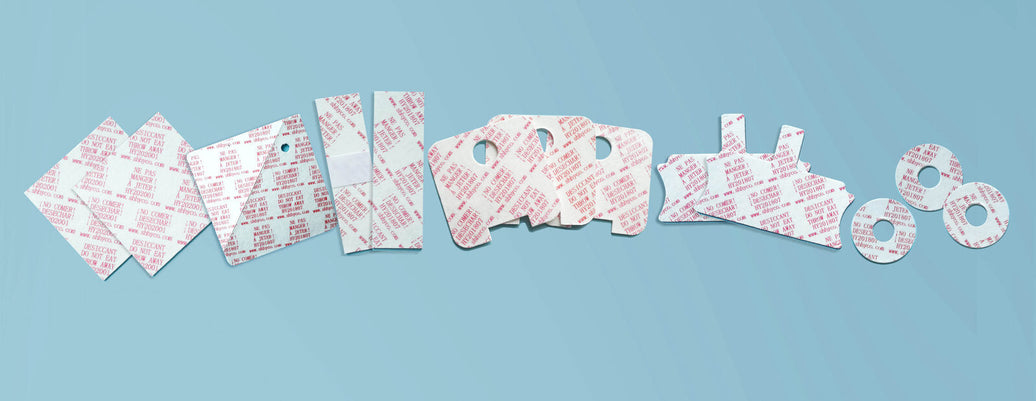
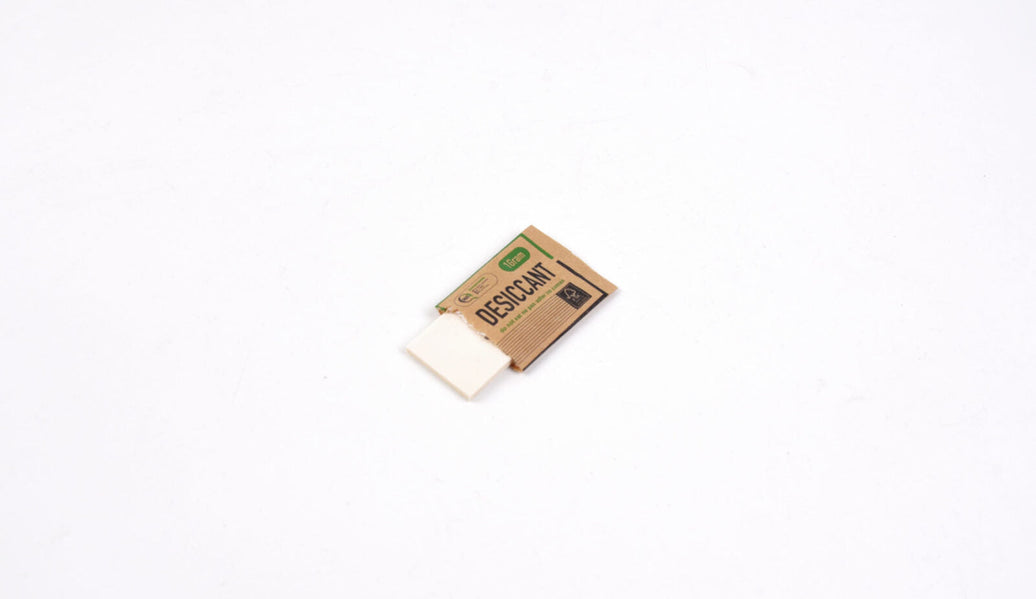
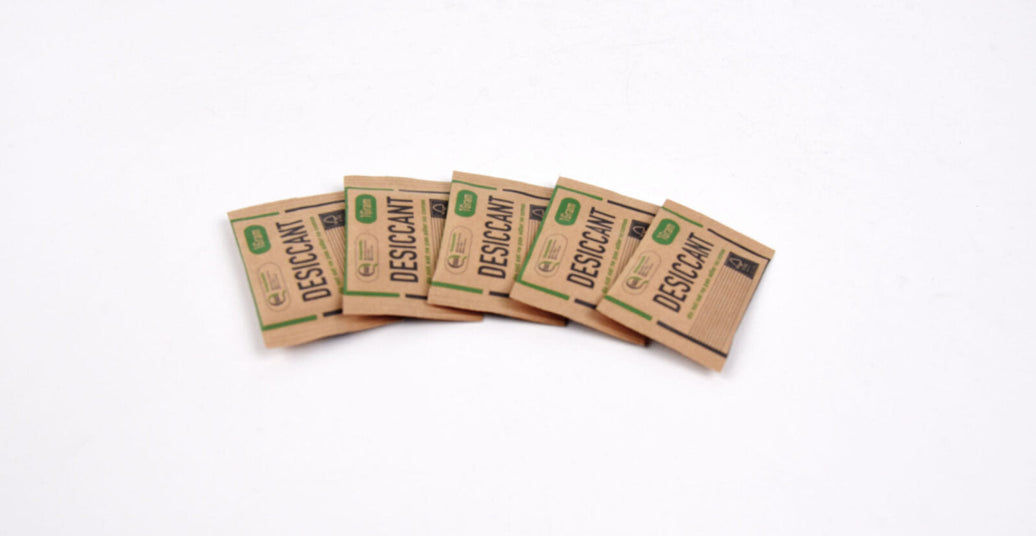
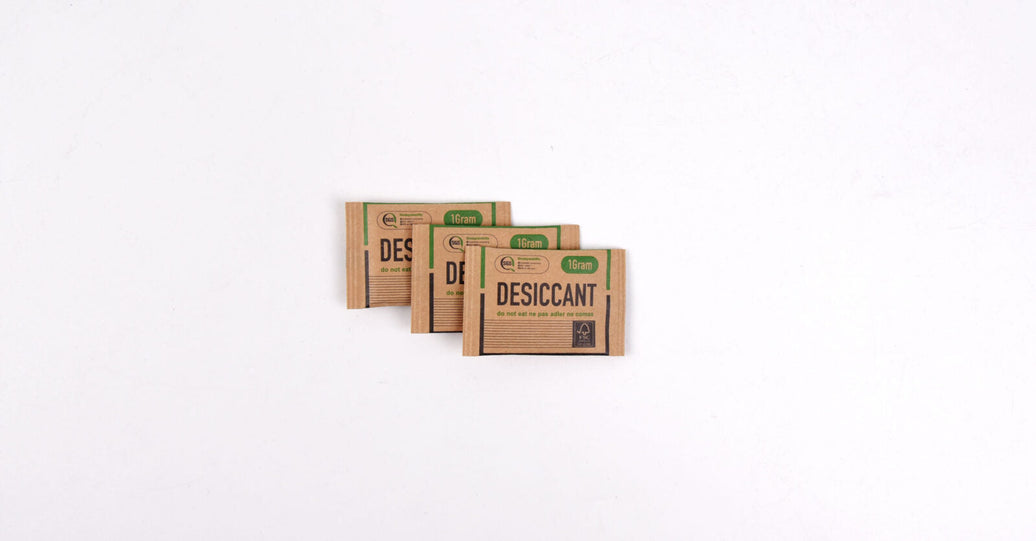
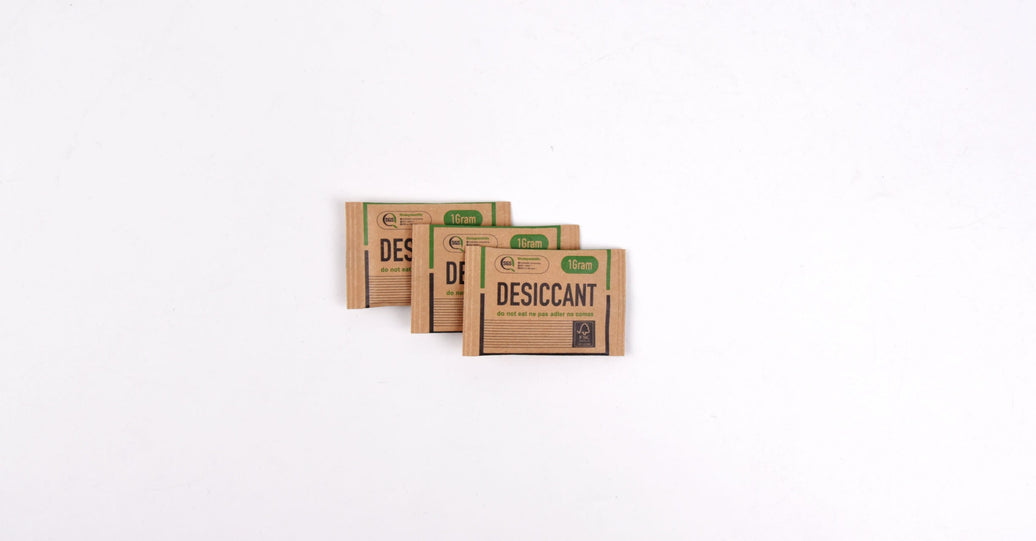
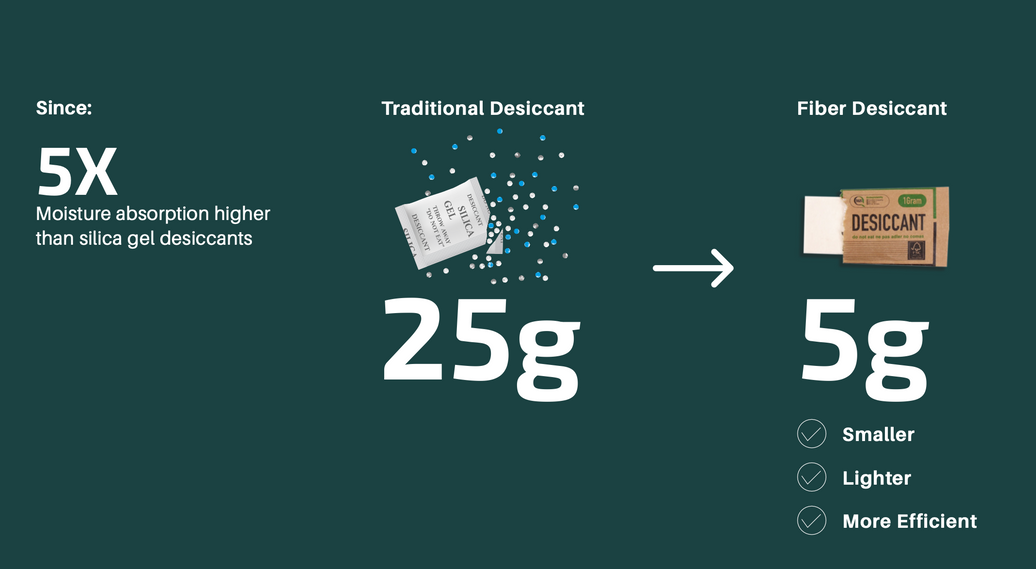
ATMOSIScience builds this on a natural plant fiber substrate whose adsorption is a function of surrounding humidity — above 35% of its own weight at 50% RH and above 70% at 90% RH (25°C), with saturated adsorption above 100% of its own weight. Because the response is humidity-dependent rather than fixed, the same material can be configured to hold different bands for different products. The underlying principle is set out in the certain-humidity principle and the mechanism in the science of fiber desiccant.
Specifying it in practice
- Measure your product's actual water activity at release, and again on aged retains. Do not assume the formulation target is what leaves the line.
- Agree the sensory band with QA and product development, not just the microbiological ceiling. The upper limit is a safety number; the lower limit is a quality number and it is usually undocumented.
- Choose the RH set point that corresponds to that band, then specify the humidity control product to that set point.
- Size for the pack, the route and the opening pattern. A resealable snack tub opened daily behaves very differently from a sealed single-serve pouch — see desiccant for resealable packs.
- Verify with a worst-case trial that includes both a hot-humid arm and a dry-warehouse arm. Most programmes test only the humid one, which is exactly how over-drying reaches shelf undetected. Protocol: the worst-case sample evaluation.
Food-contact and compliance
Anything placed inside a food pack needs its compliance position documented, whether or not it touches the food directly. For fiber-based humidity control the relevant documentation route is FDA 21 CFR 175.300 for food-contact use; the distinction between direct and indirect contact is explained in food-contact desiccants and FDA 21 CFR. Where the item is a physical object inside a food pack, it should also appear in the hazard analysis — see adding desiccants to a HACCP plan.
Dust matters more than usual in this category, because the product is tacky. A granule that lands on a sticky fruit surface stays there. A bonded fiber pad inside a sealed sachet does not shed, which is the practical reason many snack co-packers exclude loose-fill entirely — background in loose-fill desiccant risks.
Sustainability sits well with this category
Dried fruit and better-for-you snacks skew toward compostable and paper-based pouches, which have weaker moisture barriers than foil. That raises the humidity-control duty and simultaneously raises the bar on what can be placed inside the pack without contradicting the claim. ATMOSIScience pouch films meet ASTM D6400 and EN 13432, and the fiber substrate is plant-based. What those certifications do and do not cover is set out in the sustainable desiccant guide.
FAQ
Should dried fruit have a desiccant at all?
Not a conventional one-way desiccant. A two-way humidity control pack sized to the product's target band is the appropriate control.
What RH should jerky sit at?
It varies by formulation, water activity target and preservative system. Derive the set point from your own measured water activity and sensory panel rather than copying a competitor's pack.
Can two-way control replace an oxygen absorber?
No. They control different variables. Rancidity and colour loss in fatty snacks are oxygen problems — see desiccant vs oxygen absorbers vs nitrogen flush.
Does two-way control help with sugar bloom on dried fruit?
Surface sugar crystallisation is associated with moisture loss and cycling. Holding a stable band reduces the cycling that drives it, though formulation and coating also matter.
Will it stop mould?
It reduces the humidity excursions that enable microbial growth. It is a control within a food-safety system, not a substitute for water-activity control at formulation.
Snack going hard or sticky? Specify a humidity band, not a desiccant
Send your product's water activity target and pack format. ATMOSIScience proposes an RH set point, a two-way configuration and samples for a dual-arm trial.
Prefer email? info@atmosiscience.com