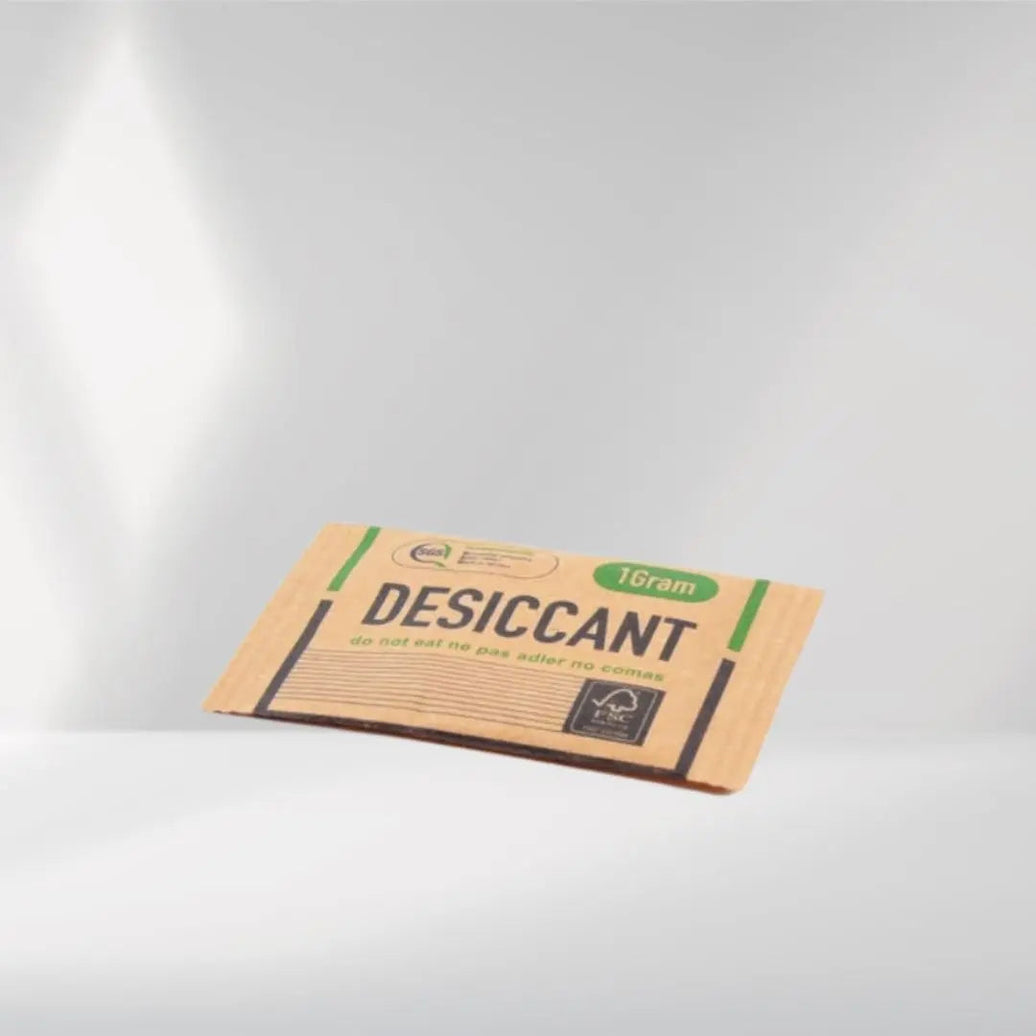
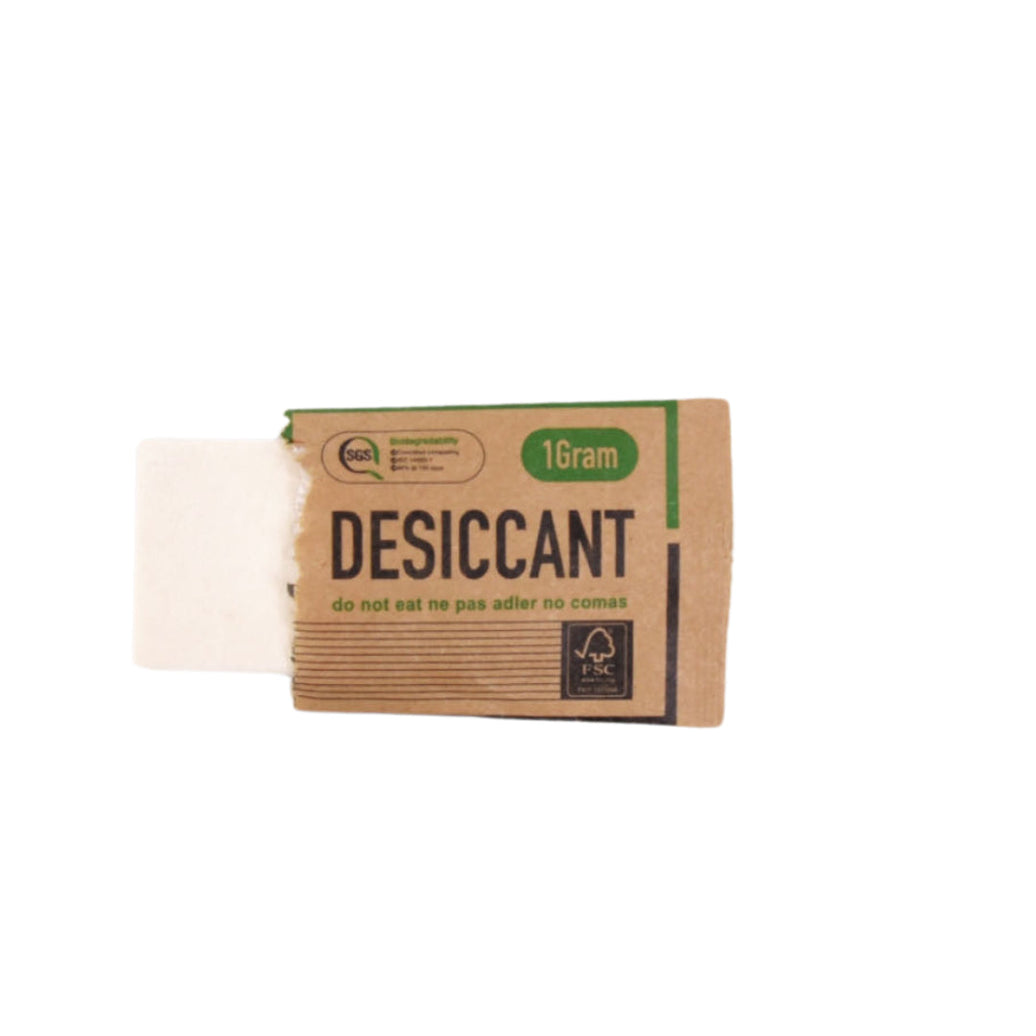
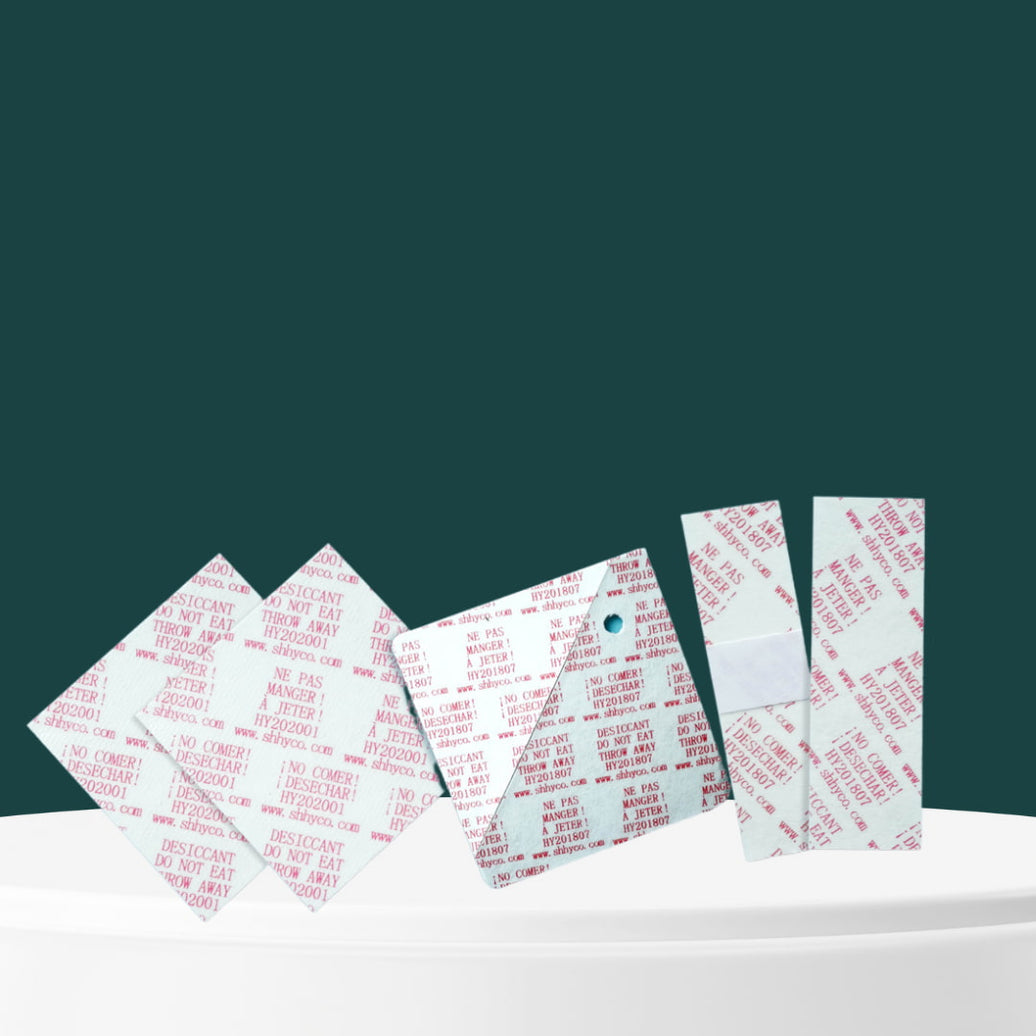
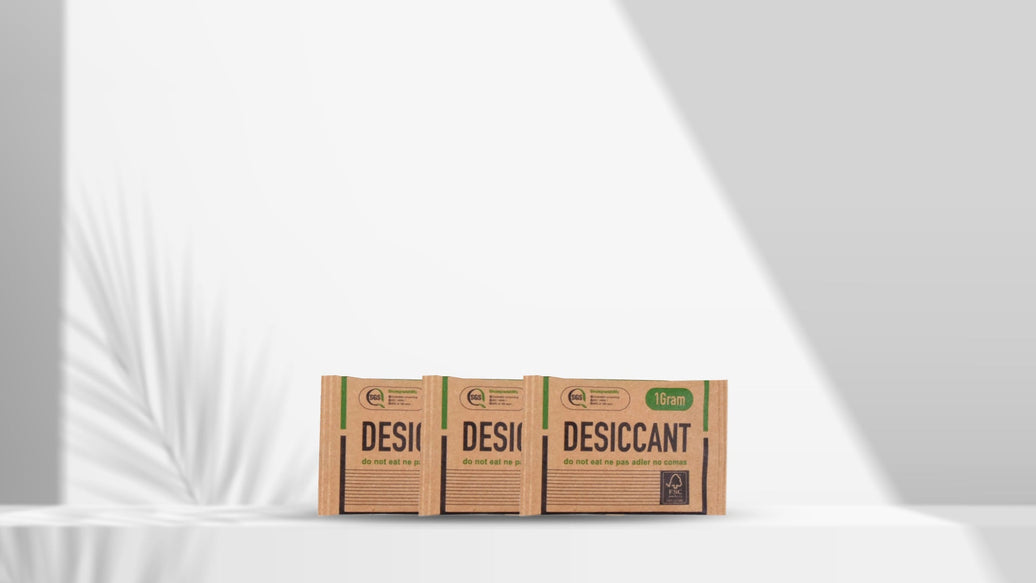
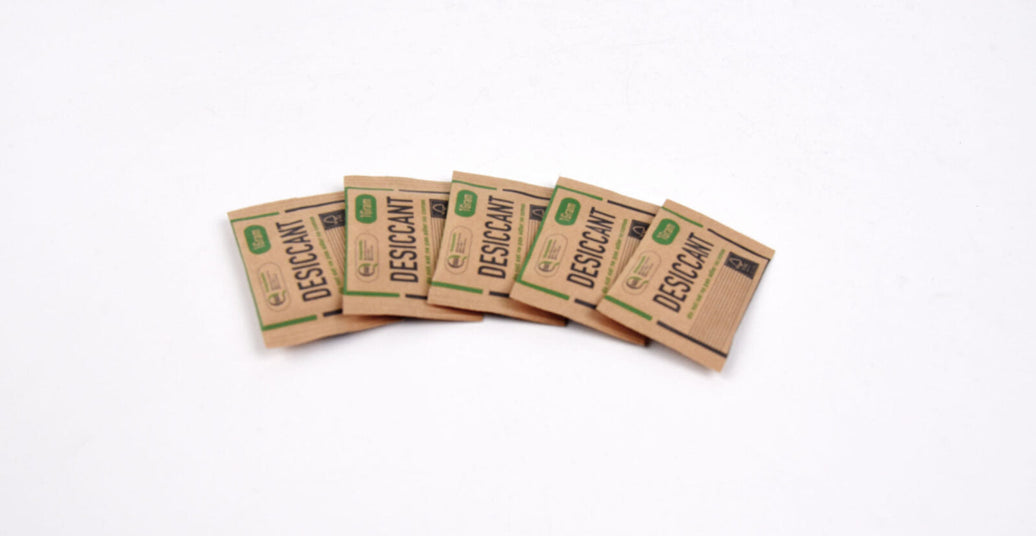
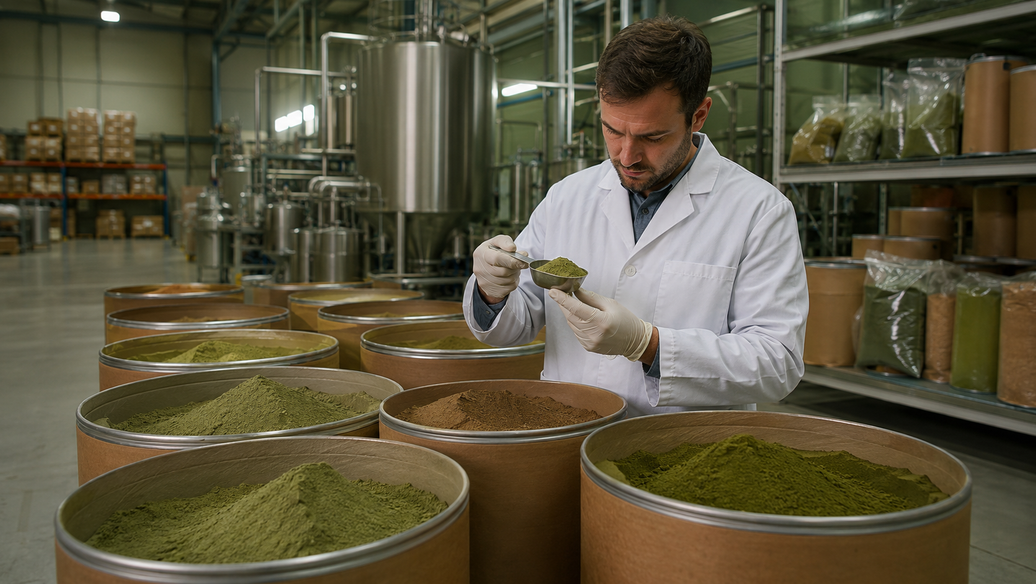
Quick answer: "Drier is better" is one of the most expensive assumptions in packaging. Many products have a target humidity band, not a floor of zero: gelatin capsules do best around RH 30–50% (too dry and they crack, too wet and they stick), and electronic components store best at RH 30–40% (too dry and static electricity builds). A one-way desiccant only pulls moisture down; a two-way humidity-control material holds a certain humidity by both adsorbing and releasing water — which protects these products better than maximum drying.
ATMOSIScience's work began, two decades ago, as a straightforward search for better desiccants — comparing silica gel, minerals, molecular sieves, alumina and calcium chloride. The turning point was a repeated observation: most products are not as dry as possible for a reason. That observation became the "certain humidity" principle, and it is why the product line evolved from one-way drying into two-way humidity control.
The evidence that zero is the wrong target
Gelatin capsules: RH 30–50%
Pharmaceutical and supplement capsules sit in a narrow band. Below it, the gelatin shell dries out and cracks; above it, capsules turn tacky and stick together. A desiccant powerful enough to drive the headspace toward zero can push capsules straight out of spec on the dry side.
Electronic components: RH 30–40%
Electronics need protection from moisture — but drive the environment too dry and you invite static electricity, which is its own failure mode for sensitive components. The correct target is a band, not a minimum.
Gummies, powders and soft chews
The same logic governs gummy supplements and many powders: the goal is proper humidity, not drier humidity. The gummy-specific version of this problem is covered in desiccant for gummy supplements.
One-way vs. two-way: the mechanism difference
A conventional desiccant is dehydrated at high temperature before it is formed, so in use it is essentially one-way — it adsorbs. It can release a little moisture if the surroundings get very dry, but the energy needed to meaningfully desorb is high and doesn't happen at room temperature, so it cannot hold a stable value.
A two-way humidity-control material is different by design. It has a defined water activity: at room temperature, water molecules diffuse freely between the material and the air, always seeking dynamic equilibrium. When the air is too humid it adsorbs; when the air is too dry it releases — buffering the enclosed space toward a target RH. The mechanism is explained in the science of fiber desiccant.

How to know your product's target band
The band is a property of the product, read from its water-activity spec and sorption behavior — the method is in water activity vs. relative humidity. Once the target is known, the moisture-control medium is chosen to hold it, not to beat it to zero.
FAQ
Does this mean desiccants are bad?
No — for products that genuinely want to be as dry as possible (many electronics-drying and industrial cases), a strong one-way desiccant is correct. The point is to match the tool to the product's target, not to assume drier is always safer.
What products have a target band rather than a floor?
Capsules, gummies and soft chews, many botanicals, tobacco and cigars, cannabis flower, wooden instruments, and moisture-sensitive electronics — all have a defined RH they want held.
How is a target humidity actually set?
By the product's own stability and texture data — the water-activity band where it neither degrades wet nor fails dry. A supplier should size the solution to that number.
Where did the certain-humidity principle come from?
From two decades of applied humidity research across packaging, electronics and cultural-heritage preservation, where "stability" and "suitability" — not maximum dryness — are the control objectives.
Not sure whether your product wants dry or a target band?
Tell ATMOSIScience the product and its texture/stability failures — the recommendation will target the right humidity, not just "maximum dry." Ask for a humidity target review →