Quick answer: Outright counterfeiting is rare in desiccant. The common failures are quieter: a capacity claim stated without test conditions, a certificate that belongs to a different product or has expired, a material substituted mid-contract without notification, and a "compostable" claim covering the wrapper but not the fill. Seven incoming checks — weigh, seal, dust, gain, certificate scope, certificate currency and change-control clause — catch nearly all of it before production.
The commercial exposure is asymmetric. A desiccant is a small fraction of packaged-goods cost and sits inside the pack where nobody looks until something has already gone wrong. When it fails, the cost lands on the finished product: a caked batch, a contamination hold, a compliance claim that cannot be defended, or a customer audit finding.
What actually goes wrong
The unstated test condition
The most frequent problem, and rarely deliberate fraud. A datasheet claims "up to 40% adsorption" and omits the temperature and relative humidity at which that was measured. Capacity varies enormously across the humidity range — a material that reaches 40% at RH90 may deliver a fraction of that at the RH50 where your package actually lives. A capacity figure without stated conditions is not data. Full method: how to compare desiccant spec sheets.
The travelling certificate
A certificate exists, looks legitimate, and covers something adjacent to what you bought. Common variants: a food-contact document that covers the wrapper film and not the adsorbent; an ISO certificate for a trading company rather than the plant; a compostability certificate whose scope names a different product code.
The expired certificate
Certificates lapse. A supplier who has not recertified may keep circulating the old PDF. An auditor treats an expired certificate as no certificate.
The silent substitution
The most damaging one. Material, dimensions or plant change mid-contract without notification. Everything looks the same in the carton; the dispenser jams, or capacity drops, or a claim quietly stops being true. Prevention is contractual, not analytical — change-control language in the quality agreement.
The partial green claim
"Compostable desiccant" where the film is certified and the fill is not, or vice versa. Both components have to be covered for a pack-level claim to survive review. Standards map: OK Compost HOME vs. ASTM D6868 vs. BPI, and the exposure in the Green Claims Directive.

Seven incoming checks
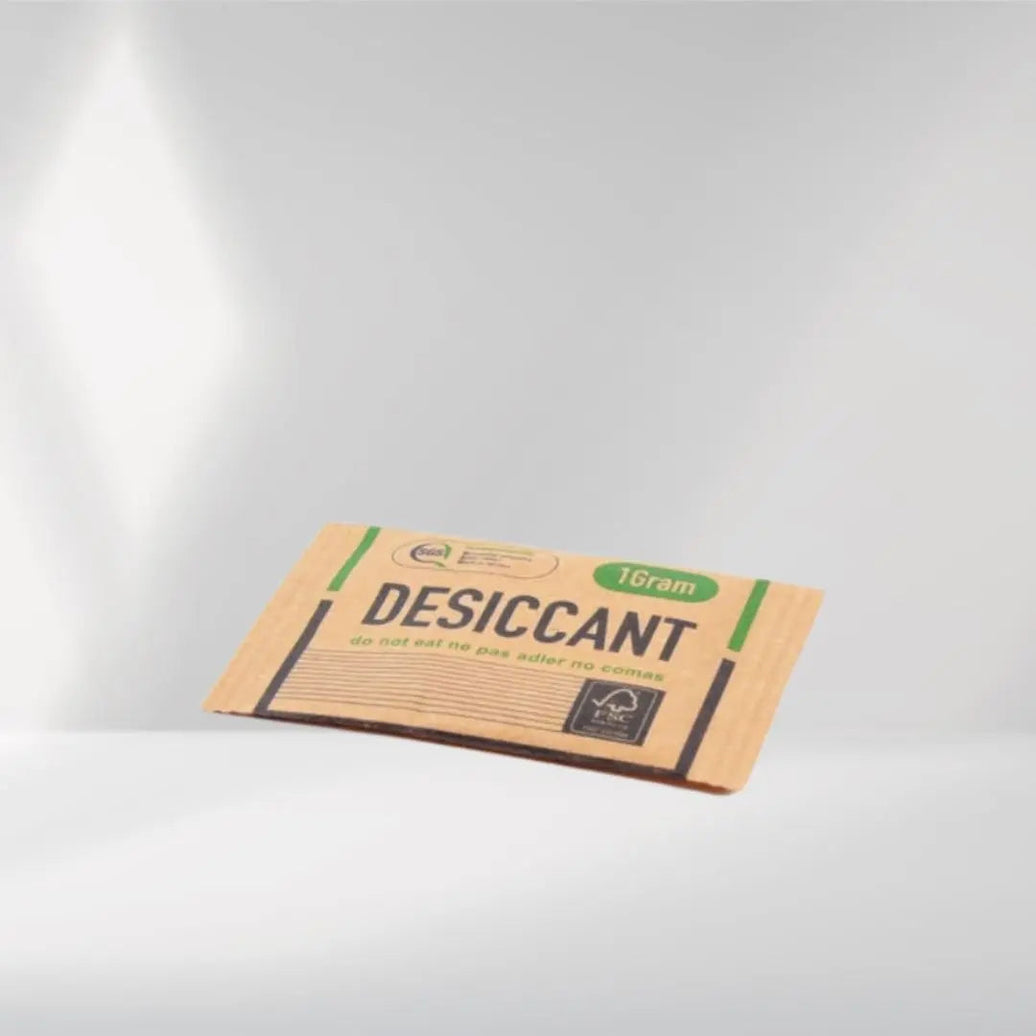
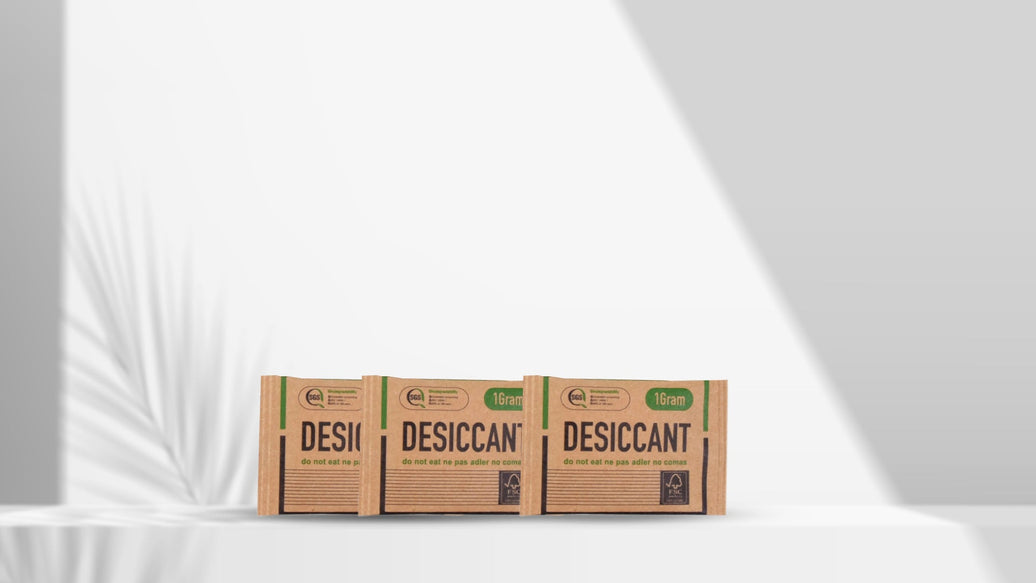
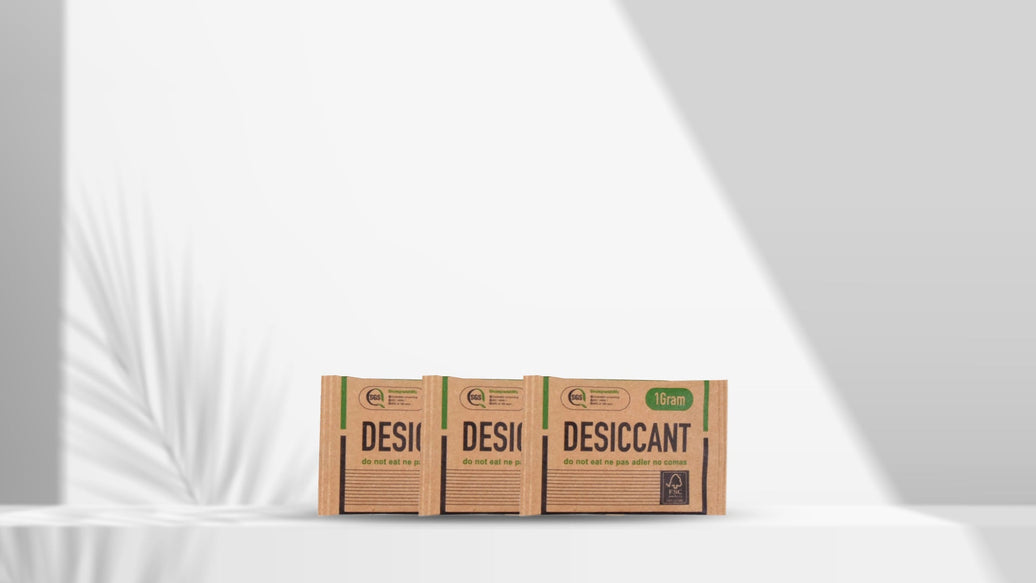
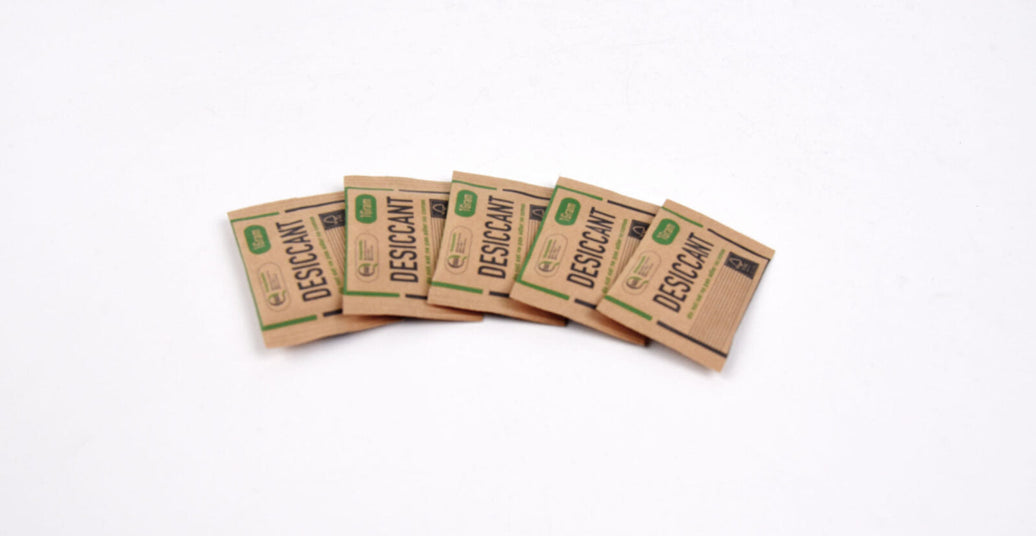
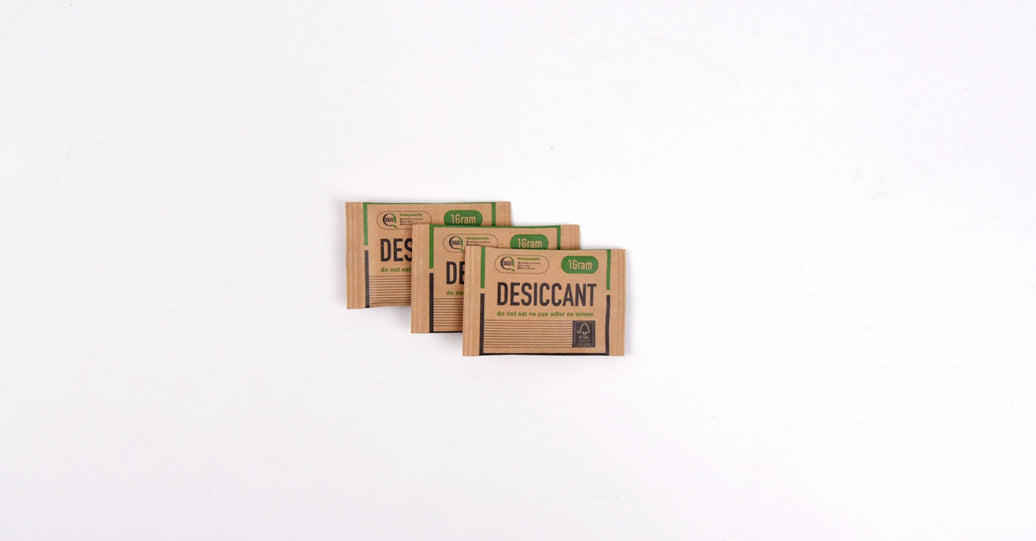
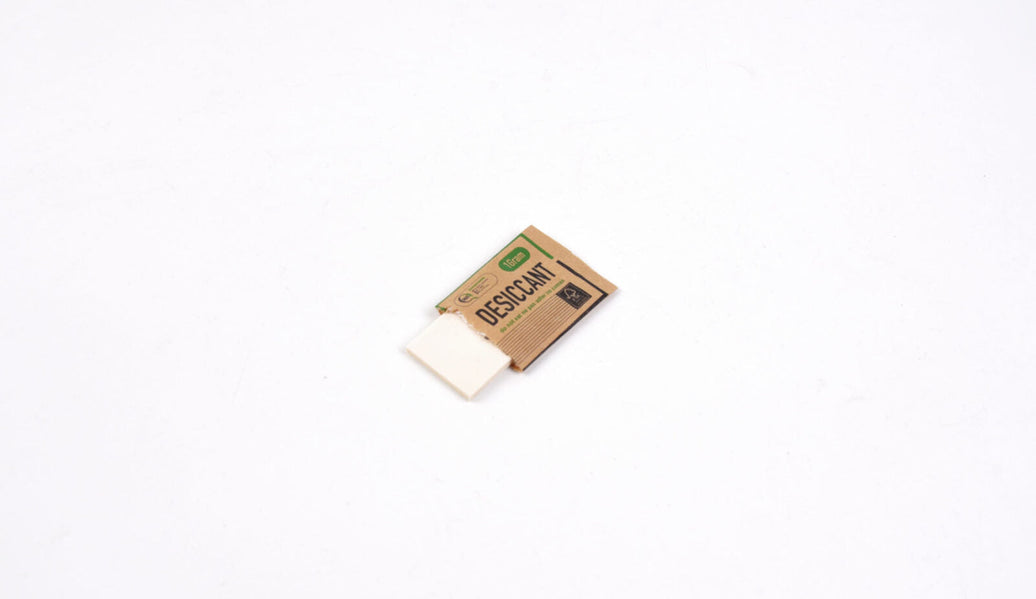
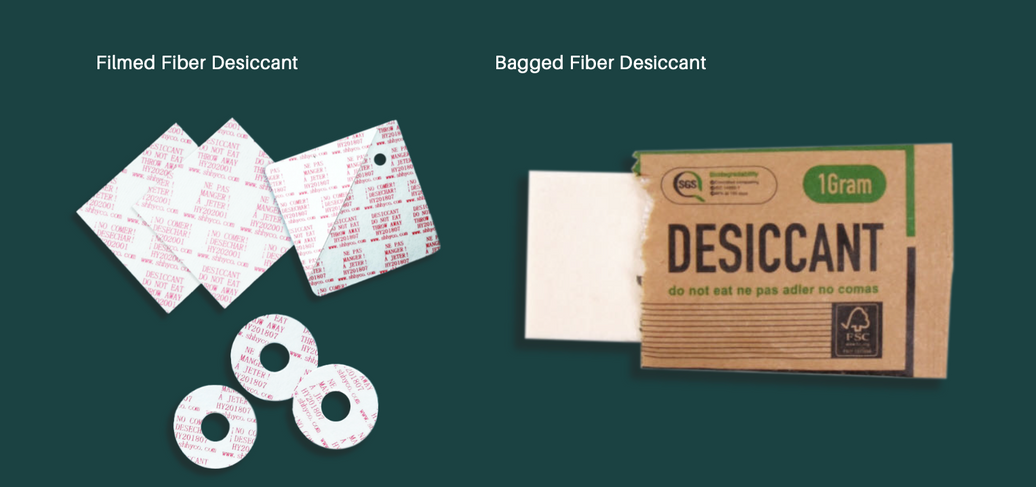
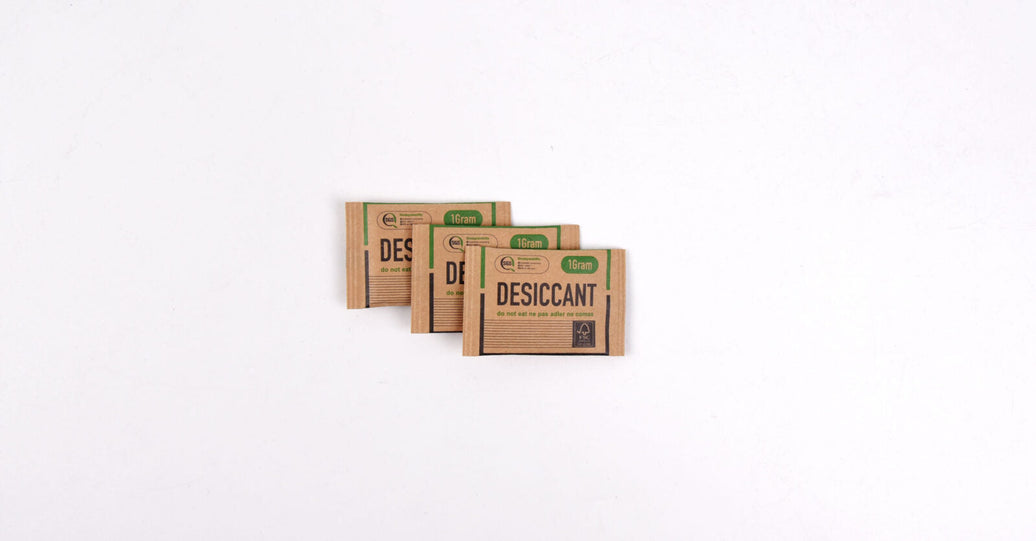
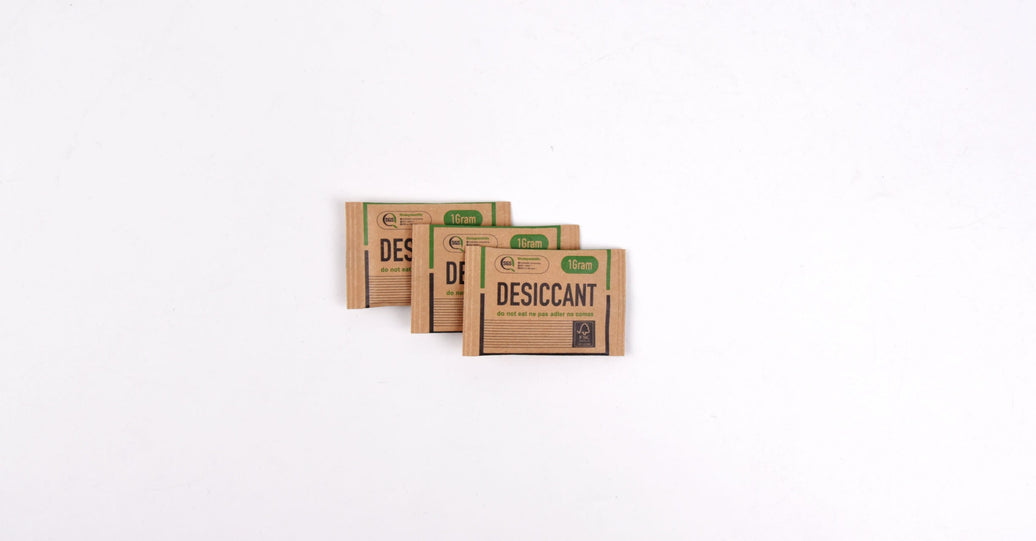
- Weigh a sample of units. Ten units, individually. Real manufacturing holds a stated tolerance — the fiber film cards run 0.15±0.05 g for FF-3, 0.35±0.08 g for FF-6 and 1.0±0.1 g for FF-15. Wide scatter or a consistent shortfall against the stated mass is the cheapest early warning available.
- Test the seal. Press and flex ten sachets. Any seam that opens under normal handling pressure will open on the line.
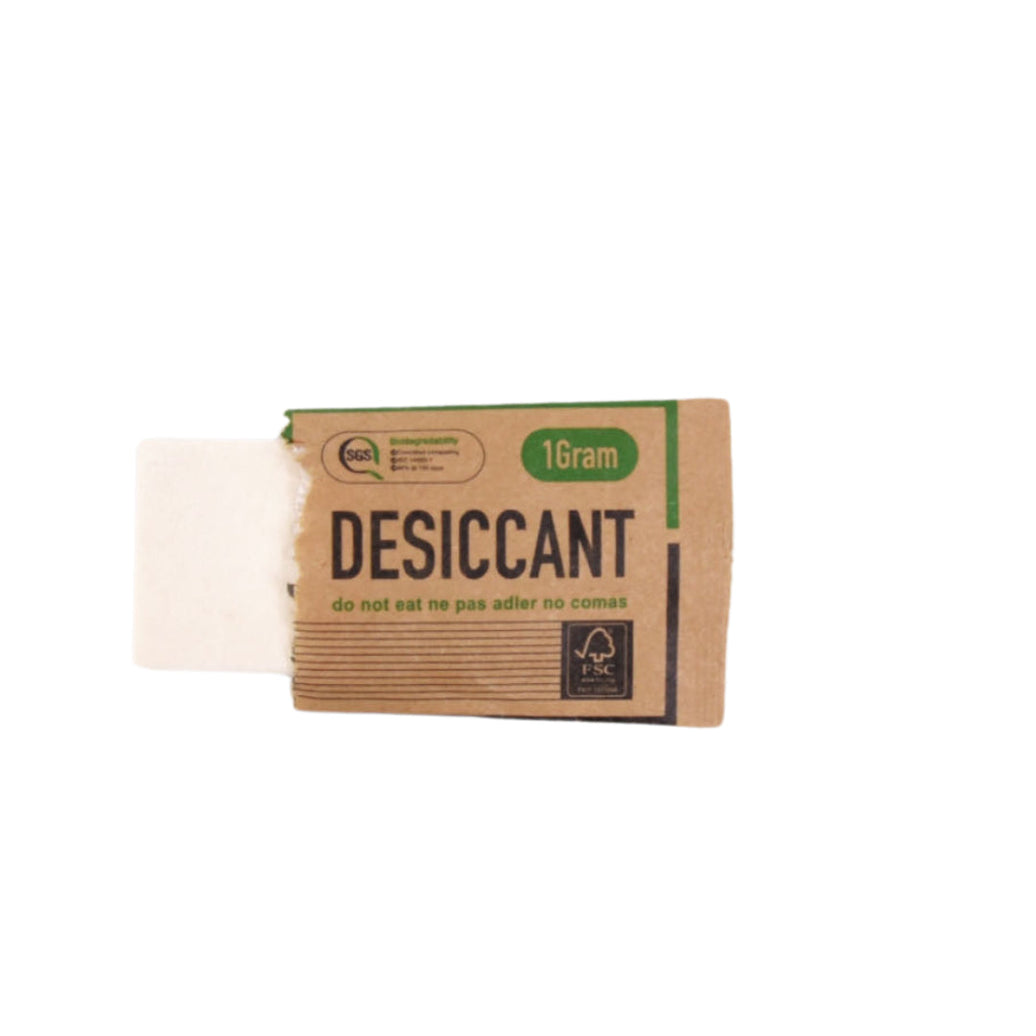
- Check for dust. Shake a sachet over dark paper. Loose-fill formats shed; a bound pad does not. If a supposedly dust-free product sheds, it is not the product you qualified.
- Run a gravimetric gain test. Weigh, expose to a known humidity for 24 hours, reweigh. Compare against the stated capacity at that specific RH. This is the check that catches material substitution directly.
- Read the certificate scope, not the header. Confirm the named product code, the named site, and what exactly is covered — adsorbent, wrapper, or both.
- Confirm the certificate is current. Check the expiry, and verify against the issuing body rather than the supplied PDF.
- Confirm change-control is in writing. A quality agreement requiring written notification before any change to material, dimensions or manufacturing site. Without it, checks one through six only tell you about the lot in front of you.
Building it into incoming inspection
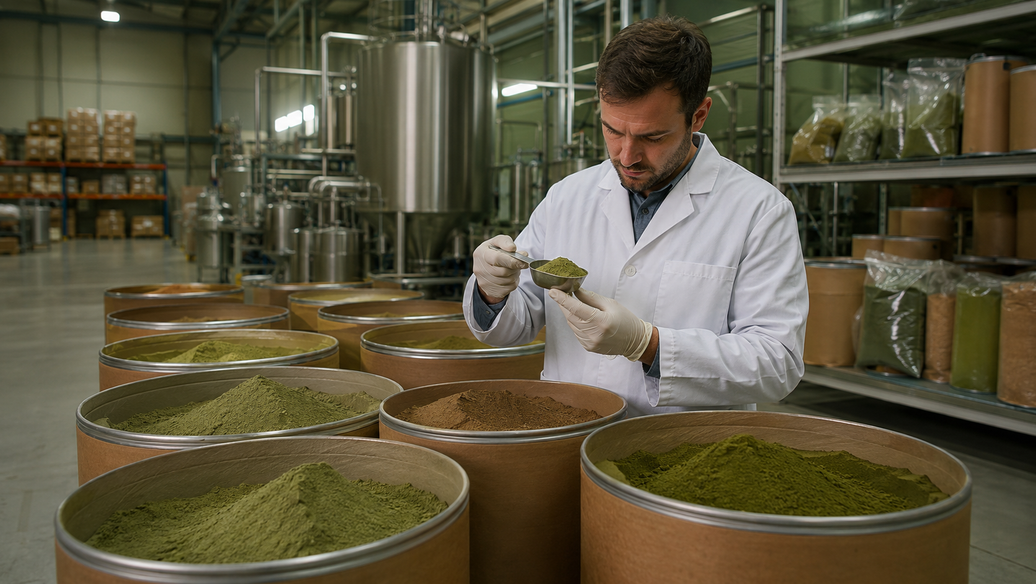
Checks one through three take a few minutes and belong on every lot. Check four belongs on first receipt, on any lot where documentation changed, and on a periodic schedule after that. Checks five through seven belong in the qualification file and get re-verified annually.
For food and supplement operations, the desiccant should be named in the HACCP plan as a component with defined controls rather than left as an unlisted packaging item — which also makes it far easier to defend at audit. Method: adding desiccants to your HACCP plan.
What a defensible supplier looks like
The distinguishing behaviour is willingness to be specific. A supplier who names the manufacturing site, states adsorption with both temperature and humidity, supplies per-lot certificates of analysis rather than generic specification sheets, accepts change-control language, and sends samples for worst-case testing without resistance is a supplier whose claims can be checked.
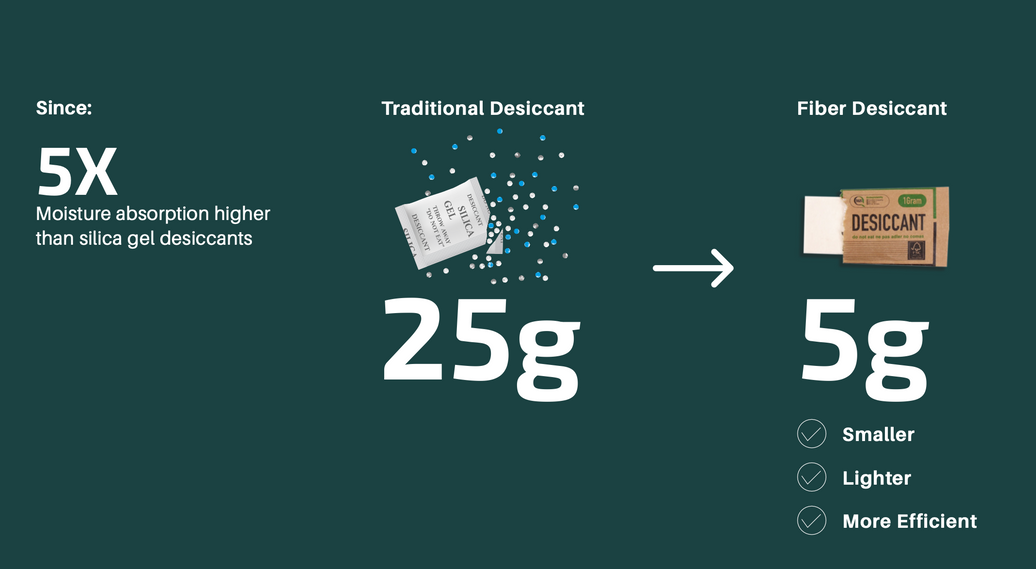
The ATMOSIScience fiber platform publishes its numbers with conditions attached: loss on drying below 10%; adsorption above 10% of own weight at RH20, above 35% at RH50 and above 70% at RH90, all at 25°C; saturated adsorption above 100% of own weight; pouch films compliant with ASTM D6400 and EN 13432; SGS ISO 9001 manufacturing; ROHS testing report and FDA 21 CFR 175.300 food-contact documentation available on request.
Frequently asked questions
Are counterfeit desiccants actually common?
Deliberate counterfeiting is uncommon. Misrepresentation — overstated capacity, out-of-scope certificates, undisclosed substitution — is considerably more common and does comparable damage.
Can a mislabeled desiccant be identified visually?
Partially. Weight scatter, seal quality and dust are visible. Capacity is not — that requires a gravimetric test, which is why check four exists.
What does a 24-hour gain test require?
An accurate balance, a sealed chamber at a known relative humidity, and consistent timing. A saturated salt solution provides a stable reference humidity at low cost. Protocol: the worst-case test protocol.
What if a lot fails incoming inspection?
Quarantine the lot, request the manufacturing records for it, and re-test a retained sample from a known-good lot alongside it. If material substitution is confirmed, treat it as a change-control breach rather than a single-lot quality deviation.
Does a low price signal a problem?
Not by itself. Capacity per gram varies widely between materials, so a genuinely higher-capacity product can cost less in total while costing more per unit. Compare landed cost per unit of moisture adsorbed, not per sachet.
Verify a desiccant before it reaches your line
ATMOSIScience supplies per-lot certificates of analysis, named-site quality certification and samples for gravimetric verification against your own specification.
Prefer email? info@atmosiscience.com