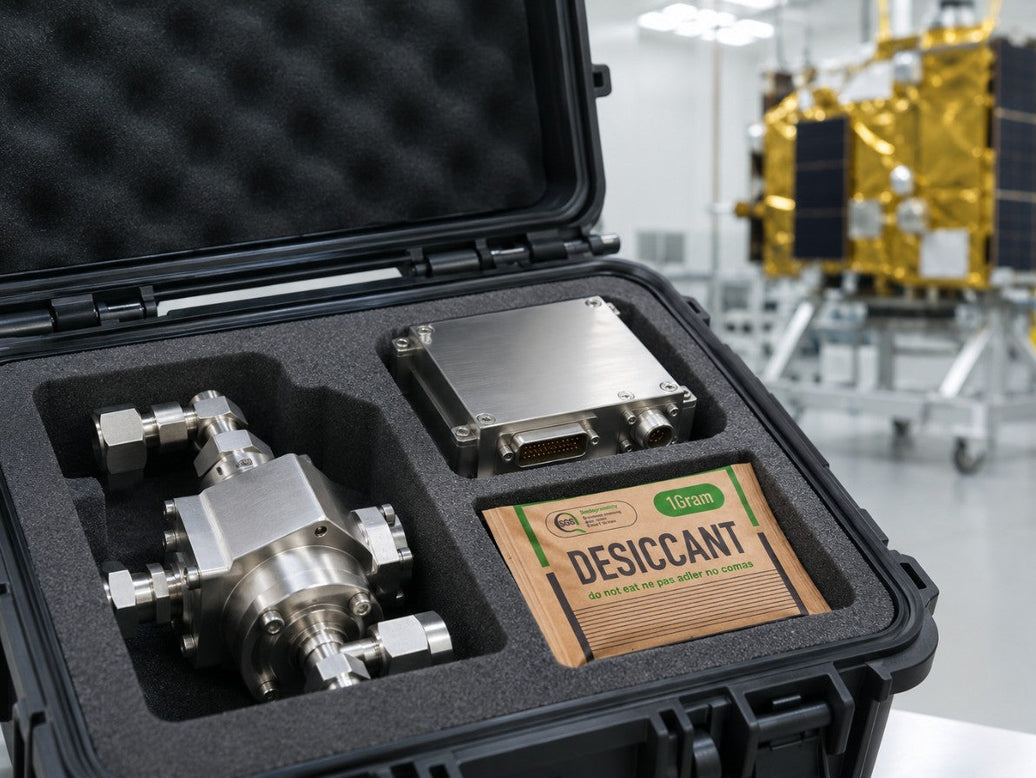
Metal rarely rusts from a single splash. It rusts from condensation: warm, humid air inside a package cools at night or at sea, drops below its dew point, and leaves water on the coldest surface, often your parts.
The checklist
- Clean and dry parts before packing. Fingerprints and machining fluid residues start corrosion
- Pack in a dry room, not on a humid loading dock
- Apply a temporary protective: oil, wax or VCI as the parts allow
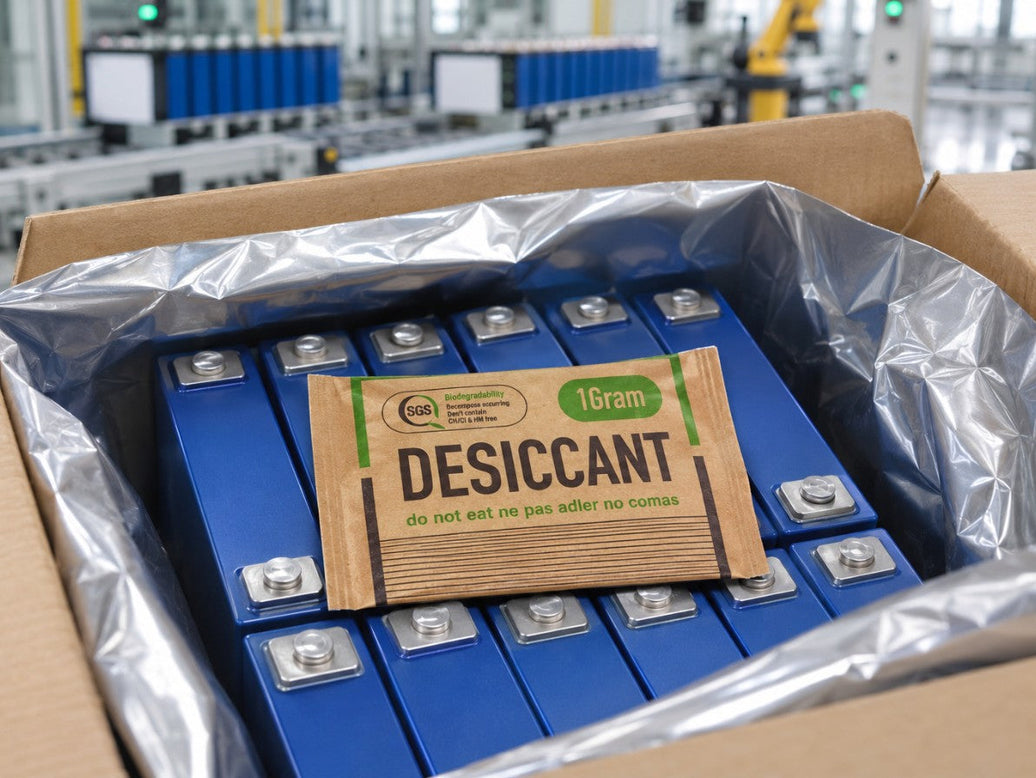
- Use a sealed barrier bag, such as a foil or metallized laminate, for sensitive parts
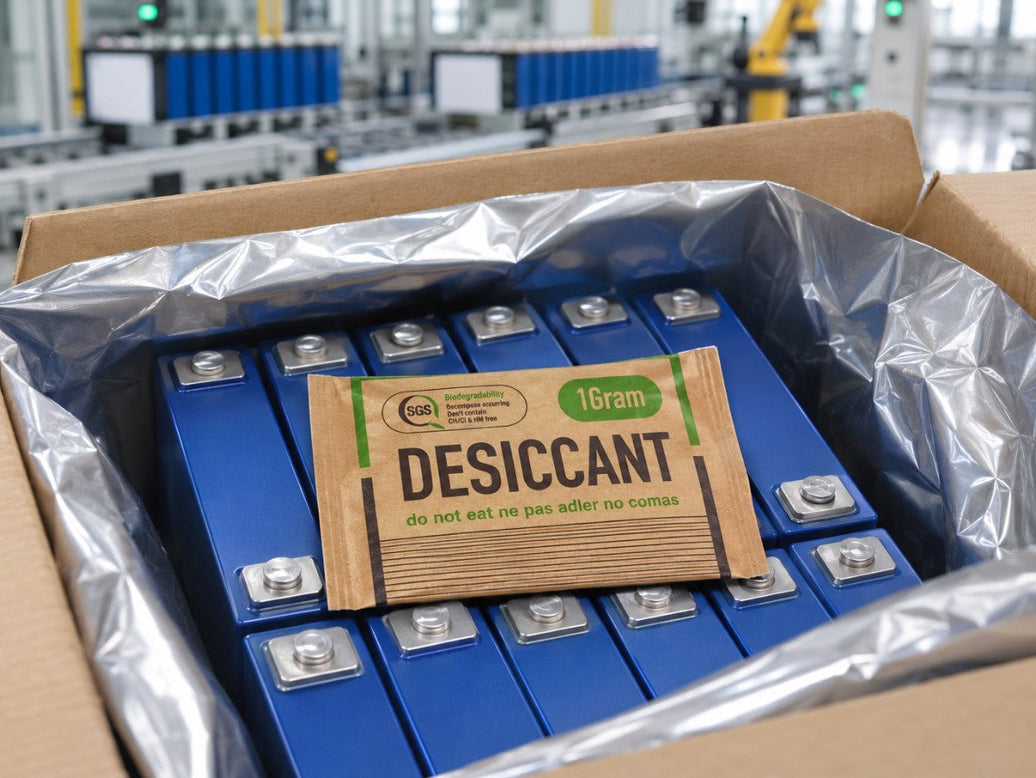
- Add desiccant inside the barrier, sized to the bag area and transit time
- Add a humidity indicator card so the receiver can check
- Keep wood dry: wet pallets and crates release moisture
- Avoid cardboard against bare metal in humid routes
- Load to avoid container drip: cover top layers, use container desiccant
- Record conditions with a logger on high-value shipments
Desiccant vs VCI
| Desiccant | VCI | |
|---|---|---|
| How | Removes moisture from the air | Releases a corrosion inhibitor that coats metal |
| Needs a seal | Yes | Yes, mostly |
| Best together? | Often yes, for long sea routes. See VCI vs desiccant | |
Our part
Plant-fiber desiccant sachets and sheets sized for parts packaging. Fiber desiccant · Talk to our team.
FAQ
Why do parts rust in shipping containers?
Condensation from temperature swings inside sealed packaging and the container.
Does desiccant prevent rust?
Inside a sealed barrier, yes, by keeping humidity below the level where corrosion speeds up.
How much desiccant do I need?
It depends on bag area, barrier and time. See dosage by barrier.
Keep reading: Cargo most at risk · Shipping dry food overseas · Container shipping