The capsule shell is part of the moisture system. Gelatin and HPMC behave differently, so the right amount of desiccant is different too.
How each shell reacts
| Gelatin | HPMC (plant-based) | |
|---|---|---|
| Held water | Needs some to stay flexible | Carries less |
| Too humid | Soft, sticky, clumped capsules | Can soften too, less readily |
| Too dry | Brittle, cracks | More tolerant |
| Effect on fill | Shell water can move into a dry fill | Less water to give up |
Why probiotic brands often pick HPMC
Probiotic fills want to stay dry. A gelatin shell holds water close to the fill. HPMC gives less to the fill and handles a stronger desiccant without cracking.
Desiccant planning
- Gelatin: size to protect against outside humidity, not to dry the pack as hard as possible. Test for brittleness.
- HPMC: sized for the fill's needs, with less risk of over-drying the shell.
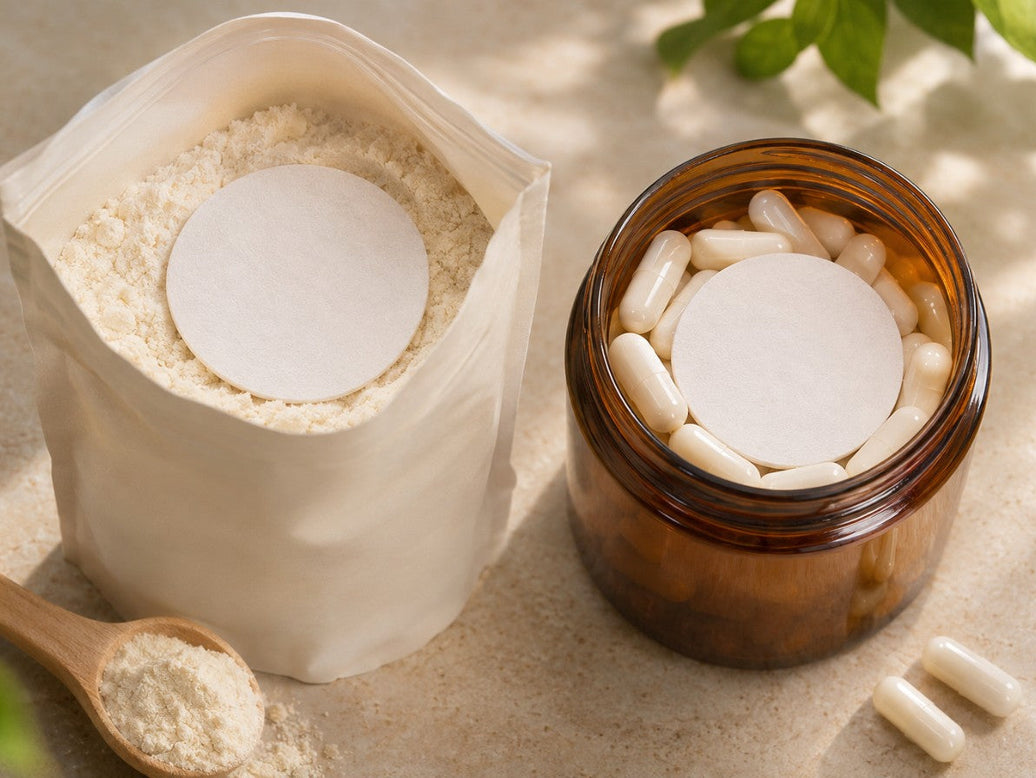
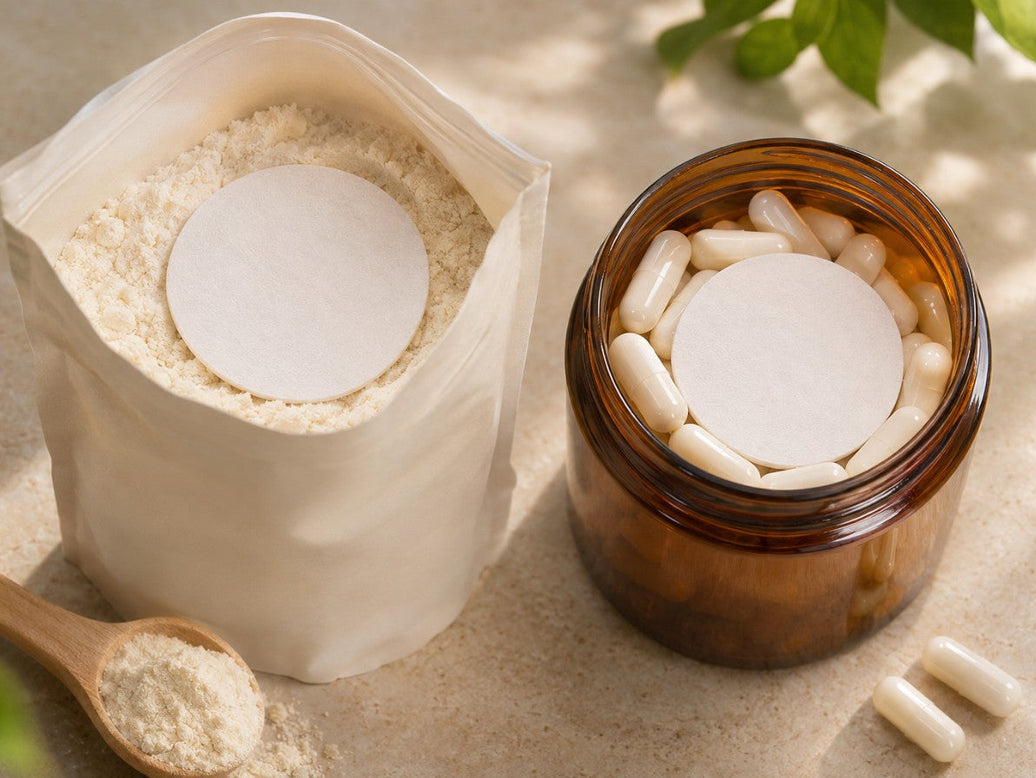
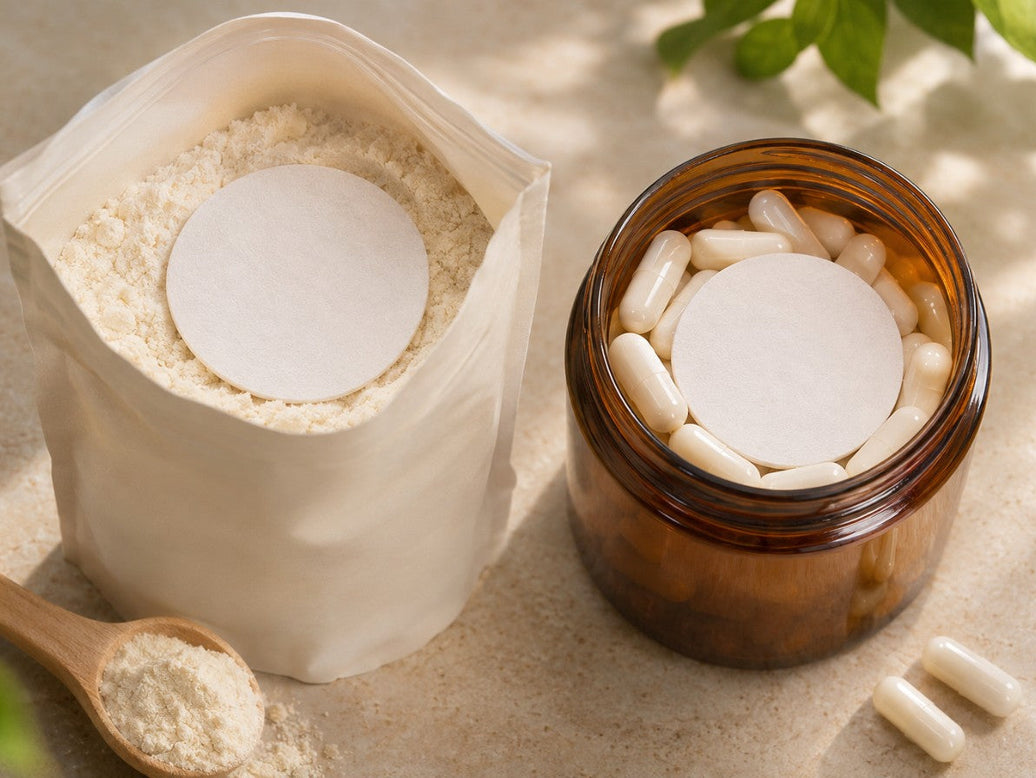
- Both: keep the desiccant above the capsules, not mixed in.
Signs to watch in testing
- Capsules sticking together: too much moisture
- Capsules cracking when squeezed: too dry (gelatin)
- Fill clumping inside the shell: moisture getting to the fill
Sizing for gelatin or HPMC?
Tell us the shell, fill and bottle. A real person will reply with a card size to test.
Or email info@atmosiscience.com
FAQ
Can desiccant make gelatin capsules brittle?
Yes, if oversized for the pack. Test before committing.
Are HPMC capsules better for probiotics?
Many brands choose them because they hold less water.
Do vegan capsules need desiccant?
If the fill is moisture-sensitive, yes.
Keep reading: Card sizing by bottle · Softgels stuck together · Probiotic bottle desiccant