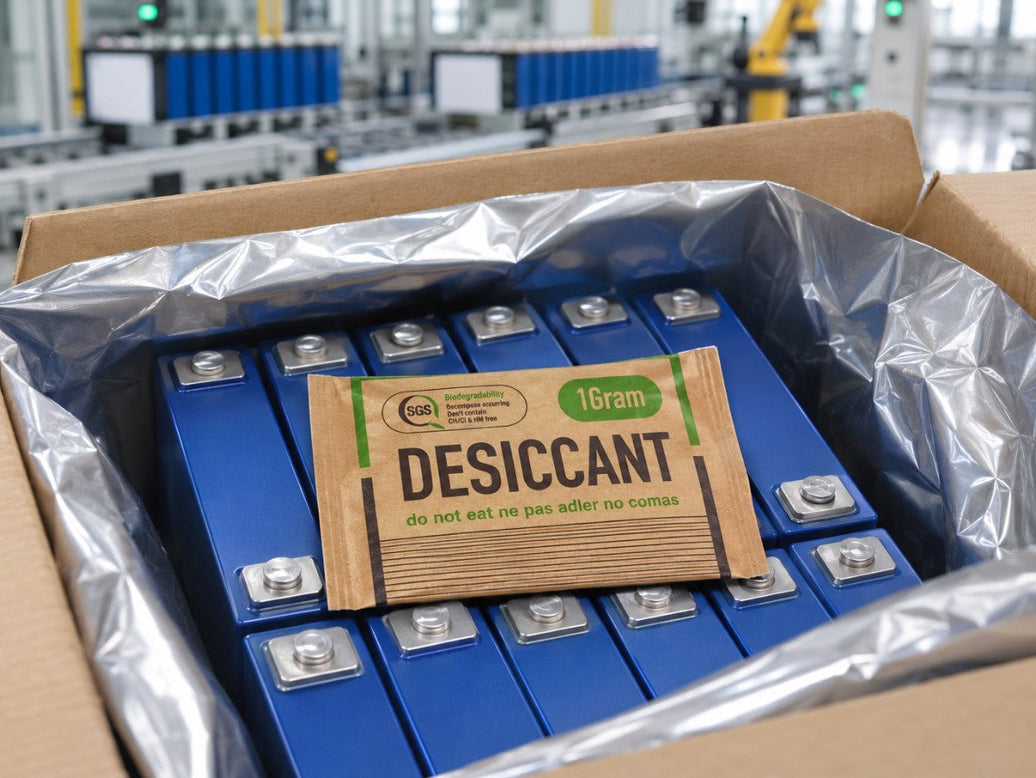
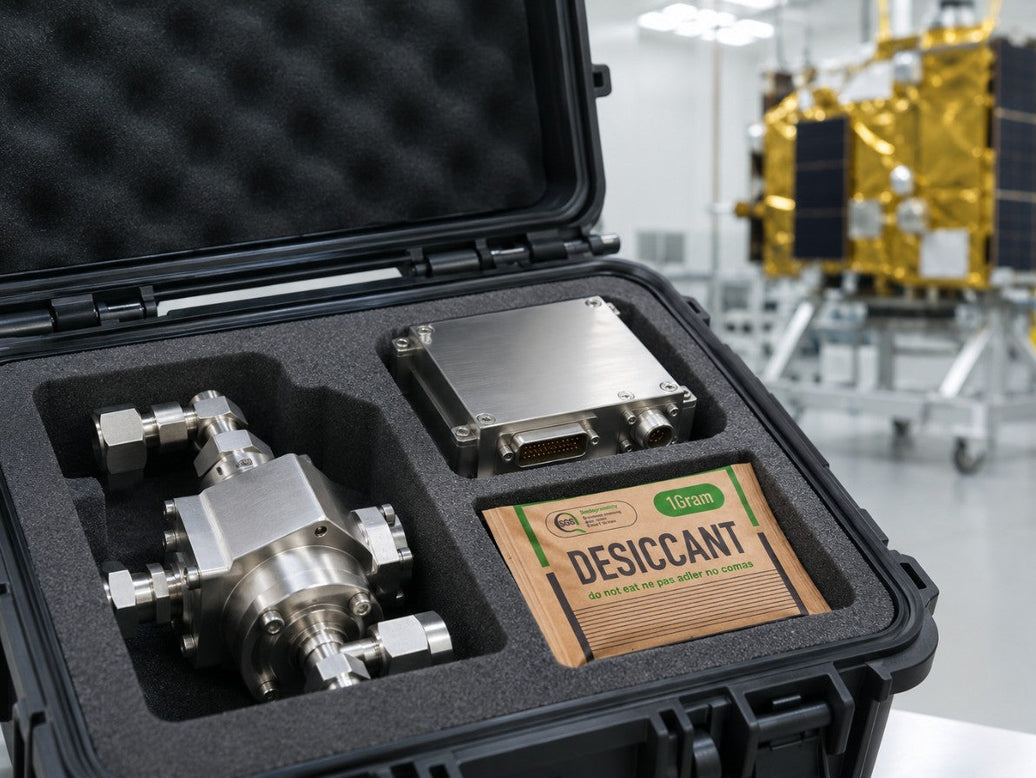
Industrial dehumidifiers and packaging desiccants solve the same problem, moisture, in different places. One controls the room. The other travels inside each package through trucks, containers, distributors and customers' shelves.
Side by side
| Industrial dehumidifier | Packaging desiccant | |
|---|---|---|
| Protects | Everything in the room, while it's there | One package, wherever it goes |
| Cost driver | Equipment, energy, maintenance | Per-unit cost times volume |
| Covers transit | No | Yes |
| Covers open handling | Yes | No (until sealed) |
| Fails how | Breakdown, power, filters | Undersized or wrong format |
When to prioritize the room
- Products are handled open: filling, weighing, blending
- Long dwell times in your own building
- Corrosion of equipment and building is also a problem
When to prioritize packaging
- Long or humid transit, especially by sea
- Products sit at distributors or on retail shelves
- Customers open and reclose packages (tubs, pouches)
The usual answer: both, sized sensibly
Control the room where products are exposed, then put the right amount of desiccant in sealed packaging for the journey. Over-investing in one rarely fixes the other. Measuring humidity through the chain shows where the money matters; see humidity control as a service.
FAQ
Can a dehumidified warehouse skip desiccants?
Only if packages never leave controlled conditions.
Are desiccants cheaper than dehumidifiers?
It depends on volume. Compare cost per protected unit over a year.
Which is better for powders?
Both: dry filling rooms and desiccant in the pack.
Keep reading: Dehumidifier vs desiccant basics · Industrial desiccant types · Fiber desiccant