Part 1 of 5 in our HaaS series.
Quick answer: HaaS (Humidity Control as a Service) is a temperature and humidity management system that combines four things: humidity-conditioning materials, sensors, a cloud data platform and algorithm models. The materials hold humidity steady. The sensors prove it, around the clock. The models turn that data into decisions you can audit.

A desiccant or a two-way pack does its job quietly. HaaS is about seeing that job happen. At ATMOSIScience®, we make the humidity-conditioning materials, and we built HaaS around them so you can see what's actually happening inside the space you're protecting.
The problem with checking humidity by hand
We see three pain points with traditional monitoring:
- Manual record-keeping is slow and easy to distort. A logbook is only as good as the person filling it in.
- Anomalies get noticed late. If nobody's looking when humidity spikes, the damage is done before anyone knows.
- Traditional practices fall short of strict compliance and safety requirements. When an auditor asks for proof, a clipboard isn't enough.
The answer HaaS gives is simple to say: 24/7 automated monitoring, intelligent alerts, and cloud-stored data that's fully traceable.
Four parts, one system: material, data, algorithm, system
We call our approach "material, data, algorithm, system" integrated humidity management. Here's what each part does.
- Material. Humidity-conditioning materials do the physical work. Our portfolio covers fiber desiccant, two-way humidity control sheets, packs, bags, sealing film and boards, and anti-condensation packs. (See our fiber technology page.)
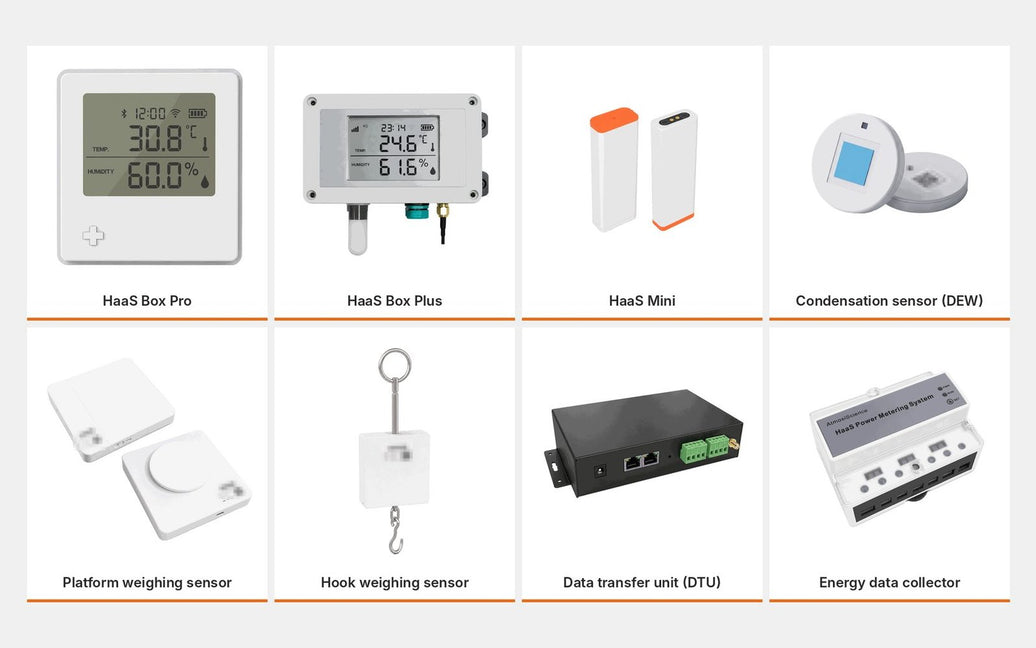
- Data. Smart terminals capture temperature, humidity, condensation and even the weight of the humidity-conditioning material in real time.
- Algorithm. The HaaSMind models analyze that data for shelf life, condensation risk and moisture diffusion.
- System. The platform links it all to the equipment in the room, so air conditioners, dehumidifiers, humidifiers and fans run when the data says they should.
Combined with our humidity-conditioning materials, the system keeps temperature and humidity evenly distributed across a space while significantly reducing energy consumption.
How the system is built: five layers
The HaaS architecture has five layers. You don't need to remember them, but they explain why the pieces fit.

| Layer | What's in it | What it does |
|---|---|---|
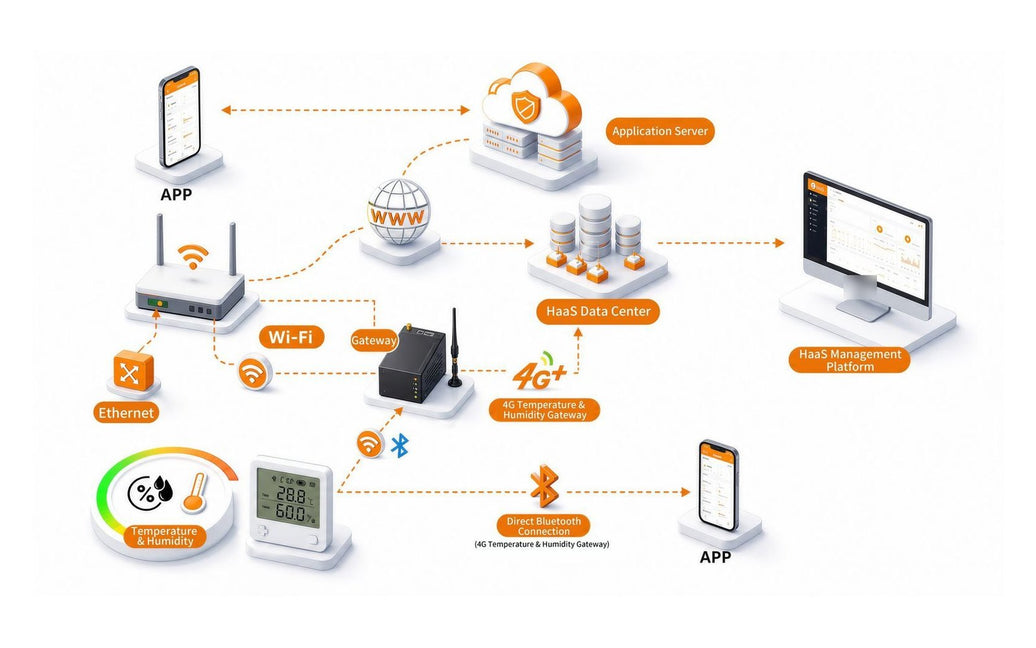
| Application | Management platform, app and mini program | Data visualization, device management, alarm center, remote control, mobile management |
| Platform | Cloud services and the HaaS data center | Device access, data processing, rules engine, storage, computing, analytics |
| Transmission | HaaS data gateway, data transfer unit (DTU), network connection | Protocol conversion, edge computing, secure access, remote transmission, resumable transfer; Wi-Fi, Bluetooth, 4G or Ethernet |
| Perception | Temperature and humidity terminals, condensation sensors, weighing sensors, energy data collectors | Precision acquisition, condensation early warning, weight monitoring, power monitoring |
| Linkage control | A/C, dehumidifier, humidifier, circulation fan, infrared linkage controller | Equipment responds automatically to conditions |
Where HaaS is used
HaaS runs in both fixed and mobile settings:
- Fixed: production workshops, laboratories, cold storage.
- Mobile: refrigerated trucks, refrigerated containers, freezer cabinets.
And it covers six industries: pharmaceutical, food and fresh produce, chemical and electrical, smart agriculture, logistics and transportation, and warehousing and storage. We also offer integrated solutions for four scenarios where our materials and sensing work together: museum and archive storerooms, anti-condensation in new-energy equipment, agricultural humidity management, and packaging micro-environment validation.
Six versions in, built for global sites
HaaS started small. Version 1.0 monitored relatively enclosed spaces over LoRa, sending data to the cloud through a concentrator that also coordinated the air conditioning. Later versions added Bluetooth and NB-IoT devices, a product-based data platform, global versions of the terminals and the HaaS App, and a full configuration-to-maintenance toolset. Version 6.0 brought the new condensation and wireless weighing sensors and reports based on the anti-condensation, shelf-life and moisture diffusion models.
The current global version of the back end and clients supports cross-time-zone, multi-site data service and remote operations and maintenance. In short, it moves humidity management from "local delivery" to "global delivery."
What's next in this series
In Part 2 we open the sensor kit: what each terminal measures, how accurate it is, and which one fits which job.
Next in the series: Inside the HaaS Sensor Kit
Frequently asked questions
What does HaaS include?
Sensors, gateways and linkage controllers, the cloud platform and apps, the HaaSMind algorithm models, and humidity-conditioning materials, working as one integrated system.
Does HaaS replace desiccants or humidity packs?
No. The materials still do the physical work. HaaS measures and manages around them.
Can it run across several sites?
Yes. The global version supports multi-site data service across time zones.
Planning a monitored humidity program?
Tell us what you're protecting and where.
Prefer email? info@atmosiscience.com