Part 4 of 5 in our HaaS series. Part 3 covered the platform.
Quick answer: HaaSMind is the algorithm layer of HaaS. It runs three core models: shelf-life validation, anti-condensation validation and moisture diffusion. In the shelf-life model, the AI diagnoses and reports, but the numbers come from deterministic calculations the LLM is never invoked to alter.

A dashboard tells you what happened. A model tells you what it means. HaaSMind is our AI inference platform, built with large language model (LLM) technology at its core, and it provides verification, analysis, inference and data reporting for temperature and humidity management.
How data gets to the models
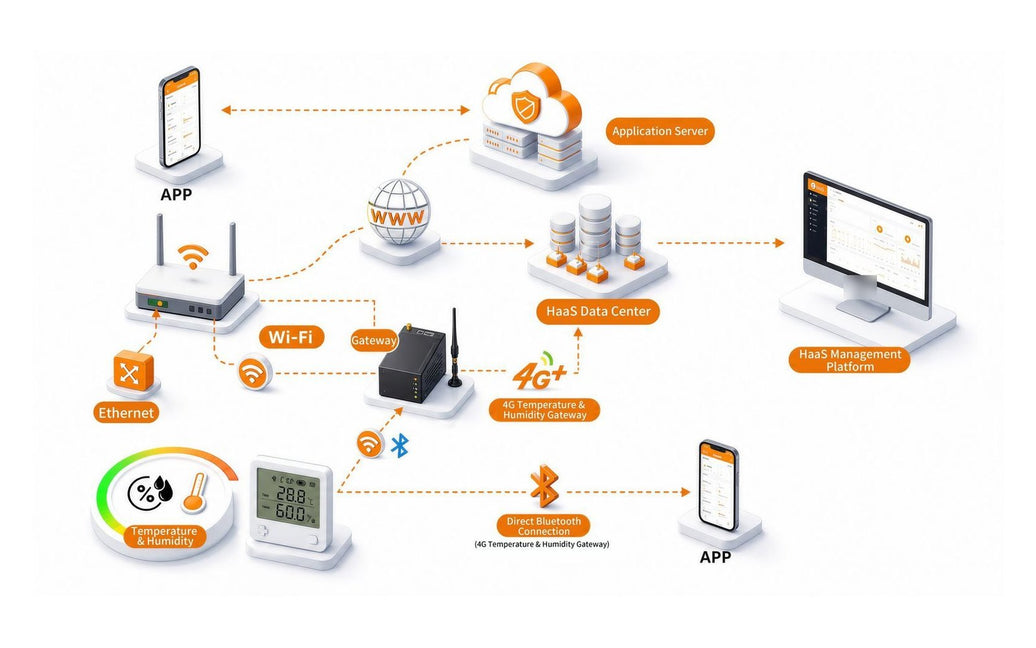
The flow has four steps:
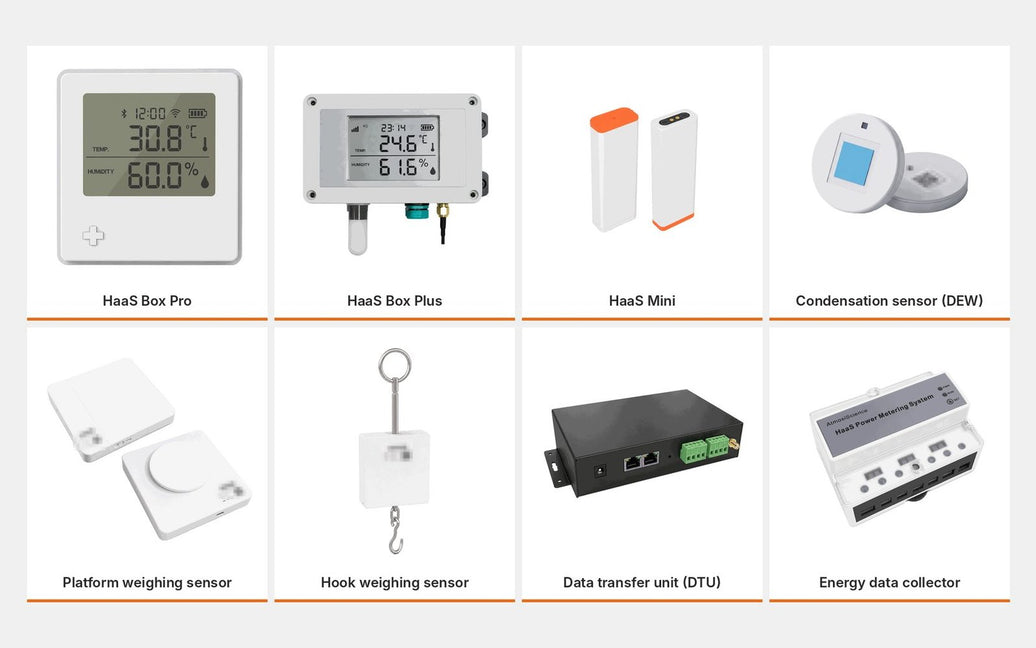
- Devices collect sensing data on site.
- Gateways aggregate it and convert protocols.
- The cloud server stores and computes.
- HaaSMind runs the inference.
The results come out as a data report and analysis findings, delivered through DingTalk, WeChat, Lark and AI agents so the right people see them early.

Model 1: Shelf-life validation, run by four agents
This model is built around one question: how long will the product last, and can you prove it? It runs as four agents, each with a strict job.
| Agent | What it does | Uses the LLM? |
|---|---|---|
| Check agent | Runs "Gate 0," the data completeness and quality gate: parameter completeness, sensor availability, completeness rate, material branch validity and driving-force preconditions. Issues are logged to the experiment memory. | No |
| Analysis agent | Deterministic numerical analysis: preprocessing, k_e and K_m calibration, mass attribution, ODE simulation, capacity, condensation and RH metrics, and t_fail candidates. | No. The LLM is never invoked to alter numerical values. |
| Reasoning agent | Diagnoses the mechanism and recommends engineering fixes such as sealing, water activity, dosage, or moving to long-term models, and pulls similar past cases from the experiment memory. Every output must cite an evidence ID. Fabricating values is strictly prohibited. | Yes |
| Report agent | Produces a structured report (JSON) and a human-readable report (Markdown) with a chart index, a six-criteria decision table, risk statements and evidence levels. | Partly. Narrative paragraphs may optionally be polished by the LLM. |

That split matters. The math stays math. The AI explains it, and every reasoning output has to cite an evidence ID.
Model 2: Anti-condensation validation
This model sits behind the Condensation Analysis Platform. You pick the devices in your project, add them to an analysis set, choose a time window and run the analysis. Two settings show how carefully it treats the data:
- Surface temperature correction: you can apply a correction value to the surface reading.
- Missing surface temperature: if a device has no surface reading, the system can approximate it with air temperature, and it flags that as a warning.
A condensation analysis agent and a digital assistant work alongside the data, and results feed into data templates and reports.
Model 3: Moisture diffusion
This model works from the geometry of your space: where the opening (valve port) is and where each sensor sits. It runs as "identification tasks":
- You set the coordinates of the opening where moisture gets in, plus the x, y and z position and role of every device. These are required before a task can run.
- The value L for each device is calculated automatically from the coordinates (Equation 11). Entering L by hand on its own isn't allowed.
- You choose a boundary scheme and a baseline condition, record the installation orientation (required for baseline tasks) and note whether forced convection is present.
- Optionally, you can add each sensor's τ value (in seconds) and calibration date for quality-grade results.
Tasks can be compared with each other and fitted across different operating conditions, and a project coordinate library stores the geometry.
What this changes for you
- Shelf life becomes evidence-based. For packaging micro-environment validation, we combine materials, sensors and model validation so that 30 days of dynamic monitoring produce an auditable data package.
- Condensation becomes measurable. It's calculated from air temperature, humidity and surface temperature readings.
- Recommendations come with receipts. Every reasoning output must cite an evidence ID, and fabricating values is strictly prohibited.
Next in the series: From Pilot to Proof: How a Humidity Validation Project Runs
Frequently asked questions
Does the AI make up numbers?
It's designed not to. In the shelf-life model, numerical analysis is deterministic, the LLM is never invoked to alter numerical values, every reasoning output must cite an evidence ID, and fabricating values is strictly prohibited.
What reports do I get?
The shelf-life model's report agent produces a structured JSON report and a human-readable Markdown report with a chart index, a six-criteria decision table, risk statements and evidence levels.
What if a sensor is missing surface temperature?
The anti-condensation model can approximate it with air temperature and marks the result with a warning.
Need a shelf-life or condensation answer you can defend?
Tell us the product, the package and the conditions it lives in.
Prefer email? info@atmosiscience.com