Quick answer
Nitrogen flushing protects a powder while the tub is sealed. It pushes air out of the headspace at filling, which removes most of the oxygen and the moisture that air carried. It stops working the first time the customer takes the lid off, it does not dry powder that was filled damp, and it does not stop moisture that comes through the closure or the pack wall over months. A desiccant covers those three gaps, because it keeps absorbing after the tub is opened until it is full.
Get a card sized for your tub See the fiber desiccant card
Samples ship with the spec sheet. Tell us the tub size, fill weight and servings and we size the card for you.
"Sealed with nitrogen" has become a common line on powder tubs and in brand help pages. It is a real improvement. It is also often presented as the answer to clumping, and that is where the trouble starts, because customers still open a flushed tub three weeks later and find a brick.
The flush did its job. It was never able to do the job the customer blames it for. This guide separates the two, for brand owners deciding what goes into the pack and for contract manufacturers who run the line.
What nitrogen flushing does well
- It removes oxygen from the headspace. That slows oxidation of sensitive ingredients such as oils, some vitamins and flavors.
- It removes the moisture that was in the headspace air. Nitrogen is supplied dry, so the tub is sealed with dry gas above the powder.
- It adds no component. Nothing extra goes into the tub for the customer to find.
For a powder whose main risk is oxidation on the shelf, flushing is the right tool. Our comparison of desiccants, oxygen absorbers and nitrogen flushing covers how to choose between them. This article is about what happens next.
Three things a nitrogen flush does not do
1. It does not survive the first opening
When the lid comes off, room air mixes into the headspace. Every scoop after that swaps a little more. A tub with thirty servings is opened thirty times, usually in a kitchen, often near a kettle or a sink. From the first opening onward, the powder sits under ordinary household air, and the flush has no further part to play.
2. It does not dry the powder
Flushing replaces the gas above the powder. It does not remove water the powder already holds. If ingredients picked up moisture in the blending room or at the filler, that water is sealed in with them, and it redistributes inside the closed tub over the following weeks. This is how a tub can clump with its seal intact.
3. It does not improve the pack
Moisture moves slowly through closures, liners, tub walls and pouch films. What gas is inside the pack makes no difference to that. Over a shelf life measured in months, the barrier decides how much water arrives, and a flush at filling cannot take it back out.
One more point for the line: a flush is only as good as the equipment that runs it. Residual oxygen varies with line speed and with how much air the powder carries into the tub, so it is something to measure rather than assume.
Flush, desiccant or both
| What it protects against | Nitrogen flush | Desiccant |
|---|---|---|
| Oxygen in the sealed headspace | Yes | No |
| Moisture in the headspace air at sealing | Yes | Yes |
| Moisture released by the powder after sealing | No | Yes, until it is full |
| Moisture arriving through the pack over months | No | Yes, until it is full |
| Moisture entering every time the tub is opened | No | Yes, until it is full |
The two do different jobs, and they work well together. A flushed tub starts dry, so the desiccant does not spend capacity on the air sealed in at the factory. More of it is left for the weeks after opening, which is when most clumping complaints begin.
- Oxidation-sensitive and water-attracting: flush and desiccant.
- Water-attracting but not oxidation-sensitive: desiccant first. Many pre-workout, electrolyte, collagen and greens blends sit here.
- Oxidation-sensitive, low moisture pickup, used up quickly: a flush may be enough.
Use the timing to find the cause
If your tubs are flushed and customers still report clumping, ask when the clumps appeared.
- Clumped when the seal was first broken: look at moisture in the powder at filling, and at the pack barrier over the time the tub spent in storage and transit.
- Loose at opening, hard a few weeks later: the headspace after opening is the cause. This is the case a flush cannot reach.
Our guide to clumped pre-workout explains the same split from the customer's side.
Size the desiccant for the opened life
Desiccant for a sealed shipment is sized from the pack volume, the barrier and the time. A consumer tub adds a second calculation: the weeks it spends being opened. The inputs are the headspace volume, the number of servings, the humidity of a normal kitchen, and how long a customer takes to finish the tub. The fiber desiccant sizing guide walks through the method.

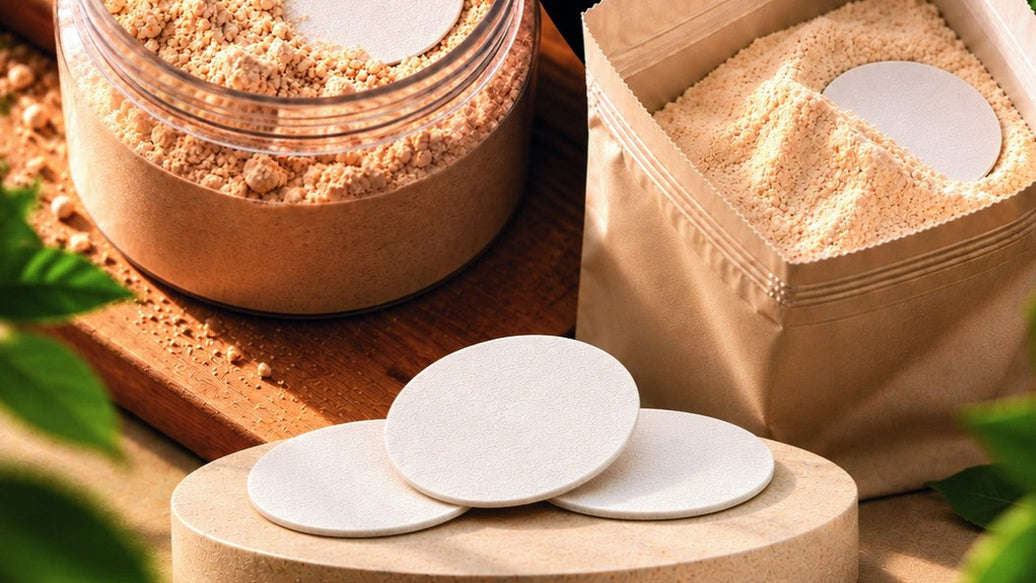
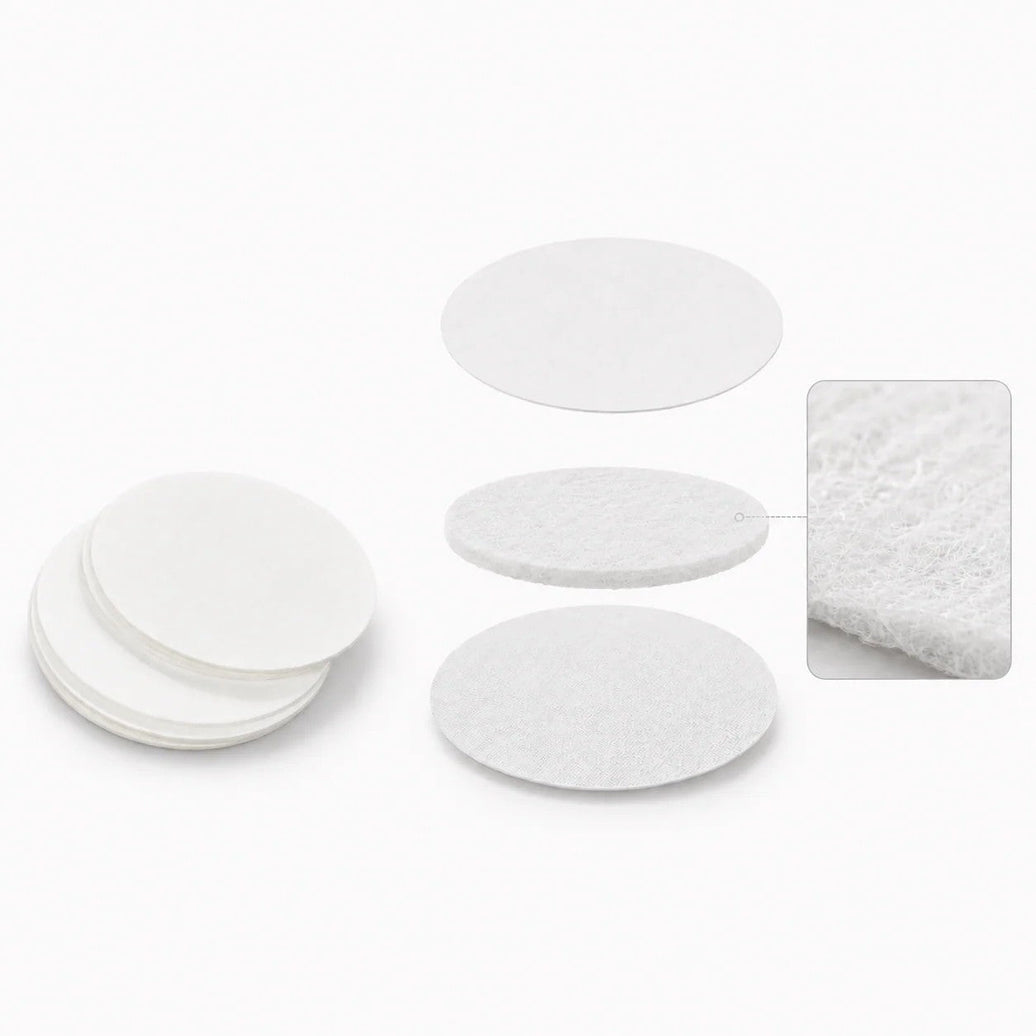
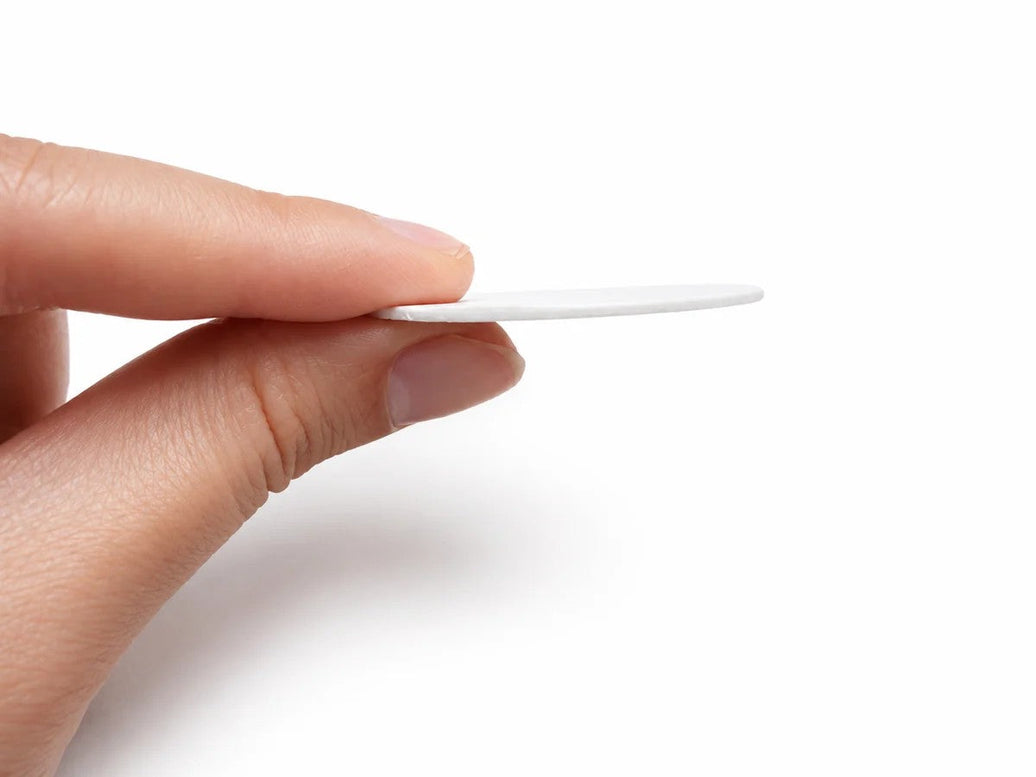
The Fiber Desiccant Card is a flat, rigid plant-fiber disc, 0.7 mm or 1.0 mm thick, with no loose beads to spill into the powder. Capacity depends on the humidity it is working in:
| Relative humidity at 25 °C | 1.0 mm Fiber Desiccant Card absorbs |
|---|---|
| 20% RH | Over 10% of its own weight |
| 50% RH | Over 35% of its own weight |
| 90% RH | Over 70% of its own weight |
At 25 °C and 90% RH, the 1.0 mm card absorbs three times as much moisture as the same weight of silica gel under the same test conditions. Across 20 to 40% RH it holds about twice as much.
For contract manufacturers: a card on a flushed line
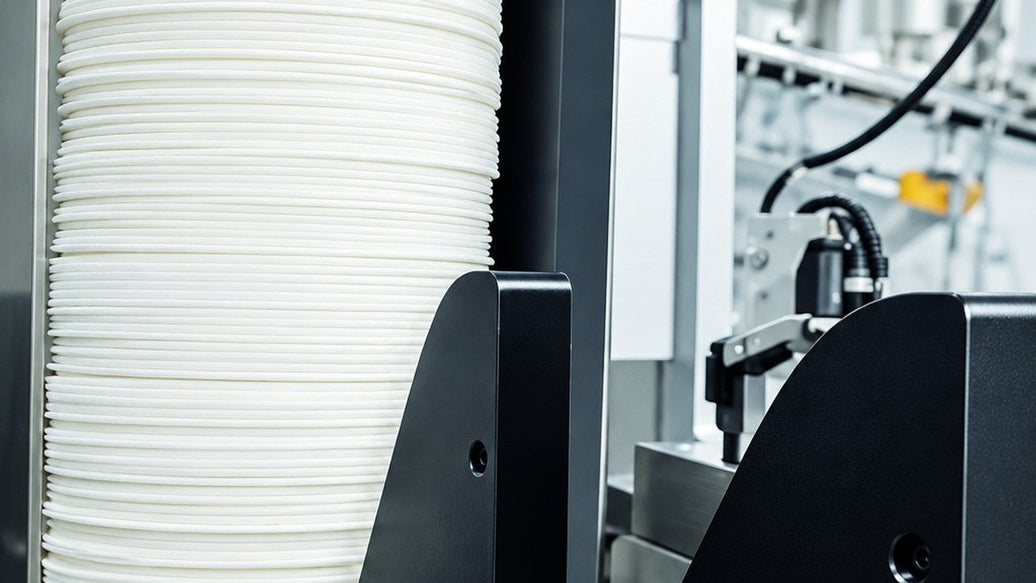
A desiccant card and a nitrogen flush do not interfere with each other. The card absorbs water vapor, not nitrogen. It goes into the tub before the flush and seal, by hand or with a feeder.
- Keep cards in their sealed bag until they are needed at the line.
- In a packing room at 50% RH or below, use an opened bag within 2 hours. Above 50% RH, use it within 1 hour.
- At 80% RH or above, stop and bring the room down before opening more cards.
- If the line pauses for more than 30 minutes, reseal the bag.
More detail is in how to use fiber desiccant on the packing line and in the guide to automatic card insertion. If you fill for several brands, one card spec can cover many of their SKUs: see one card spec across client SKUs.
Frequently asked questions
Does nitrogen flushing prevent powder from clumping?
It helps while the tub is sealed, because the headspace starts dry. It does not prevent clumping after the tub is opened, and it does not remove moisture already in the powder or moisture that arrives through the pack over time.
Does a nitrogen-flushed tub still need a desiccant?
If the powder attracts water and the tub is opened many times over several weeks, yes. The flush protects the sealed shelf life and the desiccant protects the weeks of use.
How long does the nitrogen last after opening?
Room air mixes into the headspace the first time the lid comes off, and each scoop exchanges more. In practice the benefit of the flush ends at first opening.
Does a desiccant interfere with a nitrogen flush?
No. A desiccant absorbs water vapor and leaves nitrogen alone. The card is placed in the tub before flushing and sealing.
Get a card sized for your tub
Tell us the powder, the pack and whether it is flushed. We reply with a card size, a placement and samples to test.
Prefer email? info@atmosiscience.com
Figures from ATMOSIScience Fiber Desiccant Card product documentation, the fiber desiccant usage instructions and the measured adsorption curve at 25 °C.