Quick answer
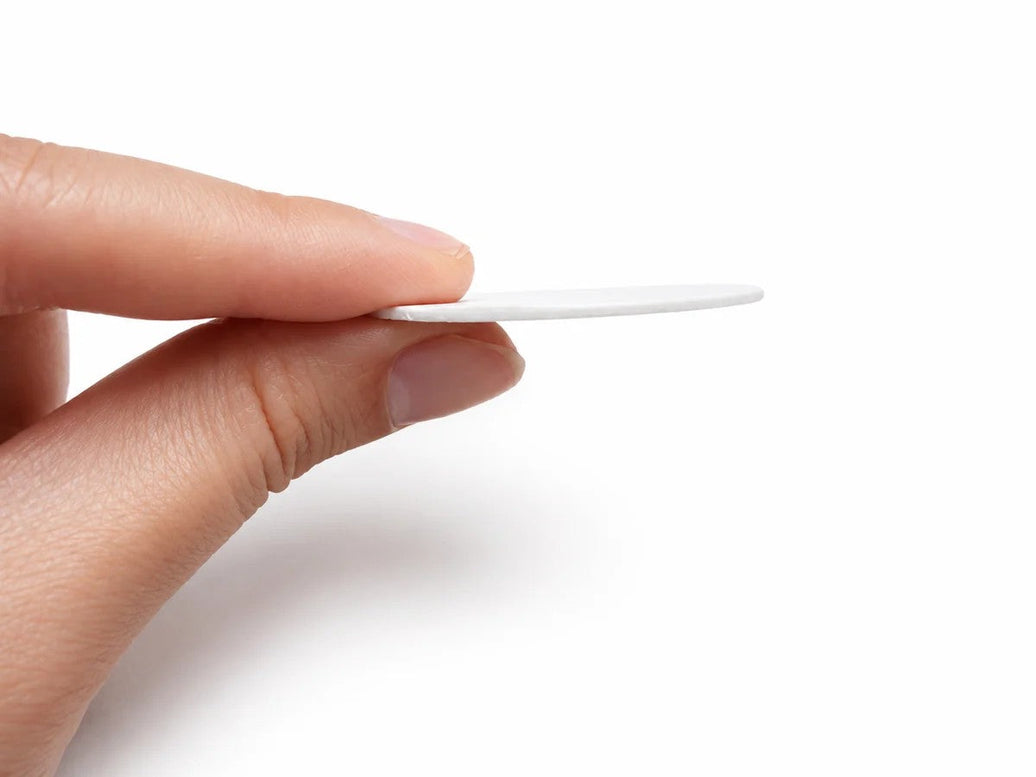
Before you pick a desiccant for a sealed electronics enclosure or connector, decide which job it does. Protecting a module in its barrier bag until it is installed is a transit job. Sitting inside the housing for the product's working life is an in-service job, and it is sized very differently. Then check the space you have: a flat 0.7 mm or 1.0 mm fiber card fits against a lid or wall where a granular sachet will not, and the 1.0 mm card holds about twice as much water as silica gel across 20 to 40% RH at 25 °C.
Send your enclosure spec See the fiber desiccant card
Samples ship with the spec sheet. Tell us the cavity size and temperature range and we size the card for you.
Electronics teams usually come to desiccant late. The board is designed, the housing is tooled, and then a field return or a humidity test shows moisture where it should not be. At that point the question sounds simple: which desiccant goes in the box? The honest answer depends on four things that most requests leave out, and getting them right first saves a round of samples.
Transit or in-service: two different jobs
A desiccant in a sealed barrier bag protects a module from the factory to the installer. The bag lets very little moisture in, the journey has an end date, and once the bag is opened the desiccant has done its work. Sizing comes from the bag volume, the barrier film and the time in transit and storage.
A desiccant inside the product's own housing has a longer and harder job. Most housings are not truly sealed. As the device warms and cools, the air inside expands and contracts, and every cycle can pull a little humid air past gaskets, cable glands and connector seals. A one-way desiccant soaks that moisture up until it is full, then stops. So an in-service desiccant has to be sized for the total moisture the housing will take in over the period you need, not just for the air trapped at assembly.
| Question | Transit and storage | Inside the product, in service |
|---|---|---|
| Where moisture comes from | Air sealed in the bag, plus slow ingress through the film | Air trapped at assembly, plus breathing through seals with every temperature cycle |
| How long it must work | Weeks to months, with a known end | A service interval or the product's life |
| What sets the size | Bag volume, barrier film, time | Cavity volume, seal quality, temperature swing, time |
| Can it be replaced | Discarded when the bag is opened | Often sealed in for good, so size it right the first time |
Space decides the format
Granular desiccant in a sachet needs depth. Connector housings, sensor heads and slim control boxes rarely have it. A flat card uses surface instead of depth: it can sit under a lid, against a side wall or behind a board, and it does not shed beads or dust into the assembly.

The Fiber Desiccant Card comes in two thicknesses, 0.7 mm for compact spaces and 1.0 mm for more capacity, and is die-cut to shape. If your cavity is long and narrow rather than flat, send the dimensions. We will tell you plainly which shapes can be cut from the sheet and which cannot.
Capacity, in numbers from the product documentation
Electronics generally want low humidity rather than bone-dry conditions, so the useful range is the dry band, not the 90% RH headline most suppliers quote.
| Relative humidity at 25 °C | 1.0 mm Fiber Desiccant Card absorbs |
|---|---|
| 20% RH | Over 10% of its own weight |
| 50% RH | Over 35% of its own weight |
| 90% RH | Over 70% of its own weight |
Across 20 to 40% RH, the band most electronics packaging aims for, the 1.0 mm card holds about twice as much water as the same weight of silica gel. That is what lets a thin card do the work of a thicker sachet.
The six facts to send any desiccant supplier
These are the questions an application engineer will ask anyway. Sending them up front turns a week of emails into one reply with a sized recommendation.
- The cavity. Free air volume inside the housing, and the flat area available for a card.
- The seal. Fully potted, gasketed, cable-gland sealed, or fitted with a breathable vent membrane.
- Temperature. Storage and operating range, and how often the device cycles between them.
- The limit. The highest humidity your components tolerate, or the point where condensation becomes a risk.
- The time. Transit only, a fixed service interval, or the whole product life.
- Paperwork and volume. Declarations your QA team needs, such as RoHS and REACH, plus a rough annual quantity and when you need samples.
If the temperature range is wide, ask for the range the desiccant was tested at and compare it with your own cycle. Do not assume a figure from a datasheet written for a different application.
Where a fiber card fits well
- Modules, PCB assemblies and connector boxes shipped in barrier bags
- Spares and service kits stored for months before use
- Slim housings with a flat lid or wall and no depth for a sachet
- Assemblies where loose beads or dust are not acceptable
- Branded packs, since the card can carry a printed logo, with a COA for every lot
For enclosures that stay sealed in service and see daily heating and cooling, such as outdoor controllers, battery packs and telecom units, a one-way desiccant may not be the whole answer. Our anti-condensation fiber pack is built for that case. Tell us about the enclosure and we will say which of the two fits.

Frequently asked questions
Can a desiccant stay inside an electronics housing permanently?
Yes, but it must be sized for the moisture the housing takes in over that whole period, not just the air sealed in at assembly. A one-way desiccant stops working once it is full, so seal quality and temperature cycling matter as much as the desiccant itself.
How thin is the Fiber Desiccant Card?
0.7 mm or 1.0 mm. It is die-cut to shape and can sit flat under a lid or against a wall where a granular sachet would not fit.
How much water does the card hold in dry conditions?
At 25 °C the 1.0 mm card absorbs over 10% of its own weight at 20% RH and over 35% at 50% RH. Across 20 to 40% RH it holds about twice as much water as silica gel.
What should I send to get a sized recommendation?
Cavity volume and flat area, how the housing is sealed, the temperature range, the humidity limit for your components, how long protection must last, and the paperwork your QA team needs.
Get a card sized for your enclosure
Tell us about the housing and how long it must stay dry. We reply with a recommendation, a card size and samples to test.
Prefer email? info@atmosiscience.com
Figures from ATMOSIScience Fiber Desiccant Card product documentation and the measured adsorption curve at 25 °C.