Quick answer: Creatine clumps for three main reasons: moisture forming bridges between particles, pressure from stacking and long storage, and vibration and temperature or humidity cycling in transit. Flavoured blends with sugars, acids or mineral salts clump more readily than plain creatine monohydrate. Dry clumps of plain creatine that break apart easily, with no change in smell or colour, are usually a physical change rather than a sign the creatine has broken down. For brands, the fix depends on the cause: a desiccant protects a sealed or reclosed pack from moisture, but it cannot undo moisture picked up before sealing or caking caused by compaction.
"Creatine clumping" and "creatine hardened" are among the most common moisture questions customers ask about supplements. The same complaint reaches brand quality teams as caking reports. Both audiences need the same starting point: clumping describes what the powder looks like, not why it happened.
Why creatine clumps
- Moisture bridges. When the powder picks up water, dissolved material at particle contacts forms bridges, then dries into solid links. Each opening of a tub in a humid bathroom or kitchen adds a little.
- Compaction. Pallets stacked high and stored for months press the powder at the bottom of each tub into a cake, without any added moisture.
- Transit effects. Vibration settles fine particles into gaps, and day and night temperature swings move moisture within the pack.
- Fines and formulation. Micronised creatine has more surface area. Sugars, acids, flavours and mineral salts in finished blends are often more hygroscopic than creatine itself.

Is clumped creatine still good?
For the consumer: plain creatine monohydrate is a stable powder when dry. If clumps break up easily and the powder looks and smells as usual, it is usually a physical change. Breaking up the clumps and closing the lid tightly is normally all that is needed. If the product is wet, discoloured, smells off, or is a flavoured blend that has set hard, follow the brand's guidance or contact them. When creatine is held in solution it gradually converts to creatinine; that is a reason to mix it fresh, not a reason to worry about dry clumps.
For the brand: caking alone does not prove potency loss or moisture ingress. Investigate before changing anything.
How brands find the real cause
- Compare with retained samples. Pull an unopened retain from the same batch. If it is also caked, the cause is upstream: blend moisture at filling, room humidity, open-hopper time or fines.
- Compare opened and unopened units. If only opened or shipped units caked, look at the seal, the reclose, headspace, and whether the desiccant was saturated before sealing.
- Map by route and season. Caking on one route or in one season points to the journey: stacking, vibration, temperature and humidity cycling.
- Test properly. Assay and creatinine, water content, particle size and flow. Creatine monohydrate contains water of crystallisation (about 12% of its mass), so a moisture result has to be read against that, not against zero. See LOD vs Karl Fischer for powders.
Where a desiccant helps, and where it does not
| Cause | Does a desiccant fix it? | Better lever |
|---|---|---|
| Moisture entering through the pack or with each opening | Yes, if sized for the barrier and the opening pattern | Desiccant plus a good reclose |
| Moisture picked up before sealing | No | Filling room humidity and exposure time. See open time on the filling line |
| Compaction from stacking and storage | No | Stacking limits, stock rotation, flow aid in the formula |
| Hygroscopic blend ingredients | Partly | Formulation plus a desiccant sized from the blend's sorption curve |
The caking threshold of a specific blend is best read from its sorption isotherm; see sorption isotherms and the caking threshold and why powders cake. For tubs opened every day, sizing has to cover the headspace refills too: desiccant for resealable packs and tubs.

The desiccant packet in the tub
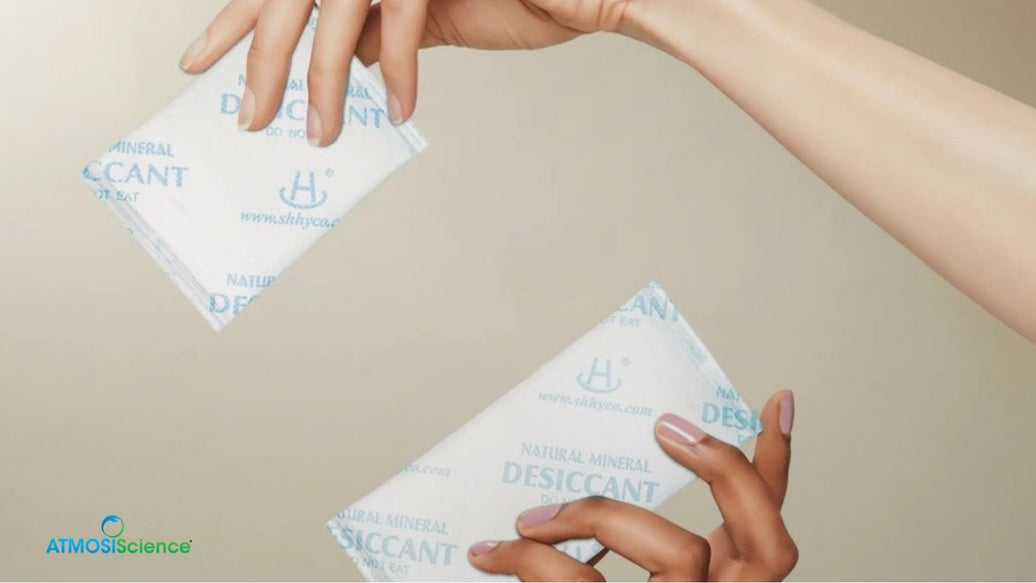
Customers often find a desiccant in a creatine tub and ask whether to keep it. The short answer is to keep it in the tub and not eat it; the full answer is in should you remove the silica gel packet from creatine. Brands choosing the desiccant itself can start with desiccant for creatine monohydrate. A flat card under the lid keeps a silica-free desiccant out of the scoop; the same logic applies to electrolyte powders, covered in electrolyte powder hardened.
Frequently asked questions
Why is my creatine clumping?
Usually moisture from the air, especially if the tub is opened in a humid room or not closed tightly. Pressure from long storage and shaking in transit can also form clumps.
Is hardened creatine safe to use?
Plain creatine that has formed dry clumps and looks and smells normal is usually fine once broken up. If it is wet, discoloured, smells off or is a blend that has set solid, check with the brand.
How do I stop creatine from clumping?
Close the lid tightly, keep the tub out of bathrooms and away from steam, use a dry scoop and keep the desiccant in the tub.
Does clumping mean creatine has turned into creatinine?
Not on its own. Creatine converts to creatinine mainly in solution. Dry clumping is a physical change; only a lab test can confirm potency.
What desiccant suits a creatine tub?
One sized for the tub volume, the lid seal and daily opening, in a format that stays out of the scoop, such as a card under the lid.
Stop caking complaints at the source
Send ATMOSIScience your formula type, pack and the complaint pattern. We will tell you whether a desiccant is the right fix, size it if so, and say plainly when the cause is upstream.
Prefer email? info@atmosiscience.com