Quick answer: To size fiber desiccant, divide the water your pack must handle by the desiccant's capacity at the humidity your product needs, add a margin, then choose the format. Plant-fiber desiccant holds more than 10% of its own weight at 20% RH, and more than 35% at 50% RH and more than 70% at 90% RH at 25 °C, so the capacities to use are more than 0.10 g, 0.35 g and 0.70 g of water per gram. The four examples below use illustrative water loads; your own numbers will differ, and every result should be confirmed with samples in your own pack.
The method is set out in how much fiber desiccant you need. This article puts it to work on four common packs. All water loads are examples only, and we show a 25% margin purely to illustrate the step. Agree your own margin with your QA team.
The formula
Fiber desiccant mass = water load ÷ capacity at your target humidity, plus margin
- At 20% RH: capacity more than 0.10 g of water per gram
- At 50% RH: capacity more than 0.35 g of water per gram
- At 90% RH: capacity more than 0.70 g of water per gram (reference only; few products are sized here)
These are minimum figures from the plant-fiber desiccant product documentation; confirm the values for your chosen format with us.

Example 1: supplement powder in a stand-up pouch
| Step | Value |
|---|---|
| Target humidity | 50% RH or below |
| Water load over the pack's life, including openings (example) | 0.40 g |
| Capacity at 50% RH | more than 0.35 g per g |
| Mass before margin | 0.40 ÷ 0.35 = about 1.14 g |
| With a 25% margin | about 1.43 g |
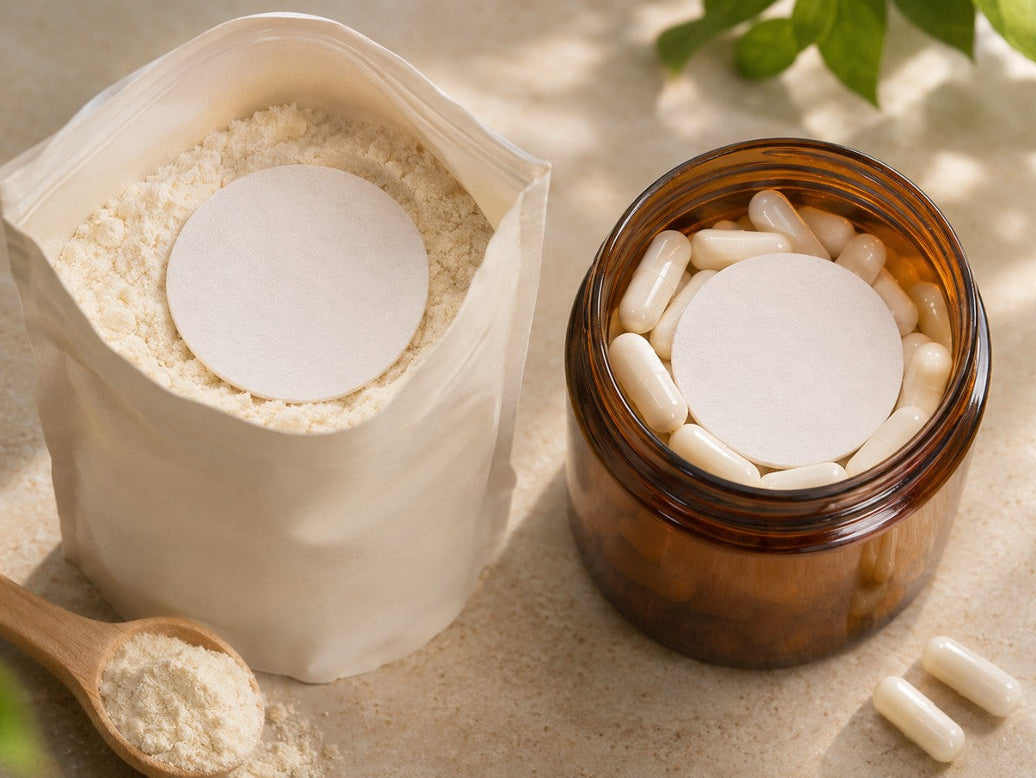
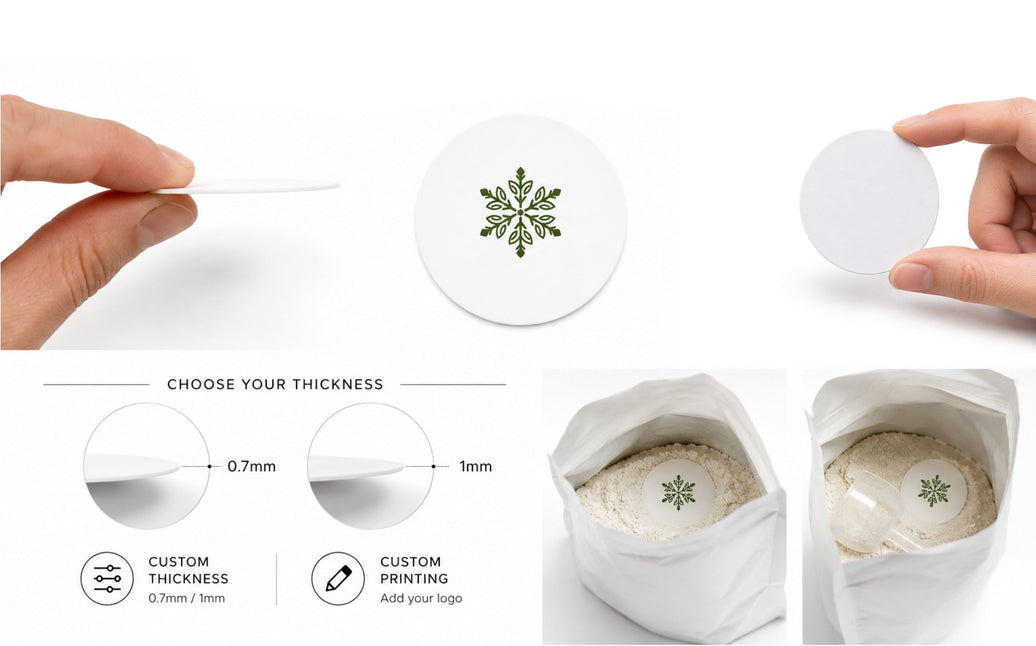
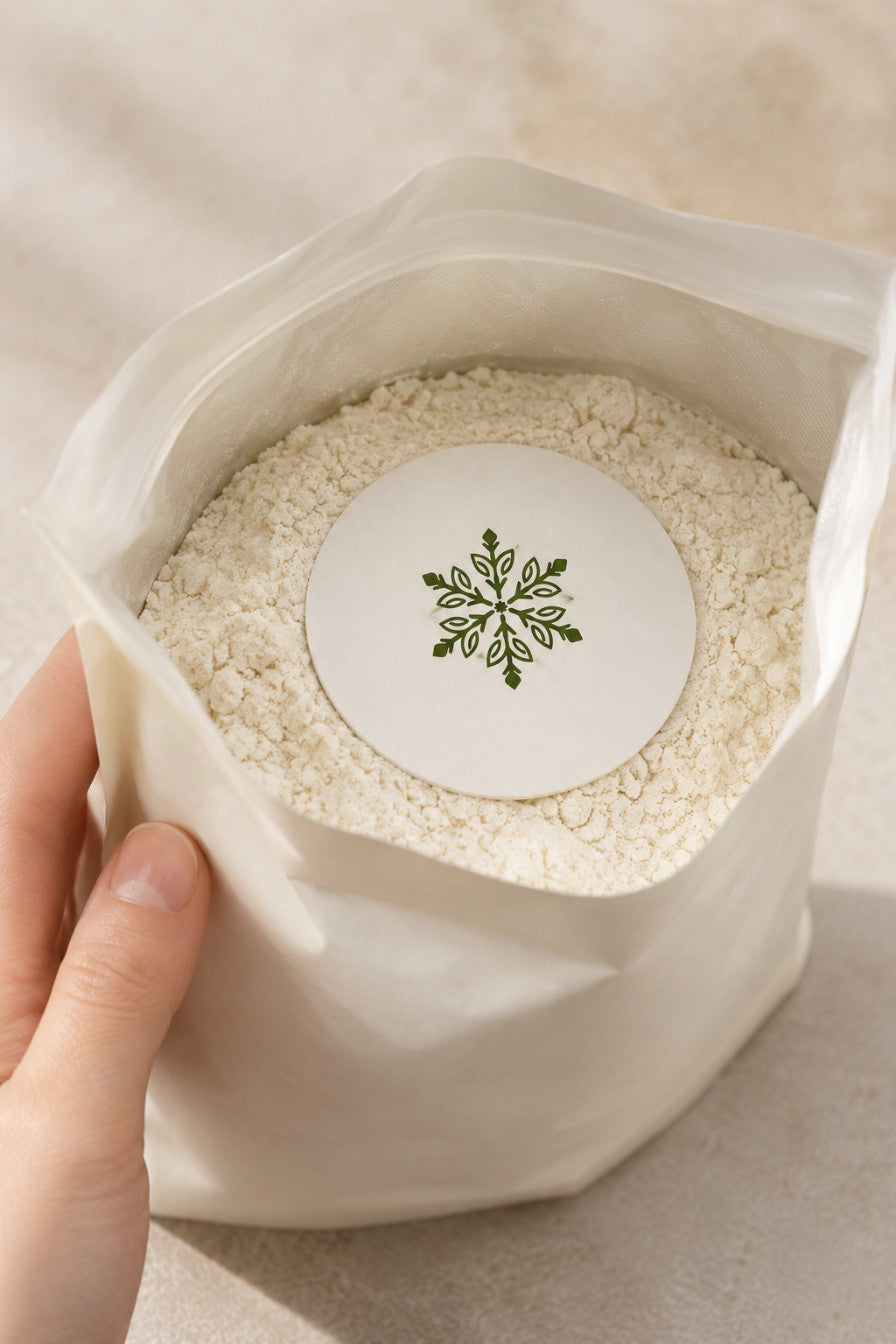
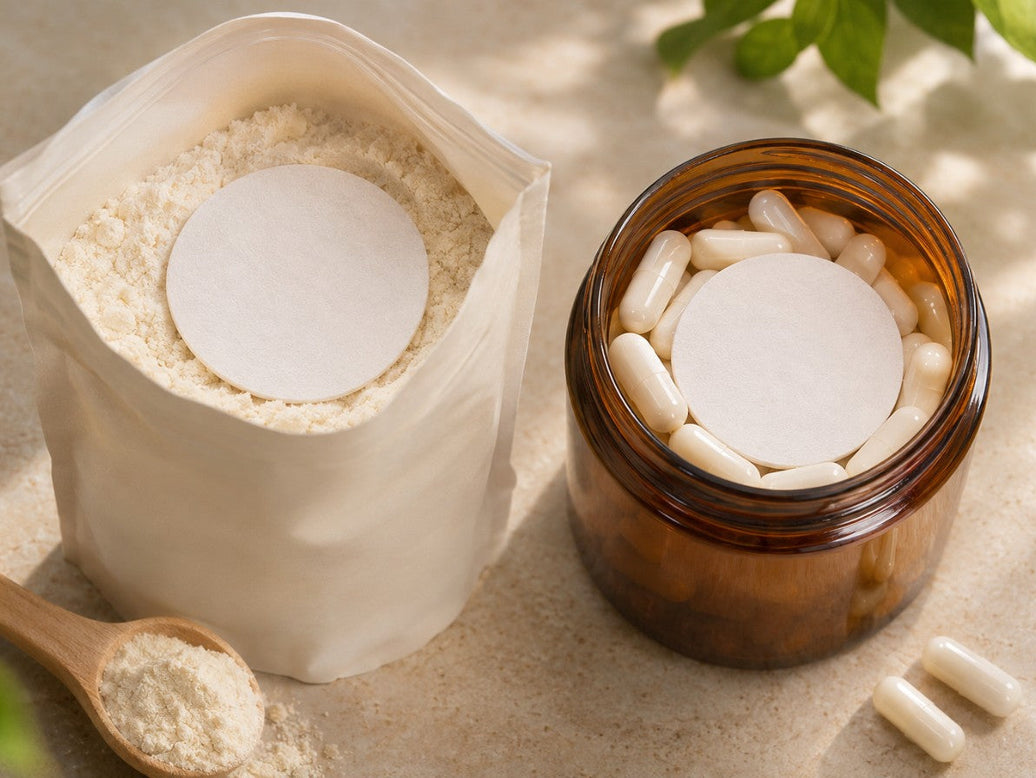
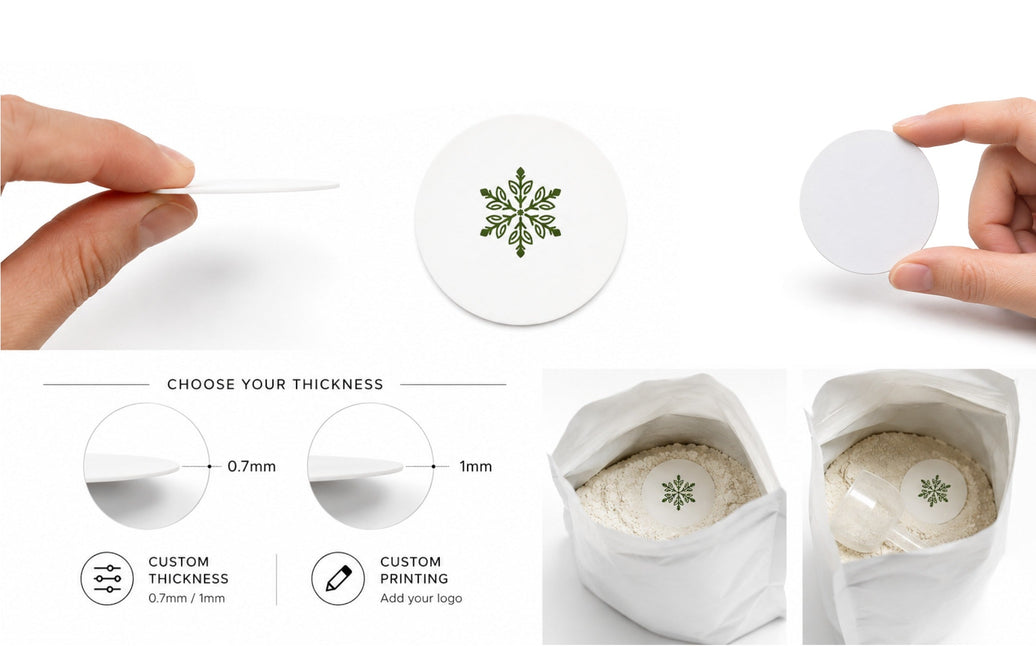
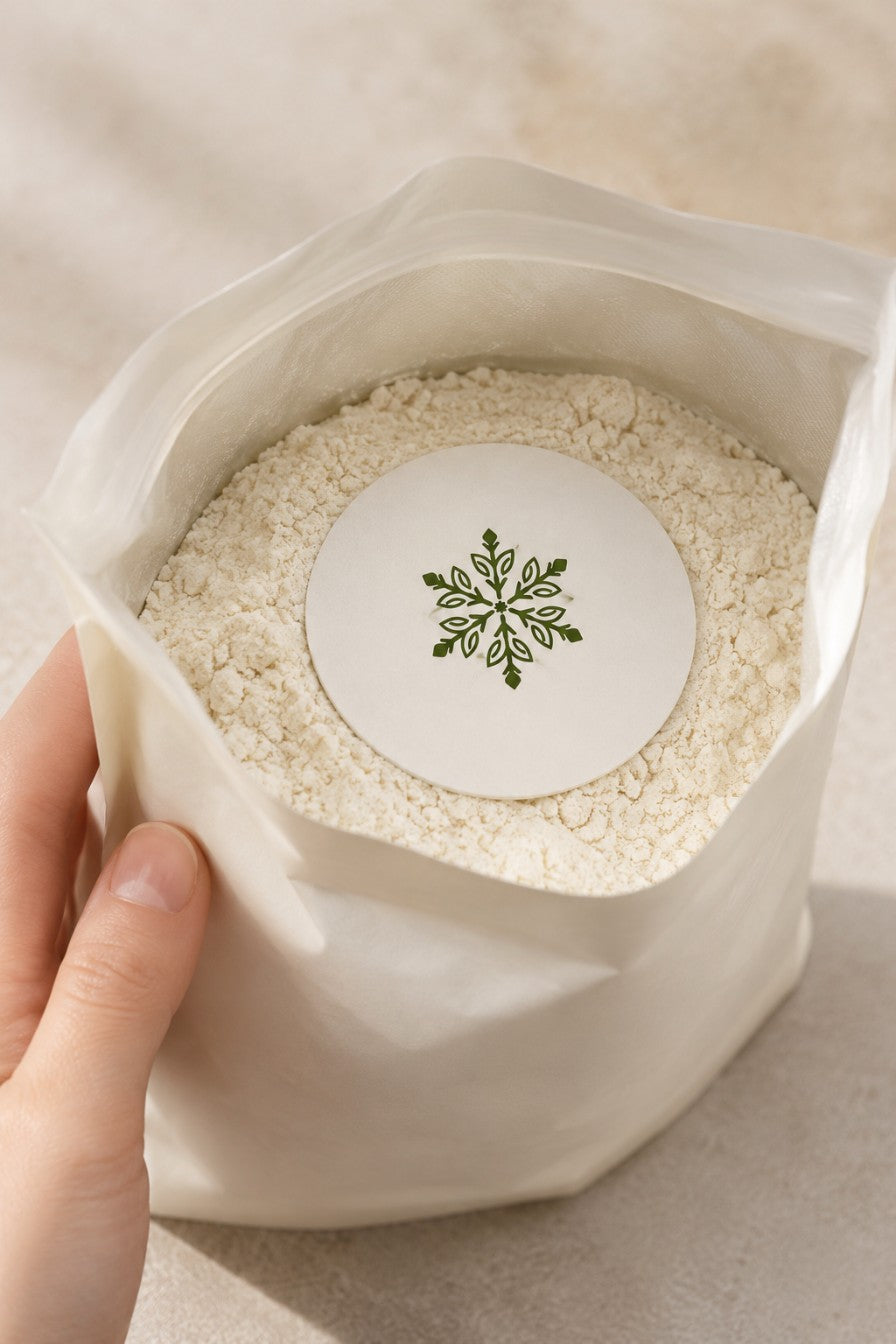
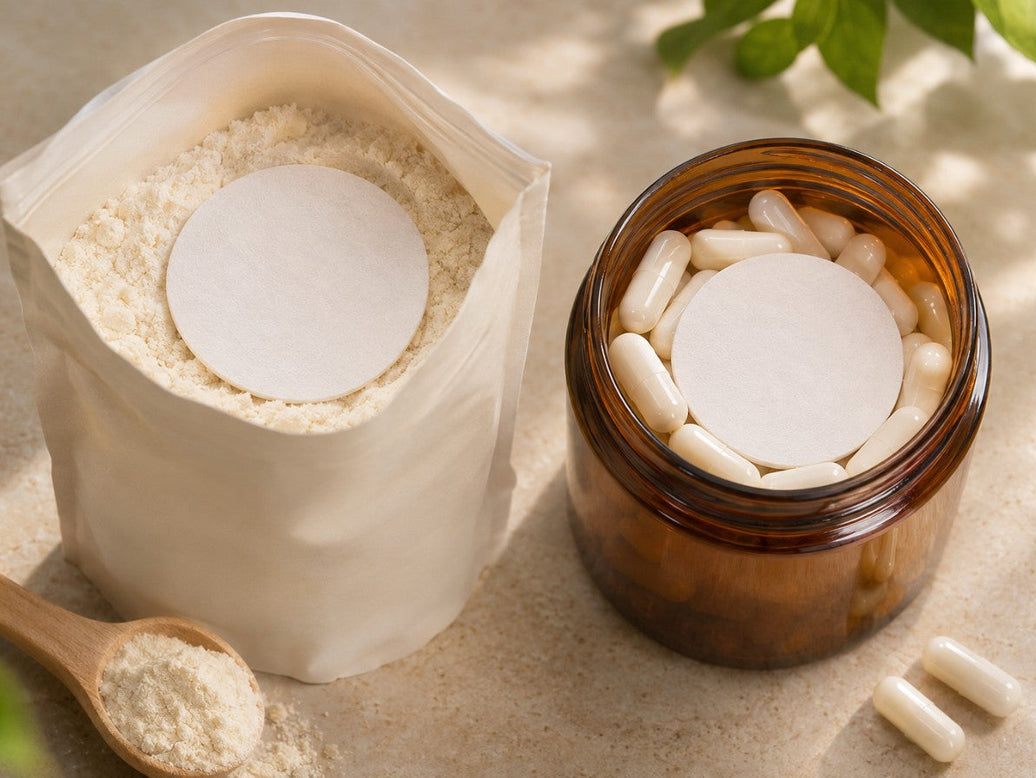
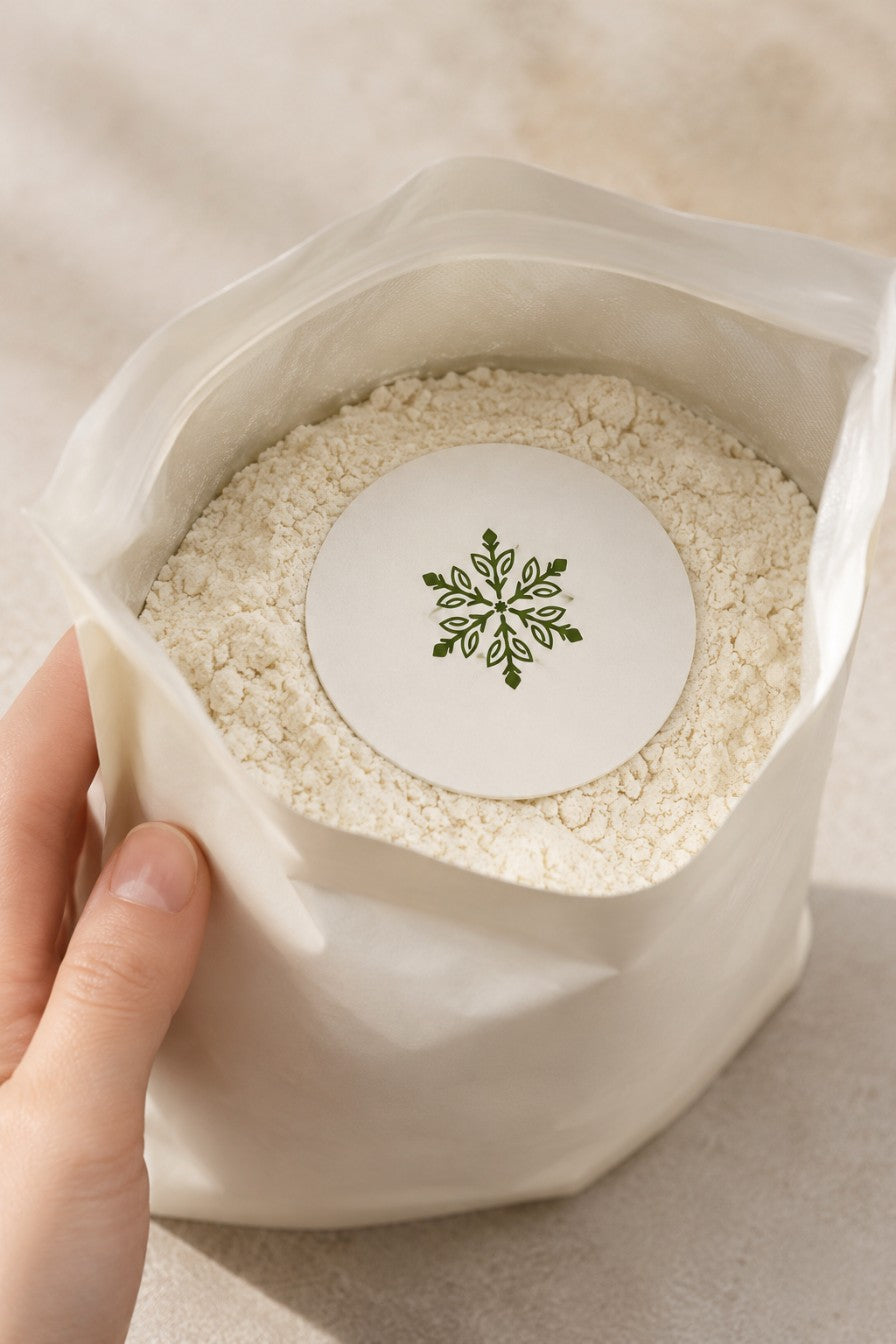
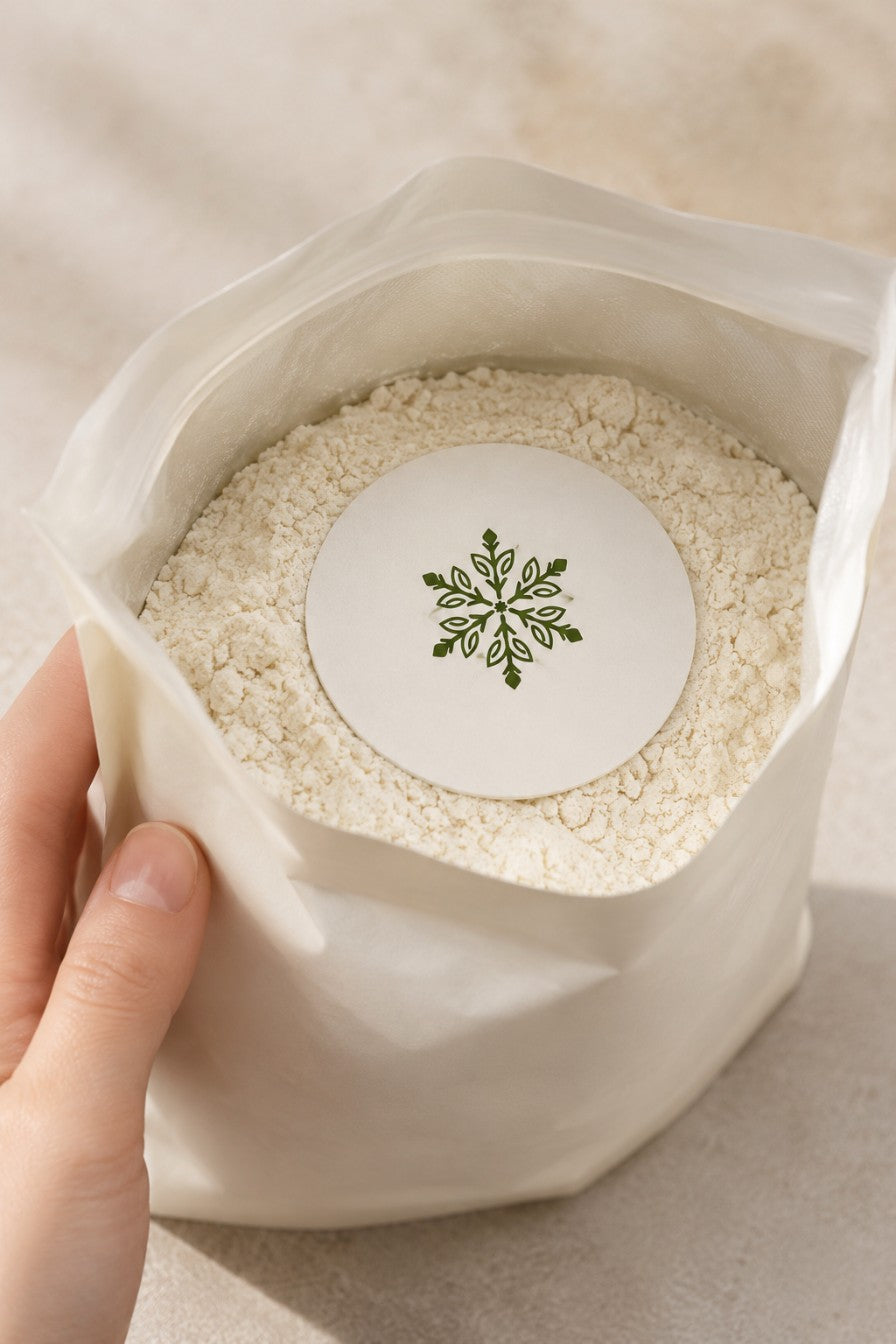
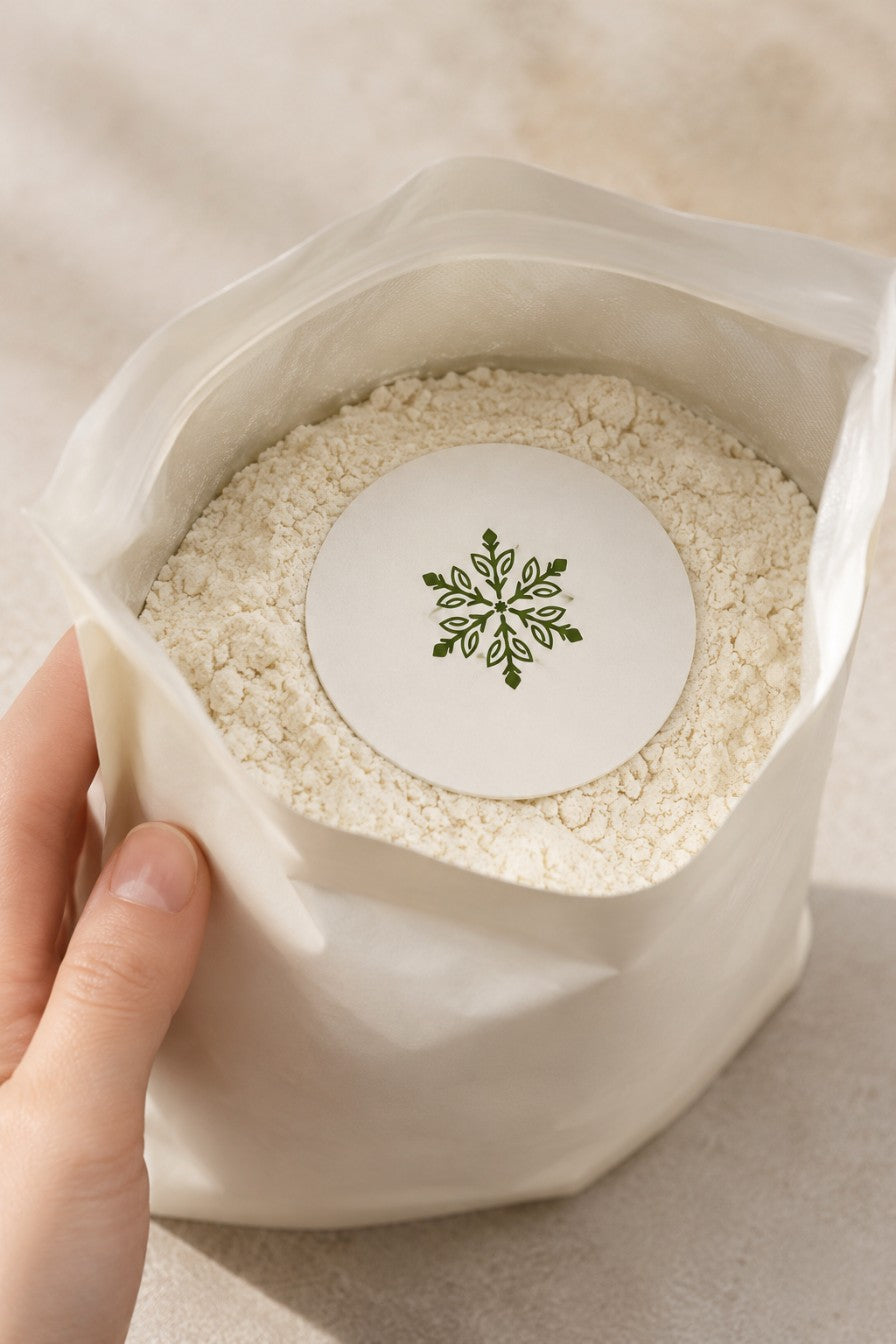
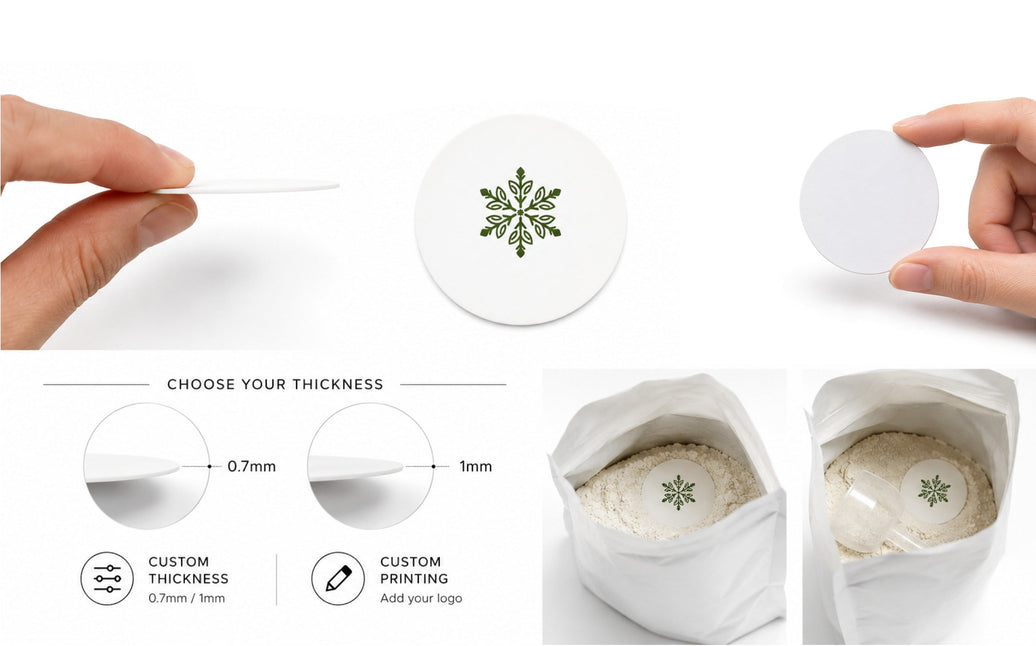
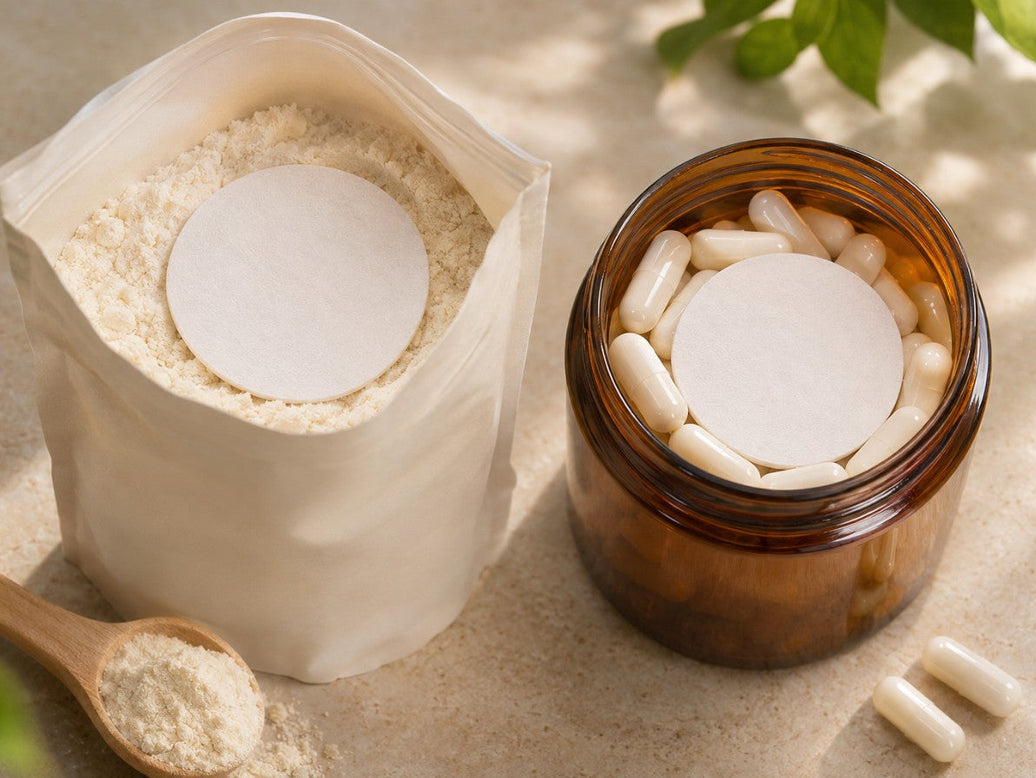
| Format | A Fiber Desiccant Card laid flat against the pouch wall, sized to that mass |
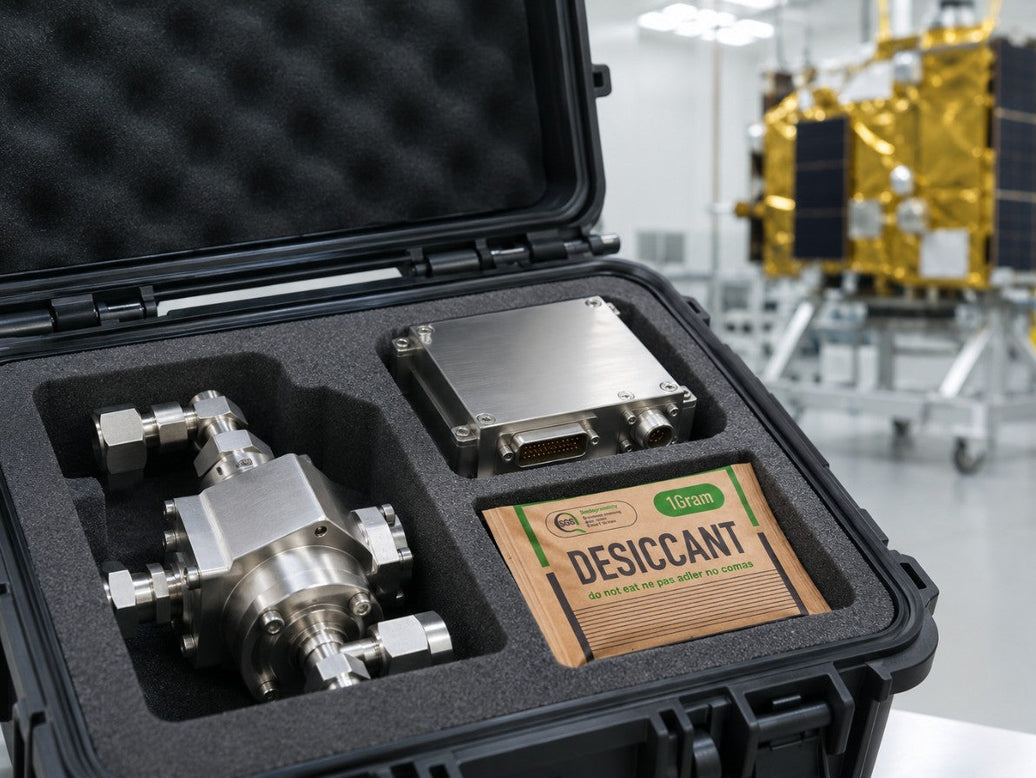
Example 2: electronics module in a barrier bag
| Step | Value |
|---|---|
| Target humidity | 20% RH or below |
| Water load over the storage time (example) | 0.15 g |
| Capacity at 20% RH | more than 0.10 g per g |
| Mass before margin | 0.15 ÷ 0.10 = about 1.5 g |
| With a 25% margin | about 1.9 g |
| Format | A thin card lying flat next to the module |
A very dry target needs more desiccant for the same water load, which is why target humidity is one of the most important inputs. In this dry range, across 20 to 40% RH on our measured 25 °C curve, plant-fiber desiccant holds about twice as much as silica gel.

Example 3: a mixed gift box
| Step | Value |
|---|---|
| Target humidity | 50% RH or below, set by the most sensitive item |
| Water load, including paper fillers and inserts (example) | 0.60 g |
| Capacity at 50% RH | more than 0.35 g per g |
| Mass before margin | 0.60 ÷ 0.35 = about 1.71 g |
| With a 25% margin | about 2.14 g |
| Format | Two printed cards, one in the lid and one with the most sensitive item |
Splitting the mass between two places suits long or crowded packs. See desiccant cards for gift sets.
Example 4: an export carton of garments
| Step | Value |
|---|---|
| Target humidity | 50% RH or below |
| Water load over the voyage and storage (example) | 8 g |
| Capacity at 50% RH | more than 0.35 g per g |
| Mass before margin | 8 ÷ 0.35 = about 22.9 g |
| With a 25% margin | about 28.6 g |
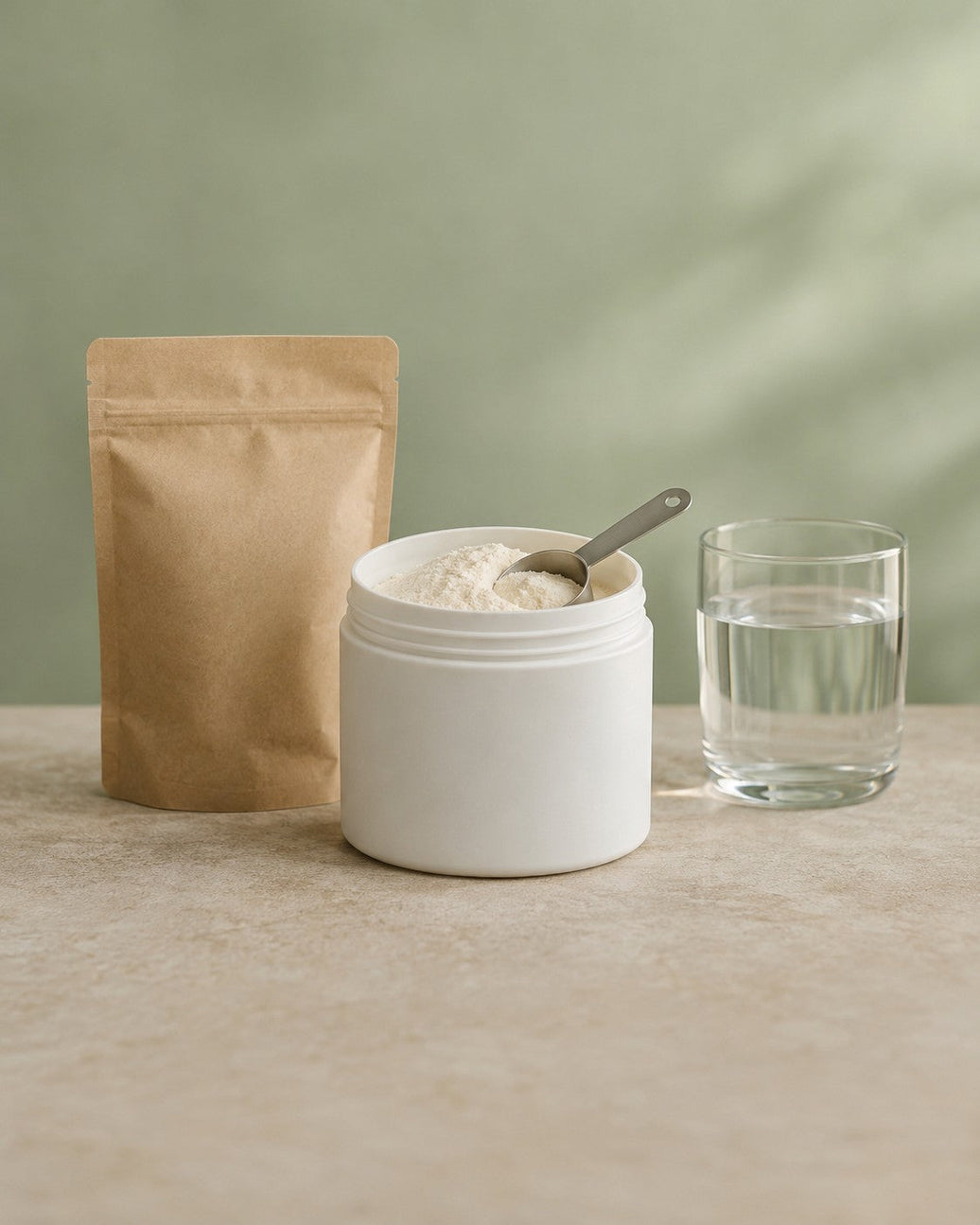
| Format | A bagged fiber sachet sized to that mass (bagged sachets run from 1 to 1,000 g) |

What changes the answer
- Target humidity: the lower it is, the more desiccant you need.
- Pack barrier: a better barrier lets in less water over the same time.
- Openings: every opening lets room air in.
- Storage time and route: longer and warmer means more water.
- The product itself: some products release or absorb moisture.
Why not size from a silica gel packet? Because capacity changes with humidity. At 1.0 mm thickness, Fiber Desiccant Card absorbs three times as much moisture as silica gel under the same test conditions (25 °C / 90% RH), while across 20 to 40% RH the advantage is about two to one on our measured 25 °C curve. A gram-for-gram swap gives you the wrong mass at either end.
Confirm in your own pack
Every calculation is a starting point. Seal packs with the sized desiccant, store them in your worst realistic conditions and check the product. For handling during the trial, see how to use fiber desiccant.
Frequently asked questions
What capacity figure should I use for sizing?
The figure for the humidity your product must stay under: more than 0.10, 0.35 or 0.70 g of water per gram at 20, 50 or 90% RH (25 °C).
How big should the margin be?
Agree it with your QA team. It covers openings, warm routes and line handling time.
When should I split the desiccant?
In long, crowded or awkward packs, two smaller pieces in different spots can work better than one.
Can I use the 90% RH figure?
Only if your product can tolerate that humidity. Most products are sized at 20 or 50% RH.
Will you run the numbers for my pack?
Yes. Send your pack and product details using the form below.
Send us your numbers
Share your pack, product and target humidity. We will run the sizing with you, recommend a format and send samples to confirm it.
Prefer email? info@atmosiscience.com
Figures from ATMOSIScience fiber desiccant product documentation and usage instructions and the Fiber Desiccant Card product sheet.