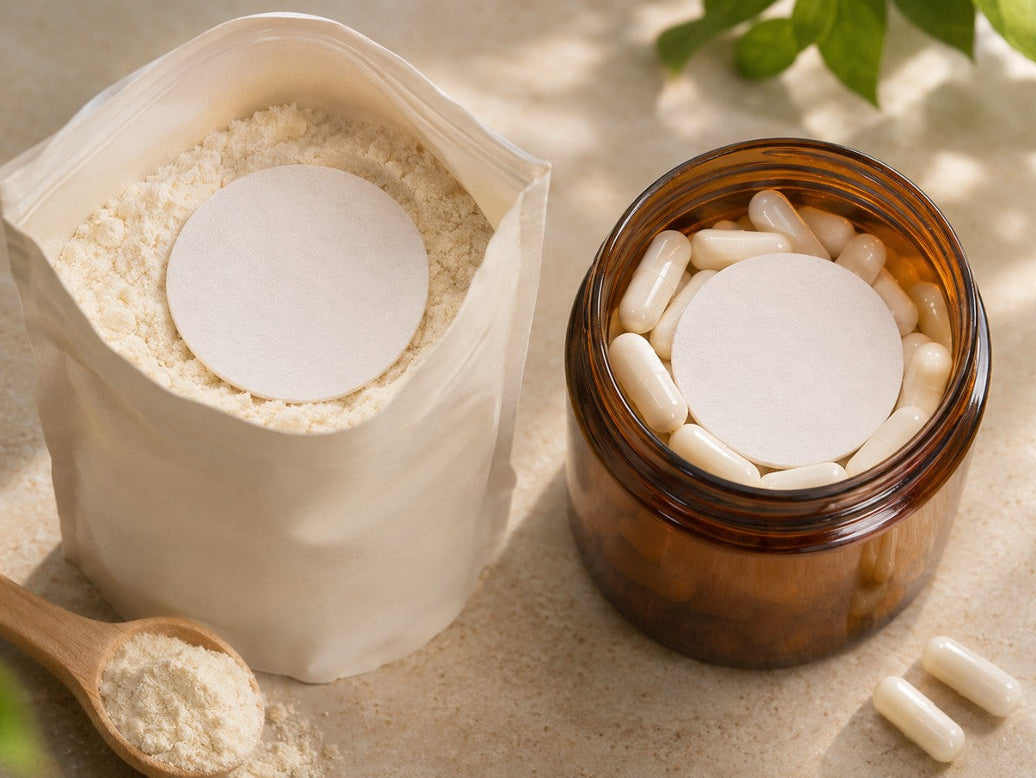
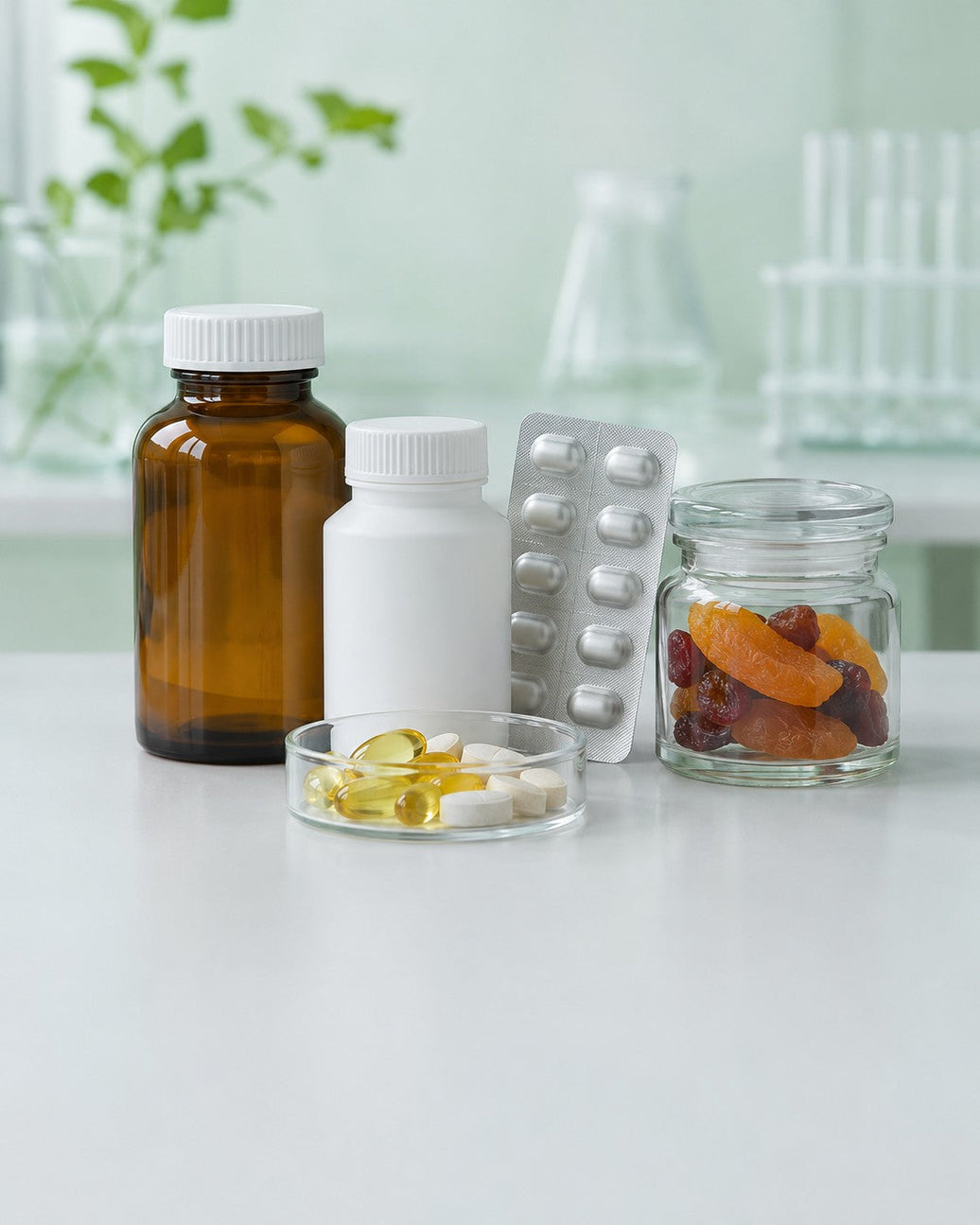
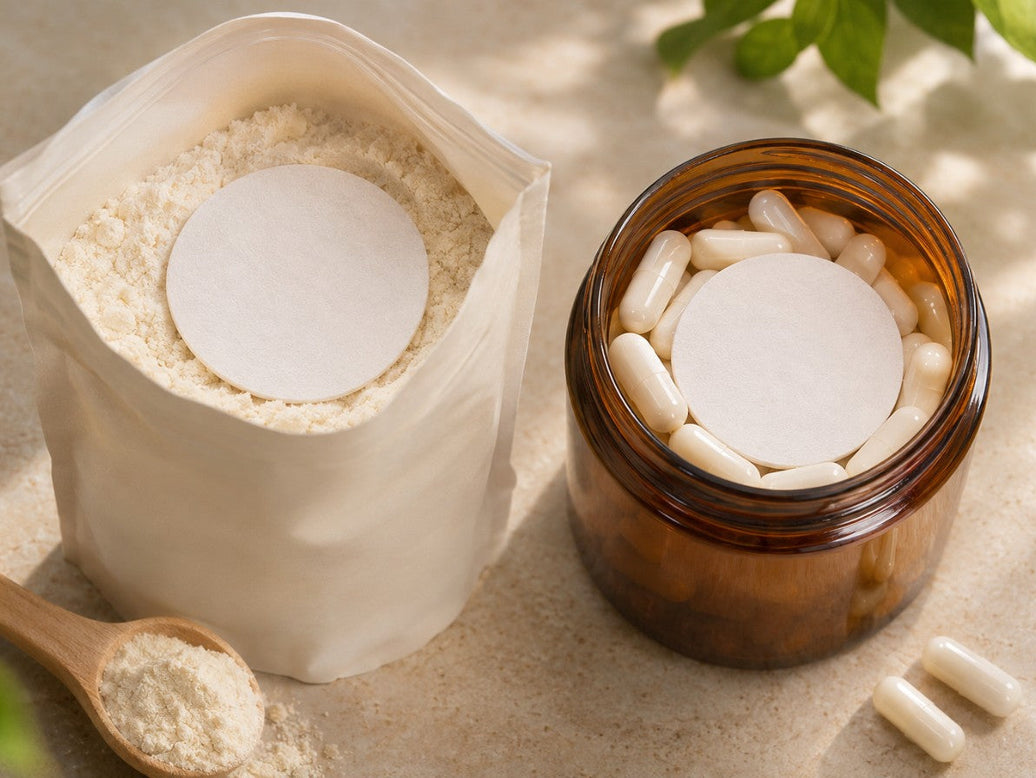
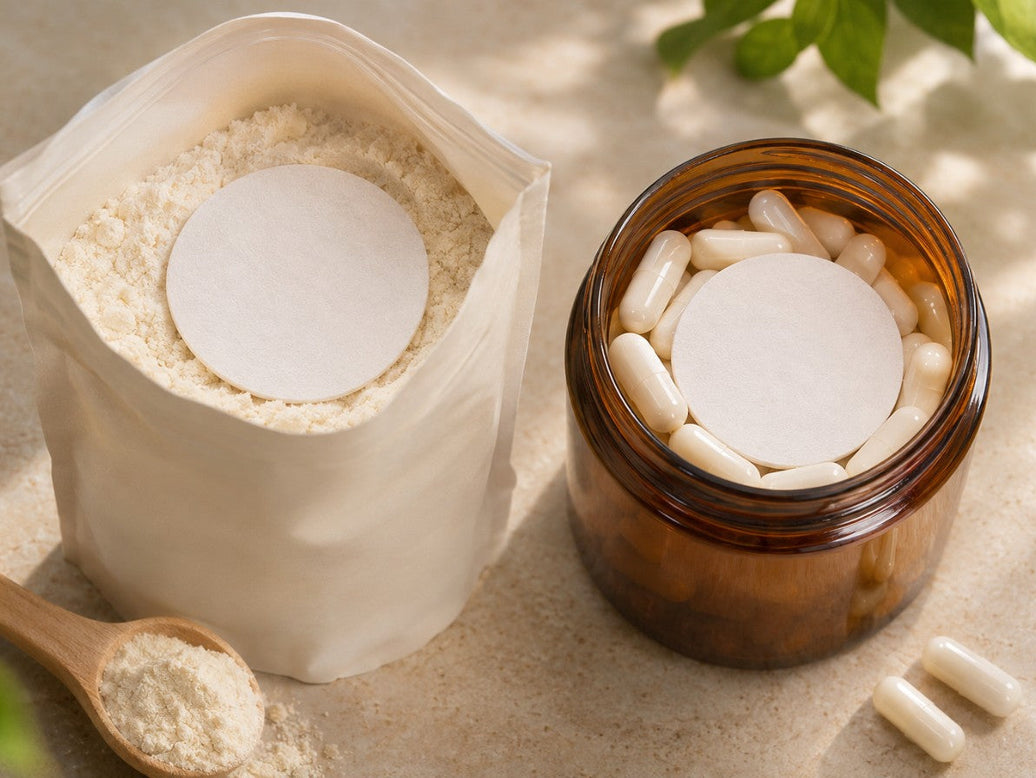
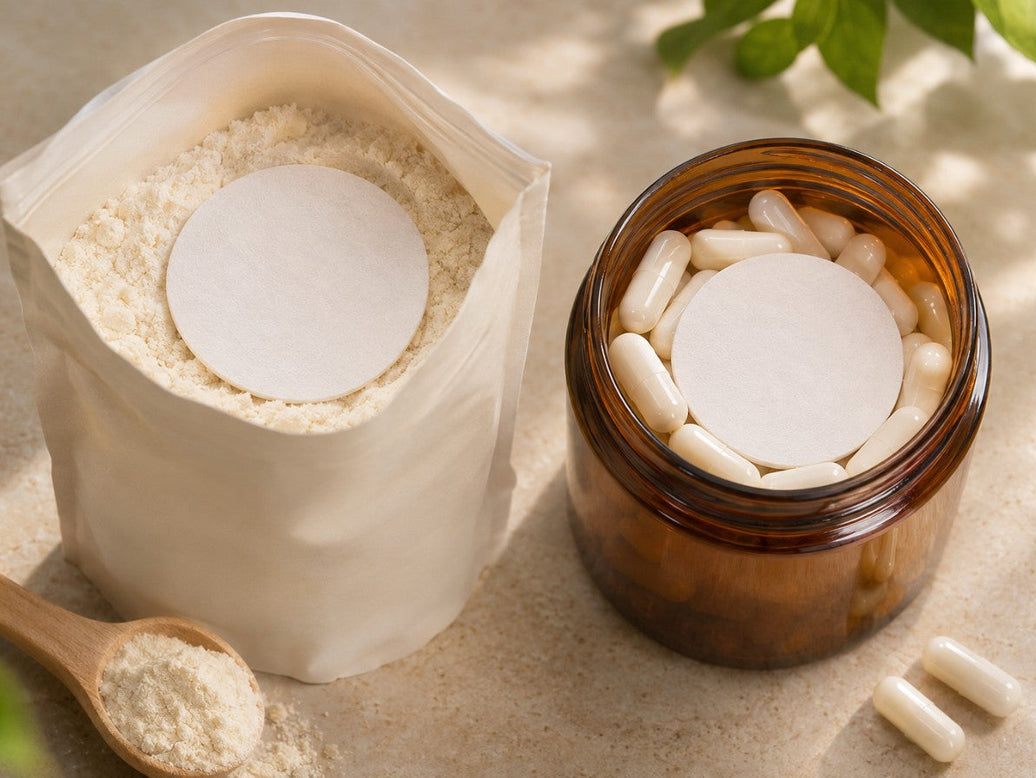
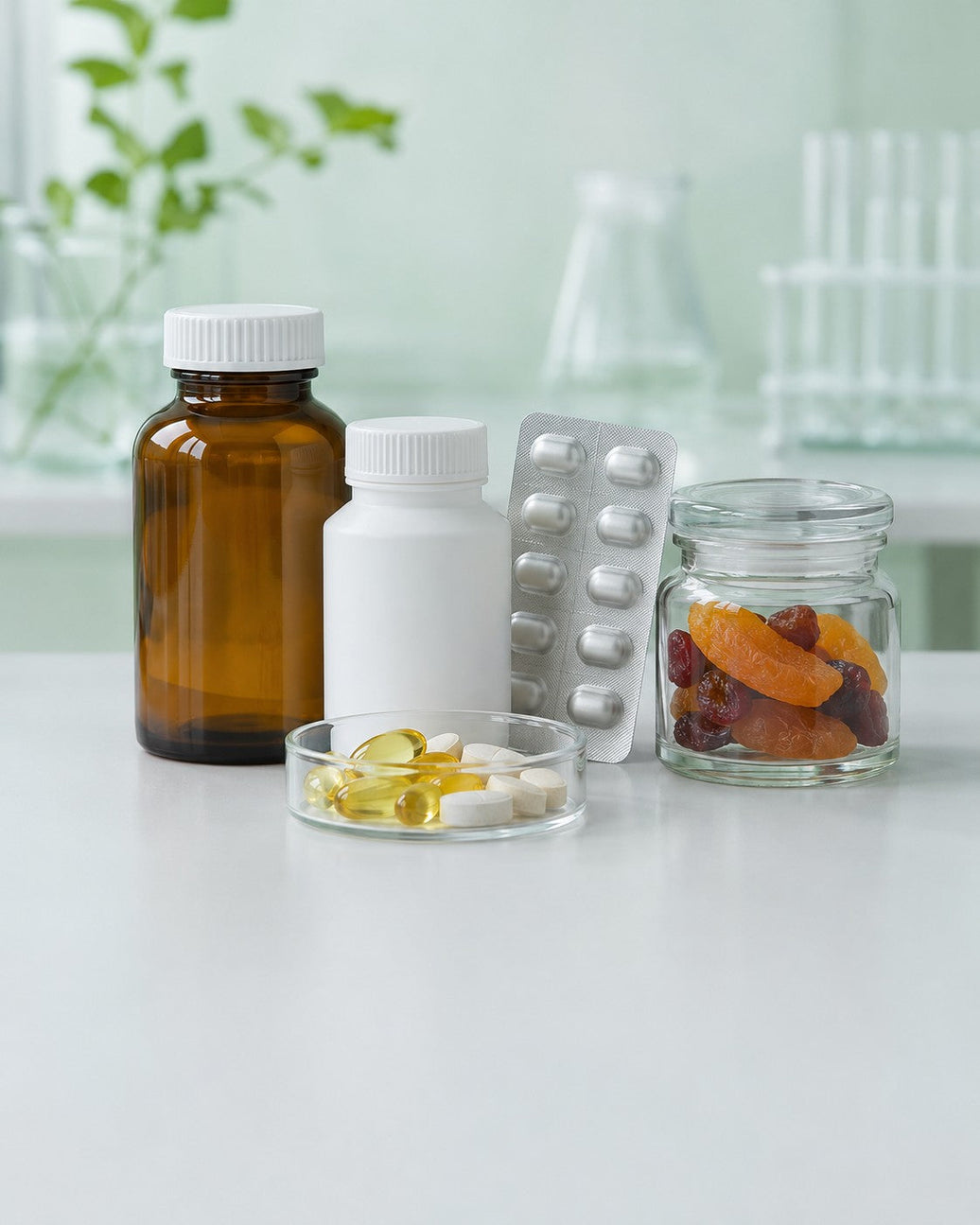
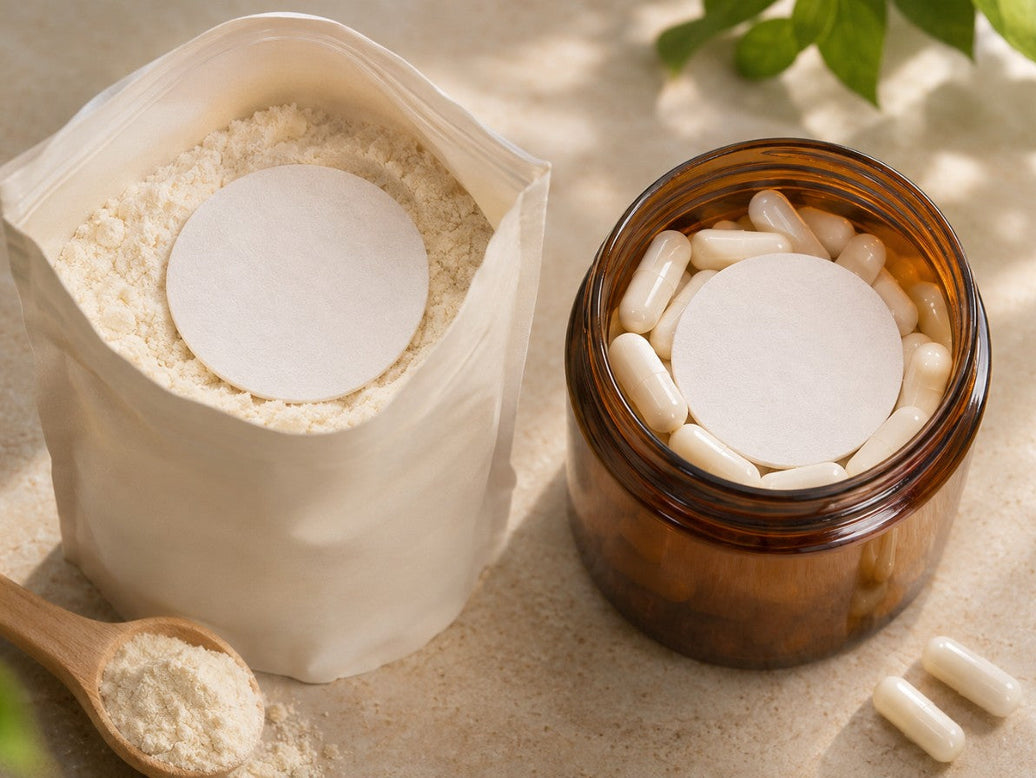
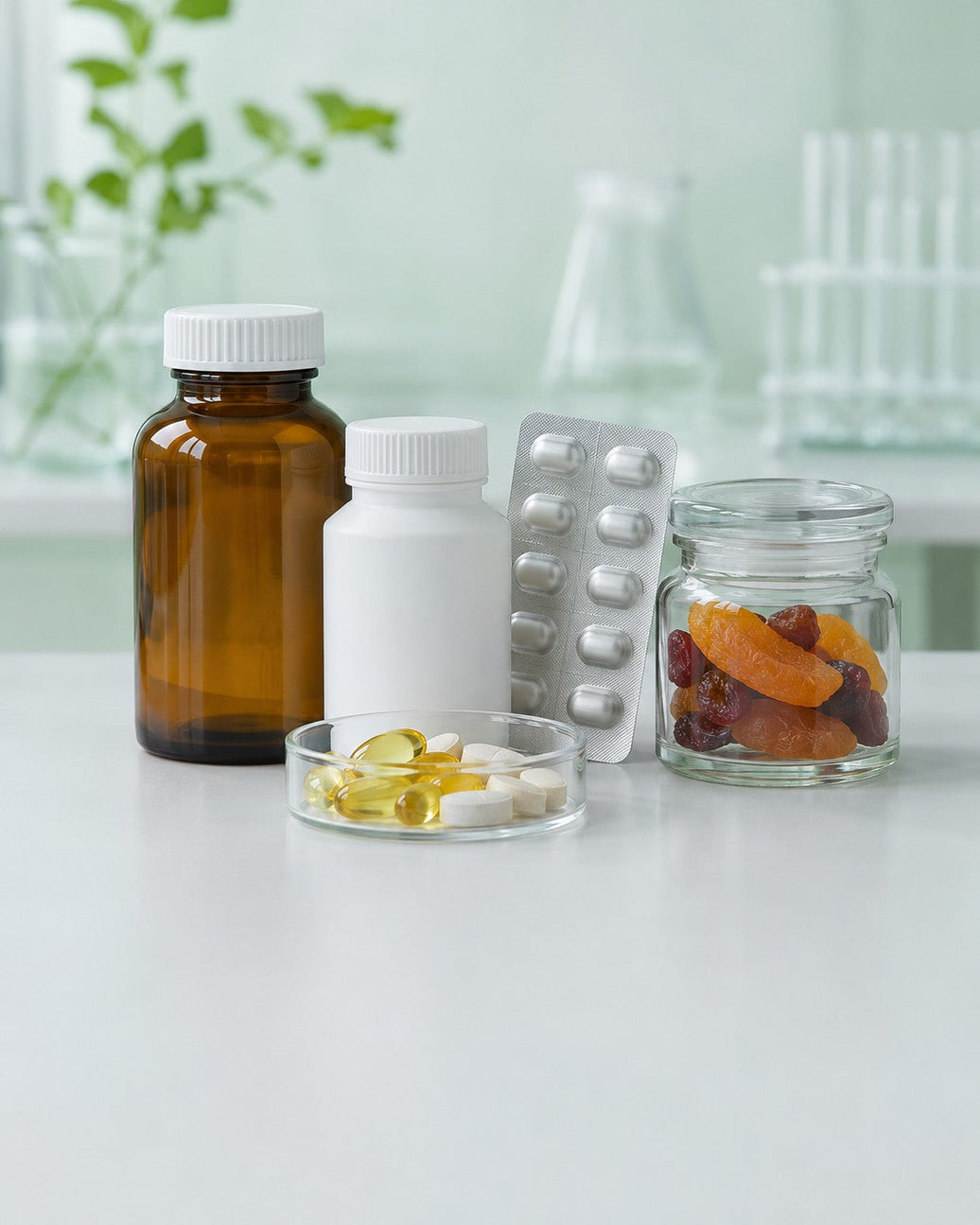
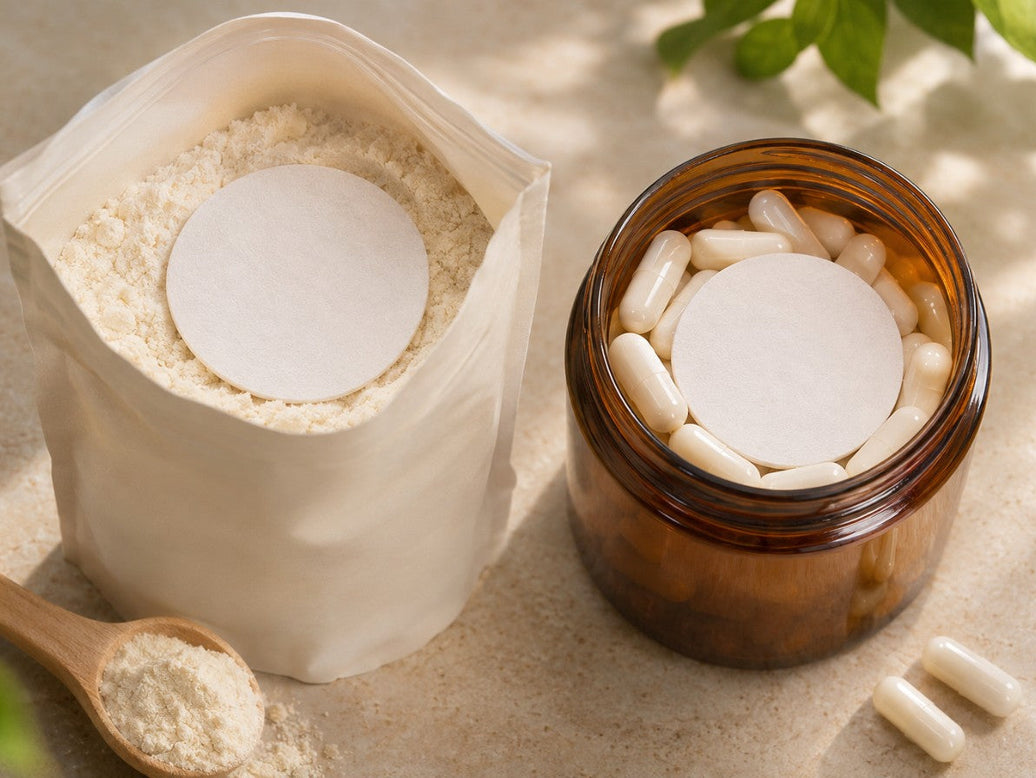
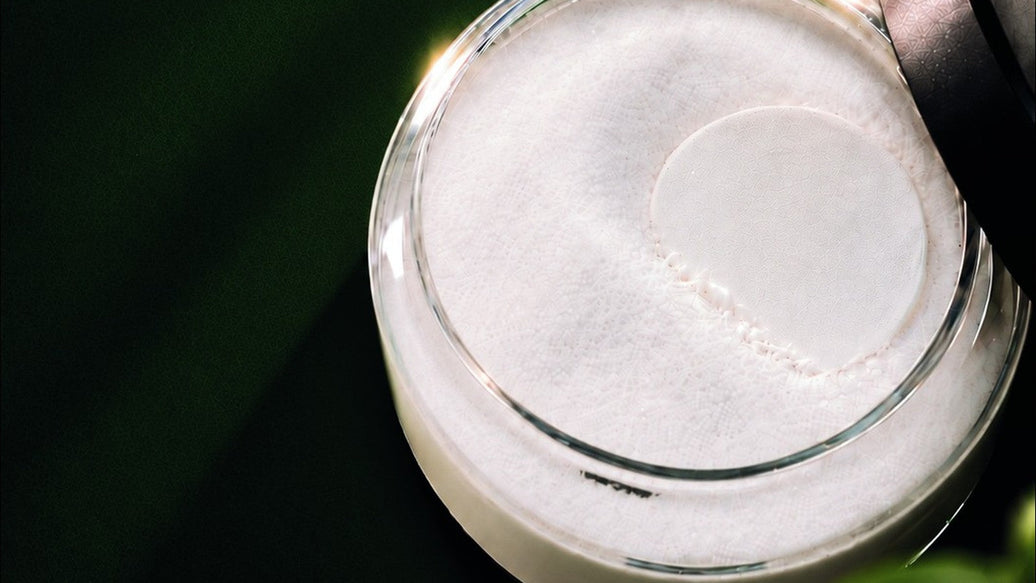
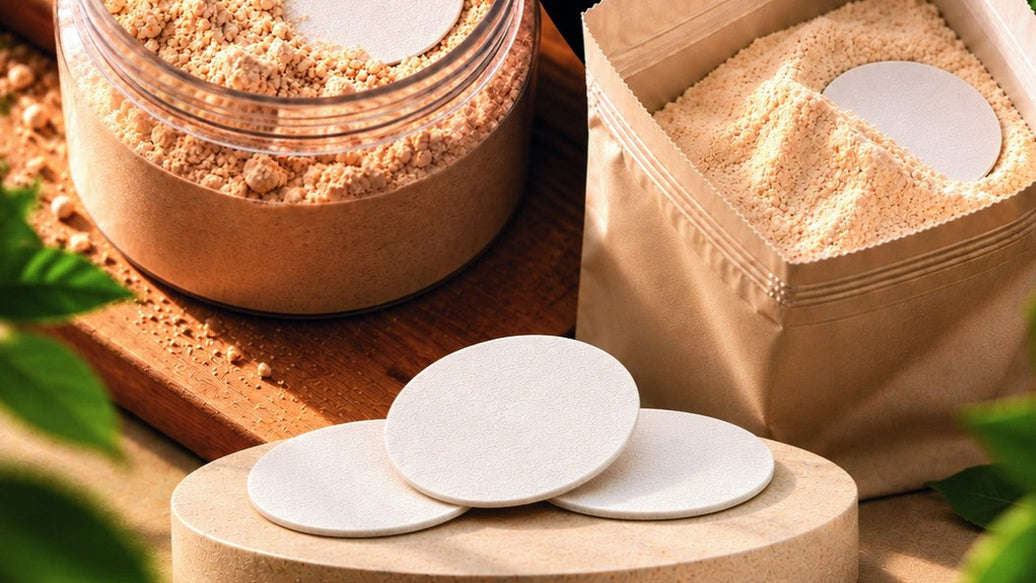
Probiotic capsules are usually sold in bottles of 30 to 90. The bottle and its induction seal handle the shelf; the desiccant handles everything that gets in after the seal comes off, plus anything that crept in before.
Format options
| Format | Pros | Cons |
|---|---|---|
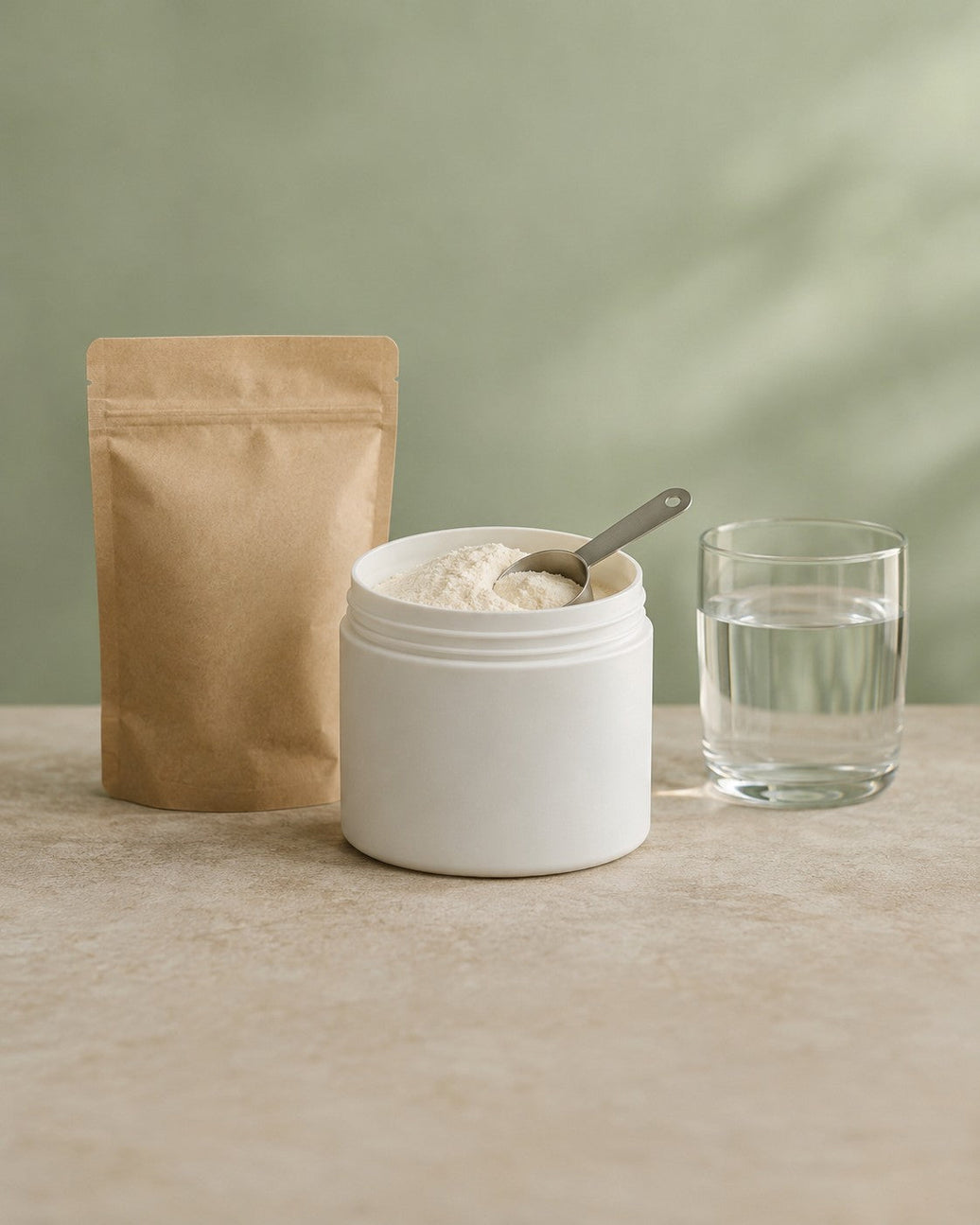
| Canister | Familiar, rigid | Plastic housing, rattles, mistaken for a pill |
| Sachet | Cheap, flexible | Can tear, mixes with capsules |
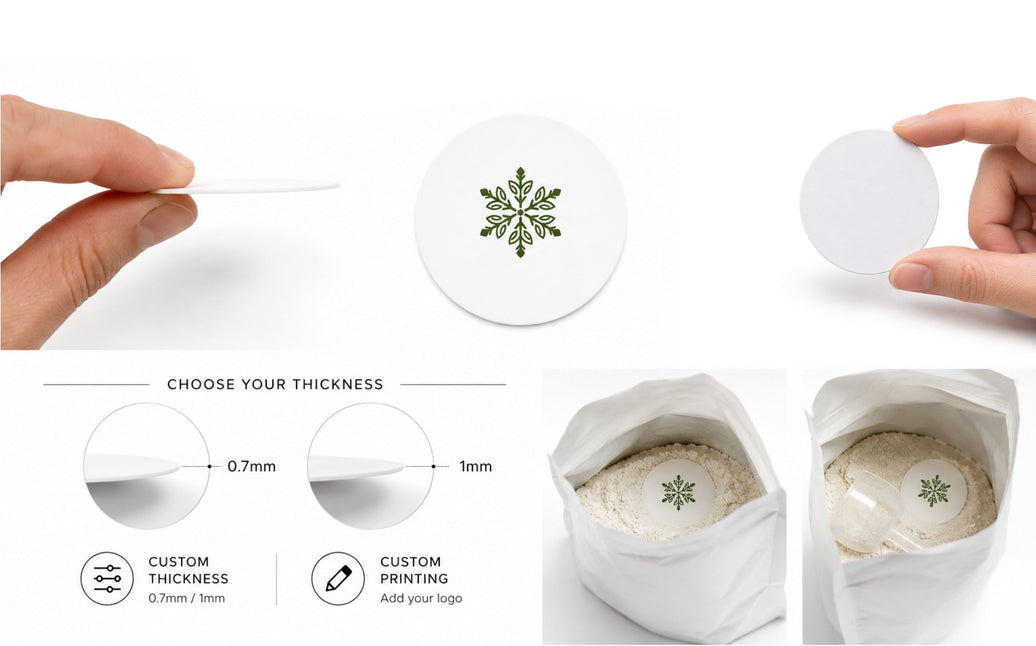
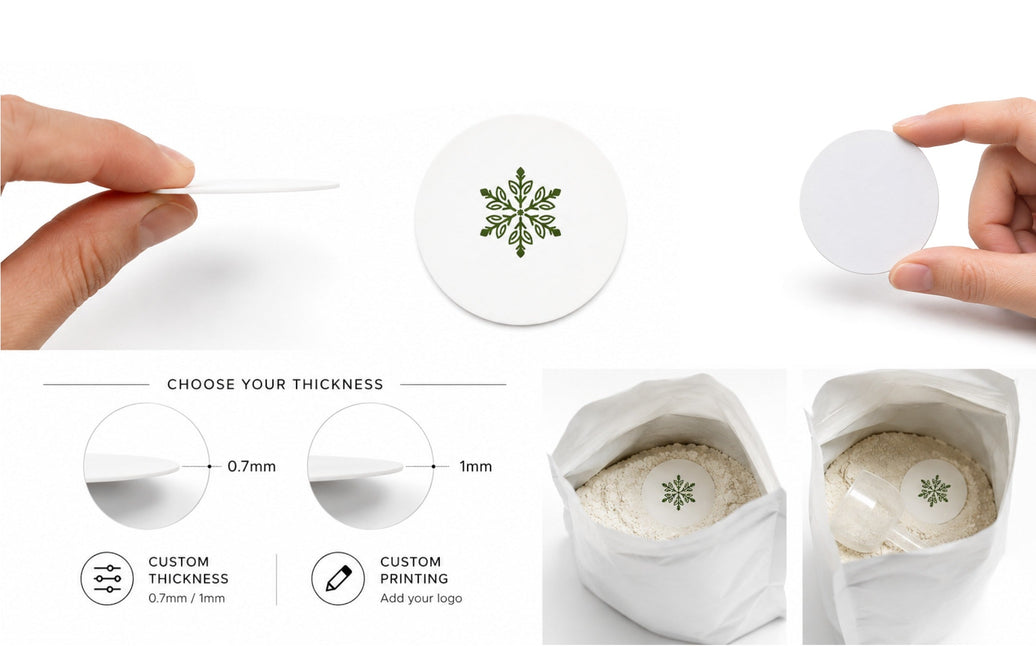
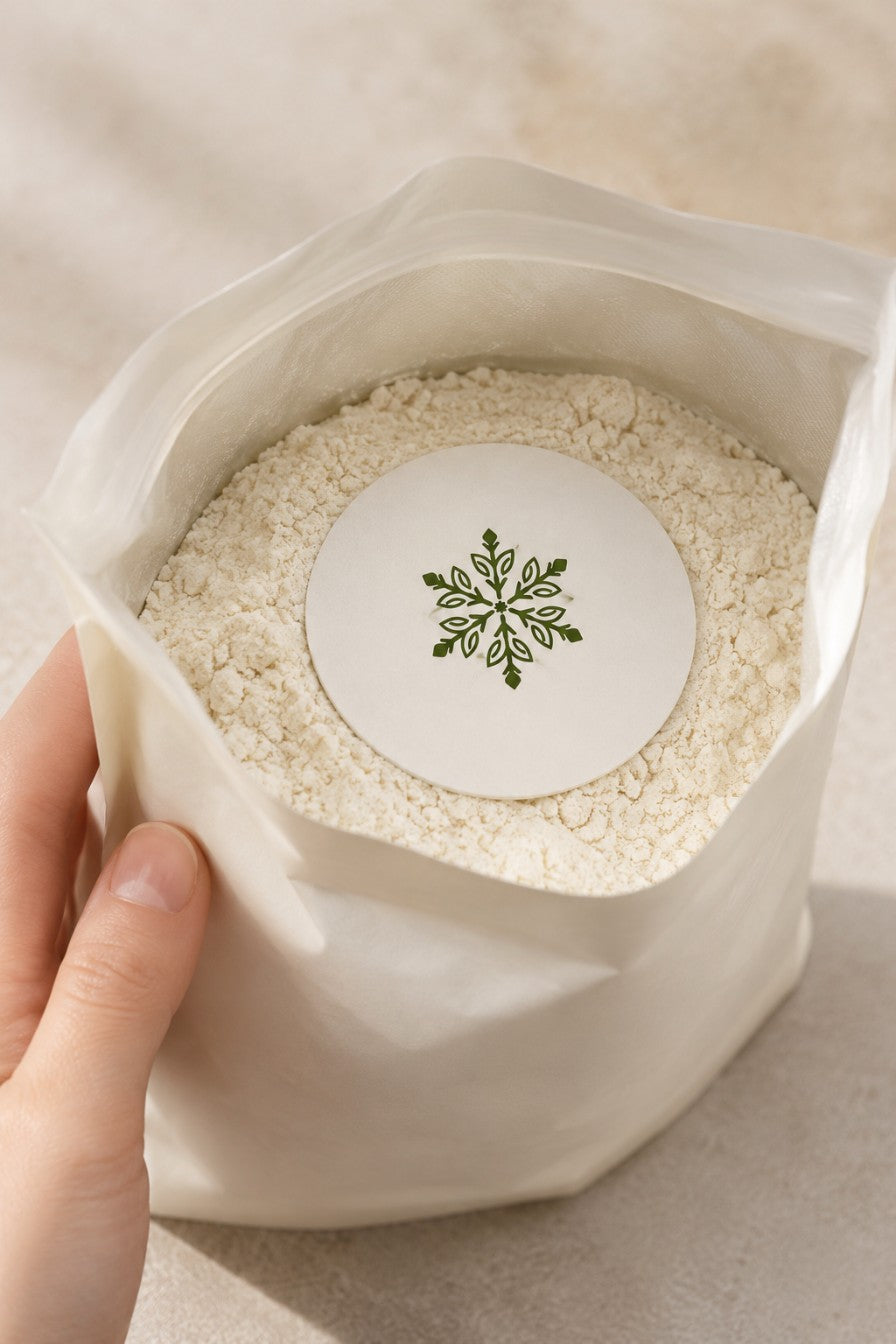
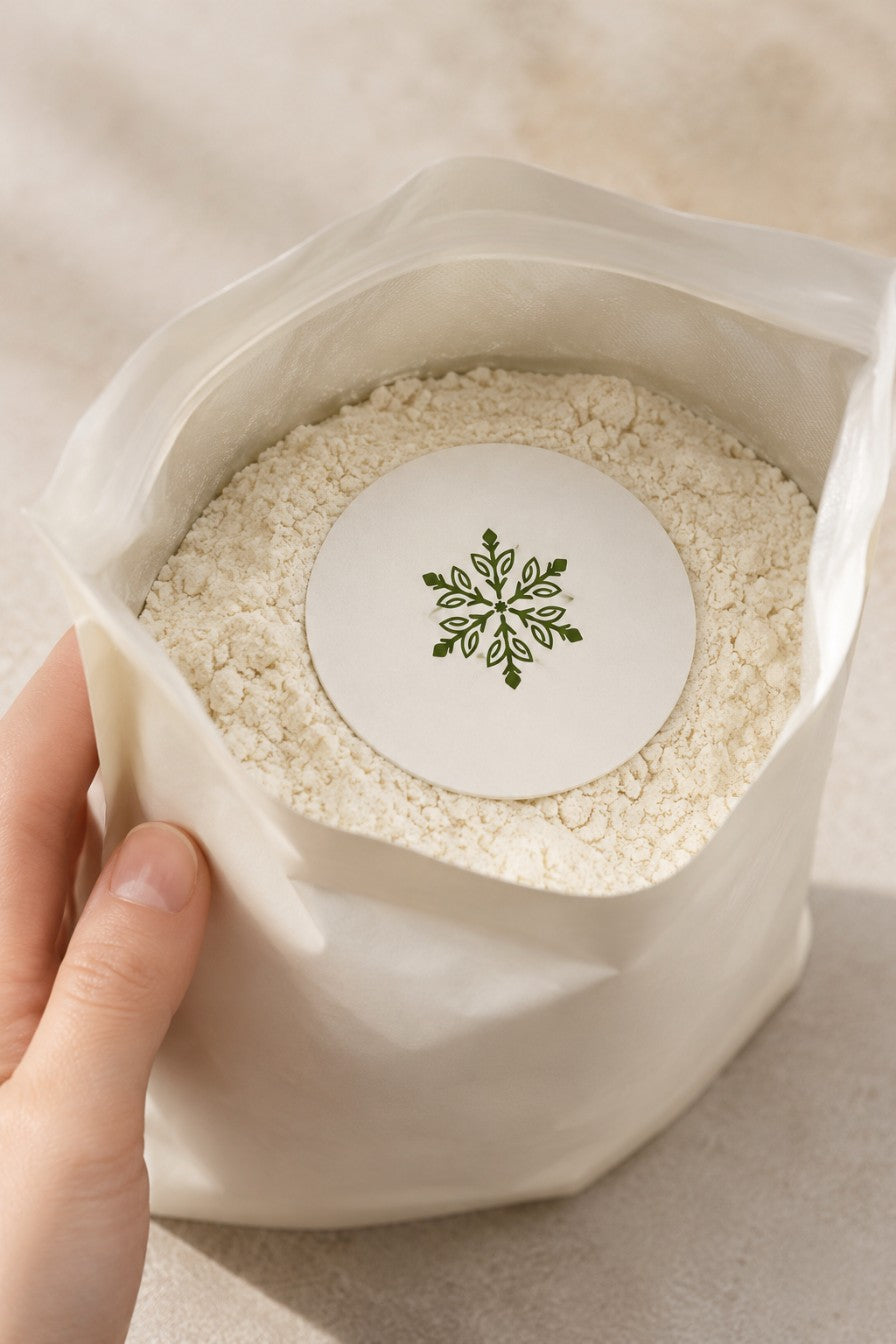
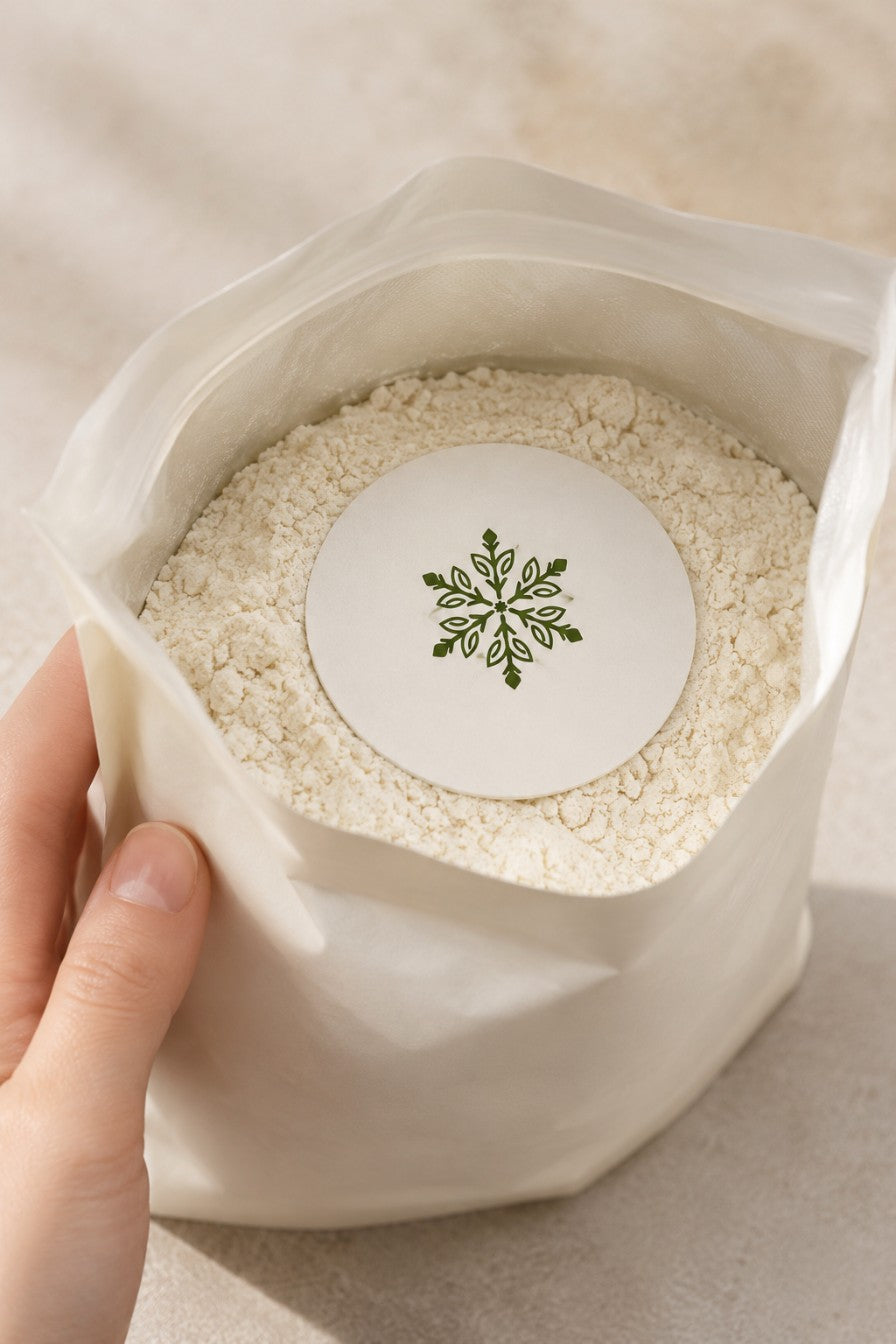
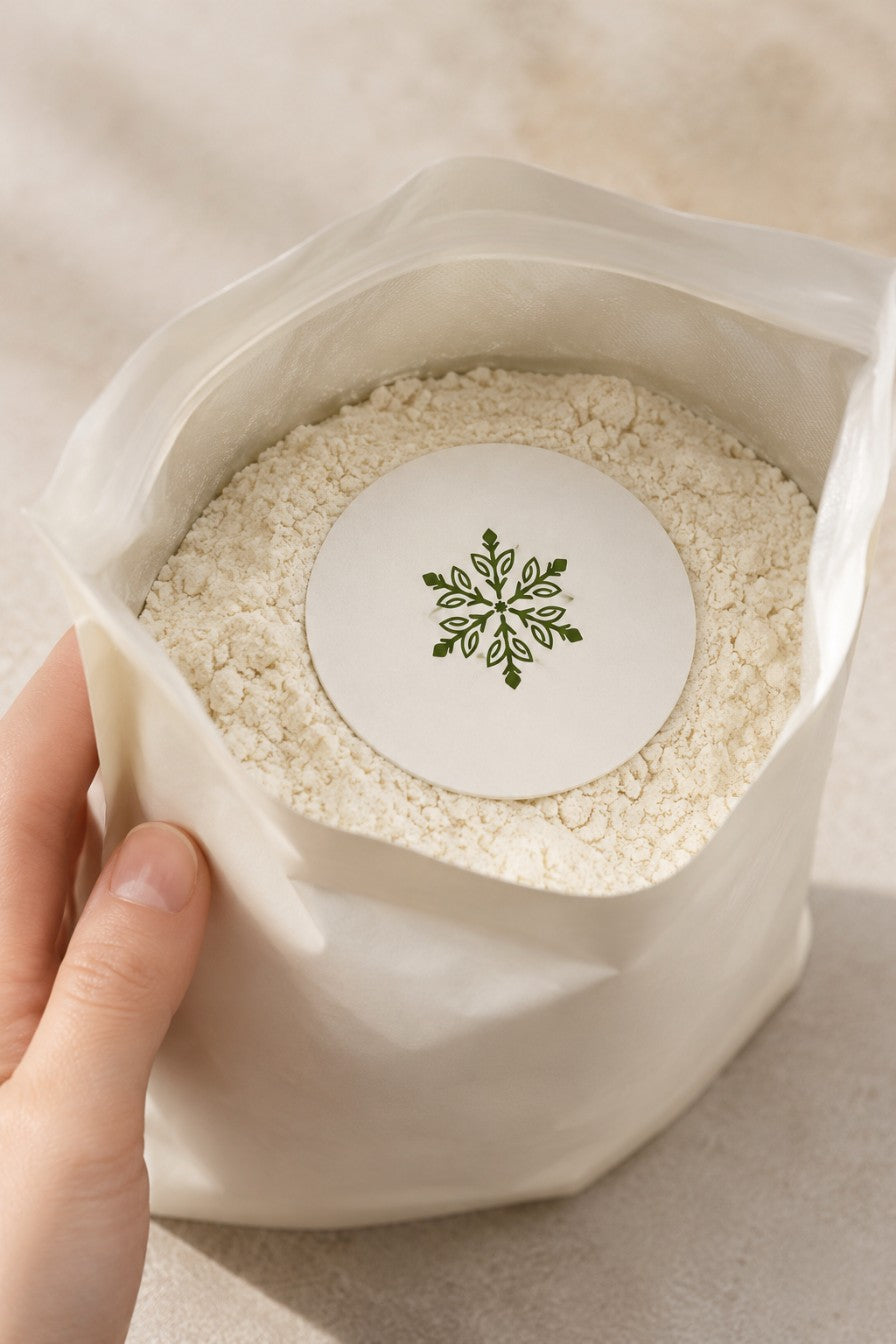
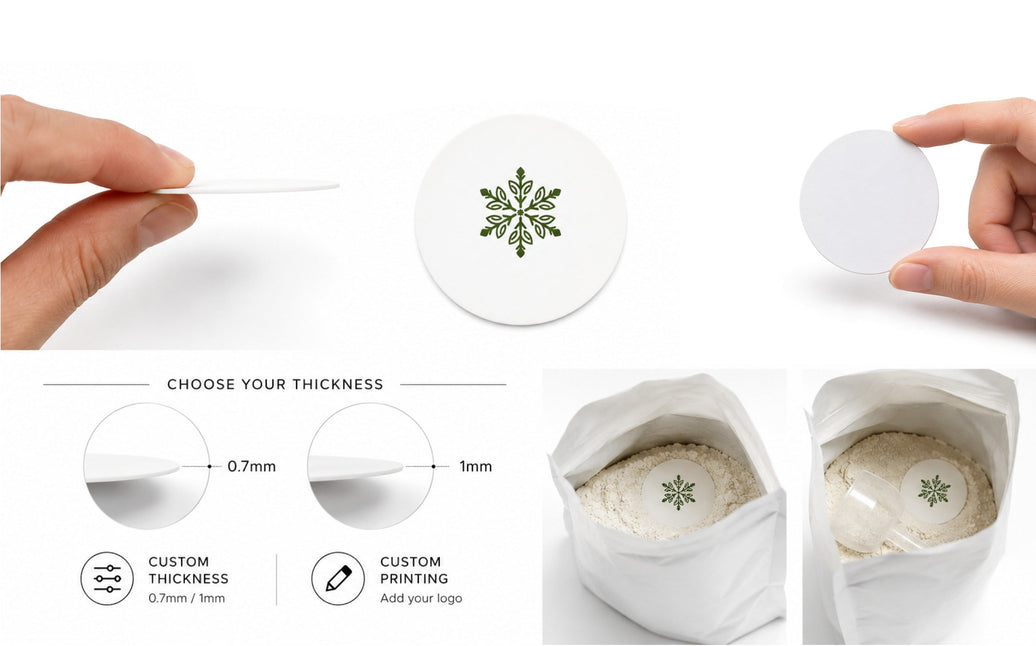
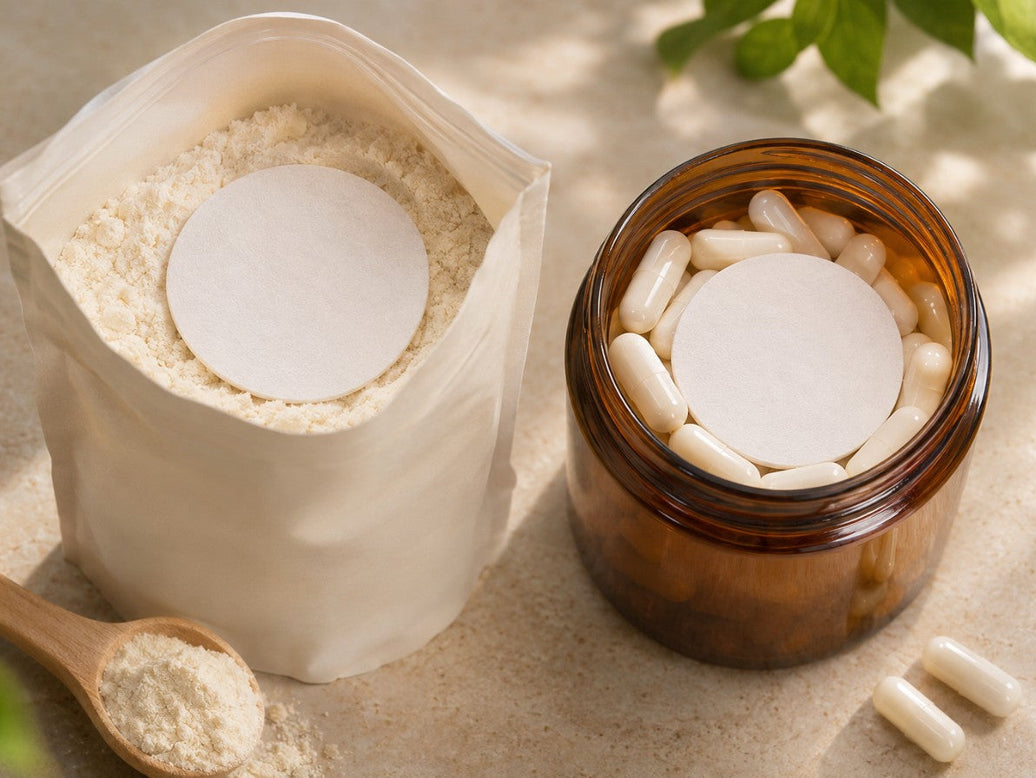
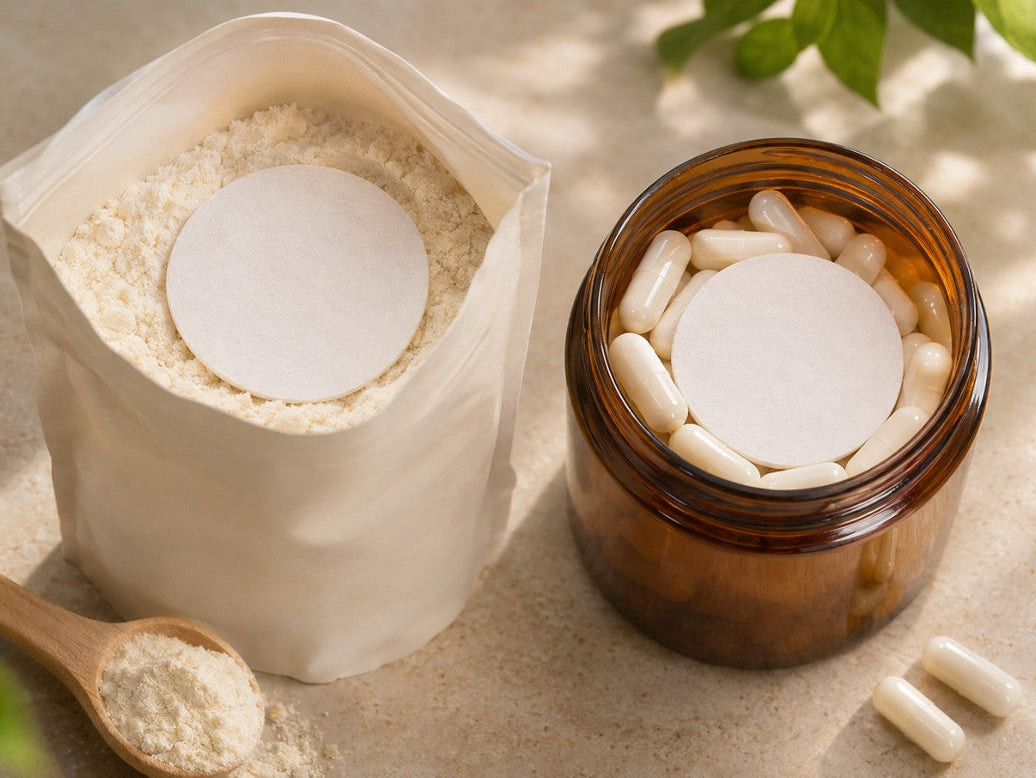
| Flat card under the cap | Stays out of the way, printable | Needs a bottle shoulder or cap fit |
| Desiccant cap or liner | Built-in | Fixed capacity, bottle-specific |
Sizing starting points
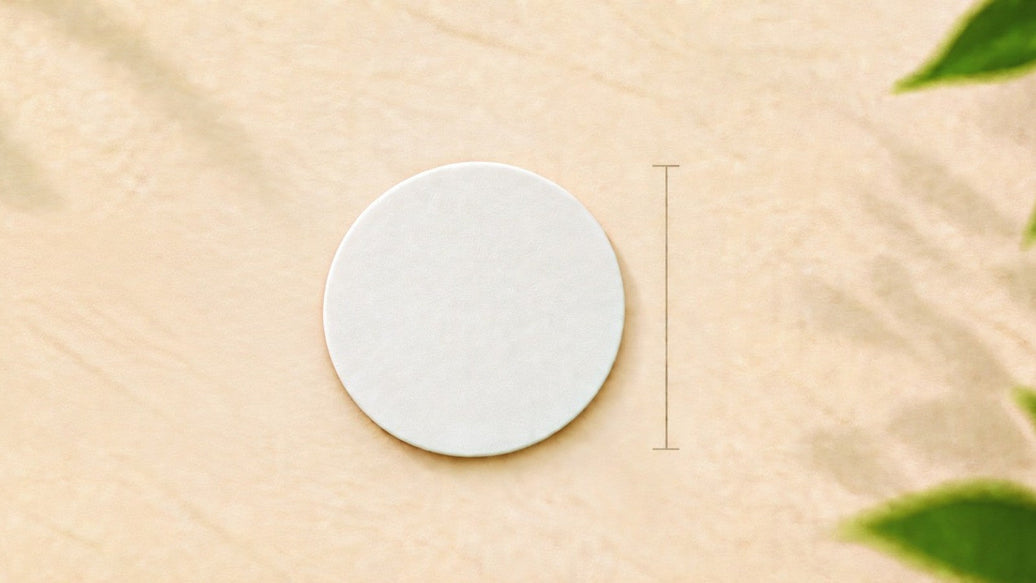
From our Desimat card table: FF-3 (25 × 12 mm) is about 0.5 g silica equivalent, FF-6 (30 × 20 mm) about 1 g, FF-15 (60 × 25 mm) about 2.5 g. Bottle size, headspace, the bottle wall's barrier and days of use decide which one. Confirm with a test. See silica gel equivalency.
Placement
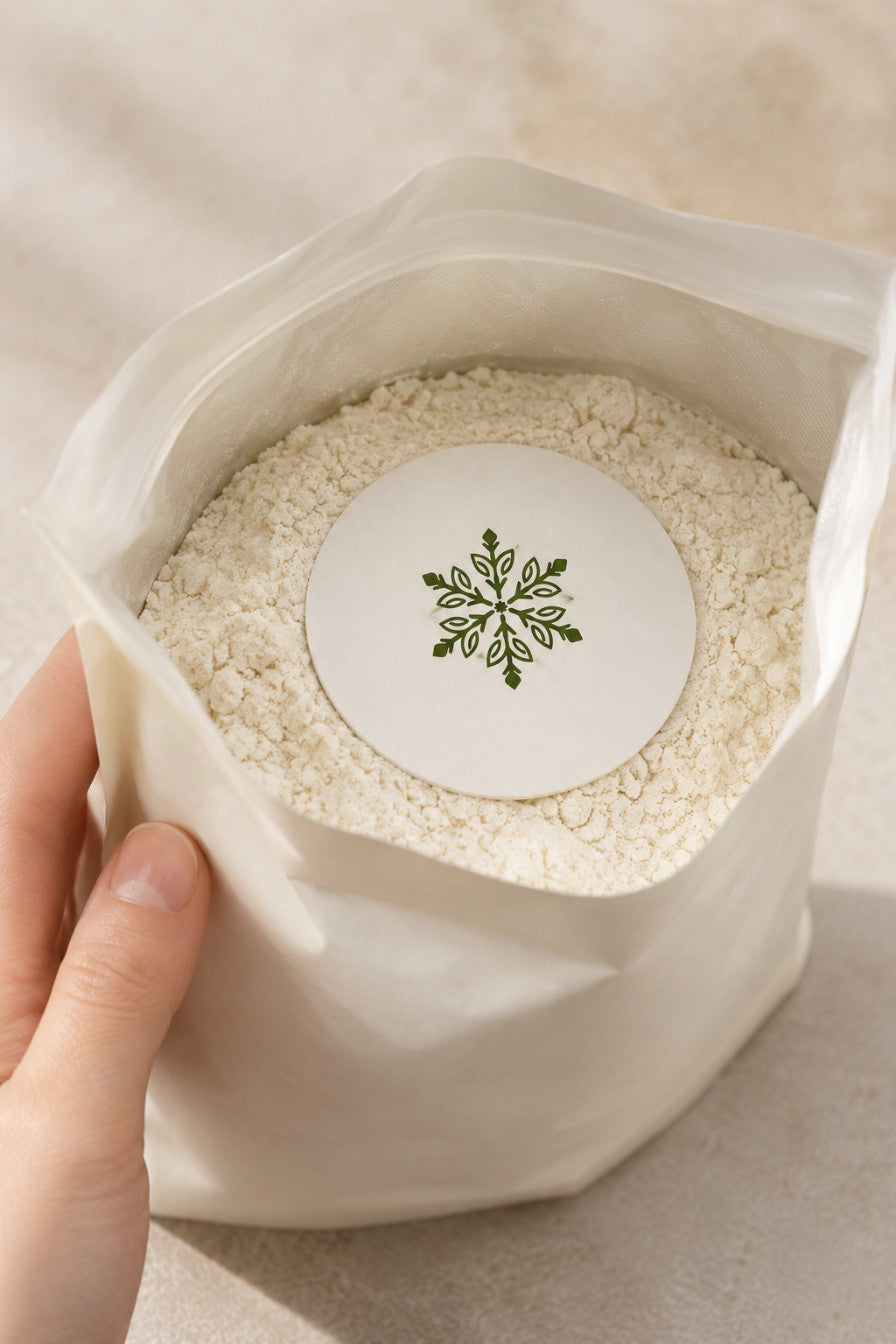
- Under the cap or on top of the fill, not mixed in
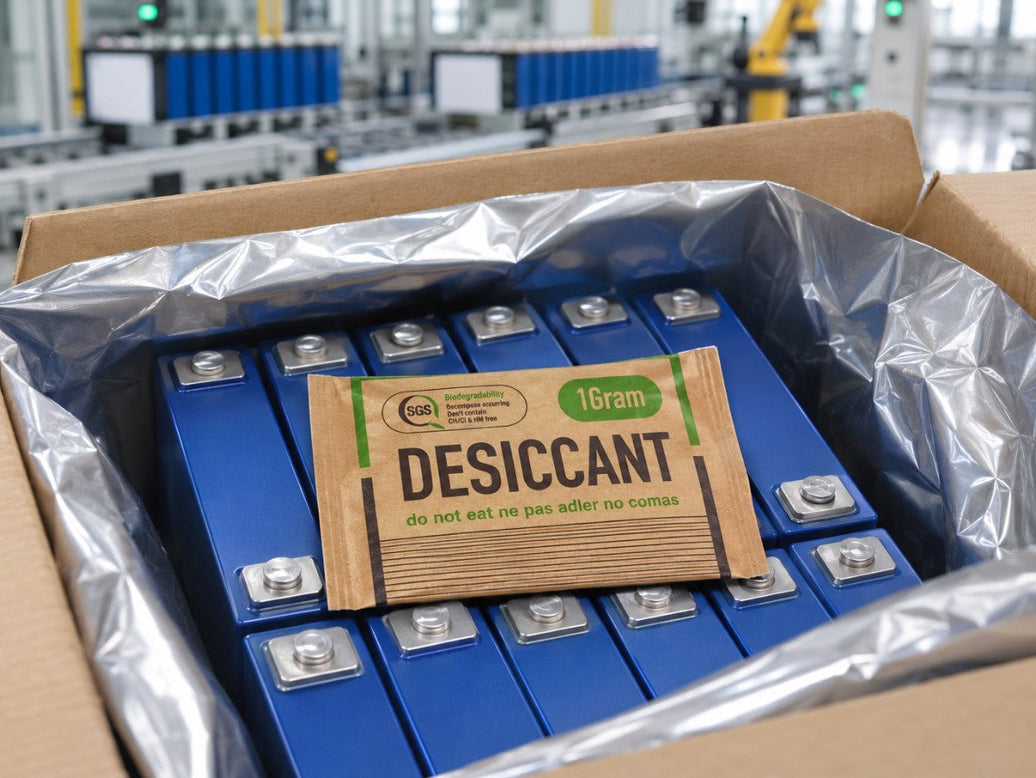
- Visible "do not eat" print
- A card shape that can't be mistaken for a capsule
Sizing for your bottle?
Send bottle size and count. A real person will reply with a card size and samples.
Or email info@atmosiscience.com
FAQ
Should I keep the desiccant in my probiotic bottle?
Yes, keep it in until the bottle is finished.
How much desiccant for a 60-count bottle?
It depends on bottle size and barrier; an FF-6 or FF-15 card is a typical starting range to test.
Can a card replace a canister?
Often, if the bottle has room under the cap.
Keep reading: Cotton vs desiccant · Card sizing by bottle count · HDPE bottles and induction seals