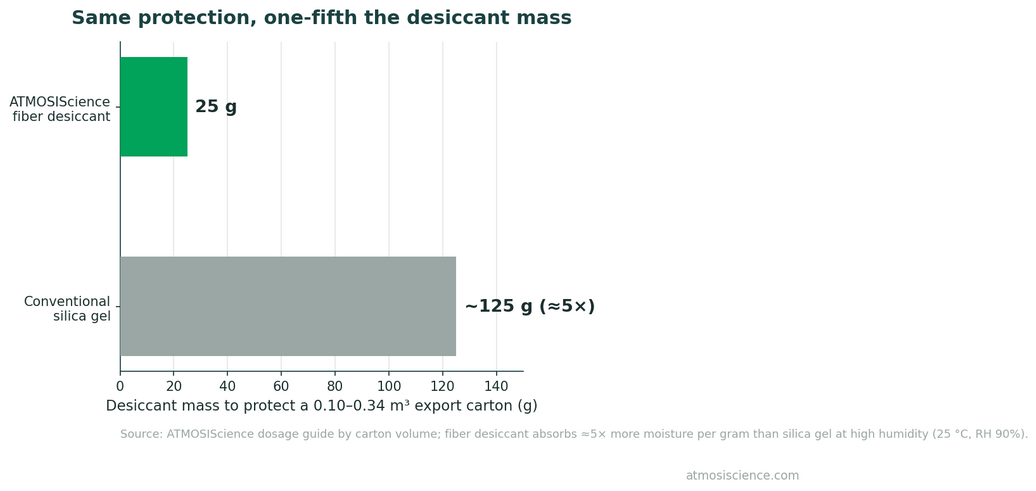
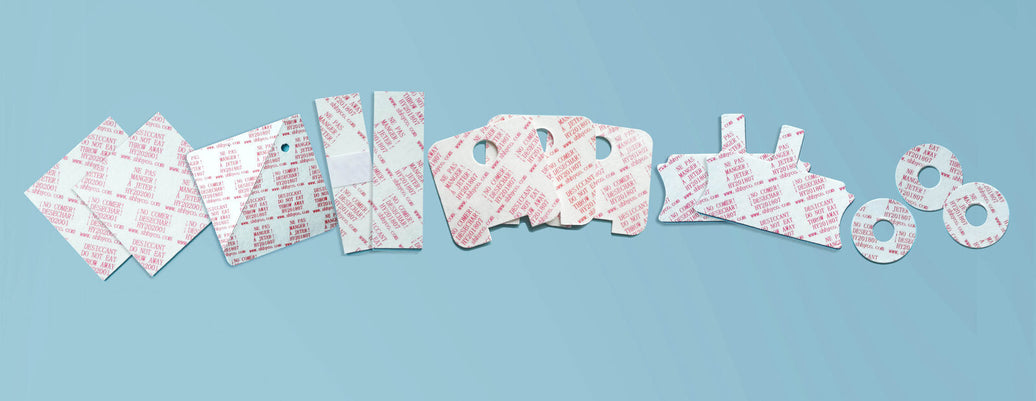
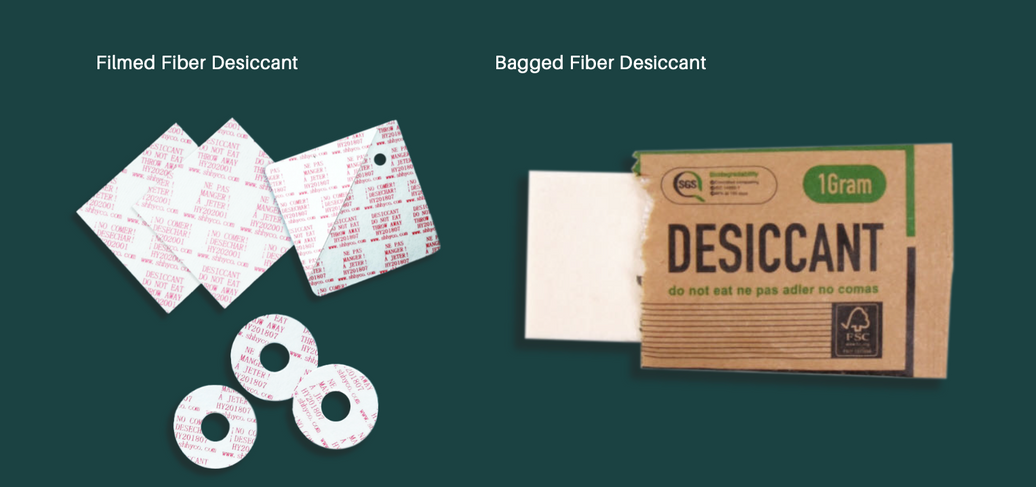
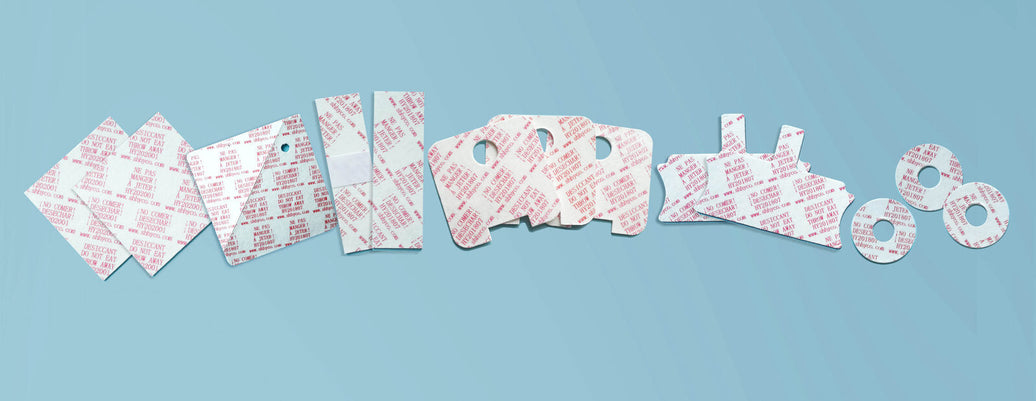
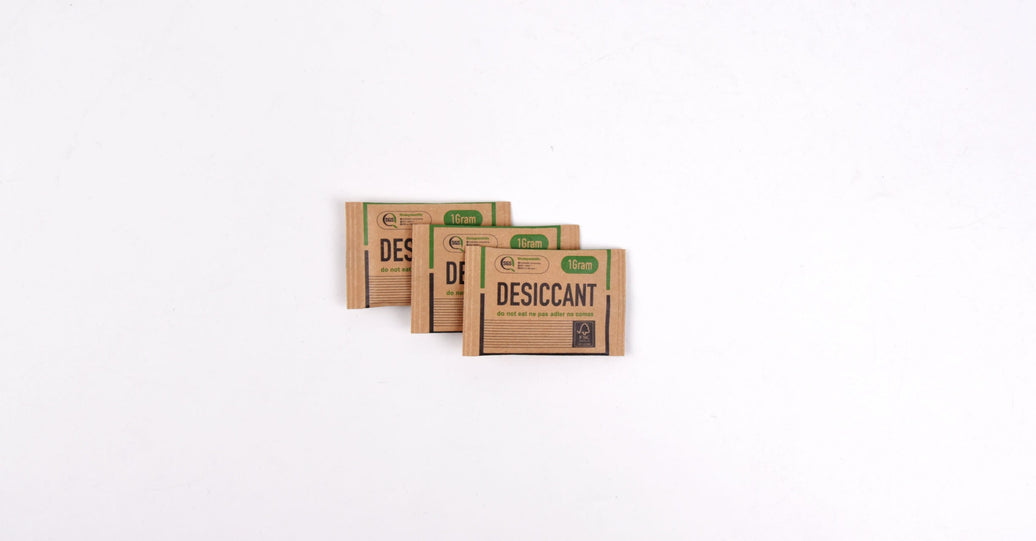
Quick answer: Put the desiccant inside the bottle, below the induction seal — never between the liner and the land where it would sit in the seal path. A die-cut film card at 0.5–1.0 mm can sit flat against the closure interior or the bottle wall without consuming fill volume. Correctly placed, it has no effect on liner adhesion or application torque, because the seal interface is untouched. If the bottle is only exposed during transit rather than through a long in-use period, protecting at the shipper may be the cheaper answer.
An induction-sealed HDPE bottle is already a good moisture barrier. That is exactly why the desiccant question gets asked as a challenge: is the desiccant necessary, redundant, or a risk to a seal that currently works? All three answers are possible, and which one applies depends on what happens after the consumer breaks the seal.
What the bottle system already does
A typical stack is: HDPE bottle, foil induction liner welded to the bottle land, closure applied over it, sometimes a secondary liner in the cap. Before opening, that assembly is close to hermetic. HDPE itself has a modest water-vapour transmission rate, and the foil closes the largest opening.
So before the consumer opens it, an in-bottle desiccant is doing very little. The moisture load is limited to the air sealed in at filling plus slow wall permeation. Where the desiccant earns its place is after first opening:
- The foil is removed and never restored.
- Every reclosure traps a fresh charge of room air.
- The closure liner alone is a much weaker barrier than the foil was.
- In-use periods of 30, 60 or 90 days are common for supplements and solid-dose pharmaceuticals.
That is the real design case: an in-use bottle, opened daily, in a bathroom or kitchen. Not a sealed bottle in a warehouse.

Three placement options
Option 1 — Loose in the bottle, below the seal
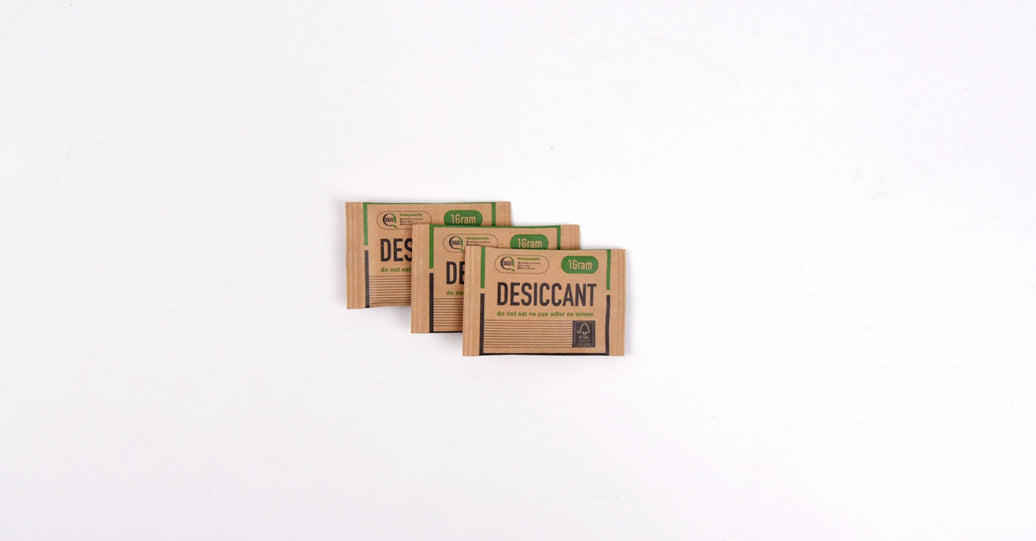
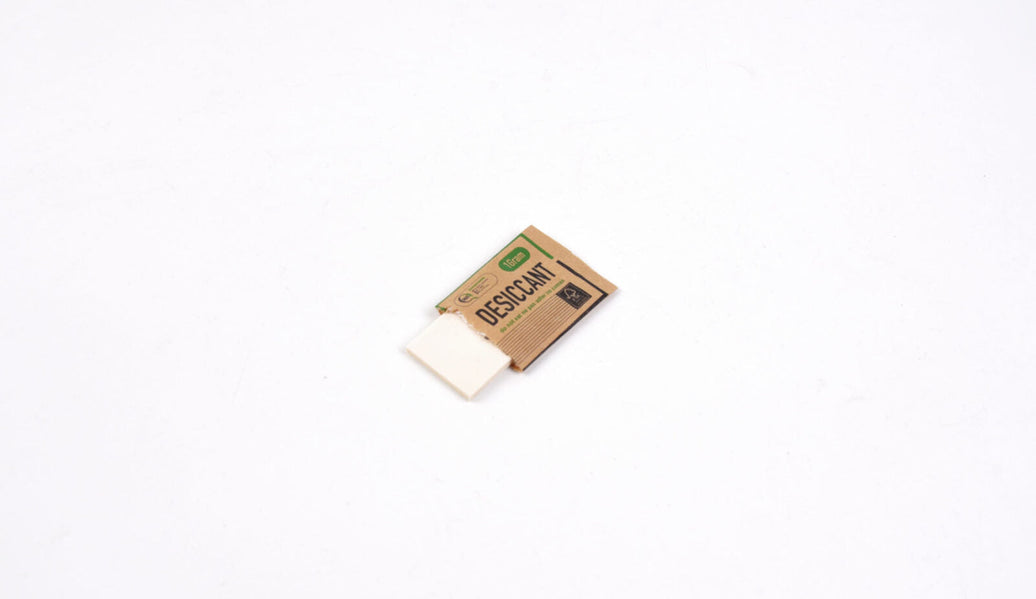
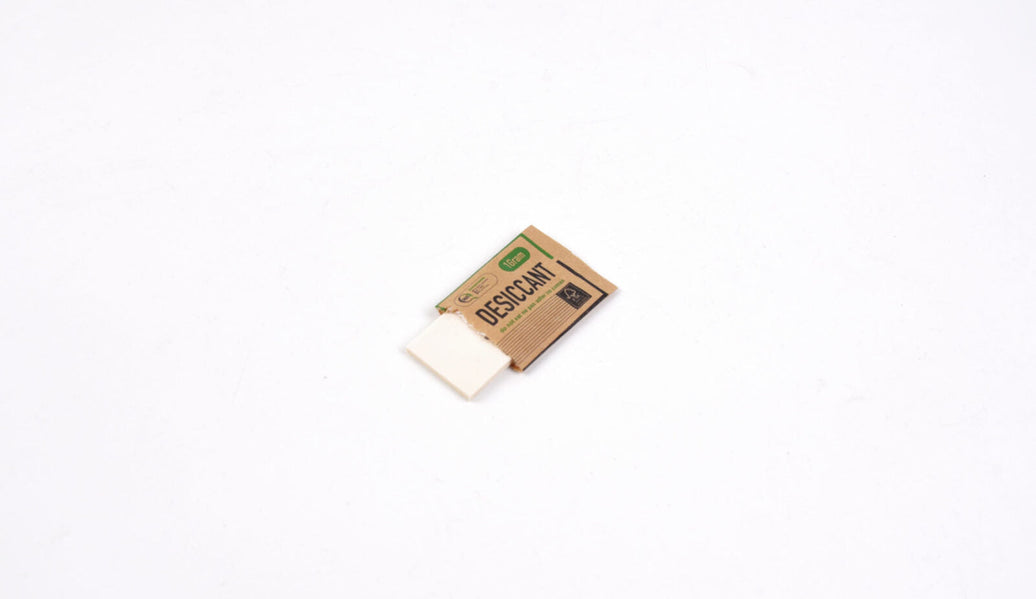
A canister or sachet dropped in with the product. Simple, needs no closure change, and the seal interface is untouched. Downsides: it consumes fill volume, it rattles, it is in the consumer’s hand every time they reach in, and it needs do-not-eat marking. See desiccant safety and warnings.
Option 2 — Integrated into the closure interior
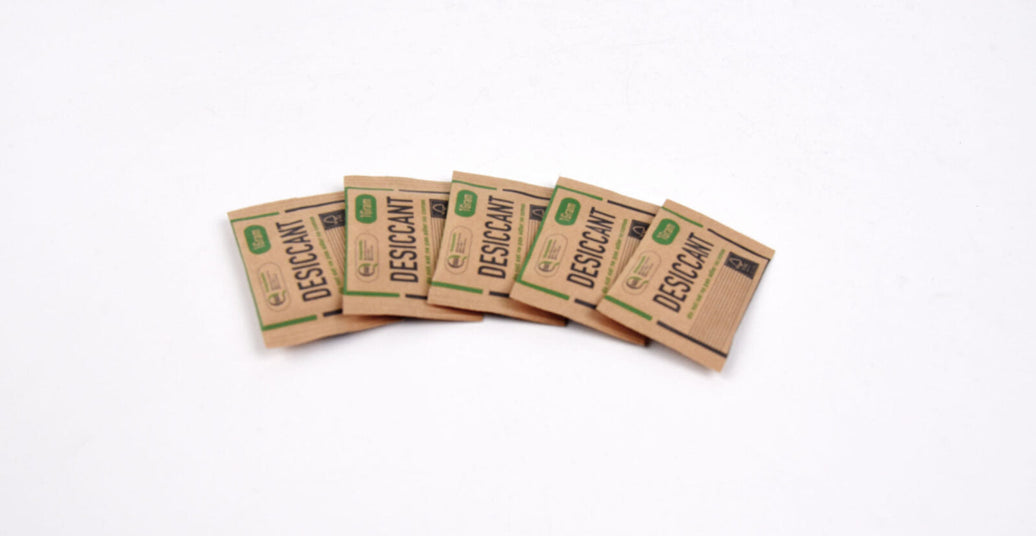
A die-cut card seated inside the cap, above the liner and below the cap crown. This is the space-efficient option: zero fill volume consumed, no loose object, nothing the consumer handles. The critical constraint is that the card sits inside the cap cavity, not on the sealing surface. Bottle-cap desiccant inserts with zero headspace cost covers the geometry.
Option 3 — Secondary pack or shipper only
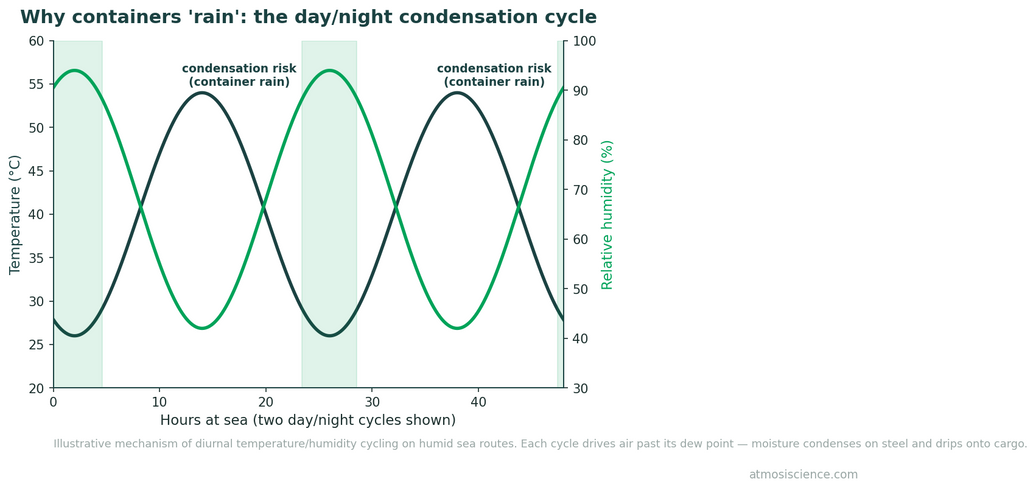
Nothing in the bottle. Protection sits in the carton or shipper. Appropriate where the sealed bottle is the retail unit and the exposure risk is warehouse and transit humidity rather than a long in-use period.
| Placement | Fill volume cost | Seal risk | Protects in use |
|---|---|---|---|
| Loose in bottle | Yes | None if below the seal | Yes |
| In closure interior | None | None if off the sealing land | Yes |
| Secondary pack only | None | None | No |
Will it affect liner adhesion or torque?
This is the question that stops most projects, and the answer is a matter of geometry rather than materials.
Induction sealing welds the foil to the bottle land under a magnetic field. Adhesion depends on three things: land flatness and cleanliness, the pressure the closure applies, and the induction energy delivered. A desiccant placed below the seal or inside the cap cavity is in none of those paths, so none of the three changes.
Adhesion problems arise when the desiccant is in the wrong place:
- Anything on the sealing land — a card edge, a sachet corner, desiccant dust — creates a channel and a leaker.
- A card thick enough to preload the closure alters application torque and removal torque. Confirm the stack height against the cap cavity depth; at 0.5–1.0 mm the card should sit within the cavity, but the check belongs in the drawing review, not in a trial.
- Loose-fill dust is the real risk factor. Granules and fines can migrate onto the land during filling. A bound fiber pad has no loose particles to migrate — see loose-fill desiccant risks.
Verify with the seal tests already in the specification — peel or shear on the induction liner, plus torque measurement — comparing bottles with and without the insert. If the numbers overlap, placement is clean.
Sizing for the in-use period
Because the design case is post-opening, the dominant load is opening cycles, not permeation. Inputs to gather:
- Headspace volume with the bottle at its emptiest (largest free volume, worst case)
- Number of openings over the in-use period — a 60-count bottle taken twice daily is 30 openings
- Ambient humidity in the use environment, not the warehouse
- The product’s critical humidity, from a sorption isotherm
- Closure liner permeability once the foil is gone
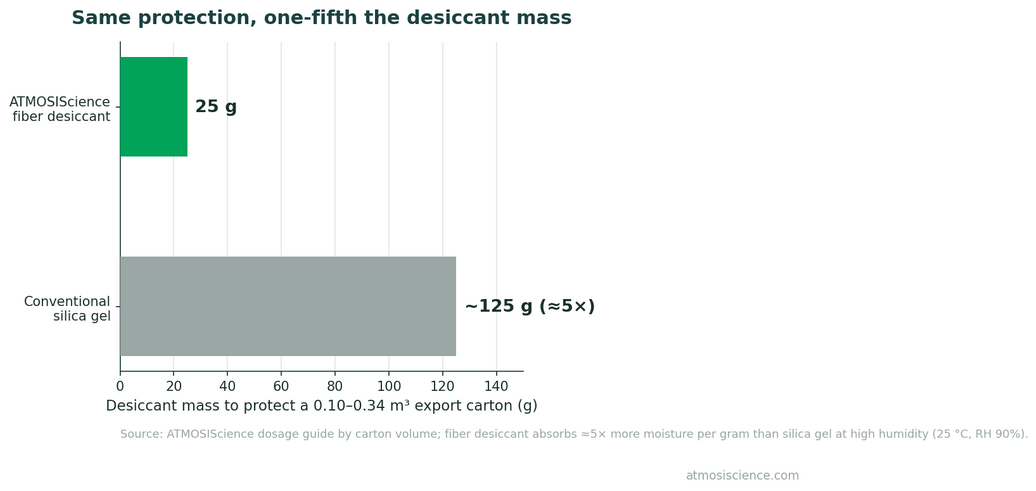
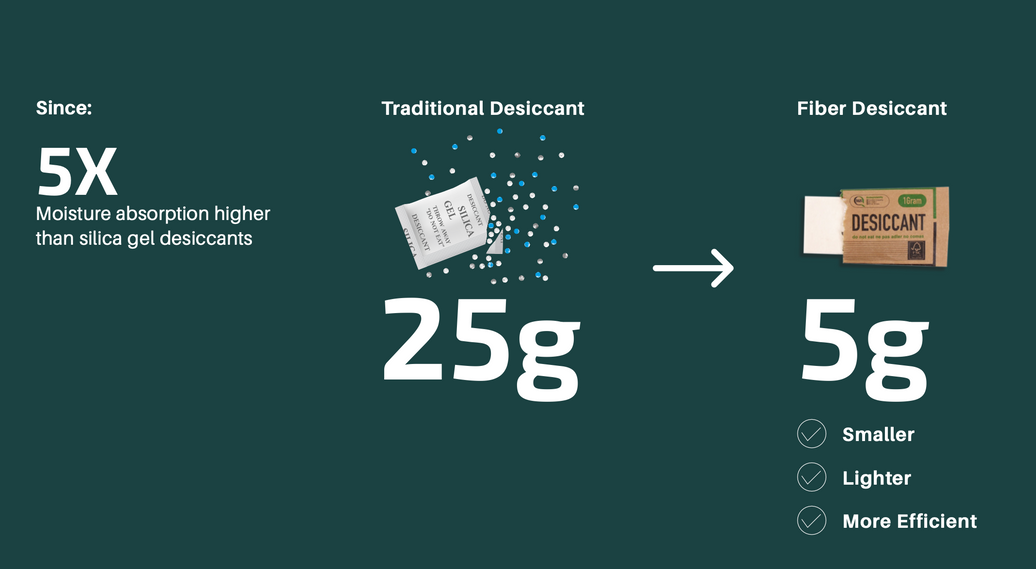
Fiber desiccant adsorbs more than 35% of its own weight at RH 50% and more than 70% at RH 90% (25°C), which is the range a domestic bathroom actually occupies. Sizing at the humidity of use rather than a nominal dry-storage figure is what makes the calculation hold.

The two-way behaviour matters here as well. Over-drying a solid dose can cause capping, brittleness and dissolution changes. A material that holds a band rather than driving humidity as low as possible avoids trading one defect for another — see the certain-humidity principle.
Documentation for a bottle application
In-bottle desiccant is in direct product contact, so the wrap and substrate need contact documentation. For food and supplement use that means an FDA 21 CFR 175.300 declaration — see direct versus indirect contact explained. For pharmaceutical bottles the file is broader; FDA-compliant desiccants for pharmaceutical packaging lists what compliance teams verify.
Frequently asked questions
Can desiccant be used with HDPE bottles and induction seals?
Yes. Place it below the induction seal or inside the closure cavity so it never contacts the sealing land. In that position the seal process is unchanged.
Should the desiccant go in the neck, the cap, or the secondary pack?
Never in the neck — that is the sealing area. The cap cavity is the space-efficient choice for in-use protection. The secondary pack is appropriate when the bottle stays sealed until sale and the risk is transit humidity.
Will the induction liner still seal properly?
Provided nothing sits on the land and the closure is not preloaded, yes. Confirm with the seal-strength and torque tests already in your specification, comparing with and without the insert.
Does the desiccant affect removal torque?
Only if the insert stack exceeds the cap cavity depth and preloads the closure. Check the dimensional stack at drawing review.
Do we need a desiccant if the bottle is already induction sealed?
For the sealed shelf period, usually not. For the in-use period after the foil is removed, frequently yes — especially for hygroscopic actives and for effervescent or deliquescent formats. Decide on the in-use exposure, not the sealed one.
Have a bottle and closure stack reviewed
Send the bottle size, closure and liner type, count per bottle and in-use period. ATMOSIScience will propose a placement and card size that keeps the sealing land clear.
Prefer email? info@atmosiscience.com