Quick answer: Accelerated shelf-life testing validates a desiccant dose by storing finished packs at elevated temperature and humidity, measuring a defined failure criterion over time, and extrapolating back to real conditions. The study only works if three things are right: the failure criterion is measurable and tied to the actual consumer complaint, the acceleration factor is justified rather than assumed, and the test packs are real production packs with the real desiccant inside — not lab-sealed pouches. Water activity is usually the right criterion for a powder, because it predicts caking and microbial risk better than moisture content does.
Almost every powder brand has a shelf-life number on the pack. Far fewer can show the study that produced it, and fewer still can show a study that included the desiccant as a variable. That gap becomes visible in exactly two situations: a customer complaint that turns into a claim, and an auditor who asks how the date was established.
This is the pharmaceutical side of the question in accelerated stability testing under ICH Q1A. Food and supplement products do not have a comparable prescriptive standard, which means the design burden falls on the brand.
Step one: define failure before you define the test
The most common design error is starting from storage conditions. Start from the complaint.
Ask what the customer actually reports when the product has gone wrong. "Hard lump in the tub." "Scoop won't move." "Smells stale." "Won't dissolve." Each of those maps to a different measurable, and choosing the wrong measurable produces a study that passes while the product fails in the market.
| Complaint | Measurable criterion | Method |
|---|---|---|
| Caking, hard lumps | Water activity crossing the caking threshold; cake strength | Water activity meter; penetration or compression test |
| Poor flow, dosing variation | Flow function, angle of repose, Carr index | Shear cell or flow tester |
| Potency loss | Assay of the labile active | HPLC or the compendial method for that active |
| Colour or aroma change | Colorimetry; sensory panel | Instrumental plus trained panel |
| Microbial growth | Water activity below the growth threshold; plate counts | Water activity plus micro testing |
For most powders, water activity is the workhorse. It is fast, non-destructive of the wider study, and it is the variable that both caking and microbial growth actually respond to. The distinction that trips teams up is covered in water activity versus moisture content.
Step two: find your threshold, do not guess it
An ASLT study measures how long a product takes to reach a threshold. If the threshold is wrong, the study duration is meaningless. The threshold comes from the moisture sorption isotherm for your specific formulation — the point at which the curve turns upward and the powder begins to cake.
That is a one-off piece of work per formulation, and it pays for itself because it becomes the specification everything else references. Method in how to read a moisture sorption isotherm.

Step three: choose conditions you can defend
A typical accelerated condition for shelf-stable powders is elevated temperature with elevated humidity, run alongside a real-time control at intended storage conditions. Two design rules matter more than the specific numbers.
Do not accelerate past a phase change. If the elevated temperature melts a fat, softens a coating, or takes a deliquescent salt past its critical relative humidity, the failure mechanism at test conditions is not the mechanism at shelf conditions and the extrapolation is invalid. This is the single most common reason an ASLT study gives an optimistic answer. Deliquescent actives are especially unforgiving — see taming deliquescent salts.
Always run the real-time control. The accelerated arm gives you an answer in weeks; the real-time arm is what eventually confirms or corrects it. A study without the control is a hypothesis.
Step four: test the pack, not the powder
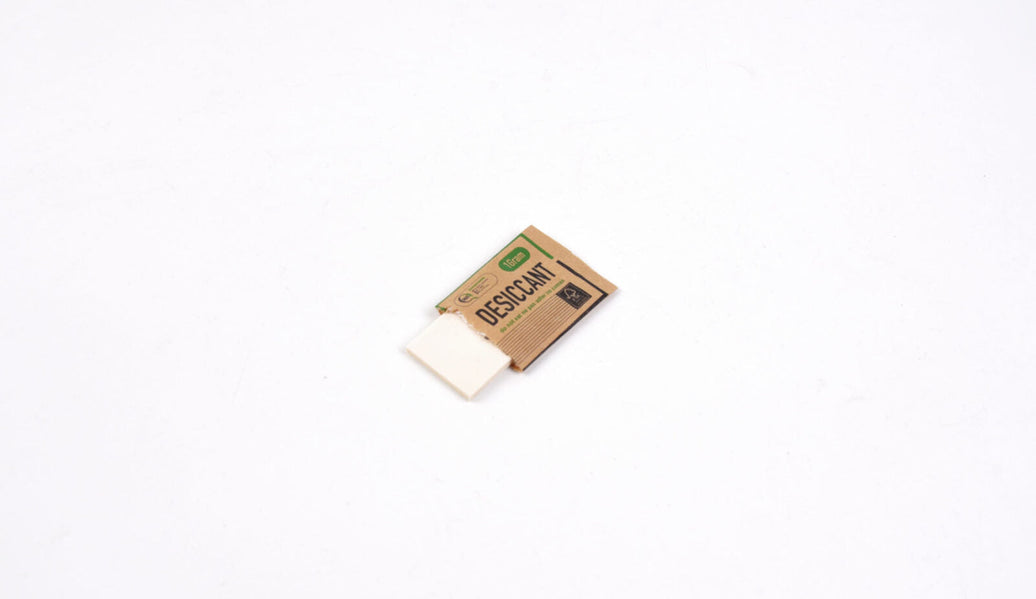
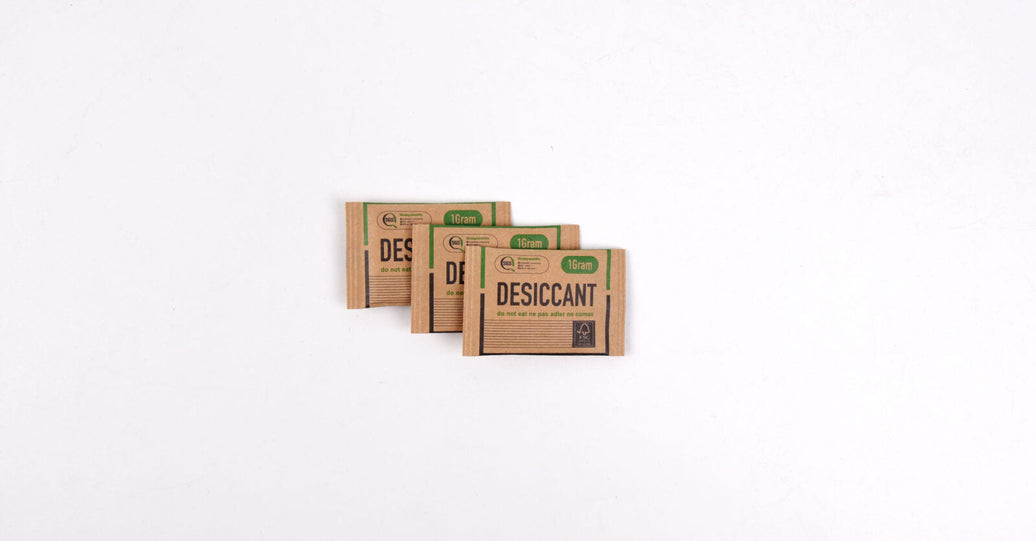
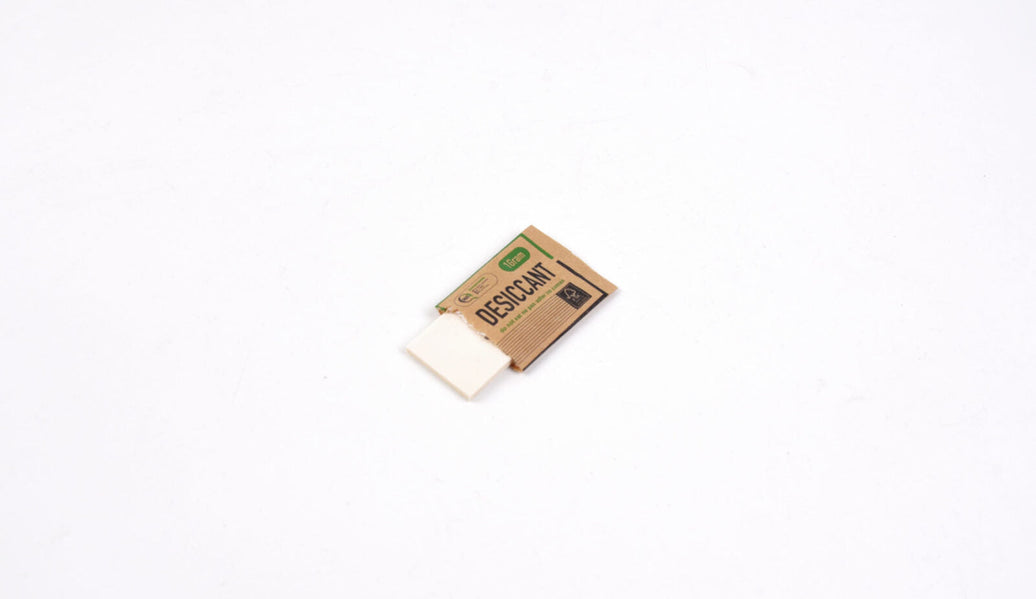
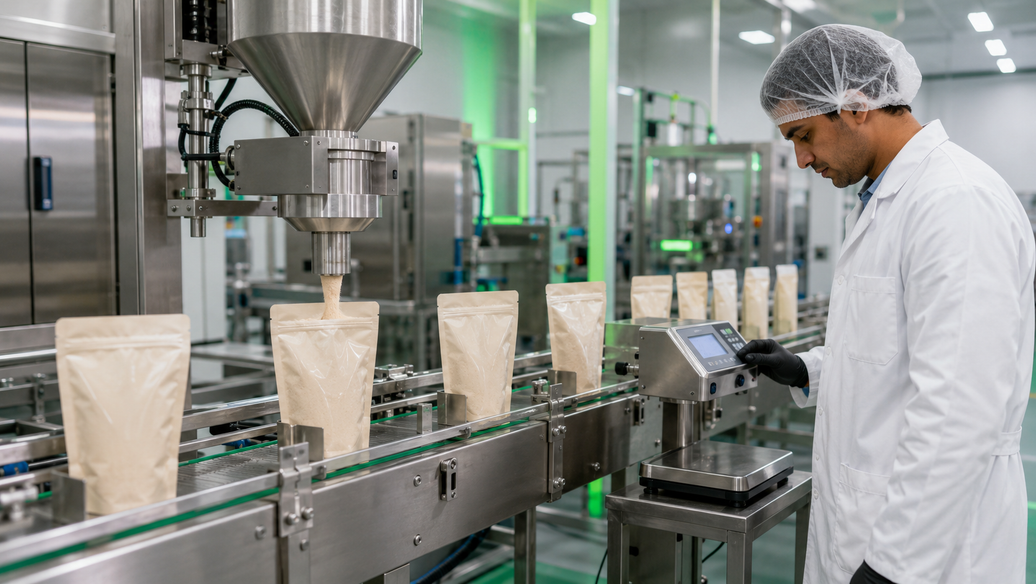
This is where desiccant validation stands or falls. The study must use production packs — the real film, the real seal, the real headspace, the real desiccant SKU at the real dose, filled on the real line.
Run at minimum three arms:
- No desiccant. Establishes the unprotected baseline and proves the desiccant is doing something.
- Proposed dose. The candidate specification.
- Reduced dose. Typically half. If it passes, you have found cost savings with evidence. If it fails, you have quantified your margin.
A fourth arm with the desiccant deliberately exposed to plant air before insertion tells you how much protection you lose to handling on the line — the exposure question we cover in the 30-minute rule.
Step five: sample on a curve, not a calendar
Moisture uptake is fastest early. A monthly sampling schedule misses the shape of the curve in the first weeks, which is exactly the region that determines whether the desiccant is keeping pace with ingress. Sample densely at the start and sparsely later — weekly for the first month, then monthly.
Record the desiccant's own weight gain at each point if you can. A desiccant that has stopped gaining weight while the powder is still gaining moisture is a saturated desiccant, and that single observation explains most "the desiccant didn't work" reports. Other causes are catalogued in seven desiccant failure modes.
Frequently asked questions
How long does a useful ASLT study take?
The accelerated arm often produces an actionable answer in eight to twelve weeks for a moisture-driven failure. The real-time arm runs to the claimed shelf life. Plan the accelerated arm to inform the launch decision and the real-time arm to confirm it.
Can I use the Q10 rule to extrapolate?
Q10 is a reasonable first approximation for temperature-driven chemical degradation. Moisture-driven physical failure such as caking is not well described by it, because the dominant variable is water activity rather than temperature. Use it with caution and validate against the real-time arm.
Do I need to repeat the study if I change desiccant supplier?
Not necessarily a full repeat, but you do need a bridging study. What that involves is set out in switching desiccant suppliers without restarting validation.
What if I have no lab?
Water activity meters are widely available at contract labs, and a basic study can be run with a third-party lab plus your own storage cabinet. The cost of the study is almost always smaller than the cost of one rejected batch — quantified in the cost of one caked batch.
How does this relate to transit testing?
ASLT answers "how long on the shelf". Transit testing answers "does it survive the journey". Both are needed, and they are different protocols — see ISTA and ASTM transit testing with desiccant.
Get samples for your shelf-life study
Tell us your formulation type, pack format and target shelf life, and we will send dose options and the specification data your study protocol needs.
Prefer email? info@atmosiscience.com