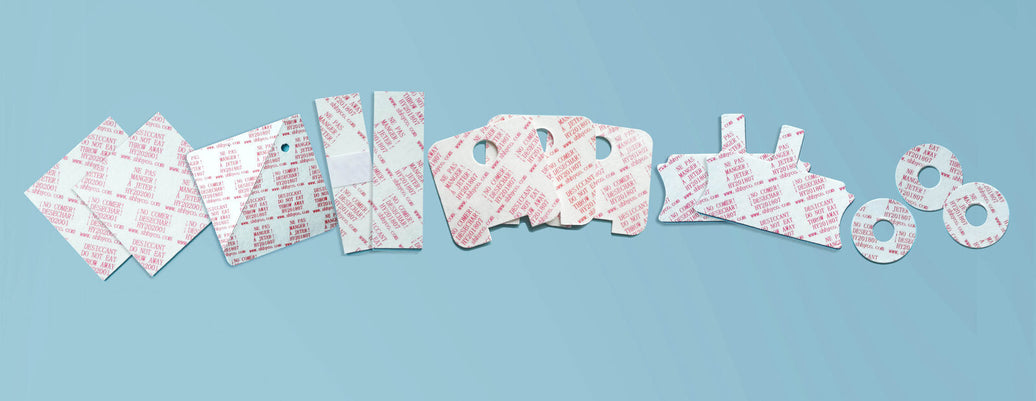
Quick answer: Ash content is the mineral fraction that remains after a paper sample is combusted; fibre yield is what is left for a mill to use, calculated as (100% − ash content) × yield. In SGS report CQMR260700043401, a plant-fibre desiccant sheet measured 30.22% ash and 69.78% fibre yield, with coarse reject of zero and screening yield of 100%. Mineral load reduces the fibre a mill recovers; it does not, by itself, make a sheet unrecyclable. What disqualifies material is coarse reject, flake content and macrostickies — and all three came back clean.
“There is mineral in it, so it cannot go in the paper stream.” That objection comes up in nearly every technical review of a fibre-based desiccant, usually from someone who is right to be sceptical and wrong about the mechanism.
Paper mills handle mineral all day. Coated and filled printing papers routinely carry substantial mineral loading; it is the reason ash content is a standard measurement in the first place. The question is never “is there mineral?” It is “how much fibre do I recover, and does anything in this sample damage my process?”
The two numbers, and how they relate

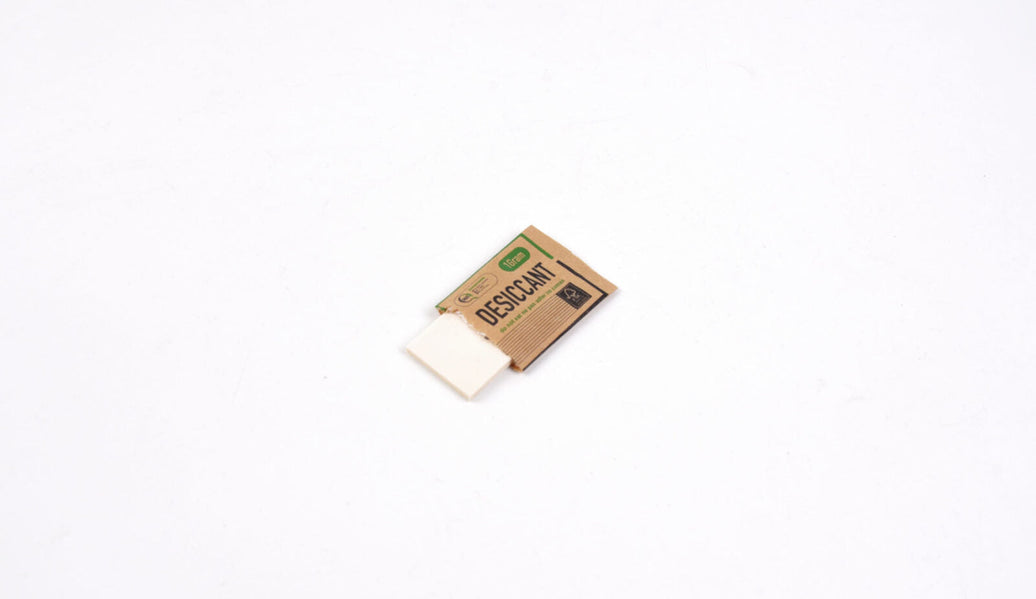
Ash content: 30.22%, measured to ISO 1762:2019 under section 7.6 of the assessment protocol. This is the non-combustible residue — in a fibre desiccant, principally the mineral salts that give the material its moisture affinity in the first place. The safety data sheet describes plant fibre steeped in a drying solution comprising calcium and sodium salts. Ash content is that chemistry showing up on a balance.
Fibre yield: 69.78%, defined in the report as (100% − ash content) × yield. Because screening yield was 100%, fibre yield here is simply the non-ash fraction. Nothing was lost to the coarse screen on the way.
So for every kilogram of this sheet entering a pulper, roughly 698 grams is recoverable fibre and roughly 302 grams is mineral that will report to the mill’s ash and sludge handling.
Why a mill cares about ash — and why it is not a veto
High ash affects mill economics in three ways: it lowers fibre recovery per tonne of input, it loads the water circuit, and it can affect the properties of the finished sheet. Those are real costs. They are also quantitative costs a mill prices in, not a structural incompatibility.
Compare that with the three parameters that actually decide the verdict in the recyclability protocol:
- Coarse reject: 0. Nothing had to be screened out and disposed of.
- Flake content: 0.39%. Essentially no non-fibrous fragments surviving into the sheet.
- Macrostickies area: 626 mm²/kg. Scored the full 40 points — no tacky contaminant load that would foul a paper machine.
Ash content is measured and reported, but it is not one of the four scored parameters. Read the scoring table and the logic becomes obvious: the protocol is designed to catch things that break equipment and contaminate output. Mineral filler does neither. Adhesive does. Film does. Unpulpable lumps do.
That is why the sample scored 100 out of 100 while carrying a 30% mineral load. The full breakdown is in what a 100/100 recyclability score actually measures.
Optical homogeneity is the quiet confirmation
One result worth pausing on: optical homogeneity came back “very good — no visible inhomogeneity”, assessed on standard handsheets formed to ISO 5269-2:2004.
If mineral were poorly bound or unevenly distributed, the handsheet would show it — specks, shading, patchy formation. It did not. A third of the mass being mineral and the resulting sheet still forming cleanly is a statement about how the material is made, not just what it contains.
What this does and does not license you to say
It does support: the fibre substrate repulps cleanly, recovers roughly 70% fibre, and produces no coarse reject.
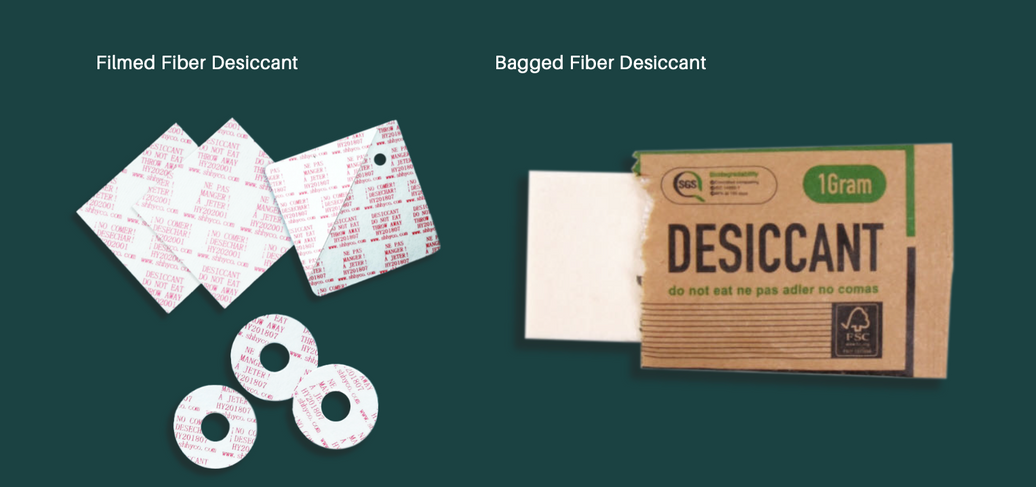
It does not support: a recyclability claim for a finished sachet or a filmed card. The report explicitly states its result ceases to apply once the sample’s structure is changed or assembled with other components. An overwrap, an adhesive or a printed film changes the article being assessed — and those are precisely the components that drive macrostickies and flake content.
For anyone writing environmental copy from these numbers: cite the measurement and the scope, not the adjective. Vague environmental claims are exactly what European rules are moving against. See the green claims guidance and the sustainable desiccant guide.
Frequently asked questions
What is a normal ash content for paper packaging?
It varies enormously by grade. Uncoated kraft sits low; coated and filled graphic papers sit much higher. A single figure means little without the grade context, which is why the protocol scores contaminants rather than setting an ash ceiling.
Does the mineral end up in the recycled paper?
Part of it reports to the finished sheet and part to the mill’s reject and sludge streams, depending on the process. Either way it is handled by existing mill infrastructure.
Is a lower ash desiccant better?
Not straightforwardly. The mineral fraction is functional — it is part of what does the adsorbing. Lower ash may mean less moisture capacity per gram. Optimise for the pack, then check the end-of-life data.
How is ash content actually measured?
By combustion in a furnace and weighing the residue, following ISO 1762:2019 in this assessment. It is a mass measurement, not a chemical identification.
Does high ash affect the desiccant’s performance?
Performance is specified separately, by adsorption at stated humidity conditions, not inferred from composition. Ask for the adsorption figures and the conditions they were measured at.
Send your end-of-life question to a technical reviewer
Tell us the format you are evaluating and the market it ships into. The ATMOSIScience team will send the relevant test data with its scope stated plainly.
Prefer email? info@atmosiscience.com