Quick answer: A desiccant is sustainable when three things are true and documented: the sorbent is a renewable or benign material (plant fiber rather than mined mineral), the finished sachet is certified compostable to ASTM D6400 / EN 13432 rather than merely "eco-friendly" on the label, and the carbon footprint is measured under ISO 14067 rather than estimated. "Natural desiccant" home remedies (rice, chalk, charcoal) are fine for a drawer — but for commercial packaging, certification is what separates a sustainable desiccant from a green-looking one.
Search interest in sustainable desiccants and natural desiccants keeps climbing for a practical reason: regulations now price packaging waste. The EU PPWR eco-modulates producer fees from August 2026, several US states run packaging EPR laws, and retailers screen suppliers against circularity targets. The desiccant sachet — small as it is — rides inside every one of those packages.
This guide compares the material options, explains which certifications actually count, and ends with the checklist procurement teams use to qualify a sustainable desiccant supplier.
What "sustainable" has to mean for a desiccant
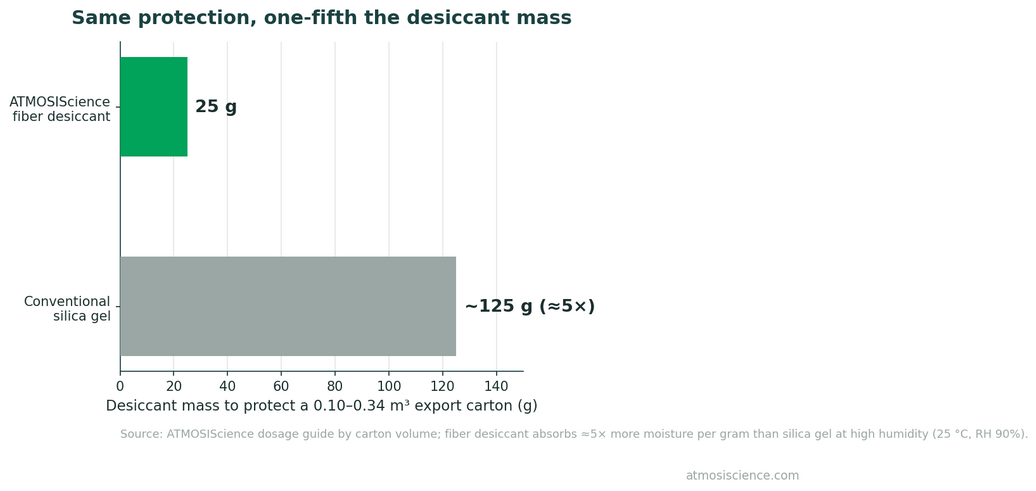
Marketing language aside, sustainability for a moisture sorbent comes down to four measurable properties. The substrate: is the active material renewable (plant-derived fiber) or mined and processed mineral (silica, bentonite clay)? End of life: does the finished sachet carry industrial-compostability certification — ASTM D6400 (US) and EN 13432 (EU) — or does it default to landfill? Carbon accounting: is there an ISO 14067 product carbon footprint on file, or just a claim? And dosage efficiency: how many grams must you ship to do the same drying job — because every gram is freight, fee and waste.
Natural and sustainable options, compared honestly
| Option | What it is | Where it falls short |
|---|---|---|
| Plant-fiber desiccant | Lignocellulose fiber matrix binding a food-grade hygroscopic salt; certified-compostable wrap | Premium format — justify with dosage math (fewer grams per job) |
| Bentonite clay | Mined natural mineral, often paper-bagged | "Natural" but not renewable; ~25–35% absorption caps performance; mining footprint |
| Silica gel in paper | Conventional sorbent, more recyclable wrap | Sorbent is still energy-intensive mineral; sachet rarely compostable as a unit |
| Home remedies (rice, charcoal, chalk) | Kitchen-scale moisture buffers | No spec, no documentation — not qualifiable for commercial packaging |
The fiber option, by the numbers
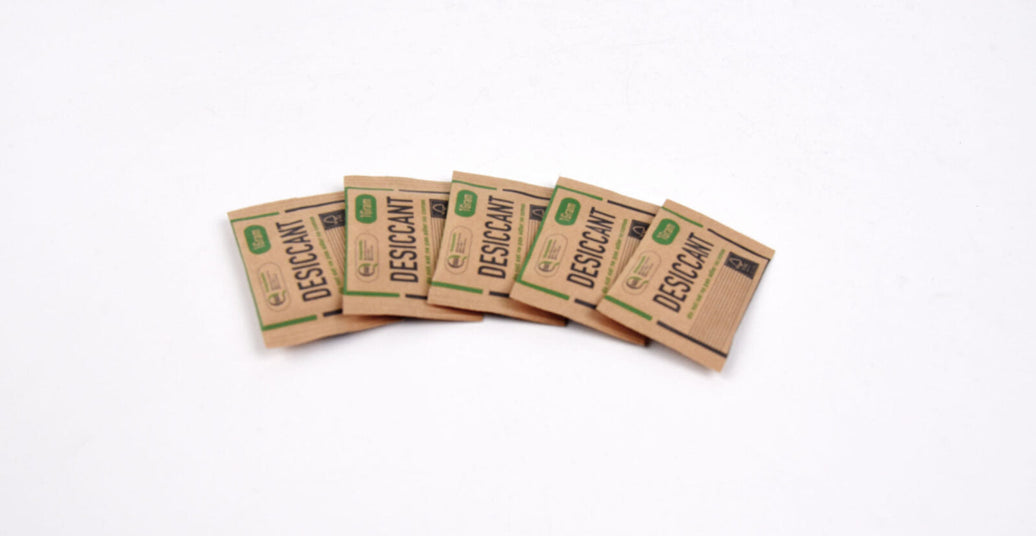
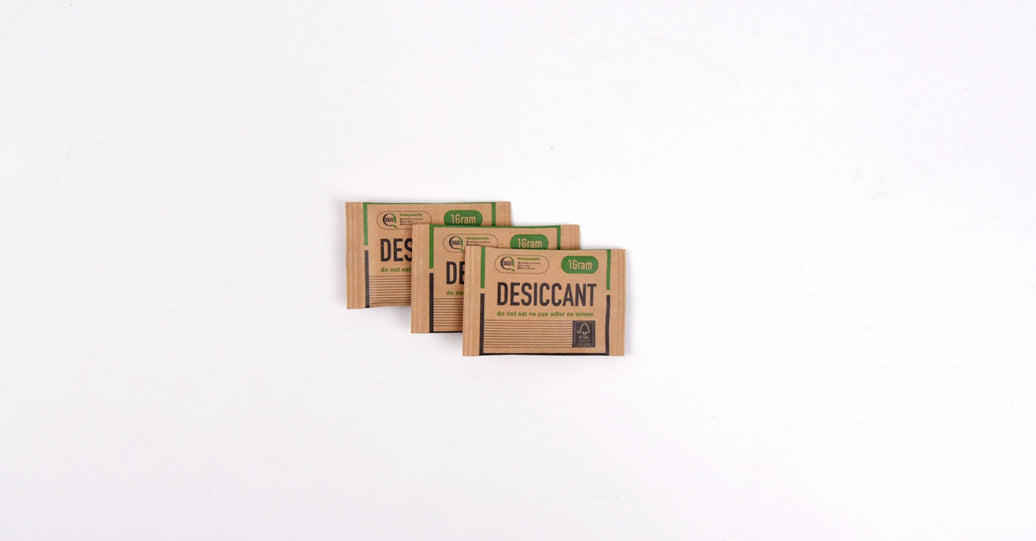
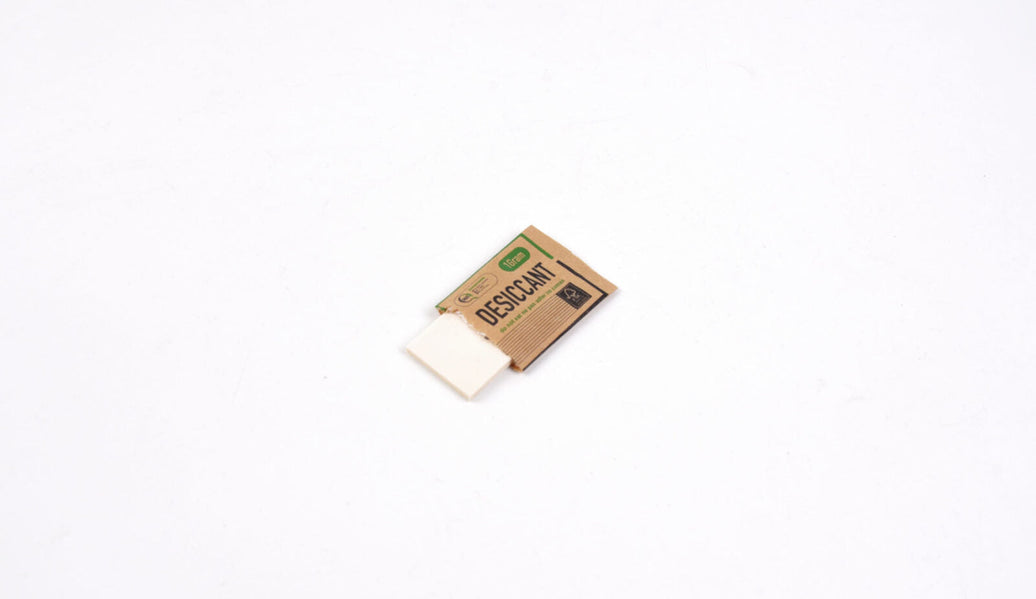
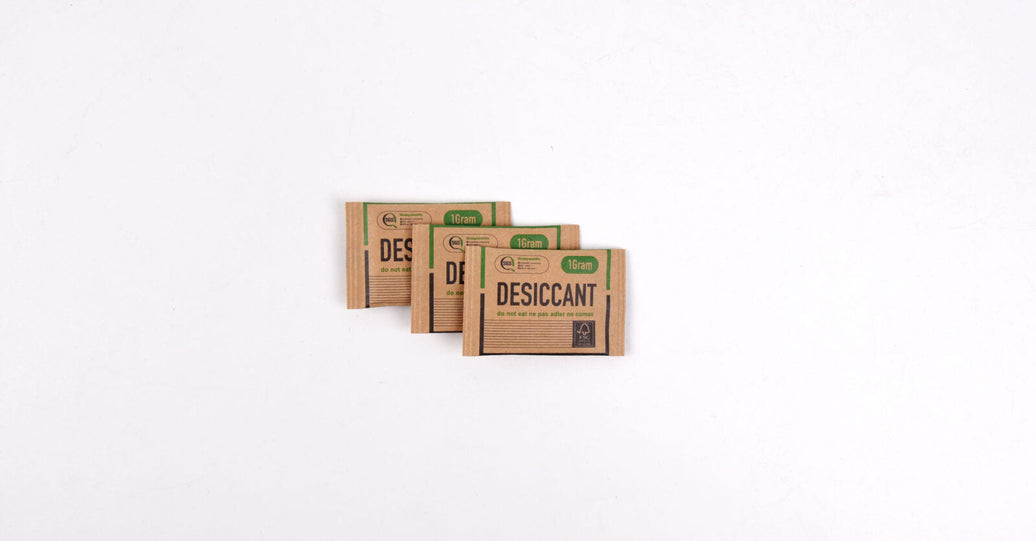
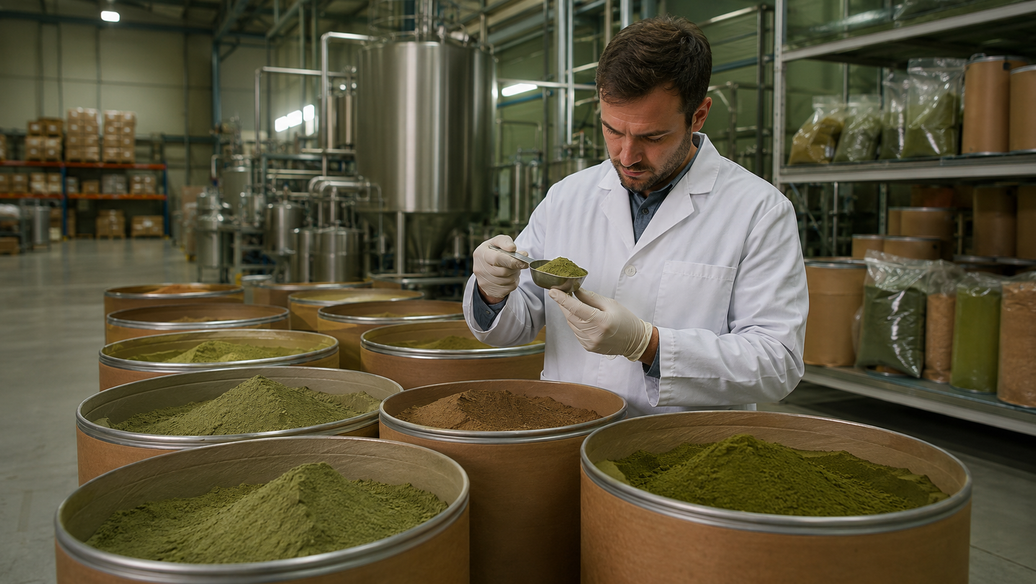
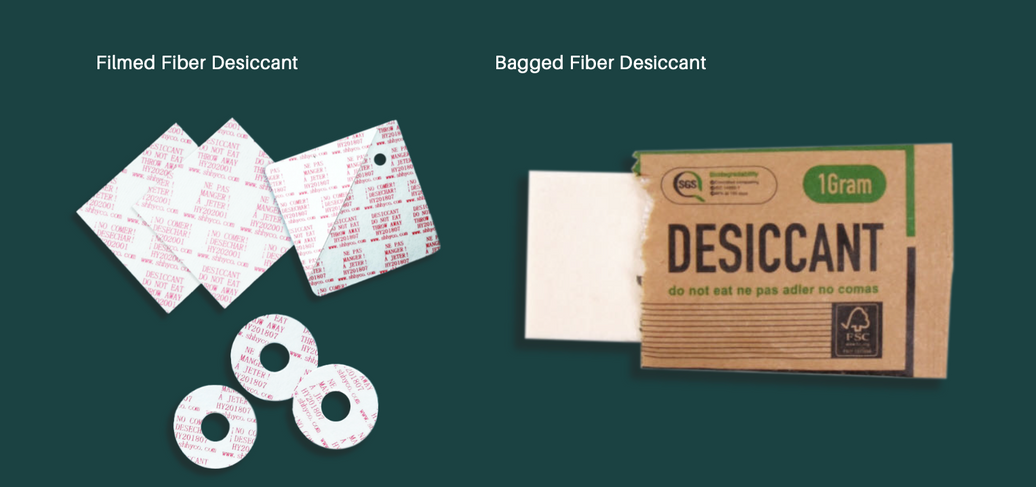
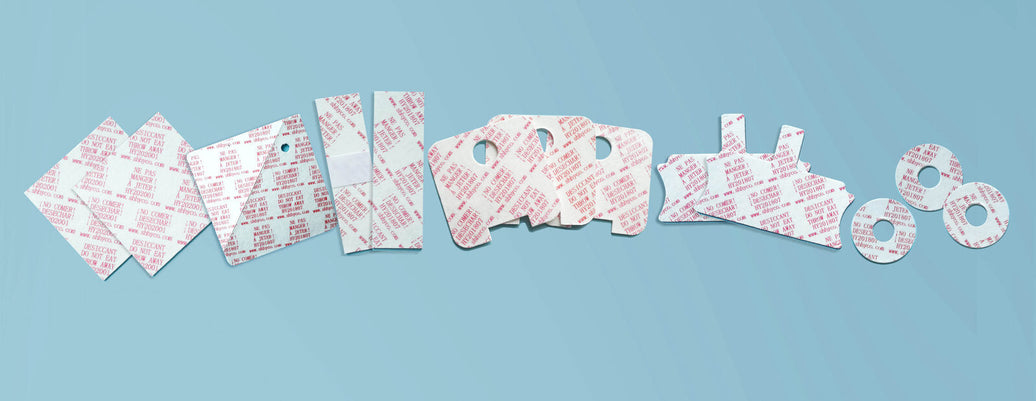
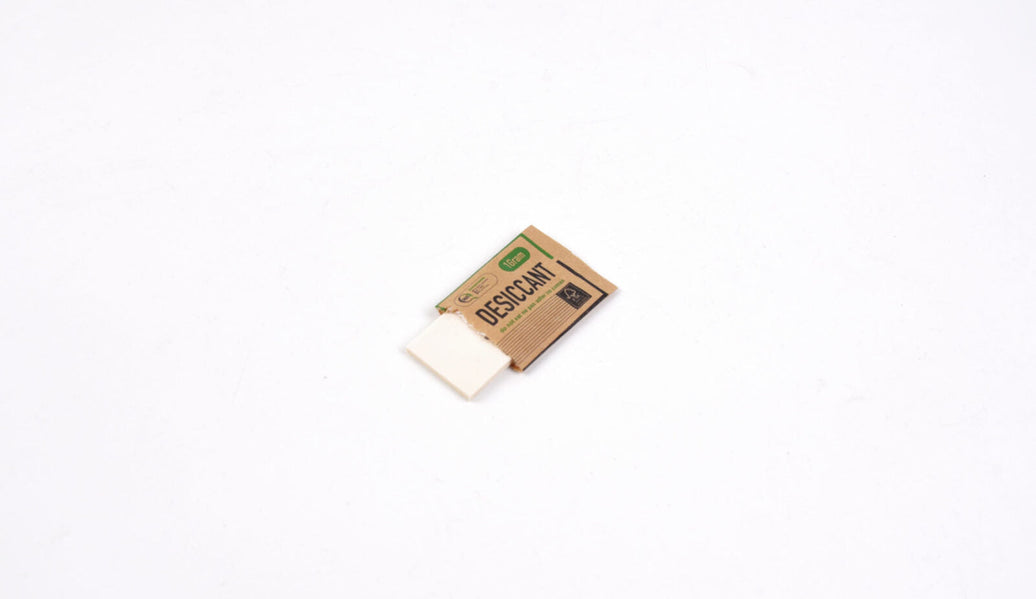
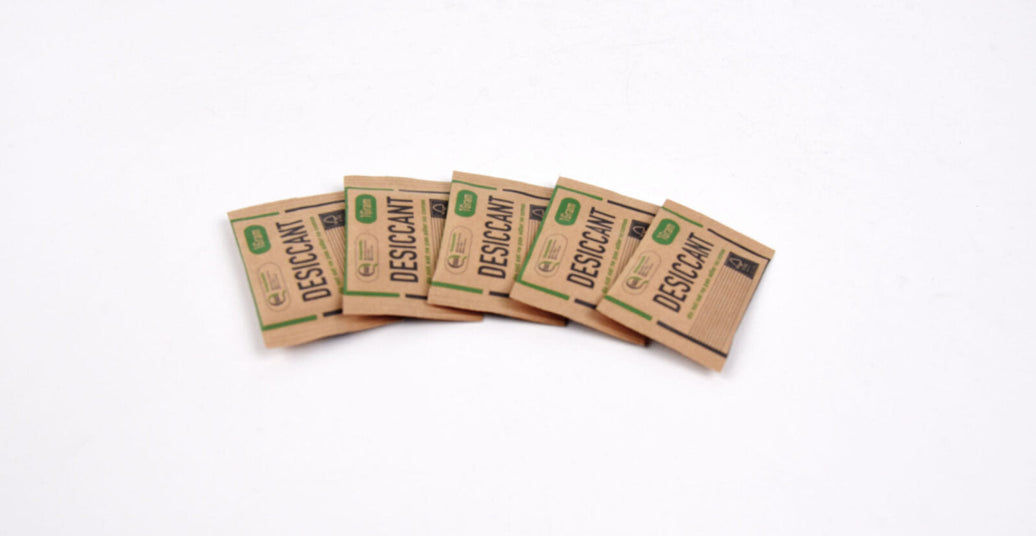
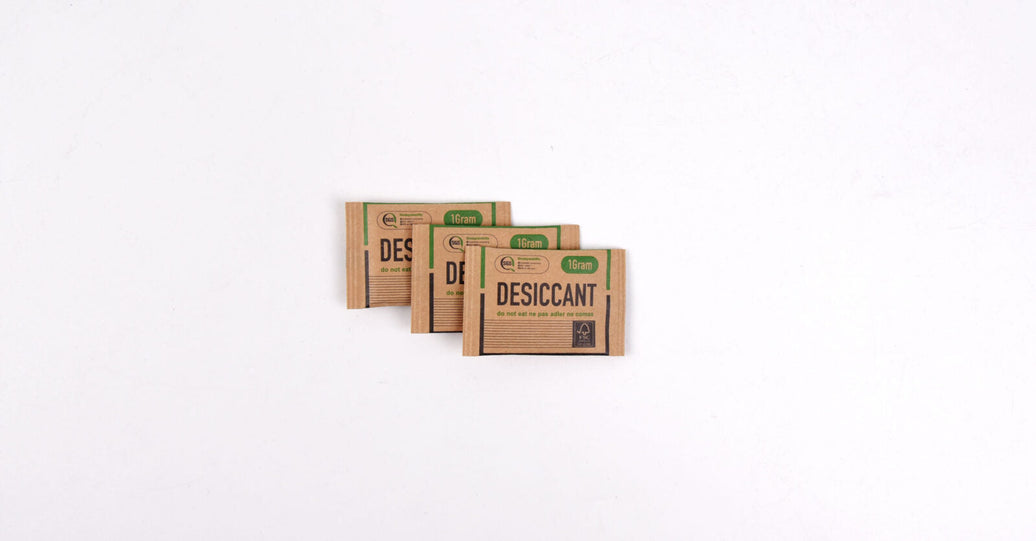
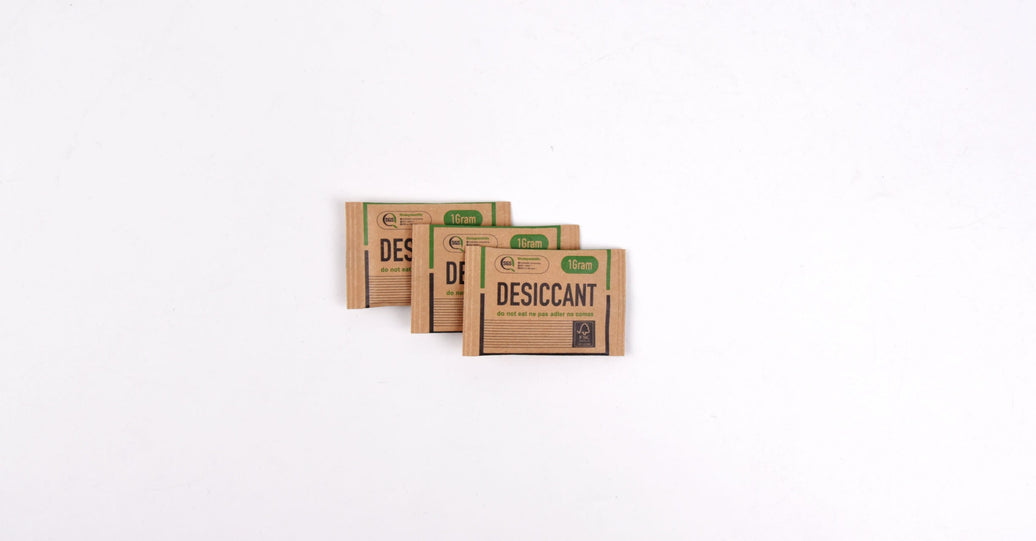
ATMOSIScience fiber desiccant is the plant-fiber row of that table — a patented composite of lignocellulose fiber carrying a food-grade salt, wrapped in certified-compostable material (what's inside).
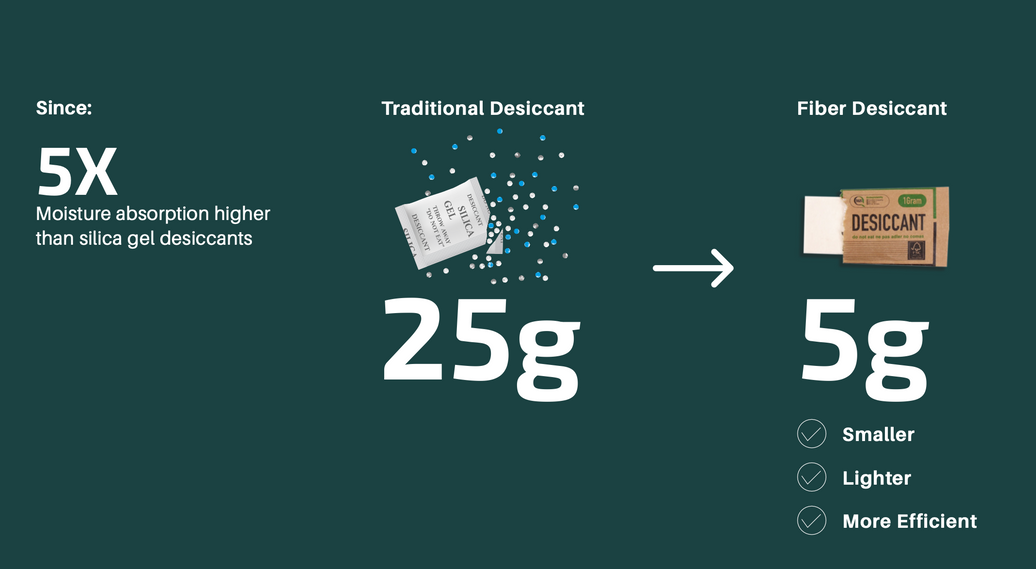
- Capacity: adsorbs >10% / >35% / >70% of its own weight at RH 20 / 50 / 90 (25°C), and over 100% at saturation — 3–5× typical silica-gel performance in humid conditions (how it works).
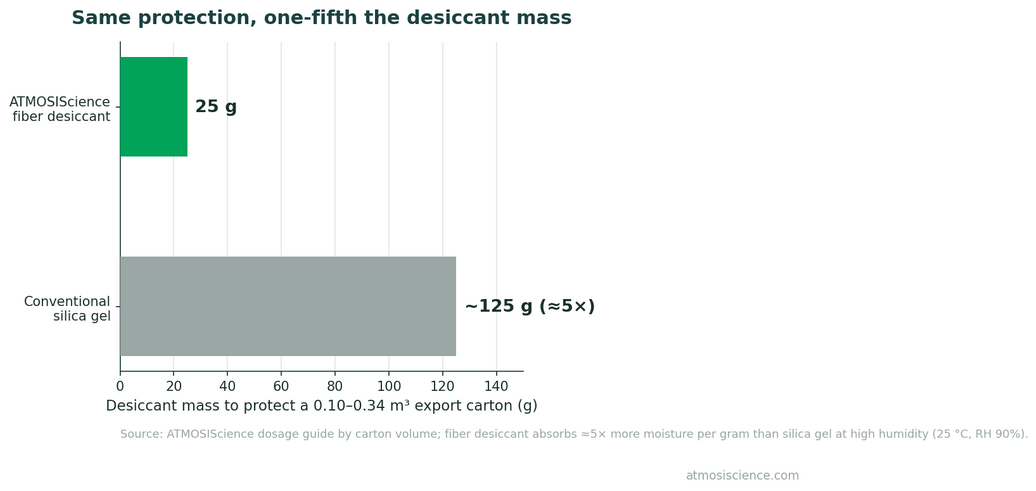
- Dosage efficiency: the same protection job that takes ~30 g of silica gel or ~35 g of clay takes ~18 g of fiber — fewer grams manufactured, shipped and disposed per carton.
- Carbon: 1.44 kg CO₂e per kg, certified under ISO 14067 — materially below typical silica-gel figures. Combined with the lower dose, the same moisture-protection job runs roughly 75% lighter on emissions.
- End of life: SGS-certified compostable to ASTM D6400 + EN 13432; regenerable by air-drying for reuse before disposal.
- Safety stack: FDA 21 CFR 175.300 food-contact documentation, REACH SVHC screening, RoHS (EU 2015/863), SGS Anti-mould.

Certifications that count (and claims that don't)
Under the EU Green Claims regime and the PPWR, an unsubstantiated "compostable" or "eco-friendly" label is a liability, not an asset (green-claims guide). What holds up in an audit: the EN 13432 / ASTM D6400 certificate itself — number, scope, issuer (SGS in our case), not a leaf icon; an ISO 14067 carbon footprint statement for the product, not the category; and food-contact documentation if the sachet rides inside food packaging (FDA 21 CFR guide). EU-bound brands should read the full PPWR compliance timeline.
Buyer checklist: qualifying a sustainable desiccant
- Request the compostability certificate (EN 13432 / ASTM D6400) — verify number and issuing body.
- Request the ISO 14067 carbon figure in kg CO₂e/kg — then multiply by your dose, because grams-per-job is where the real gap shows.
- Confirm food-contact suitability documentation if the sachet goes in-pack.
- Check construction: bonded fiber substrate means no loose beads to spill — a safety and contamination point, not just a green one.
- Ask for the dosage equivalence math versus your current silica spec — a serious supplier hands you the table, not an adjective.
FAQ
Is silica gel bad for the environment?
Silica gel is non-toxic and technically recyclable as a material, but as a packaged sachet it is rarely recycled, and its production is energy-intensive. The practical issue is end-of-life: a non-compostable sachet defaults to landfill and, under eco-modulated EPR fees, increasingly costs more per unit shipped.
Are "natural" clay desiccants sustainable?
Clay is natural but mined — not renewable — and its ~25–35% absorption ceiling means more grams per job. "Natural" and "sustainable" are not the same claim; certification and dosage math close the gap.
Can a compostable desiccant match silica gel performance?
Fiber desiccant exceeds it: over 100% of own weight at saturation versus roughly 30% for silica gel, which is why the compostable option here is also the higher-capacity one.
What should a sustainability audit ask our desiccant supplier for?
Three documents: the EN 13432 / ASTM D6400 certificate, the ISO 14067 product carbon footprint, and the food-contact declaration. The supplier qualification pack lists the full stack.
Get the sustainability certificate pack
EN 13432 + ASTM D6400 compostability certificates, ISO 14067 carbon footprint, FDA food-contact documentation — plus dosage-equivalence math against your current silica spec. Same-day reply.
Prefer email? info@atmosiscience.com