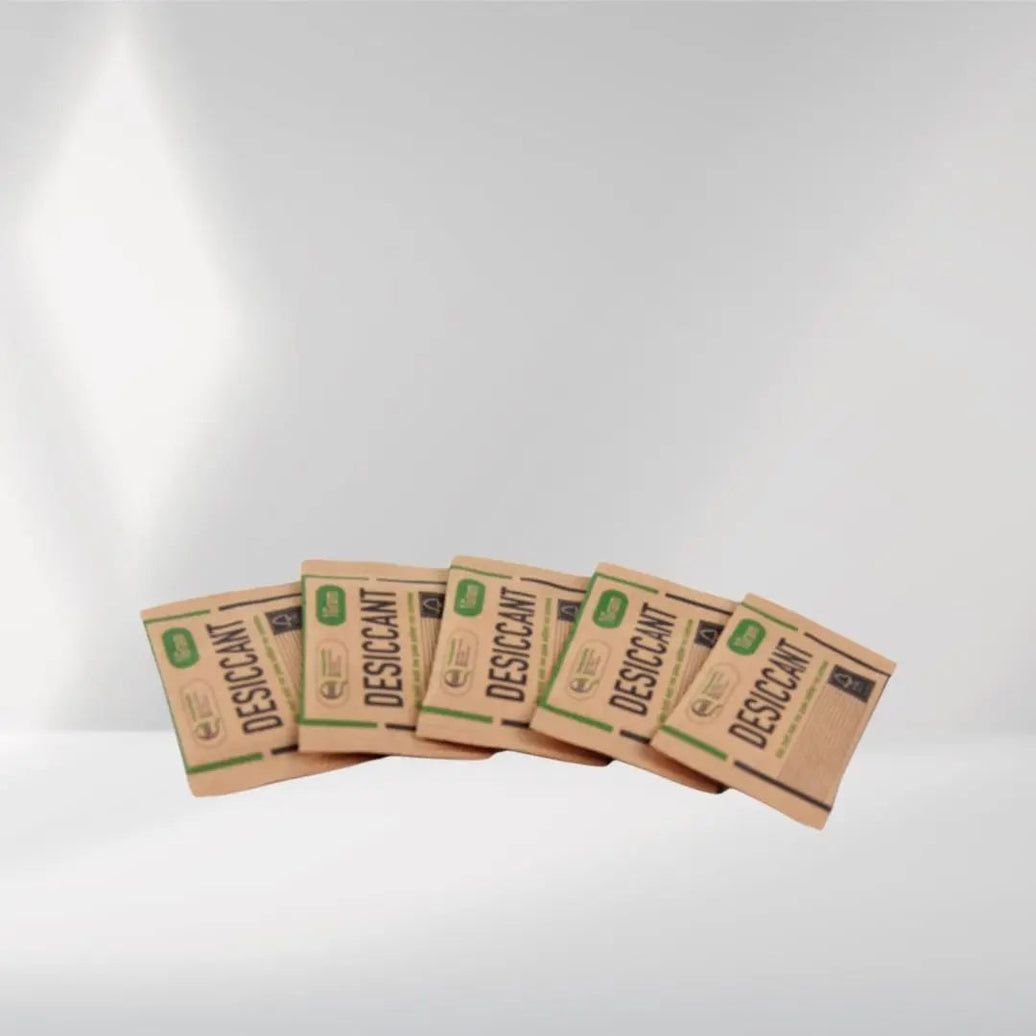
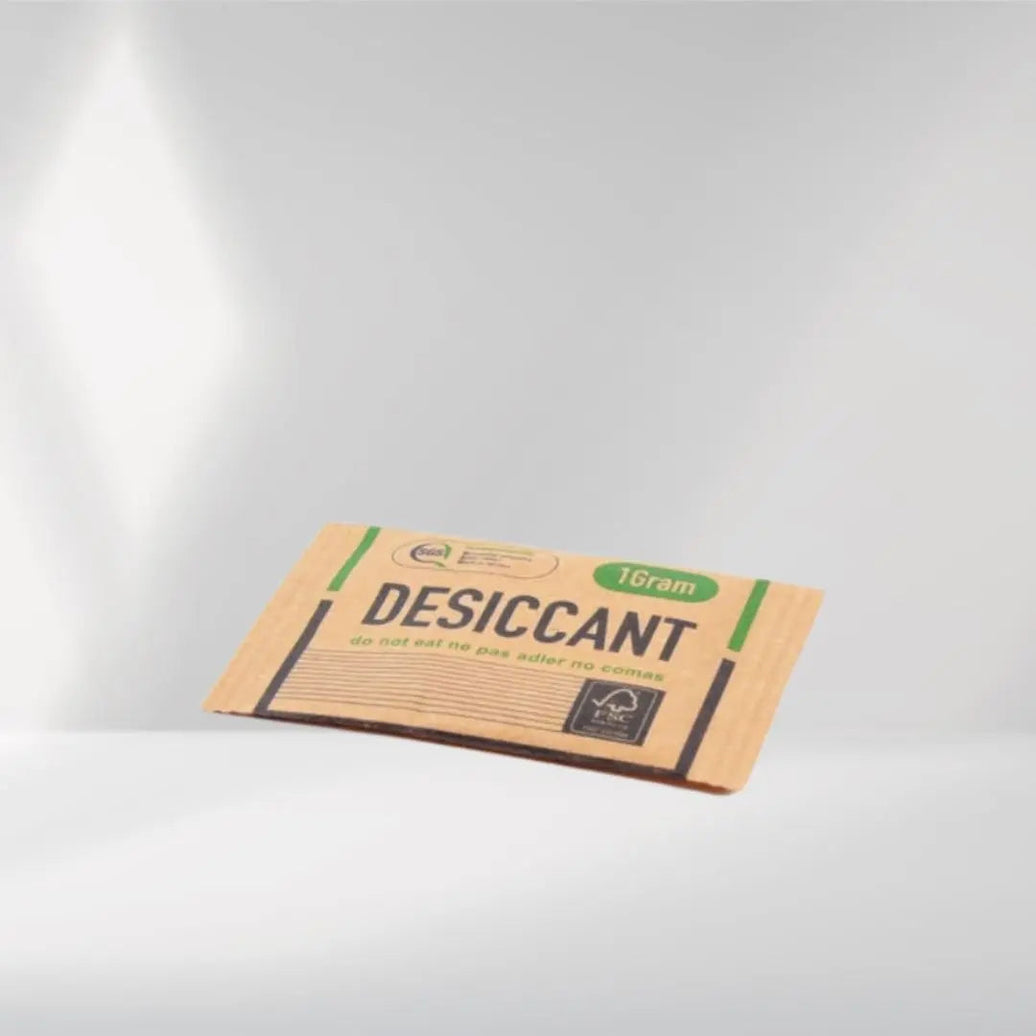
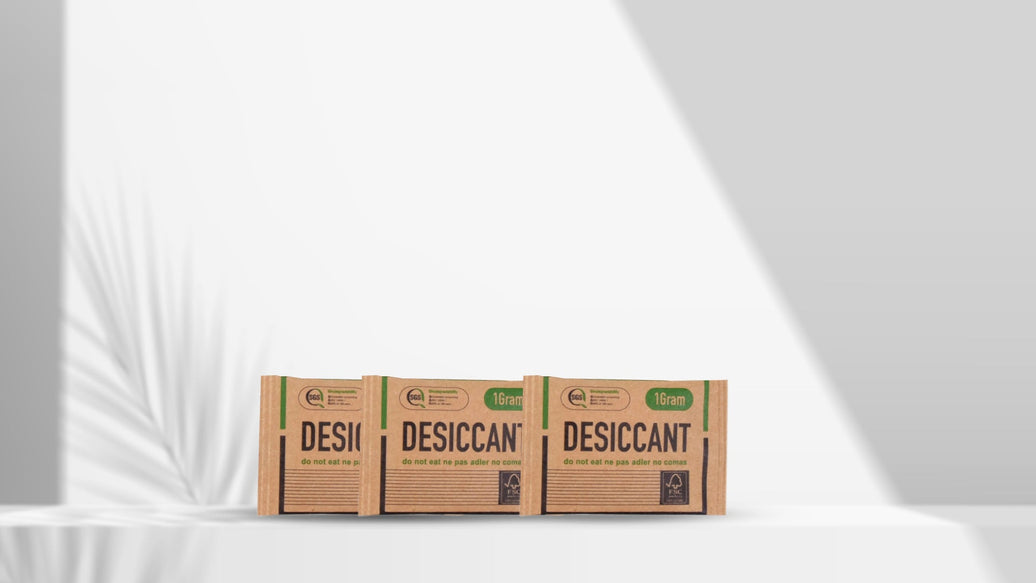
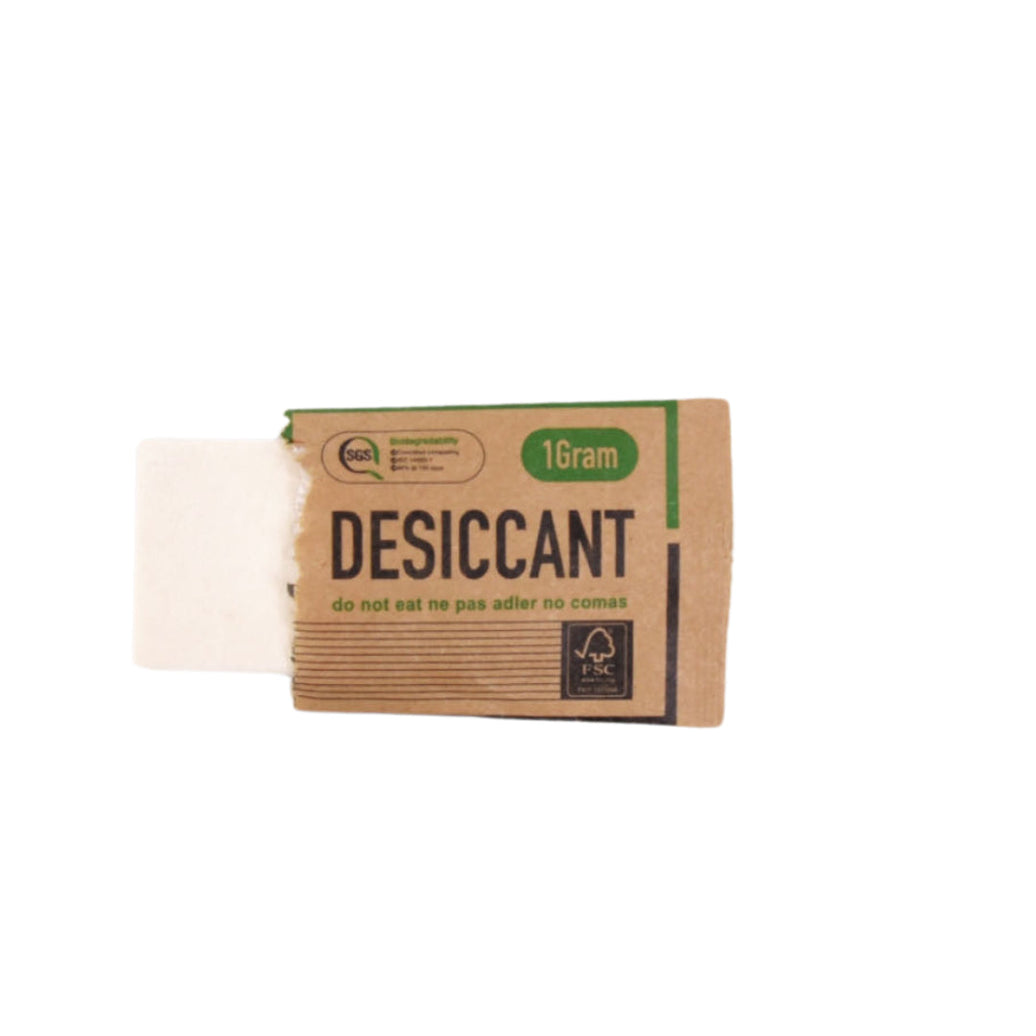
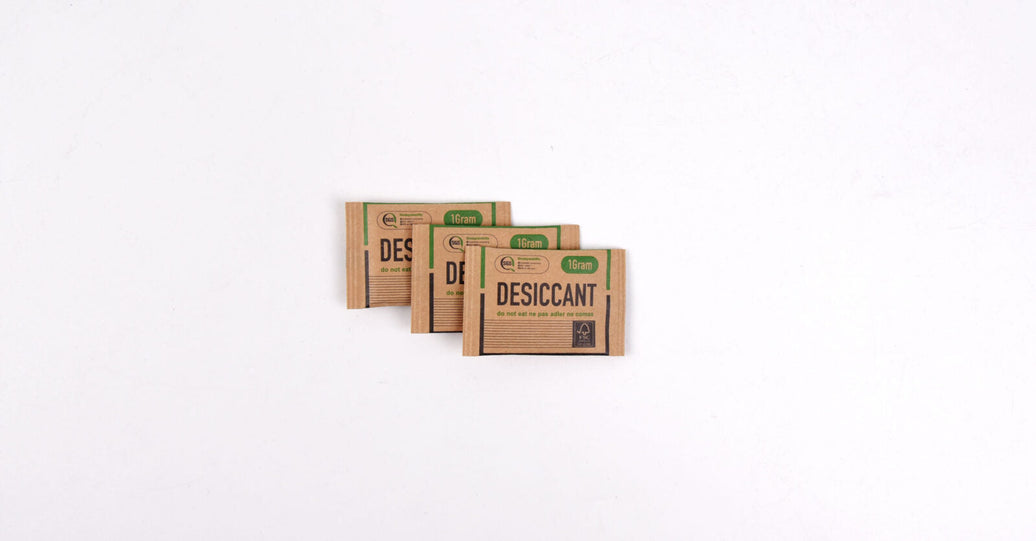
Quick answer: ATMOSIScience fiber desiccant (FPH-1) has a cradle-to-gate carbon footprint of 1.44 kg CO₂e per kg, quantified under ISO 14067:2018 and third-party-verified in a 2023 Product Carbon Footprint study. Silica gel sits at roughly 1.89 kg CO₂e/kg. Per kilogram, fiber is about 24% lower; and because one gram of fiber does the moisture work of about three grams of silica, on a same-job basis fiber cuts embodied carbon by up to ~75%.
Sustainability claims on desiccants are usually vague. This one is a number with a certificate behind it. ATMOSIScience commissioned a Product Carbon Footprint (PCF) study of its fiber desiccant under the international standard for product carbon accounting — here is exactly what it found, and how to read it honestly.
The verified figure
The study reports a PCF of 1.44 kg CO₂e per 1 kg of Fiber Desiccant FPH-1. The key parameters:
- Standard: ISO 14067:2018 (with ISO 14040/14044 and the TfS chemical-industry guideline).
- Boundary: cradle-to-gate — raw-material extraction, transport, and production.
- Functional unit: 1 kg of finished desiccant.
- Verification: independent PCF study (programme operated by Carbonebook; report issued by a third-party assessor), with a documented data-quality score.
That combination — recognized standard, defined boundary, real production data, external verification — is what separates a defensible carbon figure from a marketing adjective.

Reading it honestly: two ways to compare
There are two legitimate ways to state the advantage, and it is worth being precise about both:
1. Per kilogram of material: 1.44 vs ~1.89 kg CO₂e/kg — fiber is about 24% lower.
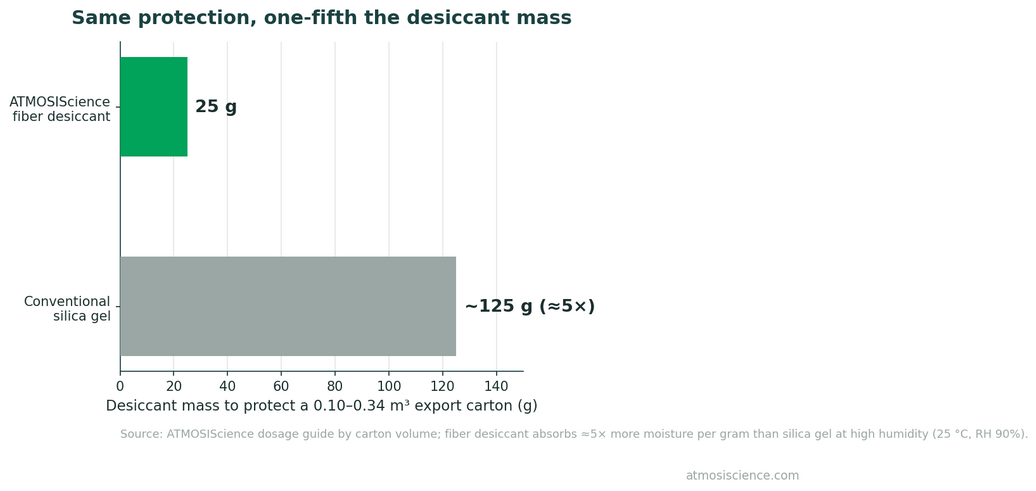
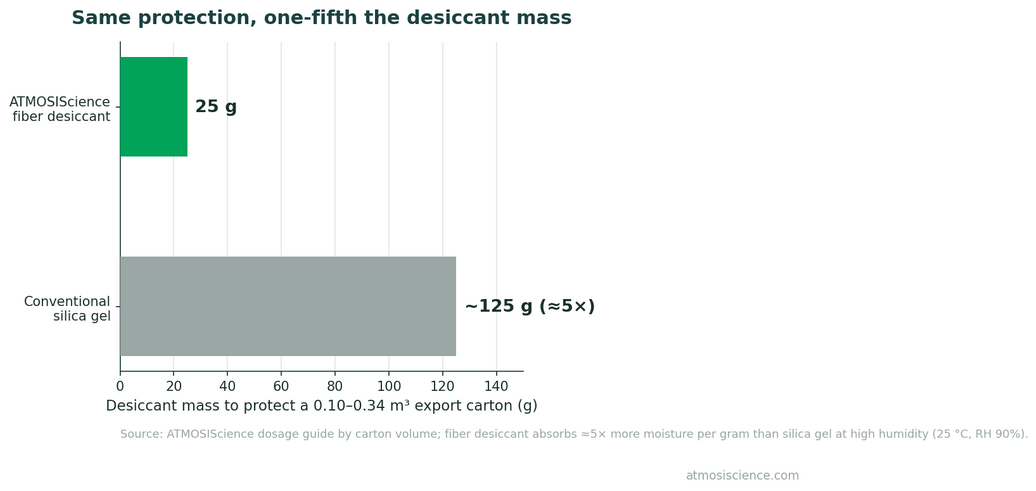
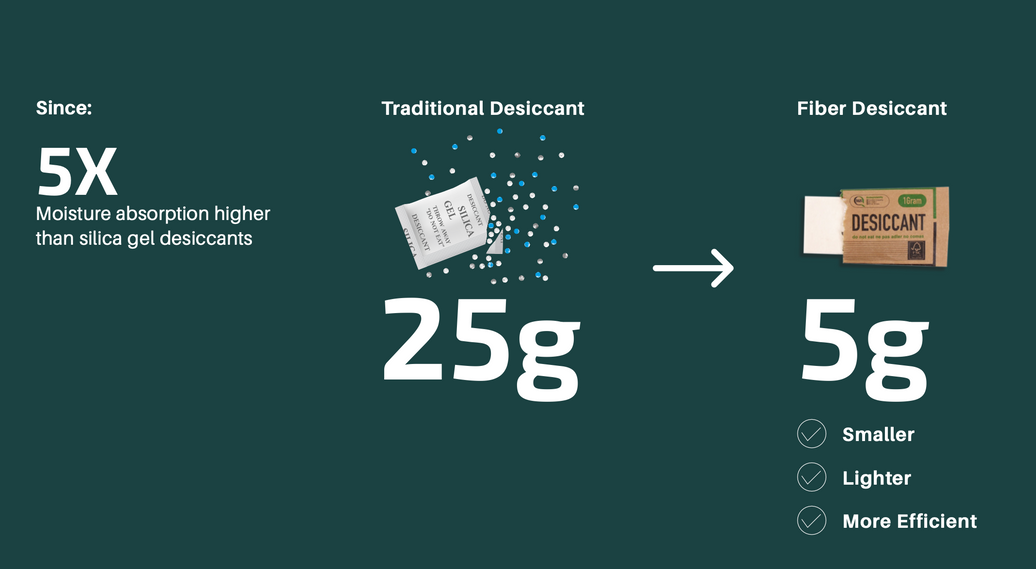
2. Per unit of moisture protection (the number that matters in a package): because 1 g of fiber absorbs roughly what 3 g of silica does, delivering the same protection with silica means ~3× the mass and ~3× its per-kg footprint (~5.67 kg CO₂e) versus 1.44 for fiber — a reduction of up to ~75%.

ATMOSIScience states it the second way because that is how a buyer actually uses the product — but the honest framing is "up to ~75% lower on a same-job basis," not a figure greater than 100%. The equivalency math is in silica gel equivalency.
Why the footprint is low
The material stack drives it: a plant-fiber (lignocellulose) substrate and a biodegradable PLA binder rather than energy-intensive mineral processing. The full composition is in what's inside a fiber desiccant. And because you ship fewer grams for the same protection, the downstream freight and end-of-life costs fall too — itemized in the true cost of silica gel.

Why it matters in 2026
With EU PPWR applying from 12 August 2026 and US state EPR fees pricing packaging by material, a verified low-carbon, compostable desiccant is no longer just a nice story — it is a documented line item procurement and sustainability teams can use. Just make sure any green claim matches its certificate, as covered in compostable desiccant & the Green Claims Directive.
FAQ
Is 1.44 kg CO₂e/kg cradle-to-gate or cradle-to-grave?
Cradle-to-gate — it covers raw materials, their transport, and production, and excludes the use and end-of-life stages. That is the standard boundary for comparing a packaging component.
Where does the silica gel figure come from?
~1.89 kg CO₂e/kg is the reference value used in the same comparison. As always, like-for-like comparison depends on boundary and data source — ask any supplier for their standard and boundary.
Can ATMOSIScience share the PCF report?
The verified figure and study parameters can be shared with buyers evaluating the product for a sustainability file. Request it via the form below.
Does a lower carbon footprint mean weaker performance?
No — the capacity is higher, not lower. Fiber reaches up to 100% of its own weight at saturation, ~3× silica. Green here is not a performance trade-off.
Building a sustainability or EPR file?
Request the ISO 14067 carbon figure, compostability standards and food-contact documentation for your application — the exact papers your QA and sustainability teams will ask for.