Quick answer: A cannabis or hemp operation has three distinct moisture problems, not one. Post-harvest flower needs a held humidity band — typically 55–62% RH — where both drying out and microbial growth are failures. Isolate, distillate-loaded and water-soluble powders are strongly hygroscopic and need aggressive protection. Finished packaged goods need a desiccant that survives distribution and passes state testing requirements. Only the first of the three wants two-way control; the other two want capacity.
Most moisture guidance written for this industry addresses the flower room and stops there. That leaves the two segments where product value is highest — concentrates and formulated goods — running on assumptions borrowed from a different problem.
Stage 1: post-harvest and bulk flower storage
Flower is the one place in the operation where a humidity floor is as real as a ceiling. Above roughly 65% RH, microbial risk rises sharply and a batch can fail state-mandated testing. Below roughly 55%, terpenes volatilise, trichomes become brittle, and the material loses both weight and quality.
That band is why a one-way desiccant is the wrong tool for bulk flower. A material that drives toward zero produces a different failure than the one being prevented. Two-way humidity control holds the band in both directions: adsorbing when the enclosure is too humid, releasing when it is too dry. Principle: why "drier is better" is wrong.
Freeze-drying has changed the timeline for part of this segment — lyophilisation compresses a seven-to-fourteen-day dry into roughly 24 to 48 hours and largely bypasses the mould window. It does not remove the storage problem. A freeze-dried batch coming out of the chamber is drier than target and sits in an enclosure that must now hold it at the band rather than continue removing water.
Stage 2: concentrate, isolate and water-soluble powders
This is the stage most operations under-protect. The materials involved behave nothing like flower.
- Crystalline isolate readily picks up surface moisture, which causes clumping, then fusion into a solid mass that has to be reprocessed.
- Distillate-loaded powders — carrier systems used for capsules, edibles and beverages — combine a hygroscopic carrier with an oil load and cake readily.
- Water-soluble and emulsified powders are built to dissolve. That is exactly why ambient humidity attacks them: the property that makes them work in a beverage makes them fragile in a drum.
- Terpene-containing blends lose volatiles alongside moisture movement, so over-drying costs product character as well as weight.
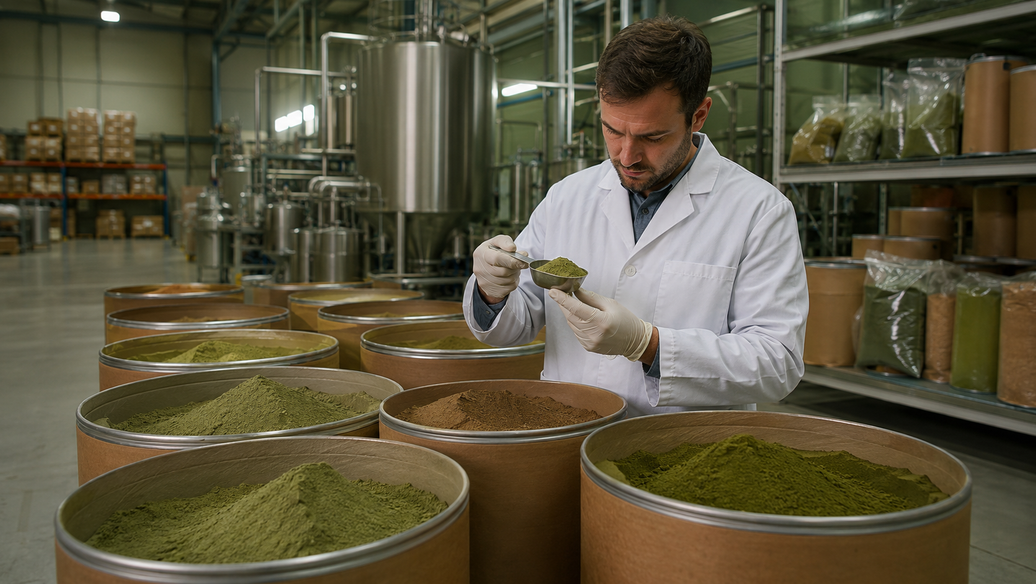
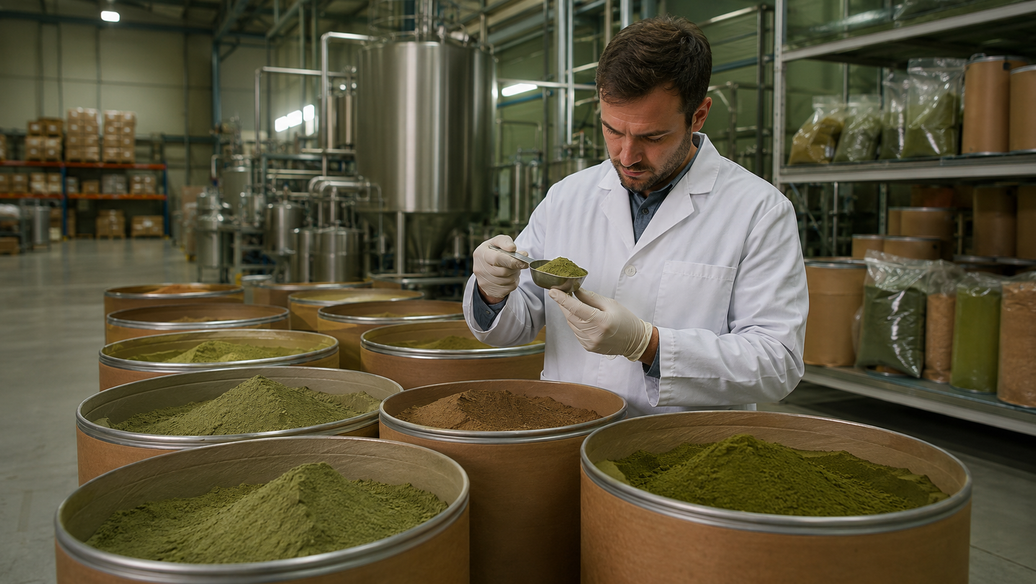
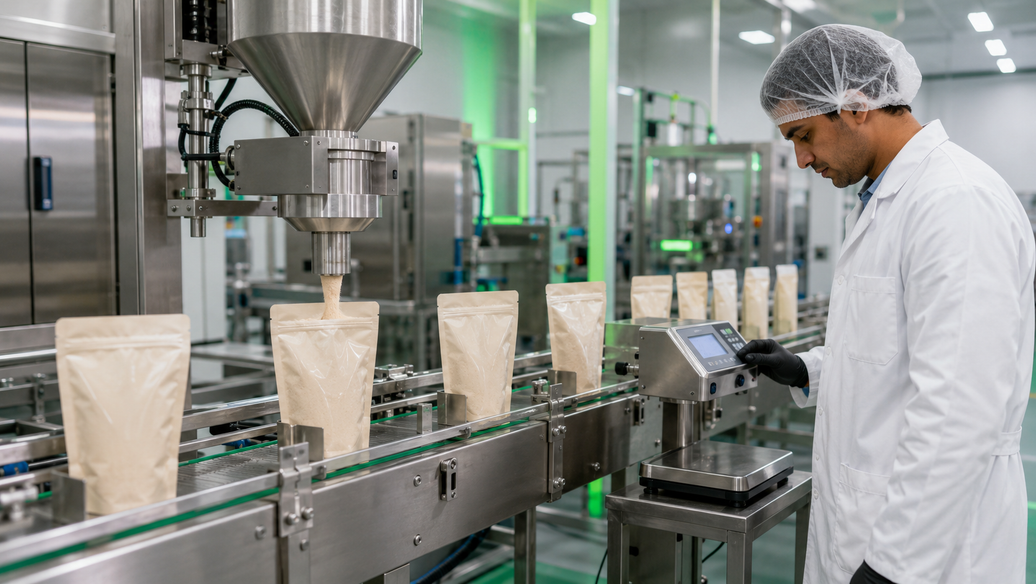
Bulk storage here is drums, pails and totes with substantial headspace, opened repeatedly for sampling and dispensing. Each opening admits ambient air, which makes the opening term — not permeation — the dominant load. The mechanism is identical to any hygroscopic botanical: desiccant for botanical extract powders.

Stage 3: finished packaged goods
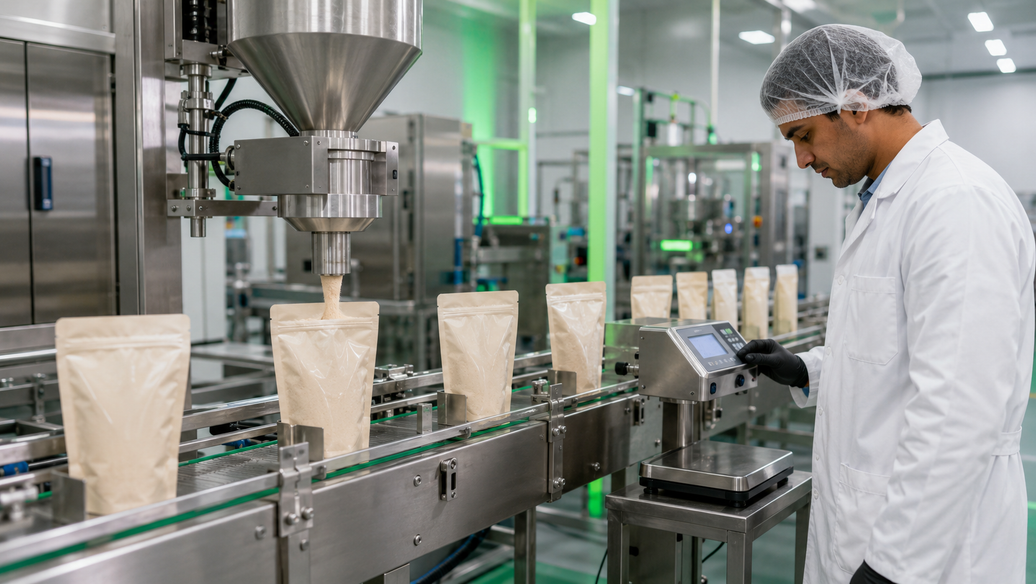
Finished goods face a different constraint set: consumer-facing packaging, child-resistant closures, state compliance testing, and a distribution chain the producer does not control.
Requirements that consistently apply:
- Food-grade documentation. Ingestible products need food-contact evidence — FDA 21 CFR 175.300 documentation on the fiber platform. Detail: direct vs. indirect contact.
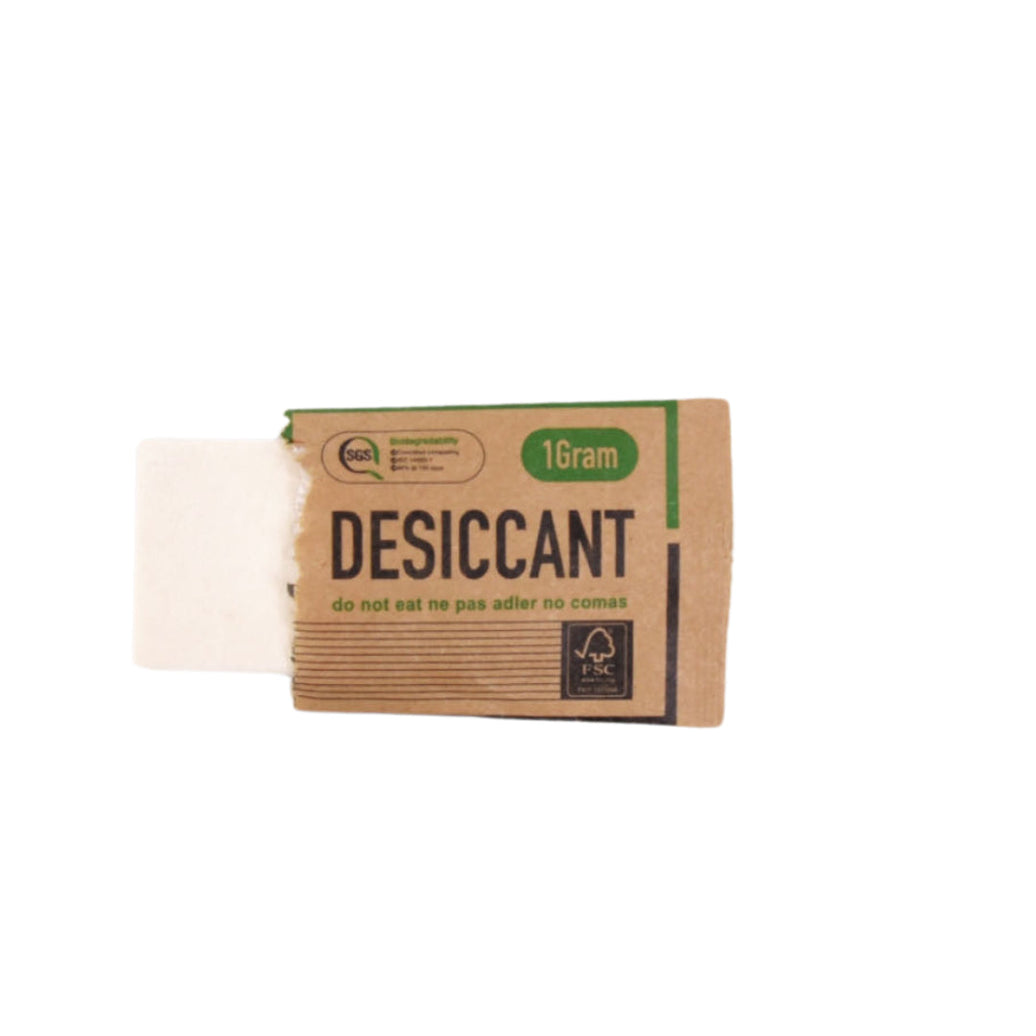
- No shed particulate. A loose bead in a consumer cannabis product is a complaint and potentially a regulatory event. Bound-pad construction removes the failure mode. Context: loose-fill desiccant risks.
- Correct direction. Flower products want a held band. Edibles, gummies and powders want capacity. Gummy-specific behaviour: stopping stickiness without over-drying.
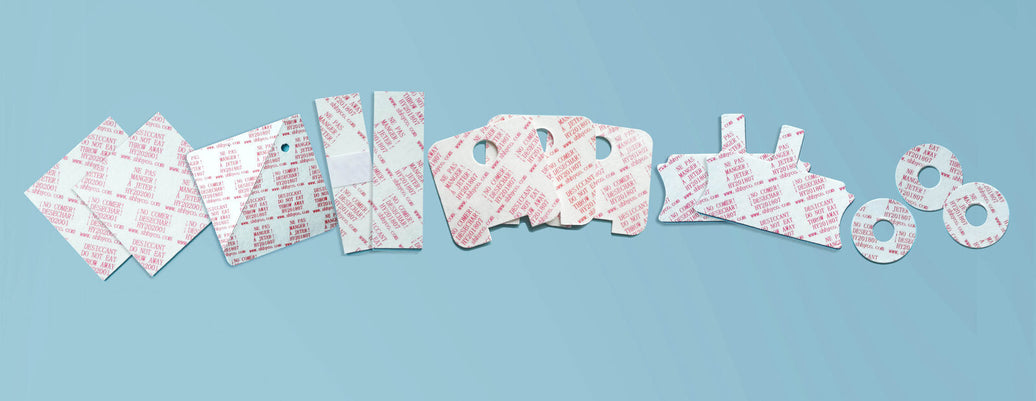
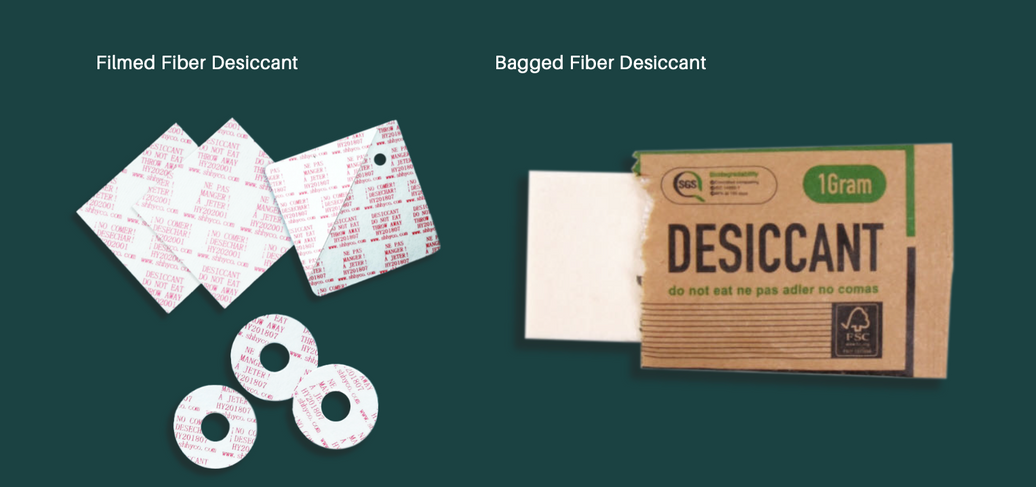
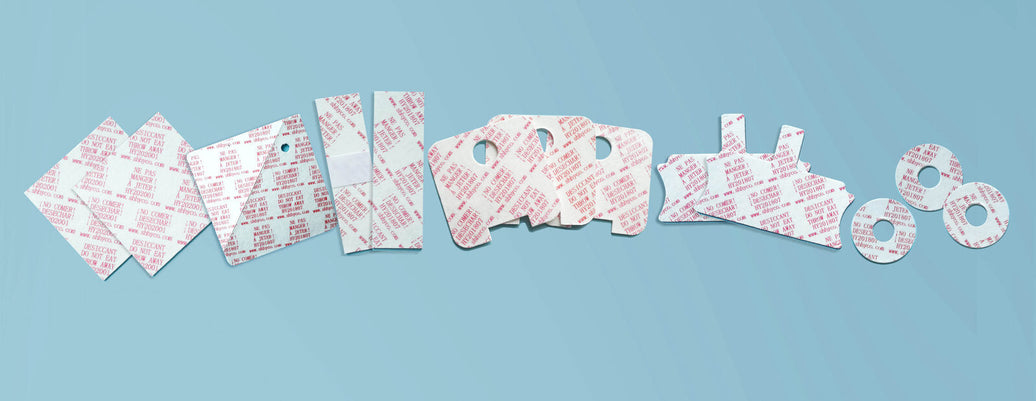
- Format fit. Pouches, jars and rigid containers each have different headspace and closure geometry. Selection: sachet, film card or cap insert.
The sustainability angle is a real buying factor here
Cannabis packaging carries heavy regulatory weight — child-resistant closures, mandated labelling, opaque materials — and consumer criticism of that weight is persistent. Producers looking to offset it are examining every in-pack component.
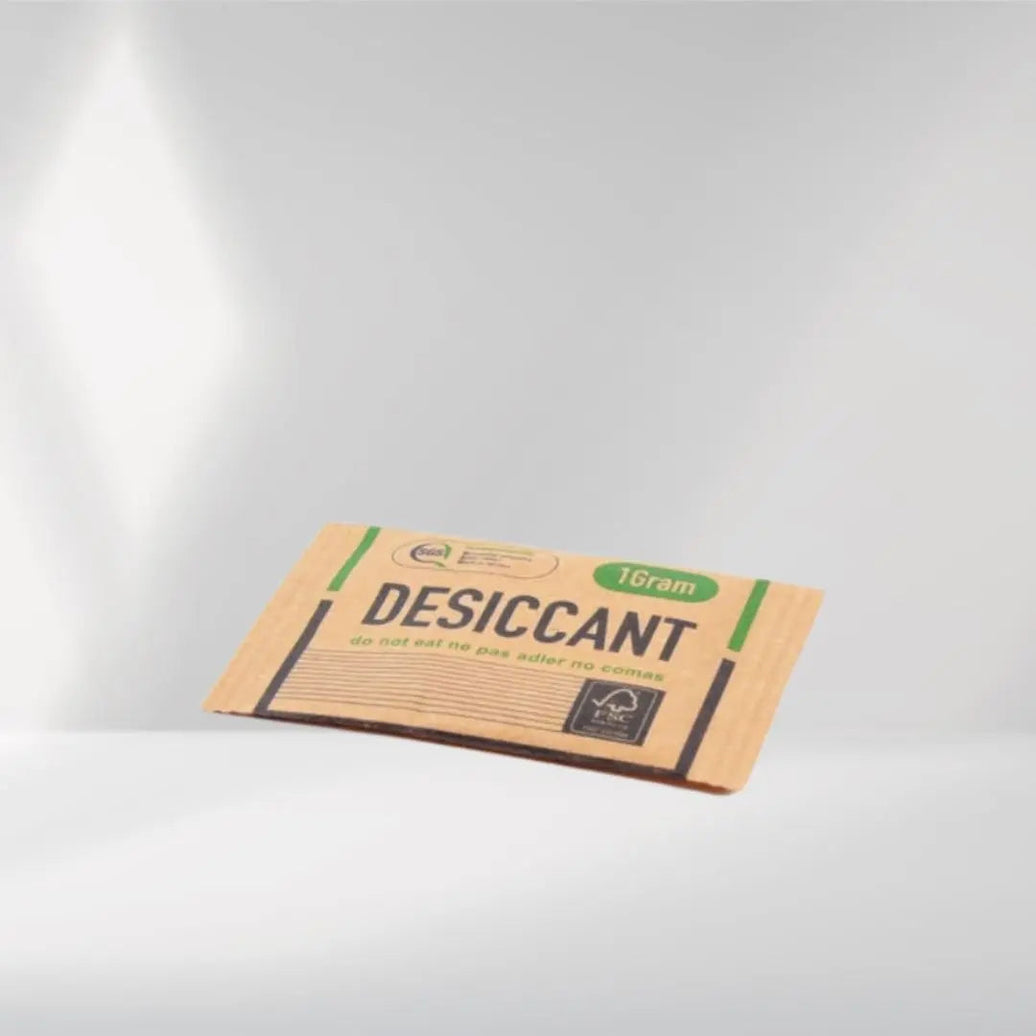
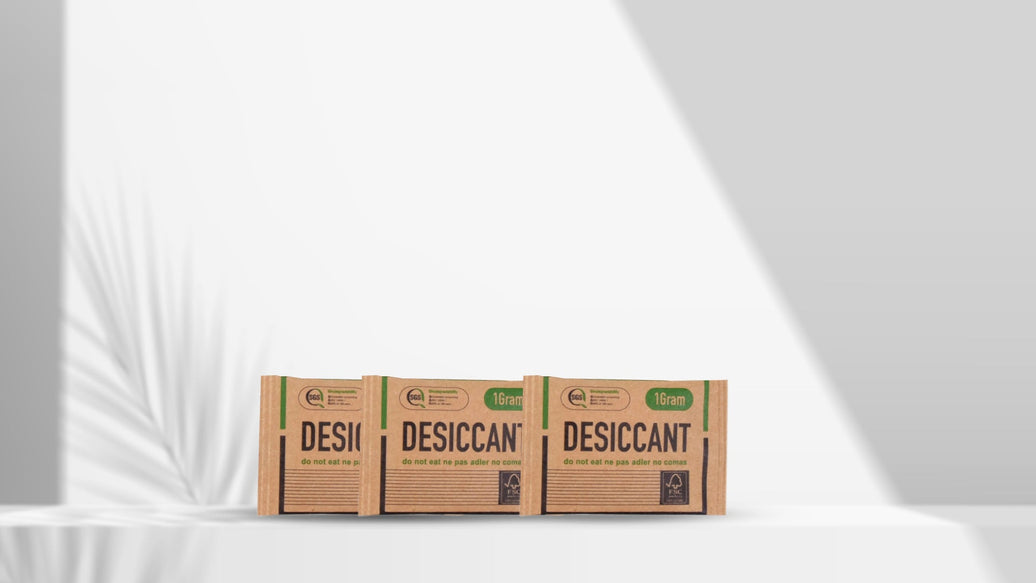
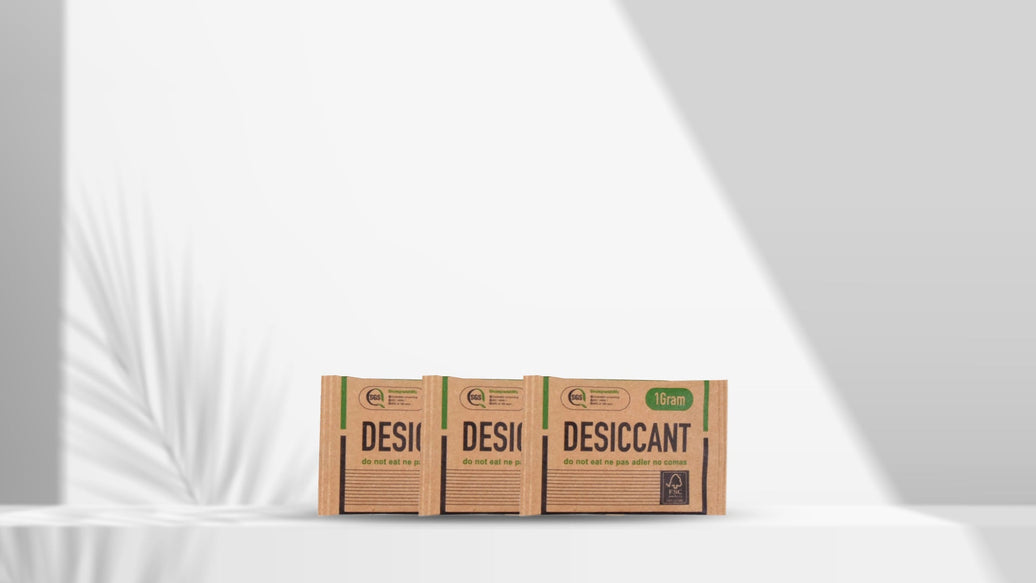
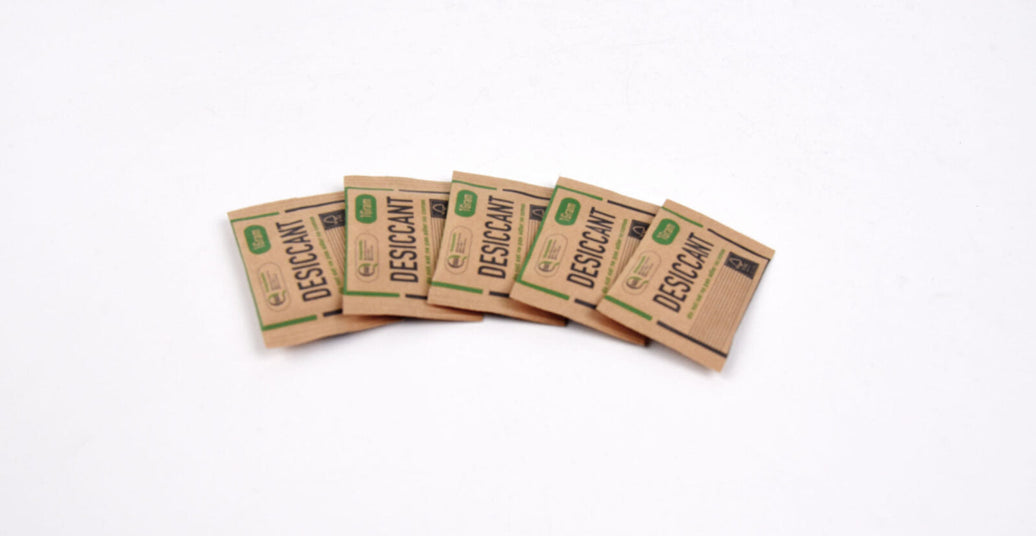
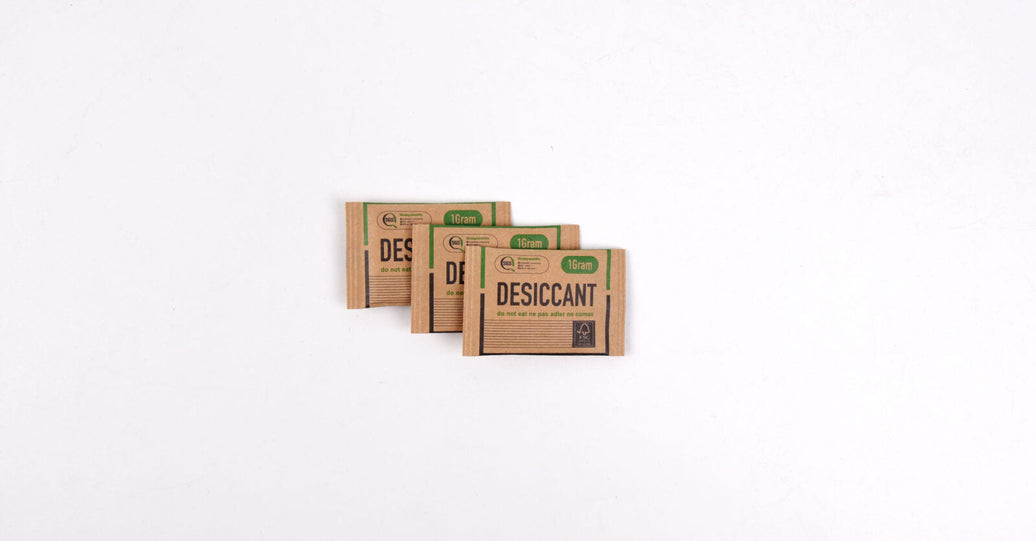
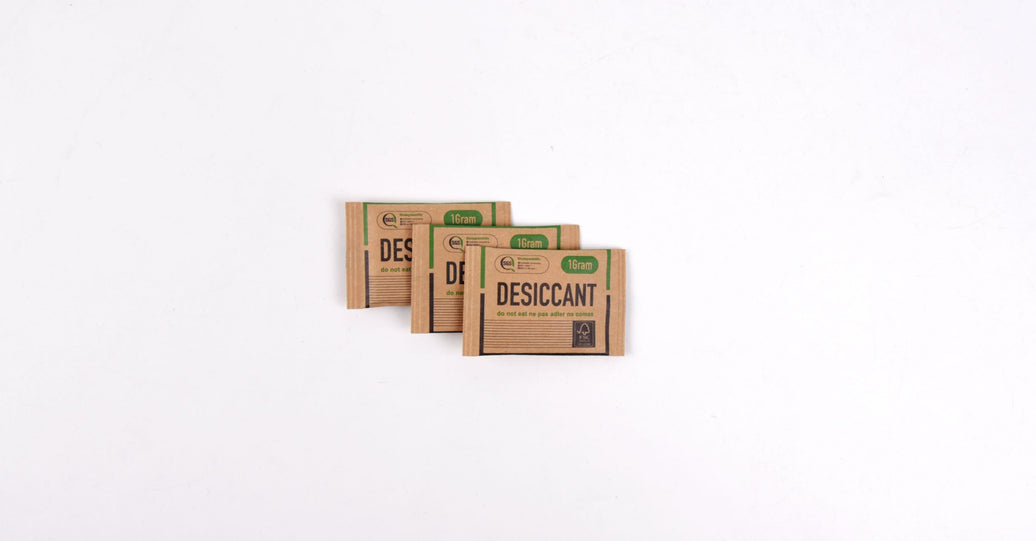
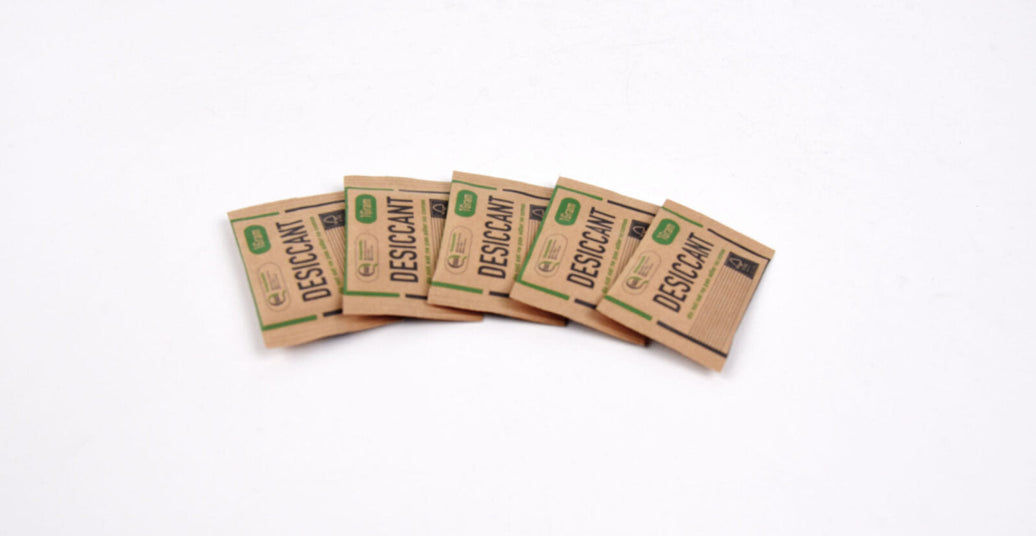
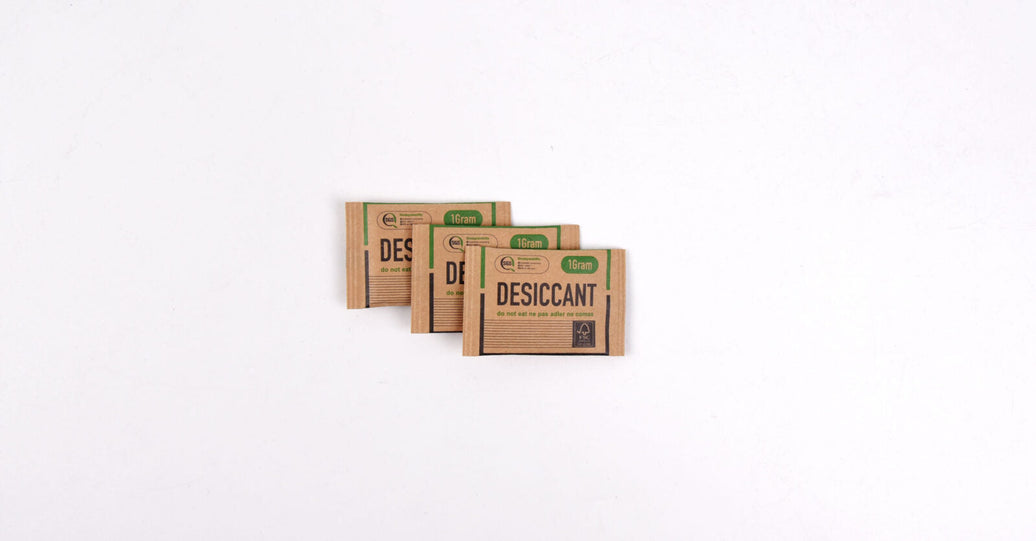
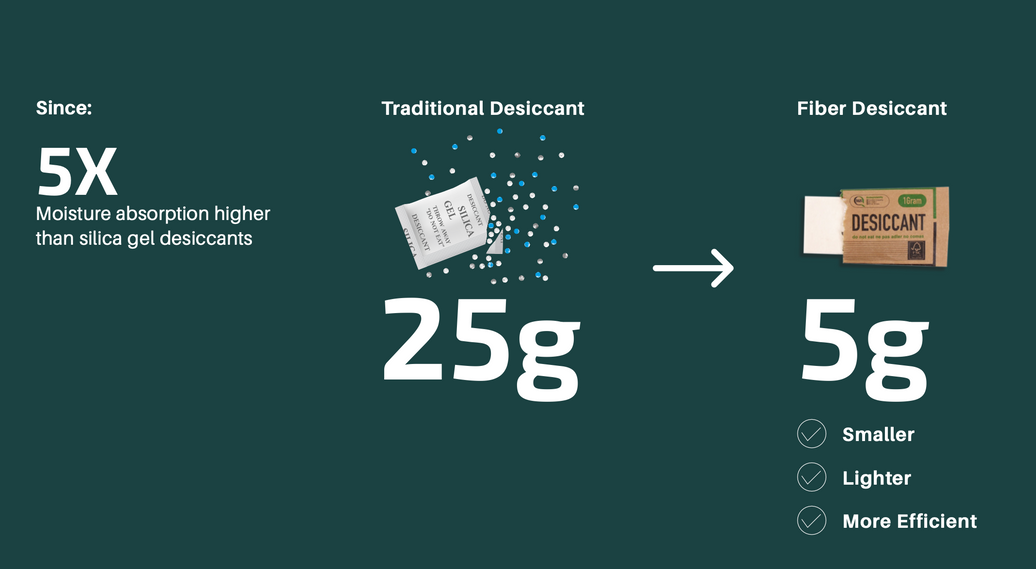
A compostable desiccant is one of the few components that can be swapped without touching a compliance-critical element. On the fiber platform the adsorbent substrate is natural plant fibre and 100% degradable, with pouch films compliant with ASTM D6400 and EN 13432, and a verified carbon footprint of 1.44 kg CO₂e per kg against 1.89 for silica gel under ISO 14067. Broader framing: the sustainable desiccant guide.
Sizing across the three stages
| Stage | Dominant load | Control type |
|---|---|---|
| Bulk flower | Enclosure volume, opening cycles | Two-way, band-held |
| Isolate / powders | Opening cycles, headspace | High capacity |
| Finished goods | Permeation over shelf life | Product-dependent |
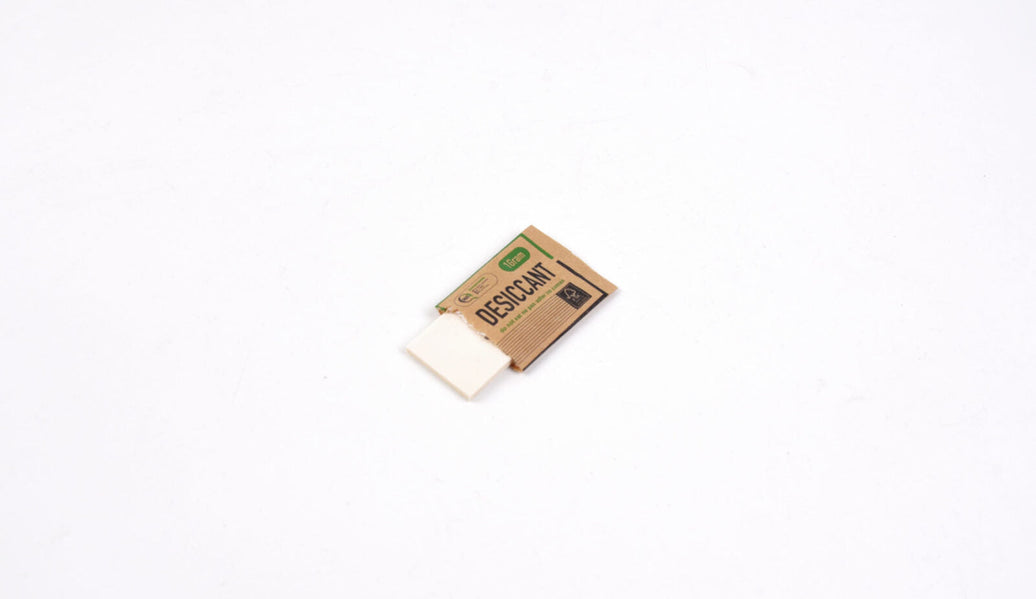
Pouches are customisable from 1 g to 1,000 g, which covers the range from a retail jar to a tote. General method: dosage by volume.
Frequently asked questions
What humidity should cannabis flower be stored at?
Commonly 55–62% RH. Above that band microbial risk climbs and testing failures become likely; below it, terpene loss and brittleness set in.
Can the same desiccant serve flower and isolate?
Not the same specification. Flower needs a two-way material holding a band; isolate needs capacity driving humidity down. Same platform, different configuration.
Does freeze-drying remove the need for humidity control?
No. It shortens the dry and reduces mould exposure during processing, but freeze-dried material still equilibrates with its storage environment afterwards — often from a drier-than-target starting point.
What does a state compliance lab actually check?
Requirements vary by state, but microbial limits and water activity or moisture content appear in most frameworks. Both are downstream of storage humidity.
Does a desiccant affect potency testing?
A correctly specified in-pack desiccant controls headspace humidity and does not interact with cannabinoids. Over-drying can affect measured weight and volatile content, which is an argument for band control rather than maximum dryness.
Spec moisture control across your operation
Send the stage — bulk flower, isolate storage or finished goods — with container size and target RH. ATMOSIScience returns a configuration and samples for testing.
Prefer email? info@atmosiscience.com