Quick answer: Concentrated botanical extracts — 10:1s, standardized extracts, spray-dried juices — are dramatically more hygroscopic than the raw herb, because extraction strips fiber and concentrates sugars, acids and glycosides that pull water from the air. Protection has to run at three levels: bulk drums with high-capacity desiccant, in-line exposure discipline, and an in-pack sachet or card in the retail unit. Botanical extract demand is one of the fastest-growing moisture-control segments of 2025-2026.
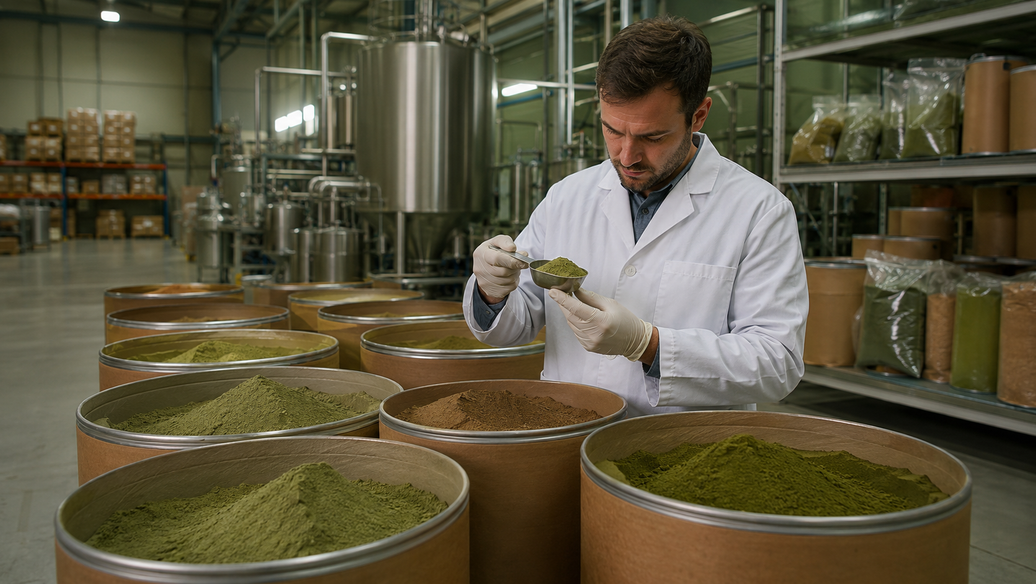
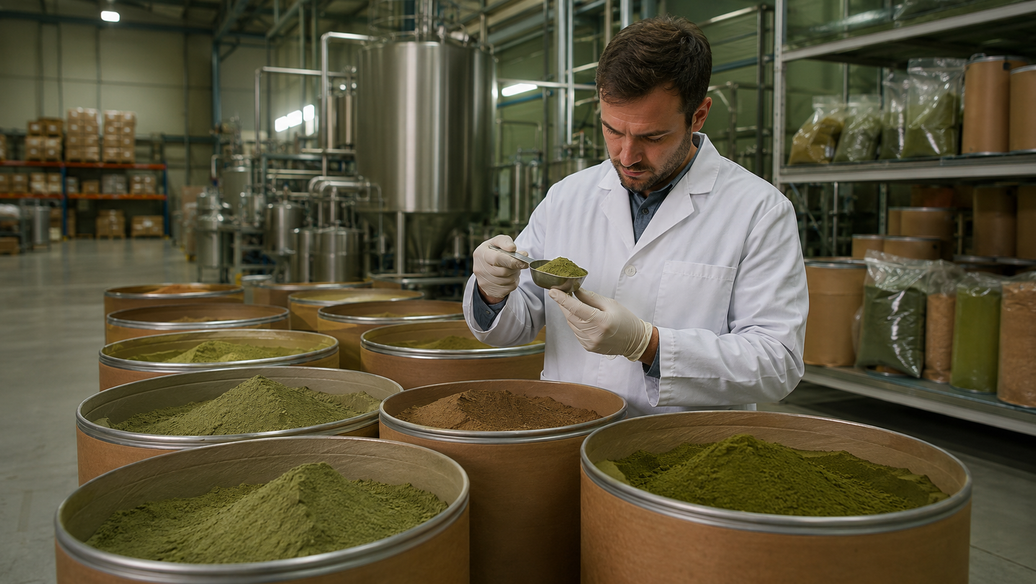
Extract manufacturers know the scene: a drum of green tea extract passes QC free-flowing, and three weeks later the co-packer reports a solid brick. Nothing "failed" — the extract simply did what concentrated botanicals do in humid air.

Why extracts cake faster than whole-herb powders
- Concentration concentrates the problem. A 10:1 extract carries ten times the soluble solids — sugars, organic acids, glycosides — that bind water. The raw herb's inert fiber, which once buffered moisture, is gone.
- Spray-dried particles are amorphous. Amorphous powders take up water faster than crystalline ones and collapse into stickiness at their glass-transition point; a few percent moisture gain can cross that line. The mechanism is the same one covered in why powders cake.
- Color, aroma and actives degrade wet. Moisture accelerates browning and actives loss, so caking is usually the visible symptom of a potency problem already underway — find your threshold with a moisture sorption isotherm.
Protection at three levels
1. Bulk: drums, liners and FIBCs
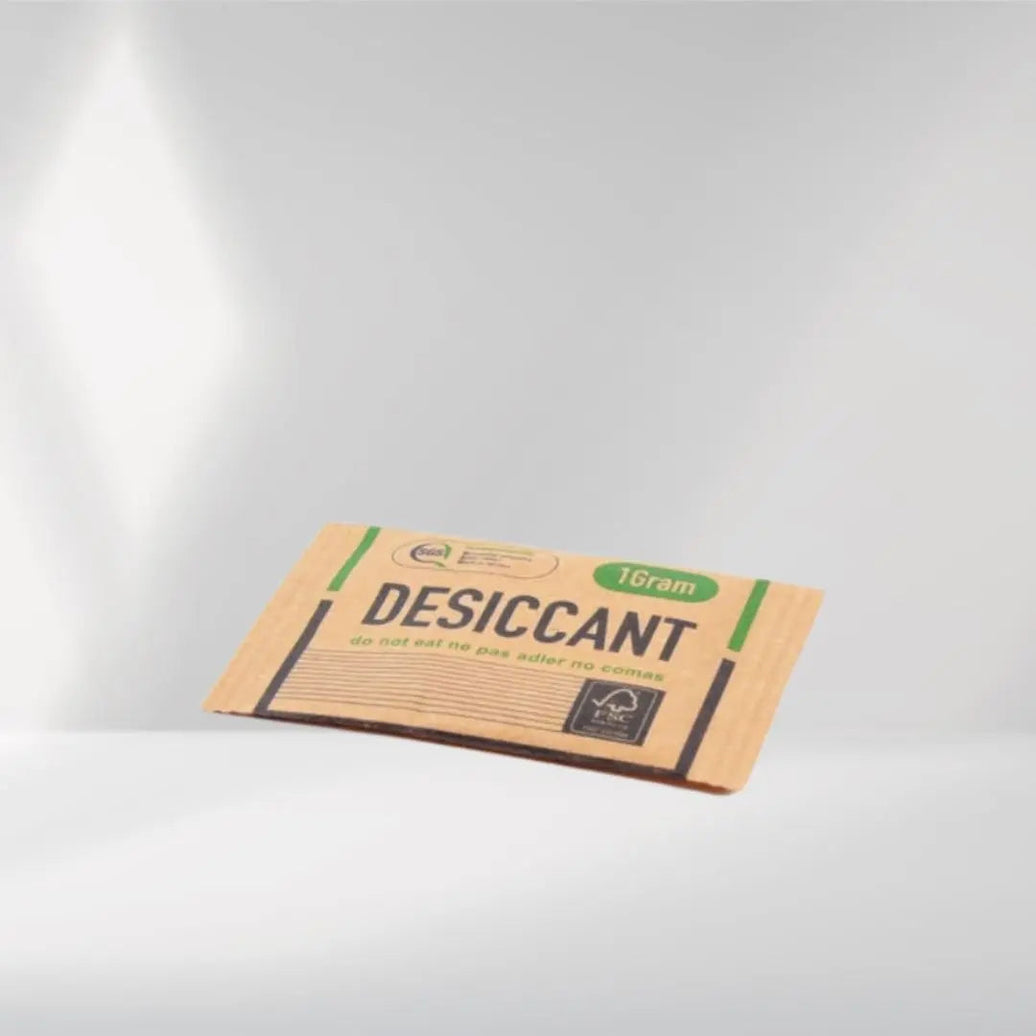
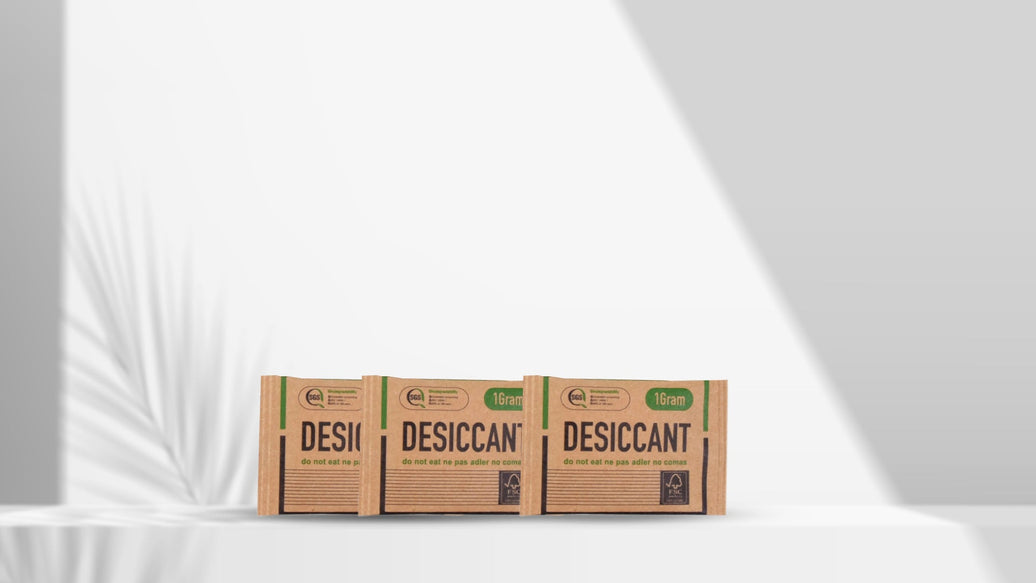
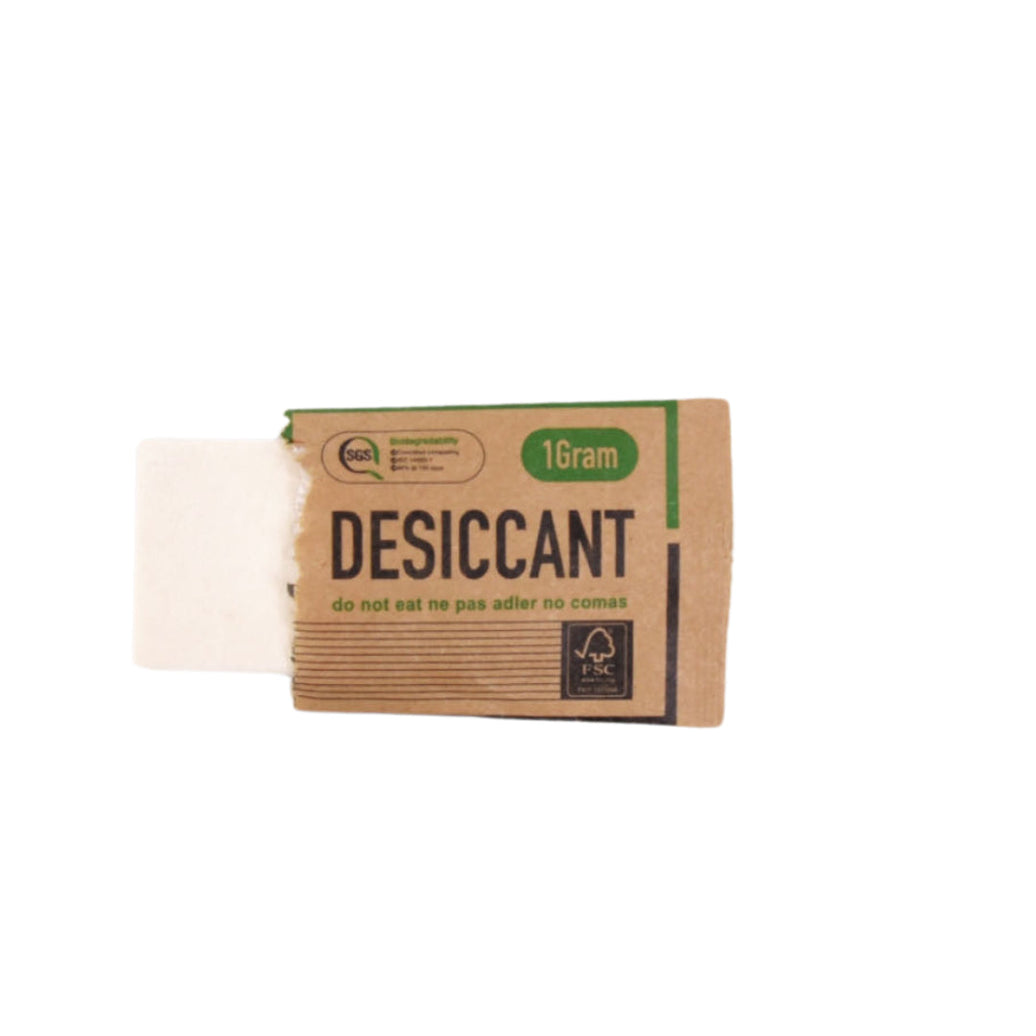
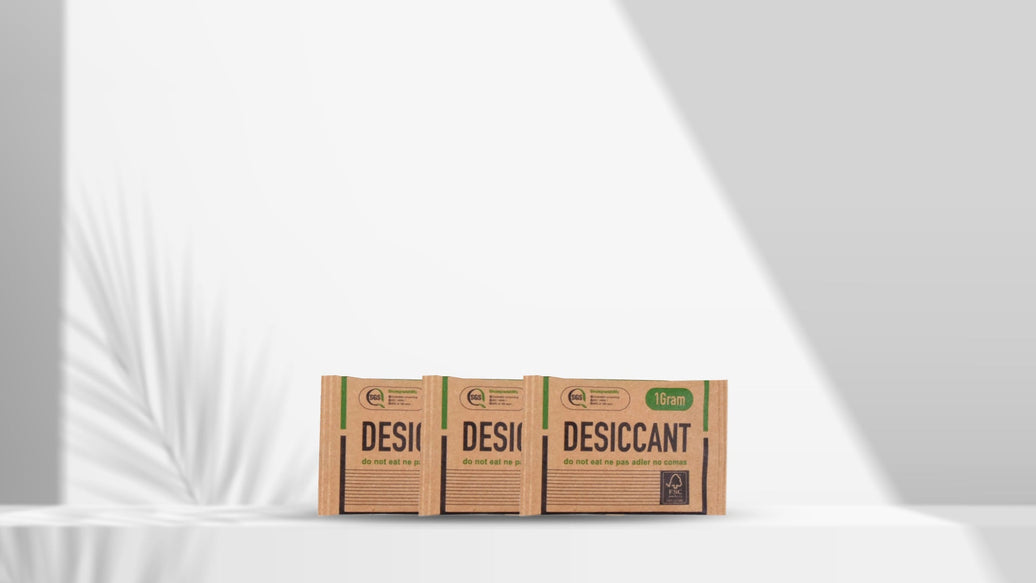
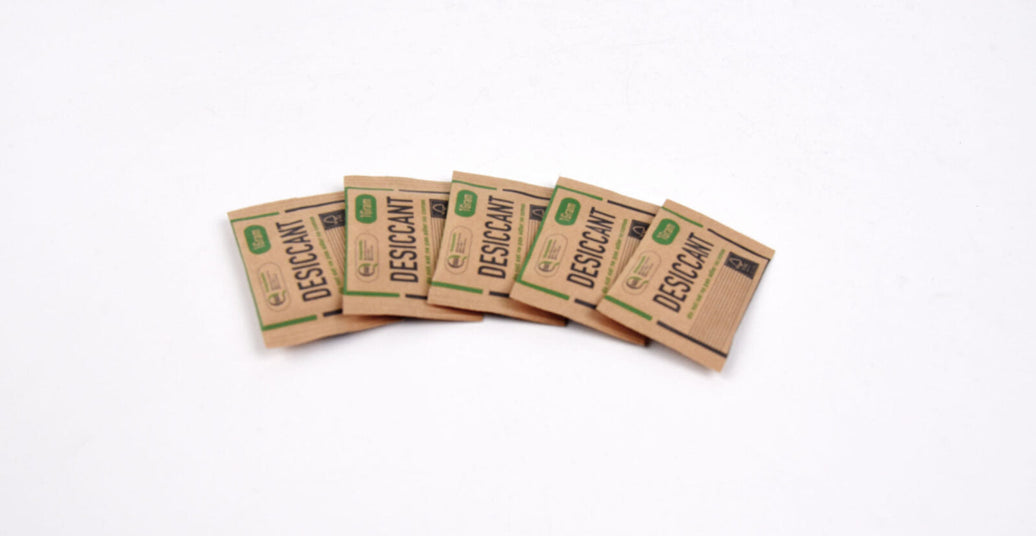
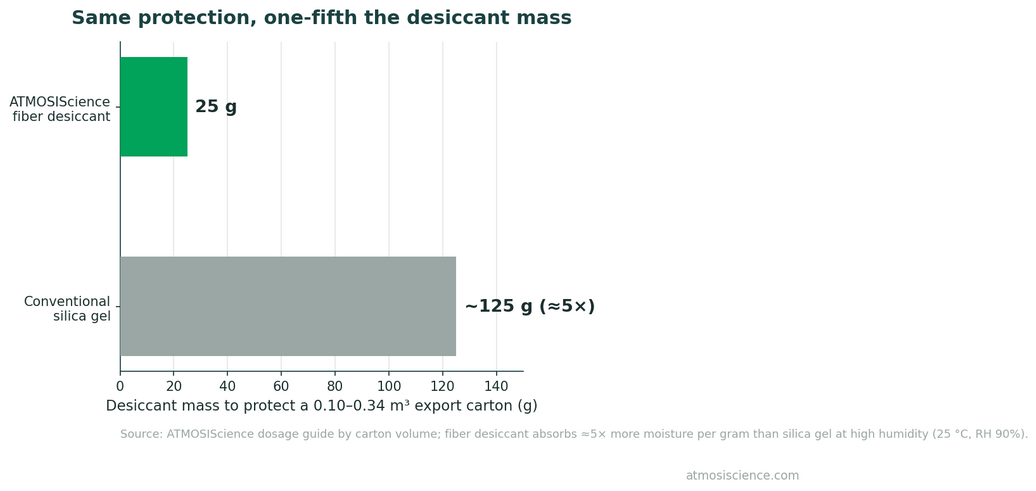
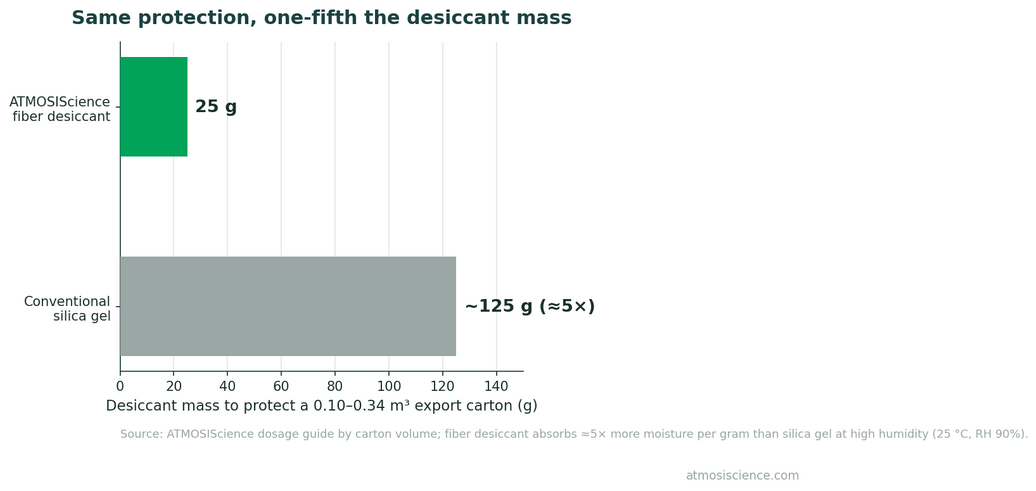
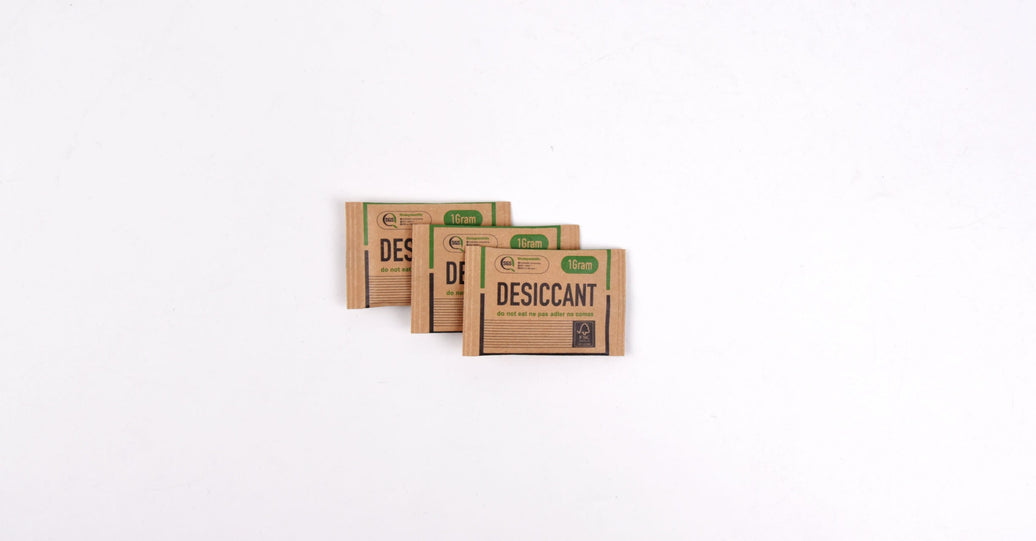
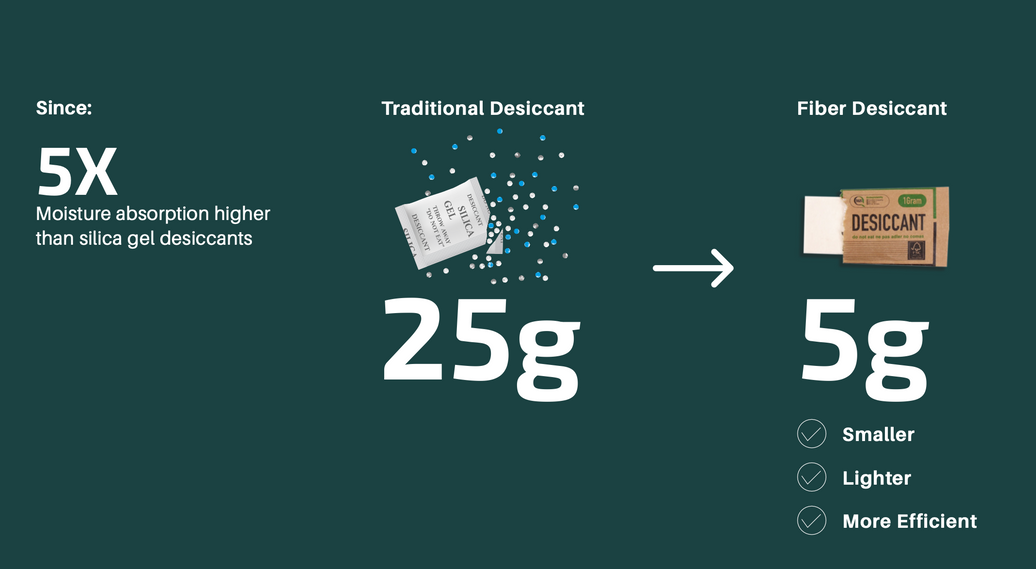
Extract makers shipping 25 kg drums to formulators need capacity, not sachet counts. ATMOSIScience fiber desiccant scales from 1 g to 1,000 g per pouch, so a drum gets one right-sized unit instead of a handful of consumer packets. The substrate adsorbs more than 70% of its own weight at RH 90% and keeps working across humidity bands (over 35% at RH 50%), with saturated capacity above 100% of its own weight — sized against the drum's headspace and the route, per the dosage guide.

2. Process: exposure discipline
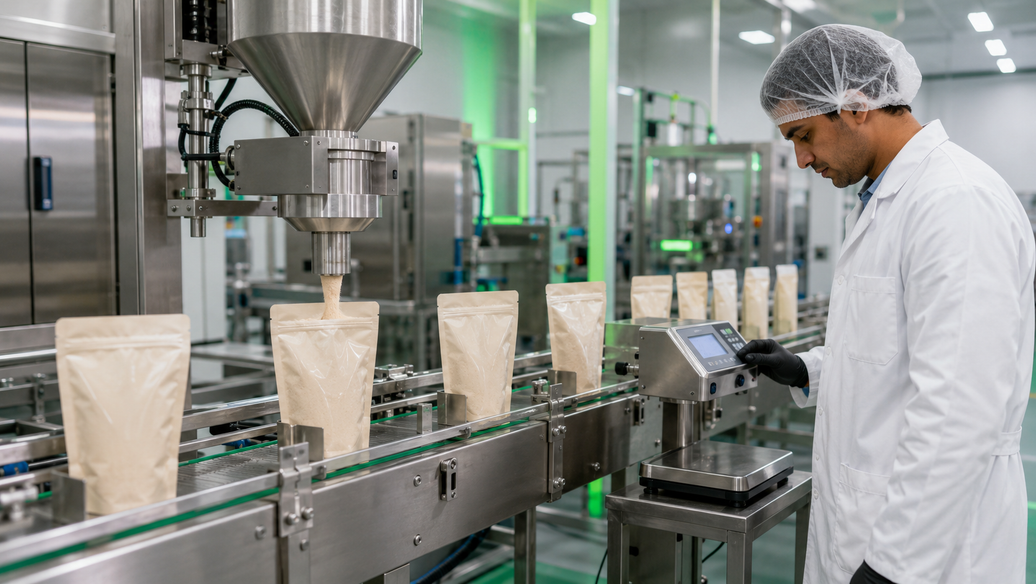
Every open-drum hour on a humid mezzanine spends shelf life. Keep drums sealed with desiccant between draws, stage the day's usage only, and watch in-plant RH — the fill-line economics are covered in the in-plant humidity analysis.
3. Retail: the in-pack unit
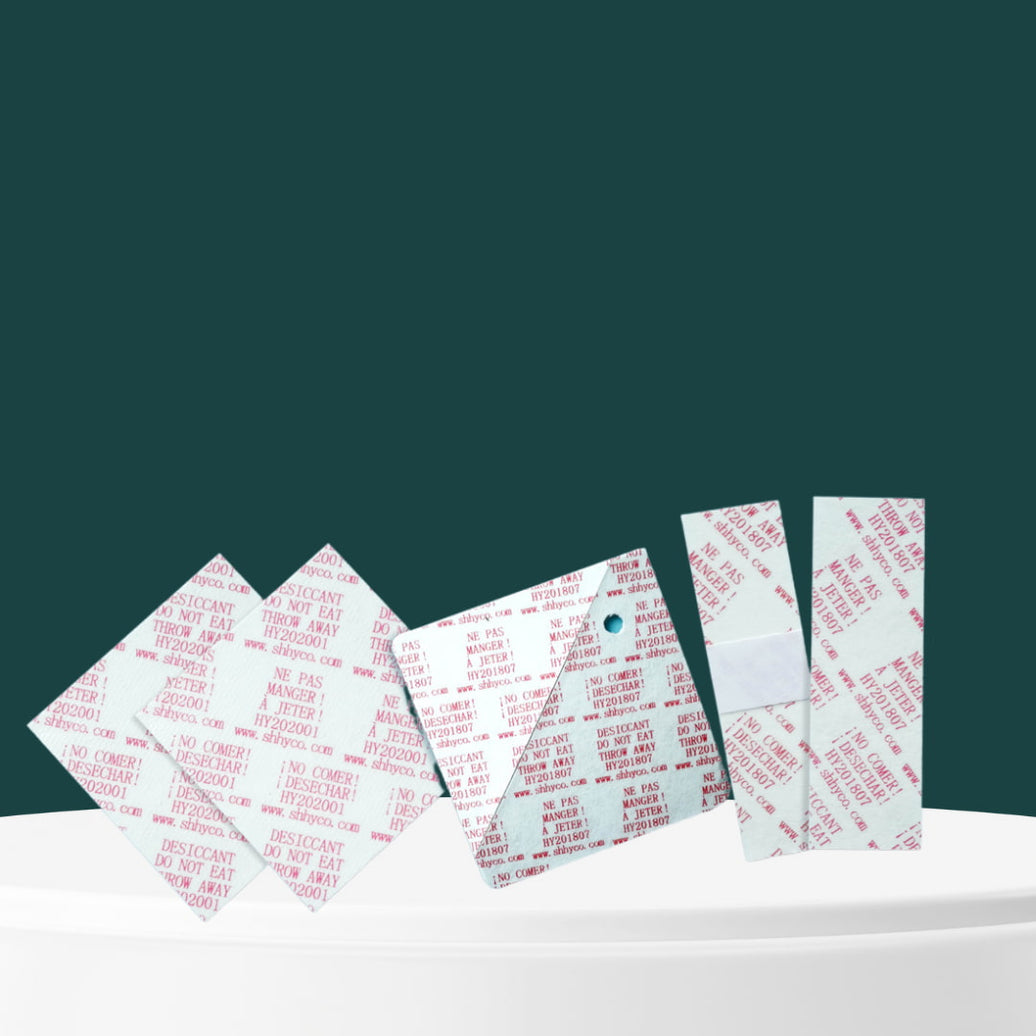
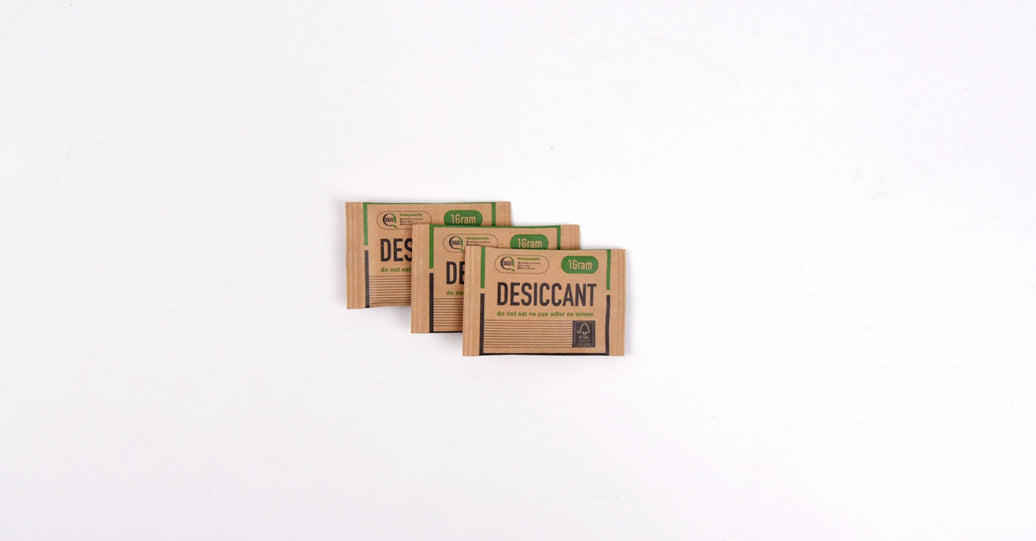
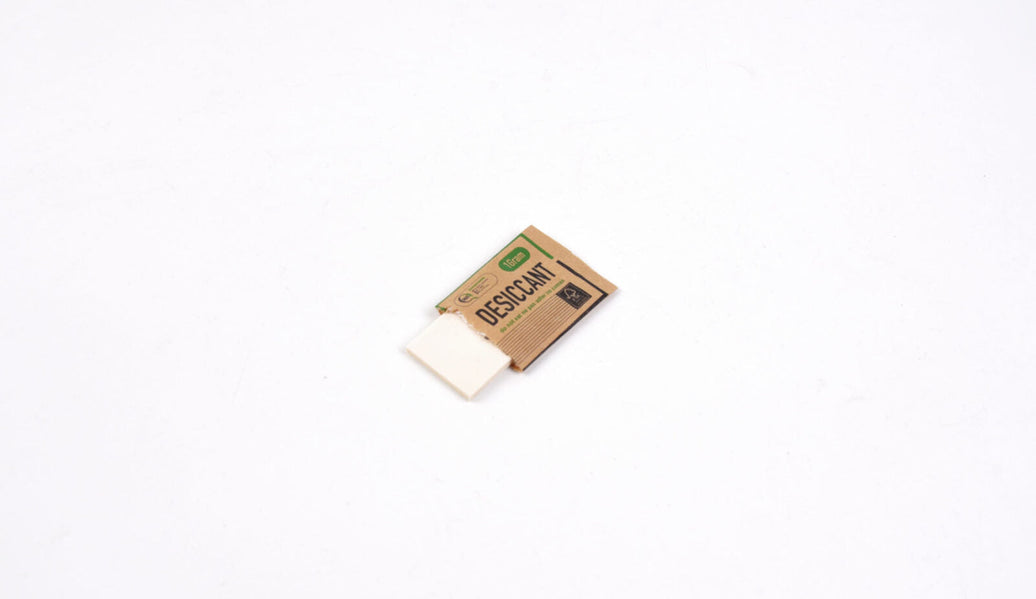
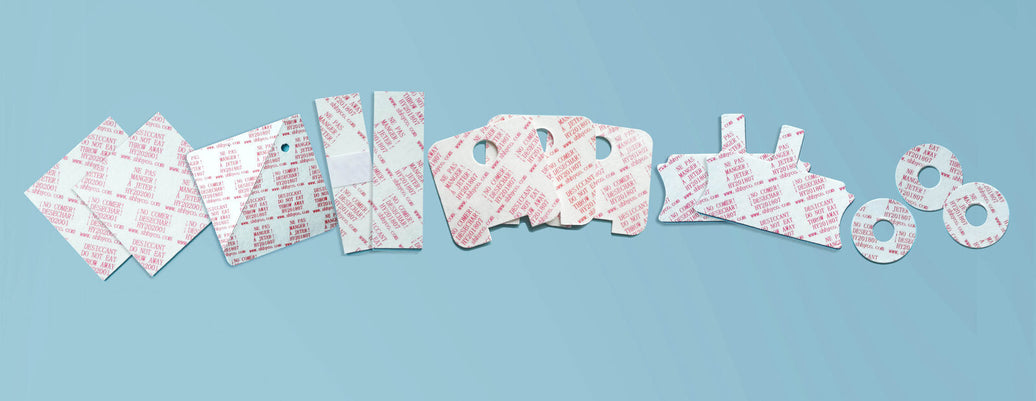
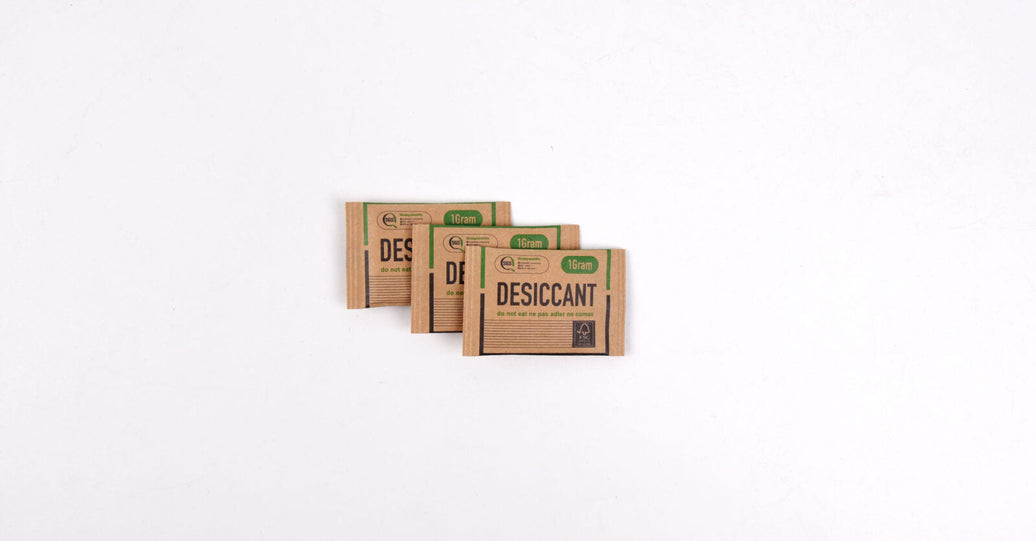
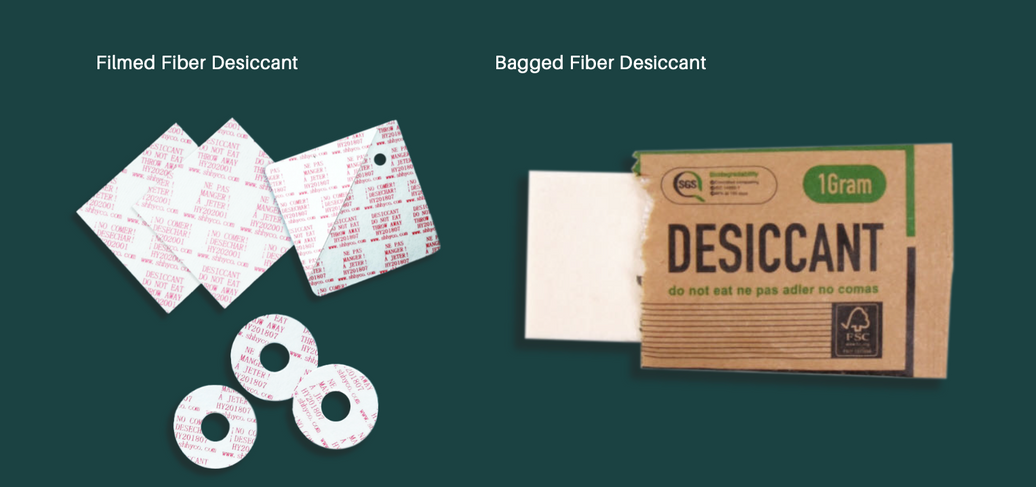
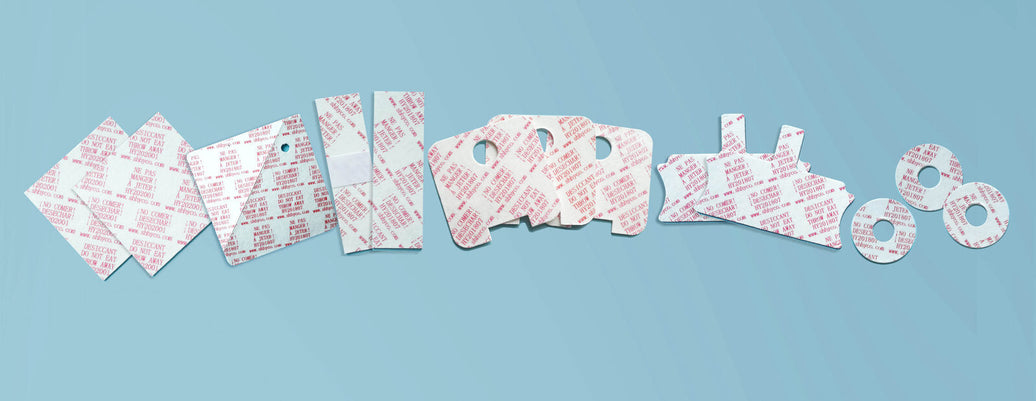
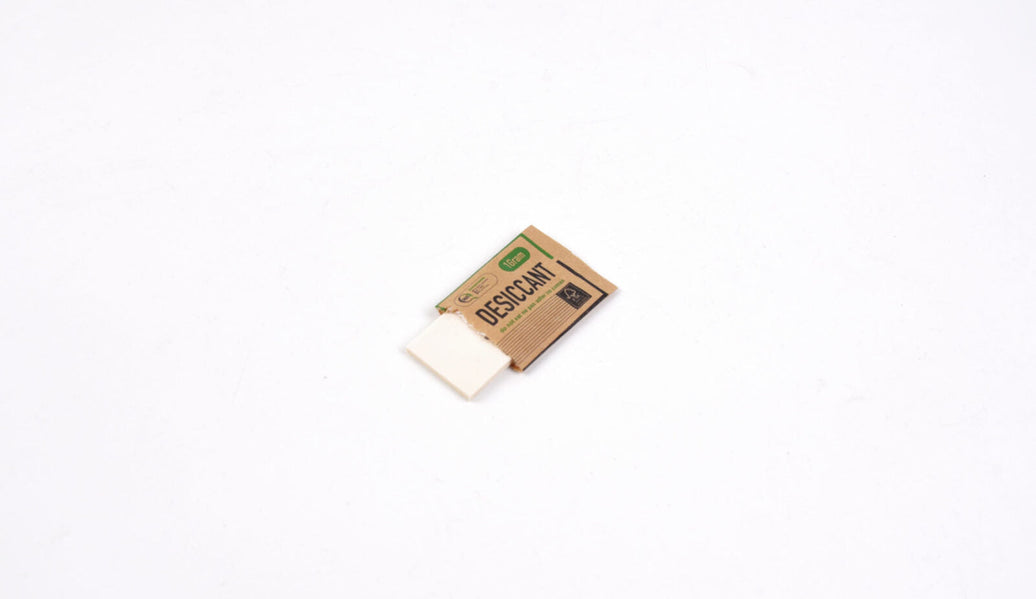
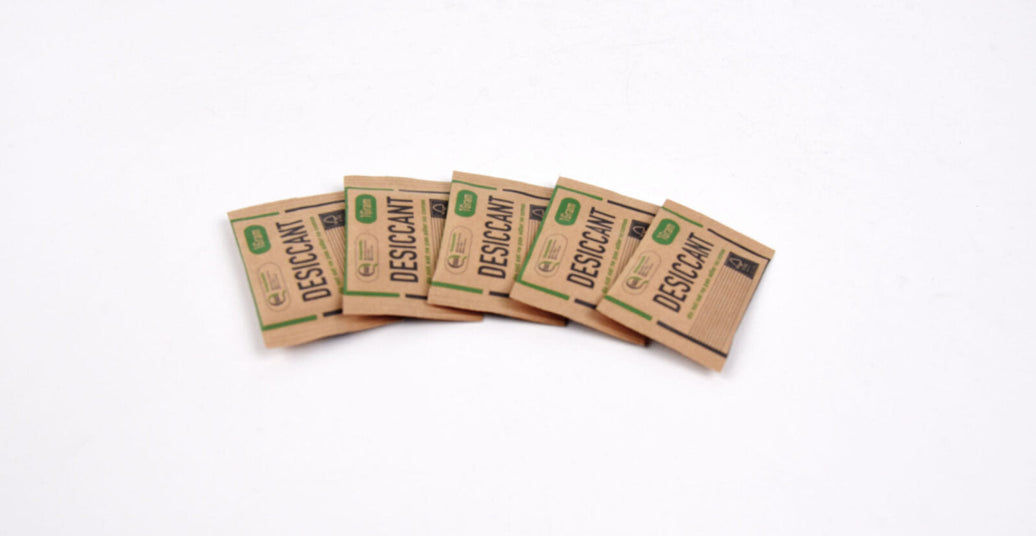
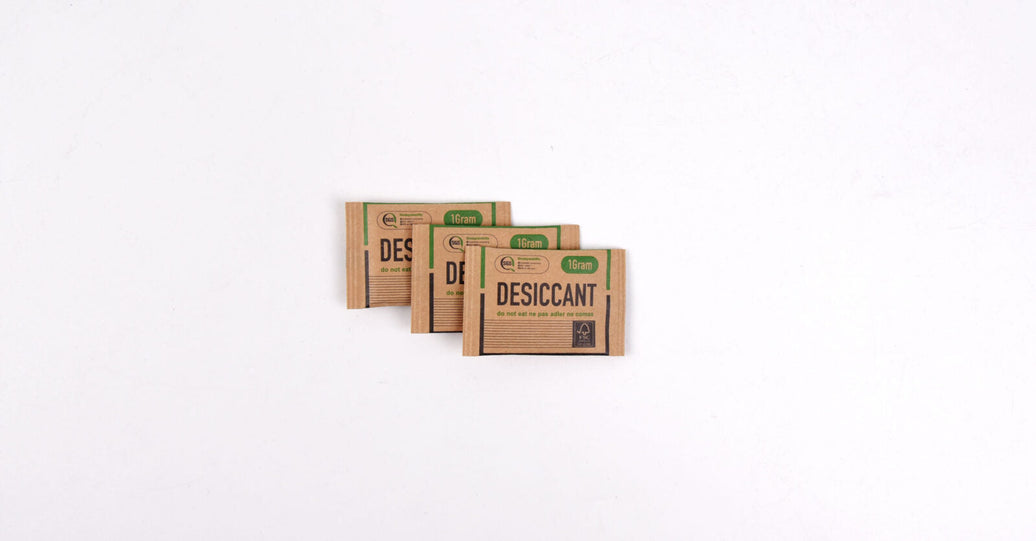
Extract-based supplements in pouches and tubs live through 30–60 opening cycles in a customer's kitchen. A food-grade fiber sachet or a printable film desiccant card (the paper-wrapped card format) holds the headspace down between openings. For clean-label botanical brands the compostable construction — plant-fiber sorbent, pouch films compliant with ASTM D6400 and EN 13432 — keeps the insert consistent with the brand story.
Segment notes
Mushroom and adaptogen lines: covered in a dedicated guide — functional mushroom powders. Greens blends: see greens & superfood powders. This guide covers the ingredient-side problem: concentrated single-botanical extracts moving B2B in drums before they ever reach a blend.
FAQ
What RH should botanical extract storage hold?
Lower than the extract's caking threshold with margin — which varies by botanical and carrier. Measure the isotherm, then spec the desiccant against worst-case transit; a worst-case trial validates before scale.
Do maltodextrin carriers fix hygroscopicity?
Carriers raise the glass-transition point and help flow, but they dilute actives and only delay moisture uptake — they don't stop it. Carrier plus desiccant is the standard architecture.
Can the desiccant sit in direct contact with the extract?
The fiber format is designed for in-pack food use: sealed pouch, no loose media to spill. Documentation for your QA file is described in the COA guide.
Protect the next extract lot
Send the botanical, format and route — ATMOSIScience returns a drum-to-retail protection spec with samples for your worst-case trial.