Quick answer: In a co-packed product, the brand owns the moisture requirement and the co-packer owns the execution — but most agreements never say so, which is why caking complaints turn into a three-way argument between brand, co-packer and desiccant supplier. Write four things into the quality agreement before the first run: who sets the in-pack RH target, who approves the dosage calculation, who receives and files the per-lot COA, and who has authority to change the desiccant. If any of the four is unassigned, that is where the failure will surface.
A brand outsources filling. The co-packer buys packaging consumables. Somewhere in that handover, the desiccant becomes nobody's specification — it is a line consumable to the co-packer and an assumed feature to the brand.
Then a retailer returns a pallet of caked product, and three parties discover they each thought someone else owned the number.
The four decisions that need an owner
1. Who sets the in-pack RH target?
This has to be the brand, because it derives from the product, not the process. The target comes from the blend's own caking or gelling threshold — determined from a moisture sorption isotherm on the finished formula, not on a raw material and not from a category rule of thumb. Method: how to read a moisture sorption isotherm.
A co-packer cannot set this number. They do not have the formulation, the stability data or the liability for the claim.
2. Who approves the dosage calculation?
Dosage depends on inputs both parties hold. The brand knows the target RH and shelf life. The co-packer knows the actual film structure being run, the real headspace after settling, and the fill-room RH at the moment of seal. Neither can calculate it alone.
Practical rule: the co-packer supplies the inputs, the desiccant supplier does the calculation, the brand signs it. Then it becomes a controlled document rather than an assumption. The inputs are set out in desiccant dosage by MVTR.
3. Who receives and files the COA?
Usually the co-packer receives it, because they take delivery. Usually the brand needs it, because they face the audit. Unless the quality agreement says the COA is forwarded, it sits in a goods-in folder and cannot be produced when a retailer or regulator asks.
Specify the fields, not just the document. A COA stating adsorption capacity without the RH and temperature it was measured at is not usable evidence — see how to read a desiccant COA.
4. Who can change the desiccant?
This is the one that causes the most damage. A co-packer running twenty brands has a legitimate interest in consolidating consumables. If a substitution is made for supply or cost reasons and the brand is not notified, the first indication is a field failure months later.
Write it plainly: the desiccant is a specified component, and substitution requires written brand approval with an equivalence rationale. The change-control approach is in switching desiccant suppliers without restarting validation.

The inputs only the co-packer can give you
Brands routinely calculate dosage from the film specification they were quoted rather than the film actually running. Ask for:
- The as-run film or resin structure, including any substitution made during a supply interruption.
- Measured fill-room RH across a production year, not a design set-point. Seasonal swing is the number that matters.
- Actual headspace after settling, which is often larger than the design assumption for low-density powders.
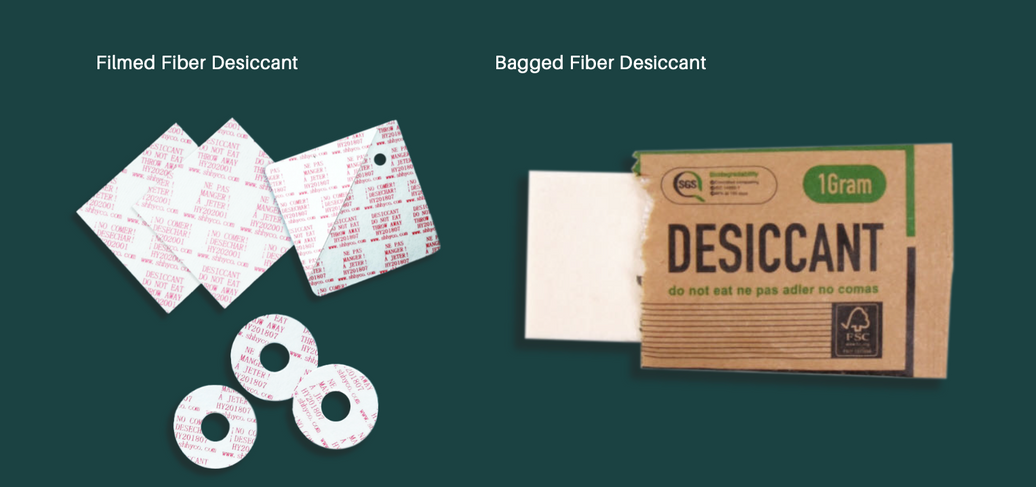
- Insertion method and line speed, which constrain format. A card has to be stiff enough to be picked reliably — see a co-packer's guide to automated desiccant insertion.
- Hold time between filling and sealing, and whether product sits open on the line during changeovers.
Failure patterns and where they actually originate
- Caking appears only in summer production. Fill-room RH, owned by the co-packer's facility. The desiccant was sized against a winter measurement.
- One SKU fails while others pass. Formulation — usually a deliquescent ingredient setting a lower ceiling than the base powder. Brand's isotherm work.
- Failure begins at a specific lot. A component changed. Either the desiccant or the film. Change control.
- Retail returns but no complaint in the brand's own warehouse. Distribution and store conditions, not the pack — sizing was against the wrong exposure profile.
- Sachets found loose or torn in finished packs. Insertion or handling, and a foreign-body risk. See powder and loose-fill desiccant risks.
A short clause set that prevents most of this
Five lines in the quality agreement:
- The desiccant is a specified component, identified by supplier, product code and dosage per unit.
- Substitution requires written brand approval supported by an equivalence rationale.
- Per-lot COA is forwarded to the brand within a defined window and retained for the product's shelf life plus one year.
- The co-packer reports fill-room RH excursions beyond an agreed band.
- Dosage is reviewed on any change to film structure, fill weight, closure or market.
Buying direct versus through the co-packer
Both work. Buying direct gives the brand documentation flow and change control, at the cost of managing another supply line. Buying through the co-packer is simpler operationally but only safe if clauses 1 to 3 above are in place.
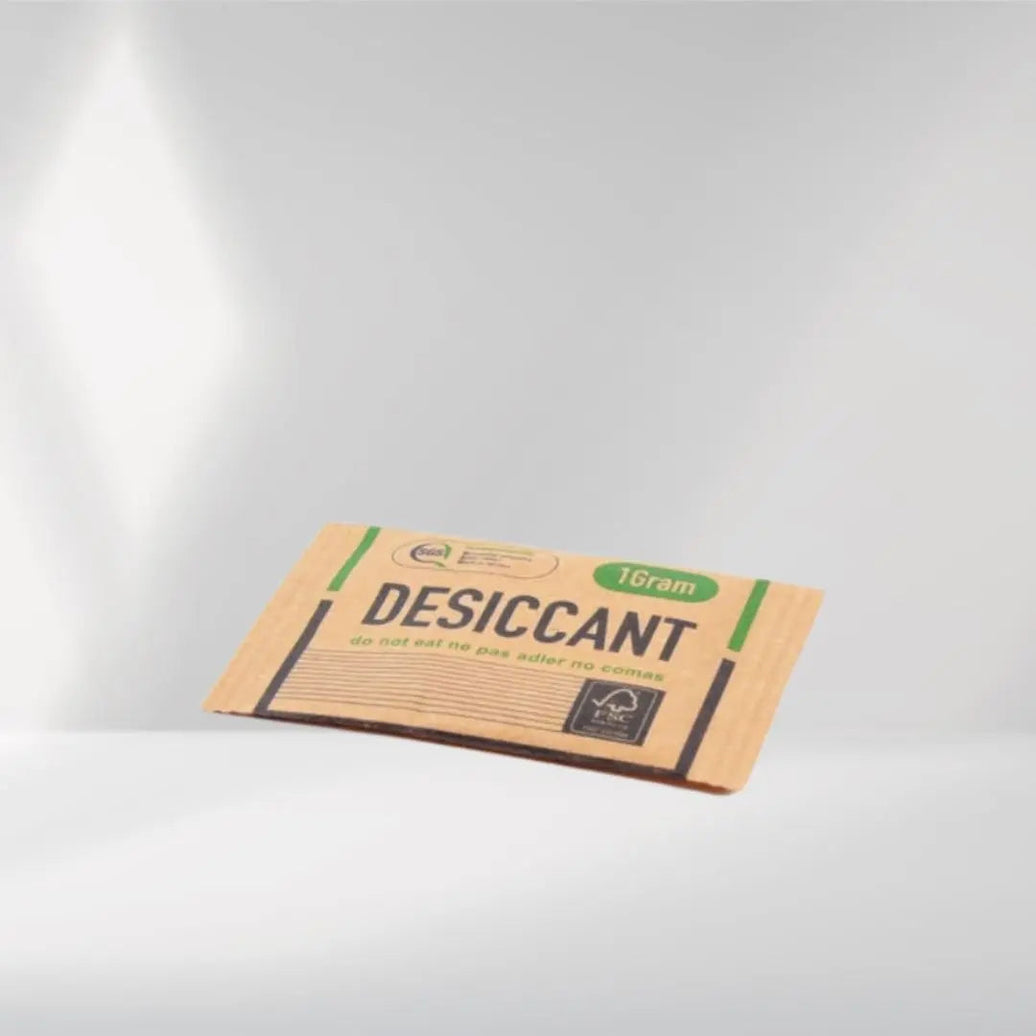
The middle path most brands land on: the brand qualifies the supplier and specifies the component; the co-packer places the orders against that specification. ATMOSIScience supports both routes and will supply the qualification pack to either party — contents listed in the desiccant supplier qualification pack.
Frequently asked questions
Our co-packer says desiccant is included in their packaging cost. Is that a problem?
Only if the component is unspecified. Bundled pricing with a named product code and dosage is fine. Bundled pricing with "a desiccant" is an open substitution right.
Who is liable when caked product is returned?
That depends on the contract, which is exactly the point. Where the specification is silent, liability tends to follow whoever cannot produce documentation. This is a commercial and legal question, and worth reviewing with your own counsel rather than settling by custom.
Can we specify a desiccant our co-packer has never run?
Yes, but validate insertion before the first commercial run. Format and stiffness constraints are real on automated lines. Run a line trial.
How often should dosage be revisited?
On any change to film, fill weight, closure, market or storage profile — and at minimum on the same cycle as packaging artwork review.
Does compostable packaging change the ownership question?
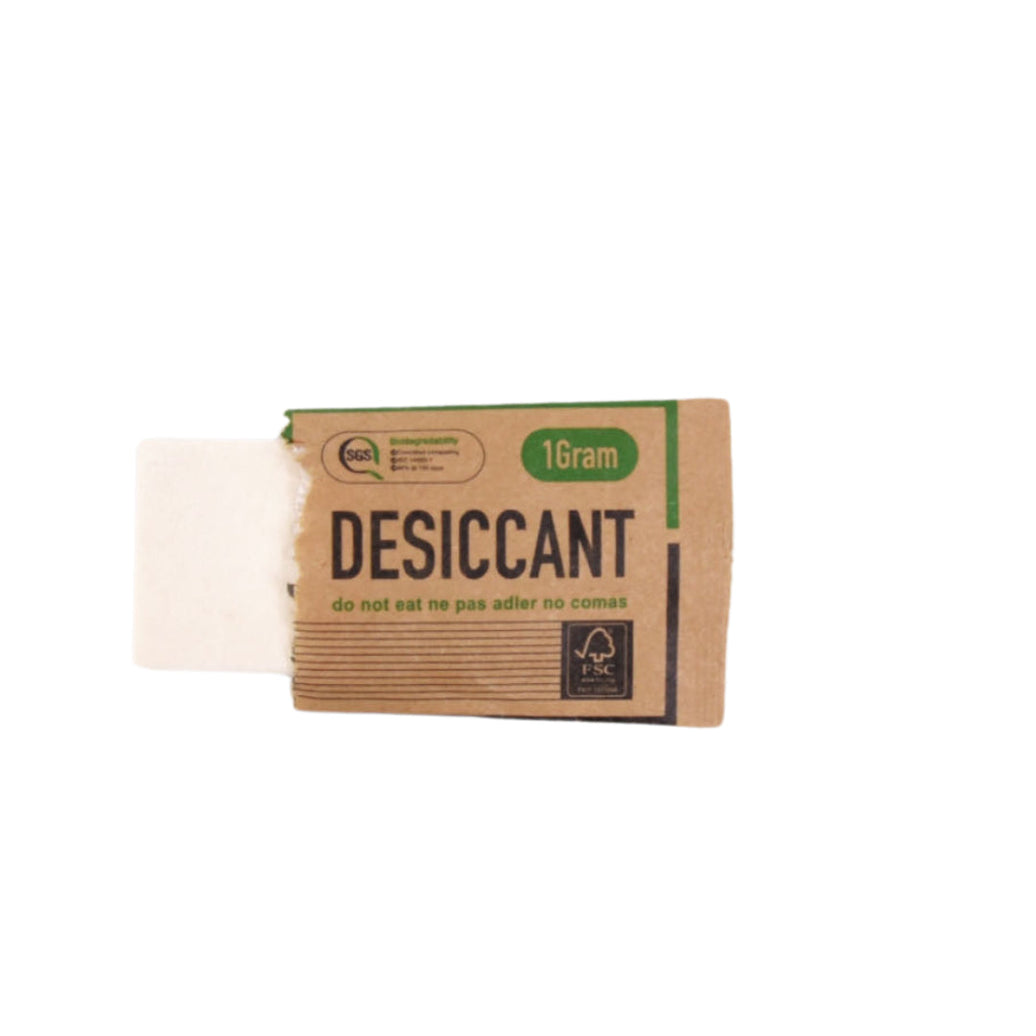
It raises the stakes, because a non-certified sachet inside a certified compostable pouch invalidates the outer claim, and the brand carries that claim. The ATMOSIScience sachet film is certified to ASTM D6400 and EN 13432; claim discipline is covered in the sustainable desiccant guide.
Specify a desiccant your co-packer can actually run
Send the pack format and line details. ATMOSIScience will produce a written dosage rationale both parties can sign, plus the qualification pack.
Prefer email? info@atmosiscience.com