Quick answer: Under PPWR enforcement, a national authority can issue a reasoned request for technical documentation, and industry reporting in August 2026 put the response window at around 10 days. Enforcement is corrective first: authorities request the file, allow a reasonable opportunity to fix remediable problems, and escalate to restriction, withdrawal or recall only if the issue is not corrected or presents a serious risk. Ten days is not enough time to commission a test, so the desiccant file — bill of materials, substance declarations, component mass, recyclability rationale, traceability — has to exist before the request arrives.
Most compliance conversations about PPWR focus on design. The enforcement mechanism is the part that decides whether a supplier has a bad week or a bad quarter, and it is built around documents rather than inspections.
How a request actually arrives
The pattern reported by industry observers in the days after PPWR became applicable is a four-step sequence, and the tone throughout is corrective rather than punitive.

The important feature is step two. A reasoned request is not an audit booking. It is a demand for paperwork on a short clock, and the clock does not pause while a laboratory runs a four-week migration study.
Why component suppliers get pulled in
The request goes to the party who placed the packaging on the market — usually the brand or the importer. But the file they have to produce contains information only the component supplier holds: what the adsorbent core is made of, what the wrapper laminate is, which inks were used, what the sachet weighs by material.
PPWR anticipates this. The Article 16 information duty requires suppliers of materials and components to give the packaging manufacturer what they need to demonstrate conformity. In practice, a desiccant supplier who answers "that's proprietary" to a bill-of-materials question is now creating a regulatory obstruction for their customer, not protecting a trade secret.
The file, item by item
Composition
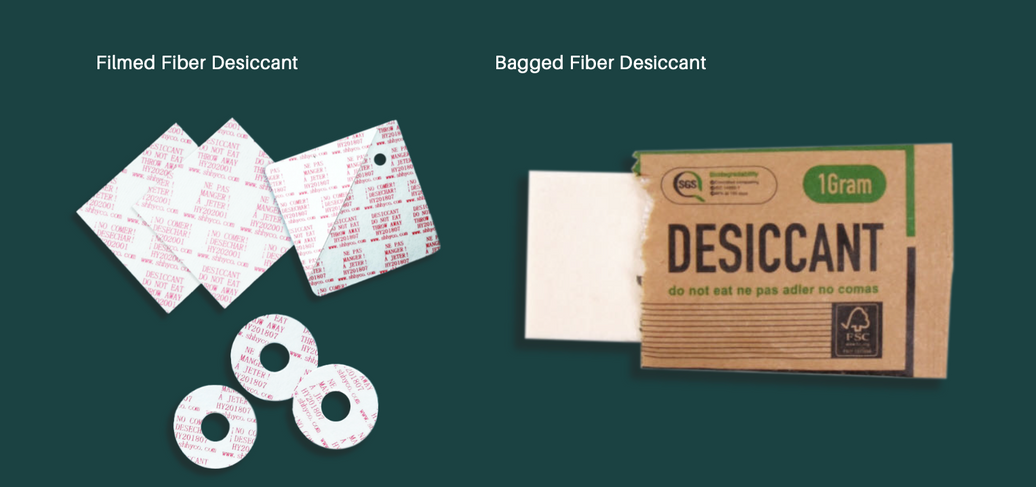
A full bill of materials for the finished component. Not "natural plant fibre" but the construction: adsorbent substrate, functional additives, wrapper material, any laminated film, adhesive and printing ink. Coatings and binders count.
Substance declarations
A signed PFAS statement and heavy-metal statement for any food-contact application, against the applicable limits. Where a screening test was used rather than a targeted analysis, the file should say so and state the method.
Food-contact status
Documentation appropriate to the market. For a US-facing customer this is typically the FDA food-contact position; for the EU, the food-contact framework and any relevant migration data. Our guide on FDA 21 CFR food-contact status for desiccants explains why direct and indirect contact are documented differently.
Mass by material
Component mass split by material class. This single number does double duty: it feeds the PPWR technical file and it is the basis on which US state packaging EPR programmes calculate fees, as covered in our breakdown of what a 3-gram desiccant actually costs in EPR.
Recyclability rationale
A written explanation of the intended recycling pathway with supporting evidence. Because the PPWR performance grades are not yet finalised, the honest form of this document states what has been tested, under which method, and what remains dependent on the forthcoming delegated act.
Traceability and change control
Which site made the batch, which sub-supplier provided the film, and what happens to the file when a material is substituted. A change-control record is the difference between a file that describes what you sell and a file that described what you used to sell.
What a supplier can do this quarter
Three practical moves close most of the gap:
- Assemble the pack once, per SKU. A per-SKU folder is more useful than a general brochure, because requests are specific to a product placed on a market.
- Date every document and record its scope. A test report covering a bare substrate does not cover a laminated, printed finished good, and saying so in the file is better than being asked about it later.
- Pre-agree the escalation route with your supplier. Ask who at the manufacturer can sign a declaration within a working week, and get the name before you need it.

Frequently asked questions
Is the 10-day window written into the regulation?
The figure comes from industry reporting in August 2026 describing how national authorities are expected to operate reasoned requests, not from a headline article of the regulation itself. Treat it as a planning assumption rather than a statutory deadline, and confirm the position for the specific Member State with counsel.
Can a request lead straight to a recall?
Reported practice is corrective first. Escalation to restriction, withdrawal or recall follows where a problem is not corrected or presents a serious risk.
What if our supplier will not disclose the composition?
That is now a supply risk, not a commercial preference. Article 16 places an information duty on component and material suppliers. If a supplier cannot support the file, the qualification questions in our supplier due-diligence guide are worth running before the next order.
Does a non-EU manufacturer have to hold the file?
The obligation sits with the operator placing the packaging on the EU market, typically the importer or brand. But that party cannot build the file without the manufacturer, which is why the contractual chain matters as much as the regulation.
How does this connect to the other PPWR deadlines?
Documentation is live now; labels and grades are not. The sequence is set out in what changed on 12 August 2026, and the wider programme in our PPWR compliance hub.
Get the per-SKU technical file before you need it
Send us the desiccant format and market and ATMOSIScience will return the bill of materials, substance declarations, component mass data and test-report scope for that SKU.
Prefer email? info@atmosiscience.com