Quick answer: An SVHC screen tests a material against the ECHA Candidate List under REACH at a 0.1% w/w threshold. SGS report SHAEC1722424101 screened a fiber humidity stabiliser against the 174 substances on the Candidate List as published on and before 7 July 2017 and returned PASS — ≤ 0.1% (w/w). PPWR Article 5 asks something different and broader: that substances of concern in packaging and packaging components be minimised, including substances that are chemically safe but harm re-use and recycling. A clean SVHC report is necessary evidence. From 2026 onward it stops being sufficient on its own.
Two clauses in two regulations use language that sounds interchangeable to anyone who does not read chemical legislation for a living. They are not interchangeable, and the gap between them is about to widen.
If you buy desiccants for packs that enter the European market, this is the distinction to get straight before your next customer questionnaire arrives.
What an SVHC screen actually is
Under Regulation (EC) No 1907/2006 — REACH — ECHA maintains a Candidate List of Substances of Very High Concern. A substance lands on it when it meets the criteria in Article 57 and is formally identified under Article 59(1): carcinogens, mutagens, reproductive toxicants, persistent and bioaccumulative substances, endocrine disruptors and equivalent-concern cases.
An SVHC screen takes a material and looks for those substances at or above 0.1% by weight. That threshold is not arbitrary — it is the concentration at which two specific legal duties switch on.
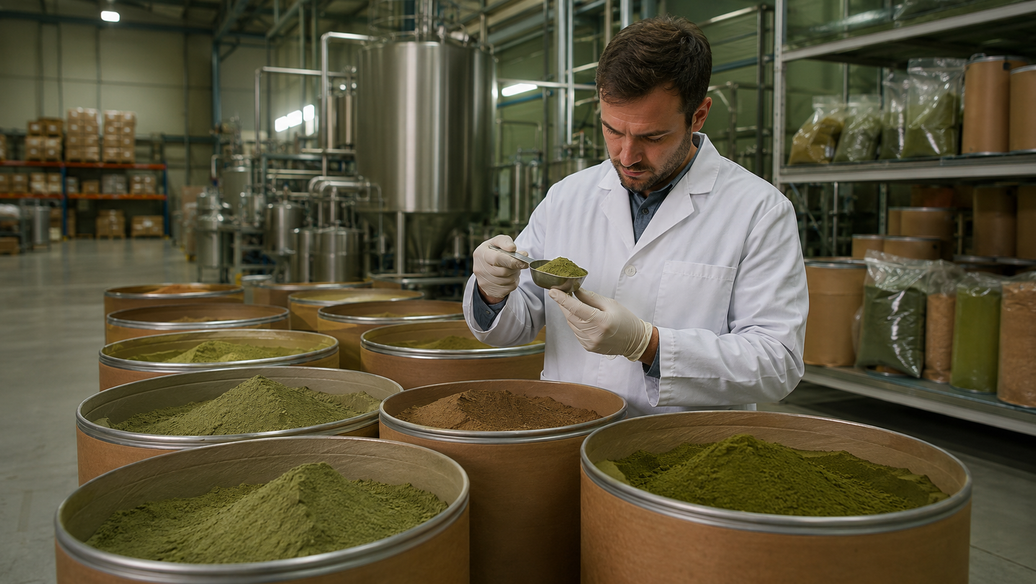
The screen on this material was performed against the Candidate List as it stood on and before 7 July 2017: 174 substances. The result was a pass at the 0.1% w/w threshold across the submitted sample.
The two duties a positive finding would trigger
Worth knowing, because they explain why buyers ask and what they are protecting themselves from.
Article 33 — communication down the chain. A supplier of an article containing a Candidate List substance above 0.1% w/w must give the recipient sufficient information, available to the supplier, to allow safe use of the article — as a minimum, the name of that substance. This duty has no tonnage threshold. One sachet triggers it if the concentration is exceeded.
Article 7(4) — notification to ECHA. An EU producer or importer of articles must notify ECHA when a Candidate List substance is present both above 0.1% w/w and in quantities totalling over one tonne per producer or importer per year. Two conditions, both required.
Note who carries these. Article 7(4) sits with the EU producer or importer — which, for an imported desiccant, is very often the brand owner or the converter, not the overseas manufacturer. That is a good reason to hold the screen in your own file rather than assume your supplier is managing it for you. The same ownership question runs through who issues the PPWR declaration of conformity.
The date is the most important line on the report
Here is the part most buyers skim past, and the report itself says so plainly in its remarks: the Candidate List is under evaluation by ECHA and may change in the future.
It has. The list grows by additions roughly twice a year, and a screen performed against a 2017 snapshot cannot speak to substances added since. This is not a criticism of the report — no test report can screen for substances that did not exist as legal categories on the day it was issued. It is a statement about what a screen is: a point-in-time answer to a moving question.
So the practical rule for a buyer is simple. When you request an SVHC screen, request the Candidate List version it was performed against, and set a re-screen interval in your supplier agreement. A five-year-old pass is evidence of good manufacturing practice; it is not current compliance evidence. The general discipline is the same one set out in what a desiccant certificate actually covers.
Read the homogeneous-material caveat too
Another remark from the report deserves attention, because it changes what you can infer.
Results refer to the tested sample submitted as homogeneous material. Where such a material is used to compose an article, the reported concentration may not represent the SVHC concentration in that article. And where a report covers a composite material group tested by equal weight proportion, the material in each composite test group may come from more than one article.
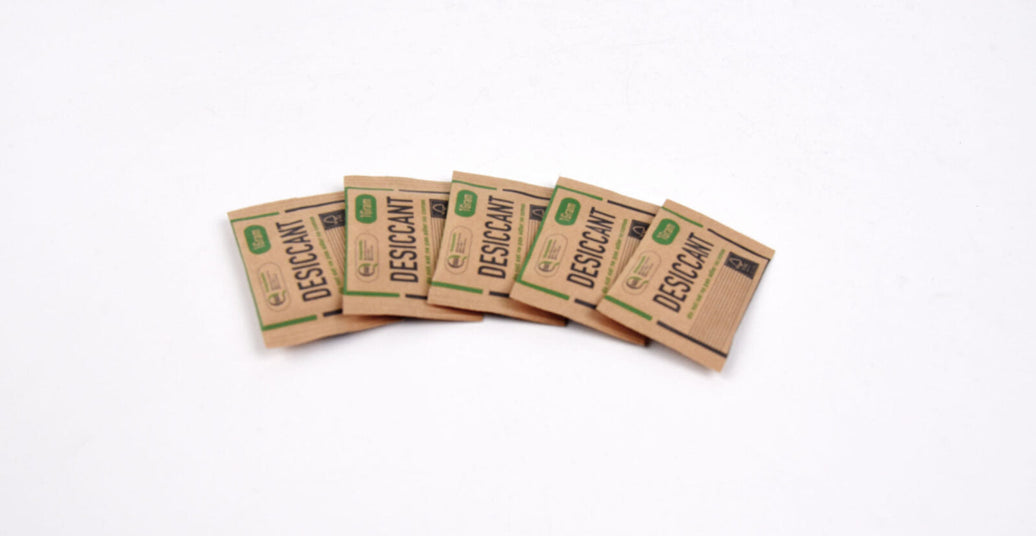
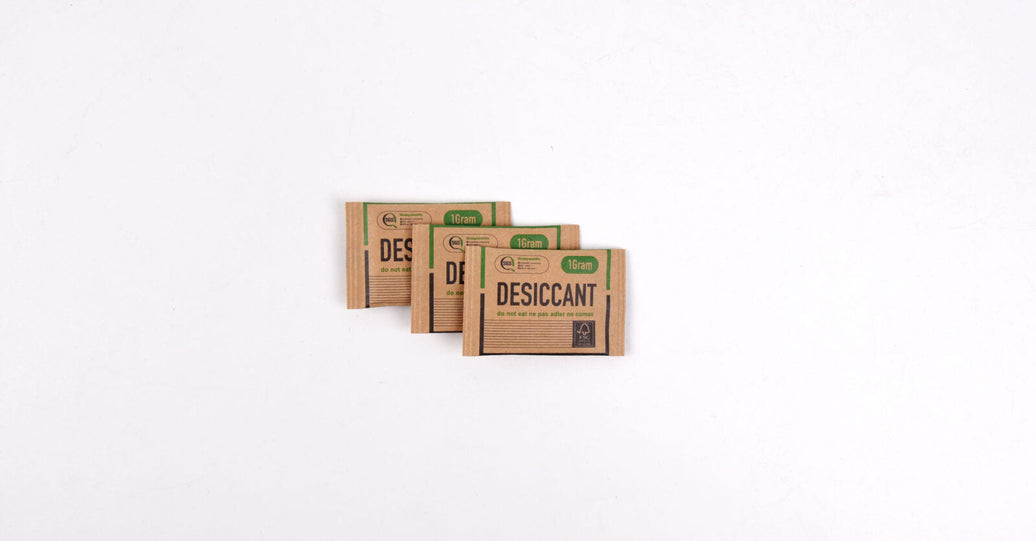
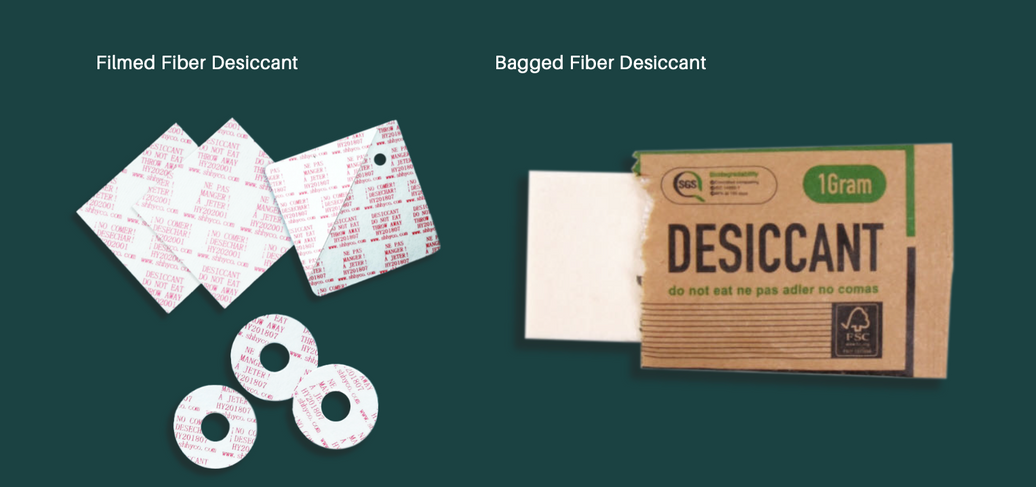
Translated into packaging terms: a screen on the fiber substrate is not automatically a screen on the finished sachet. The wrapper, the ink, the adhesive and the outer bag are separate homogeneous materials. If your pack includes them — and it does — your file needs to account for them.
Now the second question: PPWR Article 5
Regulation (EU) 2024/... on packaging and packaging waste takes a different approach, and it is deliberately broader.
Article 5(1) requires that packaging placed on the market be manufactured so that the presence and concentration of substances of concern as constituents of the packaging material, or of any of the packaging components, is minimised — including with regard to their presence in emissions and in any outcomes of waste management, such as secondary raw materials, ashes or other material for final disposal, and to adverse impact on the environment due to microplastics.
Four things to notice in that sentence.
- It says minimised, not below a threshold. There is no 0.1% line to test against.
- It explicitly covers packaging components, which is what a desiccant sachet inside a pack is. If you have not worked through why, start with PPWR and desiccant sachets.
- It reaches beyond the product into waste-management outcomes — what ends up in the recyclate, in the ash, in the residue.
- “Substances of concern” is a wider category than the REACH Candidate List.
The dates that decide how concrete this gets
| Deadline | What happens |
|---|---|
| 31 Dec 2025 | Member States that consider a substance negatively affects re-use or recycling supply that information to the Commission and ECHA, with supporting risk assessments or data. |
| 31 Dec 2026 | The Commission, assisted by ECHA, prepares a report on substances of concern in packaging and packaging components — how far they harm re-use and recycling, or affect chemical safety. The report may list them and indicate unacceptable risk. |
| 1 Jan 2028 | Deadline for the Commission to adopt the design-for-recycling delegated acts, which may identify substances of concern and impose restrictions on their presence in packaging or components. |
Two follow-up routes are written into Article 5 itself. For substances that primarily affect human health or the environment, the Commission may use the REACH Article 68 restriction procedure. For substances that negatively affect re-use and recycling, restrictions may be set as part of the design-for-recycling criteria under PPWR Article 6(4).
The part that catches people out
Article 6(4) is explicit that design-for-recycling criteria may impose restrictions on substances of concern for reasons not relating primarily to chemical safety — while leaving REACH Annex XVII restrictions and the food-contact rules of Regulation (EC) No 1935/2004 untouched.
Read that carefully, because it is the whole point of this article. A substance can be entirely safe for the consumer, fully compliant with food-contact law, absent from the Candidate List — and still be restricted under PPWR because it contaminates the recyclate or defeats sorting.
Which means the questions a packaging component will have to answer from 2028 onward are not only is it toxic? but what does it do to the material stream it ends up in? That is a materials-and-process question, and it is why end-of-life test data — the sort of repulping evidence behind a recyclability score and its ash and fibre yield figures — is becoming part of the chemical file rather than a separate environmental nicety.
What to put in your supplier request
One request, four items, phrased so the answers are checkable:
- Current SVHC screen, stating the Candidate List version and date it was screened against, and the homogeneous materials covered.
- Component-level coverage — substrate, wrapper, ink, adhesive, outer bag — or an explicit statement of which components are excluded.
- Full composition disclosure at least to the level of the safety data sheet, so you can reason about what reaches the waste stream rather than only about what is listed.
- End-of-life data for the format as supplied, with the scope of the assessment stated.
Then set a re-screen cadence. Twice-yearly Candidate List updates mean an annual refresh is a defensible interval and a five-year-old certificate is not. Everything else worth collecting at qualification is in the supplier qualification document pack.
Frequently asked questions
Does a REACH SVHC pass mean the desiccant is PPWR compliant?
No. They are different tests of different things. An SVHC pass says no Candidate List substance was found at or above 0.1% w/w in the tested material. PPWR Article 5 asks whether substances of concern have been minimised across the packaging and its components, including their fate in waste management. One is evidence toward the other; it is not the same finding.
Is “substance of concern” defined with a list I can check today?
Not in the operational way buyers would like. The Commission’s report due by 31 December 2026 may list substances of concern present in packaging and components. Until the design-for-recycling delegated acts land, Article 5 functions as a minimisation duty supported by documentation rather than a pass/fail test.
Who has to hold this evidence — us or our supplier?
Both, for different reasons. Your supplier generates it. You need it in your technical documentation, and if you are the EU producer or importer, the Article 7(4) notification duty is yours, not theirs.
Does this apply to a desiccant that never touches the product?
Article 5 addresses the packaging material and any of its components, without a contact condition. A sachet sitting loose in a carton is still a packaging component. Food-contact status is a separate question with its own evidence — see direct vs. indirect food contact.
What about PFAS specifically?
PFAS is the highest-profile case of a substance family being addressed through both routes at once, and it deserves its own treatment: PFAS-free desiccants for food-contact packaging under EU PPWR.
Request the chemical compliance file
Tell us which markets your pack ships into and which components you need covered. We will send the screens that exist, state their dates and scope, and be straight about what is not covered.
Prefer email? info@atmosiscience.com