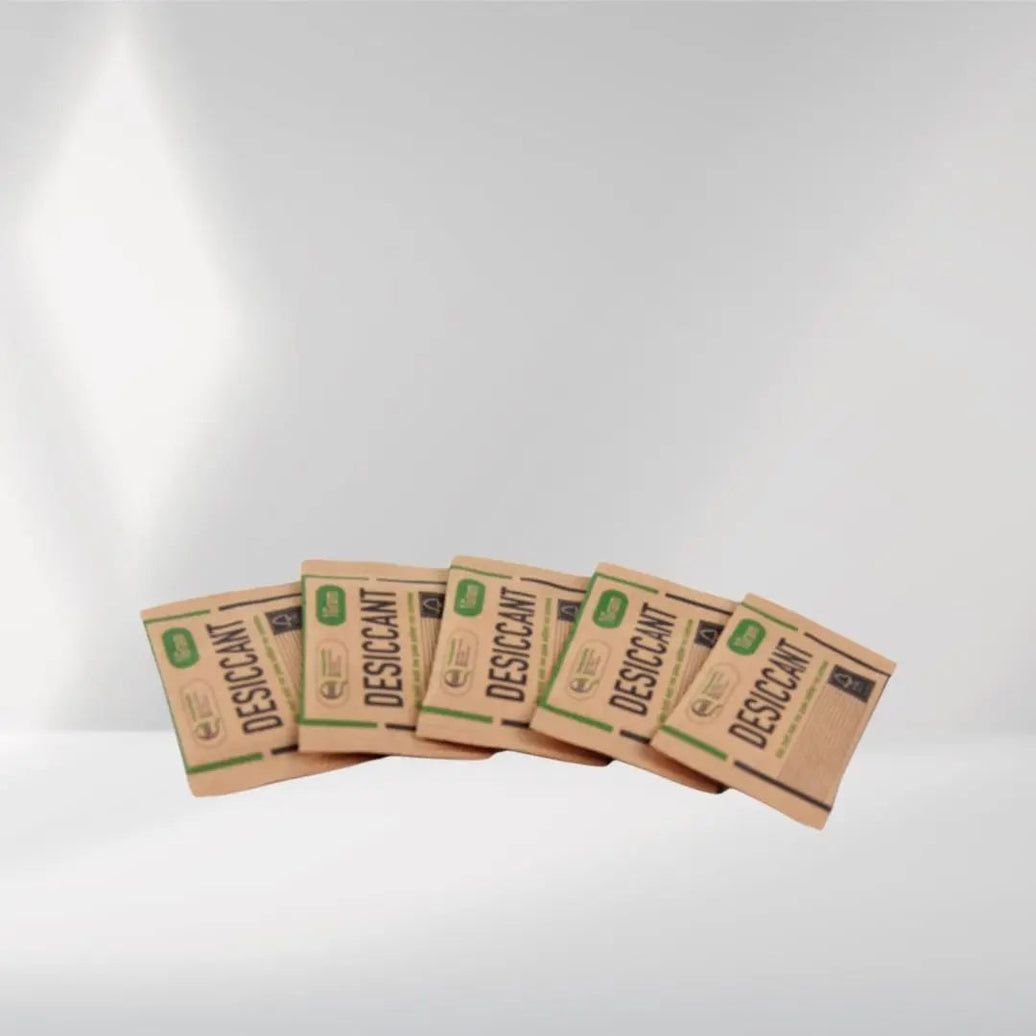
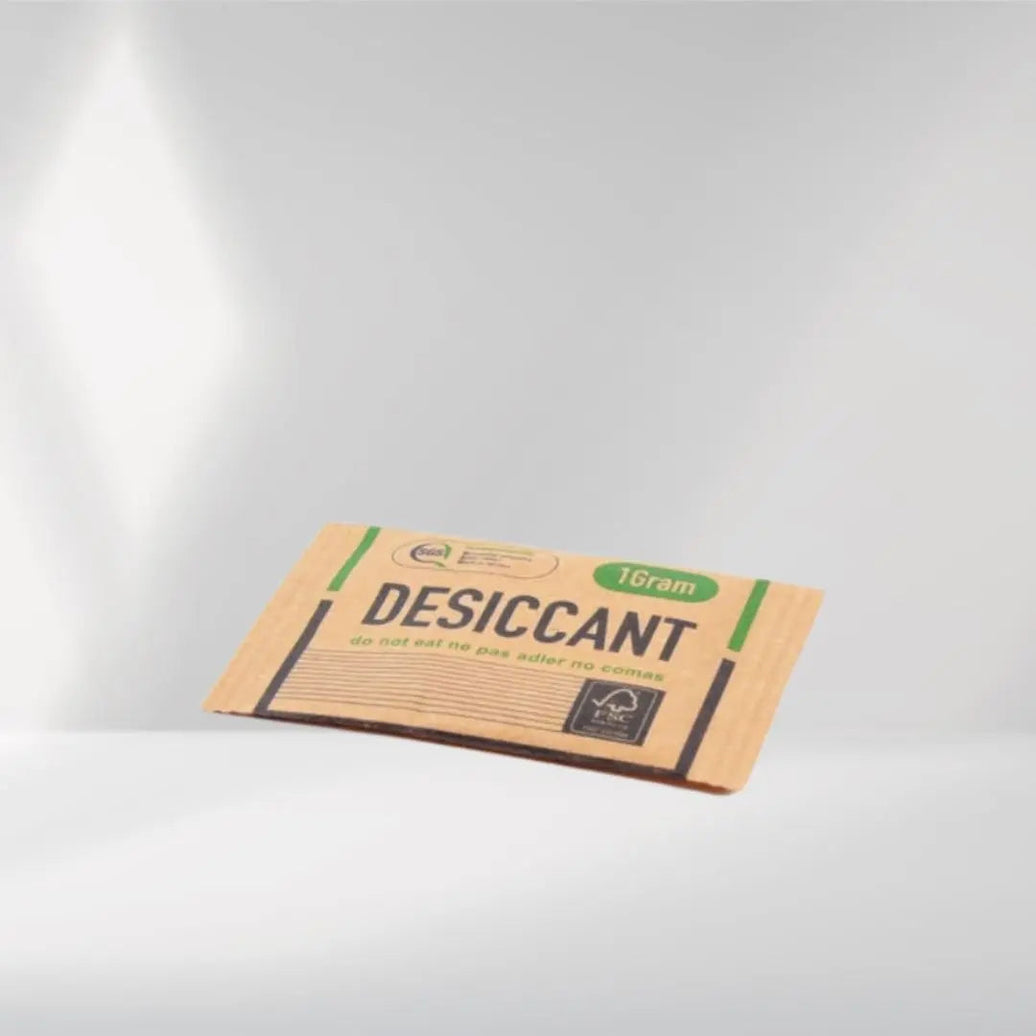
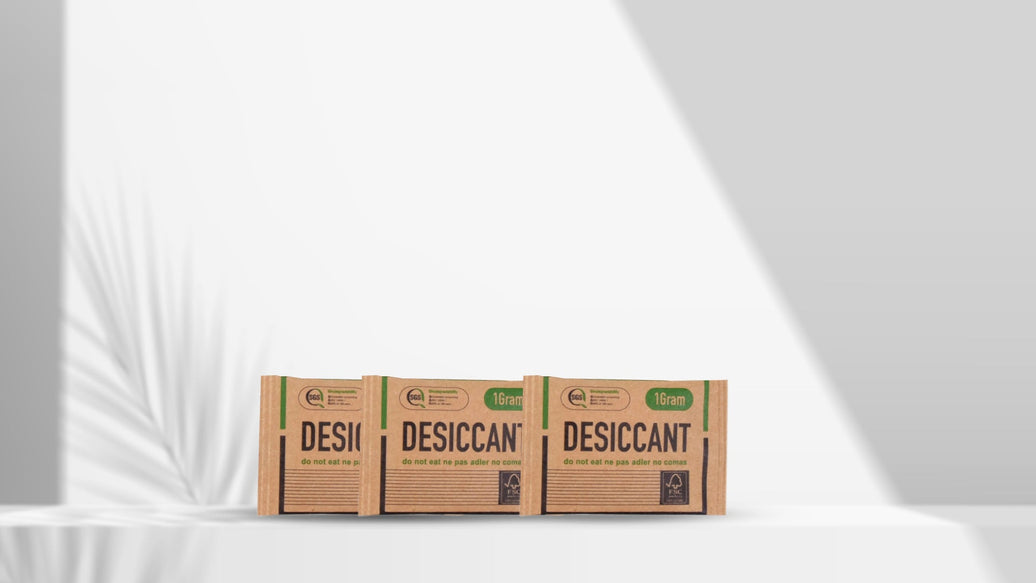
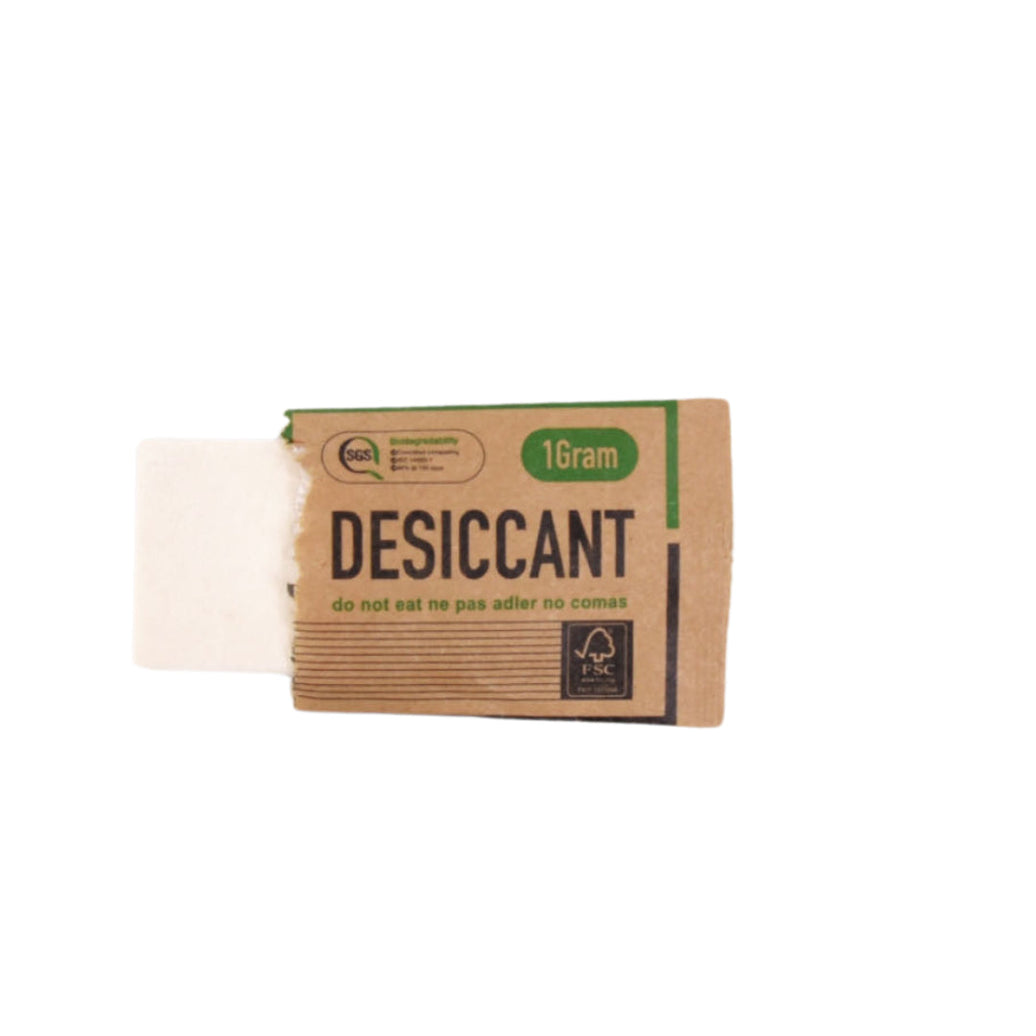
"Can you supply an EU PPWR Declaration of Conformity?" is now one of the most common questions in our inbox, and it is usually asked by someone who has been told by a customer that they need one and has no way to check what a good answer looks like.
It is a fair question with an uncomfortable answer: under Regulation (EU) 2025/40, a component supplier does not issue the EU declaration of conformity for your packaging — you do. What a supplier owes you is something different, defined in a different Article, and it is the thing you should actually be asking for. This guide sets out who signs what, what the declaration has to contain, and which numbers matter as of the Regulation's application date.
The short version: Article 39 puts the EU declaration of conformity on the manufacturer — which, under Article 3(1)(13)(a), normally means the brand owner whose name is on the pack. Article 16 puts an information duty on the supplier. Ask your desiccant supplier for Article 16 documentation, and issue the Article 39 declaration yourself.
Compliance library: PPWR overview · Reading a certificate · Fiber desiccant
First: is a desiccant even in scope?
Worth stating plainly, because it is often asserted without support — the word "desiccant" does not appear anywhere in Regulation (EU) 2025/40, and Annex I, the indicative list of what is and is not packaging, does not mention it either. Classification is therefore an interpretation of the definitions, and it should be presented that way in any technical file.
The reasoning is nonetheless straightforward. Article 3(1)(1)(a) covers an item "necessary to contain, support or preserve a product throughout its lifetime, without being an integral part of the product, and which is intended to be used, consumed or disposed of together with the product". Point (b) covers "a component of, and ancillary element to" such an item. A desiccant fits both. The closest express analogue in Annex I is "sterile barrier systems … materials necessary to preserve the sterility of the product", which are listed as packaging — the principle being that a preservation function makes something packaging.
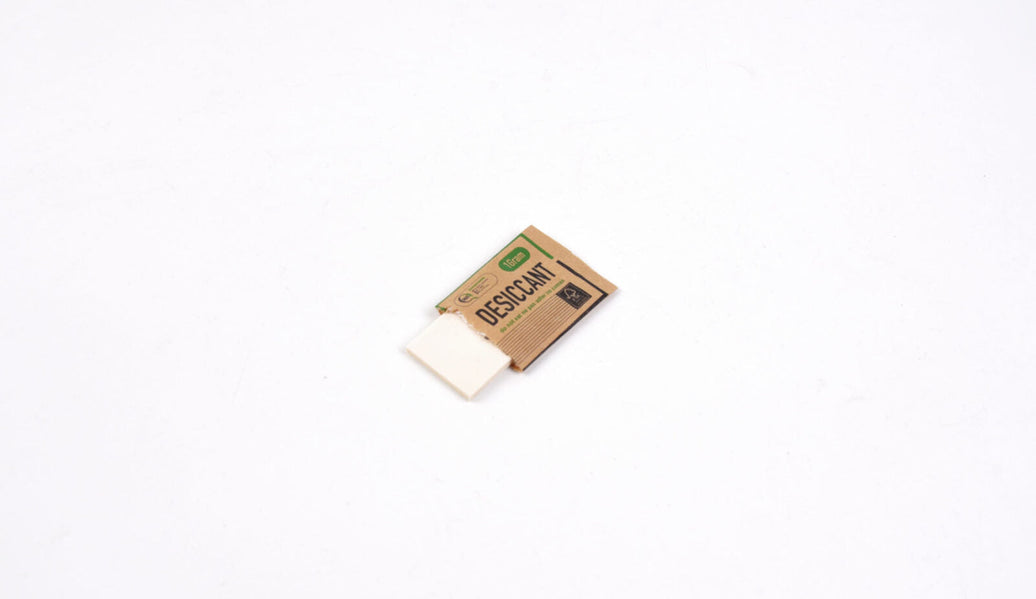
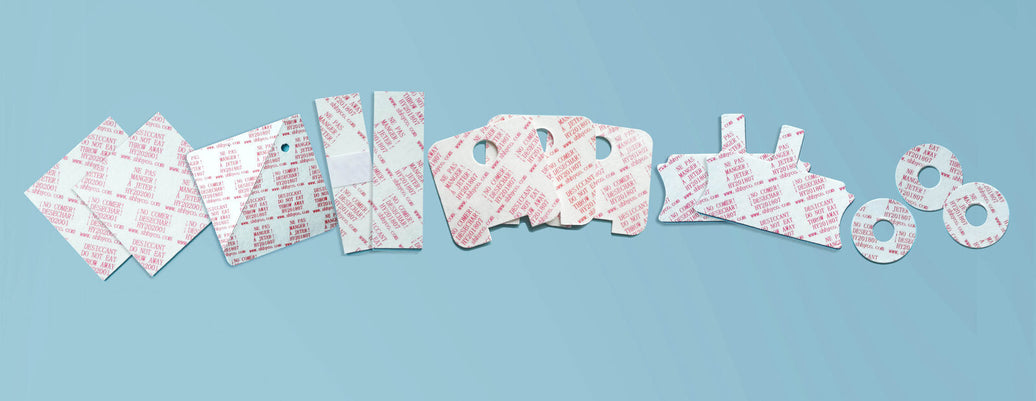
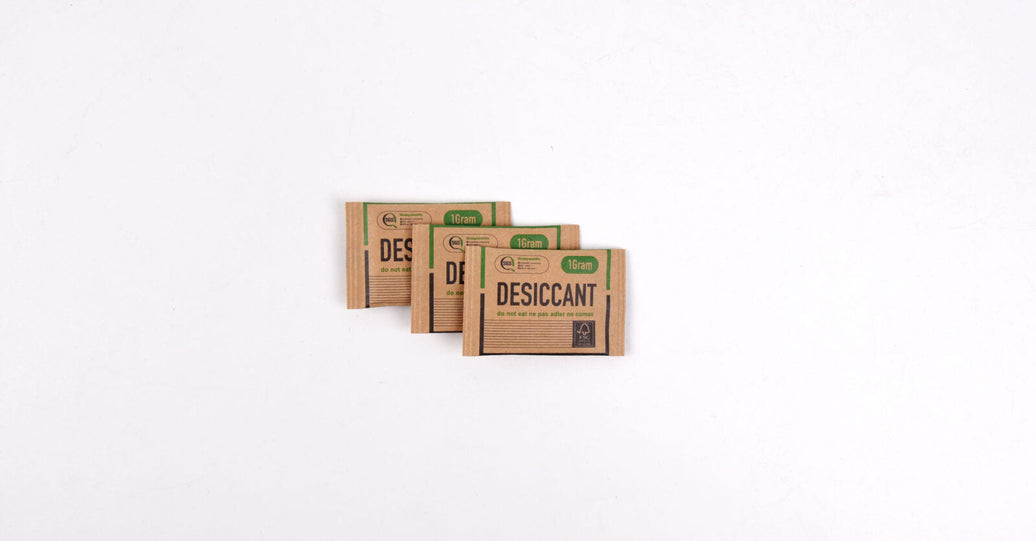
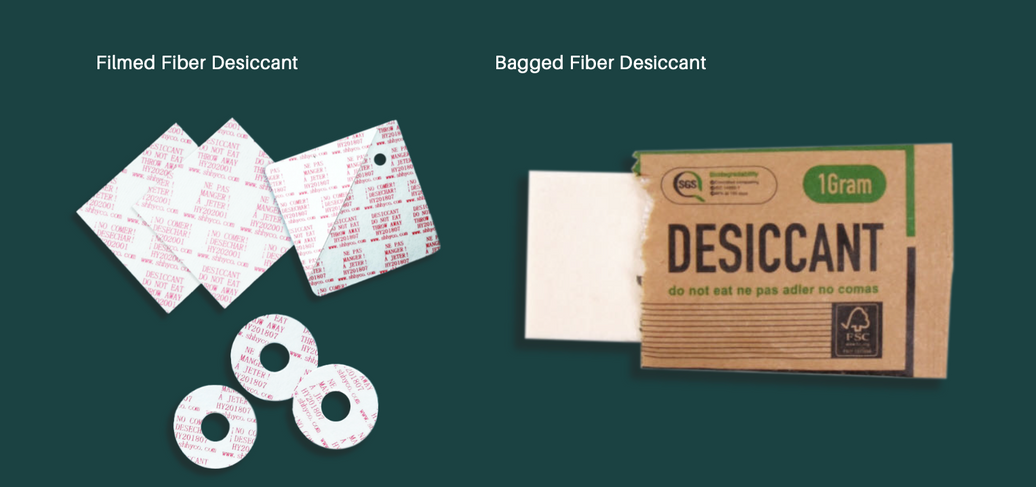
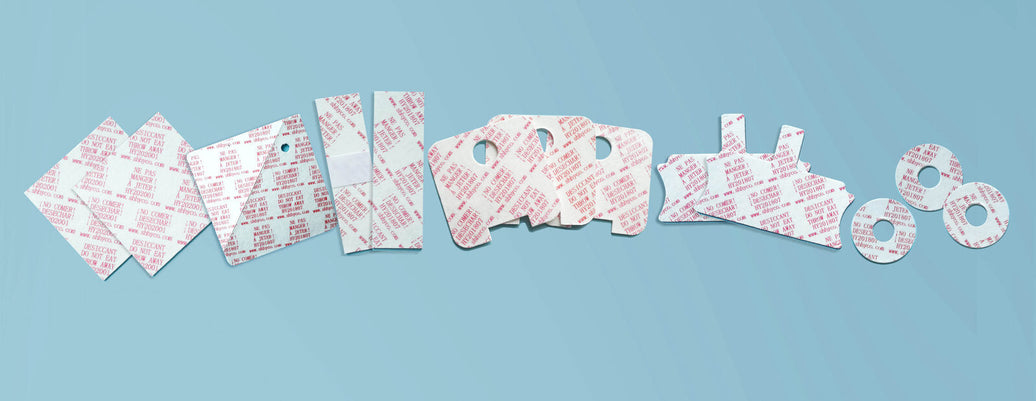
Whether it is an integrated component (Art. 3(1)(43)) or a separate component (Art. 3(1)(44)) depends on format. A loose sachet the consumer pulls out and discards separately reads as separate. A die-cut sheet bonded into a liner or lid reads as integrated. That distinction matters for design-for-recycling assessment and, in some jurisdictions, for fee calculation.
There is no de minimis exemption for small parts. Article 5 applies expressly to "packaging components", Article 6(4)(a)(ii) requires design-for-recycling criteria to "cover all packaging components", and Annex II Table 4 carries a dedicated parameter for "Closures and other small packaging components".
Who issues the declaration
Article 15(2) is the operative provision: before placing packaging on the market, manufacturers carry out the conformity assessment in Article 38, draw up the technical documentation in Annex VII, and draw up an EU declaration of conformity under Article 39.
The trap is the definition of "manufacturer". Article 3(1)(13)(a) says that where a person has packaging "designed or manufactured under its own name or trademark", that person is the manufacturer — regardless of who physically made it. In practice that is the brand owner filling the pack, not the converter and not the component supplier.
| Role | Obligation | Article |
|---|---|---|
| Manufacturer (usually the brand owner) | Conformity assessment, technical documentation, and the EU declaration of conformity | Art. 15(2), 38, 39 |
| Supplier of packaging or packaging material | Provide the manufacturer with all information and documentation needed to demonstrate conformity | Art. 16 |
| Importer | Verify that the manufacturer has done the above. Does not draw up the declaration | Art. 18(2)(a) |
| Distributor | Due care and verification only | Art. 19 |
| Importer or distributor selling under its own name or trademark, or modifying packaging in a way that could affect compliance | Treated as the manufacturer | Art. 21 |
An authorised representative cannot take this off you either: Article 17 excludes the Article 15(1) obligations and the drawing-up of Annex VII technical documentation from the representative's mandate.
Can a component supplier issue a voluntary declaration anyway? The Regulation neither permits nor prohibits it. Commercially it is a normal way to discharge the Article 16 duty. But it is not "the EU declaration of conformity" within the meaning of Article 39 — Annex VII point 4 requires the manufacturer to draw one up "for each packaging type", and Annex VIII item 3 states it is issued "under the sole responsibility of the manufacturer". A supplier document that calls itself a PPWR DoC is either loosely worded or overreaching, and either way it will not stand in for yours.
What the declaration must contain
Article 39(2) requires the model structure in Annex VIII and the elements specified in Annex VII, continuously updated, in a language required by the Member State where the packaging is placed on the market. Annex VIII lists:
- A unique identification number for the packaging
- Name and address of the manufacturer, and any authorised representative
- A statement that the declaration is issued under the manufacturer's sole responsibility
- Object of the declaration — identification of the packaging allowing traceability, with a description
- A statement of conformity with the relevant Union harmonisation legislation, referencing the other Union acts applied
- References to the harmonised standards, common specifications or other technical specifications used
- Where applicable, notified body details
- Additional information, plus place, date, name, function and signature
One point that saves a lot of anxiety: no notified body is required. Article 38 routes conformity assessment to Annex VII, which is headed "Module A — Internal production control". This is self-declaration. Item 7 of the Annex VIII model is standard boilerplate carried over from the New Legislative Framework, not a requirement to obtain third-party certification.
The supporting technical documentation under Annex VII point 2 has to cover a general description and intended use; conceptual design, manufacturing drawings and materials of components; explanations of those drawings; the standards or specifications applied; a qualitative description of how the Article 6, 10 and 11 assessments were done; and test reports. Retention is five years for single-use packaging and ten for reusable.
The PFAS numbers, and the three things people get wrong about them
The PFAS restriction is the reason most brands started asking about the PPWR at all. It is in Article 5(5) of the enacting terms — not in an annex — and it applies to food-contact packaging from 12 August 2026, the Regulation's general date of application. The limits are:
| Metric | Limit |
|---|---|
| Any single PFAS, targeted analysis (polymeric PFAS excluded from quantification) | 25 ppb |
| Sum of PFAS, targeted analysis, with prior degradation of precursors where applicable | 250 ppb |
| PFASs including polymeric PFAS | 50 ppm |
Three corrections worth carrying into your own file:
- The trigger is "equal to or above". Hitting the number exactly is non-compliant, not borderline.
- Total fluorine at 50 mg/kg is not a fourth limit. It is a documentation trigger: if total fluorine exceeds 50 mg/kg, the upstream REACH manufacturer, importer or downstream user must, on request, provide proof of whether that fluorine is PFAS or non-PFAS so the PPWR manufacturer can complete the Annex VII file. Many secondary summaries report it as a compliance threshold. It is not.
- There is no sell-through period. Article 5(5) provides none, and Article 70's transitional provisions do not cover it. The contrast is instructive — Article 12(12) expressly grants labelling a three-year sell-through, which shows the legislator granted transitions where it intended them.
Compliance with Article 5(4) — the 100 mg/kg combined limit for lead, cadmium, mercury and hexavalent chromium — and Article 5(5) is demonstrated in the Annex VII technical documentation, per Article 5(6).
Note a genuine drafting gap while you are building your file: Article 5(5) applies to "food-contact packaging", which is not a defined term in Article 3. The defined term "contact-sensitive packaging" at Article 3(1)(49) is broader and is not the term used here. If your product sits at the boundary, document your reasoning.
What is not due on 12 August 2026
A widespread misreading is that everything in the PPWR landed on the application date. It did not. Article 71 sets the general date of application at 12 August 2026, and the substances-of-concern duty in Article 5(1) and the PFAS limits in Article 5(5) do apply from then. Most of the rest carries its own later date.
| Requirement | Article | Applies from |
|---|---|---|
| Substances of concern minimised; PFAS and heavy-metal limits | 5 | 12 Aug 2026 |
| Compostability rules; all other packaging designed for material recycling | 9(1), 9(3) | 12 Feb 2028 |
| Harmonised material-composition label | 12(1) | 12 Aug 2028, or 24 months after the implementing acts — whichever is later |
| Design-for-recycling and grade A/B/C gating | 6(2)(a), 6(3) | 1 Jan 2030, or 24 months after the delegated acts — whichever is later |
| Packaging minimisation | 10(1) | 1 Jan 2030 |
| Recycled at scale | 6(2)(b) | 1 Jan 2035 (or later) |
| Recyclability grade A or B only | 6(3) | 1 Jan 2038 |
Two further points that specifically affect desiccant choices. First, compostability does not exempt you from recyclability. Article 9(3) requires packaging other than the narrow mandatory-compostable categories — "including packaging made of biodegradable plastic polymers and other biodegradable materials" — to be designed for material recycling under Article 6 by 12 February 2028. Only permeable tea, coffee and beverage bags, soft single-serve beverage units, and fruit-and-vegetable stickers are mandatorily compostable EU-wide.
Second, EN 13432 is named only in a recital, never in an Article or Annex, and Recital 58 states explicitly that the current industrial composting standard "cannot be relied upon as a basis for a presumption of conformity" pending revision, though it "can be used as guidance". Article 9(6) required the Commission to request new or updated harmonised standards by 12 February 2026. An EN 13432 certificate is still the strongest evidence available and is worth holding — just do not describe it as conferring PPWR presumption of conformity.
Finally, one provision that works in your favour. Annex IV Part A criterion 1 expressly recognises protection against "humidity, moisture loss, oxidation" as a legitimate justification for packaging weight and volume. When the minimisation requirement bites in 2030, a documented moisture-protection function is the defence for keeping the component in the pack.
What to ask your desiccant supplier for
- Full material composition of both the active and the wrap, at the level Annex VII point 2(b) requires
- A PFAS statement against all three Article 5(5) metrics — with the test report, not a self-declared "PFAS-free" adjective. Paper and cellulose substrates are the highest-risk PFAS category, so a REACH SVHC screening is not a substitute at 25 ppb
- Total fluorine result, so you can answer the Article 5(5)(c) documentation trigger
- Heavy metals against the Article 5(4) 100 mg/kg combined limit
- Certificate scope, issuing body, certificate number and expiry date for any compostability or food-contact claim
- Confirmation of whether the format is intended as an integrated or separate component, and a design-for-recycling statement to feed your Article 6 assessment
Frequently asked questions
Can you send us your PPWR Declaration of Conformity?
What we can send is the Article 16 information package your technical file needs — composition, test reports, certificate scope and validity. The Article 39 declaration for your finished packaging has to be issued by you, under your name, because Annex VIII item 3 makes it the manufacturer's sole responsibility.
Do we need a notified body?
No. Annex VII is Module A, internal production control. It is self-declaration backed by technical documentation.
Is a REACH SVHC screening enough for PFAS?
No. SVHC screening and the Article 5(5) PFAS limits are different tests at different thresholds. At 25 ppb for a single targeted PFAS you need a targeted PFAS analysis.
We are a micro-enterprise. Does that change who signs?
Possibly. Article 3(1)(13)(b) shifts "manufacturer" to the supplier where the brand owner is a micro-enterprise under Recommendation 2003/361/EC and the supplier meets a location condition — note the Regulation states this slightly differently in Article 3(1)(13)(b) and Article 15(12). Take advice before relying on it.
This article is general information, not legal advice. Verify current obligations against your own products, your Member State's requirements and your counsel.
Get the documentation your technical file actually needs
We supply plant-fibre desiccant with a documented material composition, food-contact documentation under FDA 21 CFR 175.300, industrial compostability tested to EN 13432, RoHS and REACH SVHC screening, and an ISO 14067 product carbon footprint of 1.44 kg CO₂e/kg.
Request the compliance pack on the desiccant solutions page or email info@atmosiscience.com.
Related reading: EU PPWR & desiccant sachets: the overview · What a desiccant certificate actually covers
Tell us the product, not just the part number
Send us what you are packing, the pack format and the humidity or shelf-life target. We will come back with a sizing calculation, the matching format and the certificate pack.