Quick answer: Desiccant paper is sold by the sheet or the roll, sachets are sold per thousand, and cards are sold per piece, so the quotes are never comparable as given. Convert every option to two numbers: cost per package shipped, and cost per gram of water the insert can actually hold at your storage humidity. Do that and the ranking usually changes, because a heavy silica-impregnated sheet carries a lot of mass that is not doing adsorption work, and because a thinner high-capacity insert needs fewer grams to hit the same moisture budget. Add the packaging EPR fee on the insert's weight and the gap widens again.
Procurement asks for three quotes and gets three different units. A roll price. A price per hundred sheets. A price per thousand sachets. Nobody is being evasive; that is just how each format is sold. But comparing them as given is how a packaging team ends up buying the cheapest unit of the wrong thing.
Step 1: find the yield per sheet or roll
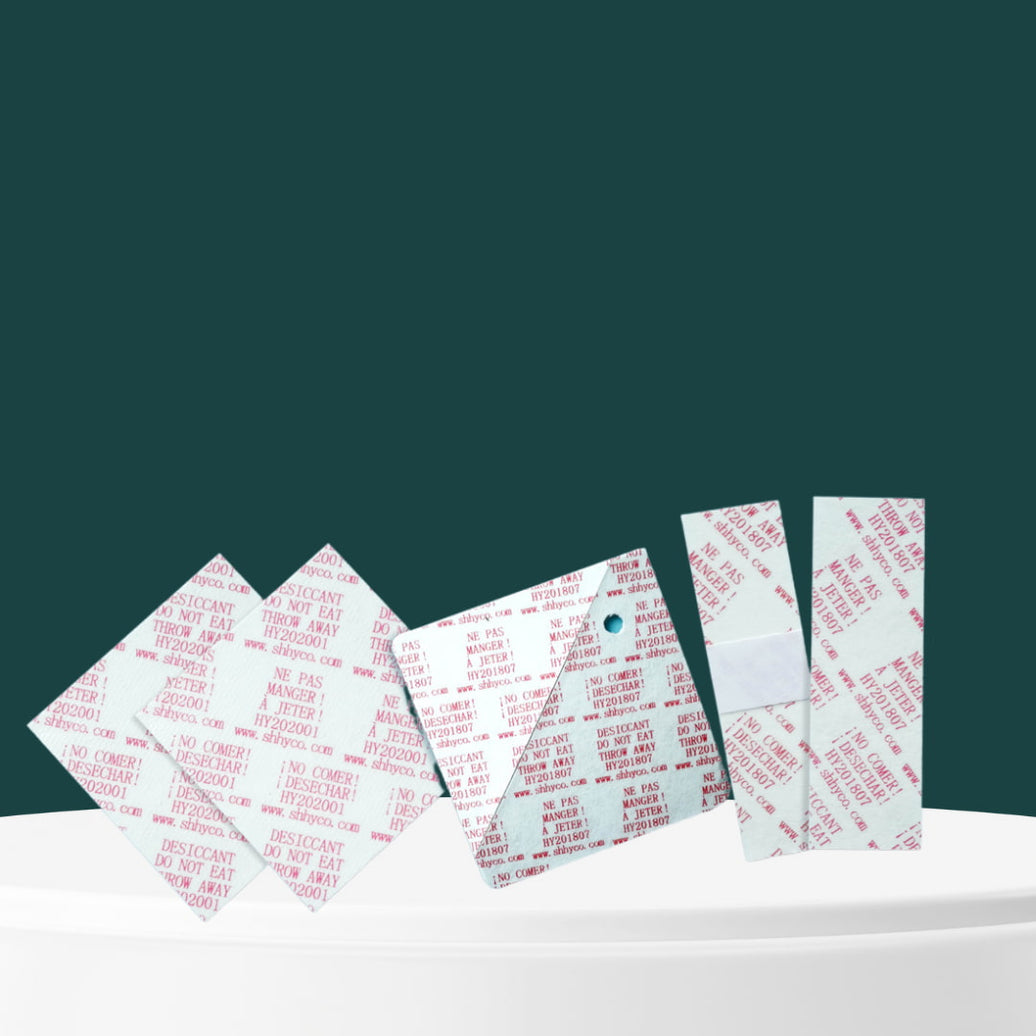
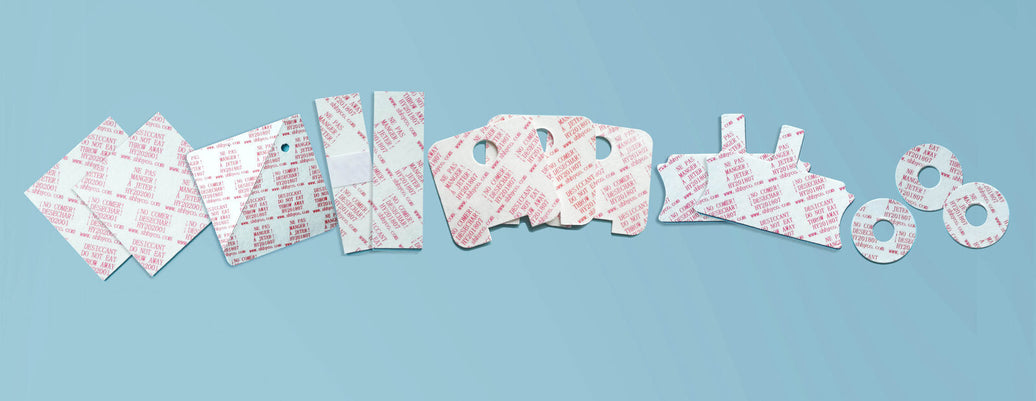
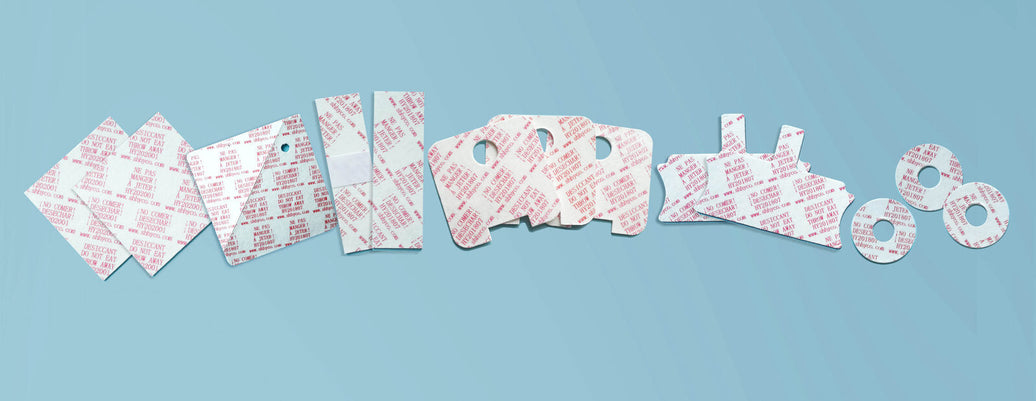
Desiccant paper is converted, so the first number you need is how many of your finished pieces come out of one purchased unit. Published sheet formats are typically 8 by 12 inches and 12 by 12 inches, and rolls are quoted in formats such as 12 inches by 460 feet.
A 12 by 12 inch sheet is 144 in². If your die-cut piece is 1.5 by 1 inch, that is 1.5 in², so the theoretical yield is 96 pieces, and a realistic yield after nesting and trim waste is lower. Ask the converter for the yield they will commit to, not the theoretical one, and ask who carries the trim waste.
A 12 inch by 460 foot roll is 66,240 in². Same arithmetic, much larger denominator, and usually a much better unit cost, which is why roll pricing looks so different from sheet pricing.
Step 2: convert to grams of water, not grams of product
This is the step that changes decisions. Published capacity for a heavy silica-impregnated desiccant paper grade works out at about 0.07 g of water per in². So a 1.5 in² piece holds roughly 0.105 g of water, if the stated figure holds at your conditions. Note that this particular figure is published as calculated, with no test conditions stated, which means you should ask for it measured at your temperature and relative humidity before you design against it.
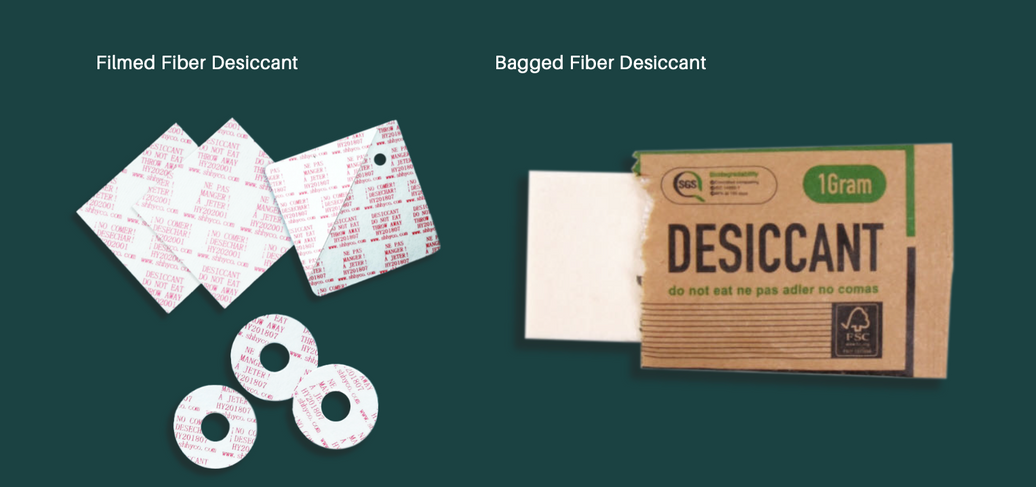
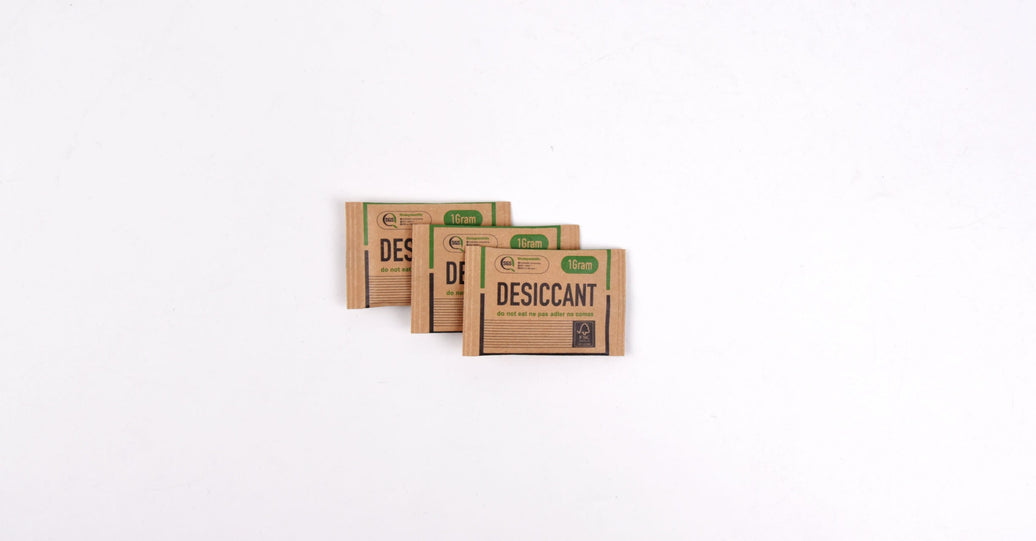
Compare that with the plant-fiber card, which publishes capacity against stated conditions. At 25 °C the fiber adsorbs more than 35% of its own weight at 50% RH and more than 70% at 90% RH. The card sizing table makes the conversion concrete:
| Card | Size (mm) | Mass | Water held | Equivalent silica gel |
|---|---|---|---|---|
| FF-3 | 25 x 12 x 1 | 0.15 g | 0.15 g | 0.5 g |
| FF-6 | 30 x 20 x 1 | 0.35 g | 0.3 g | 1 g |
| FF-15 | 60 x 25 x 1 | 1.0 g | 0.75 g | 2.5 g |
Fiber Desimat specification table — ATMOSIScience
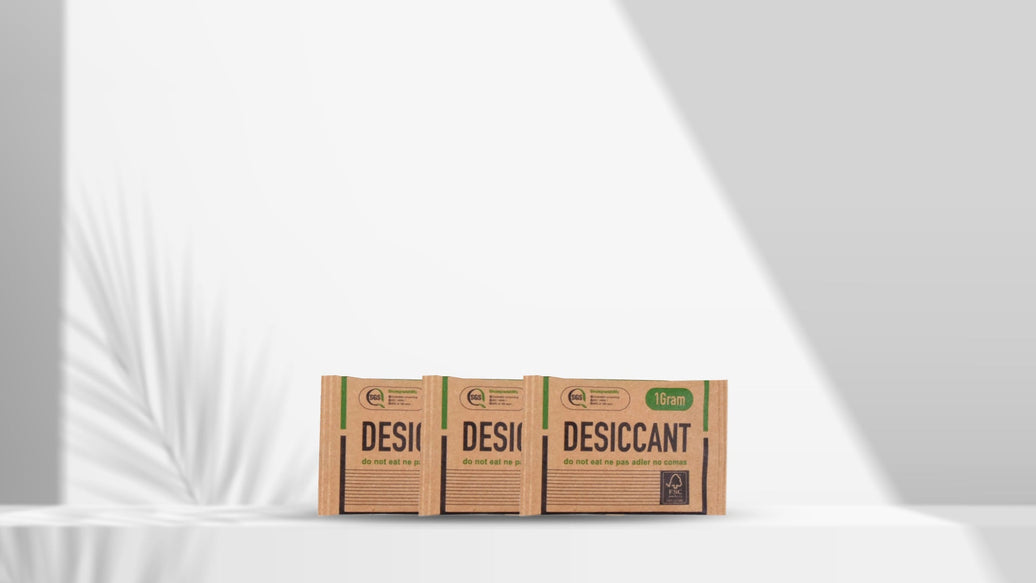
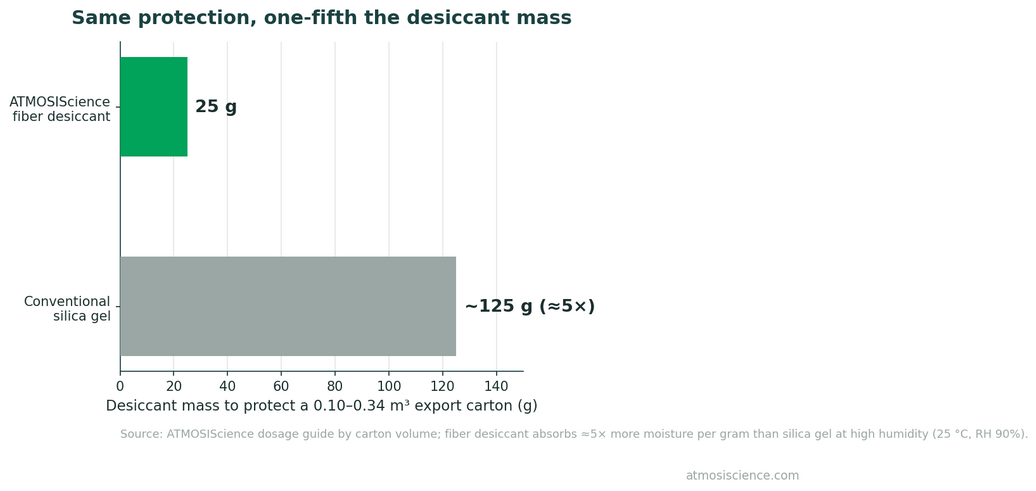
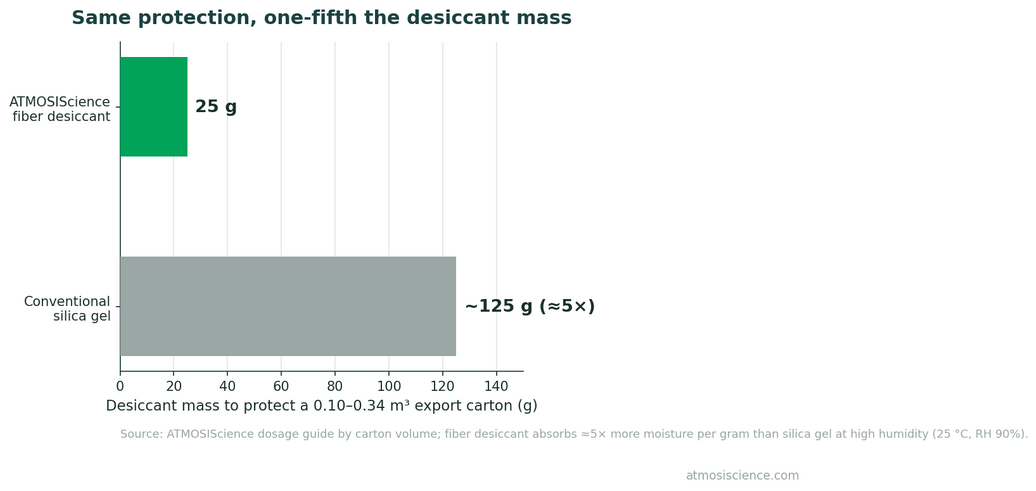
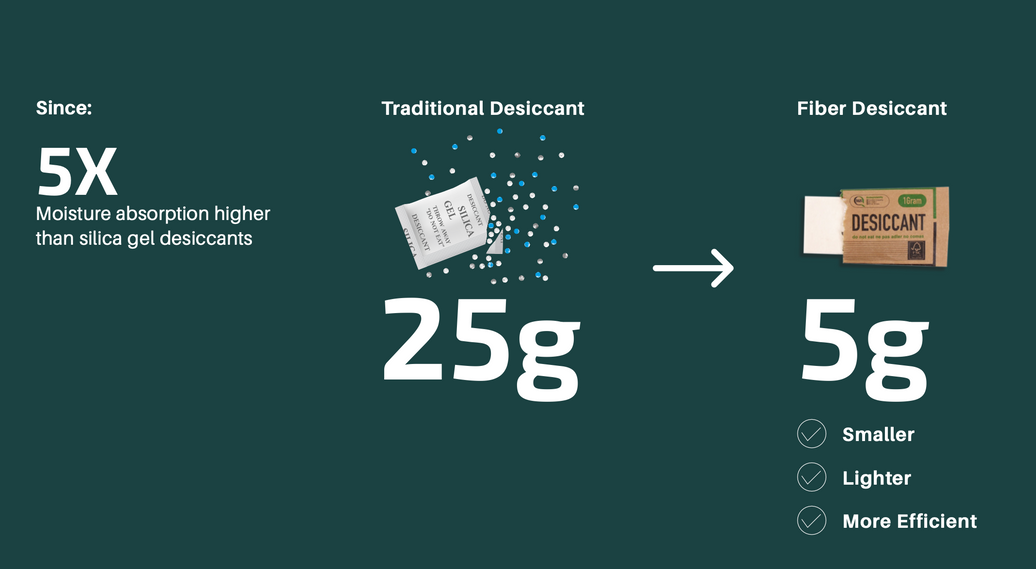
Read the last column carefully, because it is the one procurement can act on. An FF-15 card weighing 1.0 g does the work of about 2.5 g of silica gel. If your current spec is a 2.5 g silica sachet, the replacement is roughly 1 g of insert, not 2.5 g.
Step 3: build the cost per package
Now the formats are comparable. For each option, work out:
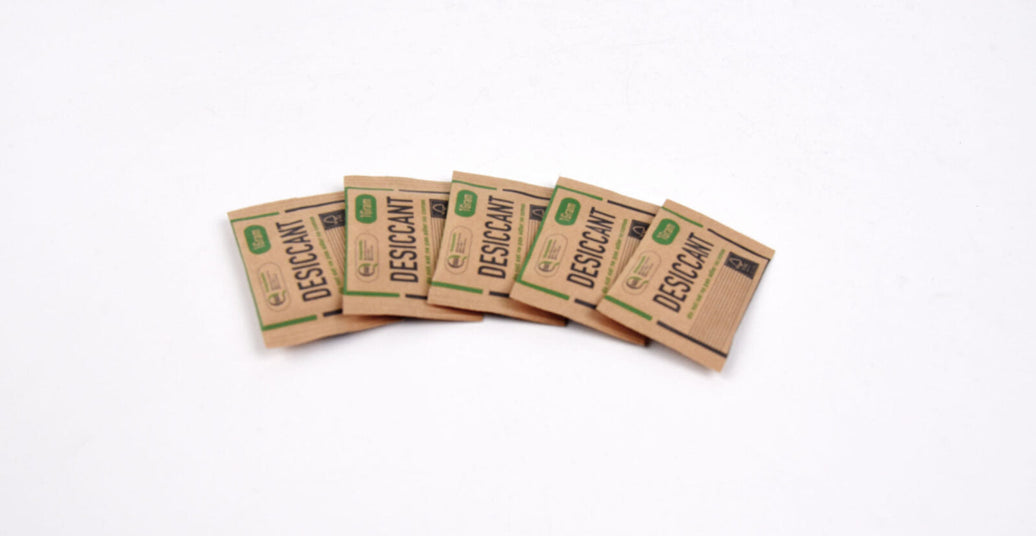
- Delivered insert cost per piece. For converted paper: purchase price divided by committed yield, plus the converting charge, plus freight. For sachets and cards: price per thousand divided by 1,000, plus freight.
- Grams of water per piece at your storage RH. Capacity times mass, at a stated temperature and humidity, not at saturation.
- Pieces per package. From your moisture budget, not from habit. The method is in how much desiccant per package, or run your own numbers in the desiccant calculator.
- Insert grams per package, which is what packaging EPR is assessed on.
- Line cost. Whether the format feeds on your existing inserter, or needs a change. See automated desiccant insertion.
The full cost-per-gram-of-water method, with worked figures, is in desiccant cost per gram of water adsorbed.
The three costs that get left out
Activation. Silica-impregnated papers are commonly sold inactive, because they adsorb moisture in the warehouse. Published activation conditions run to one minute at 500 °F or five minutes at 300 °F. If you buy inactive and bake in house, that is oven time, labour and a validated process. If you buy active and sealed, you pay for it in the price and you inherit a shelf-life constraint.
Trim waste. Converted sheet formats generate skeleton waste that someone pays for and someone disposes of. Ask whether the yield quoted is theoretical or committed.
EPR on insert mass. A 1.45 mm mineral-loaded board and a 0.5 mm fiber card are not the same declared weight, and the fee follows the weight. Figures and dates are in the Minnesota and Maryland deadlines.
A note on quotes you cannot compare at all
Some widely sold flat desiccants publish no capacity figure, no thickness value, no temperature range and no test standard. If a quote arrives with no numbers, you cannot do step 2, which means you cannot do step 3. Ask for capacity at a stated temperature and RH, caliper, and mass per unit area. A supplier who cannot supply those three is asking you to buy on trust.
Frequently asked questions
Is desiccant paper cheaper than sachets?
Per sheet it often looks more expensive, and per package it can be cheaper or dearer depending on your die-cut size, yield and dose. The comparison is only meaningful after converting to cost per package.
Why compare cost per gram of water?
Because that is what you are buying. Two 2 g inserts with different capacities do different amounts of work, so price per gram of product hides the difference.
Do I need the same number of grams if I switch to fiber?
Usually fewer. The published equivalence is roughly 1 g of fiber card for 2.5 g of silica gel on the FF-15 size. Confirm against your own barrier and shelf life rather than applying the ratio blindly.
What about roll versus sheet?
Rolls almost always win on unit cost at volume because the area per purchased unit is far larger. They also commit you to a converting setup, so the break-even depends on your annual volume.
Does a thinner insert mean less protection?
Not if its capacity per gram is higher. Thickness governs fit; capacity governs protection. Keep the two decisions separate.
We will build the comparison with your numbers
Send the quote you are holding and your pack details. We will return cost per package and grams of water per package for your current option and for the fiber equivalent, with the assumptions written out so your procurement team can check them.
Or email info@atmosiscience.com