Quick answer: A desiccant film builds the sorbent into a layer of the pouch, so there is no separate packet to insert. It can be a good fit for one high-volume product in one pack. Before switching, ask six things: the film's adsorption capacity per square metre at a stated temperature, humidity and duration; the full laminate's WVTR; how the sorbent is protected while the film sits on rolls before converting; what the sorbent layer does to recyclability and EPR classification; what revalidation the change triggers; and how the pack performs after the customer opens it. An insert keeps dose flexible per SKU and its capacity easy to document; a film removes a component but locks the dose into the material.
Removing the desiccant packet is an attractive idea. It deletes a component, a line step and a consumer question ("should I throw this away?"). Several packaging suppliers now market active films that put the sorbent inside the pouch wall for exactly that reason. The approach is real. The decision deserves the same evidence you would ask of any desiccant.
How each approach works
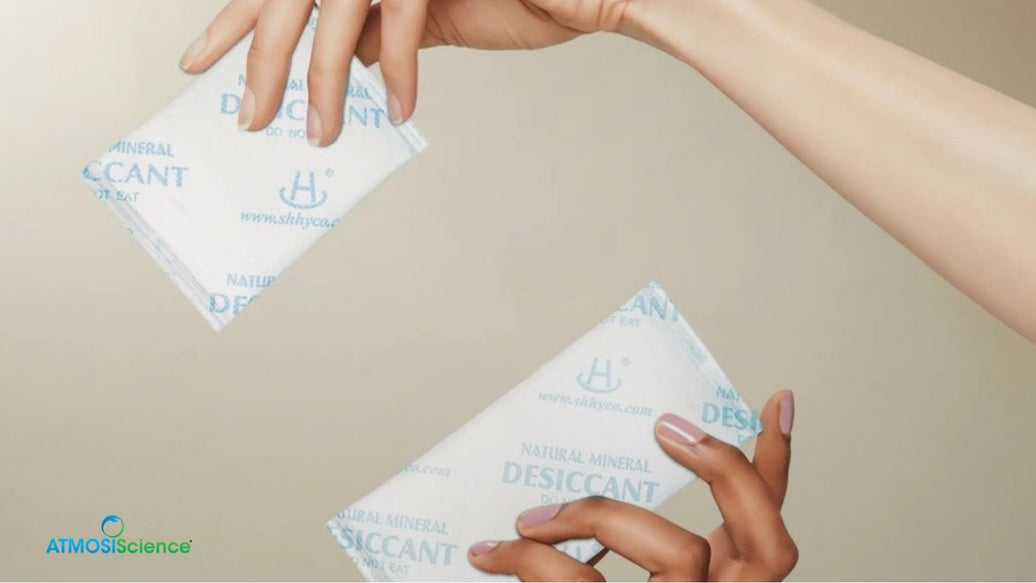
- Desiccant insert. A sachet, canister, card or die-cut sheet placed in the pack. The dose is set by its size and can be changed per product.
- Desiccant film. A laminate in which one layer carries a sorbent. The capacity is set by the film's sorbent loading and the pack's surface area.
Six questions before you remove the sachet
1. What is the film's adsorption capacity, at what condition?
Ask for grams of water per square metre at a stated temperature, relative humidity and time, plus how that compares with the moisture your pack must absorb over shelf life. If no capacity figure is published, ask for test data under your conditions before any trial. The same rule applies to inserts; see comparing desiccant spec sheets.
2. What is the WVTR of the full laminate?
Capacity only matters relative to the moisture that gets in. Ask for the finished laminate's WVTR at a stated test condition, not just the barrier layer's. Methods are compared in WVTR test methods.

3. How is the sorbent protected before the pouch is filled?
A sorbent layer starts working as soon as it meets air. Rolls of film sit in a converter's warehouse, then on your line. Ask how the rolls are packed, how long they can be stored once opened, and how much capacity is lost before sealing. With an insert, the same question is answered by a sealed bag and an open-time limit.
4. What does the sorbent layer do to recyclability and EPR?
Adding a mineral-loaded layer changes a laminate's composition. Ask whether the film still meets the recyclability guidance your brand follows, and how it is classified under the US state EPR programs and, for exports, the EU PPWR. See SB 54 and desiccant sachets for the California side.
5. What revalidation does the switch trigger?
Changing from an insert to an active film is a primary packaging change. Expect change control, stability or shelf-life confirmation and new supplier documents. Plan it like any desiccant change: change control and IQ, OQ and PQ for a desiccant change.
6. What happens after the customer opens the pack?
Reclosable tubs and pouches are opened dozens of times. Each opening refills the headspace with room air. Ask how the film's capacity is sized for repeated openings, and compare with an insert sized for the same use pattern.
When each one is the better choice
| Situation | Usually better | Why |
|---|---|---|
| One SKU, very high volume, one pouch size | Film can make sense | No insertion step; dose fixed once |
| Many SKUs or flavours with different moisture sensitivity | Insert | Dose per SKU without changing film |
| Bottles, jars and rigid tubs | Insert (cap card or sachet) | No film wall to load |
| Shelf life still being established | Insert | Easier to step the dose up or down in testing |
| Need a documented capacity for QA | Whichever supplies measured data | Evidence matters more than format |
A middle option: a flat card instead of a loose packet
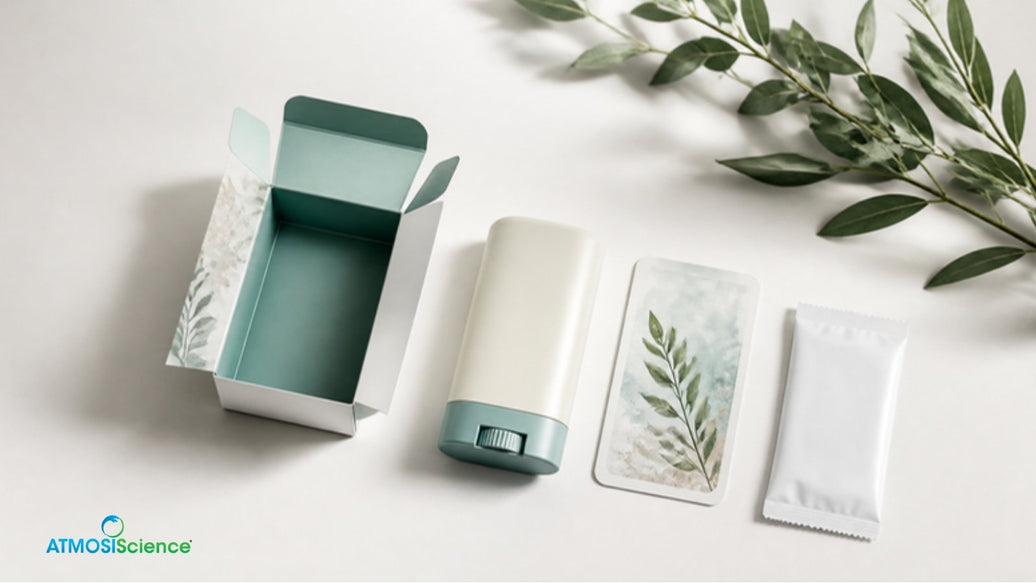
Many brands want to remove the loose packet rather than the desiccant. A thin die-cut card sits under a lid, against a pouch wall or in a cap, so the consumer does not meet a pillow-shaped sachet in the product, while the dose stays adjustable by card size. ATMOSIScience's Fiber Desiccant Card is die-cut, surface-printed and supplied ready for automated line placement; at 1.0 mm it takes up three times as much moisture as silica gel at 25 °C and 90% RH, and about twice as much at 20 to 40% RH. Formats are compared in sachet, film, card or cap insert, line integration in the co-packer guide to automated insertion, and resin-based alternatives in fiber vs desiccant polymer resin.

Frequently asked questions
What is desiccant film packaging?
A pouch or lidding laminate with a sorbent built into one layer, so the package wall absorbs moisture and no separate desiccant is inserted.
Is a desiccant film as effective as a sachet?
It depends on its capacity per square metre, the pack's surface area and the barrier. Ask for capacity at a stated condition and compare with the moisture load your pack actually has.
Does a desiccant film make a pouch harder to recycle?
It can change the laminate's composition. Ask the supplier for recyclability evidence for the finished structure.
Can I switch back from film to an insert?
Yes, but it is another primary packaging change with its own validation. Keeping an insert during development avoids two changes.
Compare film and insert on your pack
Send ATMOSIScience the pack, product and the film you are evaluating. We will size an insert for the same moisture load so you can compare both on capacity, cost and validation effort.
Prefer email? info@atmosiscience.com