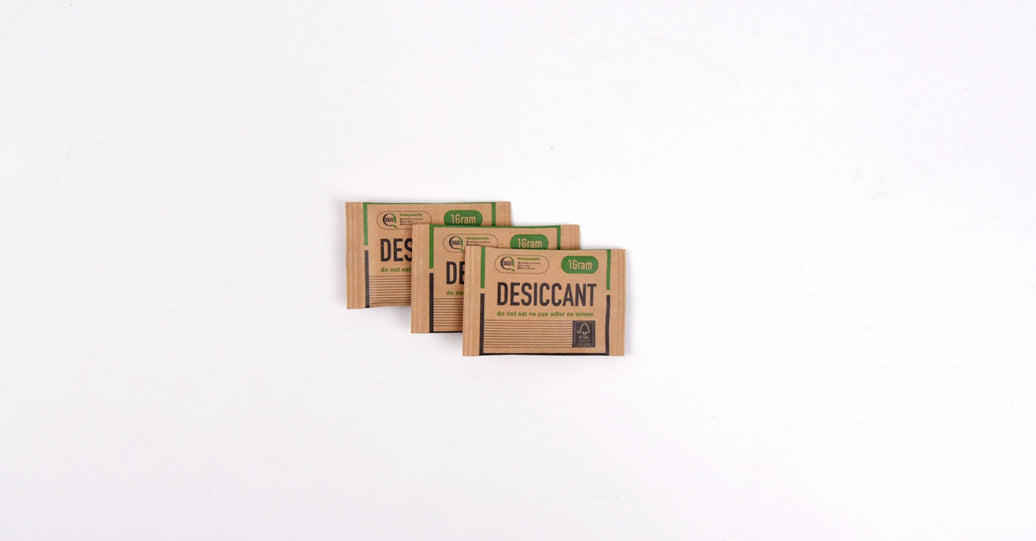
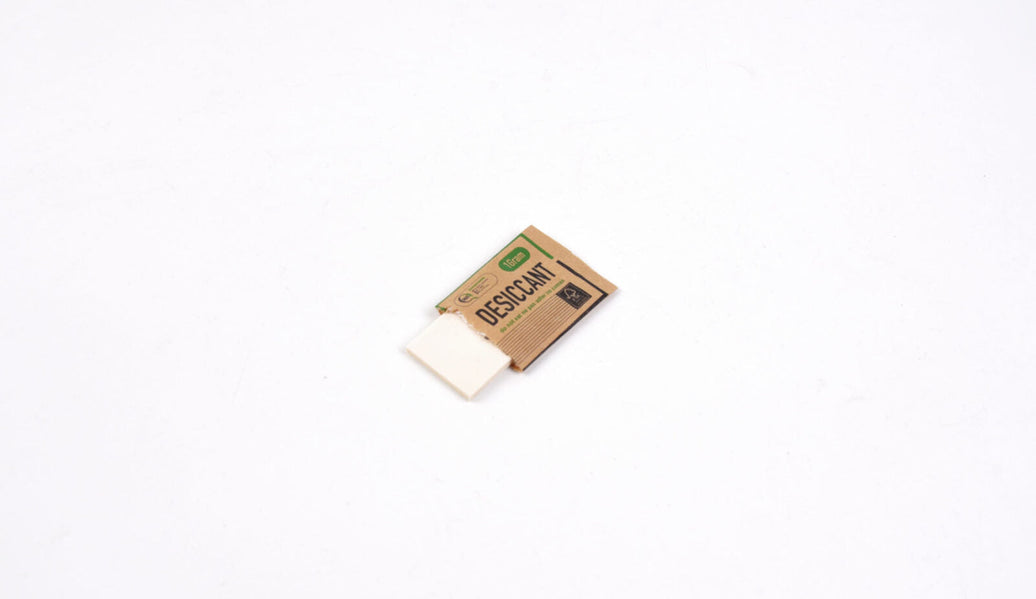
Quick answer: Treat a desiccant change as three short qualifications rather than one long one. Installation qualification confirms the sachet physically fits the dispenser, the pack and the sealing jaws. Operational qualification confirms the line places one sachet in every pack across the speed range. Performance qualification confirms the pack holds its moisture target across the shelf life, using accelerated conditions first and real-time confirmation running in parallel. Written this way, a desiccant change usually closes in eight to twelve weeks rather than a year.
Desiccant changes stall for organisational reasons, not technical ones. Nobody wants to own the risk, so the change gets attached to the next full stability programme and disappears for a year. Splitting the work into three defined stages, each with acceptance criteria agreed before the samples arrive, keeps it moving.
Before anything: define the moisture target
Everything downstream depends on one number — the internal relative humidity, or the product moisture content, that the pack must not exceed. Without it, there is nothing to pass or fail against. If the number is not documented, derive it from the product’s sorption behaviour rather than guessing; the method is covered in the sorption isotherm article.

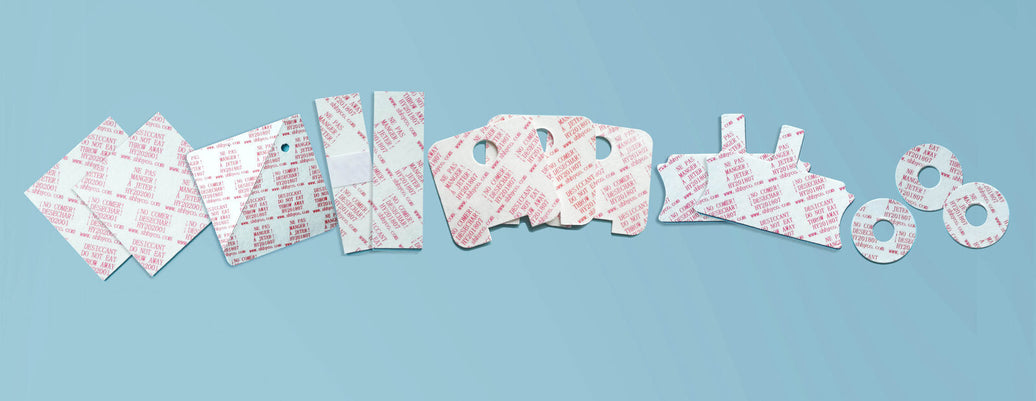
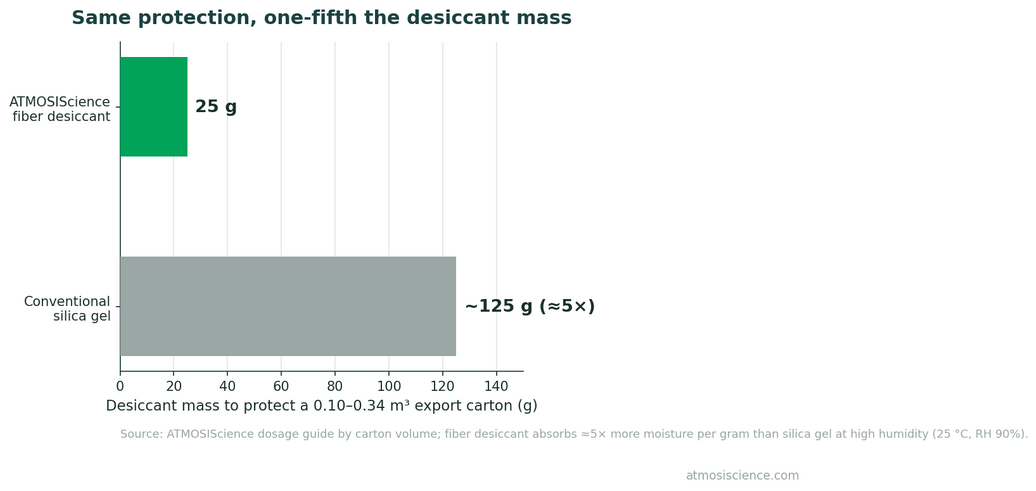
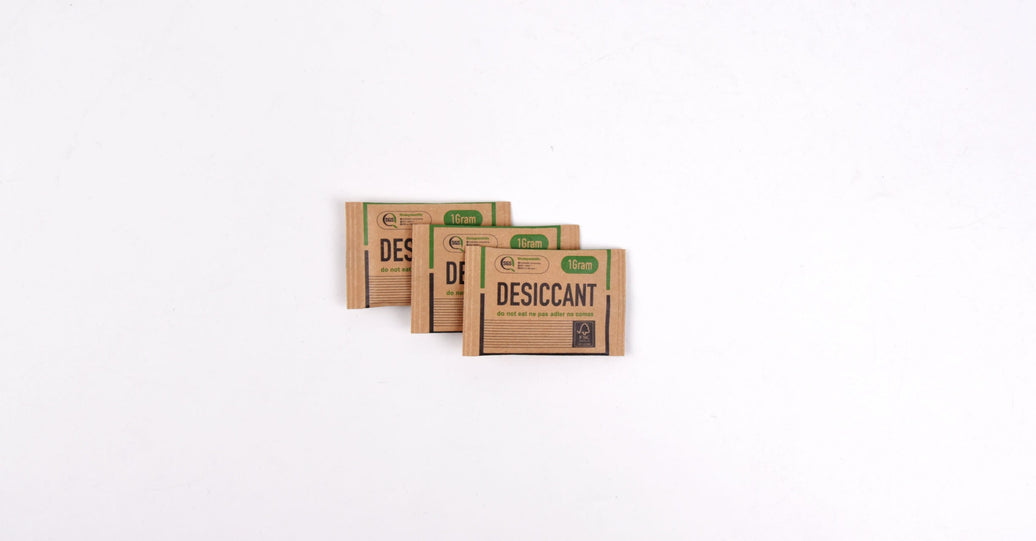
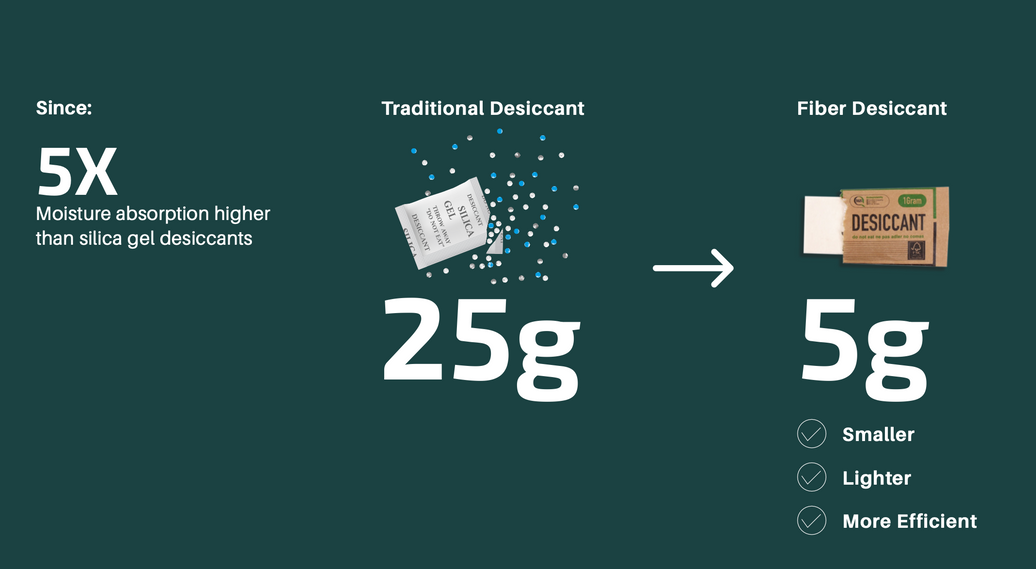
For reference, ATMOSIScience fiber desiccant adsorbs more than 10% of its own weight at 20% RH, more than 35% at 50% RH and more than 70% at 90% RH, at 25 °C, exceeding 100% at saturation. A dosage calculation uses the figure at the humidity band you are actually holding, not the headline maximum.
Stage 1: installation qualification
Purely physical, and cheap to run with a handful of samples.
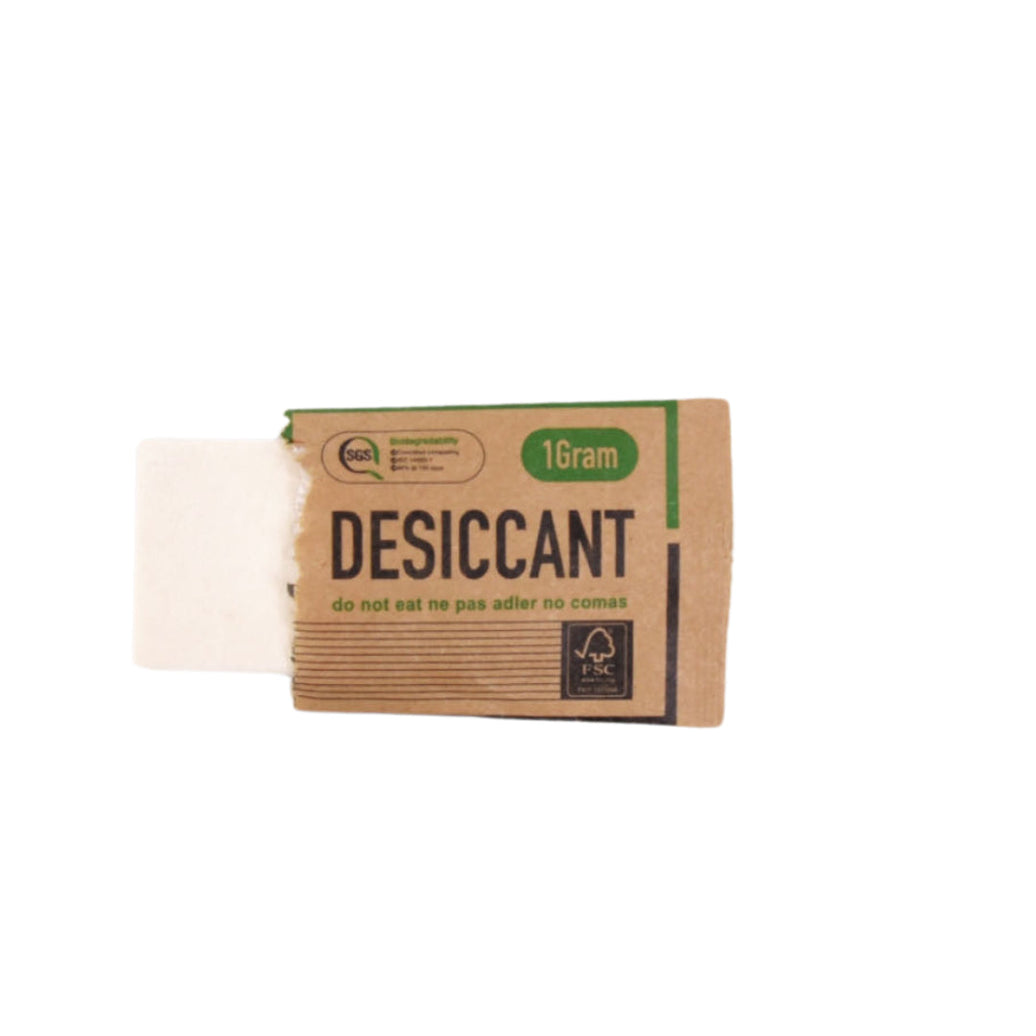
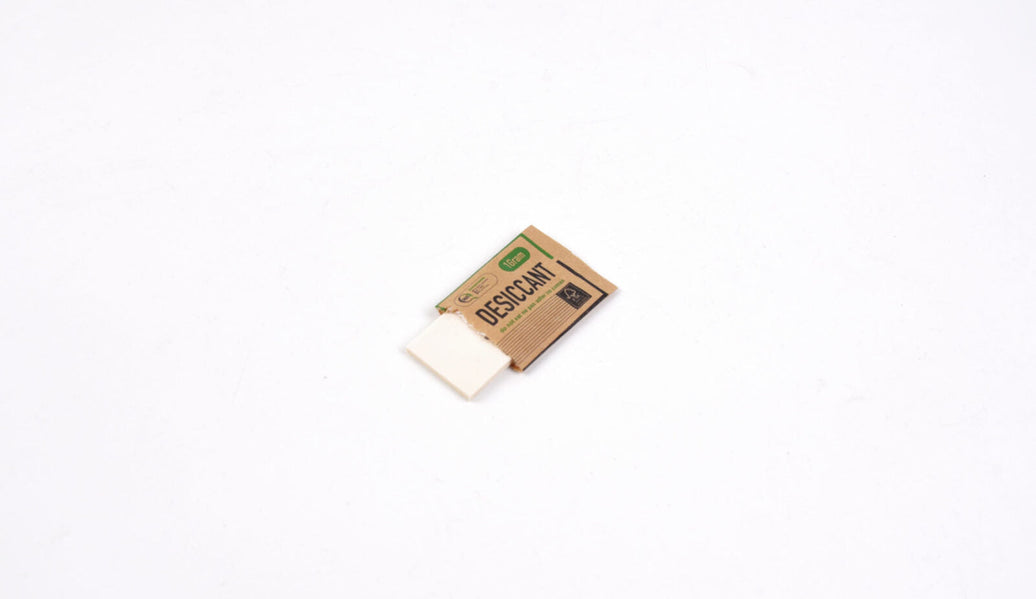
- Dimensions. Measure the samples against the specification, including thickness. A pad that is 0.2 mm thicker than the previous one can foul a dispenser chute.
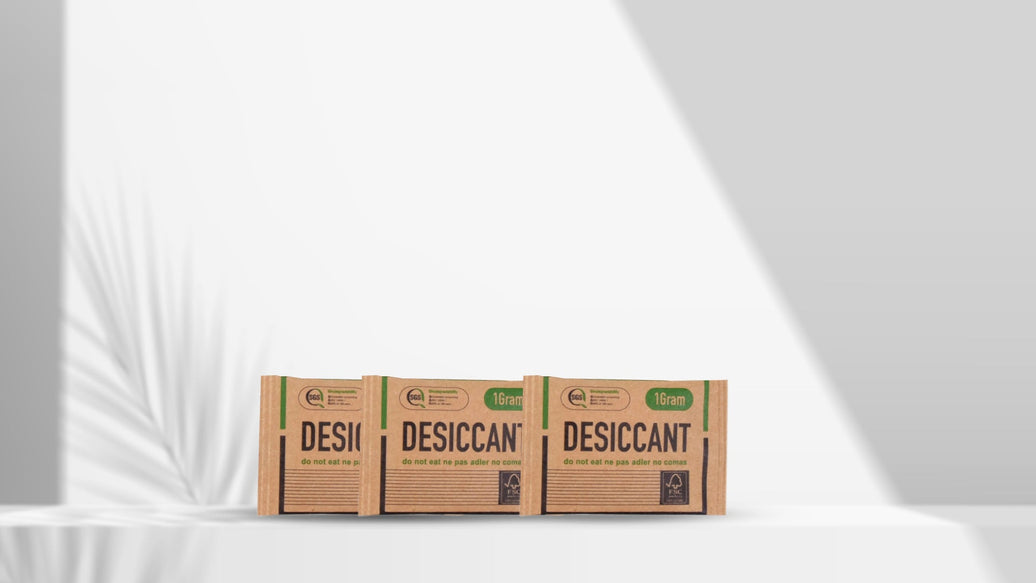
- Fit in the pack. Confirm the sachet sits below the seal area and does not intrude into the sealing jaws at maximum fill.
- Seal integrity. Run seal strength on packs with and without the sachet. A sachet caught in a seal is the most common physical failure.
- Detectability. If the line runs metal detection or X-ray, verify the sachet passes without triggering rejection.
Acceptance: all dimensions within specification, seal strength unchanged versus the current material, zero detection rejects in 200 packs.
Stage 2: operational qualification
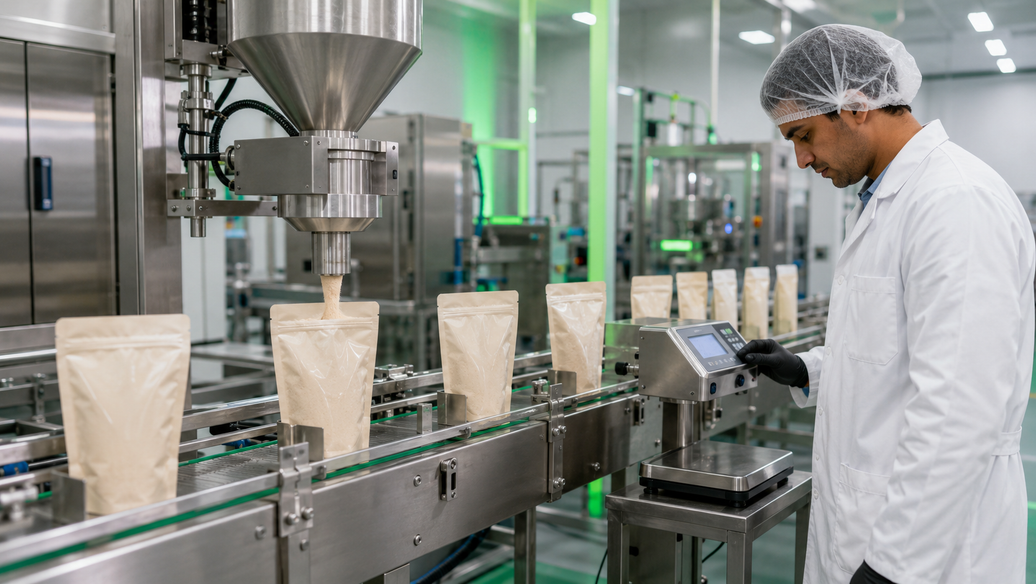
This is a line trial, not a laboratory exercise, and it is where most real problems appear.
- Run at minimum, nominal and maximum line speed.
- Count missing and double inserts across at least 1,000 packs per speed.
- Record dispenser jams and the intervention needed to clear them.
- Observe static behaviour. Static is the usual cause of doubles and of sachets sticking in the chute; the practical controls are in line-safe handling.
- Time the open-carton exposure. A carton opened at the start of a shift and finished four hours later has partly loaded desiccant, which is a real effect covered in open-bag exposure.
Acceptance: insertion accuracy at or above your current material, no increase in jam frequency, no change to line speed.
Stage 3: performance qualification
The moisture question, answered in two tracks running at once.
Accelerated track. Place packs at elevated temperature and humidity and pull at intervals, measuring internal relative humidity or product moisture. Accelerated conditions do not predict shelf life precisely for a moisture-driven mechanism, but they rank options reliably and expose failures fast. Include a worst-case arm: the highest expected film transmission, the largest headspace, the most humid filling condition. That arm is the one that decides the dosage — see worst-case sample evaluation.
Real-time track. Start the same day, pull at the same intervals, run to full shelf life. This is the evidence that eventually supports the claim; the accelerated track is what lets you ship before it finishes.
Acceptance: internal RH stays below target at every pull point in the worst-case arm, with a stated margin. Set the margin explicitly — a pack that lands exactly on the limit has no reserve for a bad summer.
Bridging from an existing material
If a desiccant is already qualified and you are switching format or supplier, run the new material side by side with retained samples of the current one under identical conditions. A comparative result against a known-good control is more persuasive to a reviewer than an absolute result against a calculated limit, and it takes the same amount of chamber space. The switching sequence is covered in the supplier changeover plan.
Documentation to close the file
- Protocol with acceptance criteria, approved before execution
- Raw data with instrument identification and calibration status
- Deviation log, including anything that happened on the line
- Summary report with a clear pass or fail against each criterion
- Revised packaging specification and updated batch record fields
Frequently asked questions
Can accelerated data alone support a shelf-life claim?
For regulated products, no. It supports an interim position while real-time data accumulates.
How many packs per pull point?
Enough to see variability. Three is common, five is better, one tells you nothing about spread.
Do we need to requalify for a different pack size?
The dosage has to be recalculated for the new headspace and film area. The insertion and physical work usually transfers.
What is the most common reason a desiccant qualification fails?
Dispenser incompatibility, not moisture performance. It is also the cheapest failure to find, which is why installation and operational qualification come first.
Get samples sized for your protocol
Send the pack format, film, headspace and shelf life and the ATMOSIScience team will propose dosages and sample quantities for each qualification stage.
Prefer email? info@atmosiscience.com