Quick answer: Three line questions decide whether a desiccant is acceptable: does it shed particles into the powder stream, does it carry enough static to cling to the wrong surface, and does it change the checkweigher or metal-detection window? A bound fiber pad inside a sealed wrap answers the first outright — there is no loose fill to shed. Static and detection are handled by specifying a stable insert mass, adding the insert weight to the checkweigher target, and rerunning metal-detection qualification with the insert present.
On a powder line, a desiccant insert is a foreign object that has been deliberately invited into the pack. Everything the food-safety system is designed to keep out — particulates, unaccounted mass, unpredictable material — the desiccant is allowed to bring in. It earns that place by preventing caking. It keeps that place only if it can be shown not to become a process defect.
The questions below are the ones plant and quality engineers ask before signing off. They are worth answering with evidence rather than assurance, because each one maps to a control the plant already runs.

1. Will it shed dust into the powder stream?
This is the one that cannot be managed with a procedure. Either the insert contains loose particles or it does not.
Loose-fill desiccants — silica gel beads, clay granules, powdered calcium chloride blends — hold discrete particles inside a permeable pouch. Vibration abrades them, fines pass through the wall, and a punctured pouch discharges directly into the product. On a powder line the resulting complaint is indistinguishable from a raw-material contamination event until someone opens the pack.
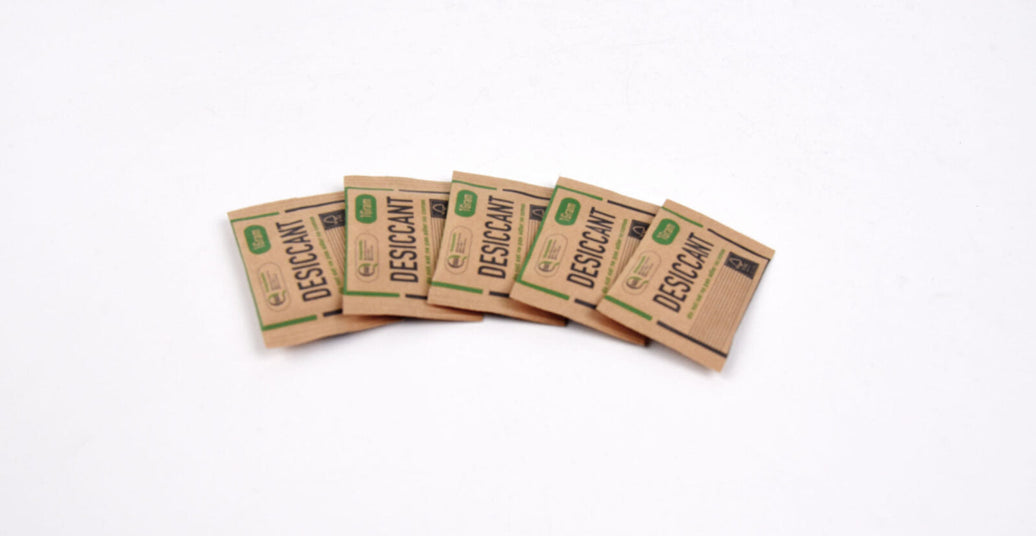
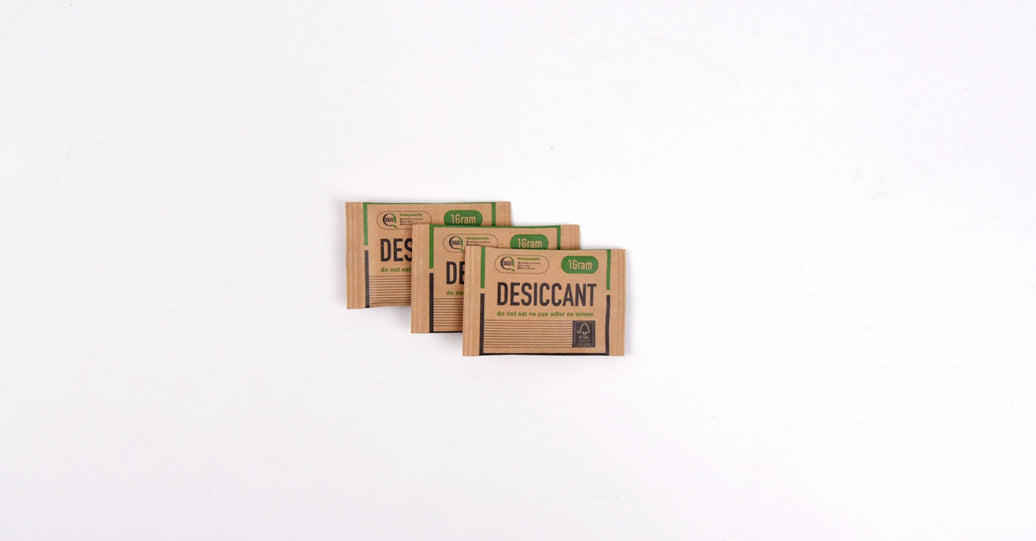
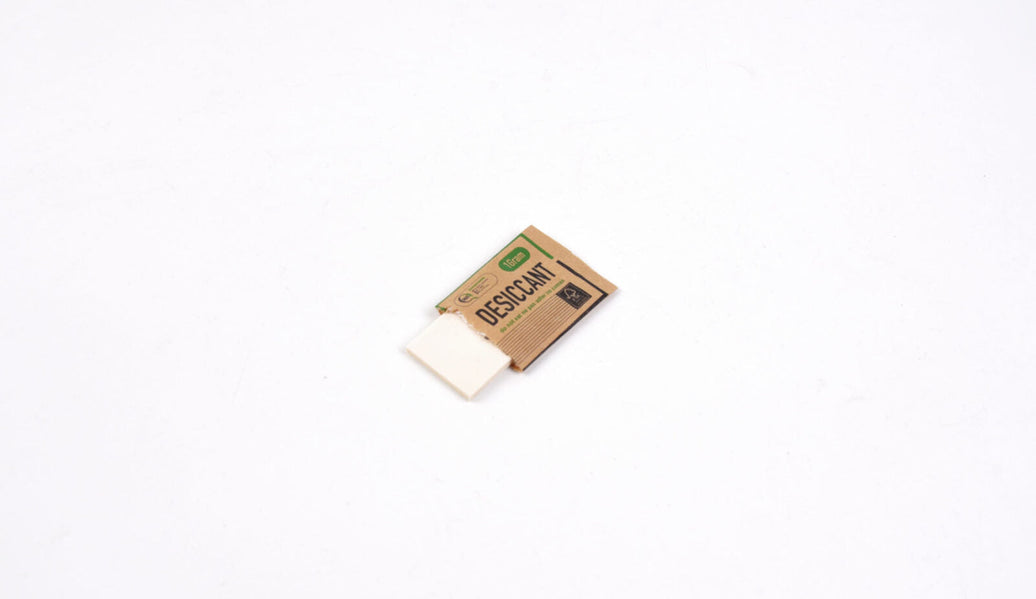
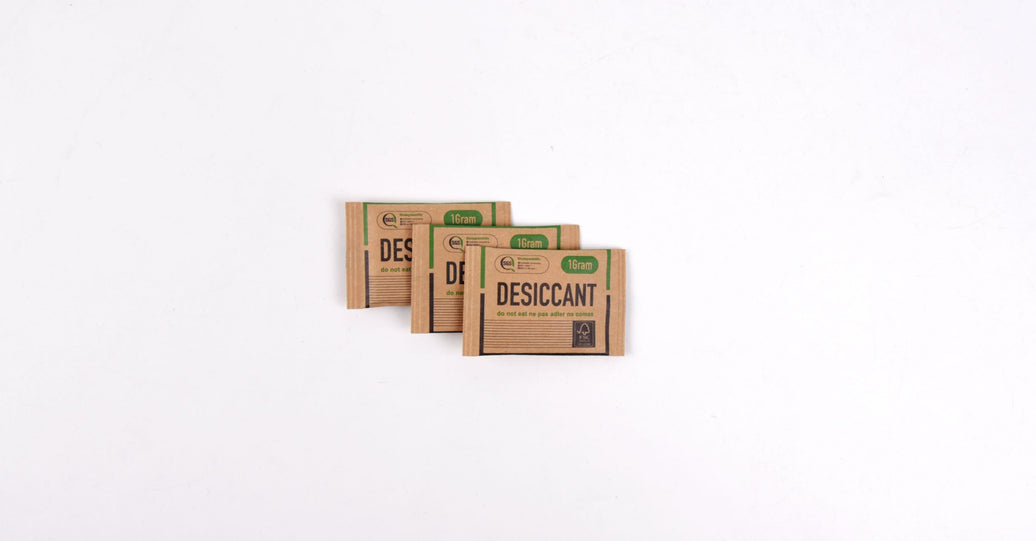
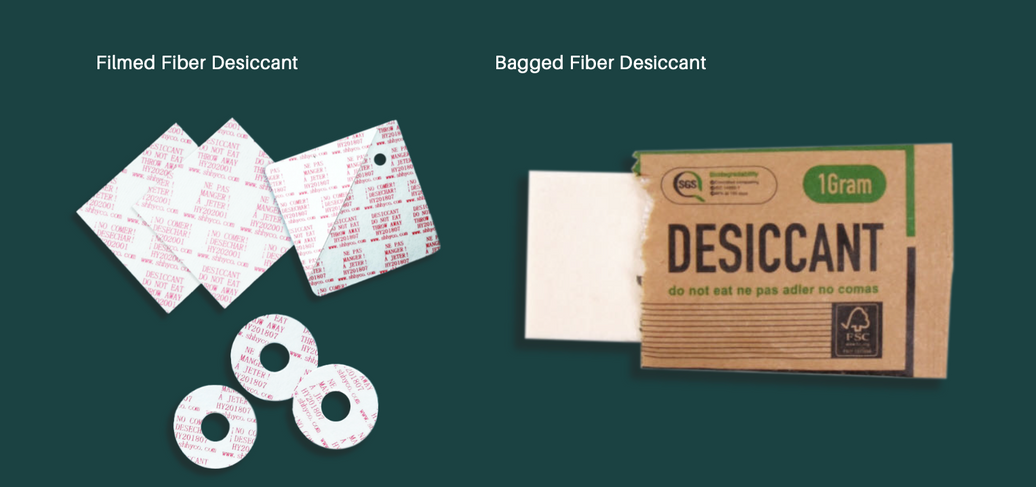
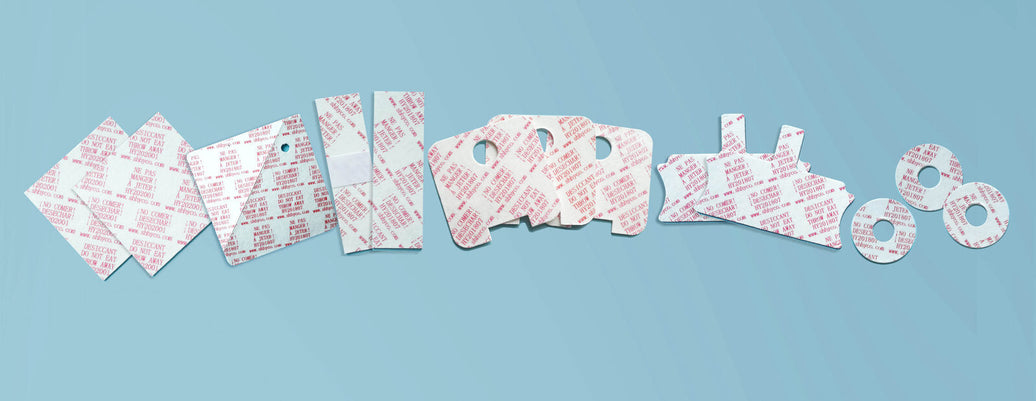
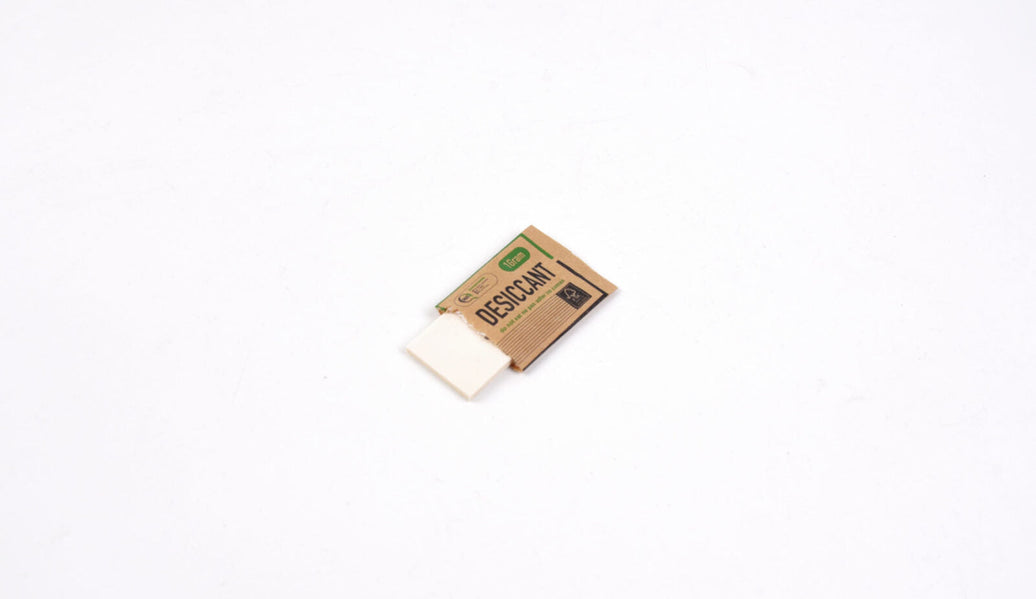
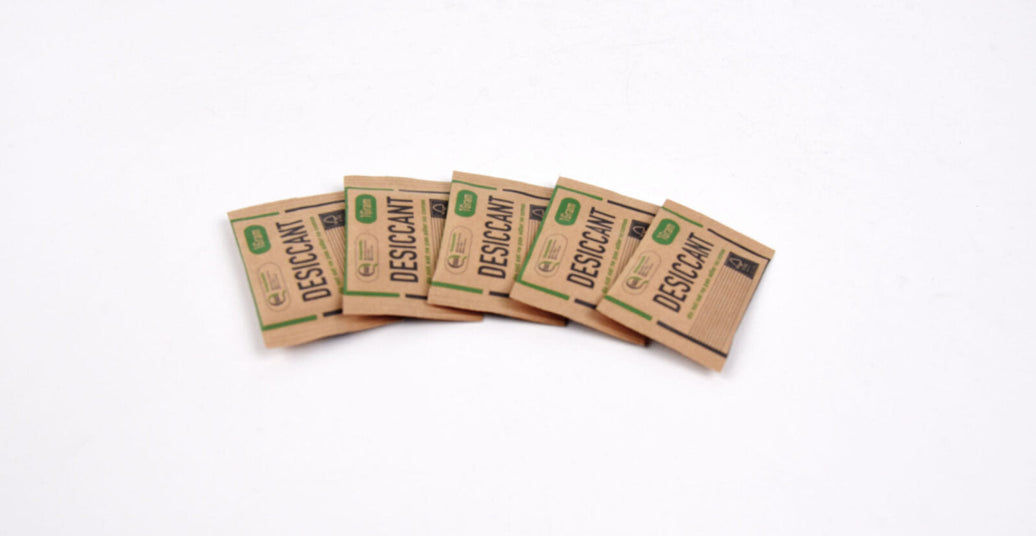
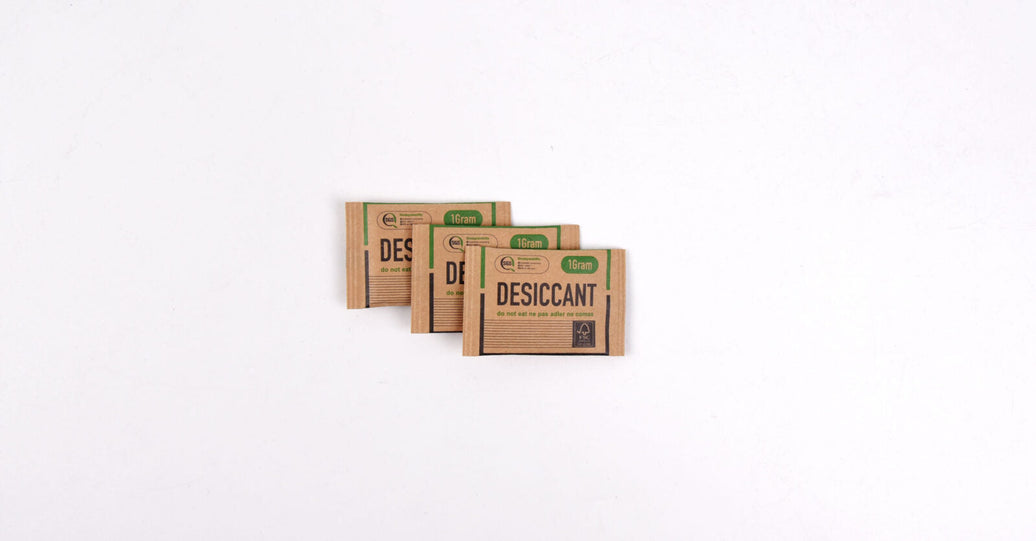
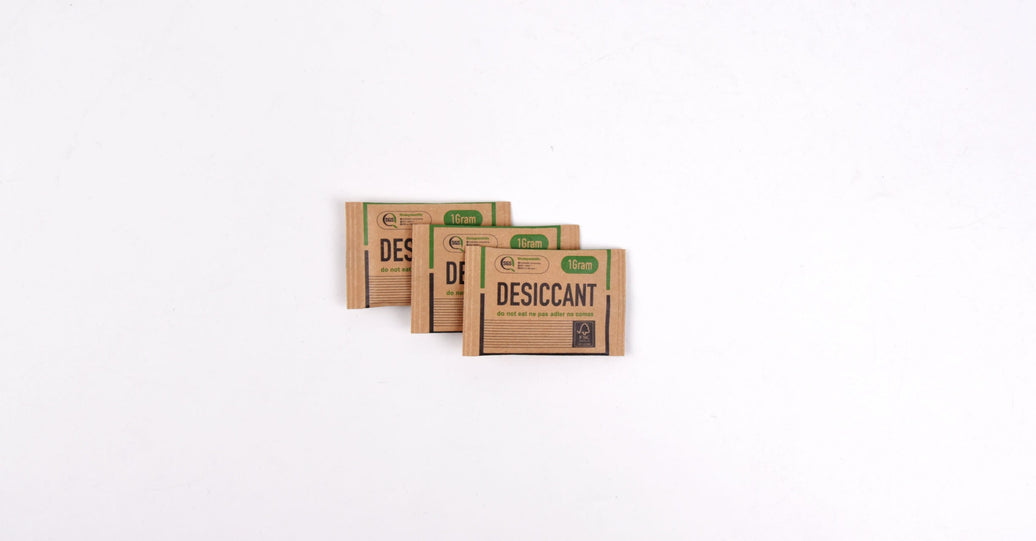
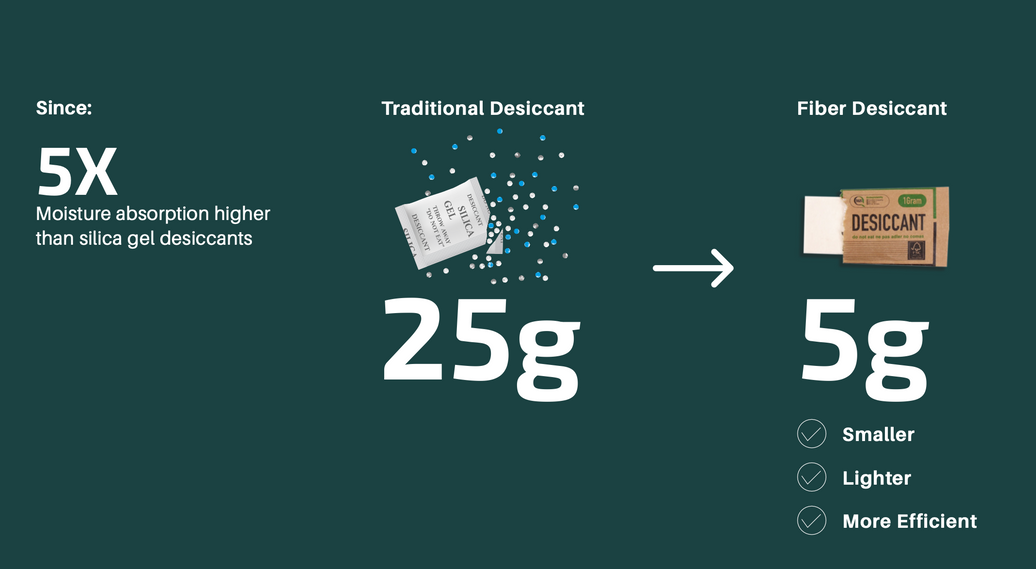
A bound fiber desiccant is a solid substrate roughly 2.5 mm thick rather than a bed of particles. There is nothing loose inside, so abrasion produces no fines and a damaged wrap releases nothing. That is the property to specify and to verify in the sample evaluation. Powder and loose-fill desiccant risks in food packaging covers the failure modes; the worst-case sample test protocol covers how to demonstrate it before production.
What to test
- Vibration-condition a sealed sample set, then inspect the wrap and the surrounding product under magnification.
- Deliberately puncture a unit and confirm what, if anything, leaves it.
- Run a shake test against a dark background and look for released material.
2. Static: the insert that goes where it should not
Dry rooms and dry powders build charge. A lightweight insert can pick up enough static to cling to a vacuum cup after the release stroke, stick to a film web, or drift into a seal jaw. The result is not usually a quality event — it is downtime and leakers.
Practical levers:
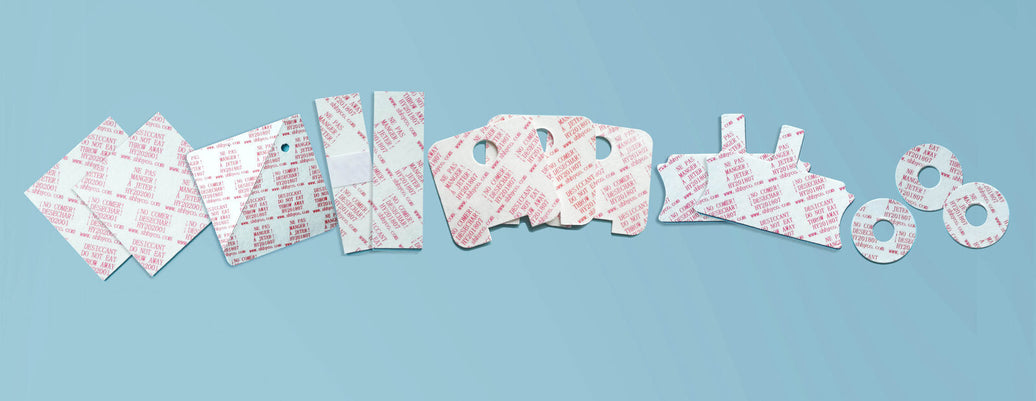
- Specify a stiff, dimensionally stable insert. Card-stiff formats release cleanly from a pickup head; floppy pouches deform and hold on. See why card stiffness decides line speed.
- Prefer paper-wrapped surfaces where possible. Paper carries and holds charge differently from a bare plastic film.
- Place downstream of the powder dose. Insert after filling wherever the format allows, so a wandering insert cannot reach the product stream.
- Ionise at the pickup station rather than trying to change the desiccant to solve a room-humidity problem.
Static severity tracks room humidity, which is the same variable driving the moisture load being sealed into the pack. A dry room reduces sealed-in moisture and increases static, so the two problems trade against each other — worth measuring rather than assuming. How in-plant humidity taxes powder packing lines covers the wider effect on fill accuracy.
3. Checkweighers: add the insert to the target
A checkweigher verifies total pack weight. Adding an insert adds mass, and unless the target and tolerance are updated, the line will either reject good packs or accept underfilled ones.
Two properties matter:
- Nominal insert mass — added to the target weight.
- Mass tolerance — consumed from the available fill tolerance window.
Tight, repeatable insert mass is therefore a line-performance specification, not just a capacity one. Film-card formats are supplied to defined masses — 0.15 g, 0.35 g and 1.0 g for the FF-3, FF-6 and FF-15 sizes — which makes them straightforward to build into a target weight.

One subtlety: a desiccant gains weight as it adsorbs. Between goods-in and placement, an insert stored in humid air will already be heavier than nominal. That is another reason to control desiccant storage — it protects both capacity and weight consistency. See shelf life, storage and handling before use.
4. Metal detection and X-ray inspection
Any new in-pack component requires the detection system to be requalified. Points to work through with the plant:
- Metal detection. Confirm the insert produces no signal and does not raise the effective product effect, which would force a less sensitive setting.
- Printed wrap. Metallic pigments and foil laminates can be detectable. Where a printed wrap is specified, qualify the actual printed article, not a plain sample.
- X-ray. Density contrast can make an insert appear as a reject. Train the image library on packs containing the insert in its normal position.
- Position variability. If the insert can sit anywhere in the pack, the inspection recipe has to tolerate every position it can occupy.
Record all of this in the hazard analysis rather than in an email. Adding desiccants to a HACCP plan shows how the physical, chemical and biological hazard classes are documented with matching controls.

5. Vibration and rupture survival
Line vibration is mild compared with distribution. If the insert survives transit testing it will survive the line, so the sequence to run is: qualify on the line for handling and detection, then qualify in transit for integrity and capacity. Transit is where a marginal wrap fails.
The pre-trial checklist
- Insert nominal mass and tolerance confirmed in writing
- Checkweigher target and tolerance updated for the insert
- Metal detection requalified with the actual insert, printed if applicable
- X-ray image library updated for insert position range
- Shed and puncture test results recorded
- Placement station verified at target line speed
- Food-contact documentation on file if contact is possible
- Hazard analysis updated and approved
Frequently asked questions
Does desiccant create static on a filling line?
The insert itself is not a significant charge source; the dry room and the moving film are. What the insert determines is whether static causes a problem — a stiff, dimensionally stable format releases cleanly where a floppy pouch clings.
Will the sachet shed dust into the powder stream?
A loose-fill sachet can. A bound fiber pad has no discrete particles inside, so there is nothing to shed. This is the single most important property to specify on a powder line.
Will it interfere with checkweighers or metal detection?
It will change the checkweigher target, which is a configuration task rather than a problem. Metal detection needs requalification with the actual article, especially where the wrap carries print.
Can the pack survive vibration without rupturing?
Demonstrate it rather than assume it. Run the insert through your distribution test profile and inspect for wrap damage and released material afterwards.
How do we keep the line dry without contaminating the product?
Separate the two jobs. Room humidity is an HVAC and enclosure question; in-pack humidity is a desiccant and barrier question. Using in-pack desiccant to compensate for a wet room means paying for capacity that is spent before the pack leaves the plant.
Request line-safety data for a trial
Tell us the line format and detection setup. ATMOSIScience will supply insert mass and tolerance, construction detail and the documentation your plant needs before a trial is scheduled.
Prefer email? info@atmosiscience.com