Quick answer: Choosing a desiccant for colostrum powder starts with three facts. Colostrum proteins are hygroscopic and can absorb odours, the powder contains lactose like other dairy powders, and it is usually sold in tubs or pouches opened every day. Ingredient suppliers typically recommend dry storage below about 65% RH and 75 °F for the bulk powder; once a consumer pack is opened daily, the headspace needs active moisture control. Size the desiccant for the opening pattern, fix it in the lid or on the pouch wall so it stays in place, make sure it is odour-neutral and documented for food contact, and validate with caking, colour and sensory checks.
Bovine colostrum has moved from niche to mainstream in the wellness aisle, usually at a premium price. That makes caking and off-notes more costly than in a commodity powder: a customer paying for a premium product notices a lump or a stale smell straight away. The good news is that colostrum behaves much like other dairy powders, so the moisture risks are well understood.
Why colostrum powder is moisture-sensitive
- Hygroscopic proteins. One colostrum ingredient specification states plainly that colostrum proteins are hygroscopic and can absorb odours, and recommends storage below 75 °F and 65% RH in an odour-free environment.
- Lactose. Like milk powders, colostrum contains lactose, which turns sticky as it takes up water and can crystallise and bridge particles. See desiccant for milk powder.
- Fine, dried particles. Spray-dried and freeze-dried powders have a lot of surface area and pick up moisture quickly.
- Daily-use packs. A 30-serving tub or pouch is opened 30 times, each time replacing dry headspace with room air.
What moisture does to colostrum powder
| Effect | What the customer or plant sees |
|---|---|
| Caking | Lumps in the tub, a crust under the lid, scoops that will not level |
| Browning | Cream powder turning yellow or tan, cooked or cardboard notes |
| Odour pickup | Off-notes from the warehouse, packaging or a strong-smelling desiccant |
| Flow loss on the line | Bridging in hoppers and variable fill weights in stick packs |
| Rising water activity | Less margin on microbial and chemical stability over shelf life |
Fill-weight problems on humid days are covered in how in-plant humidity taxes powder packing lines, and the water activity side in water activity vs relative humidity.
Where the desiccant goes, by pack format
| Format | Usual approach |
|---|---|
| Tub with scoop | A flat card fixed inside the lid, sized for daily openings |
| Resealable pouch | A card on the inside wall above the fill line, sized for pouch barrier plus openings |
| Stick packs | Rely on film barrier and dry filling; consider desiccant in the outer carton for humid markets |
| Bulk ingredient bags and drums | Bagged desiccant between liner and lid, sized for transit route |
Format details are in desiccant for resealable packs, desiccant in stick packs and desiccant for bulk bags and drums.
Do not forget odour
Because colostrum picks up odours, the desiccant itself must not add one. Some desiccant materials and printed wrappers carry a faint smell, especially when warm. Ask your supplier for sensory or odour data on the exact construction, including any print, and include a sensory check in your own trial. Store finished goods and ingredient bags away from strong-smelling materials such as cleaning chemicals, cardboard bales and spices.
Sizing and validation
- Know the caking point. Run a moisture sorption test on your blend to find the humidity where it starts taking up water quickly. See how to read a moisture sorption isotherm.
- Add up the moisture load: pack wall permeation over shelf life, plus each opening, plus the air sealed in at filling.
- Size the desiccant at your target RH, not at 90% RH. ATMOSIScience fiber desiccant adsorbs more than 10% of its own weight at 20% RH and more than 35% at 50% RH (25 °C), so the design RH changes the answer a lot.
- Test on the real pack at an accelerated condition with an opening schedule, checking caking, colour, smell and water activity at each pull. See accelerated shelf-life testing for powders.
Paperwork colostrum brands are asked for
- Food-contact documentation for every layer of the desiccant. See food-contact desiccants and FDA 21 CFR.
- Kosher, halal and allergen statements, which many dairy supplement buyers require. See kosher, halal and allergen declarations for desiccants.
- Lot traceability that matches your own batch records.
Where Fiber Card fits
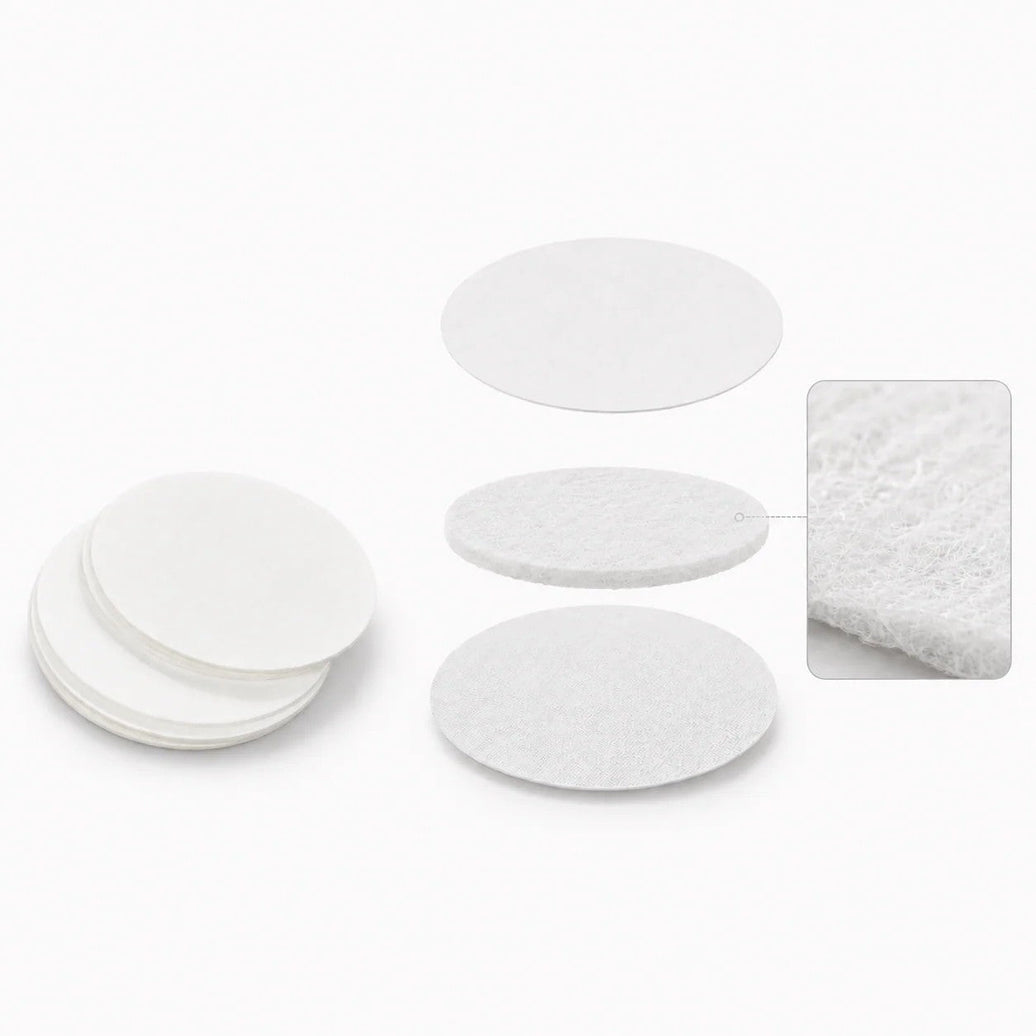
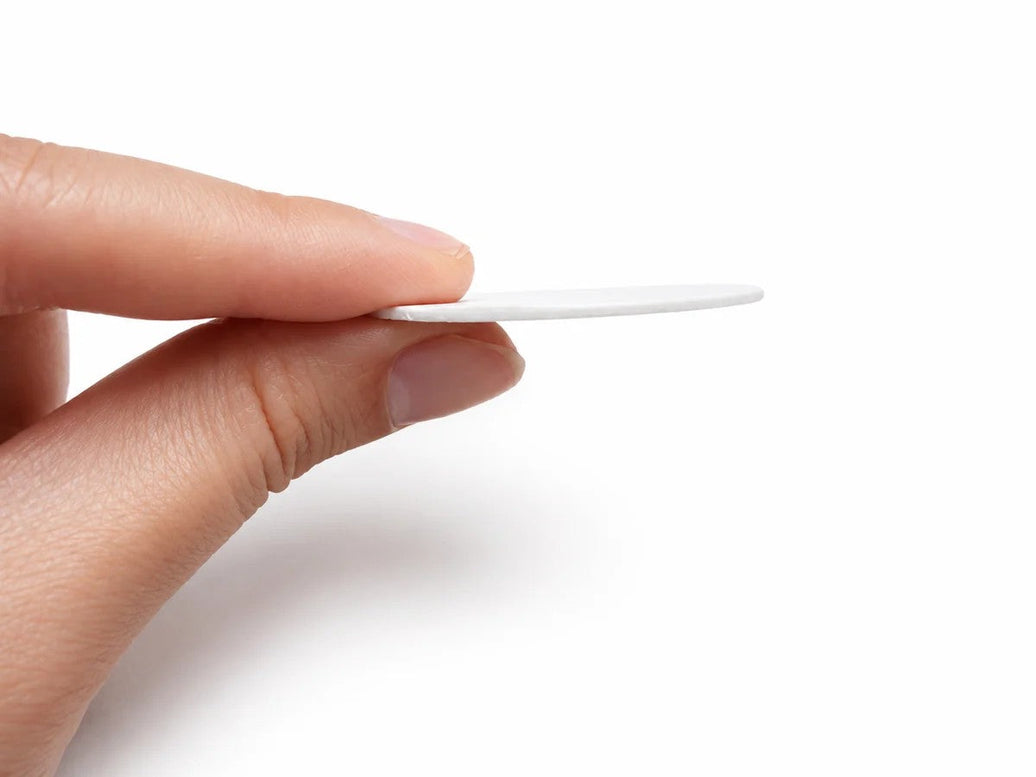
For tubs and pouches, a paper desiccant card can be fixed in the lid or on the pouch wall, so it stays put through every opening and cannot shed beads into the powder. Its printable surface can explain why it is there. At 25 °C and 90% RH it adsorbs more than 70% of its own weight, about 2.3 times common silica gel. Sizes and documents are in the Fiber Card spec guide.
Frequently asked questions
Does colostrum powder need a desiccant?
Sealed single-dose packs with a good barrier may not. Multi-serve tubs and pouches opened daily usually do, especially in humid markets.
Why does our colostrum powder smell stale after a few weeks?
Moisture-driven browning and odour pickup are the usual causes. Check headspace humidity, storage conditions and whether anything in the pack, including the desiccant, carries an odour.
Can a desiccant over-dry colostrum powder?
Dry powders are generally more stable, so over-drying is rarely a concern for the powder itself. It can matter for capsule shells; see desiccant for capsule supplements.
Should the desiccant touch the powder?
Placing it in the lid or on the wall above the fill line avoids direct contact and keeps it from being scooped out. Use food-contact documented materials either way.
What about colostrum capsules?
The fill benefits from dry conditions, but gelatin shells can turn brittle if over-dried. Follow the capsule guidance above.
Colostrum brand? Protect the premium
Tell ATMOSIScience the pack, servings and markets. We will size a Fiber Card for daily opening and share the documents your QA team needs.
Prefer email? info@atmosiscience.com