Quick answer: Most paper desiccant myths come from treating every flat desiccant as the same product. Checked against ATMOSIScience plant-fiber desiccant: under stated test conditions it outperforms silica gel (At 1.0 mm thickness, Fiber Desiccant Card absorbs three times as much moisture as silica gel under the same test conditions (25 °C / 90% RH)); the product sheet describes no brine leakage, dust or corrosion; cards are surface-printed and supplied ready for automated placement; the bagged format runs from 1 to 1,000 g; and opened stock is fine if you keep to the open-air limits and reseal.
Paper desiccant often gets ruled out early, usually because of something a buyer heard once about a different product. Here are the nine myths we hear most, each checked against the specification.
Myth 1: Paper desiccant is weaker than silica gel
Fact: At 1.0 mm thickness, Fiber Desiccant Card absorbs three times as much moisture as silica gel under the same test conditions (25 °C / 90% RH). In dry storage the gap is smaller but still in favor of fiber: across 20 to 40% RH on our measured 25 °C curve, plant-fiber desiccant holds about twice as much as silica gel. The figure to compare is always capacity at the humidity your product needs, with the test conditions stated.

Myth 2: It sheds dust or fibers into the product
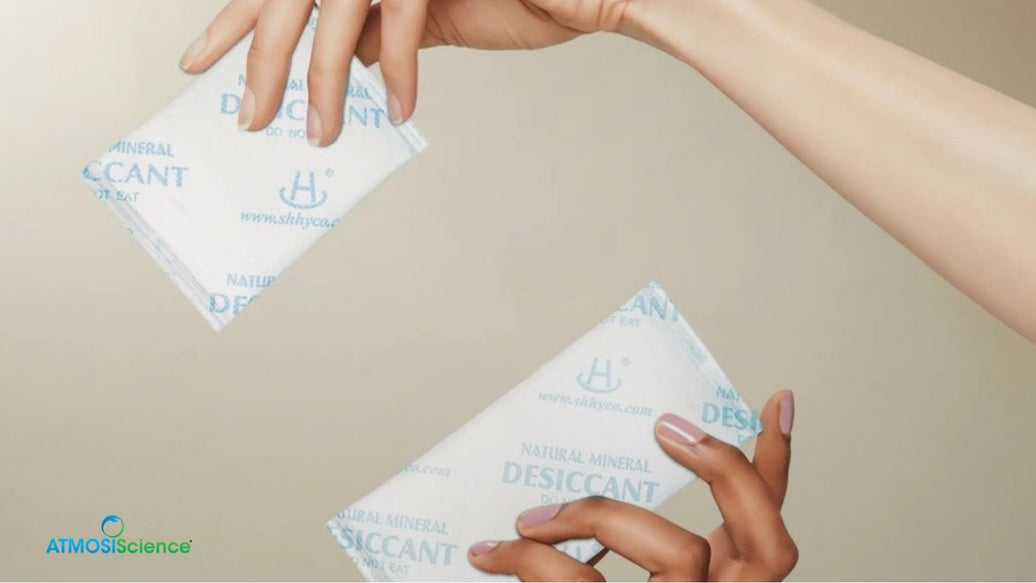
Fact: The product sheet describes calcium chloride binding water within the fiber matrix, with no brine leakage or dust, and the outer layer is breathable and dust- and leak-resistant. The absorbing layer is the card itself, so there is no loose fill.
Myth 3: You can't print on it
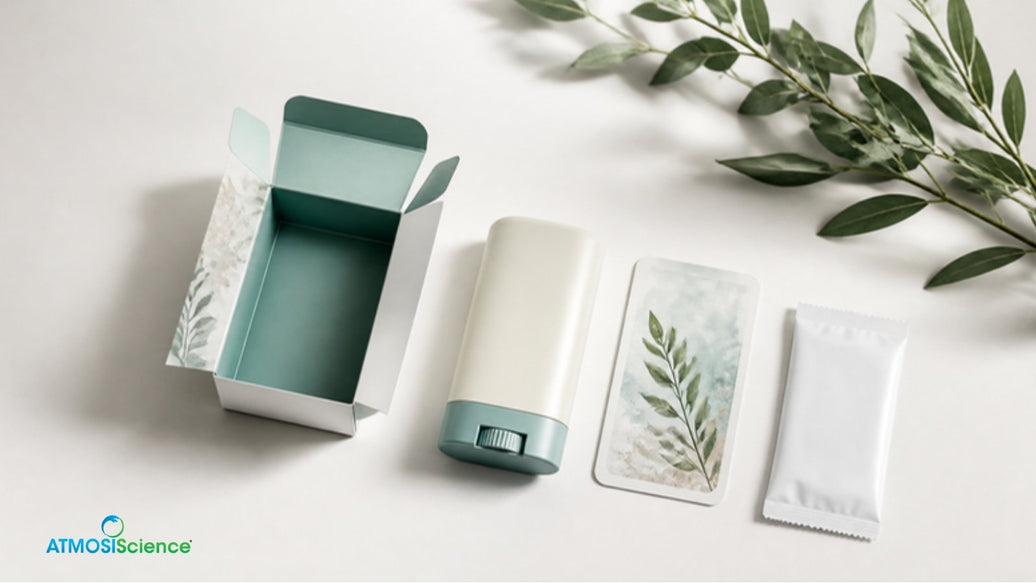
Fact: Fiber Desiccant Cards are surface-printed with your logo, product data or a do-not-eat line, and die-cut to the shape of your pack. See the paper desiccant glossary for print and format terms.

Myth 4: It only works in small packs
Fact: Cards come in 0.7 or 1.0 mm and sheets in 0.5 or 1.0 mm. For larger spaces, the bagged format runs from 1 to 1,000 g per pouch on about 2.5 mm of fiber substrate, for cartons, cases and drums.
Myth 5: It can't run on an automated line
Fact: Fiber Desiccant Cards are supplied ready for automated placement, and capacity and speed are configurable. Share your feeder model and container drawing early so the card is cut to suit.
Myth 6: All paper desiccants are the same
Fact: "Paper desiccant" is a format, not a material. Some products pair a paper or cellulose carrier with silica gel or another absorbent. ATMOSIScience uses natural plant fiber as the absorbing substrate, with calcium chloride held in the fiber matrix and no silica gel. Ask every supplier what the absorbing layer is. Paper desiccant vs fiber desiccant explains the difference.
Myth 7: Once the bag is opened, the stock is ruined
Fact: Opened stock stays usable if it is handled within the open-air limits: up to 2 hours at 50% RH or below, up to 1 hour above that, and stop at 80% RH or above; if work pauses for more than 30 minutes, reseal the unused cards in a sealed bag. A quick bend test tells you if a card is still fresh: a fresh card feels relatively stiff, and one that has gone noticeably soft has absorbed moisture and should be swapped out.

Myth 8: You can swap it gram for gram with silica gel
Fact: Size on the humidity your product needs, not on the weight of your old packet. Because capacity changes with humidity, a straight swap can leave you with too much or too little. Start from the water your pack must handle and the humidity your product can tolerate, then confirm with samples.
Myth 9: A fresh card should be soft and flexible
Fact: The opposite. A fresh Fiber Desiccant Card feels relatively stiff. One that has gone noticeably soft has absorbed moisture and should be swapped out.

Check the claims you hear
When a supplier, a colleague or a forum makes a claim about paper desiccant, ask for the figure, the test conditions and the document it comes from. Start with fiber desiccant vs silica gel packets and the paper desiccant spec checklist.
Frequently asked questions
Is paper desiccant as effective as silica gel?
At 1.0 mm thickness, Fiber Desiccant Card absorbs three times as much moisture as silica gel under the same test conditions (25 °C / 90% RH). Across 20 to 40% RH on our measured 25 °C curve, plant-fiber desiccant holds about twice as much as silica gel.
Does fiber desiccant leak?
The product sheet describes no brine leakage, dust or corrosion.
Can paper desiccant be printed?
Yes. Fiber Desiccant Cards are surface-printed with a logo, product data or a do-not-eat line.
How long can it stay out of the bag?
Up to 2 hours at 50% RH or below, up to 1 hour above that, and stop at 80% RH or above; if work pauses for more than 30 minutes, reseal the unused desiccant in a sealed bag.
How do I know a card is still working?
Gently bend it: a fresh card feels relatively stiff, and one that has gone noticeably soft has absorbed moisture and should be swapped out.
Test a myth in your own pack
Pick the doubt that matters most to your team. We will send samples so you can check it yourself.
Prefer email? info@atmosiscience.com
Figures from ATMOSIScience fiber desiccant product documentation and usage instructions and the Fiber Desiccant Card product sheet.