Quick answer: Protein powder hardened in the tub because it took up moisture from the air, usually a little with every opening. In whey concentrate, the lactose becomes sticky and can bond particles together; in plant proteins, fibers, gums, sweeteners and flavours do the same job. If the powder is dry, smells and looks normal and mixes properly, it is usually still usable within date once broken up. If it smells sour, rancid or like cardboard, has turned yellow or brown, feels damp or shows mould, stop using it and contact the brand.
There are two different protein powder clumping problems. One happens in your shaker, when powder meets liquid and forms lumps. The other happens in the tub, when a loose powder slowly turns into a crust or a solid block. This guide is about the second one, which is caused by moisture.
Why protein powder hardens
| Type | What takes up the moisture | How prone |
|---|---|---|
| Whey concentrate | Lactose, which is left in a sticky, non-crystalline form by spray drying | Higher |
| Whey isolate | Less lactose, but sweeteners and flavours still attract water | Lower |
| Plant protein (pea, rice, soy blends) | Fibers, gums, sugars and flavour carriers | Varies with formula |
| Blends with add-ins | Creatine, electrolytes, greens or fruit powders added to the protein | Often higher |
The mechanism is the same in each case. Humid air gets into the tub. The most water-loving ingredient takes up a little water and its surface turns sticky. Neighbouring grains stick together. When the air dries again, the bonds set. In whey concentrate, sticky lactose can also crystallise, which locks the grains even harder. The full process is in why powders cake, and dairy powders specifically in desiccant for milk powder.
Is hardened protein powder still safe?
| What you notice | What to do |
|---|---|
| Dry lumps, normal smell and colour, mixes well | Break up and use within date |
| Yellow or brown colour, cardboard or burnt smell | Browning has started. Quality has dropped; contact the brand |
| Sour, rancid or paint-like smell | Do not use |
| Damp patches, fuzzy spots or growth | Discard |
Why colour and smell matter
Moisture does more than make lumps. In dairy proteins, water and warmth speed up browning reactions between sugars and proteins. That is what turns a cream-coloured powder yellow or tan and gives it a cardboard or caramel note. These reactions can also reduce the availability of some amino acids, such as lysine, which is why a browned powder is a quality problem even if it is not a safety one.
Rancid or paint-like smells are usually about fat and oxygen rather than water, and are more common in concentrates that contain more fat. Moisture and oxygen are different problems with different fixes; see desiccant vs oxygen absorber vs nitrogen flush.
How to loosen it
- Break the crust with a clean, dry spoon or fork.
- Close the tub and shake or roll it to loosen what is left.
- For stubborn lumps, a few short pulses in a completely dry blender work well.
- Do not heat it to dry it out. Heat speeds up the browning reactions above.
How to keep protein powder from clumping in the tub
- Seal it every time. Twist the lid until it stops, or press the zip closed along its full length.
- Keep the scoop dry. Do not scoop with wet hands or put a damp scoop back in the tub.
- Store it cool and dry. Not next to the kettle, not in a hot car, not in a gym locker.
- Do not refrigerate. A cold tub opened in a warm room collects condensation.
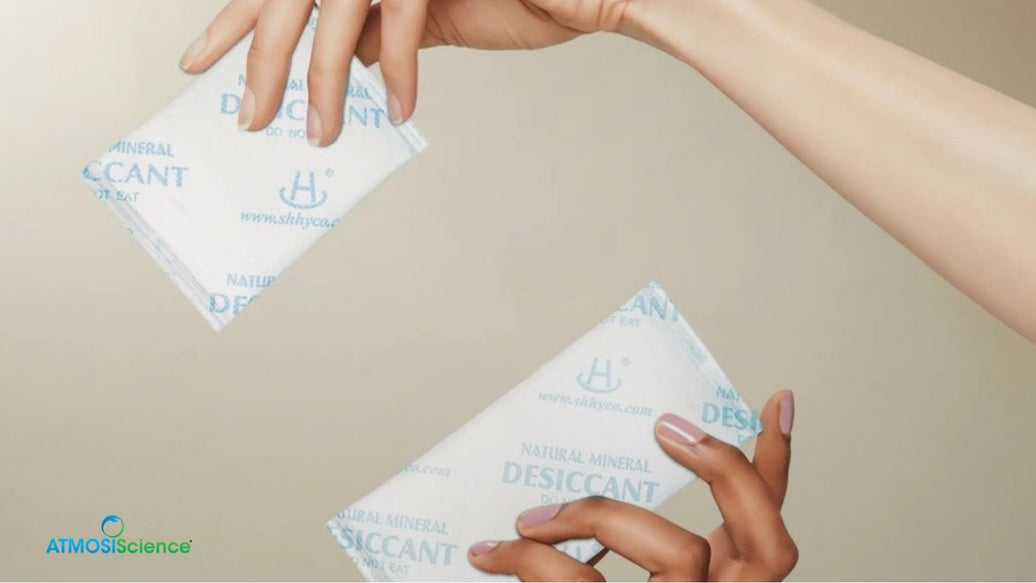
- Leave the desiccant in. If there is a packet or card in the tub, it is absorbing the water that comes in each time you open it. See should you throw away the desiccant.
Pre-workouts and hydration mixes harden for similar reasons; see pre-workout clumped together and electrolyte powder hardened.
If you are the brand: hard tubs are a pack design issue
Protein tubs are large, opened every day for a month or more, and often stored in kitchens and gym bags. That combination brings in far more moisture than a closed pack sitting on a shelf. Three checks help:
- Size moisture control for the opening pattern, not just the shelf life. See desiccant for packs opened 30 times.
- Know where your blend starts to cake. A sorption curve tells you the humidity that matters. See how to read a moisture sorption isotherm.
- Use a desiccant that stays in the lid. A paper desiccant card fixed in the lid is not scooped out or thrown away, and it can carry a one-line explanation.
The manufacturing guide is desiccant for protein powder: whey, casein and plant protein, and card sizes are in the Fiber Card spec guide.
Frequently asked questions
Why is my protein powder clumping in my shaker?
That is a mixing issue, not a storage one. Add liquid first, then powder, shake straight away, and use cool rather than hot liquid. Some proteins and gums simply need more shaking.
Can I use protein powder that is hard as a rock?
If it is dry and smells, looks and mixes normally, usually yes once broken up. If anything about colour, smell or texture has changed, stop.
Does hardened protein powder lose protein?
Caking itself does not remove protein. Long exposure to moisture and warmth can cause browning that lowers quality and reduces the availability of some amino acids.
Why does whey isolate harden less than concentrate?
Isolate contains much less lactose, the ingredient that turns sticky most easily in whey concentrate.
Should I move my protein powder to an airtight jar?
Only if the jar is cleaner and seals better than the original tub. Keep any desiccant from the original pack out of a new food container; leave it with the old tub.
Protein brand? Keep the last scoop as loose as the first
ATMOSIScience sizes moisture control for tubs opened daily and supplies Fiber Card paper desiccant that stays in the lid. Tell us the tub and the blend.
Prefer email? info@atmosiscience.com