Three technologies get lumped together in packaging meetings as if they were interchangeable: desiccants, oxygen absorbers, and nitrogen flushing. They solve three different problems. Choosing the wrong one — or assuming one covers for another — is how a nitrogen-flushed milk powder still cakes, and how an oxygen-absorber-protected jerky still molds.
This guide lays out what each technology actually does, where each wins, and how to decide — written for powder and food packaging teams making the spec call.
Three technologies, three targets
Desiccant targets water vapor. It adsorbs moisture from the headspace and keeps RH below the threshold where caking, stickiness, leavening pre-reaction, and mold risk begin. It works continuously — including after every reopening.
Oxygen absorbers target O₂. Iron-based scavengers chemically bind headspace oxygen to slow fat oxidation (rancidity), color loss, and aerobic spoilage. Notably, most iron-based absorbers require moisture to function — they are designed for moist or intermediate-moisture products, which is the first clue they are not a desiccant substitute.
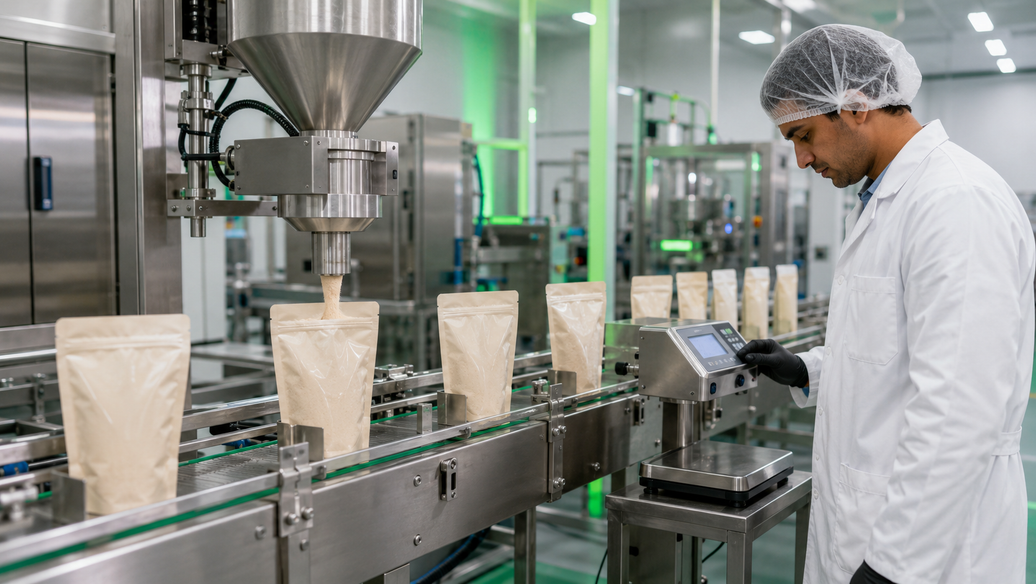
Nitrogen flush displaces headspace gas at filling. It dilutes oxygen at the moment of sealing — effective for oxidation-sensitive products — but it removes no water vapor, adds no ongoing protection, and its benefit largely ends the first time the package is opened.
The decision logic for powders
If the failure mode is caking, clumping, hardening, or flow loss → desiccant. That covers the deliquescent and amorphous systems across our powder series — protein, spices, drink mixes, dairy powders, fertilizers. Oxygen has nothing to do with these failures; flushing a canister of electrolyte mix with nitrogen changes nothing about its deliquescence. The mechanism map is in why powders cake.
If the failure mode is rancidity, flavor oxidation, or color loss in a fatty product → oxygen control. Whole milk powder fat, nuts, roasted coffee, freeze-dried meat treats — oxidation chemistry needs O₂ management: absorber, flush, or both.
If the product is opened repeatedly → desiccant is the only one still working. Flush protection ends at first opening; most oxygen absorbers are sized for the sealed phase. A desiccant keeps absorbing through every scoop of a 90-day use life — the argument detailed across our tub-format guides.
Dry powder + oxygen absorber is a poor pairing. Iron-based absorbers need moisture to react; in a very dry powder they underperform — and the moisture-activated types can even carry moisture in. For dry powders, desiccant does the protective work; if oxidation is also a concern, the package barrier and flush at filling carry the O₂ side.
High-value combination plays. Whole milk powder and infant formula: flush at filling for oxidation + desiccant for the use-life moisture load. Freeze-dried pet treats: oxygen control for fats + desiccant for texture (see the pet food guide). The technologies are complementary when each is assigned its own target.
Cost and operations comparison
Nitrogen flush is an equipment investment (gas supply, modified filler) with low per-unit cost — but zero post-opening value and no retrofit path for products already packed.
Oxygen absorbers are per-unit consumables that must be sized to sealed headspace and used quickly once their master bag is opened — a real line-handling constraint, since they start reacting with ambient air immediately.
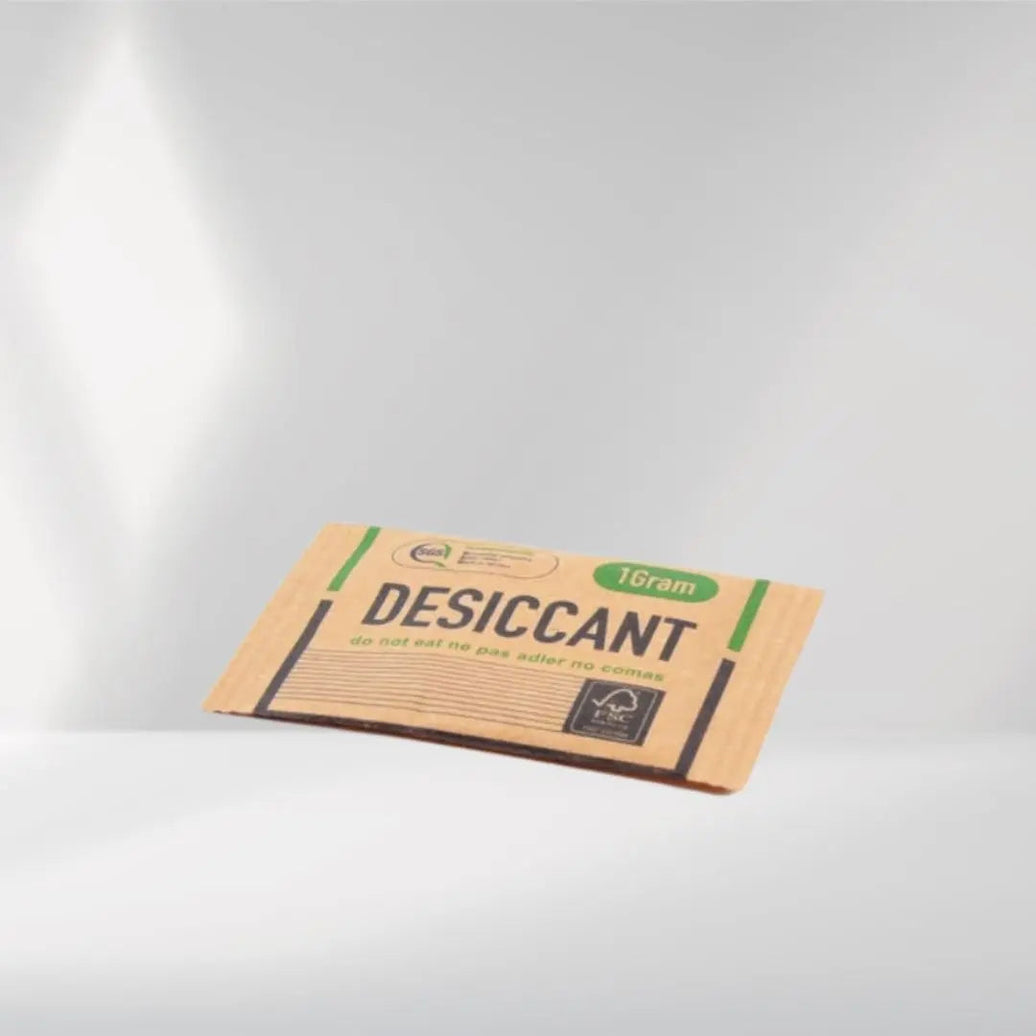
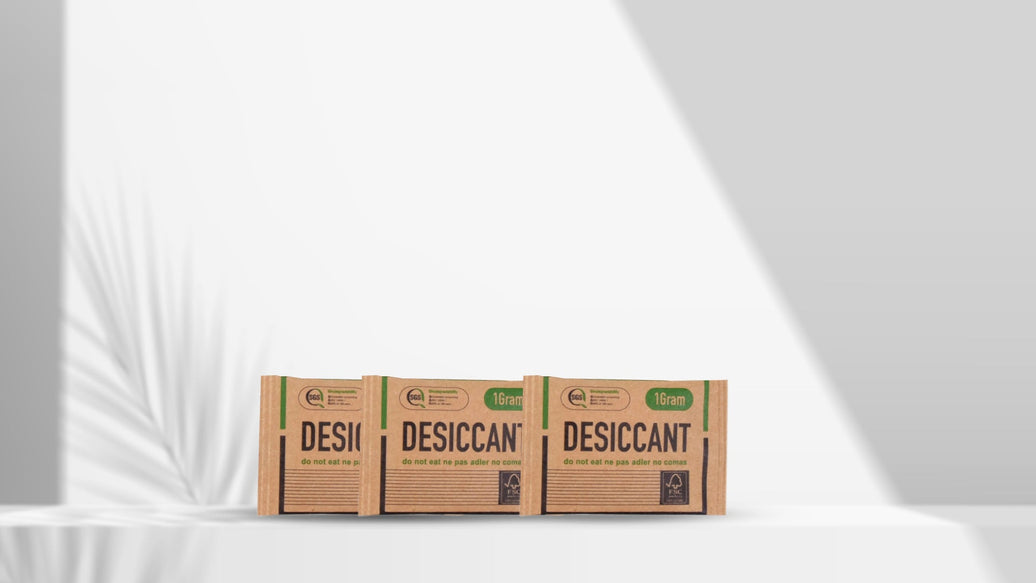
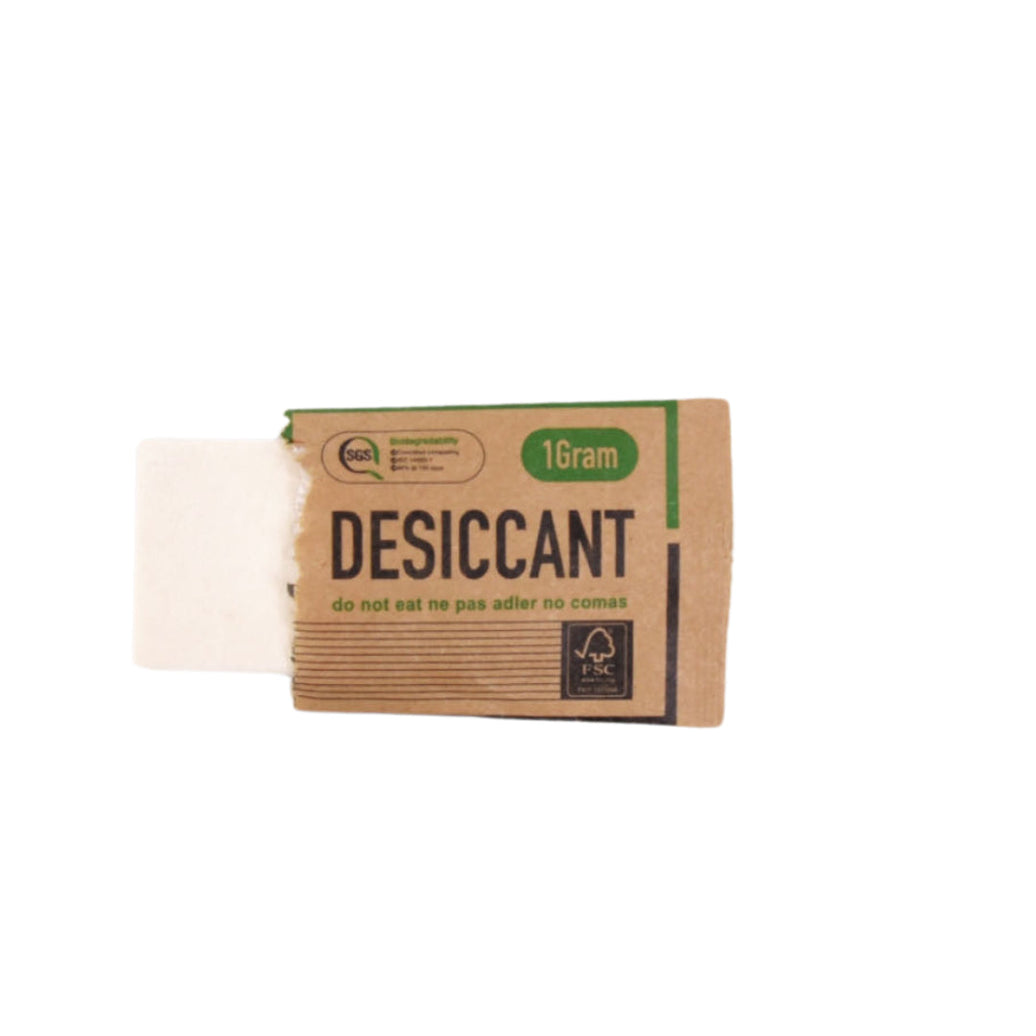
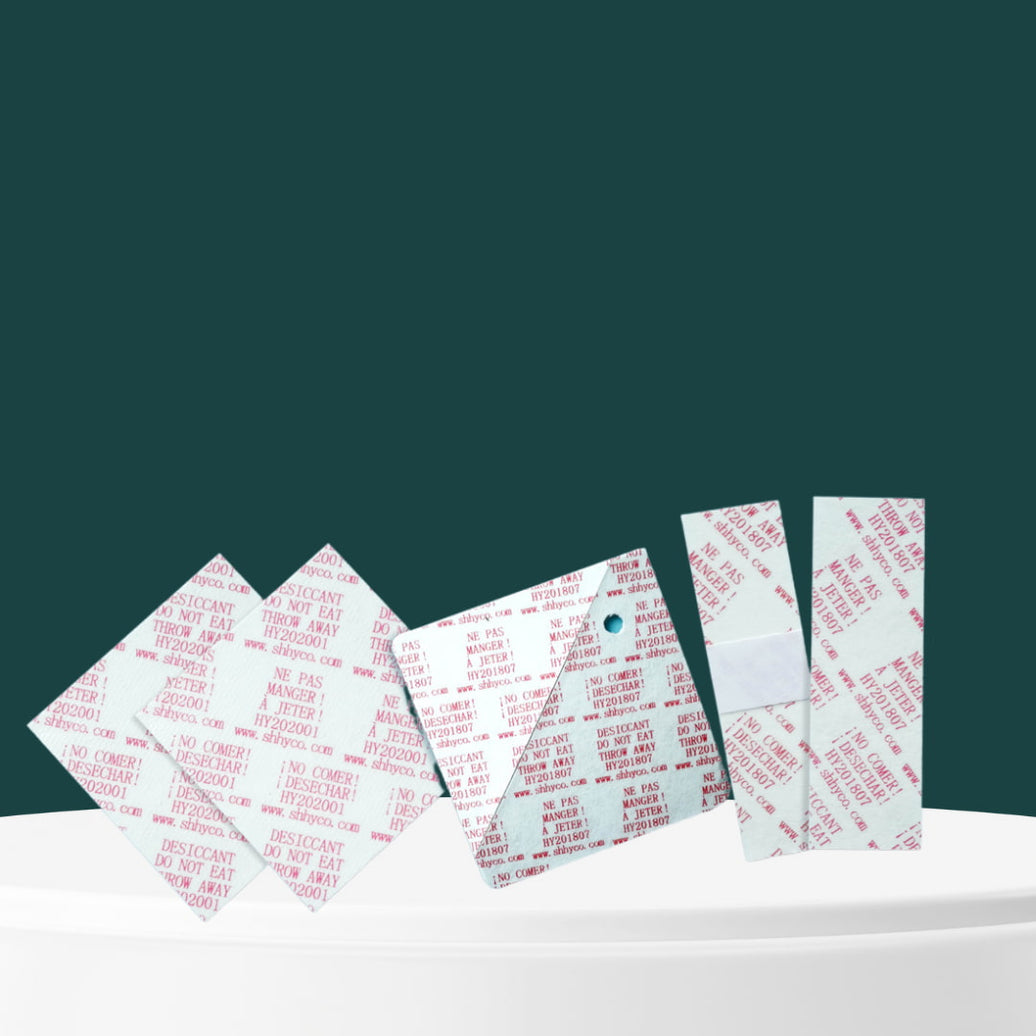
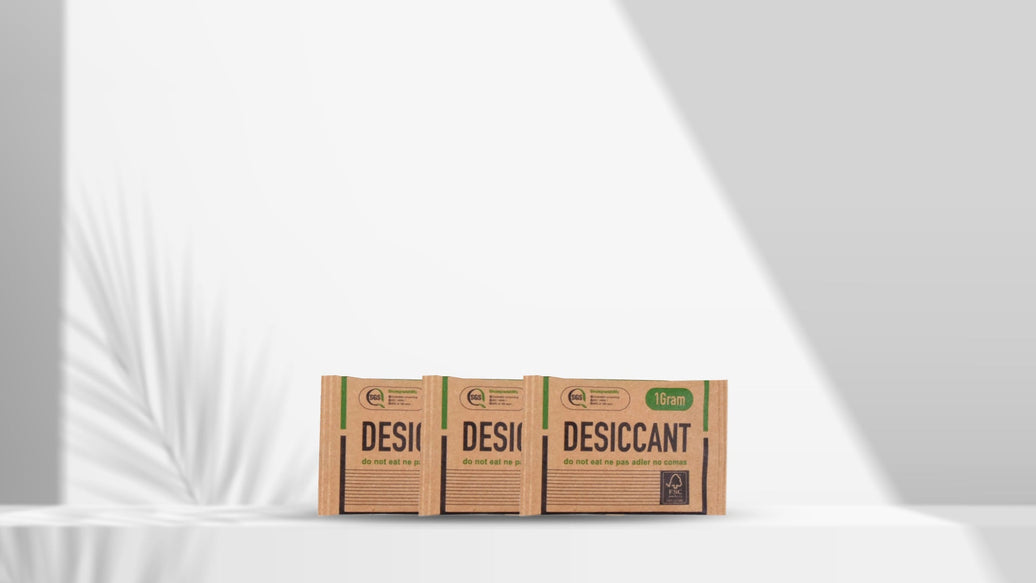
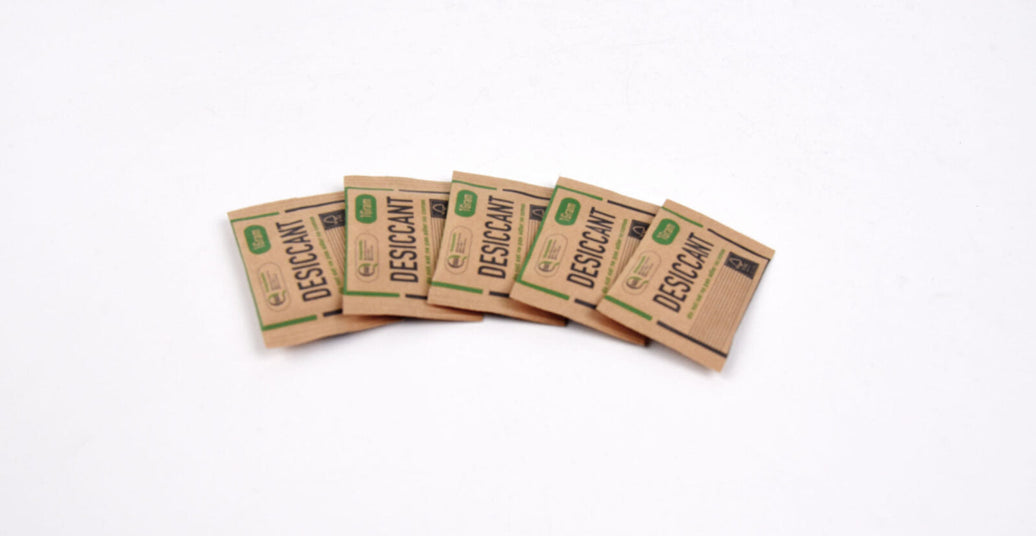
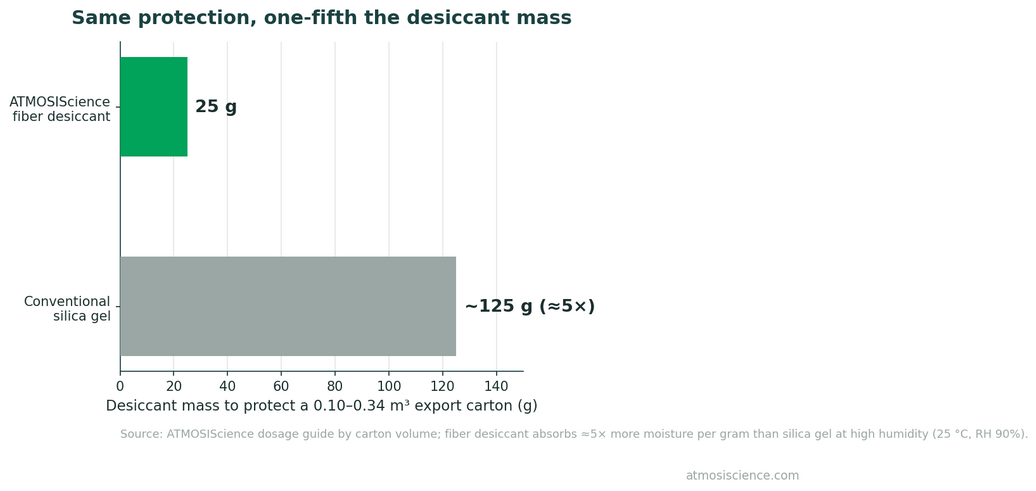
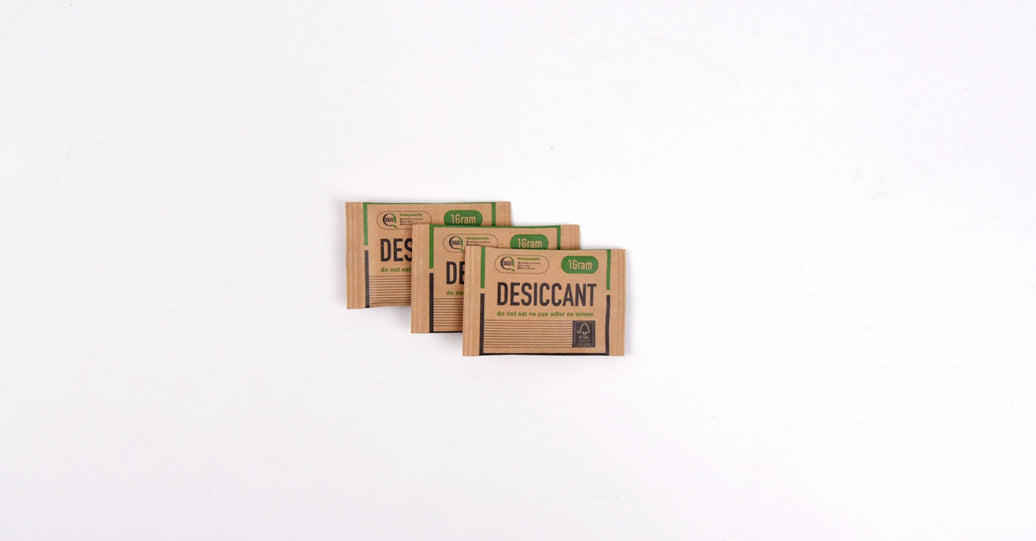
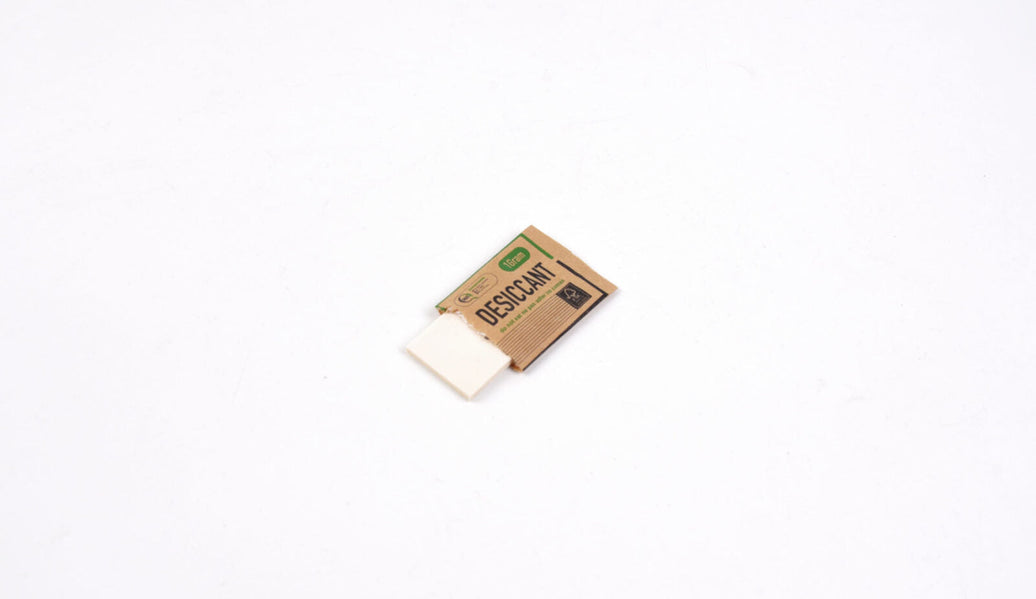
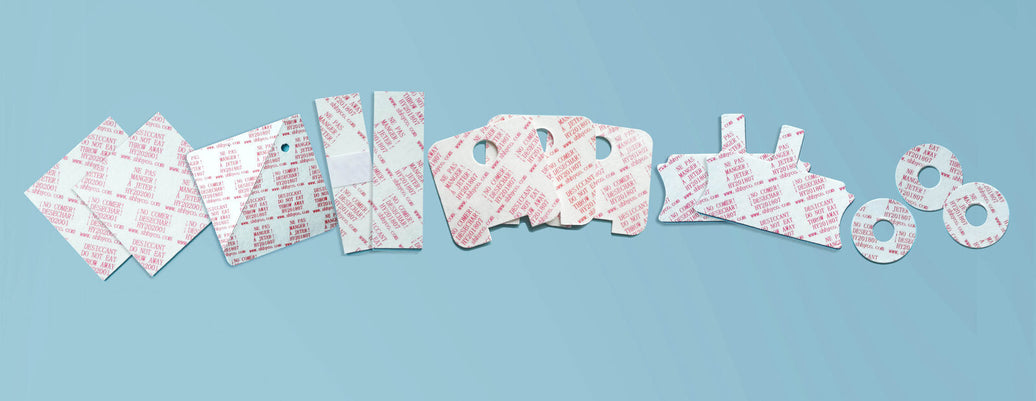
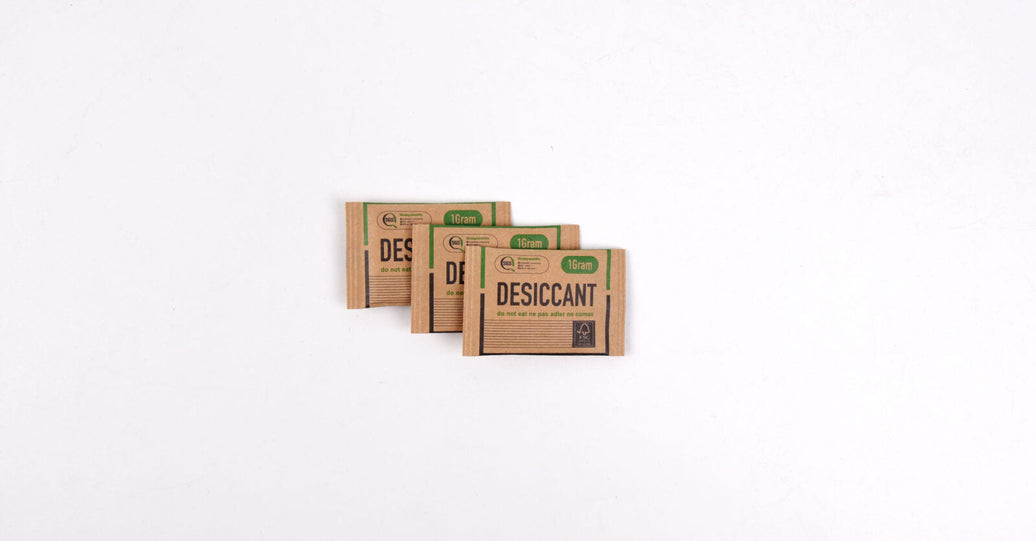
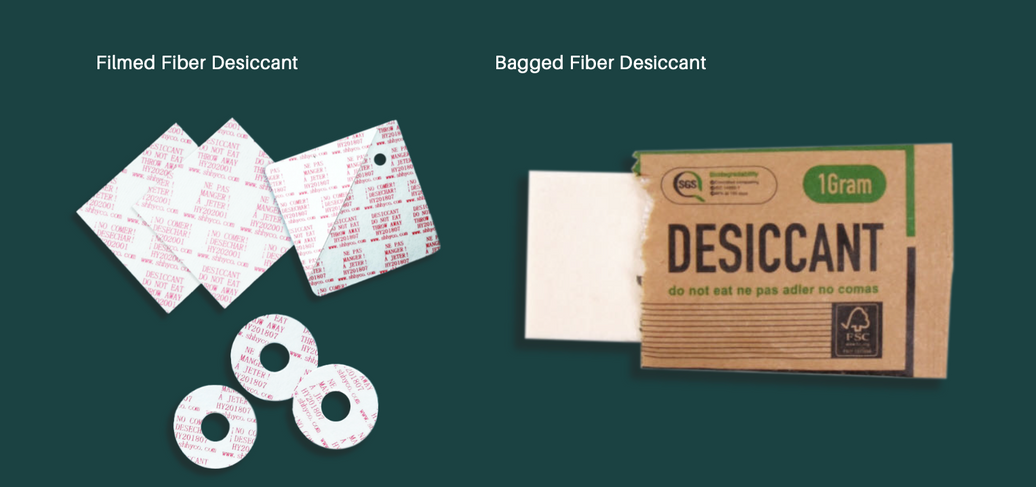
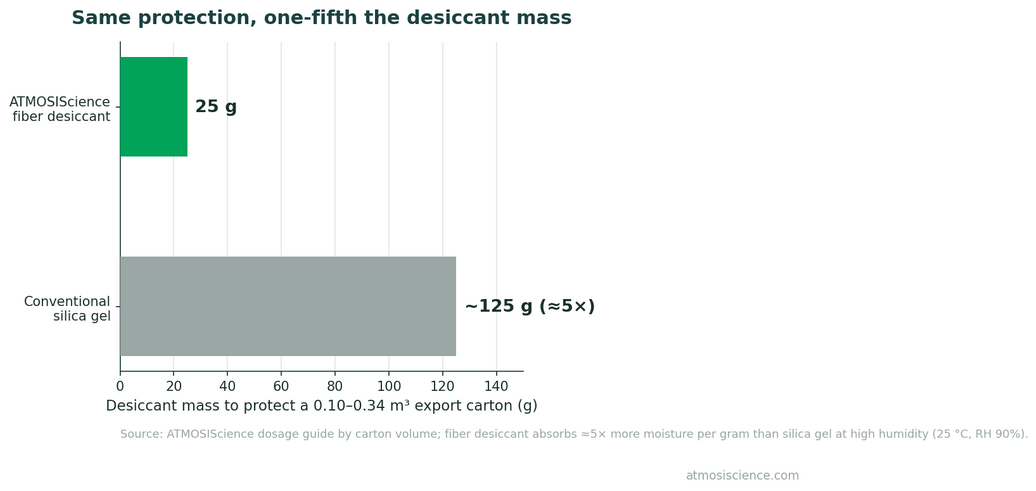
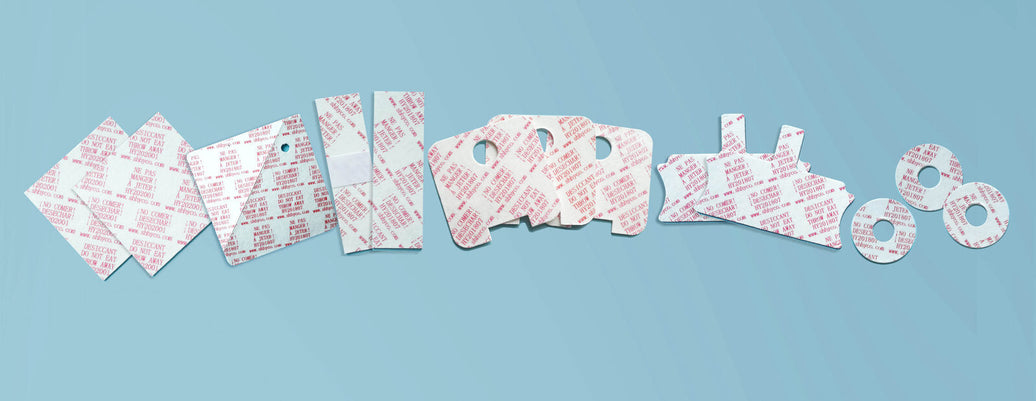
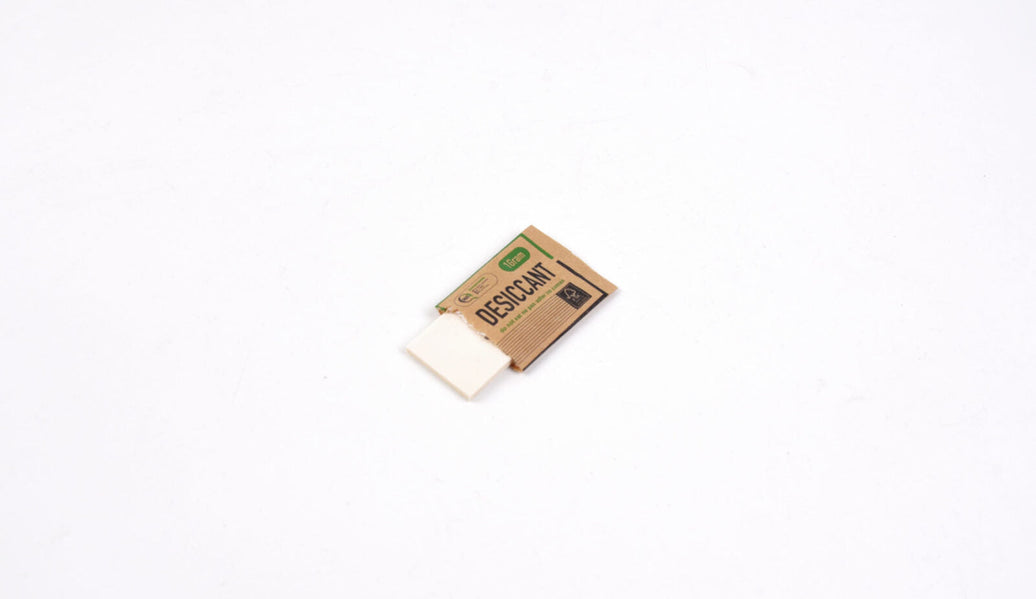
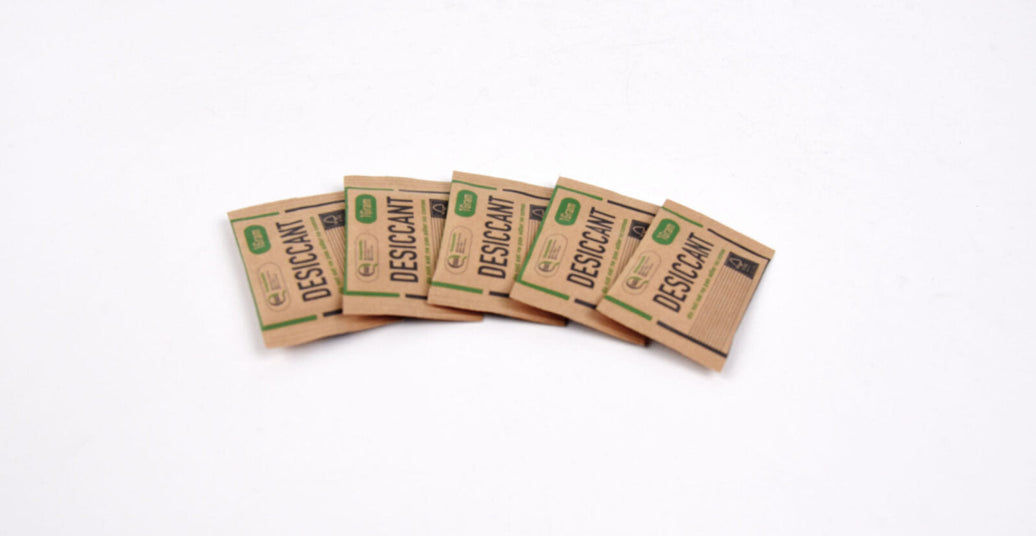
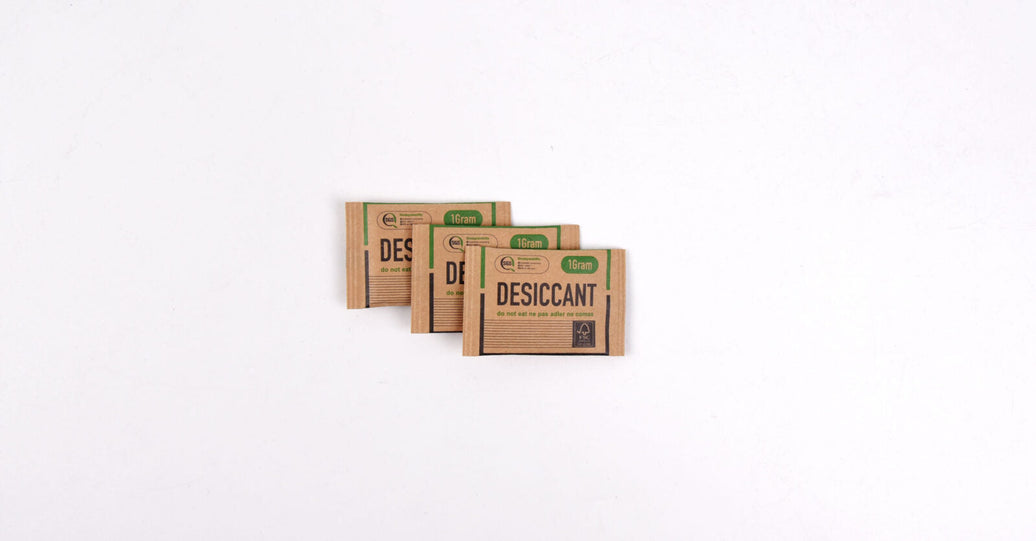
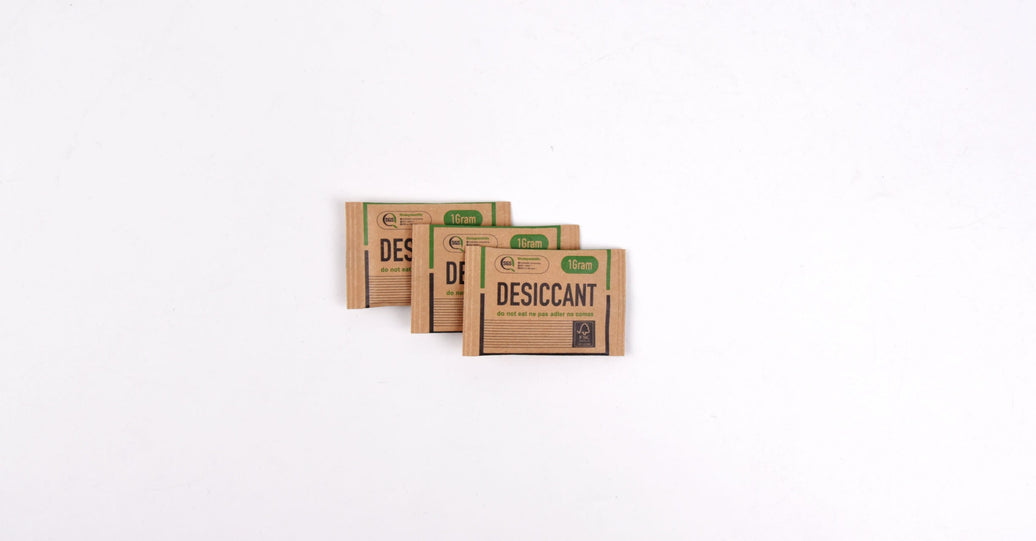
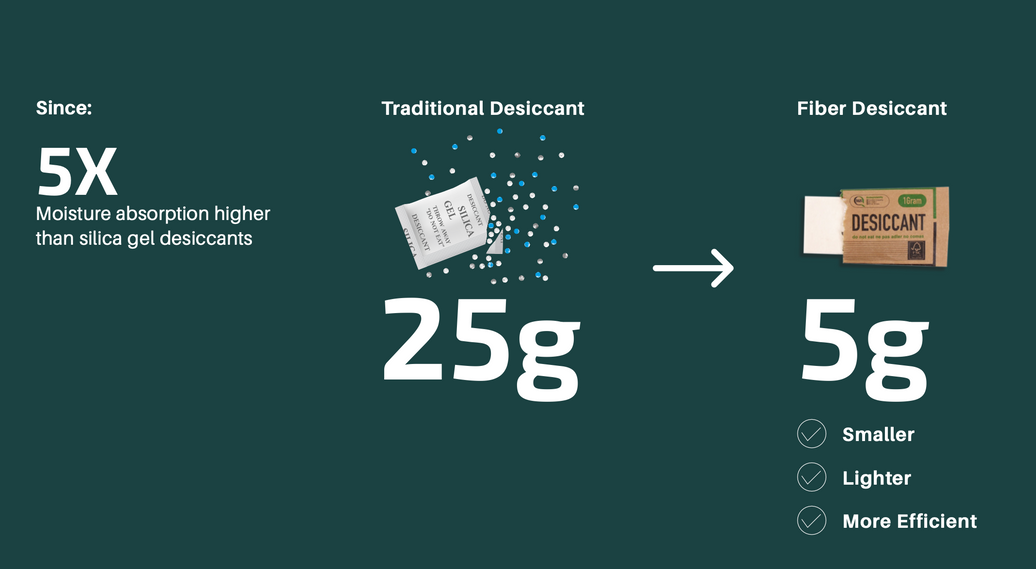
Desiccant is a per-unit consumable with the simplest handling profile, and the format flexibility the other two lack: fiber sachets from 1–60 g for liners and drums, and rigid film desiccant cards — stiffer than some credit cards, paper-wrapped rather than plastic, die-cut to the container, printable with a full-color logo in the center — for tubs, jars, and caps. Capacity drives unit economics: fiber desiccant absorbs over 70% of its own weight at 25°C and RH 90%, roughly 5x conventional silica gel, so about 25 g protects a standard 0.10–0.34 m³ carton (see the dosage guide). Documentation: SGS ISO 9001 (Cert. CN05/31171), compostable under ASTM D6400 and EN 13432.
Frequently asked questions
Can an oxygen absorber replace a desiccant?
No — it removes oxygen, not water vapor, and most iron-based types need moisture to work at all. If the failure mode is caking or mold, an absorber will not prevent it.
Does nitrogen flushing keep powder dry?
No. Nitrogen is dry, but flushing only swaps the gas once at filling — it does not remove moisture sealed in with the powder, entering through the wall, or arriving at every reopening.
Can desiccant and an oxygen absorber go in the same package?
They can coexist, but the pairing needs care: a strong desiccant can dry the headspace below the RH the iron absorber needs. The cleaner architecture for dry powders is desiccant + barrier/flush; reserve absorbers for moist products.
Which does a moisture-sensitive supplement bottle need?
Desiccant — typically a cap insert; see bottle-cap desiccant inserts. Oxidation-prone softgels are the case where O₂ strategy enters.
Assign each technology its own enemy
ATMOSIScience supplies the moisture side of the equation — fiber desiccant sachets and printable film cards at B2B scale, with ISO 9001 and compostability documentation.
Map your failure mode first. Order the Fiber Desiccant to test against your product, or request a spec review and bulk pricing through our desiccant solutions page or contact our team.
Related reading: Calcium Chloride vs. Silica Gel vs. Fiber Desiccant · Why Powders Cake · The Science of Fiber Desiccant
Not sure which protection your product needs?
Describe your product and its failure mode — our team responds with a protection architecture (desiccant, barrier, or combination), capacity calculation, and bulk pricing.