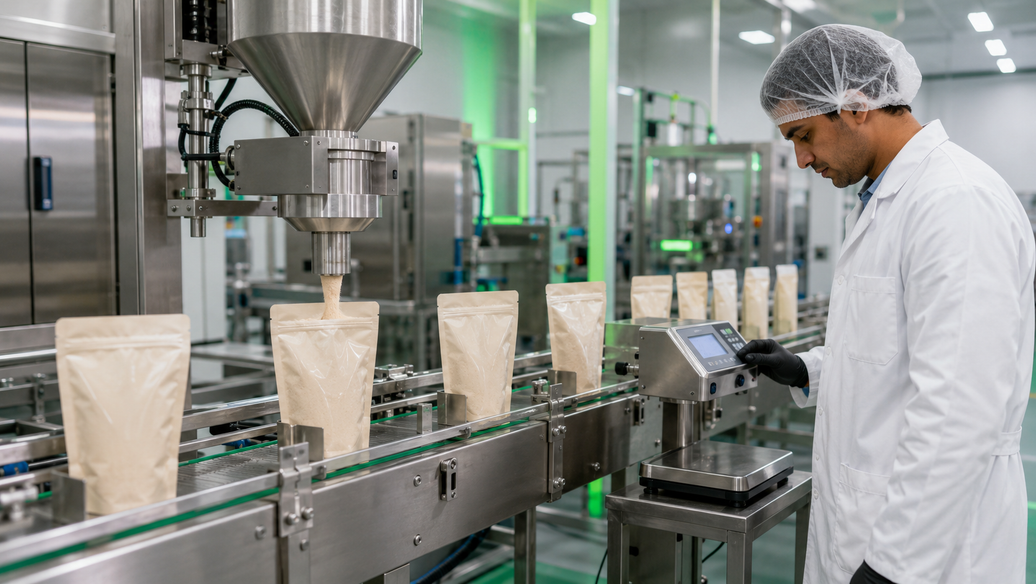
The powdered-beverage shelf has exploded in the US — electrolyte mixes, greens blends, collagen peptides, mushroom coffees, matcha, instant espresso. Most of these brands are young, DTC-heavy, and subscription-driven. Which makes them unusually exposed to one quiet failure: the canister that clumps before the subscriber finishes it. In a subscription model, a clumped month-two canister is not one bad review — it is a cancelled customer.
This guide covers why drink-mix formulas are among the most hygroscopic in food, and how brands and co-packers spec a desiccant for powdered drink mixes across canisters, pouches, and stick packs.
Why drink mixes attack themselves
Drink mixes are engineered to dissolve fast in water. The same property makes them dissolve in humid air:
Electrolyte salts (sodium, potassium, magnesium salts) are deliquescent — above their critical humidity they liquefy in the moisture they attract, then set into a crust.
Fruit-acid systems (citric, malic) in flavored hydration mixes activate at everyday household humidity and harden the blend.
Instant coffee and spray-dried extracts are amorphous: moisture lowers their glass-transition temperature, particles turn sticky, and the granules collapse — visible as darkening, clumping, and slower dissolution.
Matcha and greens powders lose color fast; moisture accelerates the degradation that turns vivid green dull olive.
Collagen peptides are fine, high-surface-area powders that wick moisture into clumps that frustrate the daily-scoop ritual the category is built on.
The underlying cascade — adsorption, liquid bridging, recrystallization, hard caking — is detailed in our pillar on why powders cake.
The daily-scoop problem
Drink mixes are the most frequently opened powders in the house: a daily-use canister is opened 30+ times a month, typically in a kitchen where a kettle just boiled. Every opening swaps the headspace for humid room air. This is why sealed-sample stability data consistently overstates field performance, and why desiccant capacity — not just presence — decides the outcome.
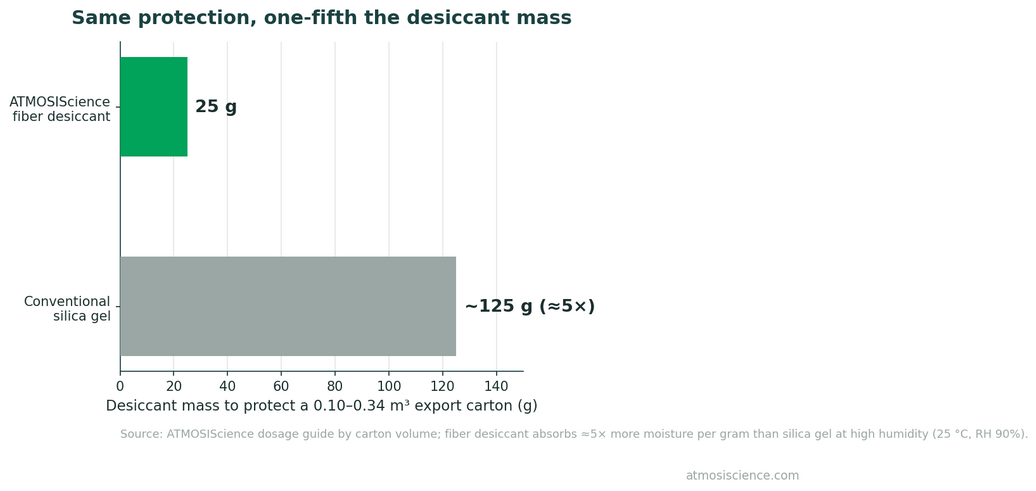
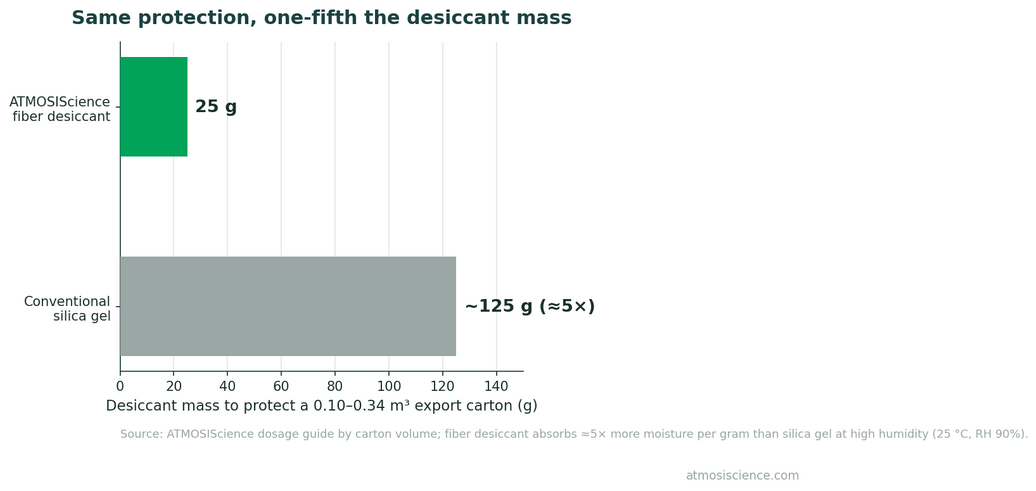
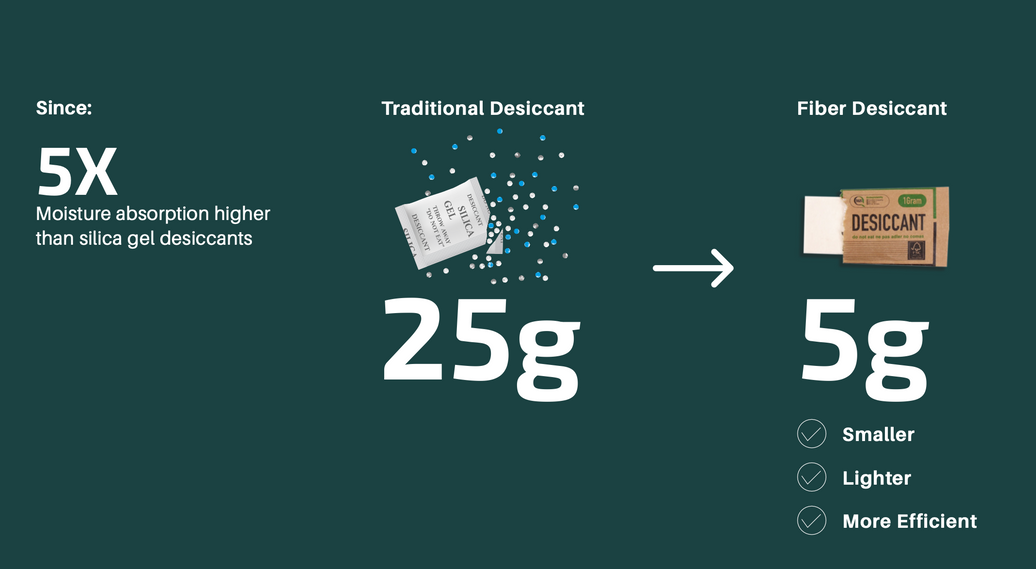
In side-by-side testing, fiber desiccant absorbs over 70% of its own weight at 25°C and RH 90%; conventional silica gel holds roughly 30% under the same conditions. That ~5x gap is what keeps a card working at scoop 60 instead of saturating by scoop 20.
Format guide: canister, pouch, stick pack
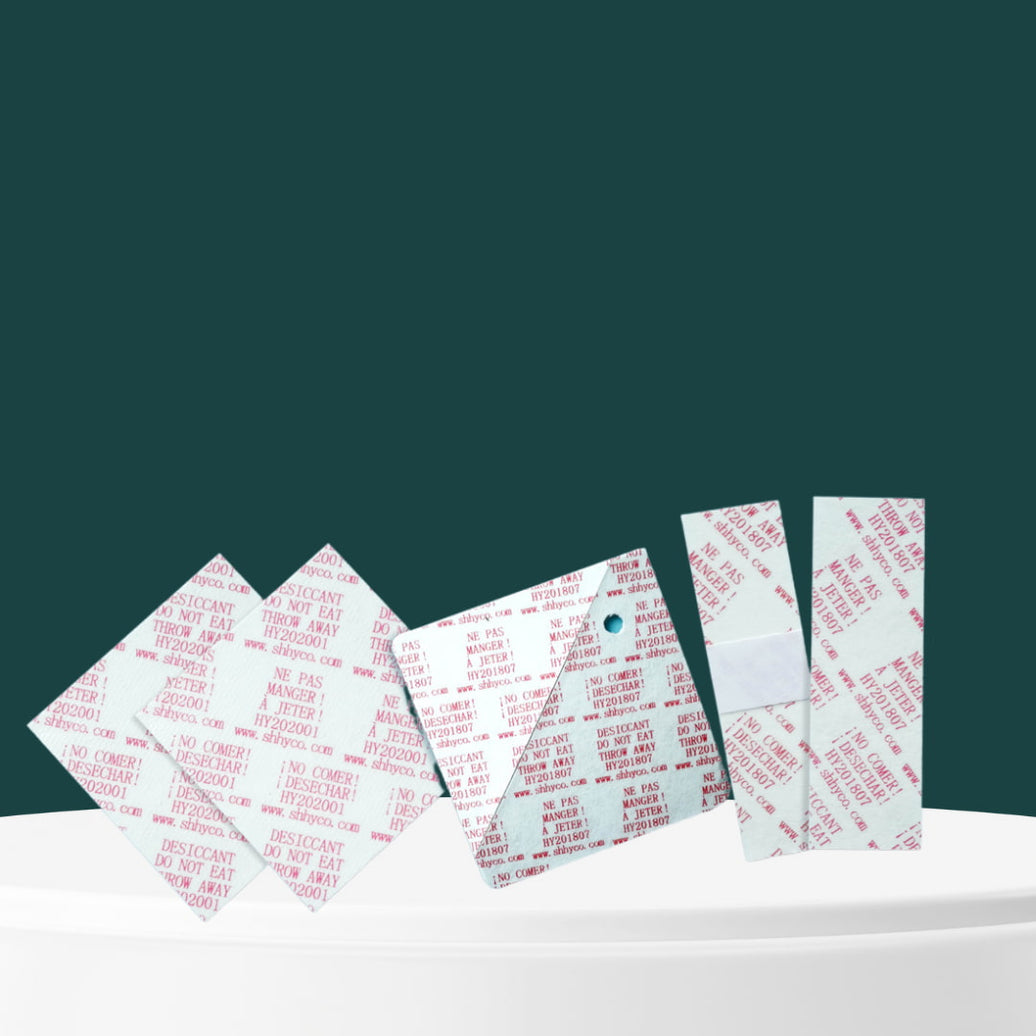
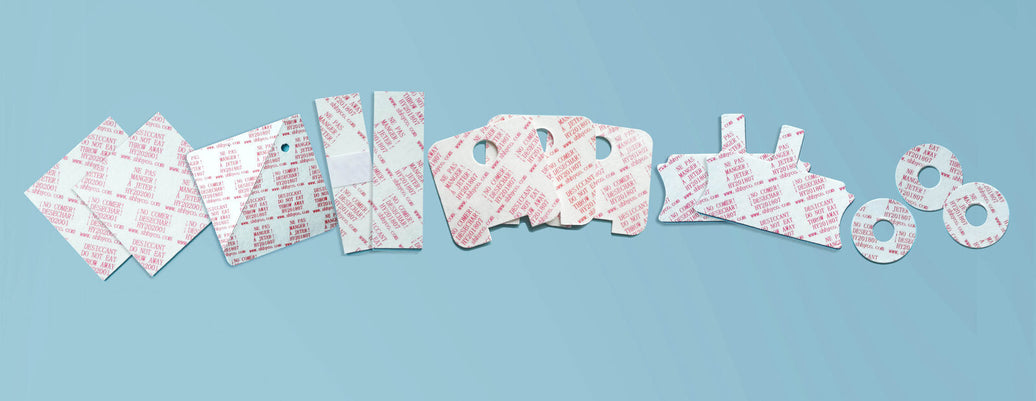
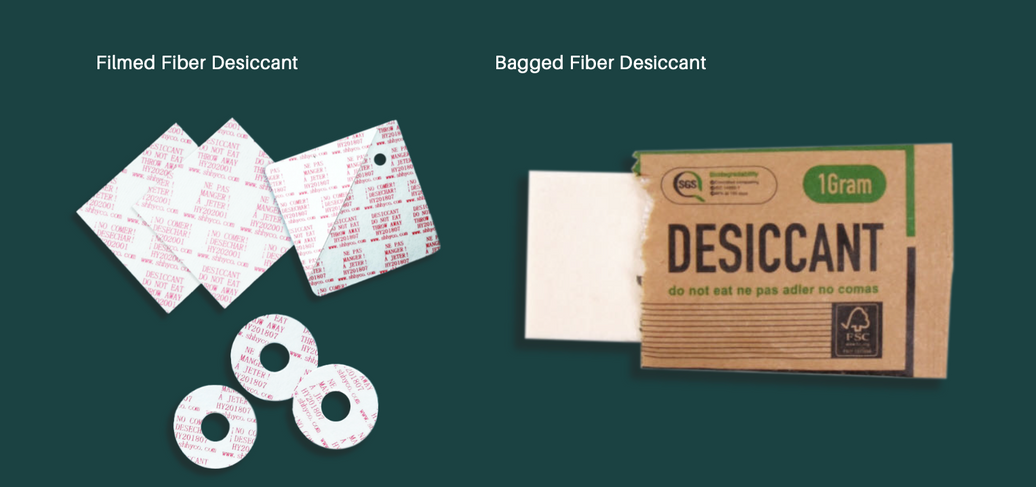
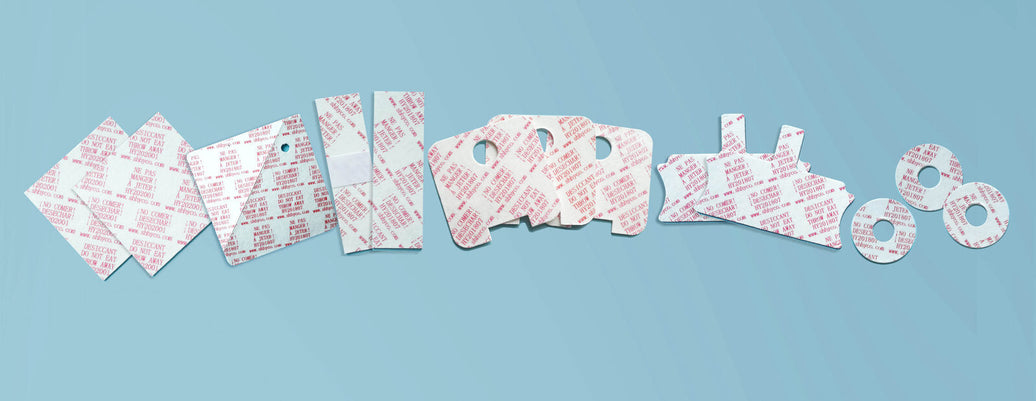
Canisters and tubs (the complaint magnet). A flat film desiccant card under the lid. ATMOSIScience film desiccant is a rigid card — stiffer than some credit cards — wrapped in paper rather than plastic. It lies flat on the powder bed or clips under the lid, never buries itself the way a soft sachet does, and lifts out in one motion. The center prints with a full-color logo, so the daily unboxing moment carries the brand instead of an anonymous "do not eat" pillow. Specs in the film desiccant guide.
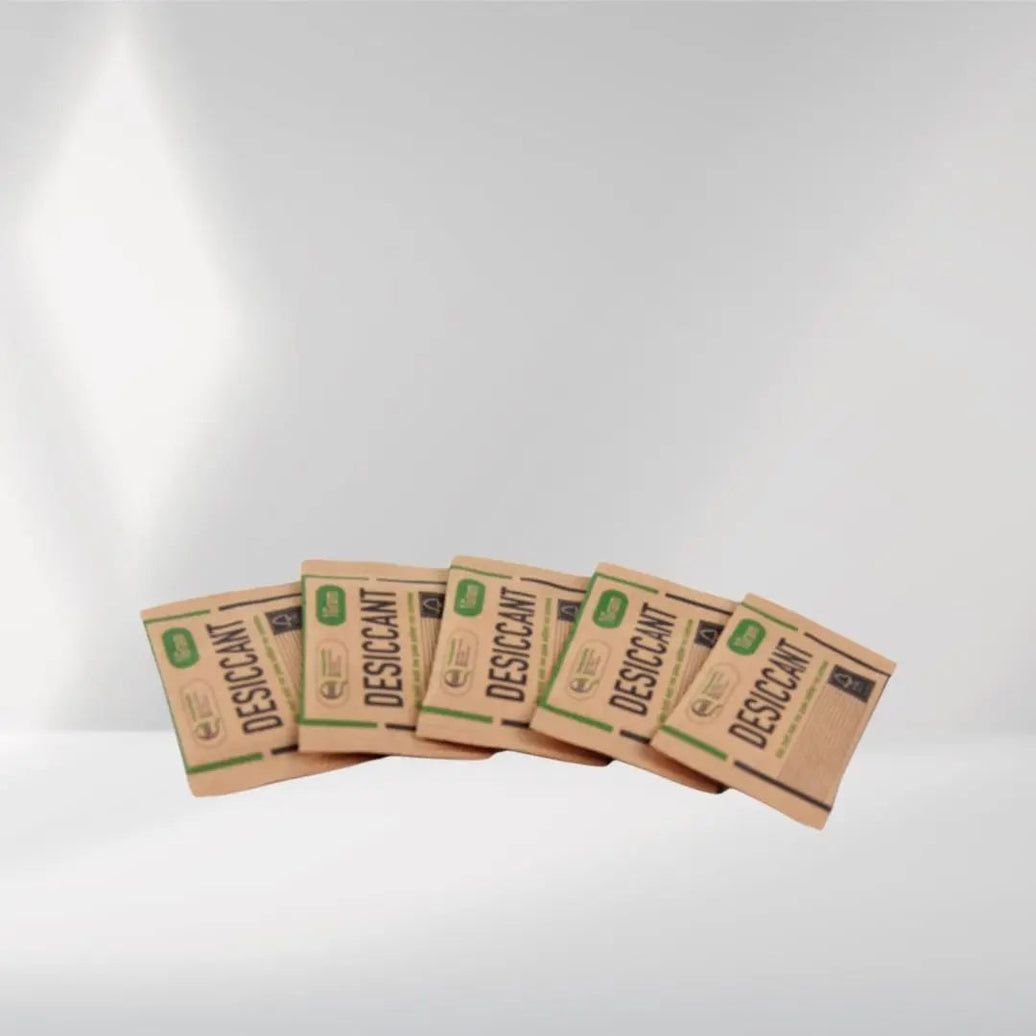
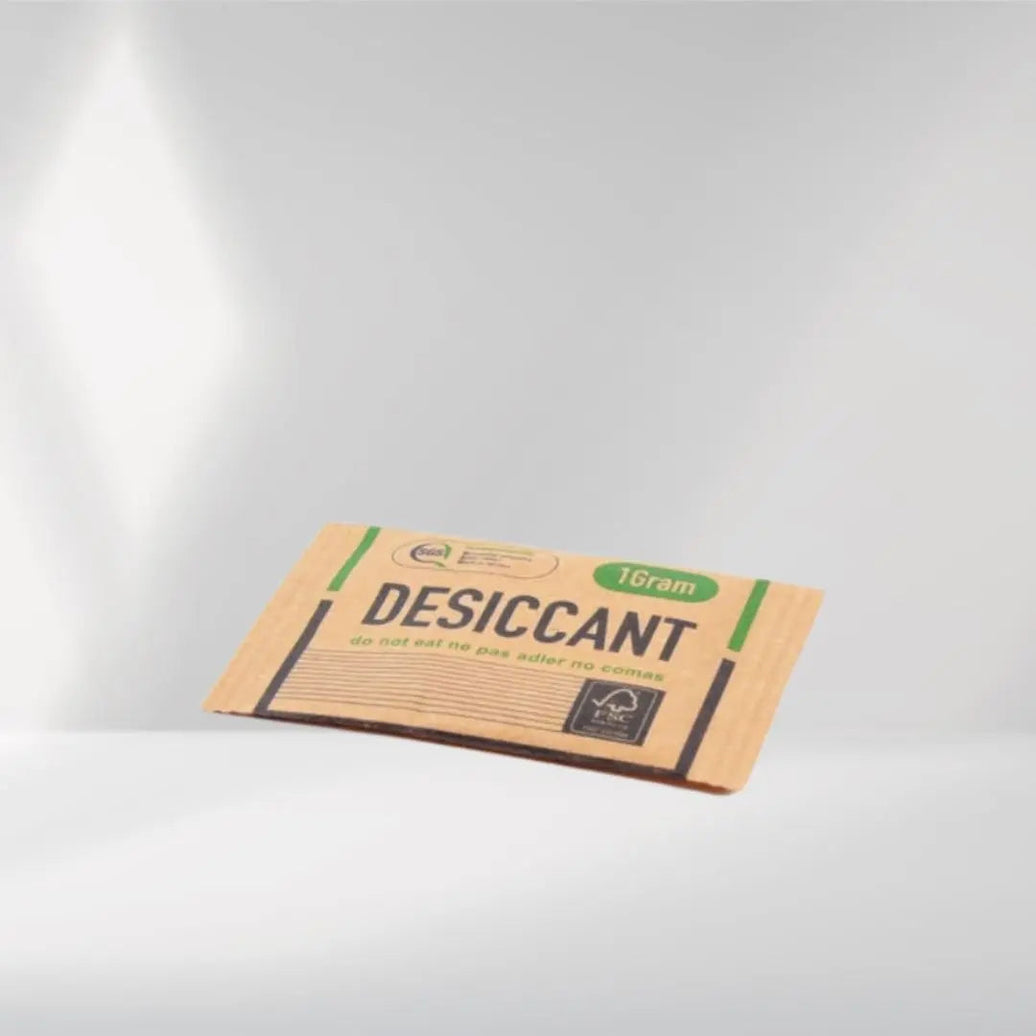
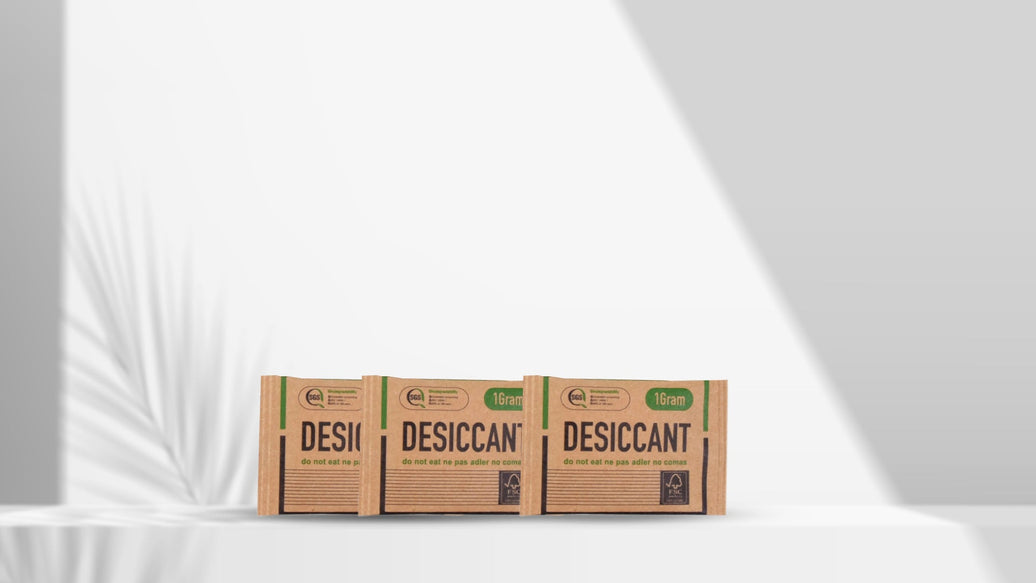
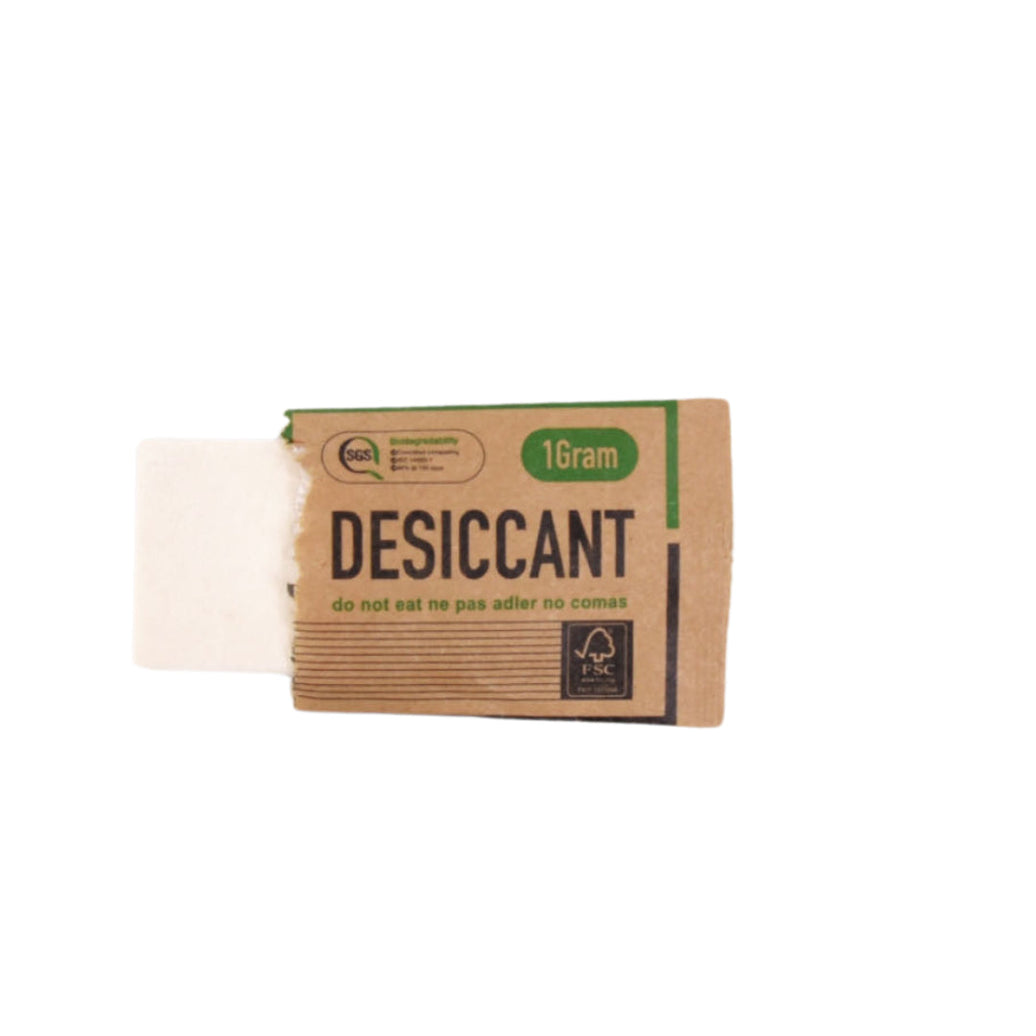
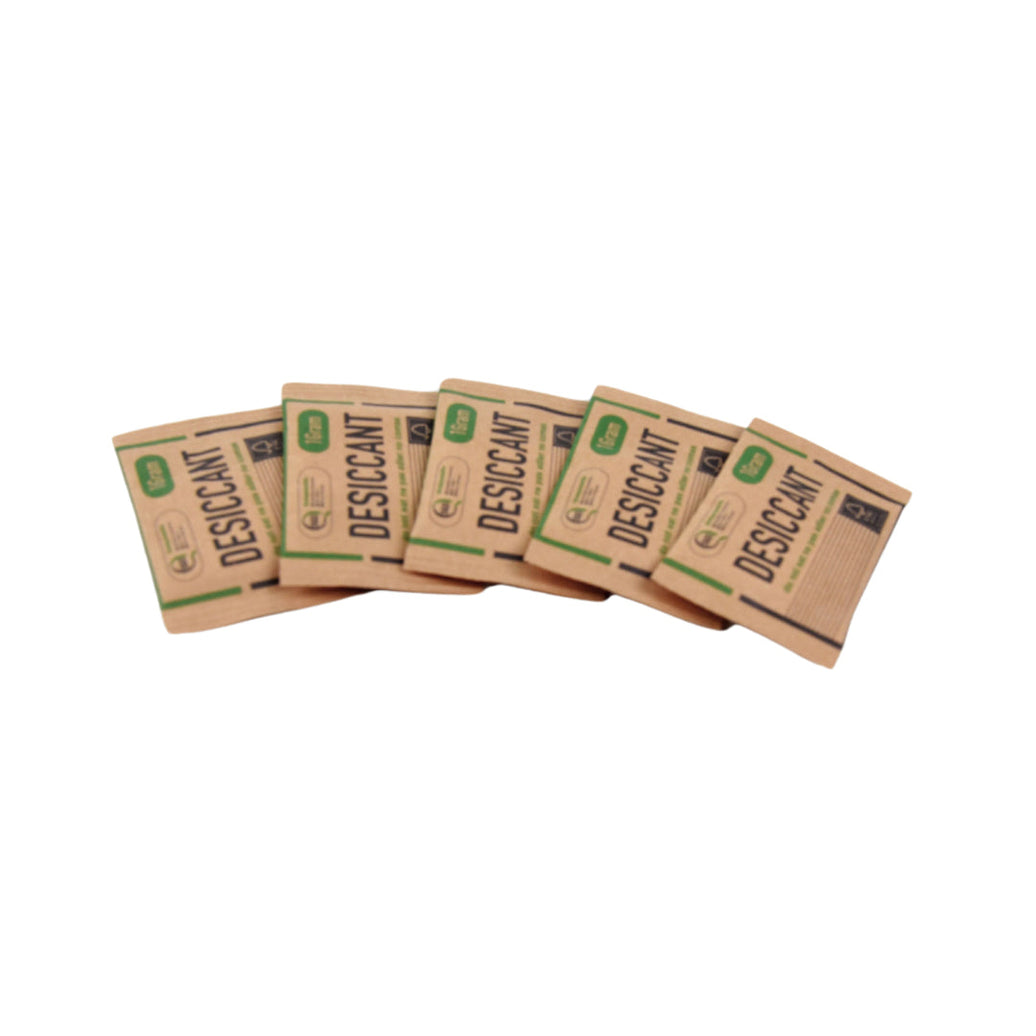
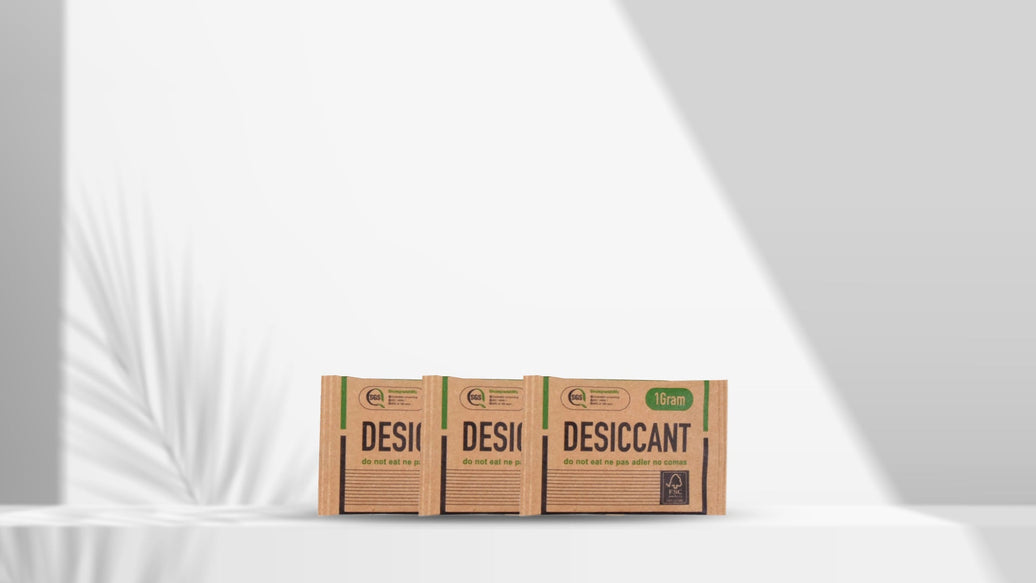
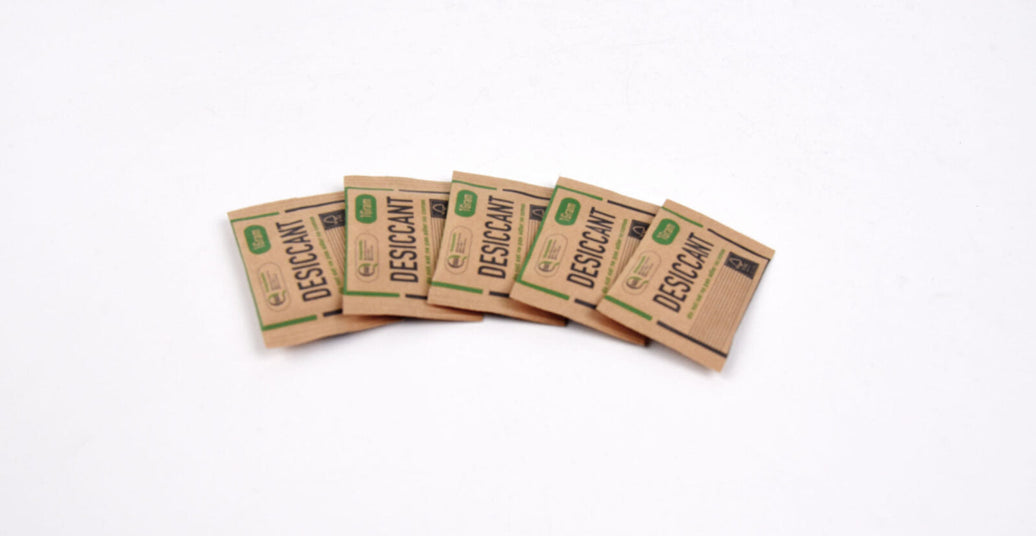
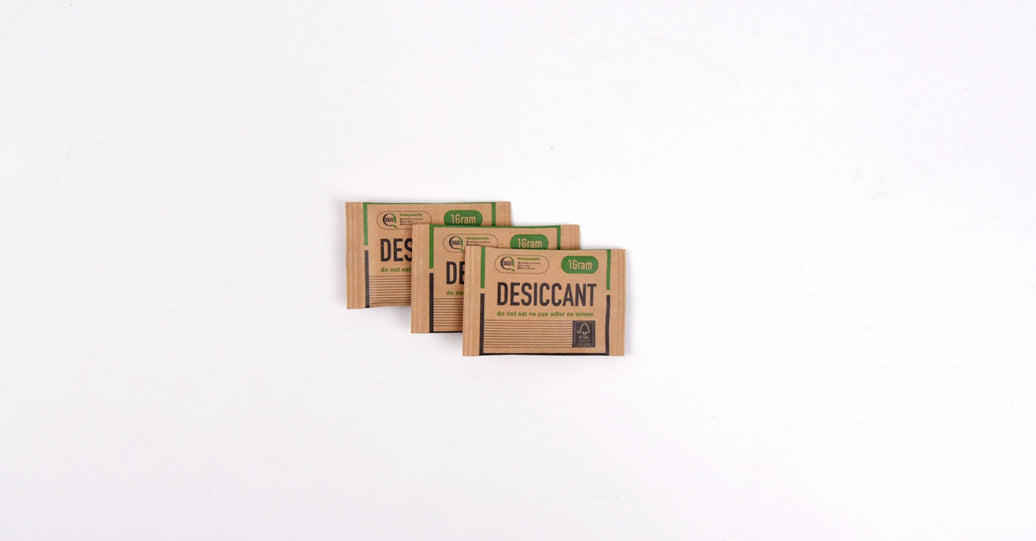
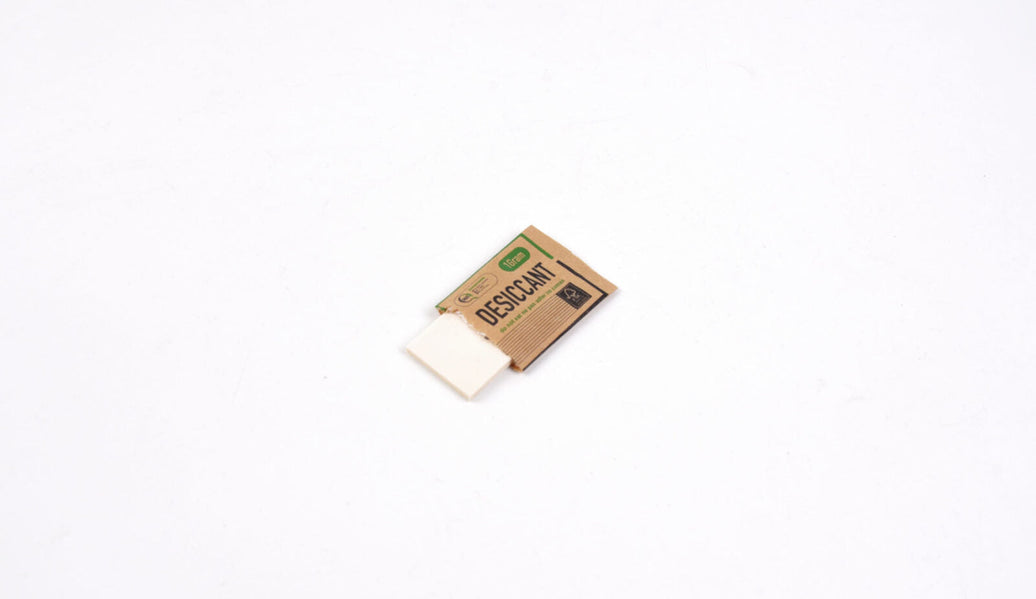
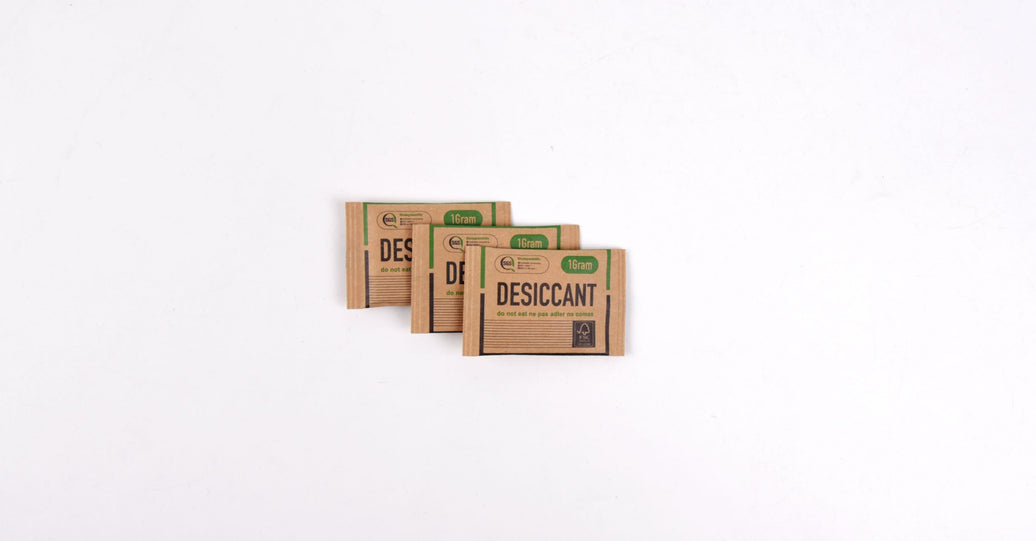
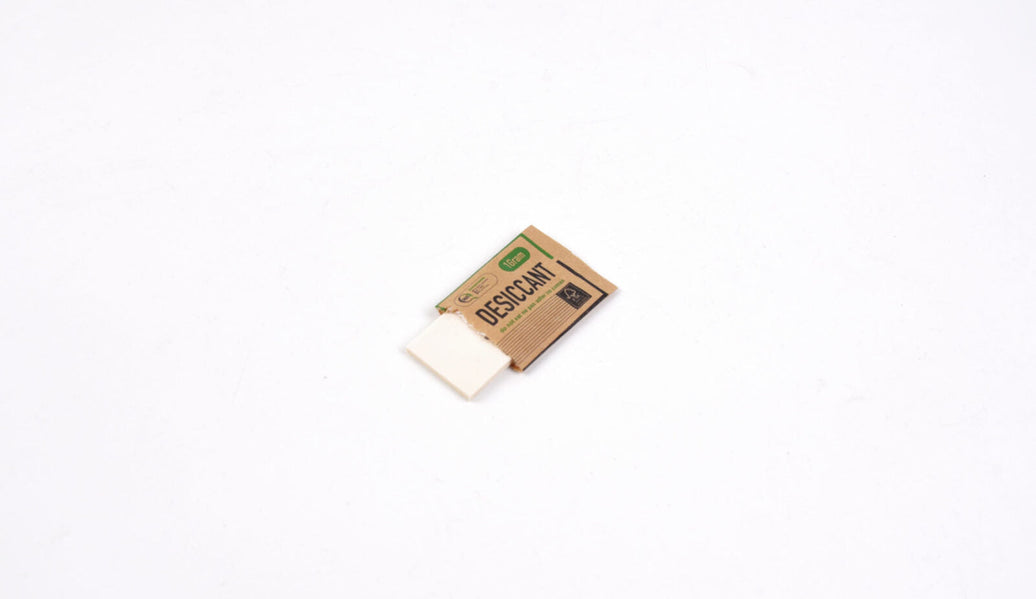
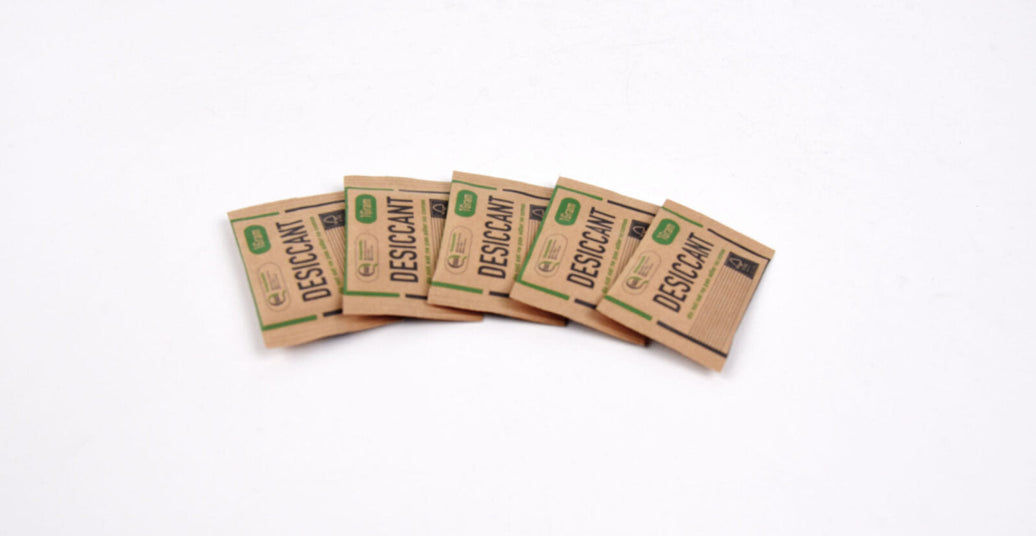
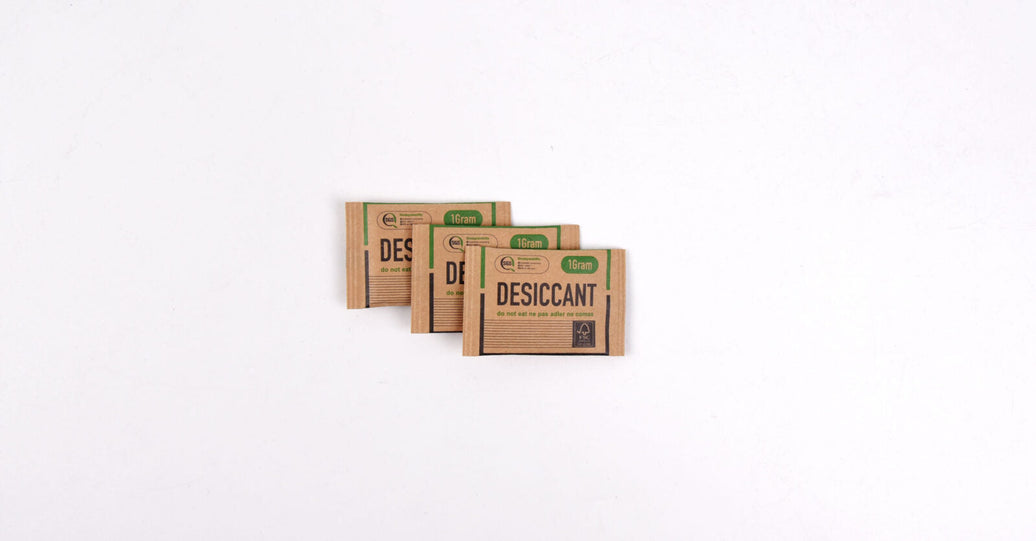
Resealable pouches. A 1–9 g fiber sachet sized to headspace and opening frequency — dust-free, no beads, nothing to leak if punctured. The loose-bead failure mode is covered in loose-fill desiccant risks in food packaging.
Stick packs and single-serve sachets. Usually protected by the film barrier itself — but the master carton and the co-packer's bulk totes are not. High-capacity sachets (25–60 g) in bulk liners hold powder dry through staging; about 25 g of fiber desiccant covers a standard 0.10–0.34 m³ carton. Dosage math: how much desiccant per package.
Documentation that matches the label story
Most powdered-beverage brands sell on clean ingredients and sustainability — the packaging components have to keep that promise. ATMOSIScience fiber desiccant is manufactured under SGS ISO 9001 (Cert. CN05/31171), with full raw-material disclosure: lignocellulose fiber, calcium chloride, PLA, food-grade paper, water. It is compostable under ASTM D6400 and EN 13432, with a documented carbon footprint of 1.44 kg CO₂e/kg — roughly 31% lower than silica gel. A paper-wrapped, compostable card inside a brand that markets sustainability is consistency; a plastic silica pillow is a contradiction customers photograph.
For supplement-classified mixes (greens, collagen, electrolytes with actives), packaging components also need to hold up in a 21 CFR Part 111 audit file — the checklist is in our FDA-compliant desiccant guide.
Frequently asked questions
Why does an electrolyte mix harden even in a sealed canister?
Moisture sealed in at filling plus wall permeation is often enough to push deliquescent salts past threshold in warm distribution. A desiccant card absorbs that load before the salts can.
What size desiccant card does a 30-serving canister need?
It depends on headspace volume, wall material, and opening frequency. Our team runs the calculation against your package spec as part of a quote — a daily-use canister typically needs meaningfully more capacity than transit-only protection.
Will the desiccant card affect taste or aroma?
No. The fiber substrate adsorbs water vapor; it is food-contact documented and dust-free, with no volatiles to transfer.
Can the card carry our branding?
Yes — the film desiccant card prints with a full-color logo in the center and die-cuts to your canister diameter, square or circle.
Protect month two of the subscription
ATMOSIScience supplies food-grade fiber desiccant in sachets and printable film cards at B2B scale, with ISO 9001 and compostability documentation that matches a clean-label brand story.
Test it in your own canisters first. Order the Fiber Desiccant, or request bulk pricing and certificates through our desiccant solutions page or contact our team.
Related reading: Why Powders Cake · Desiccant for Protein Powder & Sports Nutrition · Desiccant for Dietary Supplements
Get a desiccant spec & bulk quote for your drink mix
Tell us your formula, container format, and use life — our team responds with a capacity calculation, a logo-printed film-card mockup, certificates, and bulk pricing.