Quick answer: Fulfillment warehouses are not humidity-controlled to any per-SKU guarantee, and inventory can sit for months through seasonal swings. The seller — not the warehouse — owns moisture protection, and it has to travel with the unit: a sealed moisture barrier per sellable unit, a correctly sized desiccant inside it, and “Do Not Eat”-labeled, non-loose formats that pass prep inspection. Everything upstream (container leg, prep center dwell) multiplies the need.
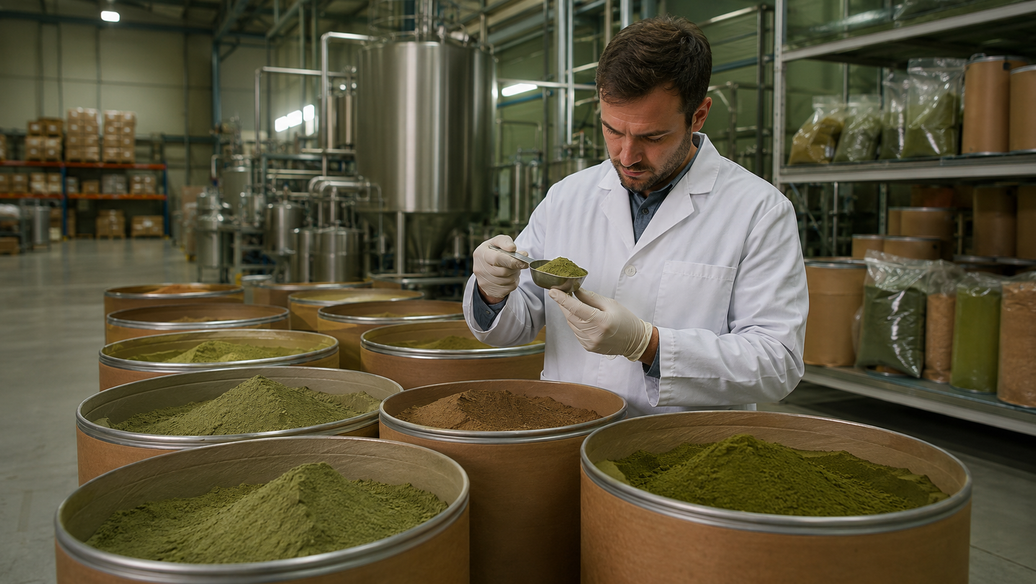
Sellers describe the same sequence on every FBA forum: inventory checks in clean, sits through a humid quarter, and returns — or gets flagged — damp, clumped, rusted or moldy, with the loss categorized as damaged or unfulfillable. ATMOSIScience supplies desiccant programs to e-commerce brands, and the pattern is consistent: sellers who treat the fulfillment center as “storage” get hurt; sellers who treat it as an uncontrolled climate design for it and don't.
Why FBA and 3PL inventory takes moisture damage
Dwell time. A unit made in a dry factory can spend weeks at sea, days at a prep center and months on a fulfillment shelf before sale — each leg adds exposure, and the sea leg alone can be brutal, as unpacked in the sea-freight sizing guide.
No per-SKU climate promise. Warehouses manage temperature broadly, not the RH around any given tote — humid-region facilities and door-open dock cycles do the rest.
Repacks and returns. Every touch — removal, inspection, re-bagging — exchanges the air inside imperfectly resealed packaging.
The seller's three control points
1. Unit-level barrier. The sellable unit needs its own sealed moisture barrier — a heat-sealed or zip-sealed poly/laminate bag, not just a printed carton. Corrugate is not a barrier.
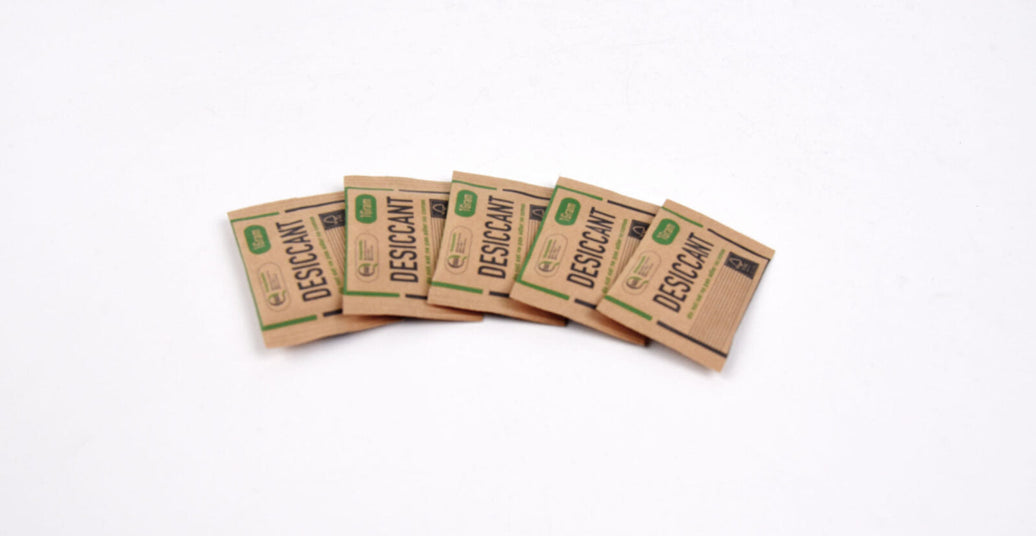
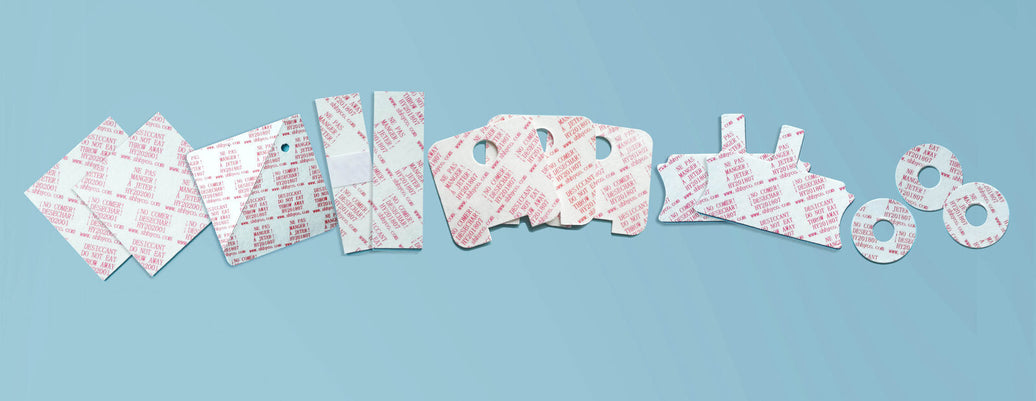
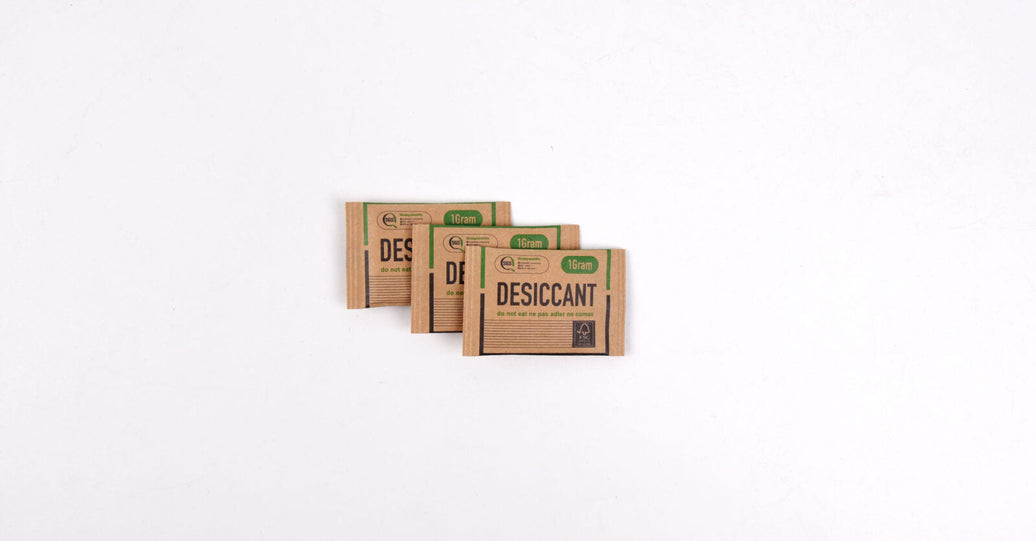
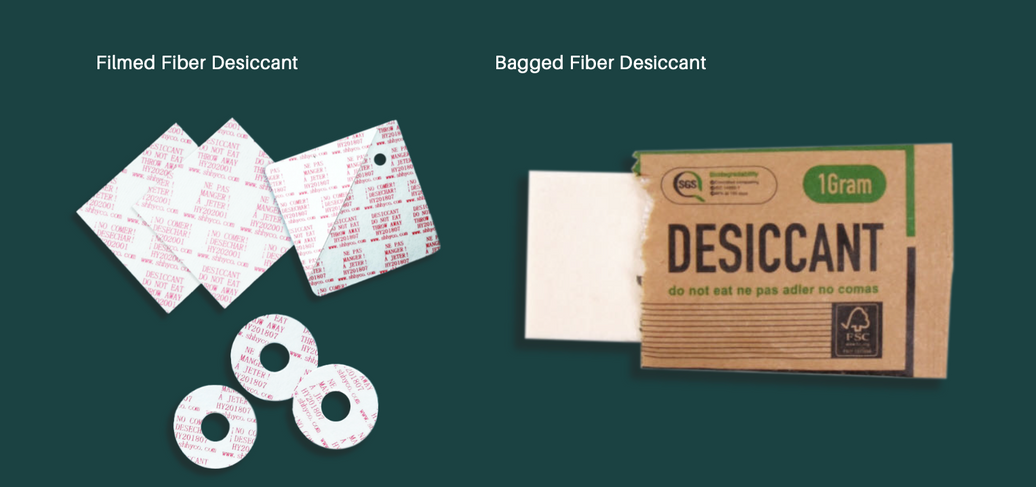
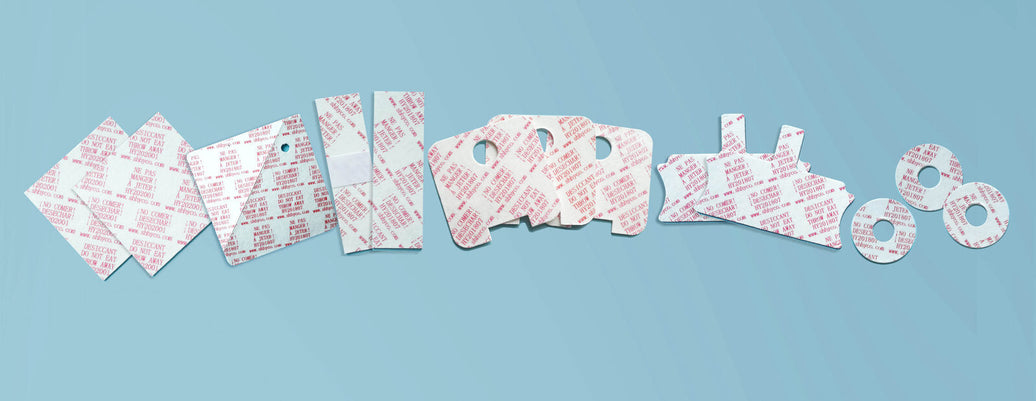
2. Desiccant inside every sealed unit. One correctly sized unit in the headspace of each sealed bag — placement rules in the placement guide. For thin retail packs where a sachet reads as clutter, a flat printable film card does the same job while carrying brand messaging — the format covered in the film desiccant explainer.
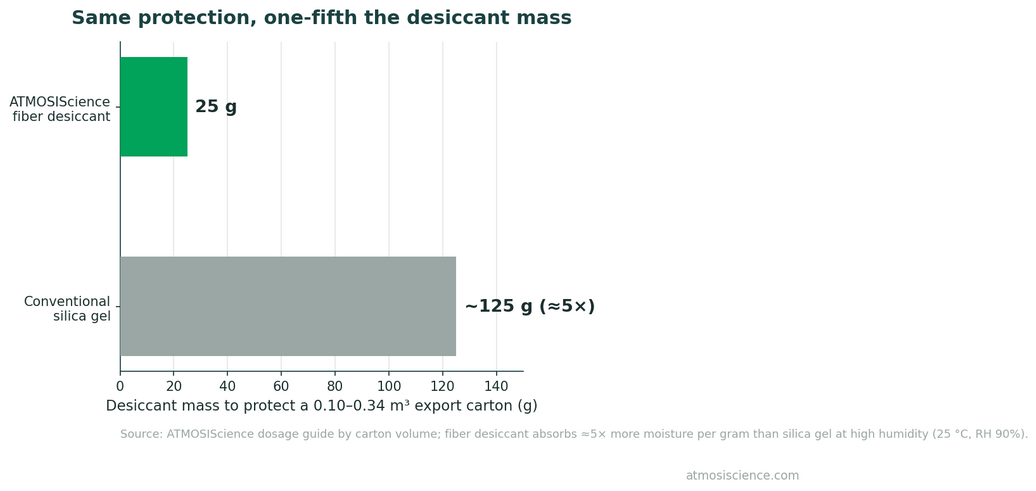
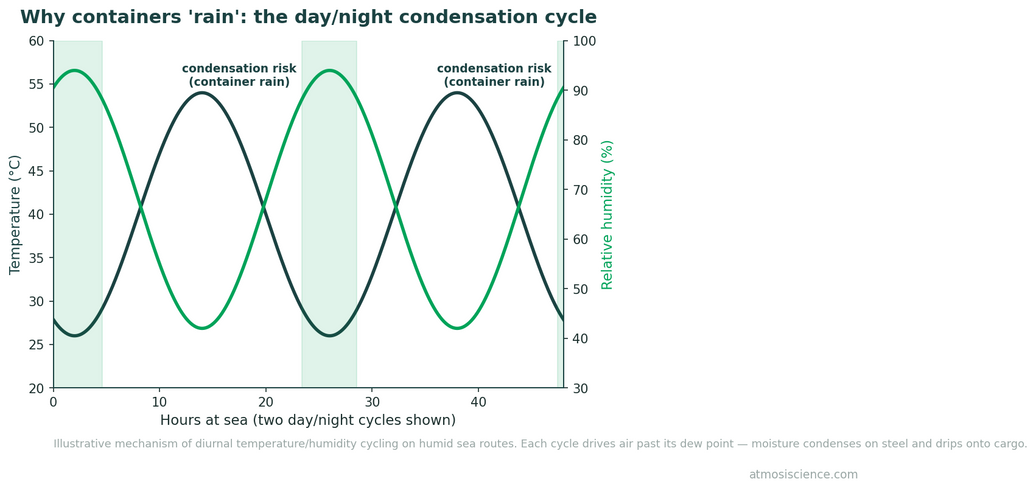
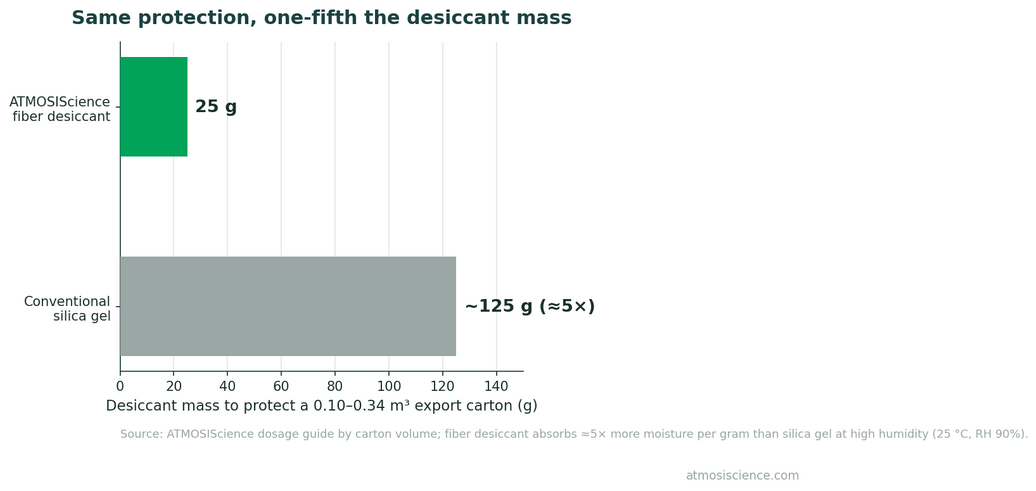
3. Master-carton protection for the container leg. Ocean-bound consolidations face condensation cycling — container rain — that unit sachets alone are not sized for. Carton- or container-grade protection on the import leg keeps the unit-level desiccant's capacity for the warehouse months.

Prep-compliance notes
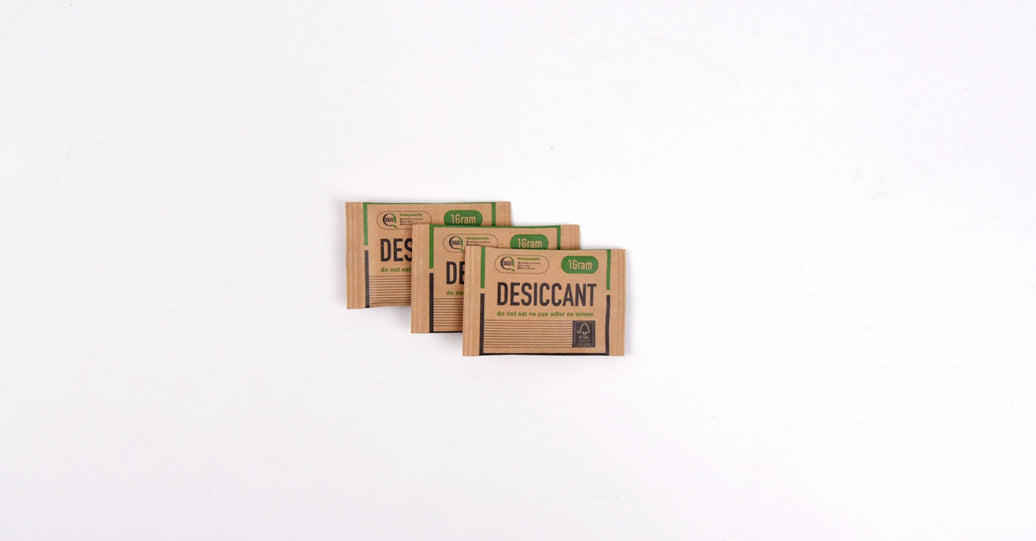
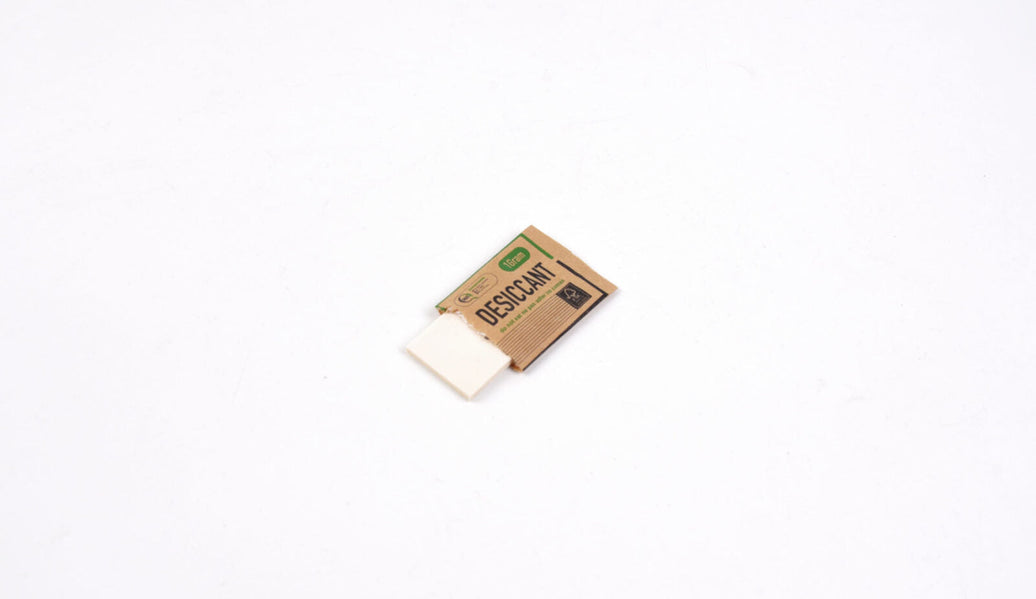
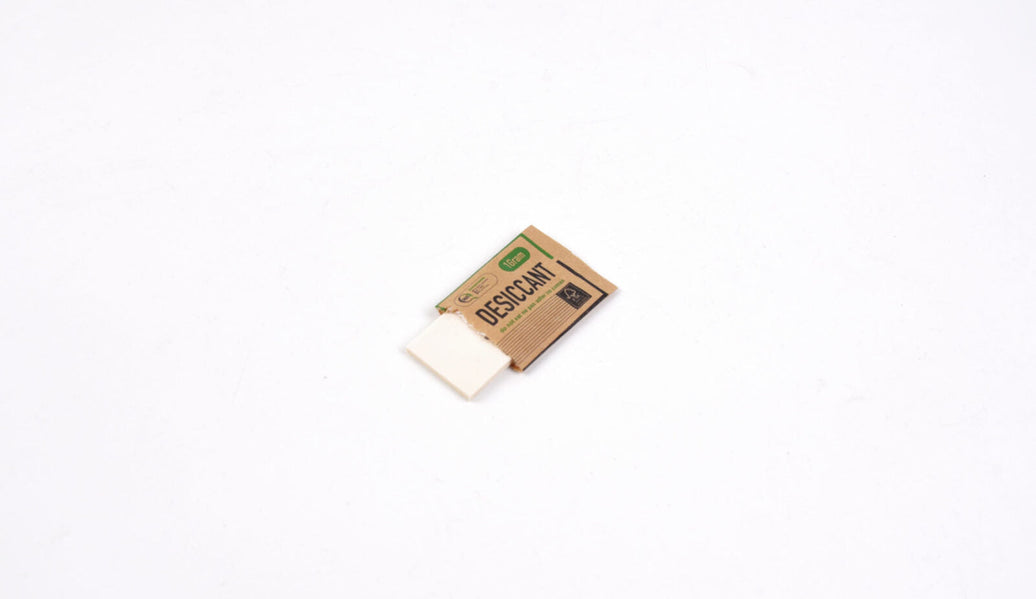
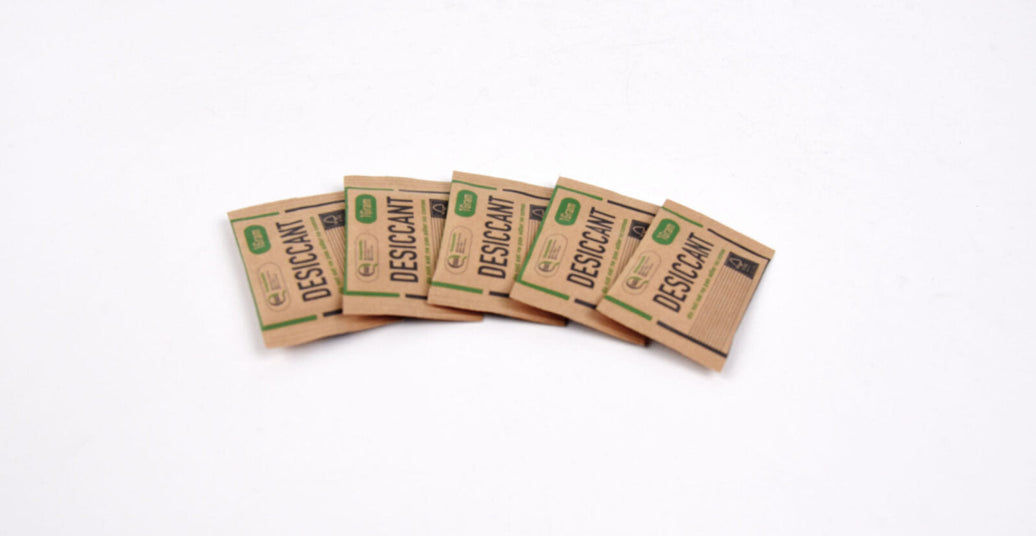
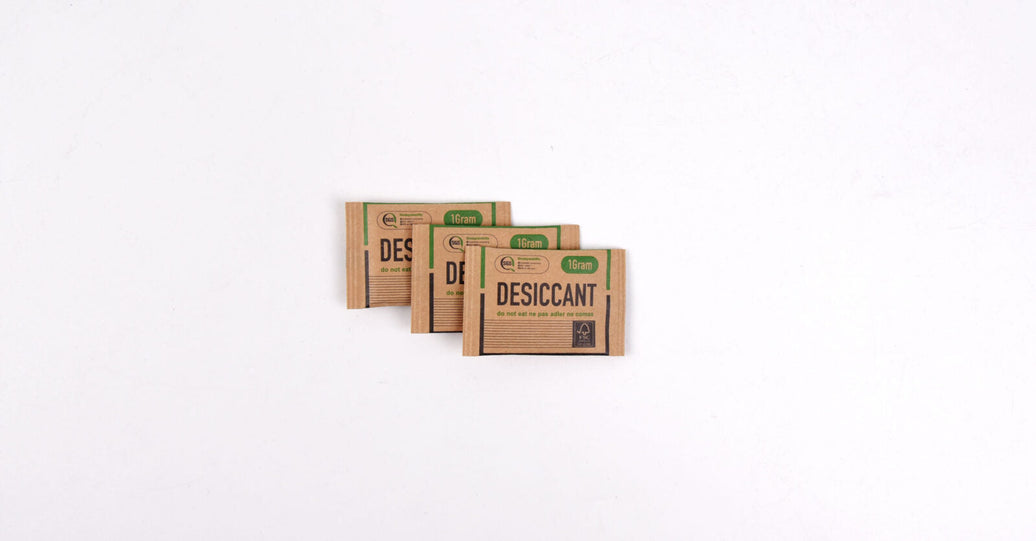
Keep desiccant formats sealed, non-loose and labeled. Loose beads or torn sachets spilling into product are exactly what prep inspections and customer complaints punish; dust-free fiber pads sealed in sachets avoid the loose-fill failure class entirely. For anything food-adjacent, use food-contact-documented desiccant (FDA 21 CFR 175.300 class) and standard “Do Not Eat” marking — the labeling logic, including child-safety context, is in the Do Not Eat label guide. Sustainability-positioned brands can keep the story consistent: compostable-certified sachets (ASTM D6400 / EN 13432 films) protect the unit without adding a plastic insert to an eco-positioned product.
Sizing for the FBA timeline
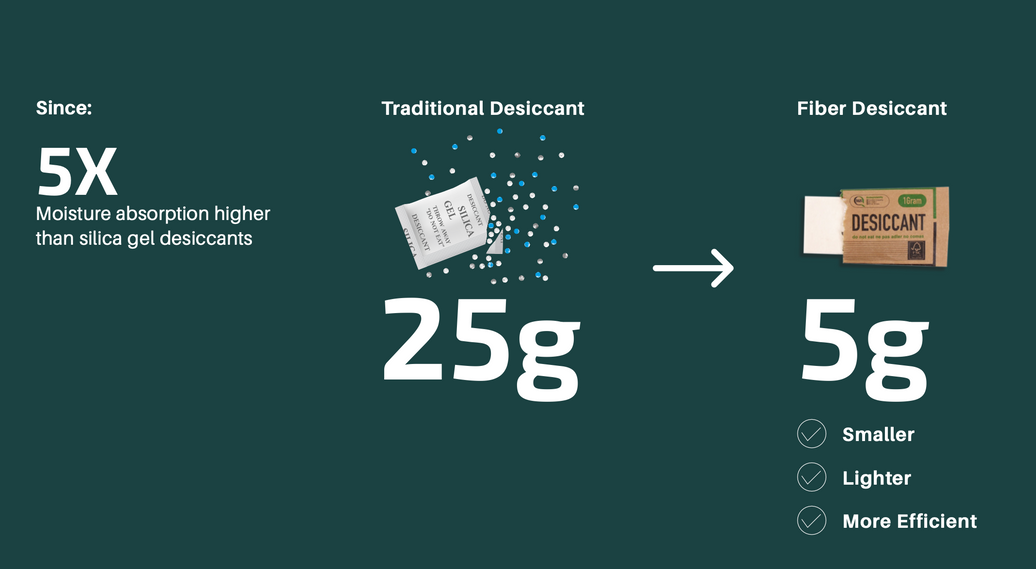
Size for the longest realistic exposure, not the happy path: factory → port → ocean → prep → shelf → buyer can run one to three quarters. That is a worst-case calculation across the unit bag's film, volume and dwell — the same math walked through in the service-life article. Fiber's capacity curve (>35% of own weight at RH50, >70% at RH90) lets one small unit cover long dwells that would take heavier silica loads.
FAQ
Are Amazon warehouses humidity controlled?
Not to a level any seller should rely on for moisture-sensitive goods. Temperature is managed broadly; RH around a specific tote is not a service commitment — protection must travel with the unit.
Can desiccant go inside FBA retail units?
Yes — sealed, labeled, non-loose formats inside the sealed retail bag. That is standard practice for supplements, snacks, electronics accessories and leather goods.
Who is responsible when FBA inventory gets moisture damage?
Practically, the seller eats most of it: reimbursement policies are narrow and mold/clumping is usually attributed to product or prep. Prevention is cheaper than the claim process.
What about returns — the bag comes back opened?
Opened-return units lose their sealed protection; that is a repack decision, not a desiccant failure. High-return categories often spec a fresh bag + fresh desiccant at repack.
Get a per-carton protection plan for your next inbound shipment
Send the product, unit packaging, origin port and shipment cadence. The team returns a two-level plan — unit sachet or card + master-carton protection — sized for your longest dwell.