Quick answer: A private-label desiccant programme is straightforward on the printing side and consequential on the liability side. Once your name is on the sachet, you are the supplier of record to your customer — you answer the QA audit, you supply the certificates, and you carry the claim if a batch fails. Before signing, establish three things: whether your partner owns the manufacturing plant or resells someone else's, whether the technical documentation will be issued in a form you can pass to your customer, and what the minimum order quantity looks like across every SKU you intend to print.
Packaging distributors, contract packagers and regional converters all reach the same point: customers keep asking for a desiccant, the margin on a traded commodity is thin, and putting your own brand on it looks like the obvious move. It usually is. The programmes that fail do so for reasons that were visible at the quotation stage.
Question 1: do you own the plant?
The single most useful question, and the one that reorders the shortlist. A trading company can quote a lower price because it carries no plant cost — and it can also change its upstream factory between orders without telling you. That change is invisible until a customer's incoming inspection finds a different substrate.
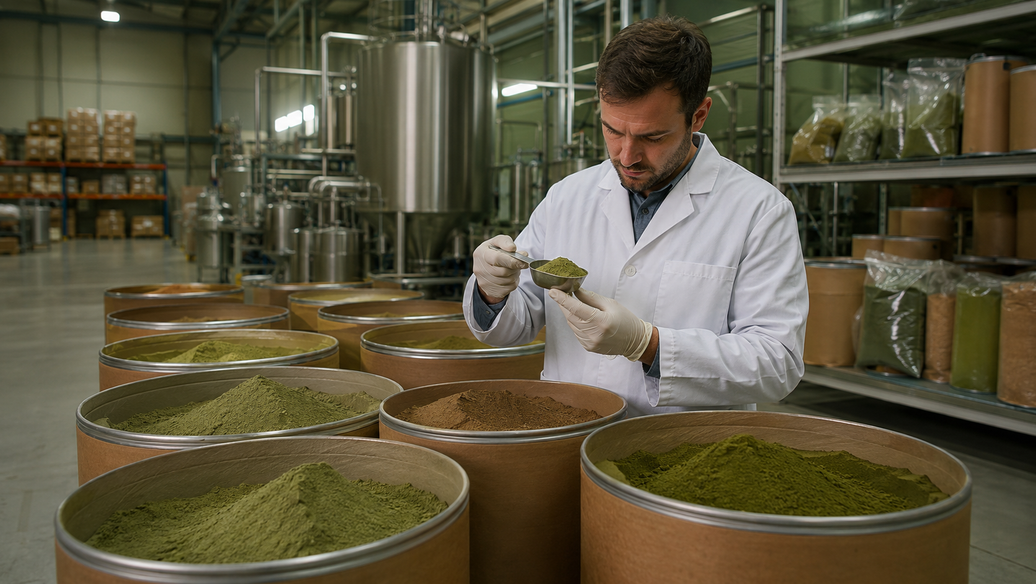
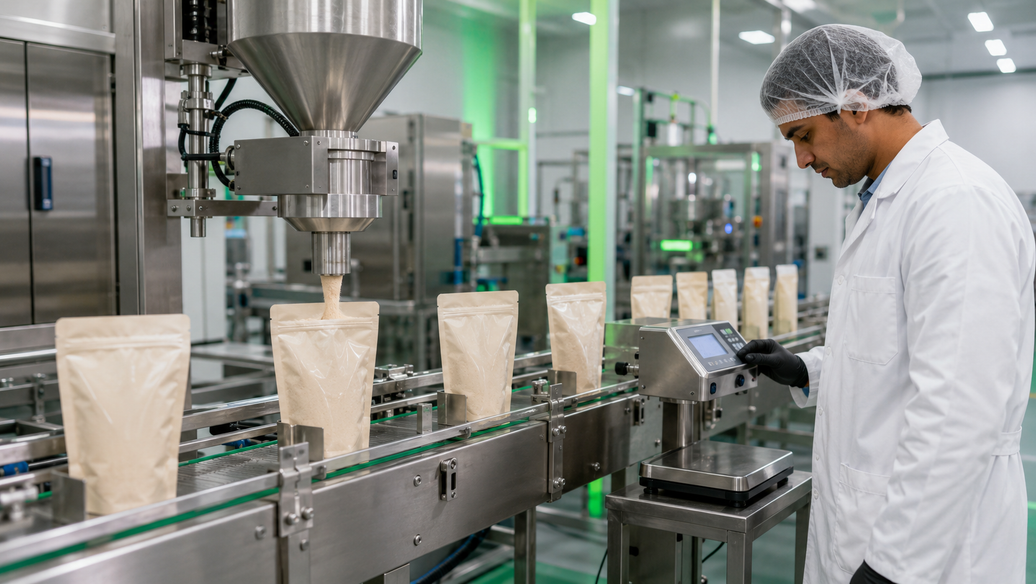
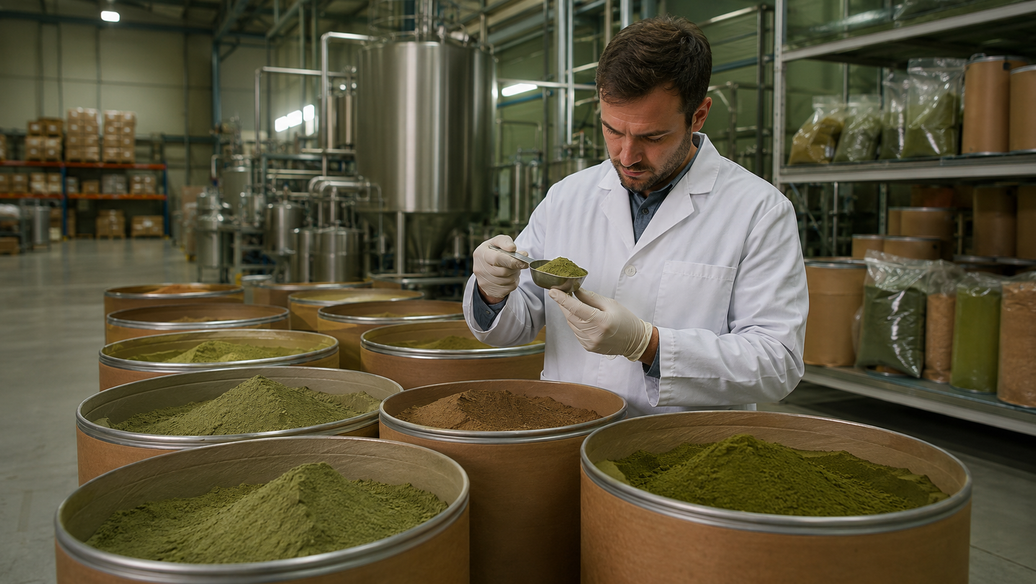
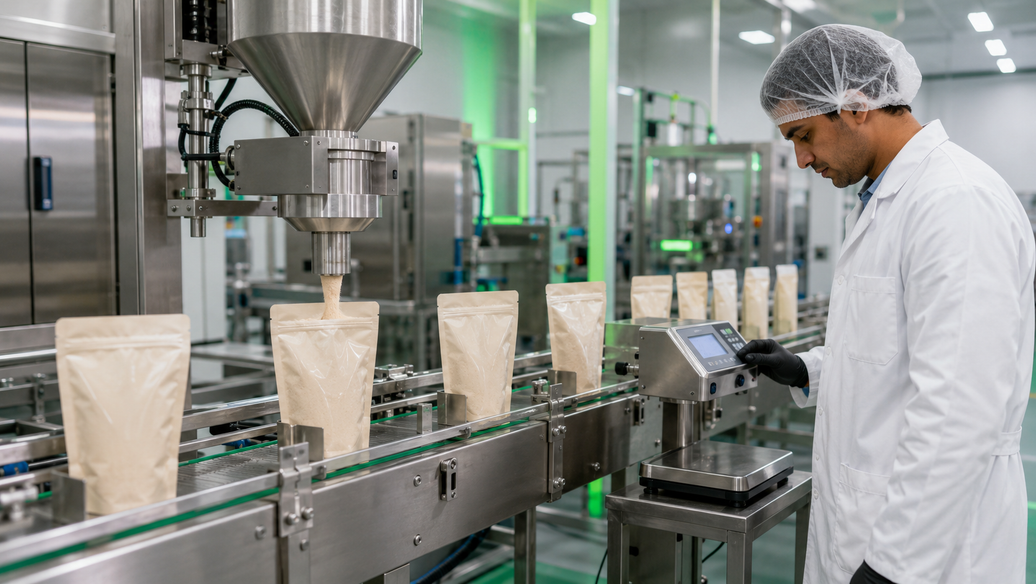
Ask for the manufacturing site address, the ISO certificate in the plant's name, and a video walk of the line. ATMOSIScience fiber desiccant is manufactured at an SGS ISO 9001 certified facility, and the composition — lignocellulose, calcium chloride, PLA, food-grade paper and water — is fixed by the process, not assembled from purchased components. The wider due-diligence list is in where is your desiccant made.
Question 2: what exactly can be customised?
Distributors often assume private label means a printed sachet. The useful range is wider.
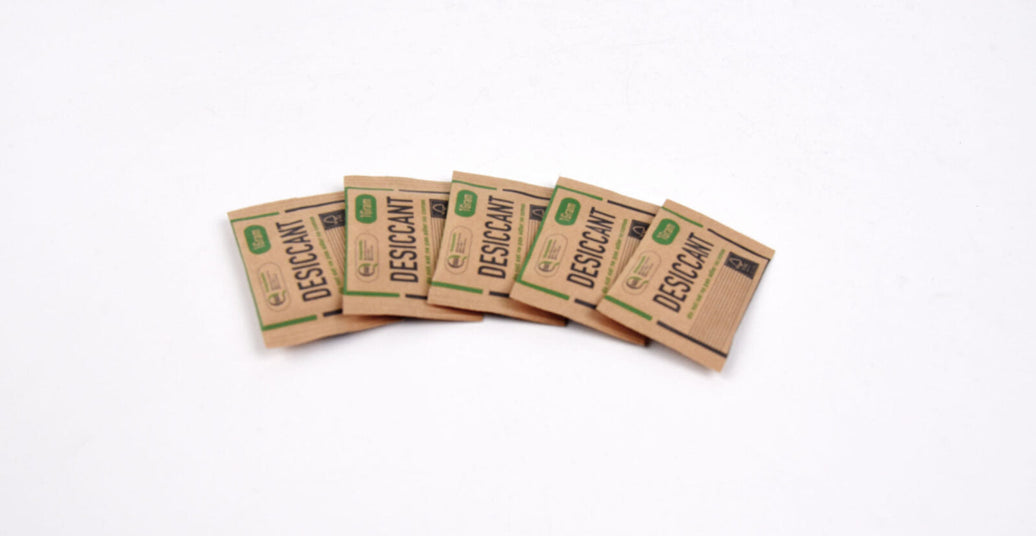
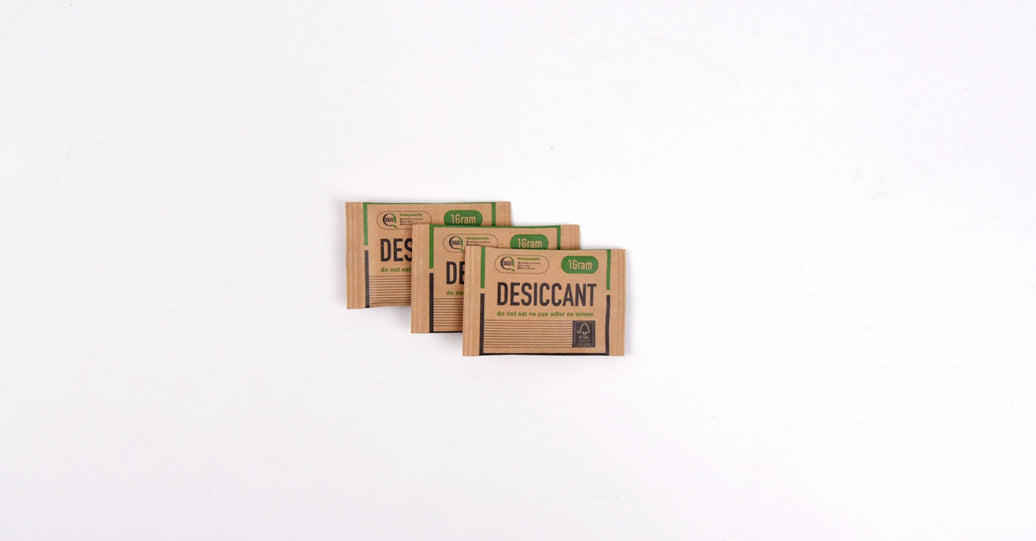
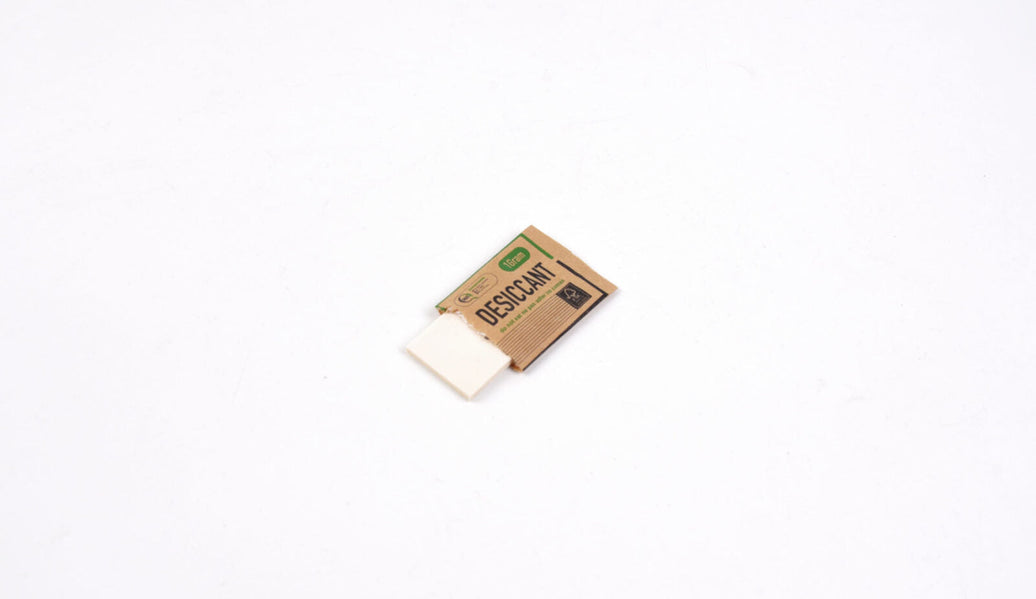
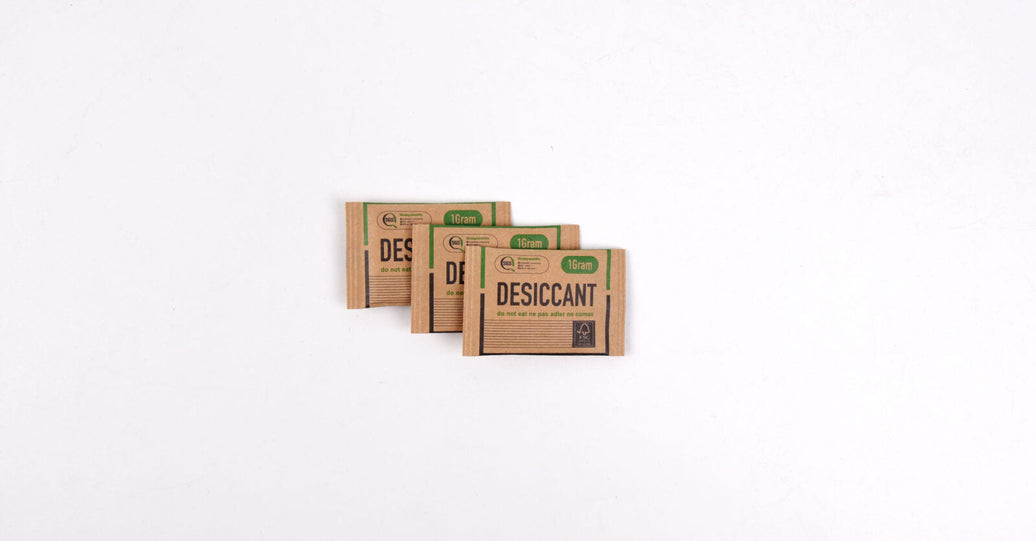
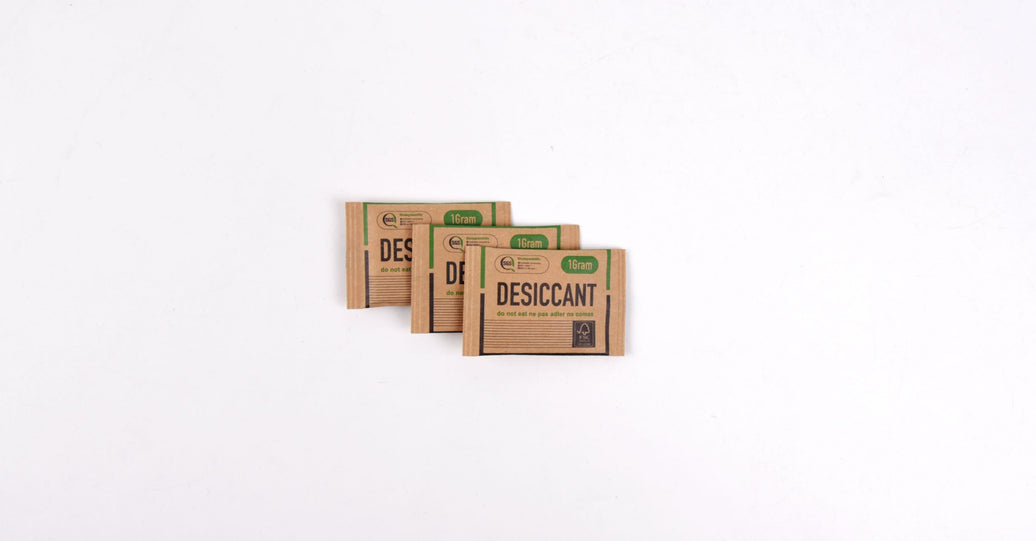
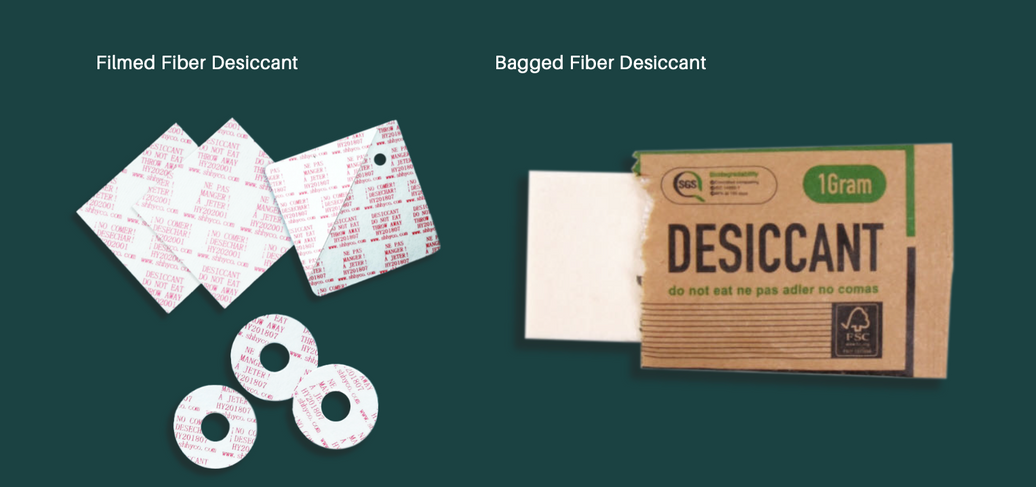
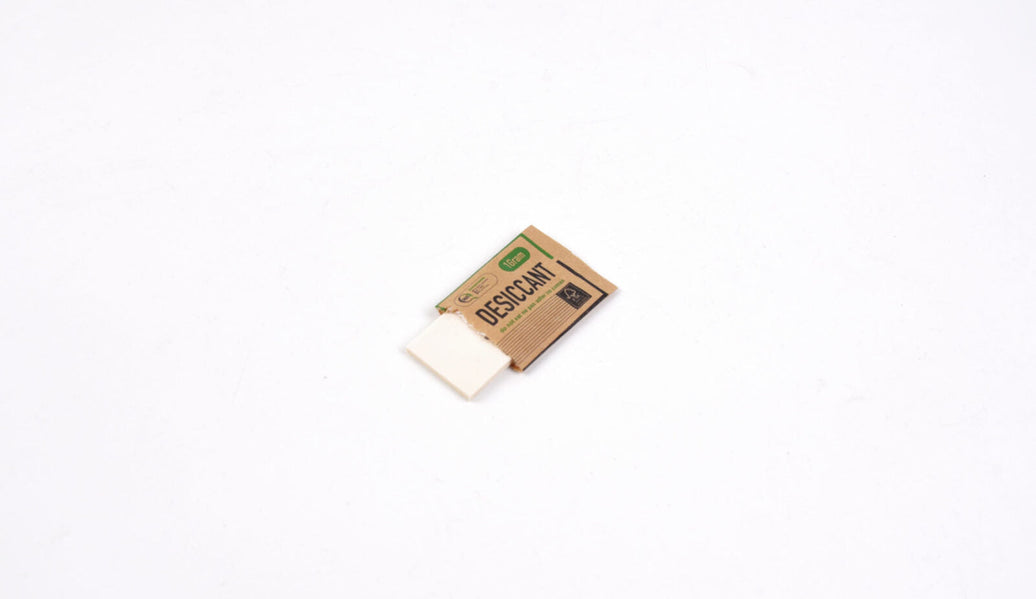
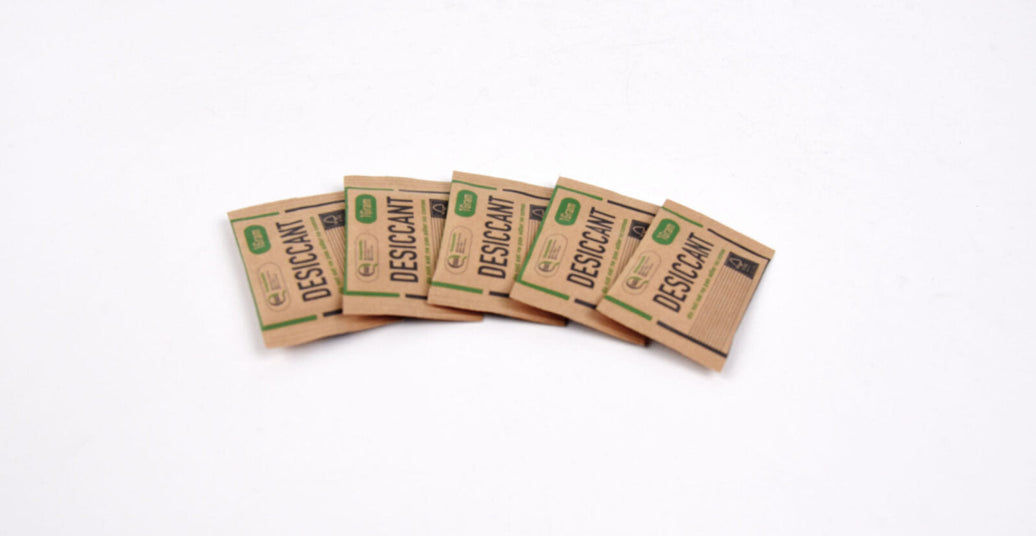
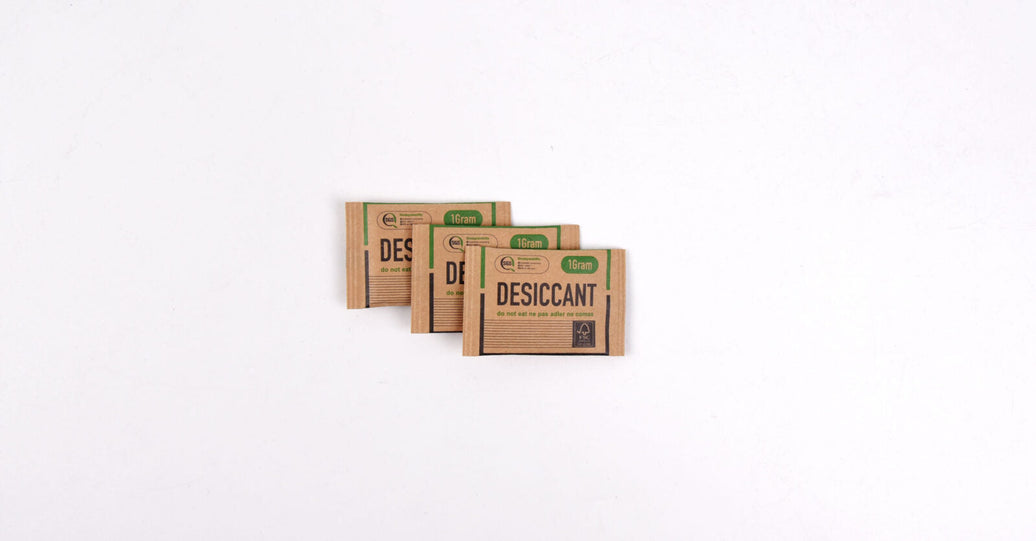
- Sachet weight: ATMOSIScience bagged fiber desiccant runs from 1 g to 1,000 g, with standard weights at 1 g, 5 g, 9 g, 18 g, 25 g and 60 g plus custom.
- Overwrap material: compostable nonwoven or food-safe Tyvek®, specified per SKU.
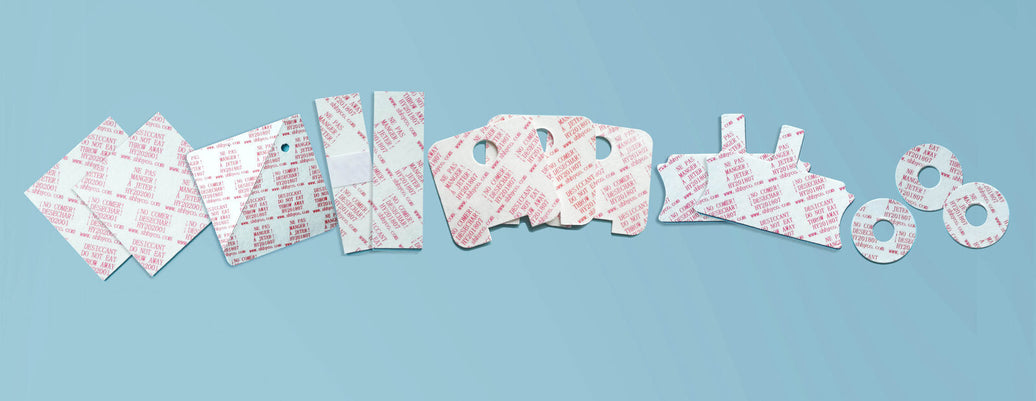
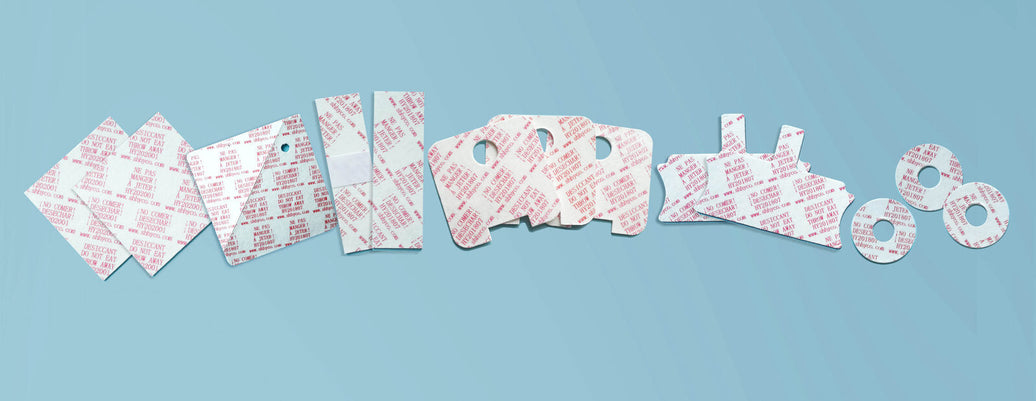
- Card format: Desimat filmed desiccant at 0.5 mm or 1.0 mm thickness, freely die-cut to square, circle or custom shape, printable on the laminated compostable film.
- Standard card SKUs: FF-3, FF-6, FF-15 and the wider FF range, at roughly 0.5 g, 1 g and 2.5 g silica-gel equivalence respectively.
- Branding: a printed card is a genuine brand surface, not just a compliance insert — see custom-printed desiccant cards.

Question 3: whose name goes on the certificate?
This is where programmes get uncomfortable at the first audit. Your customer's QA team will ask for a COA, an SDS, food-contact documentation, compostability certificates and a RoHS report. If those documents arrive with a factory name your customer has never heard of, on a product labelled with yours, you have a conversation to manage.
Settle it in the agreement:
- Will documentation be issued naming your brand, the manufacturer, or both?
- Who signs the COA, and against which test methods?
- Can you pass the certificates to your customer under your own cover, and are you licensed to do so?
- Who responds if your customer requests a plant audit?
The full list your customer will request is in the desiccant supplier qualification pack.
Question 4: what does MOQ look like across the whole range?
A quoted MOQ on one SKU is not the number that matters. A distributor typically needs three or four weights and two formats to serve a real customer base. Ask for the MOQ per printed SKU, the MOQ if artwork is shared across weights, the setup cost per artwork change, and the lead time on a repeat order versus a first order. Then model the working capital, not the unit price. MOQ and lead times covers the supply-risk side.
The rest of the checklist
- Which patents cover the technology, and are you protected from an infringement claim downstream?
- Is there territory exclusivity, and on what performance conditions?
- What is the shelf life of stock you hold? For ATMOSIScience fiber desiccant it is 12 months sealed, stored cool and dry — that number sets your inventory policy.
- What are the storage and handling limits your warehouse must respect?
- Who provides technical support when a customer asks for a dosage calculation?
- What happens on a non-conforming batch — replacement, credit, or investigation?
- Can the manufacturer supply the sustainability data your customers now ask for, including a verified product carbon footprint?
- Will you be able to substantiate the environmental claims you print? Compostability certification on ATMOSIScience pouch materials is to ASTM D6400 and EN 13432, and the scope attaches to the bag — a distinction worth reading in the sustainable desiccant guide before the artwork goes to print.
FAQ
Can I print my own brand on a compostable sachet?
Yes, with the caveat that inks and adhesives form part of the compostability assessment. Confirm the print system is within the certified scope before committing artwork.
What is a realistic first order?
It depends on format and artwork count. The productive approach is to run one printed SKU alongside unprinted stock for the rest, then expand the printed range as volume justifies the setup.
Do I need my own testing?
Not to resell. You will want it the first time a customer disputes performance, so incoming verification on at least one parameter per lot is prudent.
How do I explain fiber desiccant to customers who only know silica gel?
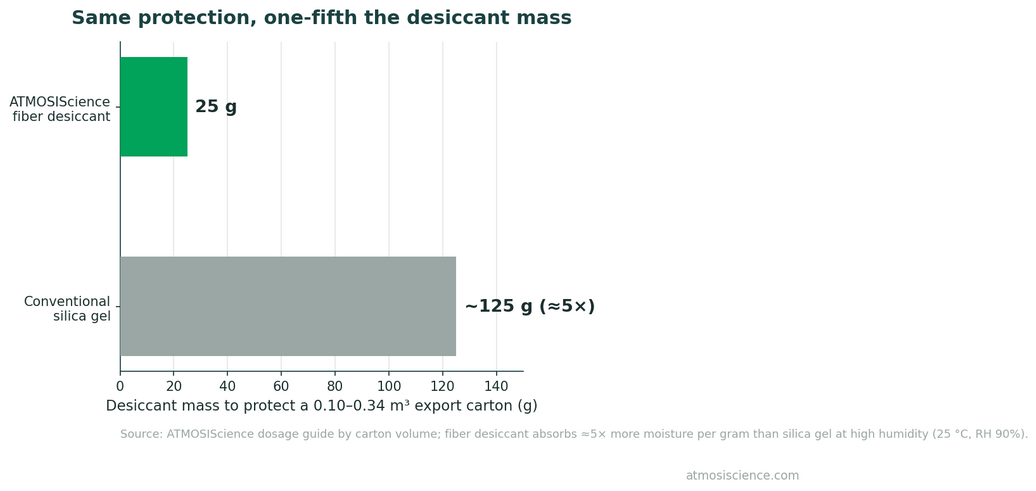
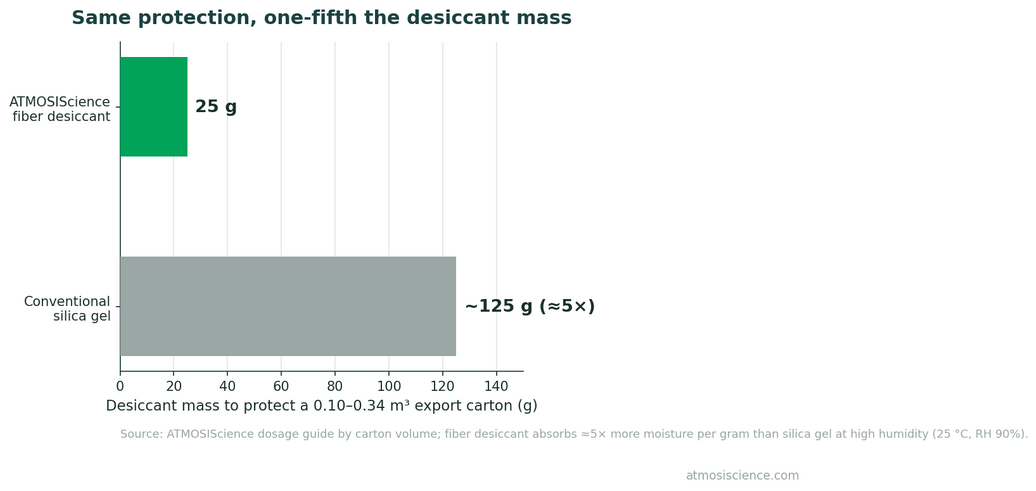
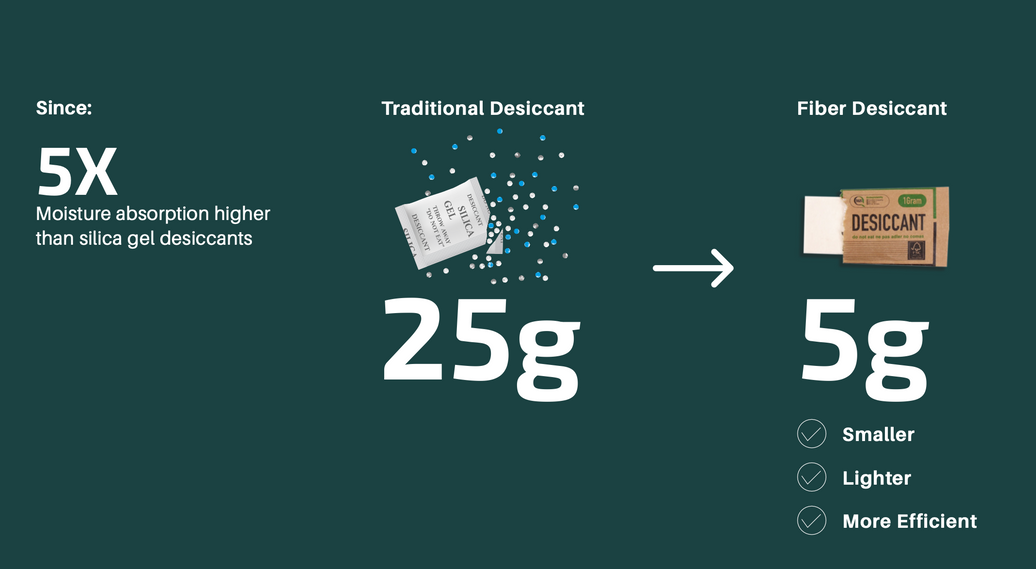
Capacity per gram and dust behaviour are the two arguments that land. Under the MIL-D-3464 unit definition a protection unit weighs about 18 g in fiber against 30 g in silica gel — less mass in the box for the same protection.
Can I sell into food and pharma under my own label?
Provided the documentation supports it and your quality system can hold the records. FDA 21 CFR 175.300 documentation exists for food-contact applications; regulated pharmaceutical use requires your customer's own qualification.
Considering a private-label desiccant line?
Tell us the formats and volumes you would need to serve your customers. Our team will come back with MOQs, setup costs and the documentation package you would be able to pass through under your own brand.
Prefer email? info@atmosiscience.com