Quick answer: VCI (vapour corrosion inhibitor) releases a volatile compound that forms a molecular film on bare metal, protecting surfaces even when humidity is high. A desiccant removes the water vapour that makes corrosion possible at all. VCI is the better answer for complex bare-steel assemblies with cavities the desiccant cannot reach; a desiccant is the better answer for mixed-material packs, coated parts, electronics and anything where a chemical residue on the surface is unacceptable. Long ocean routes with day-night temperature swings usually justify both.
Corrosion needs three things: metal, oxygen and water. Oxygen is not negotiable inside a normal pack, so export packaging engineering comes down to controlling the water — or blocking its access to the surface. VCI and desiccant do that in opposite ways, and the choice is not a matter of preference.
How each one works
VCI is emitted as a vapour from an impregnated film, paper or emitter. It travels through the enclosed air and adsorbs onto exposed metal, forming a passivating molecular layer a few molecules thick. It reaches into blind holes and threaded bores. It works even at high relative humidity, because it does not lower humidity — it occupies the surface.
A desiccant lowers the equilibrium relative humidity of the sealed volume. Below roughly 40–50% RH, the adsorbed water layer on steel becomes too thin to support the electrochemical cell that drives rust. It protects every material in the pack simultaneously, metal or not.

Where the choice actually gets made
Choose VCI when
- Parts are bare, machined steel or cast iron with cavities, threads and blind holes.
- The pack is metal-only and the receiving plant is set up to handle VCI film and its shelf life.
- Parts will be unpacked and used directly, with a documented cleaning step if residue matters.
Choose a desiccant when
- The pack contains mixed materials — metal plus cardboard, foam, electronics, printed manuals, plastics — all of which suffer from humidity.
- Surfaces are coated, plated, painted or optical, where any chemical film is a defect.
- Food-contact, pharmaceutical or medical-device rules make a volatile chemical unacceptable.
- You need one solution for both corrosion and mould on the packaging itself.
Use both when
Long-haul ocean freight across the tropics with high-value assemblies. The desiccant absorbs the moisture load that enters or condenses; the VCI covers the moment the pack is opened, resealed or breached. This is common practice for automotive components, machine tools and spare-parts kits.
The mistake that causes claims
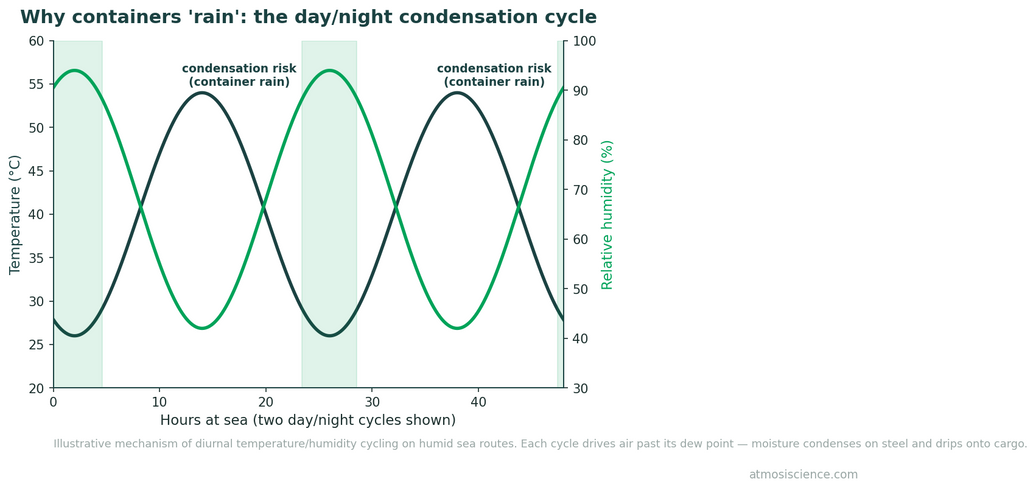
Most rust claims from sea freight are not a materials failure. They are a sizing failure. A VCI bag with the correct film weight and no moisture management still ships an enclosed volume carrying litres of water in the air, the pallet, the cardboard and the part itself. Once the container roof cools at night, that water leaves the air as liquid and lands on the load.
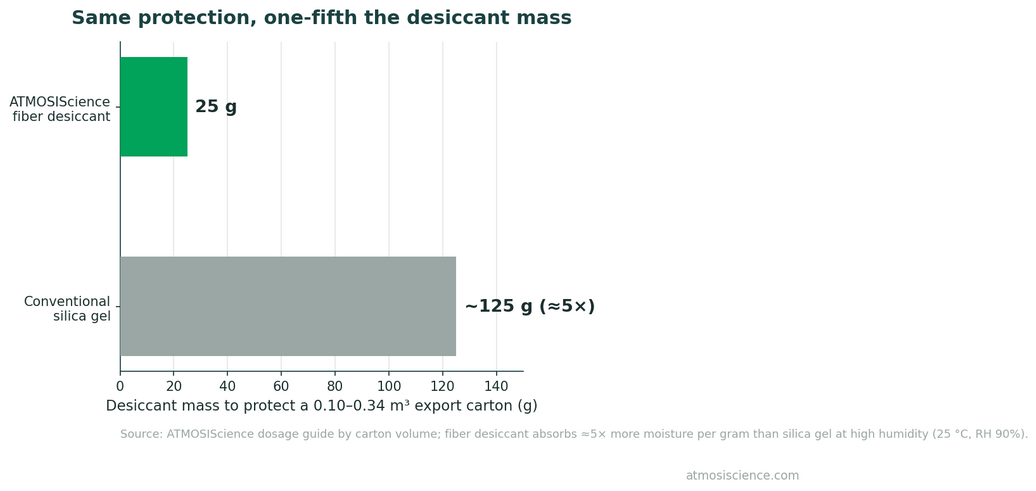
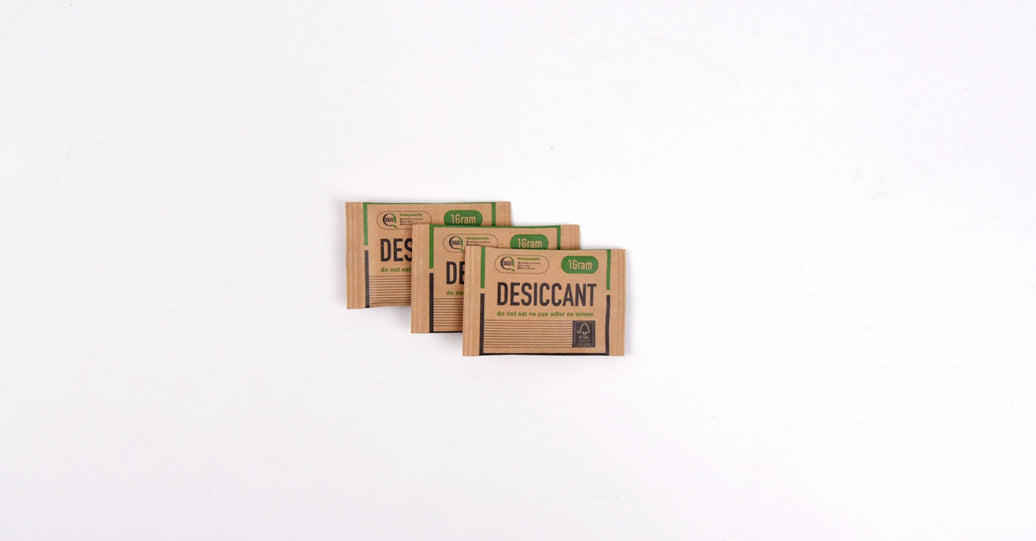
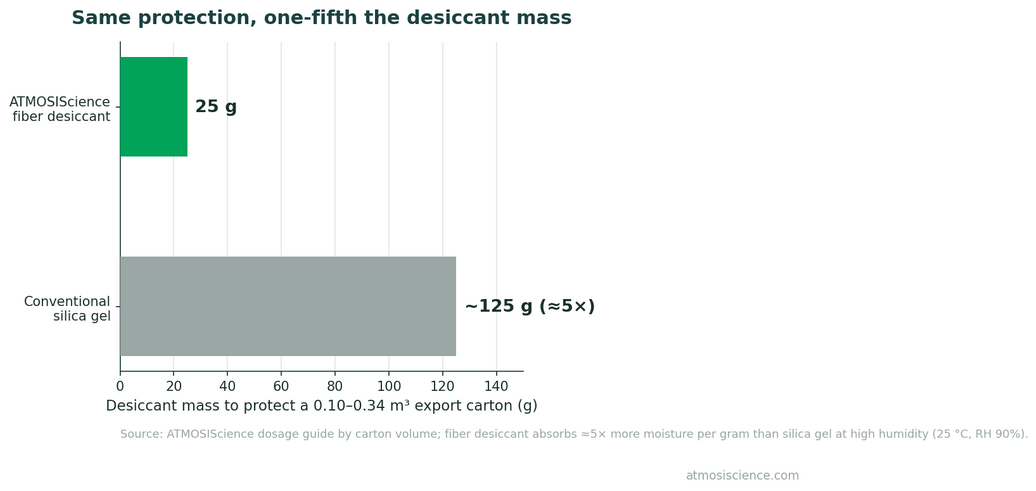
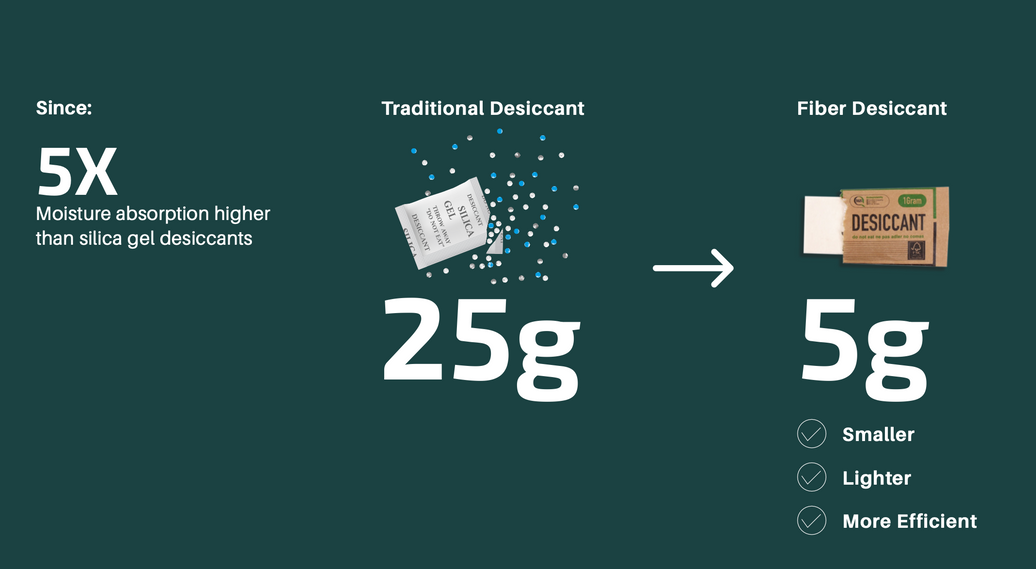
Sizing starts from enclosed air volume and the moisture already inside the pack at sealing. As a working reference, a standard 0.10–0.34 m³ carton is served by about 25 g of ATMOSIScience fiber desiccant. Ocean containers are a different calculation entirely — see why desiccants fail in sea freight and desiccant for container shipping.

Materials compatibility, briefly
VCI chemistries are metal-specific. A formulation tuned for ferrous metals can attack copper, brass, zinc or certain aluminium alloys, and the multimetal grades cost more. A desiccant has no such interaction — it is chemically inert toward the load. For multimetal assemblies with mixed fasteners, that neutrality is often the deciding factor.
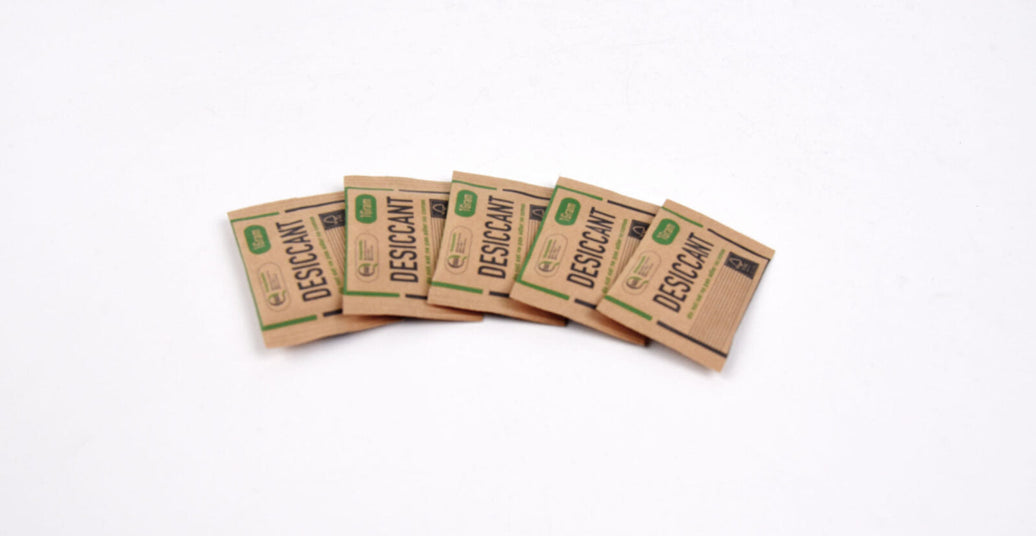
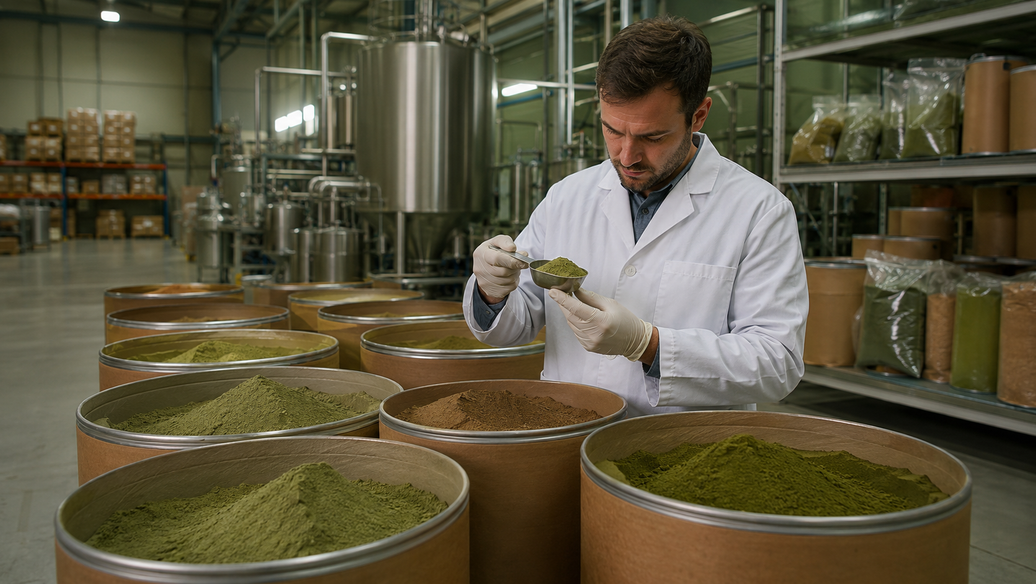
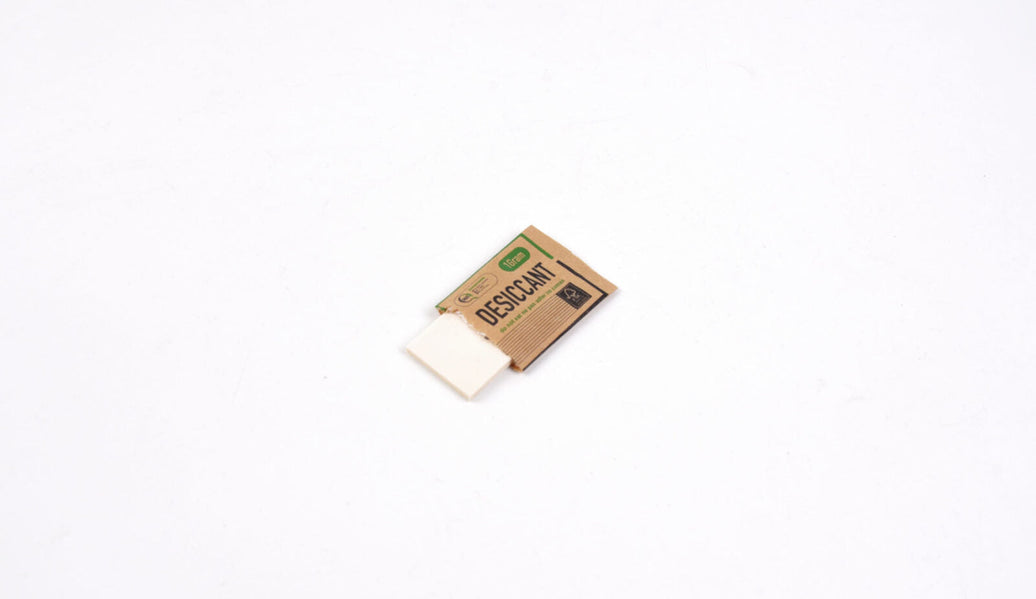
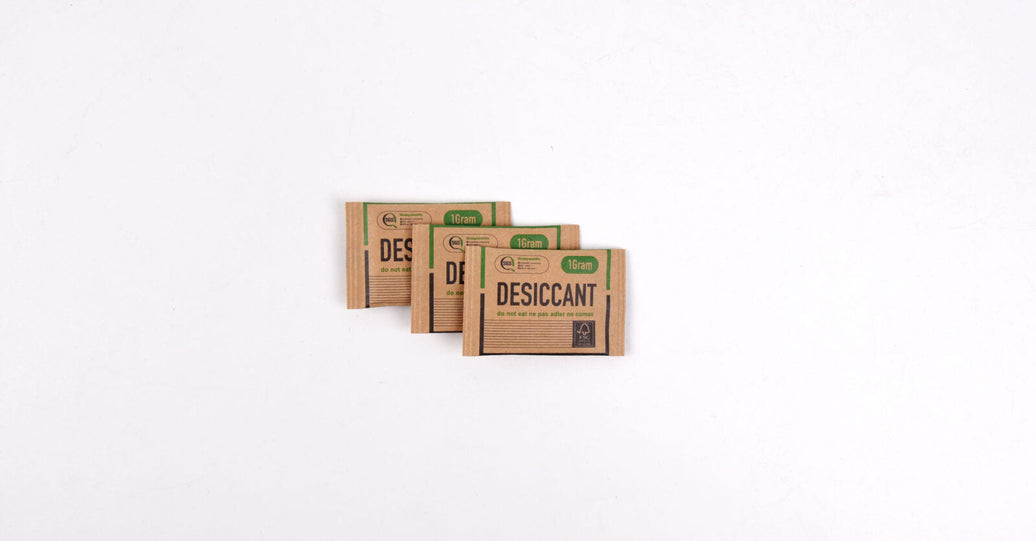
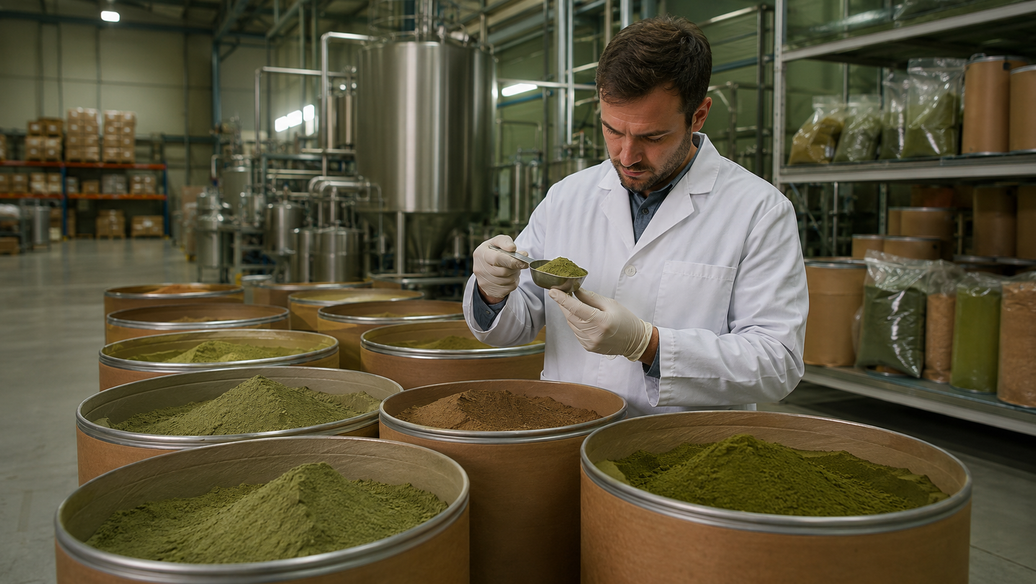
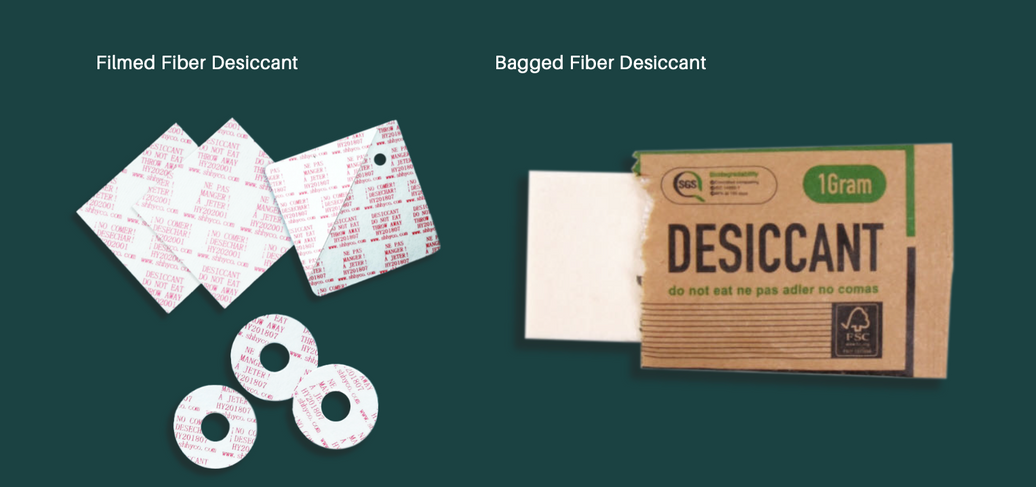
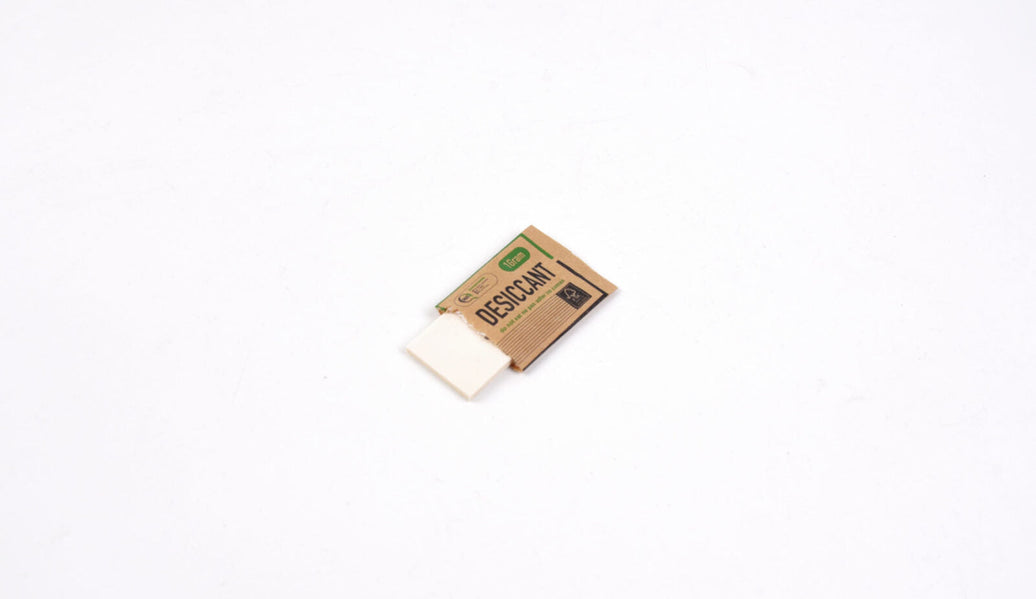
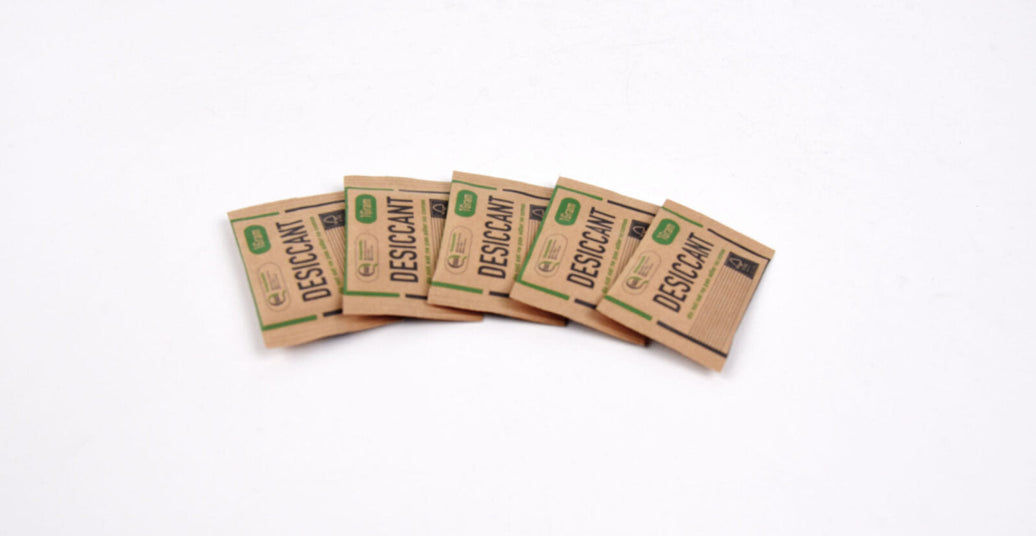
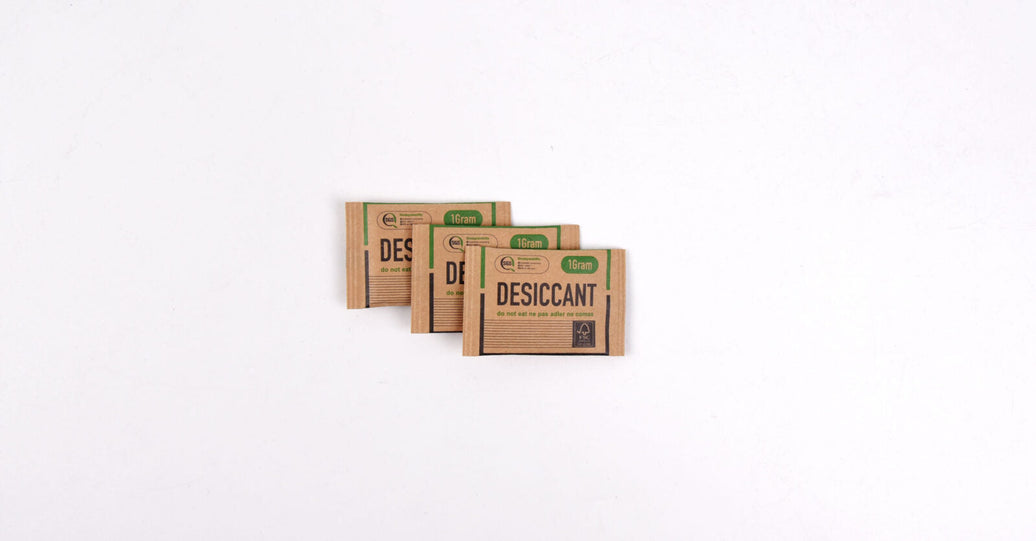
ATMOSIScience fiber desiccant is a lignocellulose substrate with calcium chloride bound into a patented composite, bagged in compostable nonwoven or food-safe Tyvek®. It is dust-free by construction, adsorbs more than 70% of its own weight at RH90 and 25°C, and holds RoHS testing documentation — which matters when the same pack carries electronic sub-assemblies.
FAQ
Does VCI stop working once the bag is opened?
Protection decays as the vapour concentration falls. Reseal promptly, and treat opened bags as a fresh clock. Desiccant behaves similarly — opened packs should be resealed within the exposure limits.
Can you put a desiccant inside a VCI bag?
Yes, and it is common. The desiccant lowers the moisture load; the VCI covers the surface. Confirm with your VCI supplier that the desiccant does not scavenge the inhibitor faster than intended in very small volumes.
What humidity target stops rust?
Below about 40% RH the risk falls sharply for common steels; below 30% it is largely arrested. Hygroscopic contamination such as salt or fingerprints raises the threshold, which is why handling discipline matters as much as the sachet.
Is VCI safe for food or medical packaging?
Generally it is not specified there. Where a food-contact or medical route is required, moisture control via a documented food-contact desiccant is the cleaner path — see food-contact desiccants and FDA 21 CFR.
Which is cheaper?
Per pack, VCI film is often cheaper than a correctly sized desiccant dose. Per claim avoided, that comparison inverts quickly on tropical routes.
Shipping metal parts and seeing rust on arrival?
Send the pack dimensions, route and part materials. Our team will come back with a moisture load estimate and a dosage figure you can put in a spec.
Prefer email? info@atmosiscience.com