Quick answer: Moving to plastic-free supplement packaging usually changes moisture protection more than brands expect. Paper-based and compostable pouches generally let more water vapour through than the foil or metallised laminates they replace, so the product needs more moisture control, not less. Glass jars and metal tins are strong barriers, but their closures and daily opening still let humid air in. Re-test the new pack, re-size the desiccant, and choose one whose certifications match the claim on the front of the pack. A plastic film sachet inside a paper pouch quietly contradicts the label.
Wellness brands are among the fastest movers away from plastic packaging, for good reasons: customers ask for it and regulations such as the EU Packaging and Packaging Waste Regulation push in the same direction. The trap is treating the switch as a graphics change. A powder or capsule that was stable for 24 months in a foil pouch can cake in six months in a paper one.
What changes when the plastic comes out
| New pack | Moisture barrier, in general terms | Where moisture gets in |
|---|---|---|
| Paper pouch with a barrier coating | Usually lower than foil laminates; depends heavily on the coating | Through the wall over time, at folds and creases, at the zip |
| Compostable film pouch | Often lower than conventional high-barrier films | Through the wall, especially in warm humid storage |
| Glass jar with metal lid | Glass itself is an excellent barrier | At the lid seal and with every opening |
| Aluminium or steel tin | Metal itself is an excellent barrier | At the lid, which is often a simple friction fit |
Barrier performance is measured as water vapour transmission rate. Make sure the numbers you compare were measured by the same method and conditions; see which WVTR number you are being quoted.
Weaker barrier means more desiccant
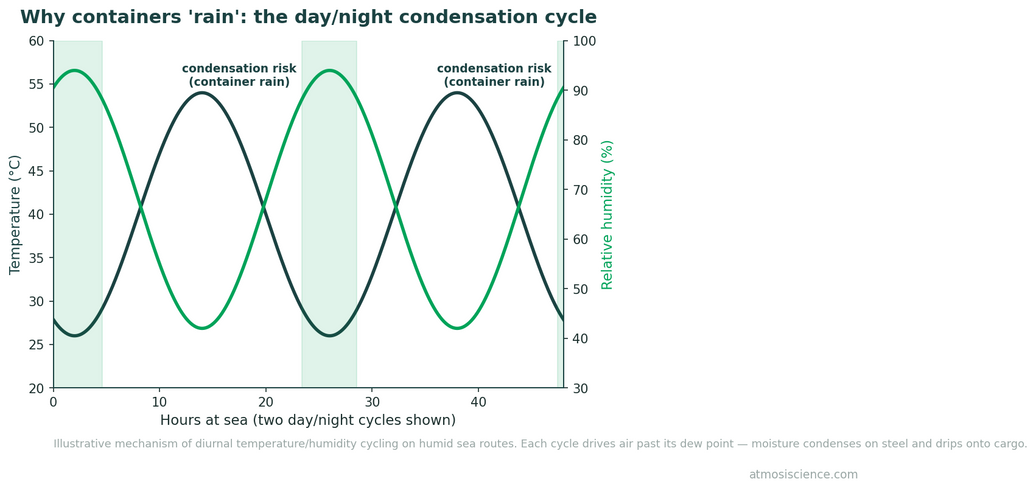
A desiccant has to absorb all the water that enters the pack over its life: what comes through the wall, what comes in with each opening, and what was in the air when the pack was sealed. When the wall lets more through, the first part grows. For a pouch that is opened daily, the opening load is already large, so the total can rise sharply.
The method is set out in desiccant dosage by MVTR, and the regulatory side of the same trend in why weaker packaging barriers mean more desiccant. For packs that are opened many times, also read desiccant for packs opened 30 times.
The sachet that contradicts the label
Many brands change the outer pack and keep the same desiccant: silica gel in a plastic film sachet. The customer opens a paper pouch that says plastic-free and finds a plastic sachet inside. At best it looks careless. At worst it makes the claim inaccurate.
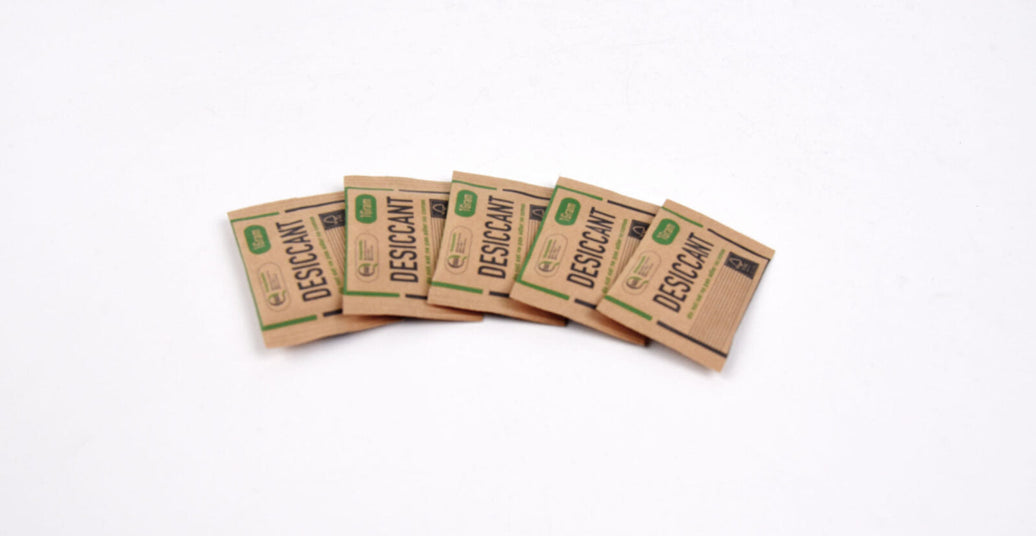
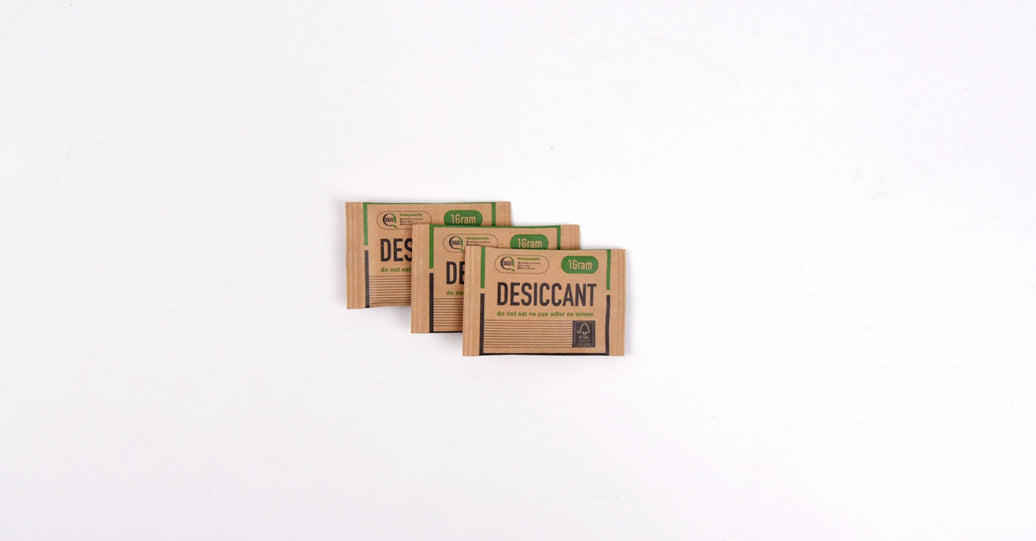
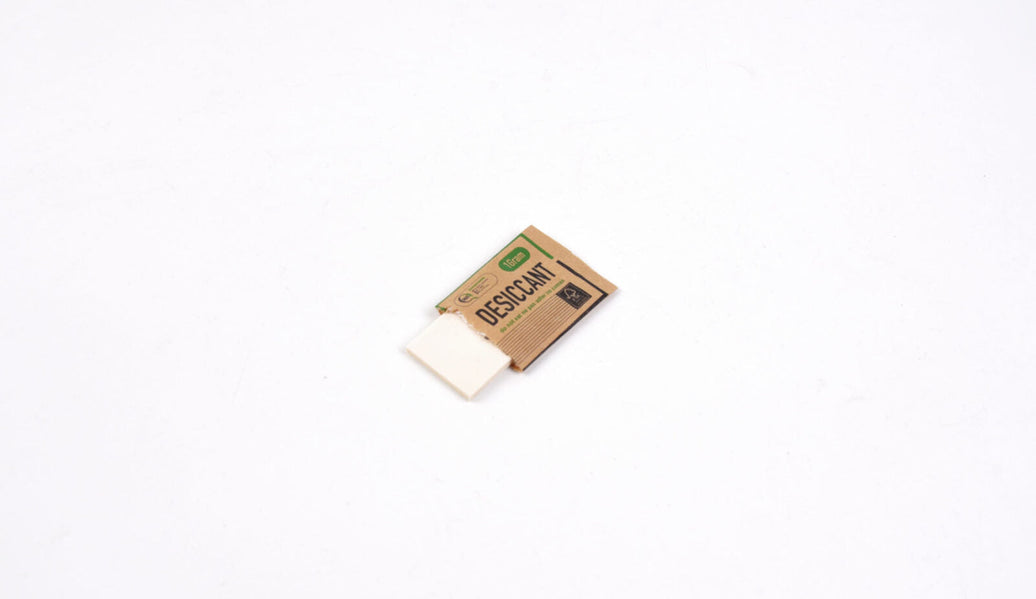
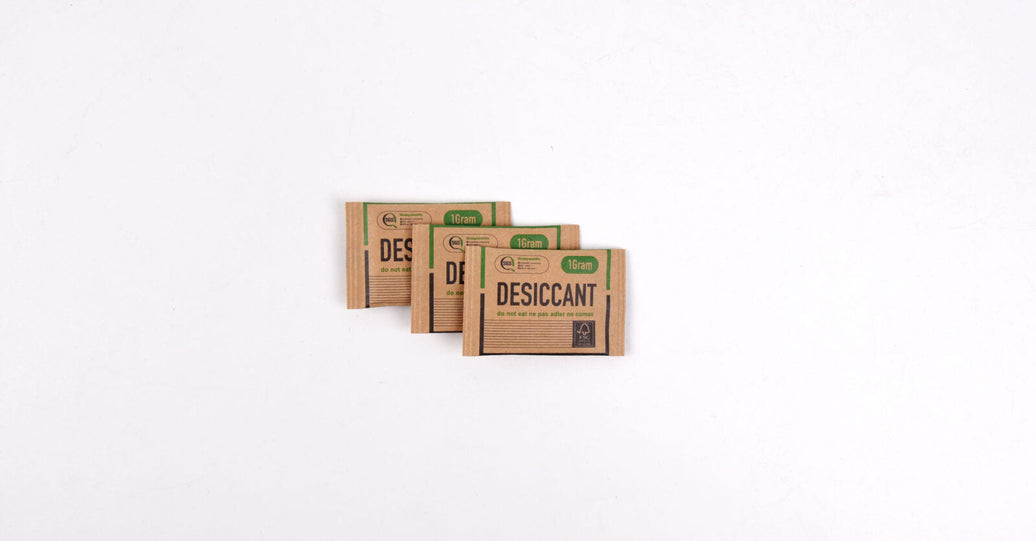
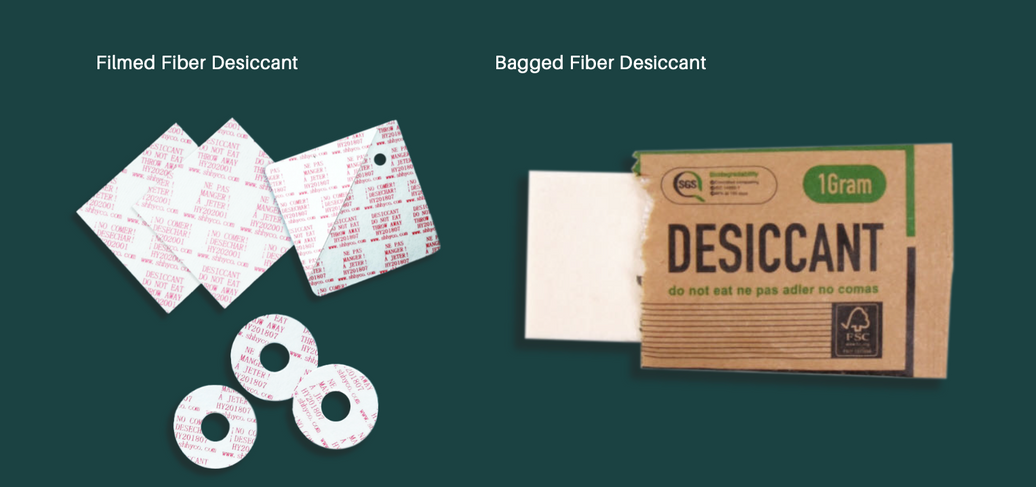
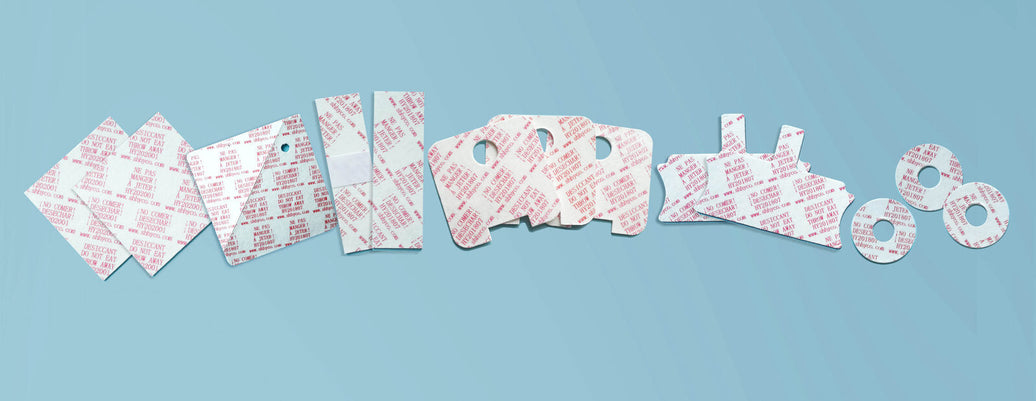
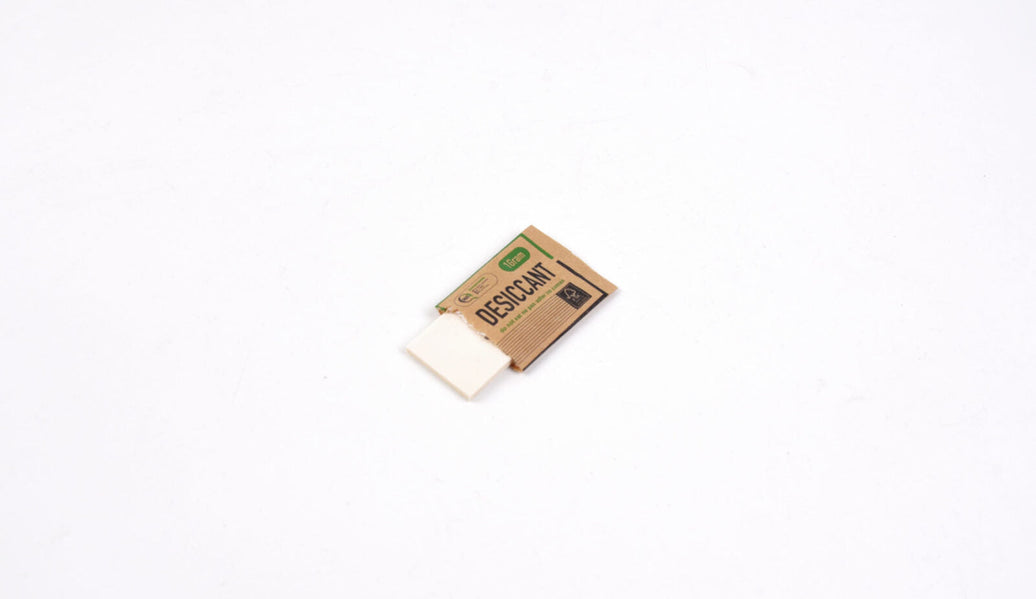
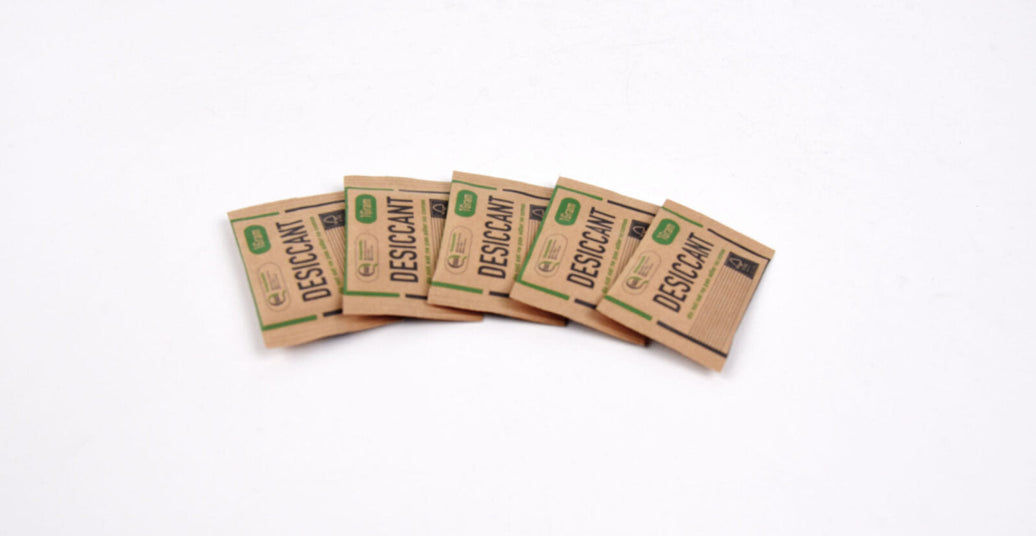
The fix is to choose a desiccant whose materials and certificates match what the pack says. Options include paper-wrapped sachets, whose wrapper may be compostable but whose fill is usually silica gel or clay (see eco paper desiccant: what is inside), and plant-fiber paper desiccants, where the sheet itself does the drying.
Where Fiber Card fits, and how to describe it accurately
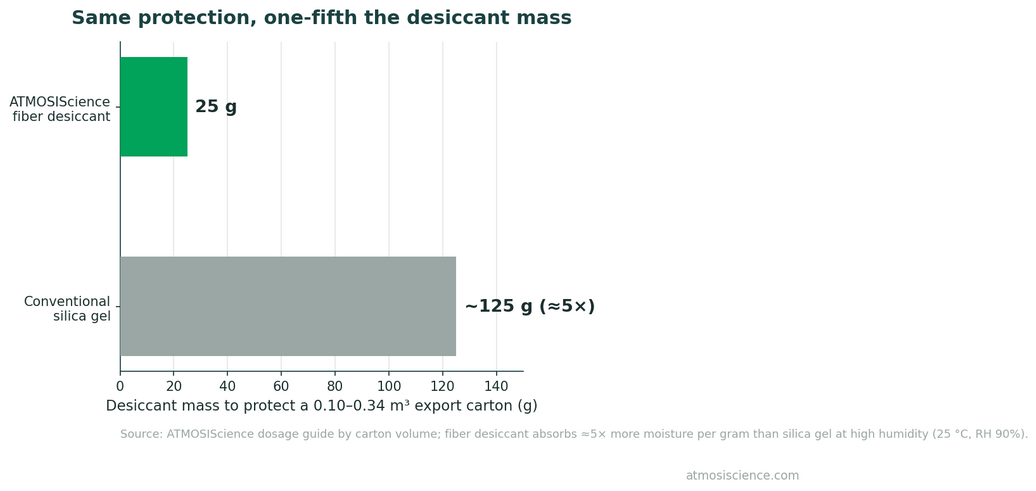
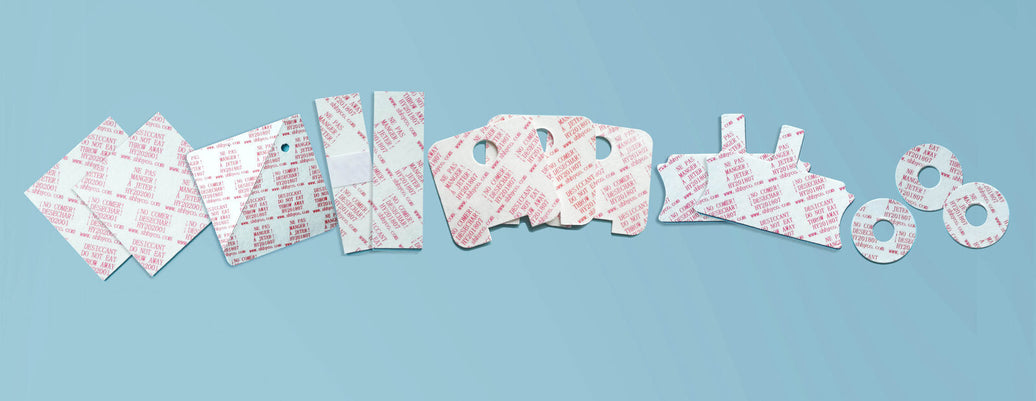
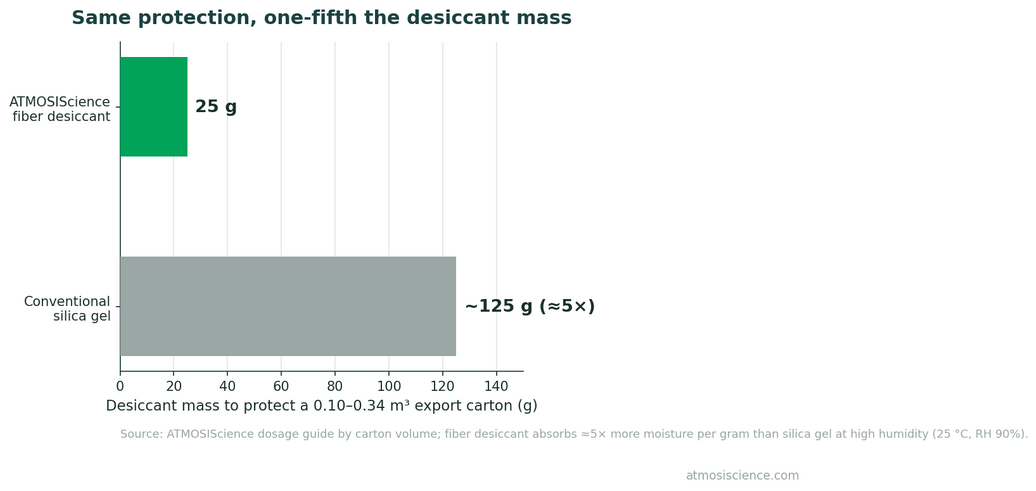
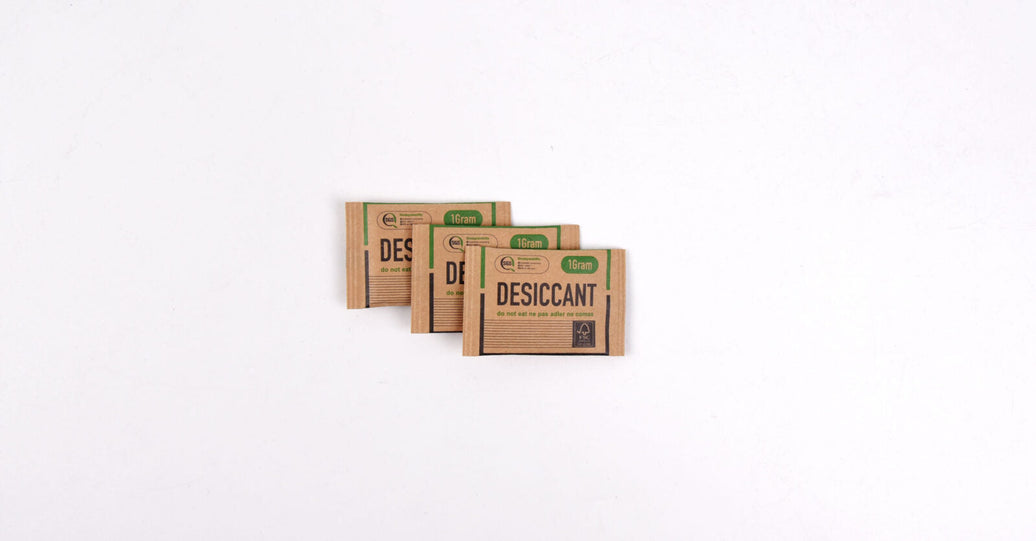
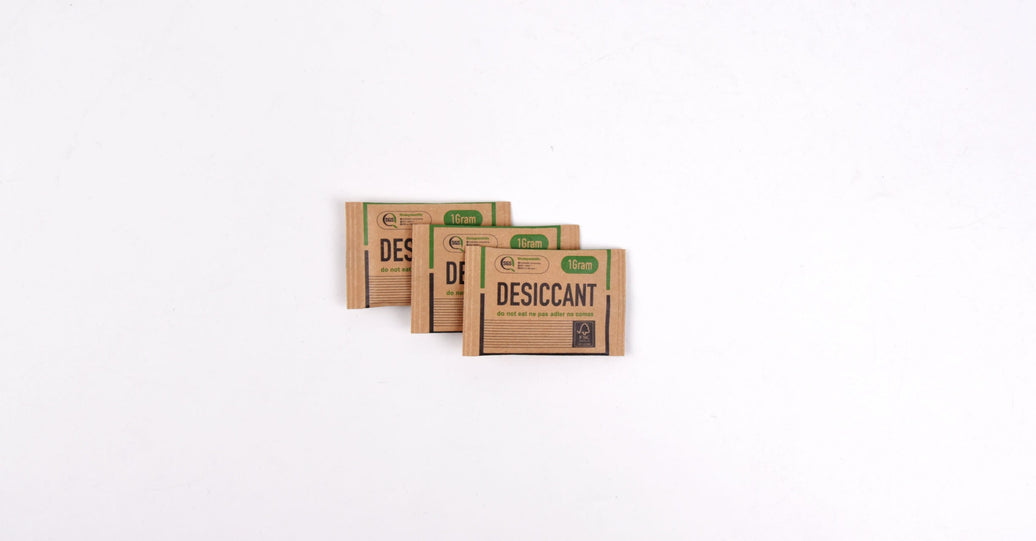
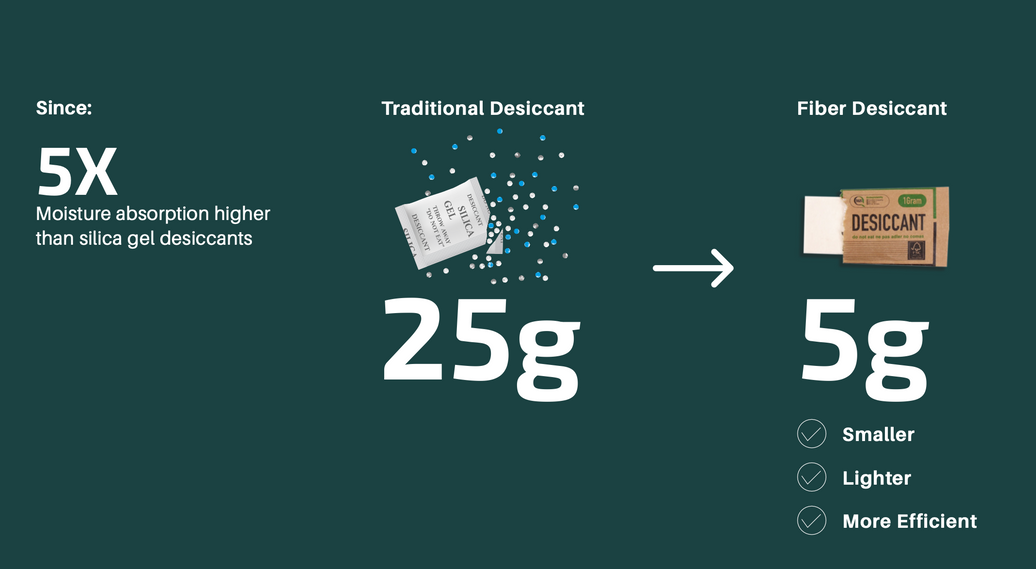
ATMOSIScience Fiber Card is a paper desiccant card with a natural plant-fiber core and calcium chloride bound into the fibers, enclosed in an outer layer that can be printable compostable paper. ATMOSIScience fiber desiccant is certified industrially compostable. At 25 °C it adsorbs more than 35% of its own weight at 50% RH and more than 70% at 90% RH, about 2.3 times what common silica gel holds at 90% RH, so less material is needed for the same job.
Be precise about wording. The product documentation describes the core as plant fibers combined with polymer materials. That means the accurate claim is about certified compostability and the absence of loose silica or plastic film, not that the card is free of every polymer. Ask for the certificate that covers the exact finished construction, including print and outer layer, before you put a word about it on pack. Details in the Fiber Card spec guide.
Glass jars and tins: excellent walls, weak spots at the top
Glass and metal are near-perfect moisture barriers, so brands moving to them sometimes drop the desiccant. Two things still let water in. The closure: a metal lid without a good liner, or a friction-fit tin lid, is a leak path. And the customer: each opening replaces the dry air inside with room air. A small desiccant card fixed inside the lid handles both without rolling around in the product. Lid design is covered in how to spec a jar-lid insert.
Refill pouches
Refill systems, where a customer tips a pouch into a reusable jar, move the moisture problem into the customer’s kitchen. The jar becomes the long-term pack, and the desiccant needs to travel with the refill. See desiccant in reusable and refill packaging.
Validate before you launch
- Run the old and new pack side by side at a warm, humid condition, for example 30 °C and 65% RH, and at an accelerated condition such as 40 °C and 75% RH.
- Track weight gain, water activity and caking at each pull point. See water activity vs relative humidity.
- Include an opening schedule that matches the label dose.
- Size the desiccant on the result, not on the old pack’s dose. The method is in accelerated shelf-life testing for powders.
A short claims checklist
- Describe each component by what it is.
- Use plastic-free only if every component, including the desiccant, supports it.
- Use compostable only with a certificate that covers the finished item, and state industrial or home where relevant. See which compostability certification you need.
- Avoid broad words like eco-friendly without specific support. See the rule that now governs your packaging copy.
Frequently asked questions
Do paper supplement pouches protect against moisture?
Some do well, some poorly. It depends on the barrier coating. Ask for the measured water vapour transmission rate and test with your product.
Do supplements in glass jars need a desiccant?
Often yes, if the jar is opened daily or the lid seal is basic. Glass blocks moisture through the wall, not through the lid or the opening.
Is a paper desiccant plastic-free?
Not automatically. Check what the core and outer layer are made of and which certificate covers the finished item before making that claim.
Will switching packs change my shelf life?
It can. Re-test rather than assume. A weaker barrier usually needs more moisture control to keep the same shelf life.
Can the desiccant go in home compost with the pouch?
Only if both carry a home-compost certificate. Industrial compostability certificates do not cover home composting.
Switching to paper, glass or compostable packs?
Tell ATMOSIScience the new pack and the product. We will help re-size moisture control and share the certificates for the Fiber Card construction you would use.
Prefer email? info@atmosiscience.com