Quick answer: Reuse and refill formats break the assumption every desiccant calculation is built on — that the pack is sealed once and stays sealed. A refill pouch is opened, decanted and often left partly full; a returnable container is opened, emptied, washed, dried and refilled. Both admit a fresh charge of humid air on every cycle, so the desiccant has to be sized against cumulative headspace refresh, not a single sealing event. Under the EU PPWR, which began applying from 12 August 2026 with reuse and recyclability obligations phasing in through 2030, this stops being an edge case for anyone selling into Europe.
The sustainability brief and the shelf-life brief usually arrive from different directions and meet on a packaging engineer's desk. Lighter, mono-material, refillable and reusable formats all make the moisture problem harder at exactly the moment the marketing claim makes it more visible.
Three formats, three different moisture problems
The refill pouch
A lightweight pouch, often paper-based or mono-material, decanted into a durable primary container. Two failure points. First, the pouch itself typically has a weaker barrier than the rigid pack it replaces — less aluminium, thinner structures, sometimes none at all. Second, consumers frequently do not decant the whole pouch, so a partly full refill sits in a cupboard for weeks with a rolled-over top and a large headspace.
The durable primary container
The jar or tub that gets refilled. It is opened far more often than a single-use pack over its life, and each opening exchanges the headspace with room air. If the room is a bathroom or a kitchen, that air is not dry.
The returnable B2B container
Reusable crates, IBCs and drums returning through a wash cycle. The risk here is residual water — a container that is not fully dried before refilling delivers liquid water straight into the next batch.

Sizing when the pack keeps being opened
A single-use calculation adds the initial moisture in the pack to the moisture entering through the film over shelf life. A reuse calculation adds a third term: the moisture delivered by every headspace exchange.
The practical method:
- Estimate openings over the life of the pack. A 30-day tub opened daily is 30 exchanges; a refill pouch decanted over three sittings is three.
- Estimate the headspace exchanged each time. A near-empty tub exchanges far more air than a full one, which is why the last third of a pack is where complaints come from.
- Take the worst realistic ambient — a humid kitchen or bathroom, not a controlled warehouse.
- Add that cumulative load to the barrier ingress over the same period.
- Choose a format that survives being handled, not just being sealed in.
The base method is in desiccant for resealable packs; the barrier side is in dosage by MVTR.
The over-drying trap in refill systems
Oversizing to cover the exchange load is the obvious response, and for some products it is wrong. A refill system usually implies a long-lived durable container, and a heavily oversized one-way desiccant will drive the contents below their target window and hold them there. Powders become dusty and static-prone, botanicals lose volatiles, and some products lose declared weight.
Where a window matters more than a floor, two-way humidity control is the correct answer: adsorb above the target, release below it. The distinction is set out in two-way humidity liner or one-way desiccant.
Making the desiccant fit the sustainability claim
A reuse programme that ships a non-recyclable sachet inside a refill pouch invites exactly the scrutiny it was meant to avoid. Three things to line up before artwork:
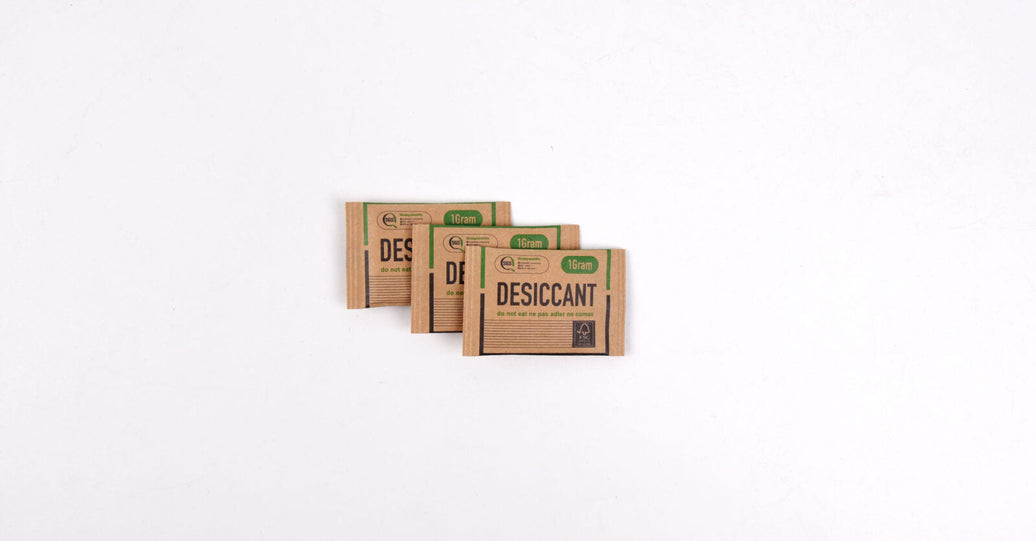
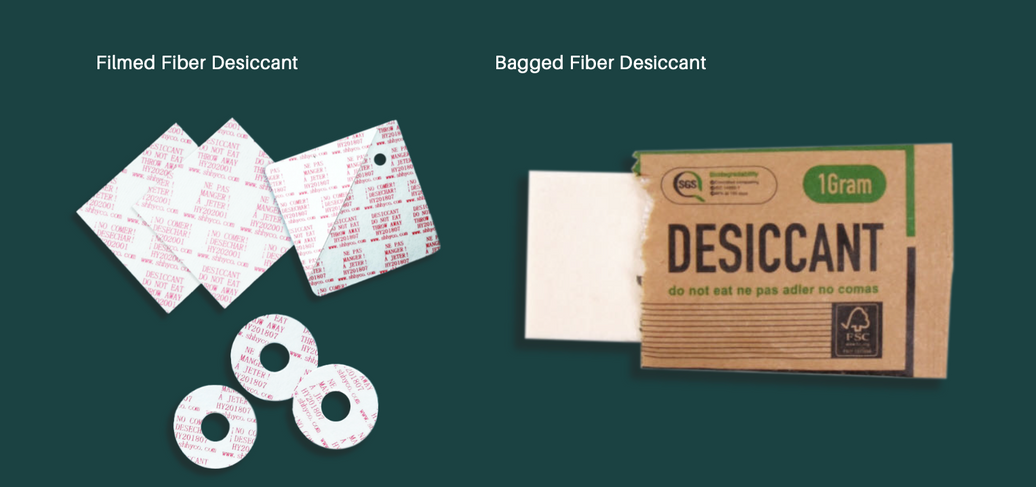
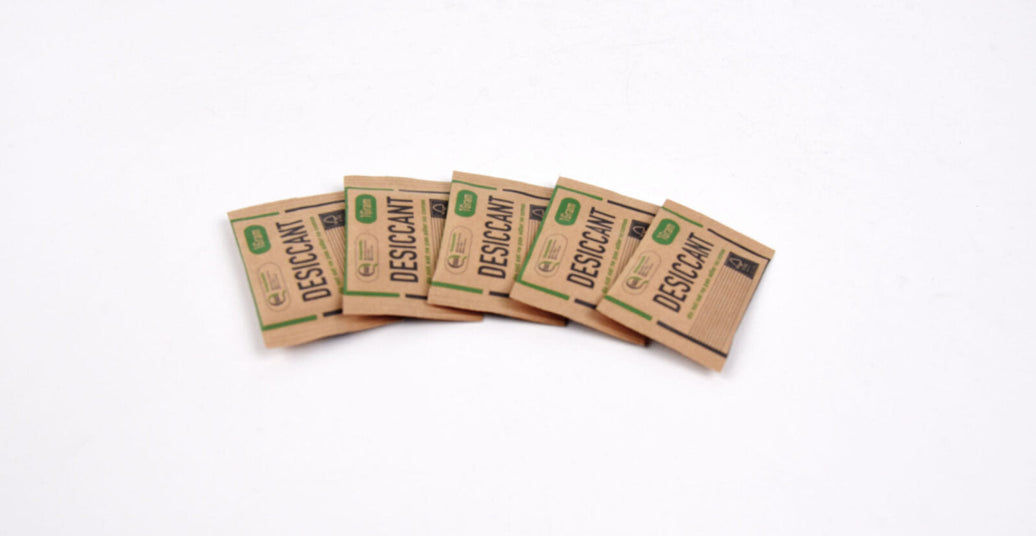
- End-of-life route. ATMOSIScience pouch materials are certified to ASTM D6400 and EN 13432 — note that the compostability certification attaches to the bag, and claims should be worded to match that scope.
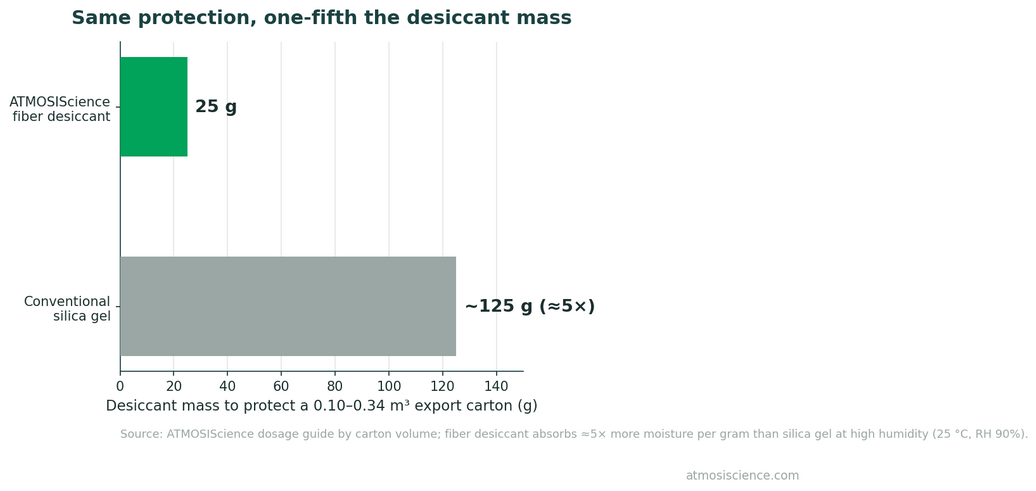
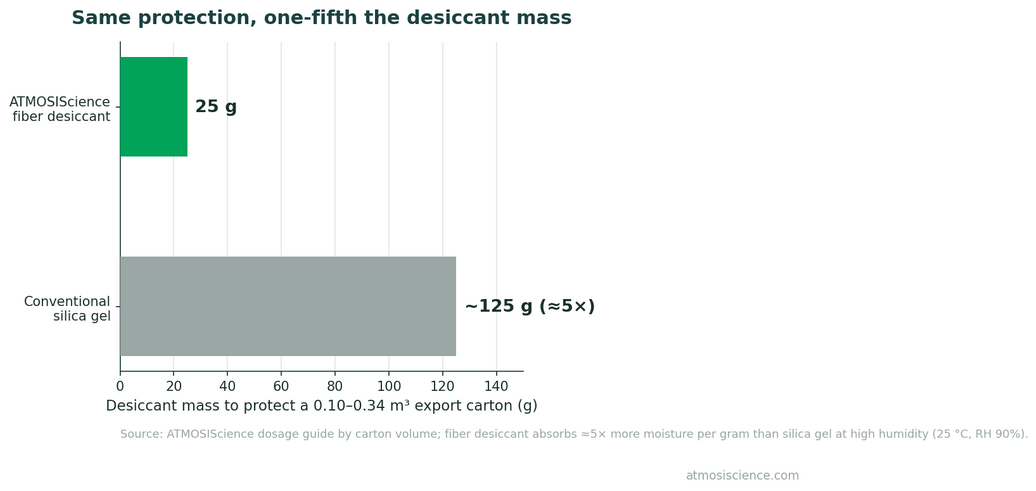
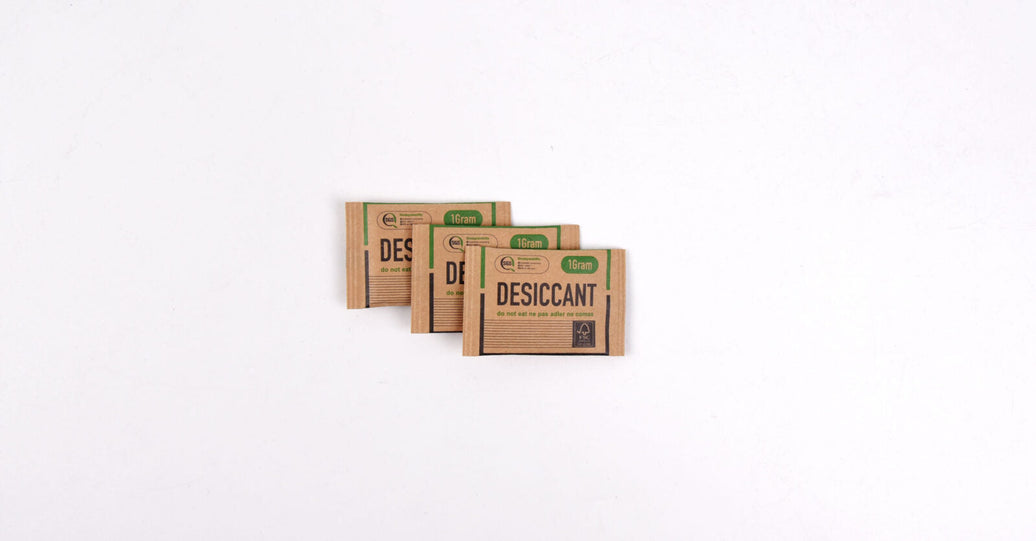
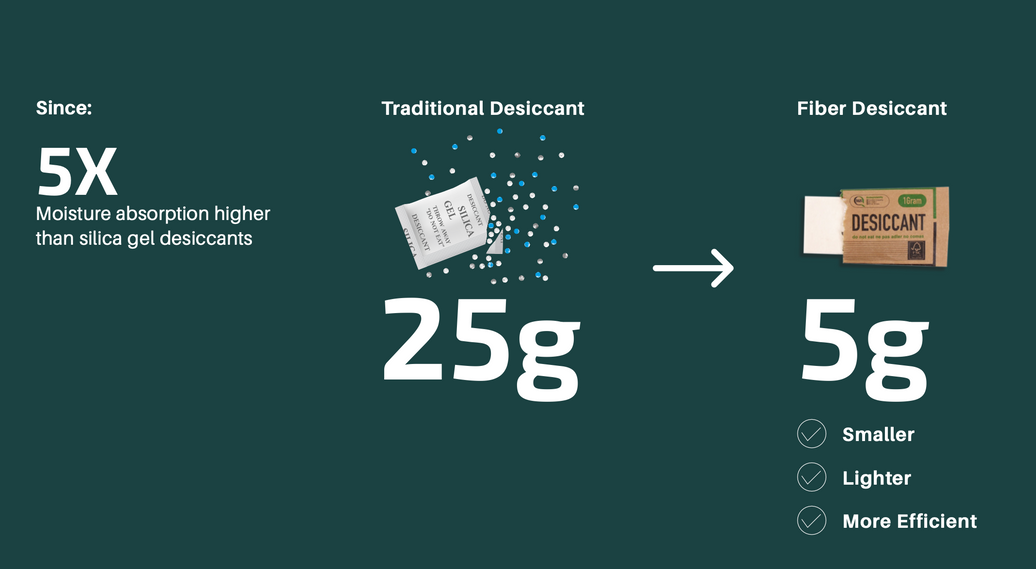
- Mass. Fewer grams of desiccant means a lower EPR fee for the life of the SKU. Under the MIL-D-3464 unit definition a protection unit is roughly 18 g in fiber against 30 g in silica gel.
- Substantiation. Environmental claims need evidence behind them. ATMOSIScience fiber desiccant carries a verified product carbon footprint of 1.44 kg CO₂e/kg to ISO 14067. The greenwashing risk around loose wording is covered in compostable desiccant and the Green Claims Directive.
For the regulatory timeline itself, work from the EU PPWR compliance hub, and for material selection start at the sustainable desiccant guide.
The refill-station question
Bulk-dispense refill stations in store are the hardest case: an open hopper in ambient retail humidity, decanted into containers of unknown dryness. Moisture control there belongs at three points — the bulk container behind the dispenser, the dispenser hopper itself, and the customer's own container, which should be dry before it is filled. Trying to solve it with a sachet in the customer's jar alone does not work.
FAQ
Can a desiccant be reused with the container?
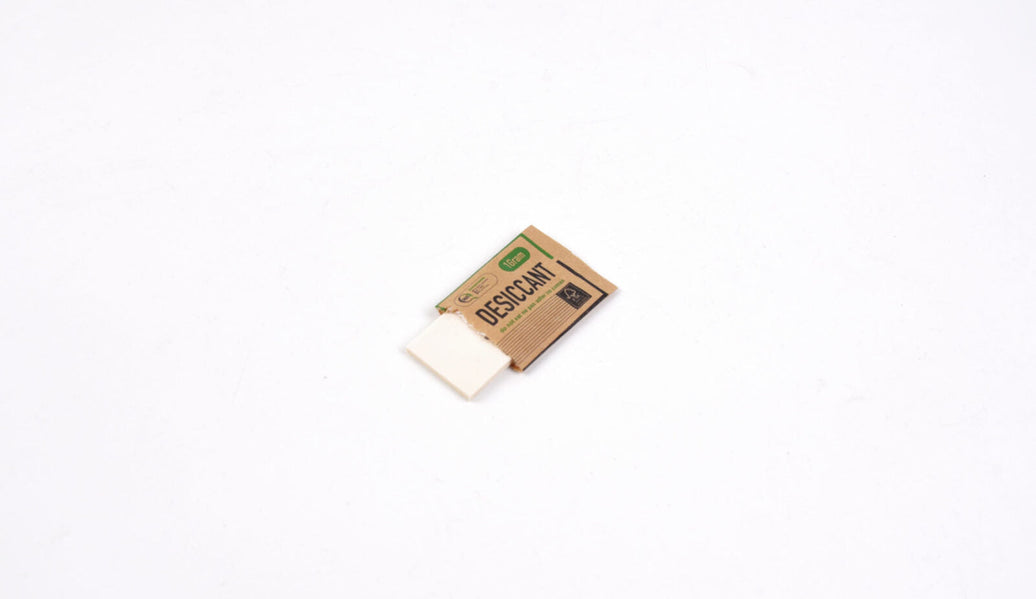
ATMOSIScience fiber desiccant can be air-dried to regenerate without applied heat, which suits a returnable-container model. Regeneration in a consumer setting is unreliable, so consumer refill systems should assume a fresh element per cycle.
Does PPWR ban desiccant sachets?
PPWR does not target desiccants as a category. The pressure comes from single-use format restrictions and recyclability grading later in the timeline, plus the general obligation for packaging placed on the EU market. Read the phased dates rather than the headlines.
Should the desiccant go in the refill pouch or the durable container?
Usually both, sized differently. The pouch element covers distribution and partial use; the container element covers repeated opening.
What about weight loss claims on refill packs?
An over-dried product can fall below declared weight. Where that is a live risk, target a humidity window and verify with water activity rather than appearance.
Does a compostable sachet compost in a home bin?
ASTM D6400 and EN 13432 are industrial composting standards. Home compostability is a separate certification — the difference is covered in OK Compost HOME vs. ASTM D6868 vs. BPI.
Moving to refill or reusable formats?
Tell us the format, the number of openings you expect and the market. Our team will size the moisture control and flag the claims that need substantiation before artwork.
Prefer email? info@atmosiscience.com