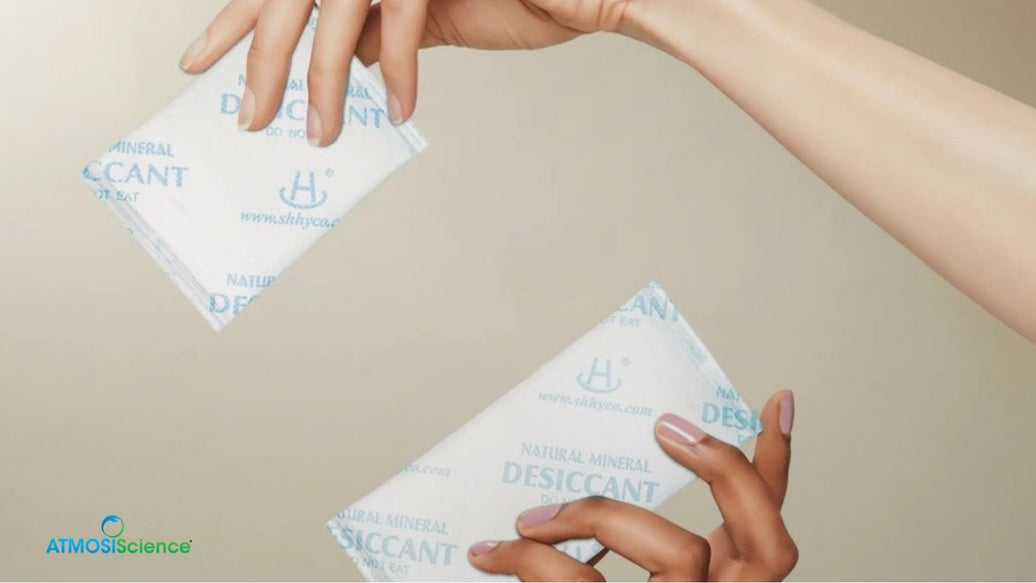
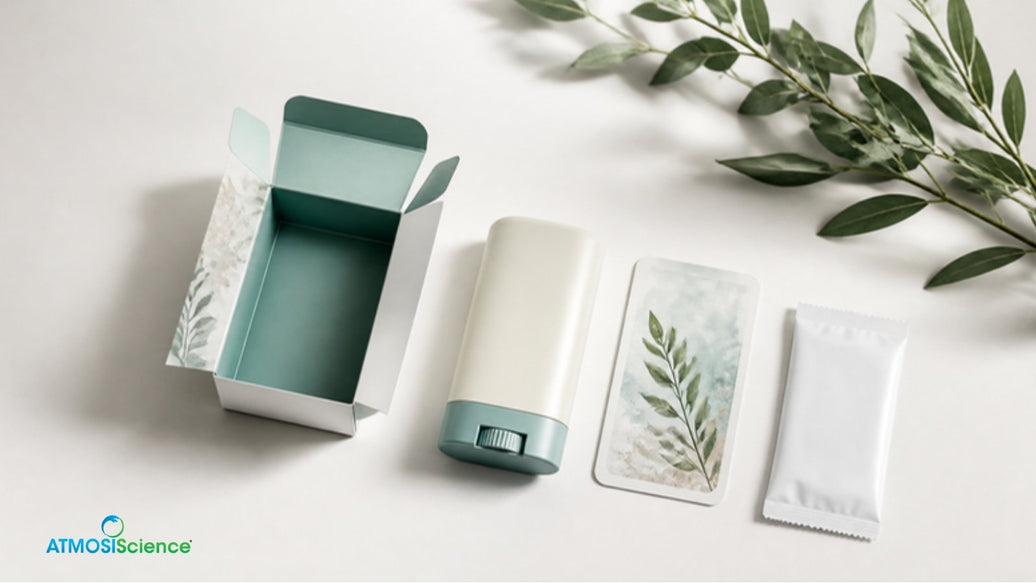
Quick answer: A Fiber Desiccant Card is 0.7 or 1.0 mm thick and die-cut to shape, so it fits places where a pouch is hard to use: jar headspace, under a lid, inside a bottle cap, flat against a pouch wall, under a kit tray, inside a gift box lid, on a garment tag and more. Pick the spot that keeps the card away from the scoop or the user's hand, size it on the humidity your product needs, and confirm it with samples in the real pack.
Pouches are a proven, flexible format and suit many packs. Some packs, though, have no room for one, or the design team wants the desiccant to look deliberate. A thin card opens up more places to put it. Here are twelve we see work, grouped by pack type.

Jars, tubs and bottles
- Jar headspace. A round card sized to the jar diameter sits in the headspace; your QA team decides whether it may touch the product.
- Under the lid. The card sits against the inside of the lid, out of the way of the scoop.
- Bottle cap cushion. A small disc sits inside the cap, where headspace is limited.
- With an induction seal. A card under the lid sits outside the seal and starts working once the customer removes the foil, through daily openings. If you need protection before opening, place it inside the seal only if your QA team approves contact with the product, and check the fit with your sealing process.
Pouches and sachets
- Flat against the pouch wall. A thin card lies flat and does not change the shape of the pouch.
- Behind a window panel. The card sits on the non-window side so the product stays on show.
- In a closed carton of loose items. One card keeps the shared carton air drier between openings.

Kits, cases and boxes
- Under a kit tray. A card sits beneath a molded or paperboard tray in test kits, tool kits and spare part kits.
- In an instrument or optics case. A card fits a foam cut-out or a lid pocket.
- Inside a gift box lid. A printed card becomes part of the unboxing.
- In a toy or game box. A thin card fits under the insert.
Garments, footwear and bags
- As a hang tag or flat insert. A card or fiber sheet travels with the garment, shoe or bag through the supply chain. See the glossary for format terms.
What to check for every placement
| Check | Why it matters |
|---|---|
| Contact with the product | Your QA team decides whether the card may touch the product |
| Air path | The card needs air from the pack space to work; do not seal it behind foil |
| Which side faces the customer | The printed side carries your logo and the do-not-eat line |
| How it is placed | By hand or by machine; cards are supplied ready for automated placement |
| How much it must hold | Size on the humidity your product needs and the pack's water load |
Plant-fiber desiccant holds more than 10% of its own weight at 20% RH, and more than 35% at 50% RH and more than 70% at 90% RH at 25 °C. At 1.0 mm thickness, Fiber Desiccant Card absorbs three times as much moisture as silica gel under the same test conditions (25 °C / 90% RH).
Related: nine paper desiccant myths, fiber desiccant vs silica gel packets and how to use fiber desiccant.
Frequently asked questions
How thin is a desiccant card?
Fiber Desiccant Cards come in 0.7 mm for compact packaging and 1.0 mm for larger formats.
Can it be cut to any shape?
Cards are die-cut to the shape your pack needs, such as a disc that matches a jar.
Can it go inside a bottle cap?
Yes. A small disc can sit inside the cap as a cushion.
Will it work behind a foil liner?
Not while the liner is intact. An intact foil liner cuts the card off from the pack air; it starts working once the liner is removed.
Can you help us choose the spot?
Yes. Send us a drawing or a sample pack and we will suggest a placement and send cards to test.
Find the right spot in your pack
Send us the pack and the product. We will suggest where a card fits and send samples to test.
Prefer email? info@atmosiscience.com
Figures from ATMOSIScience fiber desiccant product documentation and usage instructions and the Fiber Desiccant Card product sheet.