Quick answer: Silica in vitamins usually means one of two different things. Silicon dioxide on the ingredient list is a flow and anti-caking agent that helps powders fill capsules and tablets evenly; in the US it is permitted in food as an anticaking agent at up to 2% by weight under 21 CFR 172.480. The silica gel packet in the bottle is a desiccant: it is not an ingredient, is sealed so it does not mix with the product, and is not meant to be eaten. Same basic chemistry, completely different job.
Two searches sit side by side: what is silica in vitamins, and is silica bad for you in supplements. Most of the confusion comes from the word silica being used for both the ingredient on the label and the packet in the bottle. Here is how to tell them apart and what each one is doing.
Same name, different job
| Silicon dioxide on the label | Silica gel packet | |
|---|---|---|
| Where it is | Mixed into the powder, capsule or tablet | Sealed in a sachet or canister in the bottle |
| What it does | Helps powder flow and stops grains sticking | Pulls moisture out of the air in the bottle |
| Do you swallow it? | Yes, as part of the dose | No. Not intended to be eaten |
| Listed on the label? | Yes, usually as silicon dioxide or silica | No. It is packaging, not an ingredient |
| Rules that apply | Food additive rules | Food-contact packaging rules and labelling |
Silicon dioxide on the ingredient list
Many vitamin powders are fine and sticky. Without help, they clump in the hopper, fill capsules unevenly and stick to tablet presses. A small amount of silicon dioxide coats the particles and keeps them moving freely. It also slows caking once the product is on the shelf. That is why it appears on so many supplement labels, often near the end of the list.
In the United States, 21 CFR 172.480 permits silicon dioxide as an anticaking agent in food in an amount not exceeding 2% by weight of the food. In the EU it is an authorised food additive, E 551, and has been re-evaluated by the European Food Safety Authority. If you have a personal health question about any ingredient, your doctor or pharmacist is the right person to ask.
Some hair, skin and nail supplements also list silica as an active ingredient, often from horsetail or bamboo extract. That is a nutrition question and outside the scope of this article.
The silica gel packet in the bottle
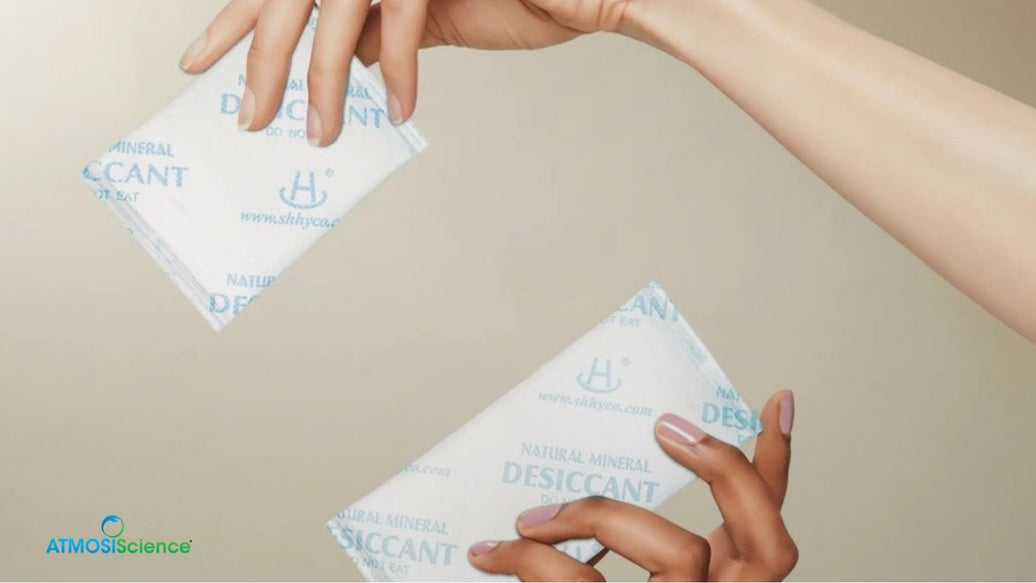
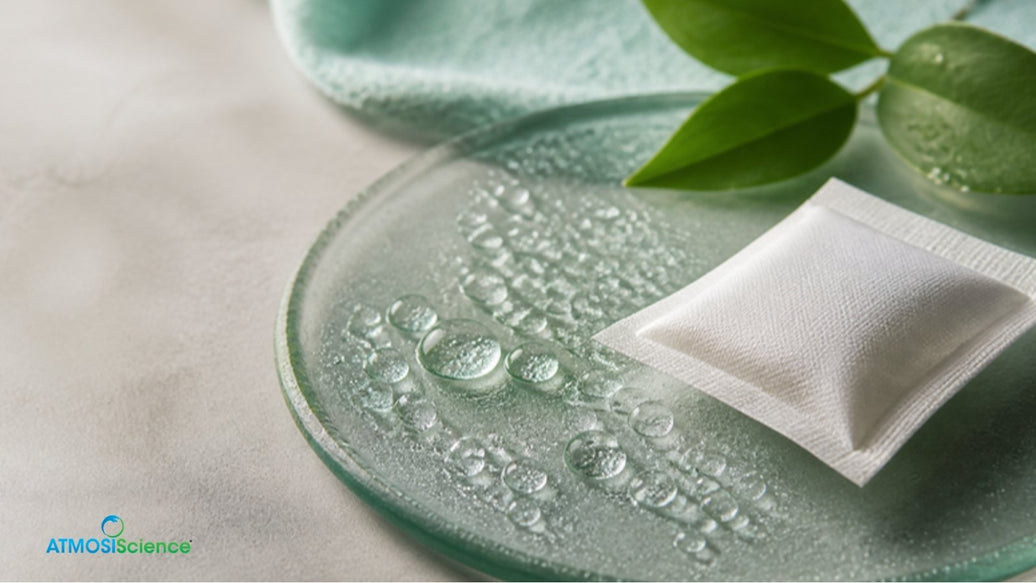
The packet is silica gel, a porous form of silicon dioxide made to hold water vapour on its huge internal surface. It is sealed in a paper or fabric sachet, or a plastic canister, so that the beads do not touch or mix with the product. It does its job in the air of the bottle, taking up moisture that comes in each time you open the lid.
According to Poison Control (poison.org), silica gel is usually considered non-toxic, and the main risk if a packet is swallowed is choking, especially for young children. It is still not food. Keep the packet whole, leave it in the bottle until the bottle is empty, and keep bottles out of reach of children. More in should you throw away the desiccant in your vitamin bottle and the do-not-eat label explained.
Why a brand might use both
The ingredient and the packet solve different problems. Silicon dioxide makes the powder easier to manufacture and slower to cake. The packet protects the finished product from the moisture that comes in after the customer opens it. A formula can be well designed and still cake if the bottle is opened daily in a humid bathroom. The difference is explained in more depth in anti-caking agent or desiccant?
For clean-label brands: removing silica from the label
A growing number of brands want shorter ingredient lists and choose to remove flow agents such as silicon dioxide. That is a legitimate choice, with a packaging consequence: a powder without a flow agent is often more prone to caking. Moisture control in the pack then carries more of the load.
- Check the caking threshold of the new formula. A sorption curve shows the humidity at which it starts taking up water quickly. See how to read a moisture sorption isotherm.
- Re-size the desiccant for daily opening. See desiccant for packs opened 30 times.
- Decide whether the pack should also be free of silica gel. Some brands that remove silicon dioxide from the label also prefer a desiccant that is not silica gel, so the story on pack is consistent.
ATMOSIScience Fiber Card is a paper desiccant made from plant fiber with calcium chloride bound into the fibers, so it contains no silica gel. At 25 °C it adsorbs more than 35% of its own weight at 50% RH and more than 70% at 90% RH, about 2.3 times what common silica gel holds at 90% RH. Construction and documents are in the Fiber Card spec guide, and the vitamin-specific view is in desiccant for vitamins and mineral premixes.
Frequently asked questions
Is silicon dioxide the same as silica gel?
Both are forms of silicon dioxide, but they are made and used differently. The food additive is a fine powder mixed into the product. Silica gel is a porous bead made to adsorb water and is sealed in a packet.
Why is there silica in my vitamins?
Most often it is a flow agent that helps the powder fill capsules and tablets evenly and stops it caking. It is listed on the label because you swallow it with the dose.
Is the silica packet in my vitamins poisonous?
Silica gel is usually considered non-toxic, but it is not food and is a choking hazard for children. If someone swallows one, call poison control (1-800-222-1222 in the US) for advice.
Does the silica gel packet contaminate my vitamins?
No, as long as it is intact. It is sealed and works on the air, not by touching the product. If a packet splits, contact the brand.
Can I find vitamins without silicon dioxide?
Yes. Many brands now make products without it. Check the full ingredient list, not just the front of the pack.
Going clean-label? Make the pack match the label
ATMOSIScience supplies Fiber Card, a plant-fiber paper desiccant with no silica gel. Tell us the product and the bottle and we will size it.
Prefer email? info@atmosiscience.com