If a single test could tell a powder manufacturer the exact humidity at which their product starts to fail, it would be the moisture sorption isotherm. It plots how much water a powder holds across a range of relative humidities at constant temperature, and buried in that curve is the caking threshold, the deliquescence point, and the target a desiccant has to defend. This guide explains how to read one and turn it into a packaging decision.
What an isotherm shows
The x-axis is water activity or equilibrium relative humidity (0 to 1, or 0–100% RH). The y-axis is the powder’s equilibrium moisture content. The resulting curve — usually a stretched S-shape for food and supplement powders — tells you how much moisture the powder will hold once it comes into balance with air at each humidity. Because it is measured at a fixed temperature, a full picture uses isotherms at the temperatures the product will actually see.
The three regions of the curve
Low-RH region (monolayer). At the bottom, water binds tightly as a molecular monolayer on particle surfaces. This water is the least reactive, and this region is generally the most stable storage zone.
Mid-RH region. The curve rises gently as multilayer and capillary water accumulates. Reaction rates — oxidation, browning, vitamin loss — climb through here.
High-RH region (the knee). The curve turns sharply upward at a critical humidity. Past this knee the powder takes on water rapidly, plasticizes, and cakes; for deliquescent ingredients it dissolves. That knee is the caking threshold you must stay below.
The physical mechanics of crossing the knee — adsorption, bridging, recrystallization — are detailed in our pillar on why powders cake.

Finding your caking threshold
Read across to the RH where the curve’s slope sharply increases — the onset of the steep rise. That equilibrium RH is your caking threshold; your packaging target is to hold headspace RH safely below it across shelf life, with margin for temperature swings and repeated openings. For blends, the most sensitive component pulls the knee to the left, so the finished powder’s threshold is lower than any single ingredient’s. Because the isotherm is expressed in equilibrium RH, it maps directly onto the water-activity thinking in our water activity vs. RH guide.
Turning the curve into a desiccant spec
1. Identify the target RH from the knee, minus a safety margin.
2. Estimate the moisture the pack must absorb — initial powder moisture above target, ingress through the container over shelf life, and the load added by each opening.
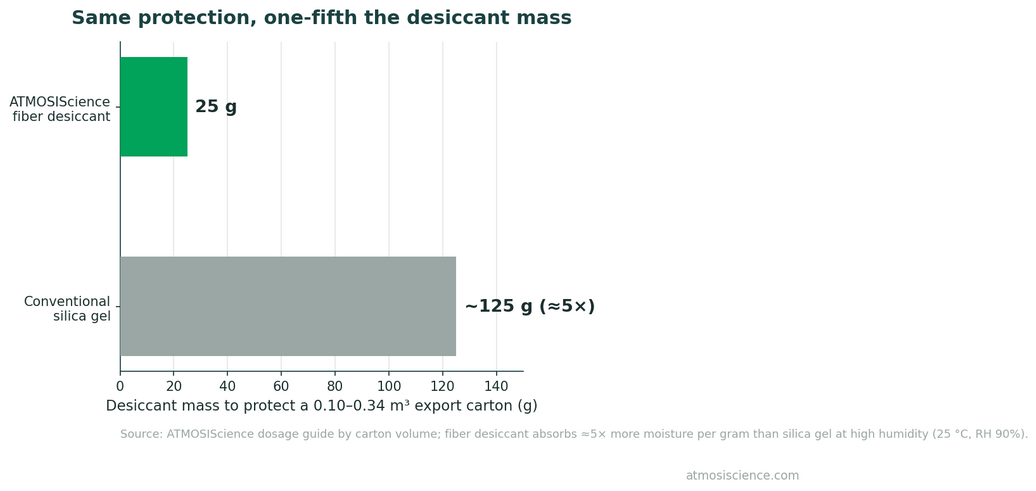
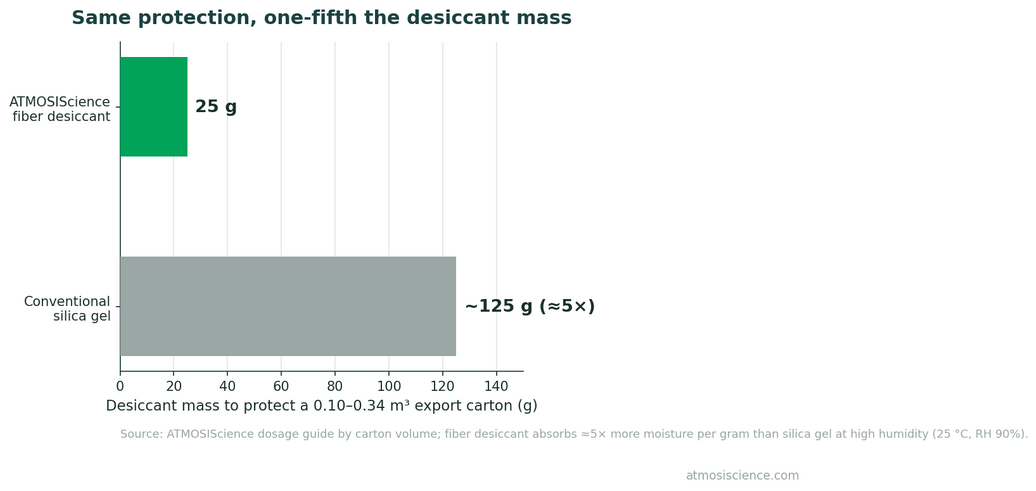
3. Size the desiccant to that total water mass at the target RH, using the volumetric method in our dosage guide and the capacity-per-gram figures in our equivalency guide.
4. Verify against the real product with a re-opening simulation.
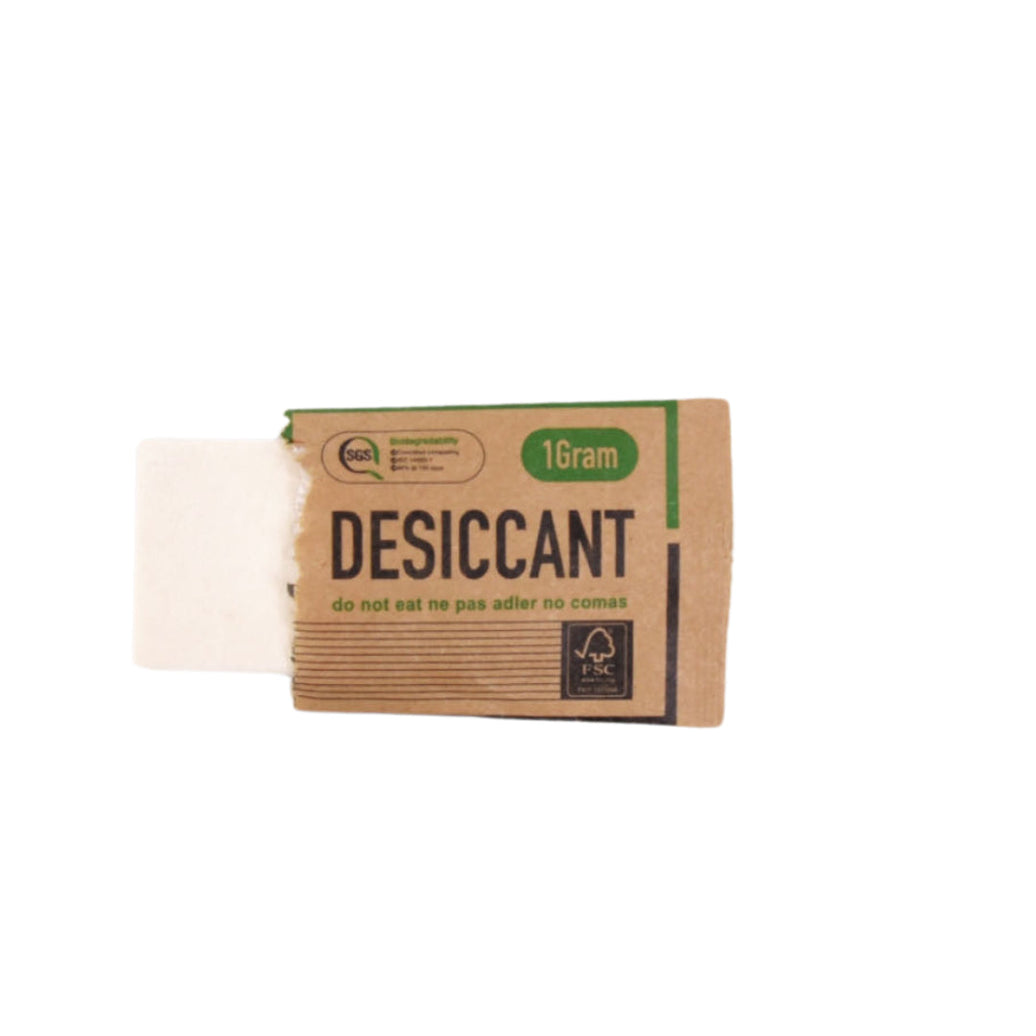
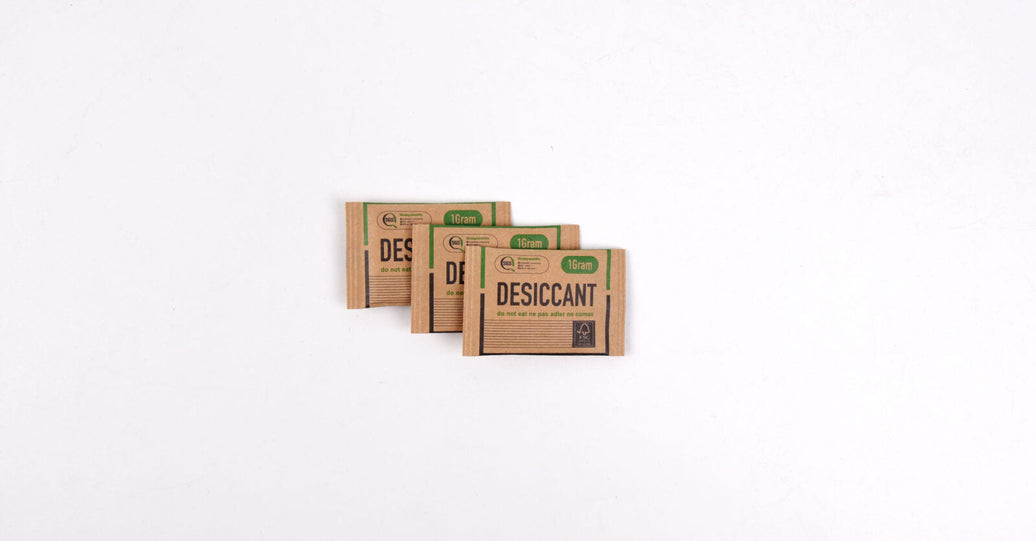
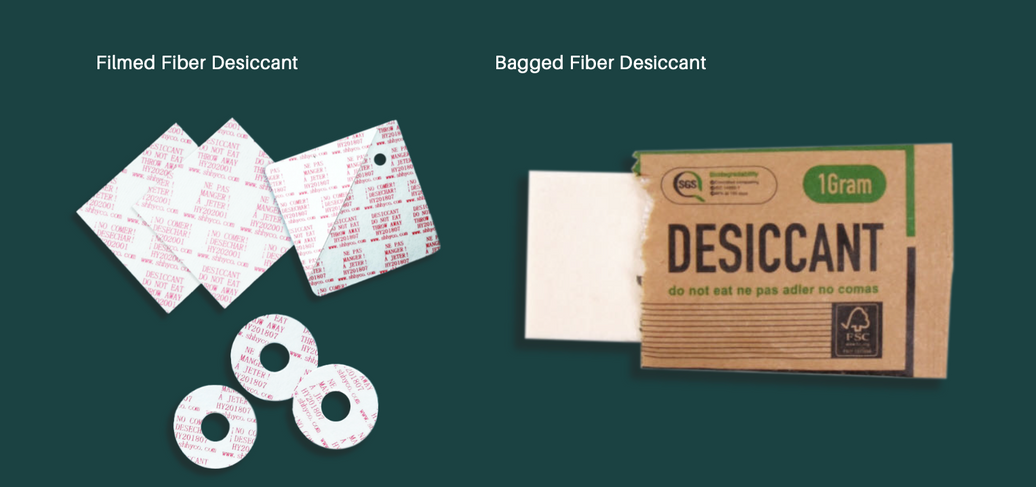
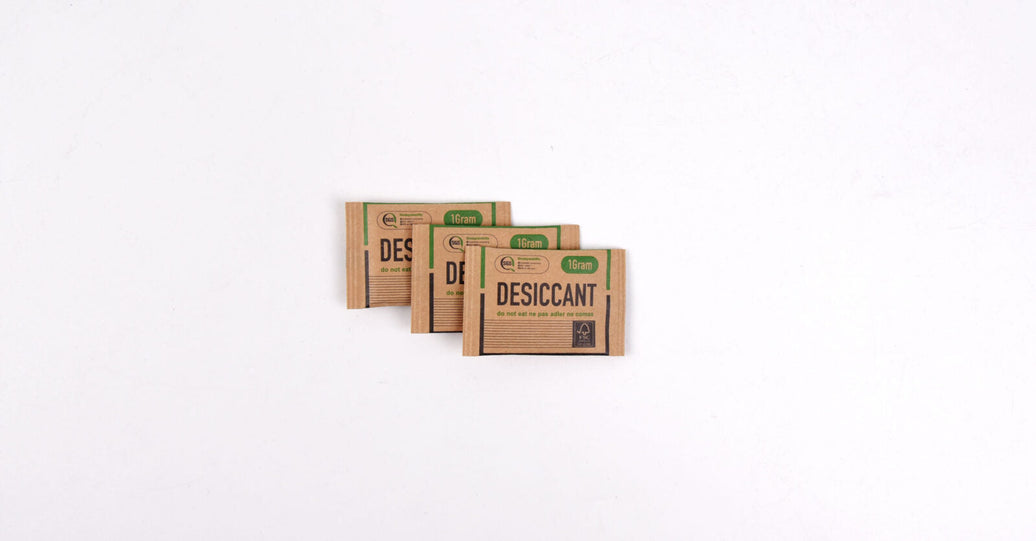
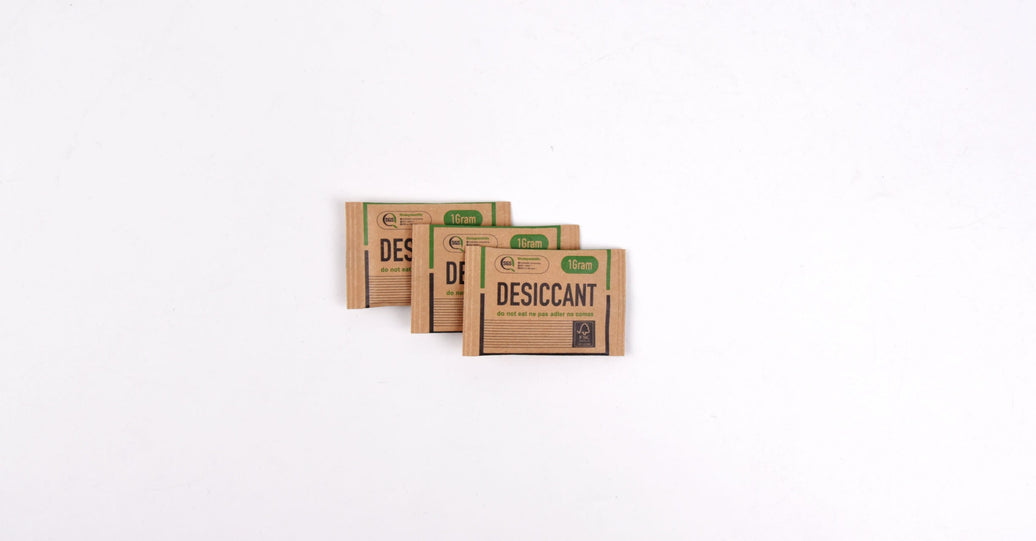
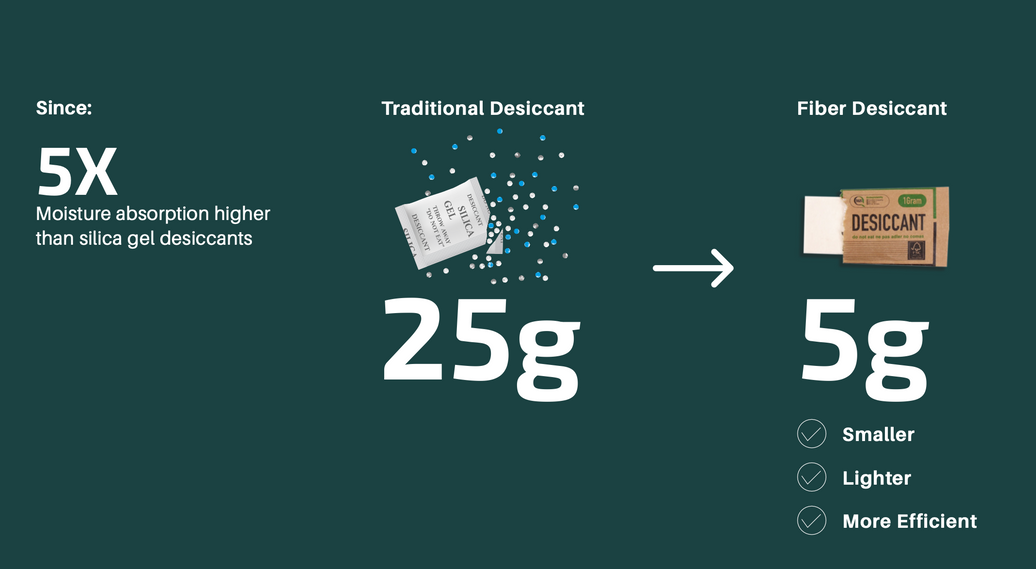
Because fiber desiccant’s capacity climbs at high RH — over 70% of its weight at 25°C and 90% RH versus roughly 30% for silica — it is well matched to powders whose knee sits in the moderate-to-high RH range, which is most hygroscopic food and supplement powders.
Frequently asked questions
Do we need to run our own isotherm?
It is the most rigorous way to set a target, but published isotherms for similar matrices plus a water-activity reading of your powder can get you close. A lab isotherm is worth it for a flagship SKU.
Why does temperature matter?
Isotherms shift with temperature — a powder can be stable at 20°C but cross its knee at 30°C. Test at the temperatures your distribution sees.
How does hysteresis affect it?
Adsorption and desorption curves differ; a powder that got damp and was re-dried may behave differently. Use the adsorption branch for packaging design.
Set your target from the curve
ATMOSIScience helps translate an isotherm or water-activity reading into a target RH and a sized desiccant. Explore ATMOSIScience desiccant solutions, request a sample of the Fiber Desiccant, or contact our team for a target RH and sized spec.
Related reading: Water Activity vs. RH · Why Powders Cake · How Much Desiccant Per Package
Turn your isotherm into a desiccant target
Send your isotherm or water-activity data and pack format — our team returns a target RH and a sized desiccant recommendation with margin for your distribution.