Quick answer: Accelerated stability testing exposes the finished pack to elevated temperature and humidity — commonly 40°C / 75% RH for six months — to support a longer shelf-life claim from short-duration data. With a desiccant in the pack it answers one question well: does the moisture budget hold under stress. It does not answer whether the desiccant will survive real distribution, whether opening cycles will exhaust it, or whether the product will be over-dried. Those need separate evidence.
Accelerated stability is attractive because it compresses time. Six months of chamber data supporting a two-year claim is a commercially significant shortcut, and the framework for it is well established in the ICH Q1A stability guideline.
The risk is not the method. It is the reading. A desiccated pack that passes accelerated conditions has demonstrated something specific and narrower than teams often assume.
What the test actually stresses
At 40°C / 75% RH, three things accelerate at once:
- Permeation through the package wall rises with temperature, so the desiccant sees a higher ingress rate than it ever would at 25°C.
- Chemical degradation in the product accelerates, which is the primary purpose of the condition.
- Desiccant loading rises quickly, because both the driving humidity and the permeation rate are elevated.
That third point is the useful one for packaging. If the desiccant is under-sized, an accelerated study finds it fast. In-pack humidity climbs, the indicator card turns, and the product moisture content rises before the study ends.

How to run it so the packaging data is usable
- Test the finished, sealed pack. Not the film, not an open dish. Include the closure, induction liner, label and any cotton coil, because all of them change the moisture picture.
- Include a no-desiccant control arm. Without it you cannot separate what the barrier did from what the desiccant did, and you have no basis for a future dosage reduction.
- Measure in-pack humidity, not only product moisture. Product moisture is a lagging indicator; headspace RH moves first and tells you where the budget stands.
- Pull and weigh the desiccant at each time point. Mass gain is the most direct read on remaining capacity. Passing at six months with the desiccant at 95% of its capacity is a different result from passing at 40%.
- Record fill-room conditions. Sealed-in moisture at fill is part of the budget, and a study filled in a dry winter week will not reproduce in July.
Four things accelerated data does not tell you
1. Whether opening cycles will exhaust the desiccant
Chamber studies keep packs closed. A consumer tub opened daily, or a bottle opened for a 90-day course, has a moisture budget dominated by air exchange that the study never simulated. Size for in-use conditions separately — see desiccant for resealable packs.
2. Whether the product is being over-dried
Accelerated conditions push humidity up, so an over-drying failure mode is actively suppressed by the test. Products with a lower moisture limit — gelatin capsules, gummies, dried fruit, some botanicals — can pass accelerated and fail in a dry warehouse. Two-way control exists for exactly this case.
3. Whether the pack survives physical distribution
Seal integrity is what makes the moisture budget real. A pack that holds in a static chamber can develop pinholes or seal channels under vibration and drop. That belongs in ISTA and ASTM transit testing, run in parallel rather than instead.
4. Whether temperature cycling causes condensation
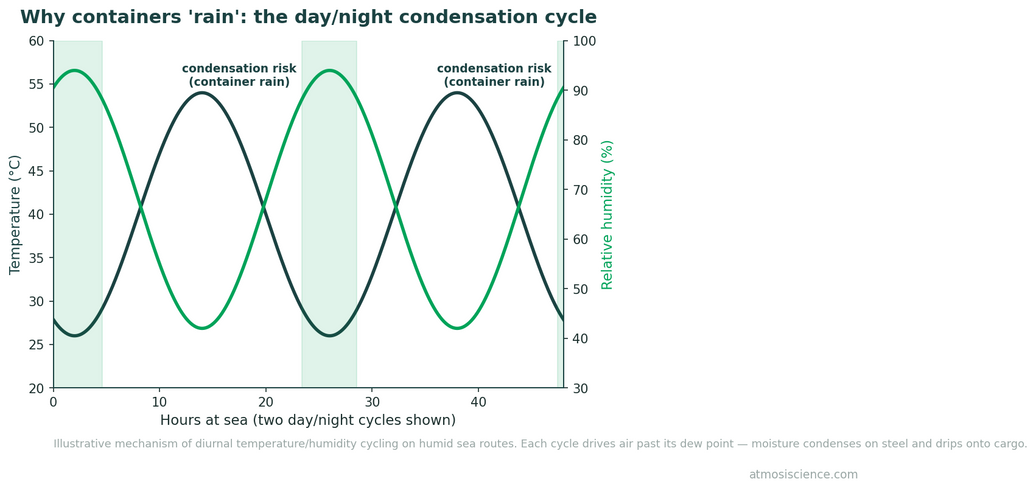
Constant 40°C does not cycle. Real freight does, and condensation on the inner surface of a pack is driven by cycling, not by steady heat. Cold-chain and sea-freight lanes need their own assessment — see condensation after cold storage.
Interpreting the desiccant result
Three outcomes are worth distinguishing:
- Pass with large capacity margin. There may be room to reduce dosage or switch to a lighter format — relevant where packaging weight carries EPR fees. Confirm with a reduced-dosage arm before changing the spec.
- Pass with the desiccant near saturation. Technically a pass, practically fragile. Any variation in fill-room humidity, film gauge or transit temperature will consume the remaining margin.
- Fail on in-pack humidity but not on assay. The moisture budget is under-sized even though the product held. Fix it before the next batch of film arrives with a different gauge.
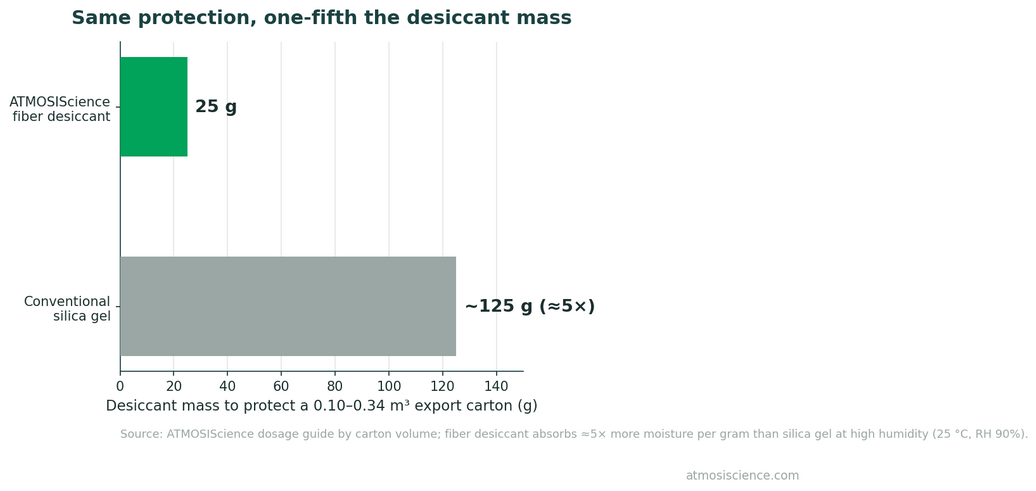
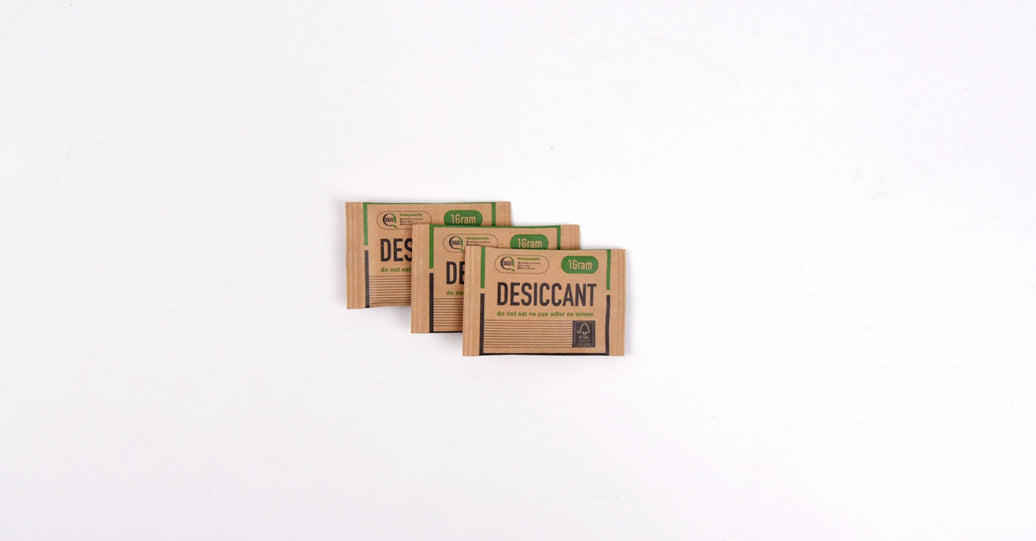
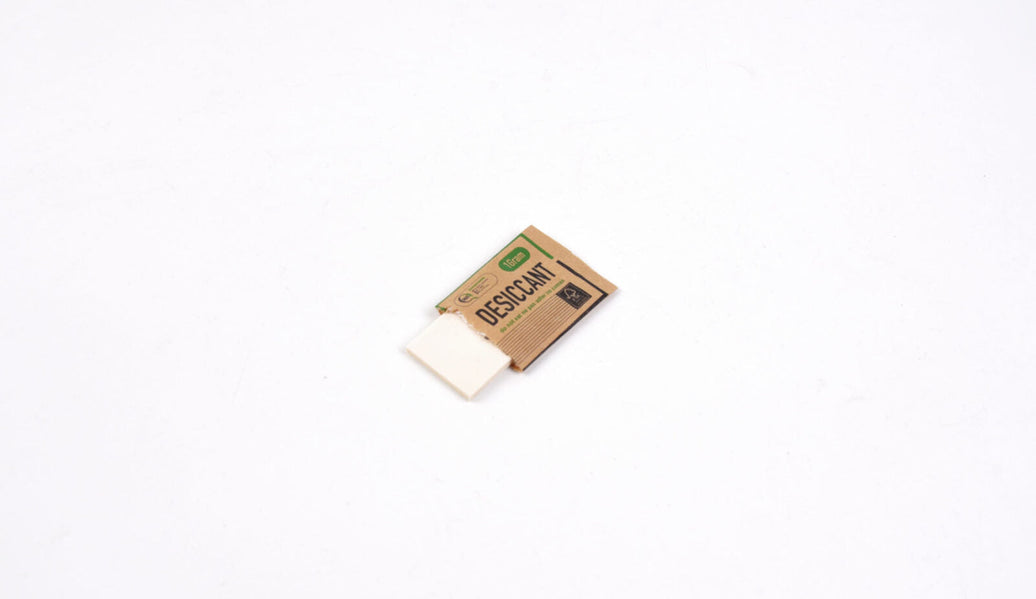
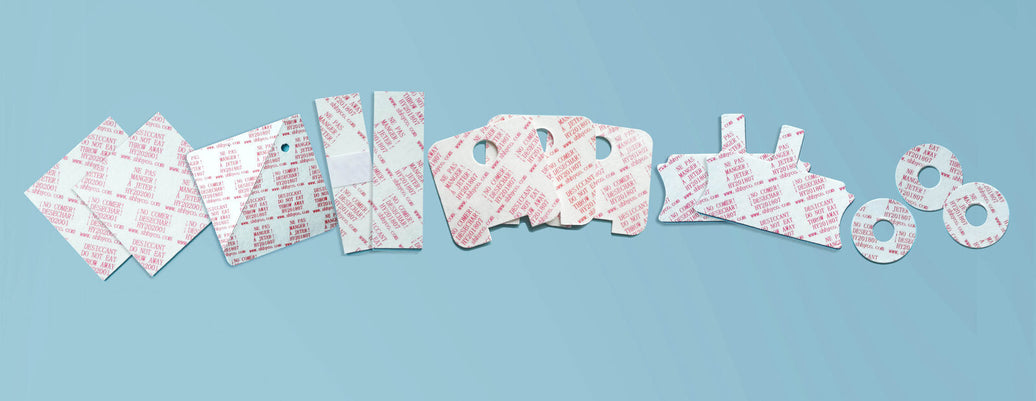
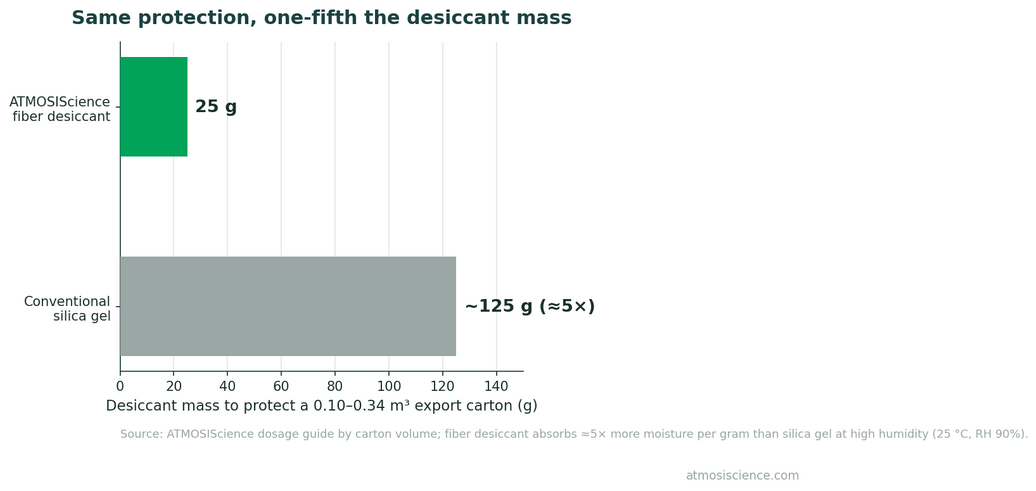
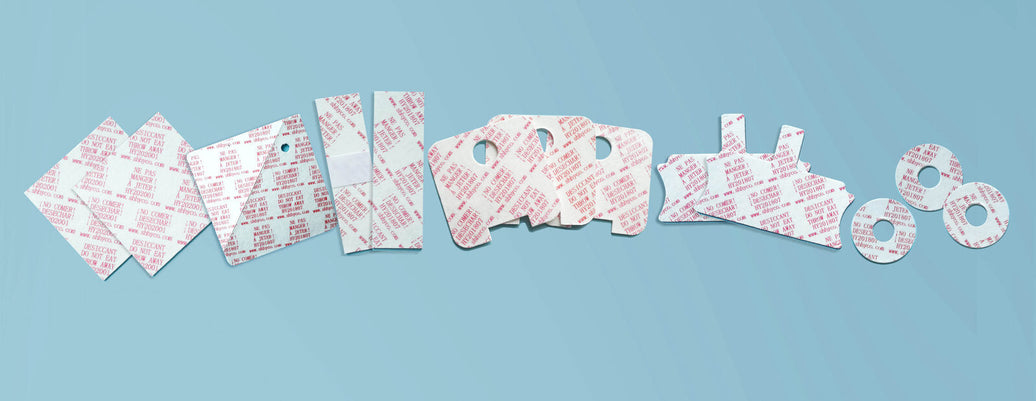
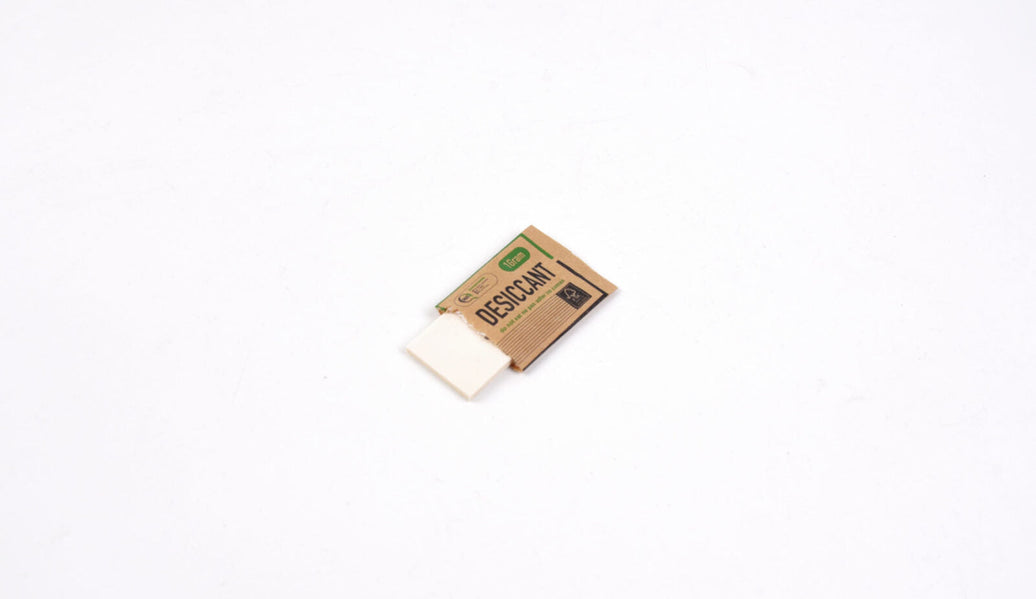
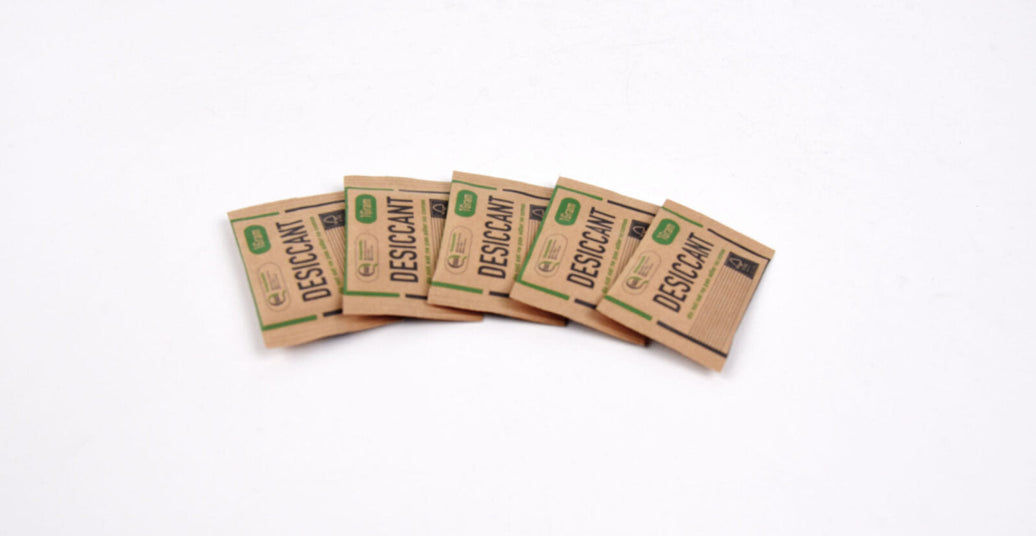
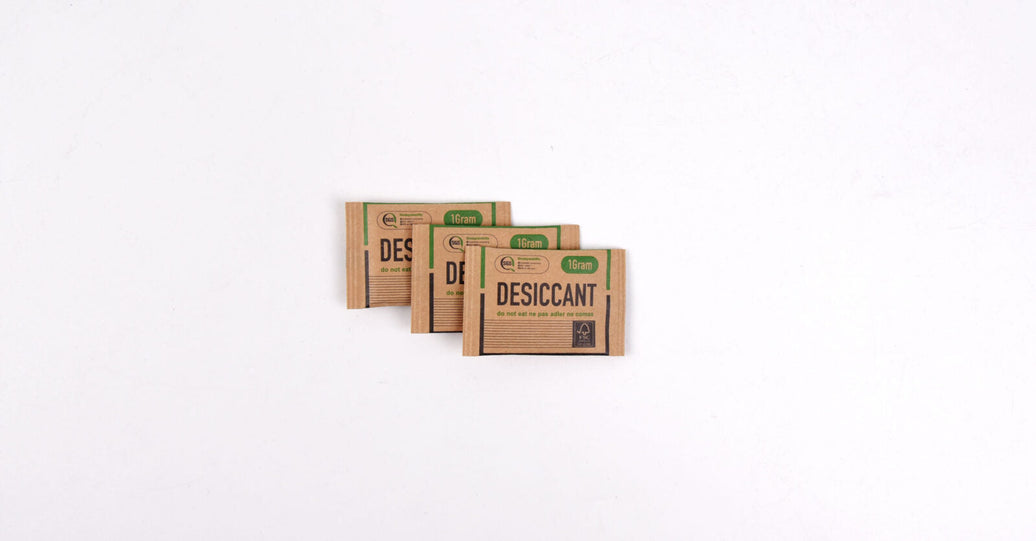
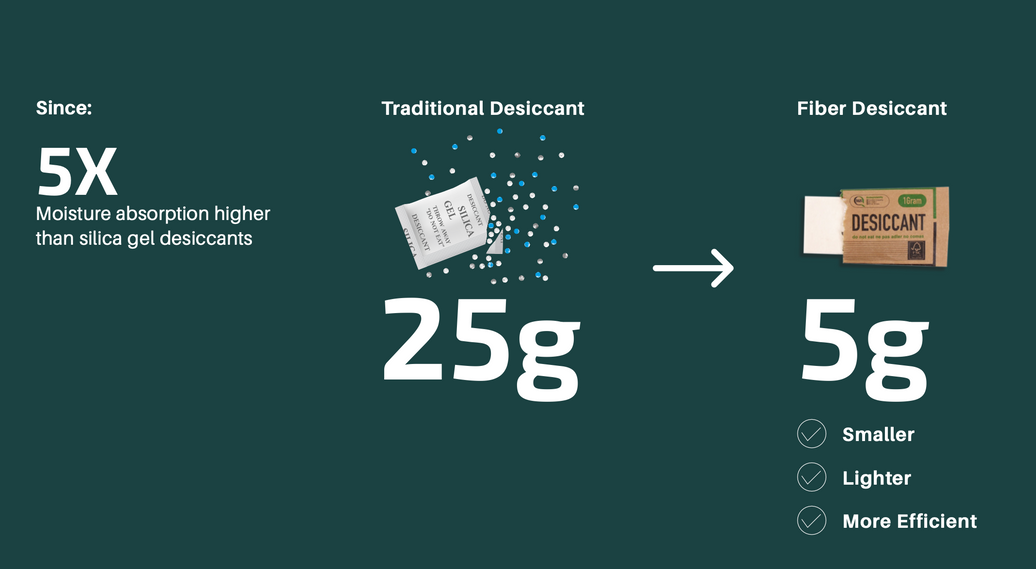
Capacity varies with humidity, which is why the margin question is only answerable with condition-matched data. ATMOSIScience fiber desiccant adsorbs more than 35% of its own weight at 50% RH and more than 70% at 90% RH (25°C); a chamber at 75% RH sits between those points, so quoting a saturation figure against a 40°C/75% RH study overstates the margin.
FAQ
What conditions are used for accelerated stability?
40°C / 75% RH for six months is the widely used accelerated condition in the ICH framework, with intermediate and long-term conditions run alongside. Zone IVb products often use adjusted long-term conditions — see pharmaceutical humidity control for ICH Zone IVb.
Can accelerated data alone justify a shelf life?
Extrapolation from accelerated data is permitted under defined conditions within the ICH framework, but it is bounded and requires supporting long-term data. Treat it as a bridge, not a substitute.
Should the desiccant be weighed before and after?
Yes. Mass gain is the clearest available measure of consumed capacity and the cheapest data point in the whole study.
Does a humidity indicator card replace RH logging?
It gives a coarse read at each pull and is useful for routine batches, but a chamber study benefits from actual RH data. Card selection is covered in humidity indicator cards.
Do supplements need accelerated stability?
Not to the same regulatory standard, but the same physics applies and the same evidence is persuasive to retail buyers asking how a shelf-life claim was set.
Planning a stability study? Get samples and capacity data first
ATMOSIScience supplies desiccant samples with condition-matched adsorption data so your study arms are comparable from day one.
Prefer email? info@atmosiscience.com