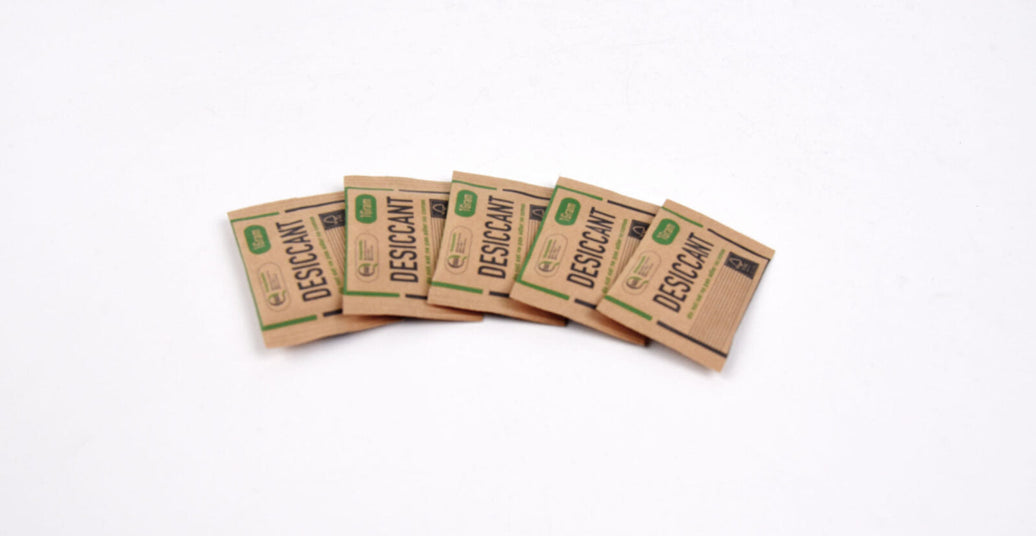
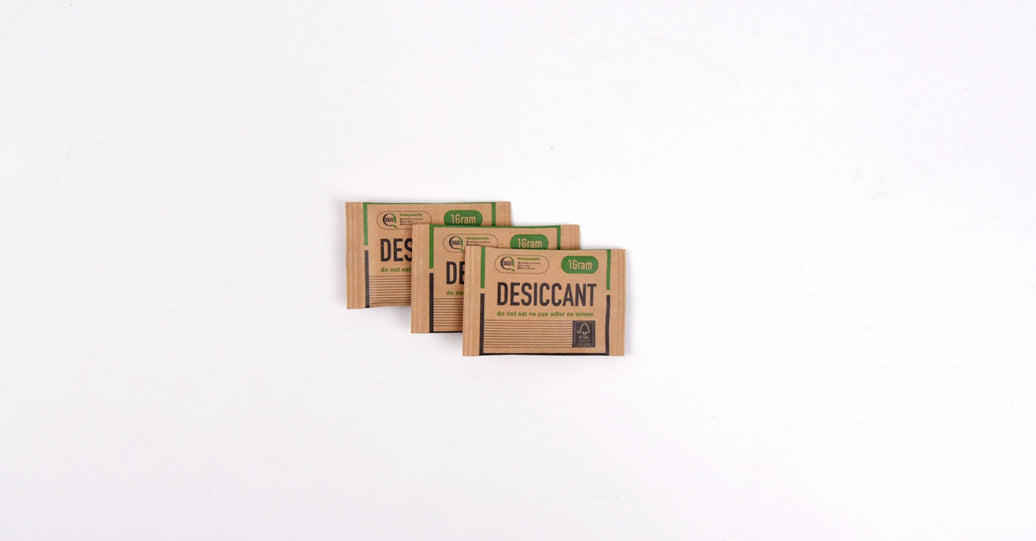
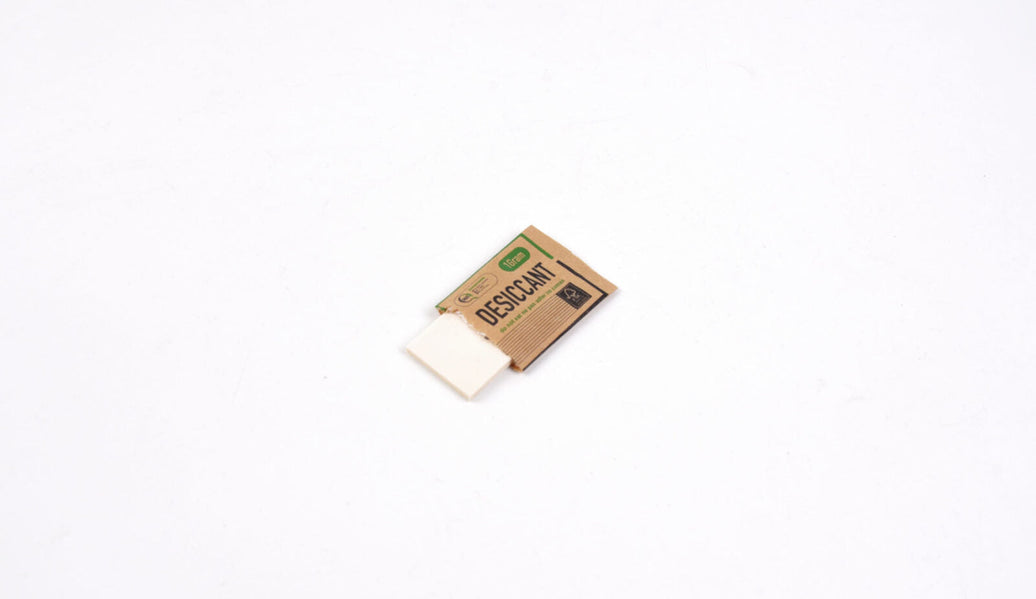
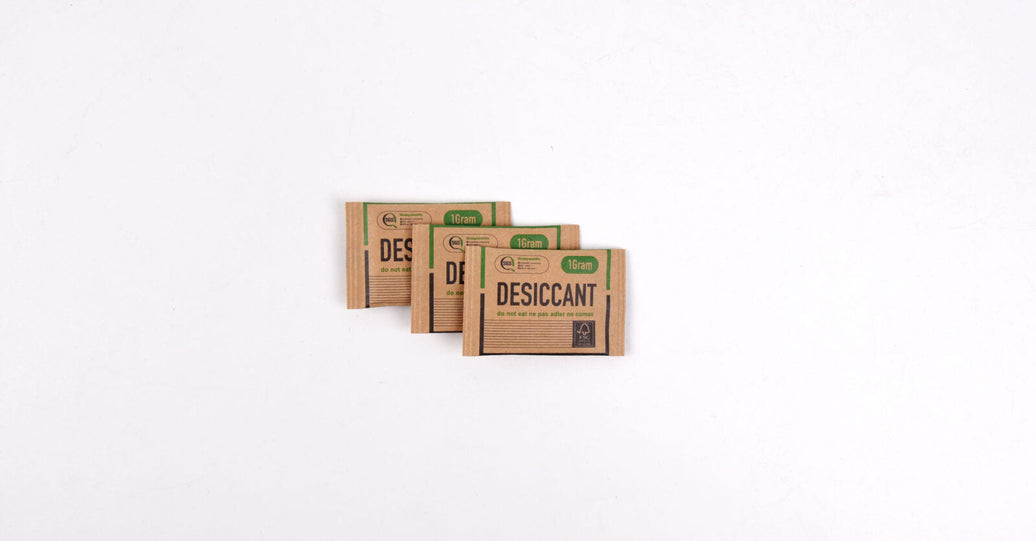
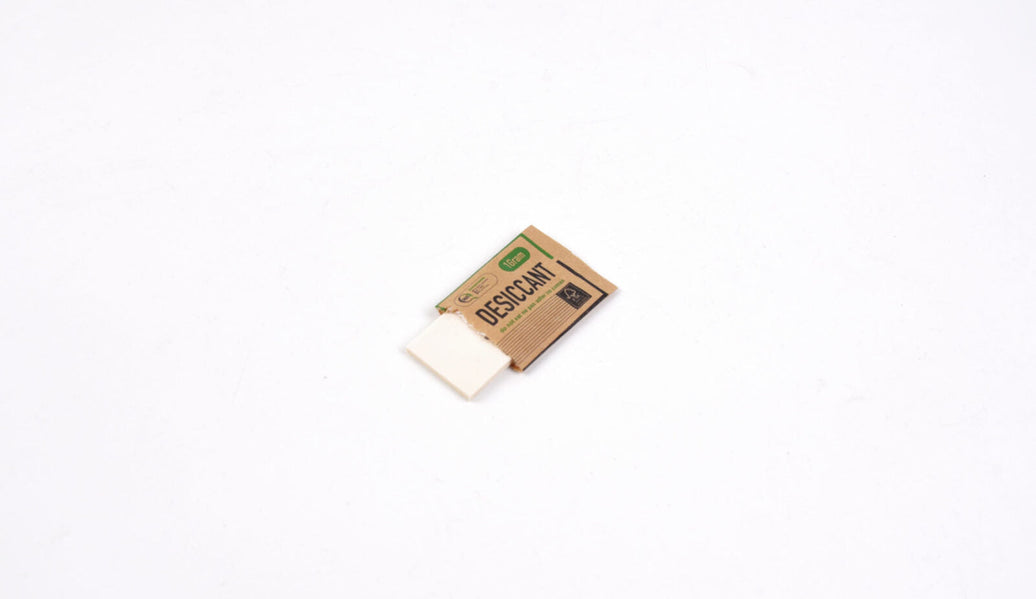
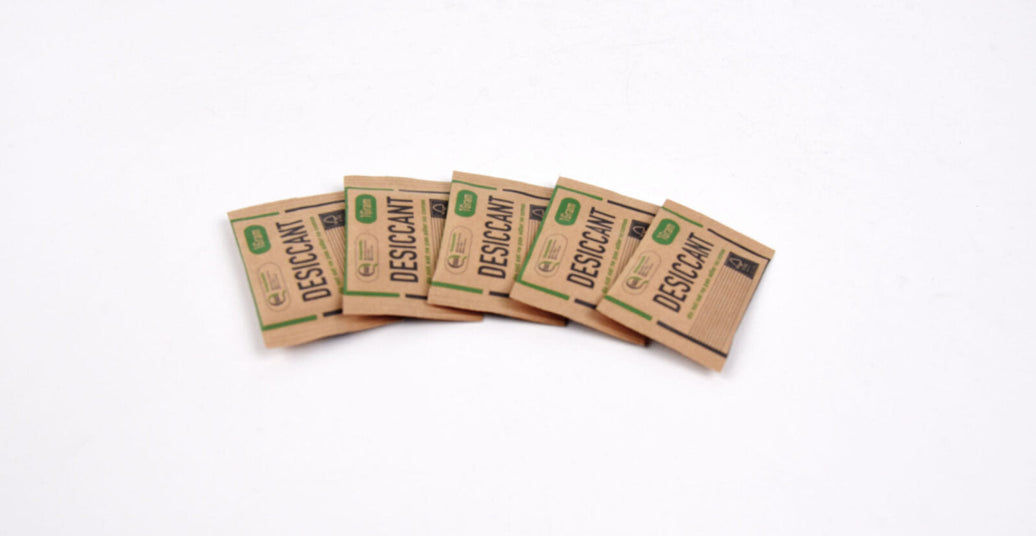
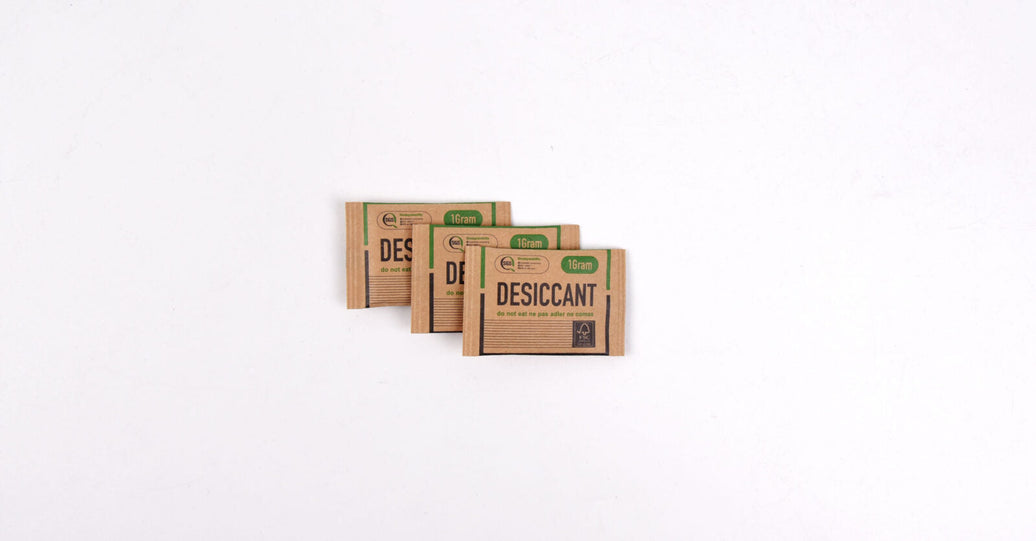
Quick answer: Most products sold as eco paper desiccant or kraft paper desiccant are standard silica gel or clay granules sealed in a kraft paper sachet. The wrapper is paper; the adsorbent is not. That can be a sensible swap from a plastic film sachet, but the capacity is the capacity of the silica or clay inside, and the granules are still loose if the paper tears. A true paper desiccant has the adsorbent bound into the sheet itself. Before you buy, ask what the adsorbent is, what certifies the wrapper, and what happens if the sachet is damaged.
Search for a greener desiccant and you will see a lot of brown paper packets. Some are exactly what they look like: a good-quality silica gel or clay desiccant in a paper wrapper. Others are marketed in a way that suggests the whole product is paper or plant-based. Knowing the difference saves you from a claim you cannot defend on your own pack.
What is inside an eco paper sachet
| Product as sold | Adsorbent | Wrapper | Loose media if torn? |
|---|---|---|---|
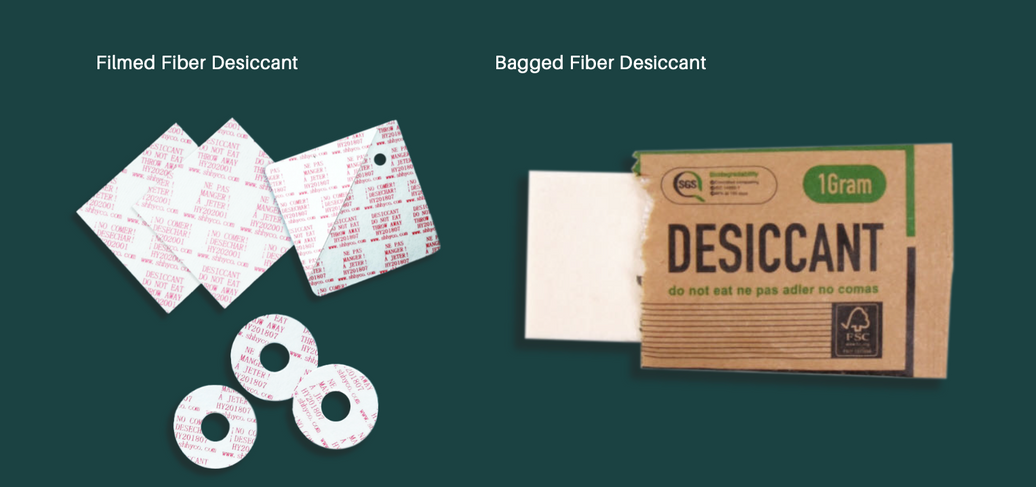
| Kraft paper silica sachet | Silica gel beads | Kraft or coated paper | Yes |
| Kraft paper clay sachet | Bentonite or similar clay granules | Kraft paper | Yes, and clay can be dusty |
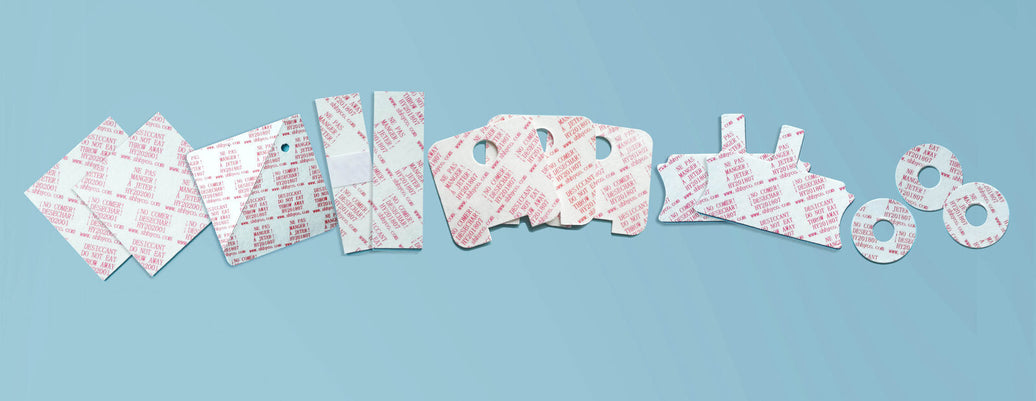
| Silica gel desiccant paper | Silica gel loaded into or coated onto a paper sheet | The sheet itself | No loose beads |
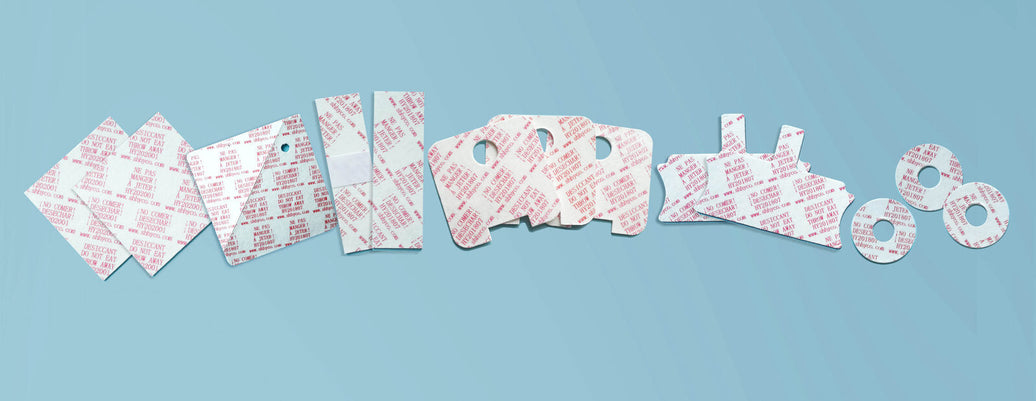
| Plant-fiber paper desiccant (Fiber Card) | Plant fiber with calcium chloride bound in the fibers | Printable compostable paper or other outer layer | No loose media |
The first two rows are the most common products you will find under eco paper and kraft paper desiccant listings. Silica gel desiccant paper is mostly an industrial material, used for example in dehumidifier wheels, and appears less often in consumer packaging. The last row is a different construction: the paper format is the desiccant. If you are new to that category, start with what a paper desiccant is.
What the paper wrapper does and does not change
It changes: the material of the outer layer, which may be easier to recycle or compost than a plastic film; the look and feel, which many brands prefer; and sometimes the rate at which moisture reaches the adsorbent, because different wrappers breathe differently. That last point is covered in how the desiccant wrapper decides performance.
It does not change: the capacity of the adsorbent, the fact that loose granules are inside, or the end-of-life of the fill. Silica gel is an inert mineral that does not biodegrade, as explained in is silica gel biodegradable. Clay is a natural mineral, but natural does not mean high capacity, which is the point of bentonite clay vs fiber desiccant.
Capacity: what you are actually buying
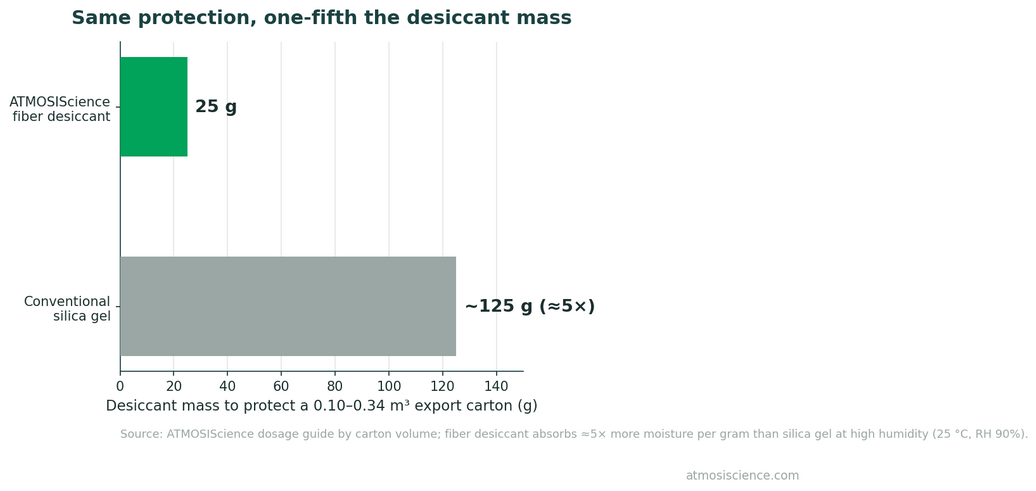
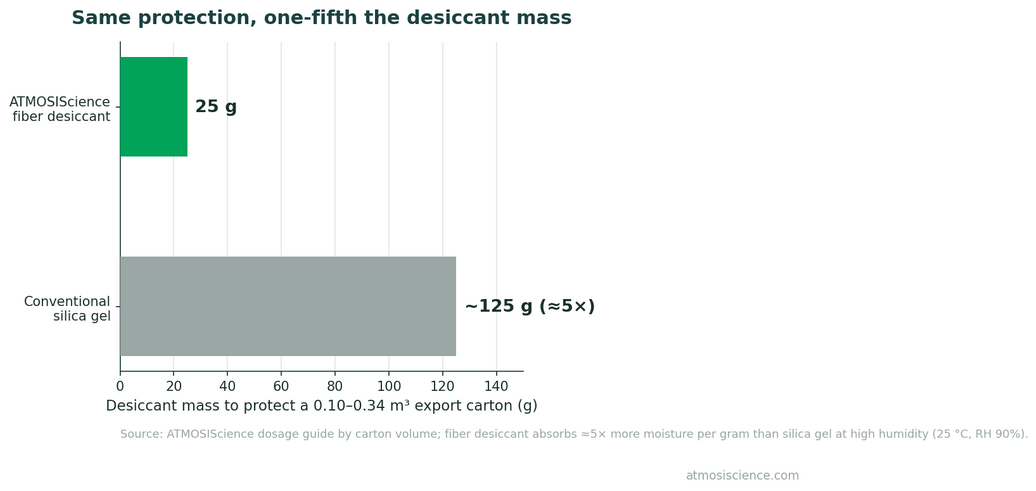
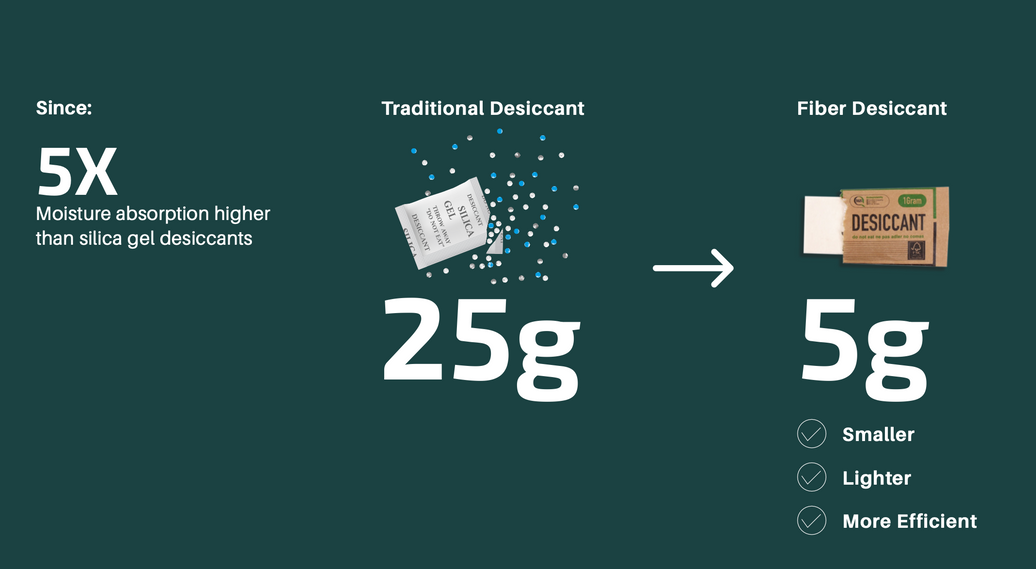
A gram of silica gel in a kraft paper bag holds what a gram of silica gel holds anywhere. Our documented comparison point at 25 °C and 90% RH is about 30% of its own weight for common silica gel. Clay is generally lower than silica at high humidity. A plant-fiber paper desiccant such as Fiber Card adsorbs more than 70% of its own weight under the same condition, roughly 2.3 times the silica figure, and more than 35% at 50% RH.
So a switch from a plastic silica sachet to a kraft paper silica sachet gives you the same moisture protection with a different wrapper. A switch to a fiber-based paper desiccant changes the capacity per gram as well. For a full side-by-side, see calcium chloride vs silica gel vs fiber desiccant.
The green-claim risk
Calling a kraft paper silica sachet a paper desiccant, plant-based desiccant or plastic-free desiccant can mislead buyers. It also creates risk for your own brand if you repeat the claim on pack. In the EU, generic environmental claims such as eco-friendly now need specific, provable support. We cover what applies in the rule that now governs your packaging copy and compostable desiccant and greenwashing risk.
A safe rule: describe the desiccant by what each component is. Silica gel in a paper sachet is accurate. Paper desiccant is accurate only when the paper itself does the drying.
Five questions to ask before you buy
- What is the adsorbent? Silica gel, clay, molecular sieve, calcium chloride, plant fiber or a blend. Ask for it in writing.
- What is the wrapper, and what certifies it? Kraft, coated paper, non-woven or Tyvek. A compostability certificate for paper does not cover the fill. See which compostability certification you need.
- What happens if the sachet tears? Beads or clay granules in a powder or a pill bottle are a foreign-matter complaint. See loose-fill desiccant risks.
- Capacity at what humidity? A number without a temperature and RH is not a spec. See how to compare desiccant spec sheets.
- Which documents cover the finished sachet? Food contact, compostability and chemical screening should match the exact construction you buy.
A simple check you can run on a sample
You do not need a lab to see what you have been sent. Two checks answer most questions.
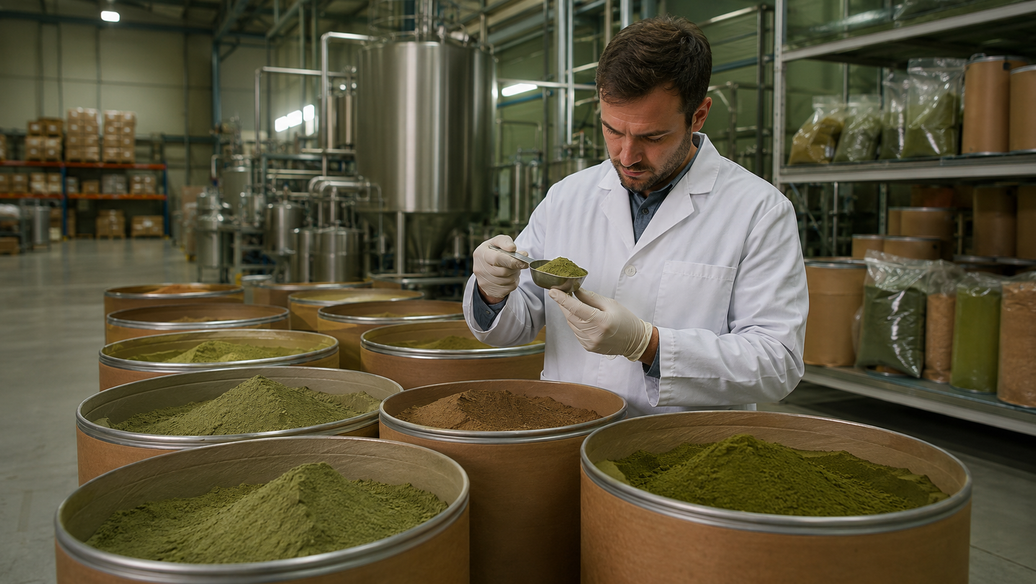
1. Open one sample over a white tray. Clear or white glassy beads are silica gel. Grey, tan or brown granules that leave dust on your fingers are clay. Small uniform pellets are often molecular sieve. A sheet you cannot pour out, made of pressed fibers, is a bonded paper desiccant. Do this with a spare sample only, never with a sachet that is going into product.
2. Run a weight-gain comparison. Weigh two or three candidate desiccants on a kitchen or lab scale that reads to 0.01 g. Place them side by side in a sealed plastic box with an open dish of saturated table-salt solution (water with undissolved salt at the bottom). At room temperature a saturated sodium chloride solution holds the air near 75% RH. Weigh again after 24, 48 and 72 hours. Divide the weight gained by the starting weight to see how much water each one has taken up per gram.
This is a screening test, not a specification. It tells you whether a supplier’s claim is in the right range. Final sizing should come from a test on your real pack, as described in how to run a desiccant sample evaluation.
If two products marketed as eco paper desiccant give near-identical results to plain silica gel, you have your answer about what is inside.
When a kraft paper sachet is a good choice
It is a reasonable, honest option for indirect-contact uses where loose media is low risk: shoe boxes, garment cartons, tool kits and outer shipping cartons. If your goal is simply to remove plastic film from a carton insert, a paper-wrapped silica or clay sachet may be all you need.
When a bonded paper desiccant is the better choice
- Supplements and food powders, where loose beads or clay dust inside the product is unacceptable.
- Packs that claim compostable, where the desiccant should carry the same certification as the pack.
- Tight spaces, such as bottle caps, blisters and stick packs, where a flat card fits and a sachet does not.
- Automated lines, where a stiff card places more reliably than a soft packet.
- Branded packs, where the desiccant should carry your logo. See custom-printed desiccant cards.
The construction, sizes and documents for our bonded paper desiccant are in the Fiber Card spec guide.
Frequently asked questions
Is kraft paper desiccant compostable?
The paper wrapper may be. The silica gel or clay inside is a mineral and does not compost in the same way. Check whether the certificate covers the whole sachet or only the paper.
Is eco paper desiccant food safe?
It can be, if both the adsorbent and the wrapper have food-contact documentation and the sachet is labelled as not edible. Ask for the declaration, not just the product listing. See food-contact desiccants and FDA 21 CFR.
Can I recycle a used paper desiccant sachet with paper waste?
Usually not as is, because the fill is not paper. Follow local rules; many programmes ask for small mixed-material items to go in general waste.
Is clay more eco-friendly than silica gel?
Clay is mined and minimally processed, which can mean a lower footprint per kilogram. It also tends to hold less water, so you may need more of it. Compare on the job done, not per kilogram; see natural desiccants compared.
Does a paper wrapper make the desiccant weaker?
It does not change capacity. It can change how fast moisture reaches the adsorbent, depending on the paper and any coating.
Want a desiccant where the paper itself does the drying?
ATMOSIScience Fiber Card is a plant-fiber desiccant card with no loose media. Tell us your pack and we will send samples and documents.
Prefer email? info@atmosiscience.com