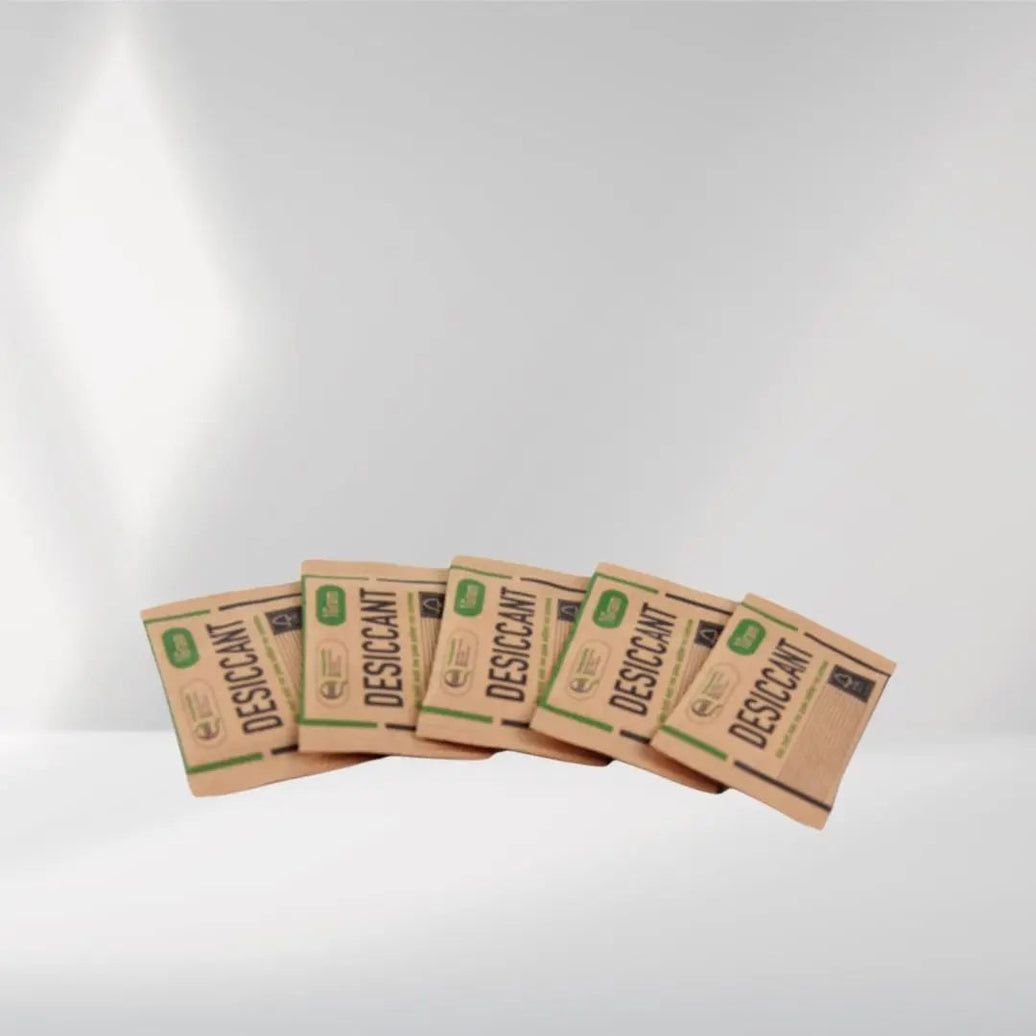
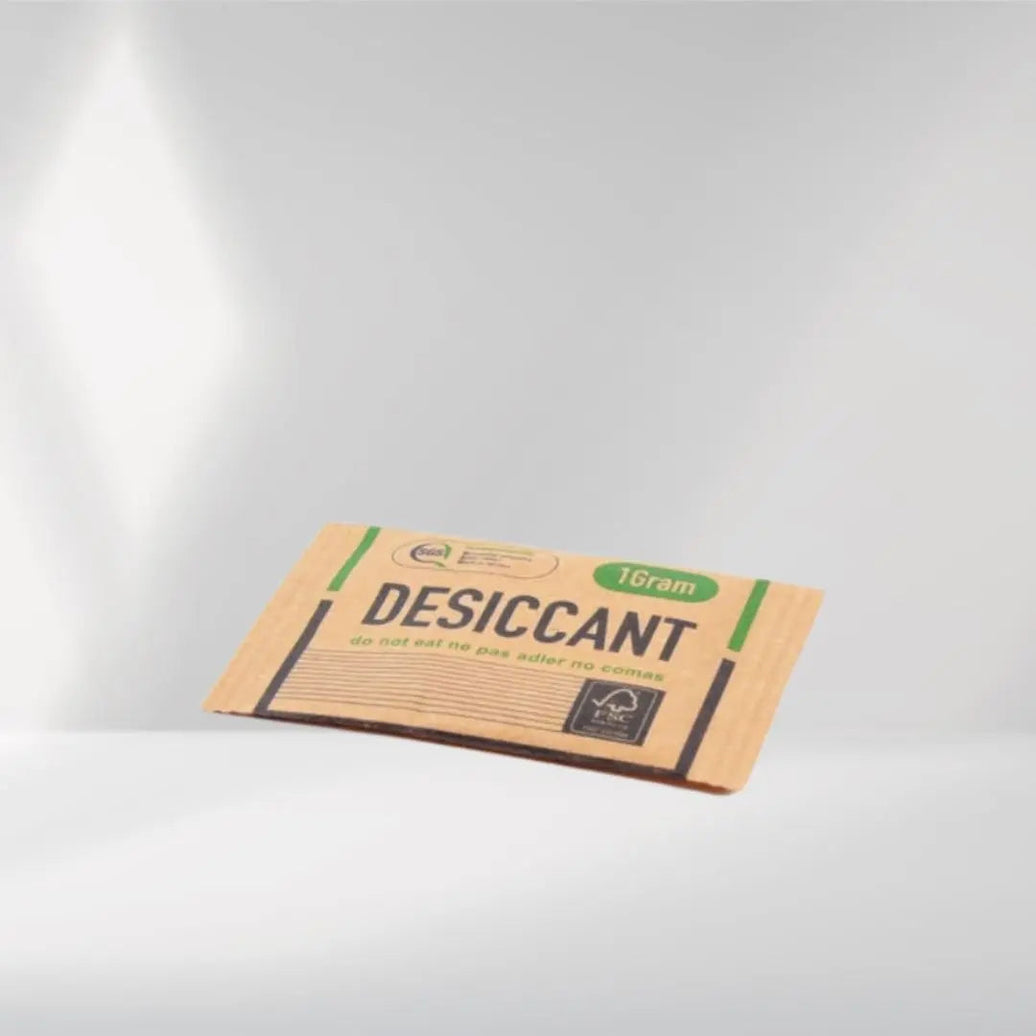
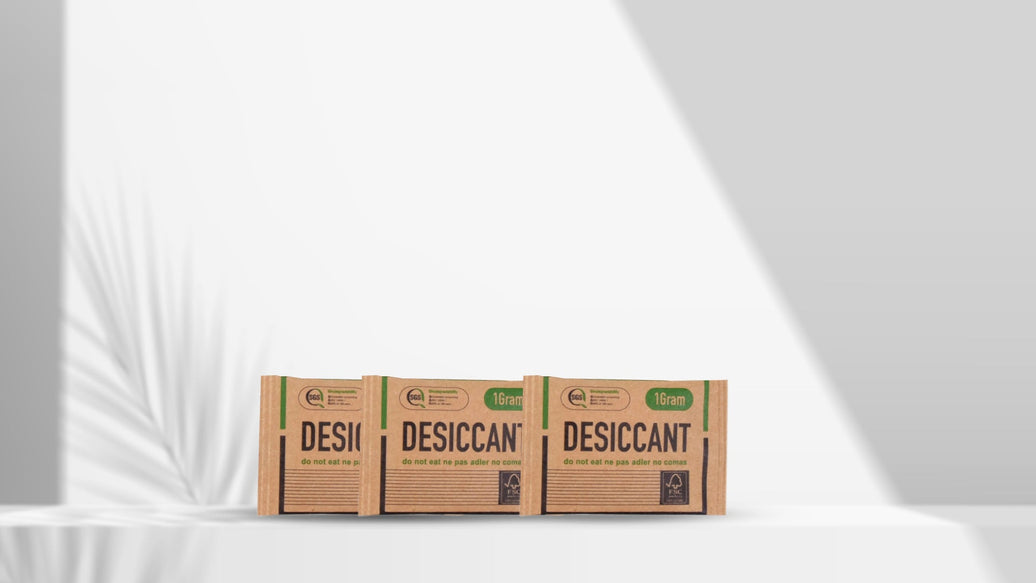
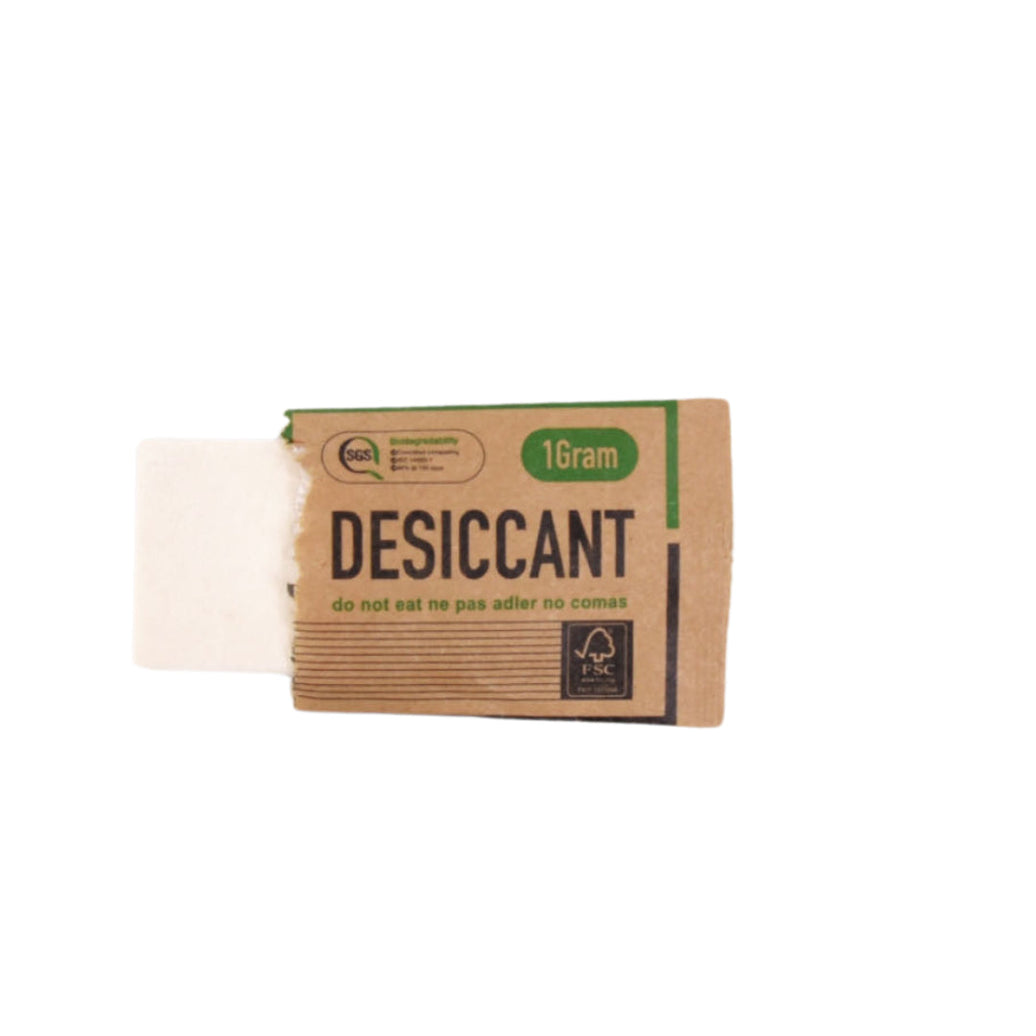
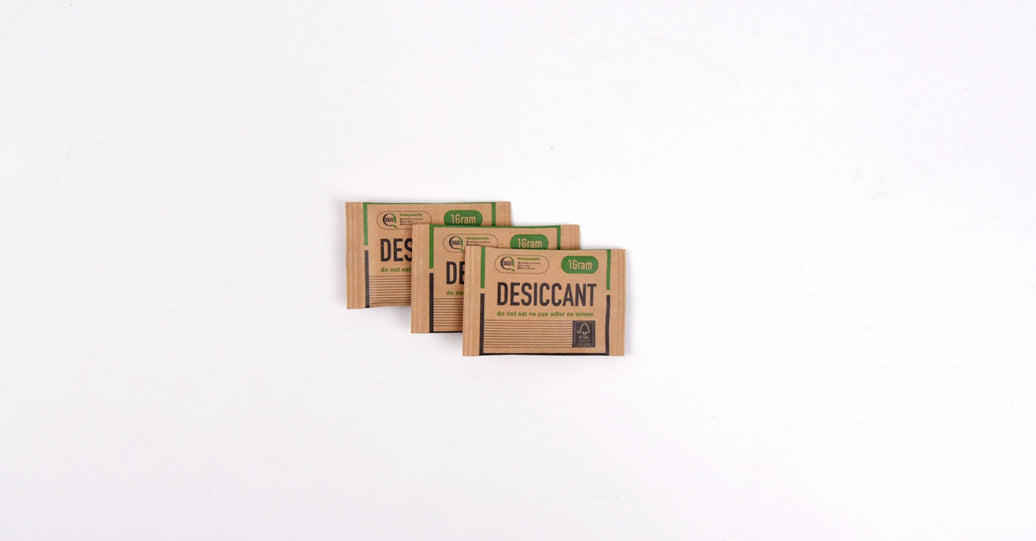
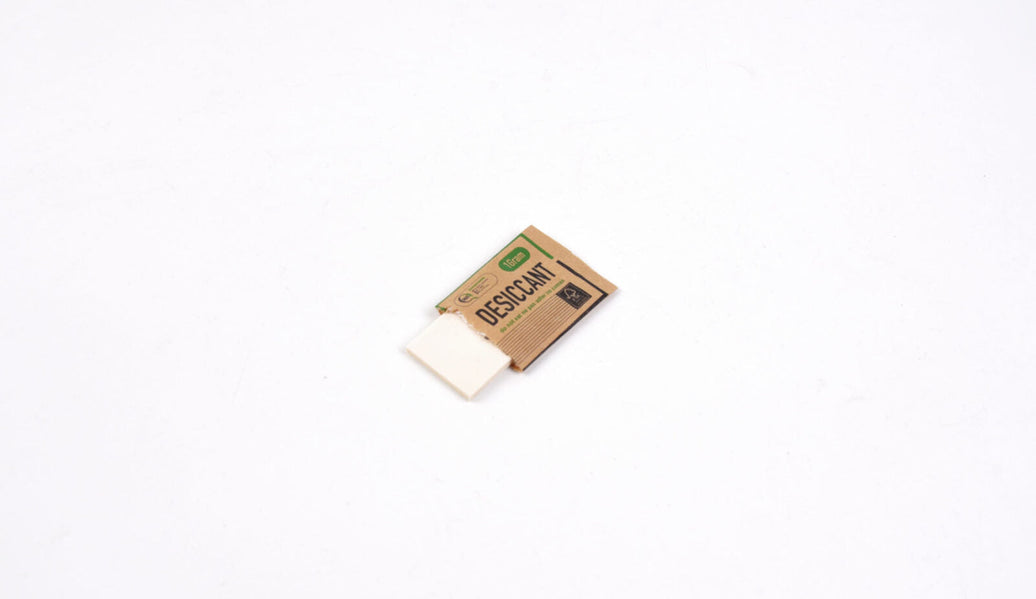
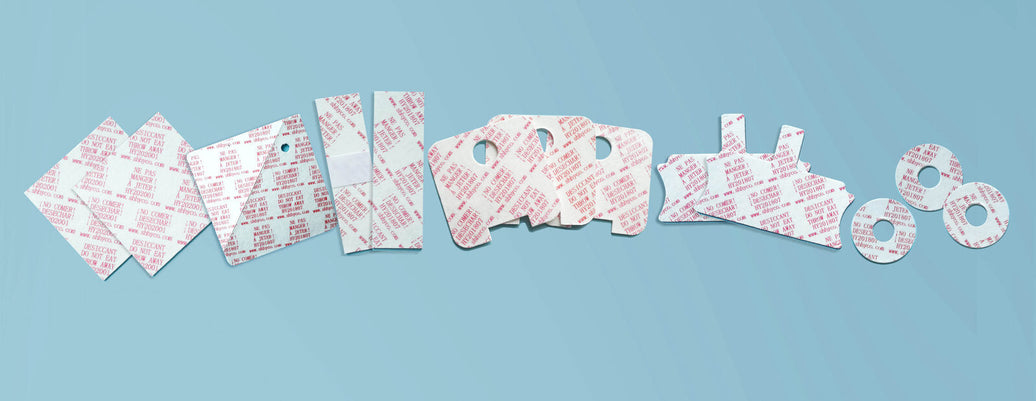
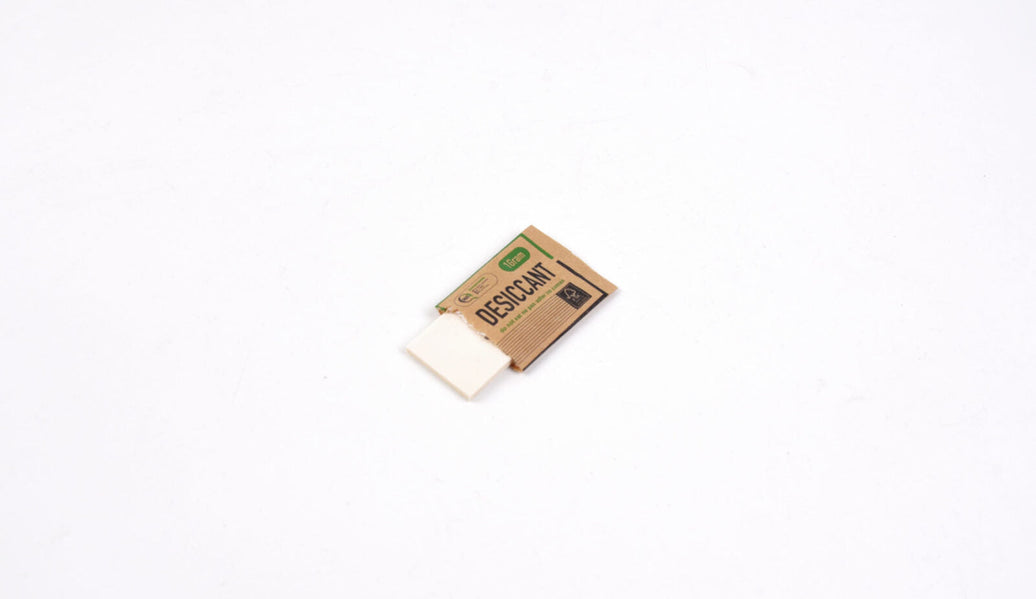
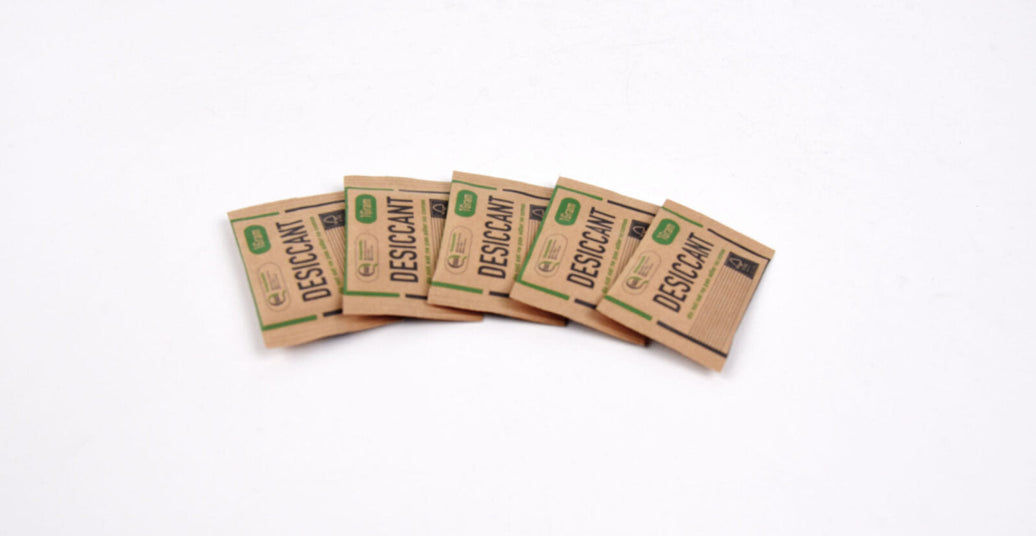
Quick answer: No. Silica gel is amorphous silicon dioxide — a synthetic mineral that is chemically inert and does not break down biologically. It will not biodegrade, will not compost, and does not meet ASTM D6400 or EN 13432. "Non-toxic" and "biodegradable" are two different claims, and silica gel only satisfies the first one.
The question comes up in two very different rooms. In one, a consumer wants to know whether the little sachet can go in the food-waste bin. In the other, a packaging manager needs to know whether a silica sachet inside a certified-compostable pouch invalidates the claim on the front of the bag. The chemistry answer is the same in both rooms. The commercial consequences are not.
"Non-toxic" and "biodegradable" are not the same claim
Silica gel is widely and correctly described as non-toxic. It is not absorbed by the body, it is not classified as hazardous waste in ordinary quantities, and the "do not eat" warning exists mainly because of choking risk and because some sachets carry a moisture indicator.
None of that says anything about end-of-life. Biodegradation requires microorganisms to metabolise a material into water, carbon dioxide and biomass within a defined time frame. Silicon dioxide gives microorganisms nothing to metabolise. It is essentially engineered sand: stable, unreactive, and permanent on any human timescale.
Marketing language blurs this constantly. "Environmentally friendly," "safe," "natural" and "inert" all get used where a buyer is looking for "biodegradable," and none of them are the same claim. Full framing: the sustainable desiccant guide.
What actually happens to a silica gel sachet
Three end-of-life routes, none of them good.
- Landfill. The default. The gel persists indefinitely; the sachet wrapper — often a plastic-laminated or foil-lined material — persists alongside it.
- Recycling stream. Silica sachets are a contaminant, not a recyclable. They are small, mixed-material and moisture-loaded, which is close to a worst case for sorting equipment.
- Compost stream. Rejected. An industrial composter will screen the sachet out as inorganic residue. If it does not get screened, it becomes visible contamination in finished compost.
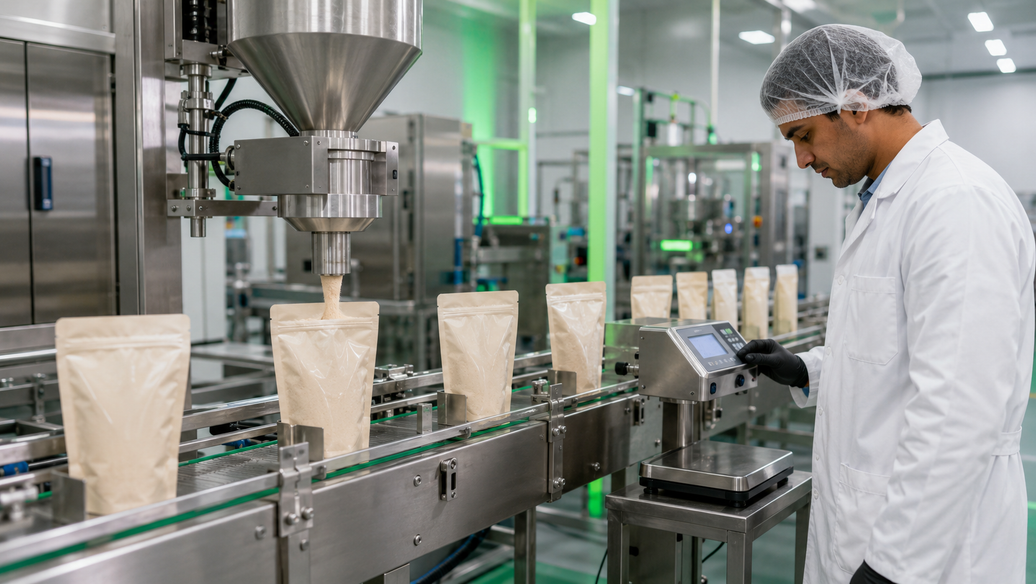
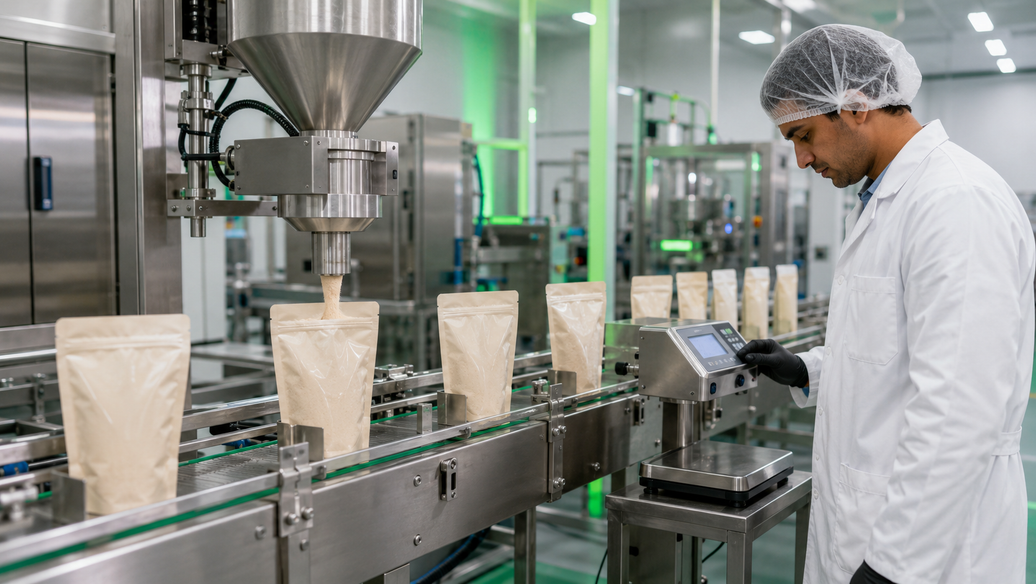
The practical outcome: a brand that has done the work to specify a compostable pouch, compostable label and compostable seal can undo the whole claim with the sachet dropped in at the filler.

Why this now costs money
Until recently the answer to "is it biodegradable?" was a reputational matter. Two regulatory movements turned it into a cost line.
US extended producer responsibility. California, Colorado, Maine, Oregon and Washington have all enacted packaging EPR. Fees are calculated on packaging placed on the market, and eco-modulated by recyclability. A non-recyclable, non-compostable in-pack component is fee-bearing weight, every unit, forever. Breakdown: the hidden EPR fee in CA, WA, OR, ME and CO.
EU PPWR. Regulation 2025/40 entered into force on 11 February 2025 and applies generally from 12 August 2026, with recyclability performance grading required by 2030 and a stricter grade by 2035. In-pack components are assessed as part of the packaging unit. Compliance hub: EU PPWR and desiccant sachets.
What a genuinely certified alternative looks like
The distinction that matters is documentary, not descriptive. A desiccant that can carry a biodegradability or compostability claim has test evidence behind both the adsorbent and the wrapper.
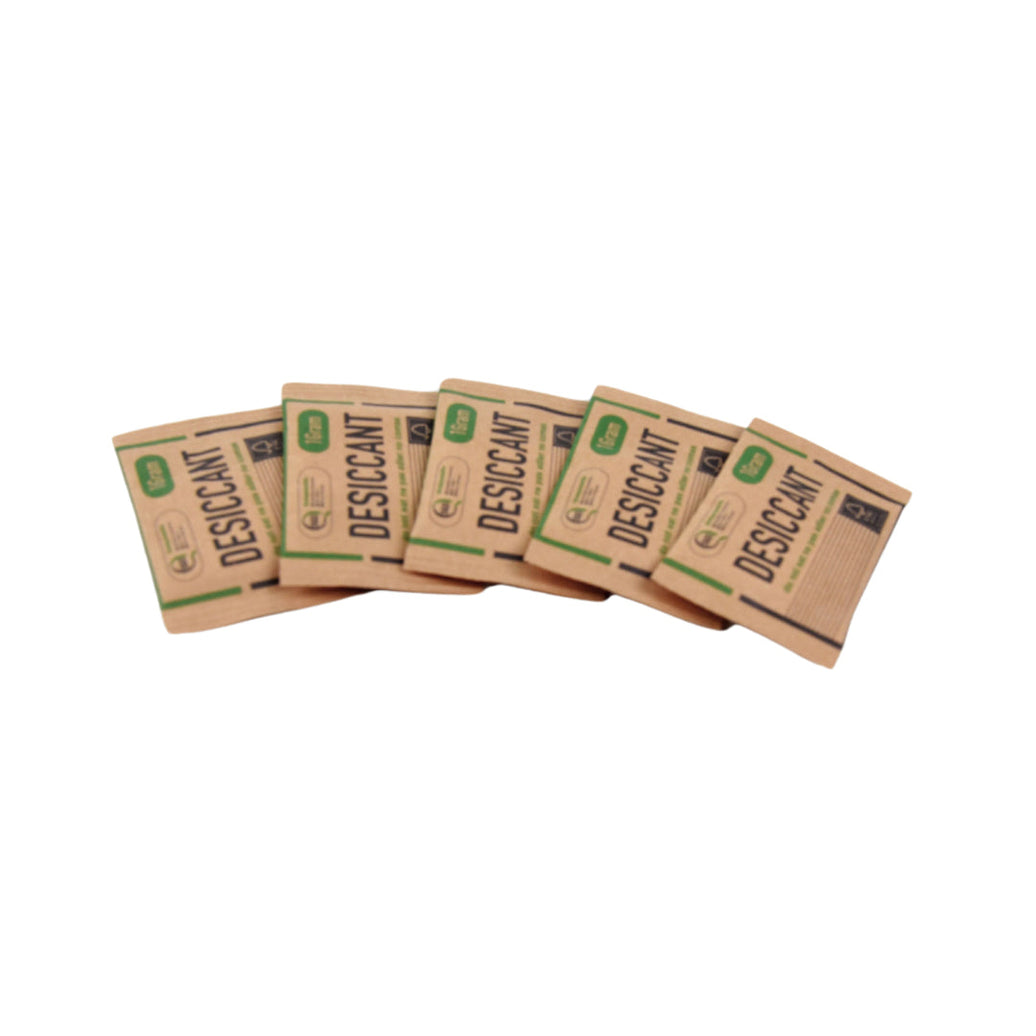
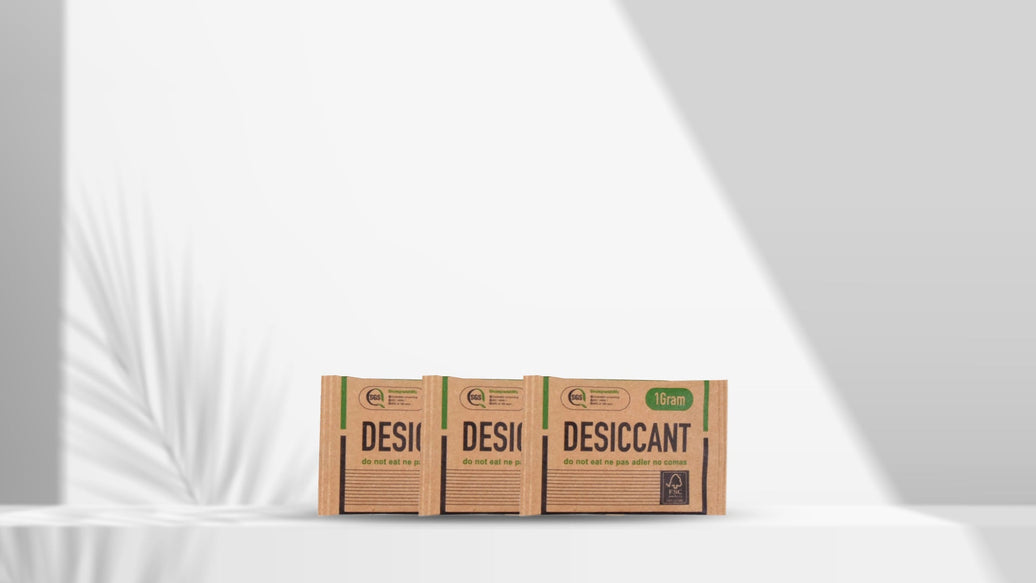
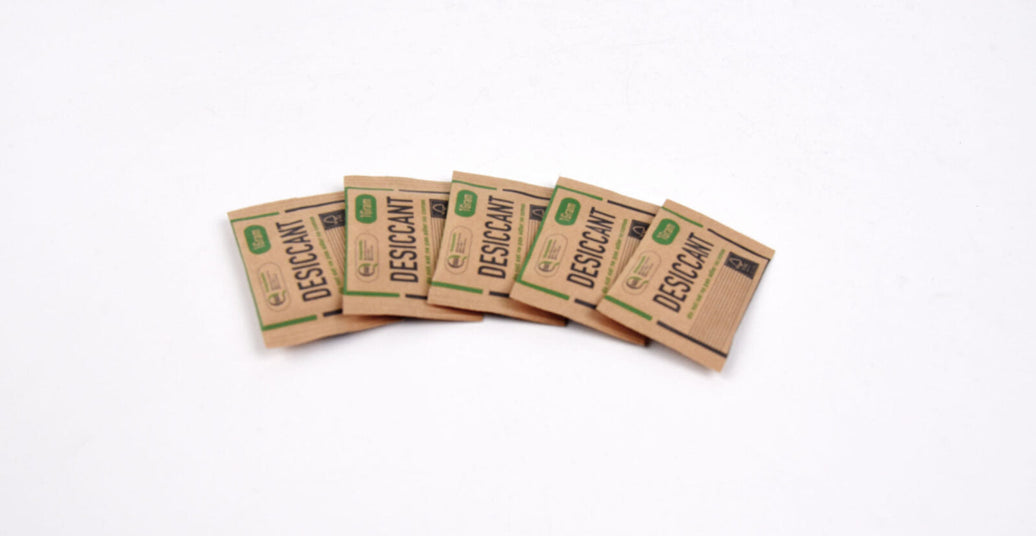
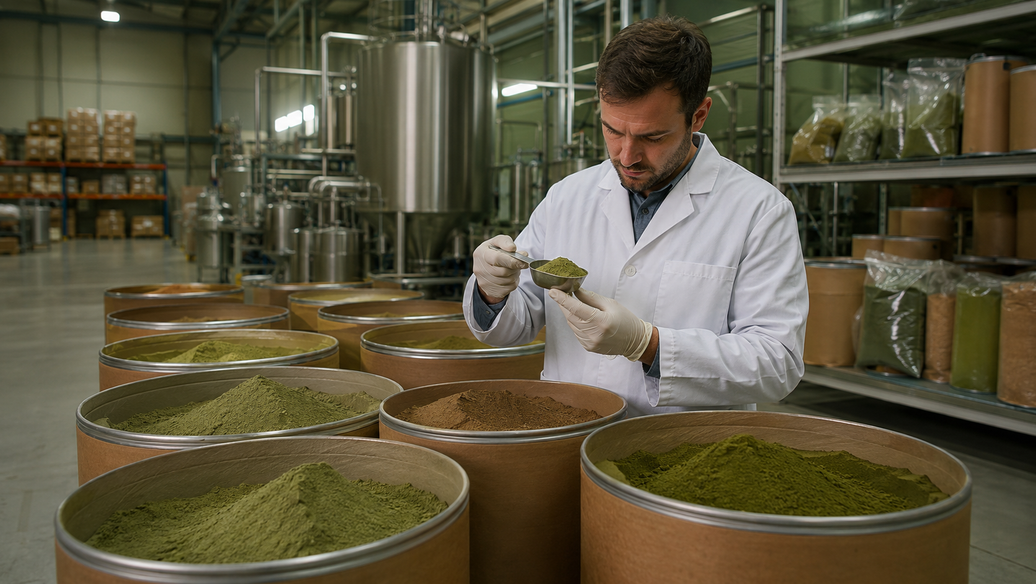
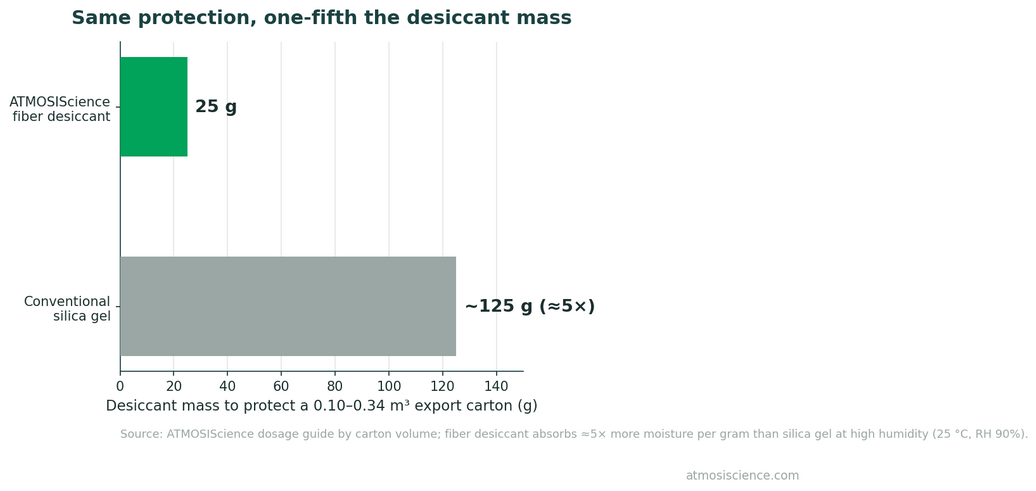
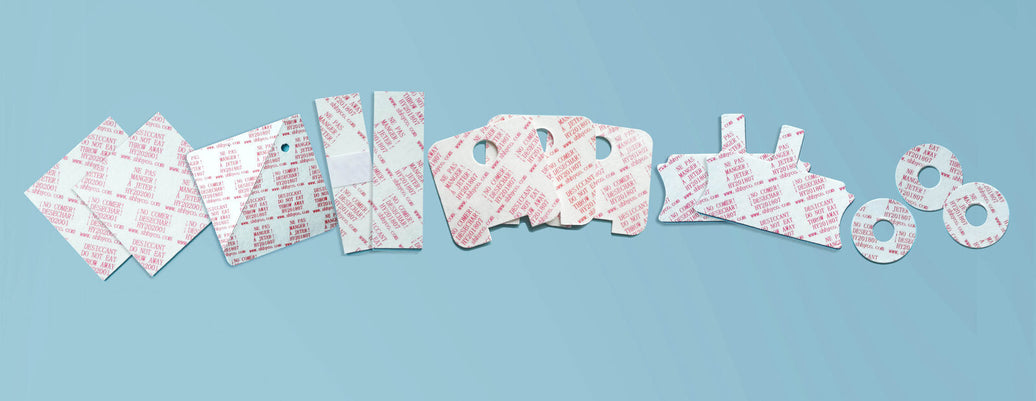
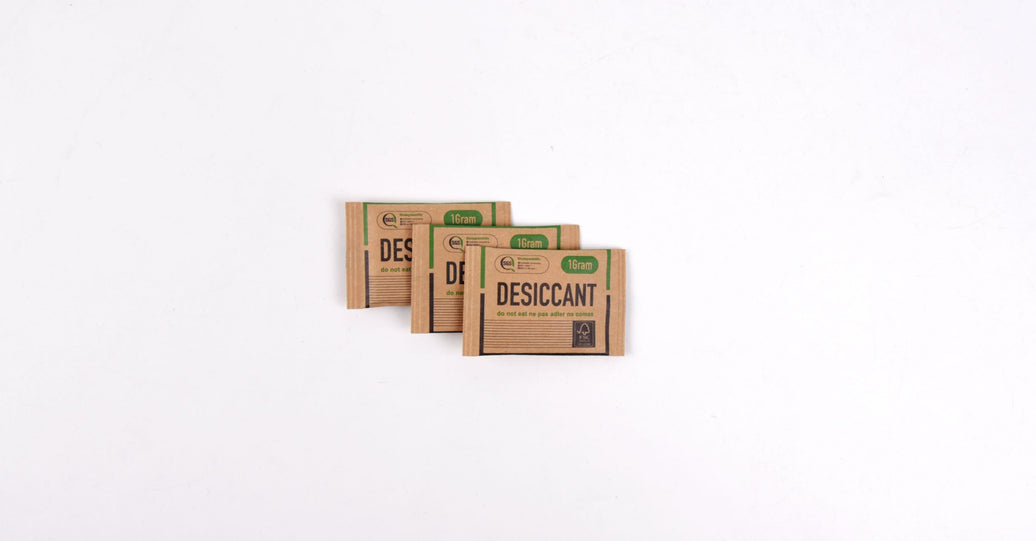
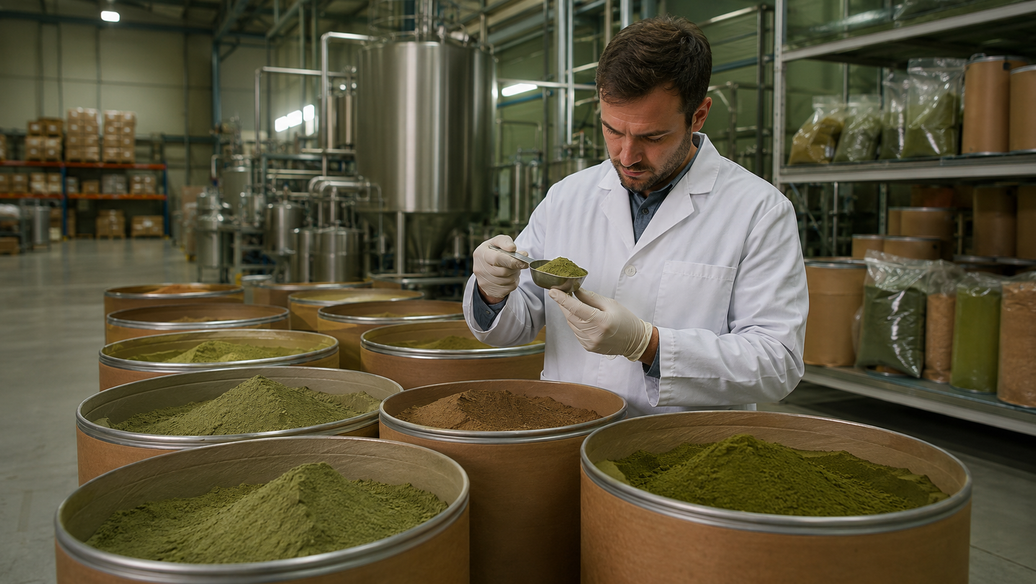
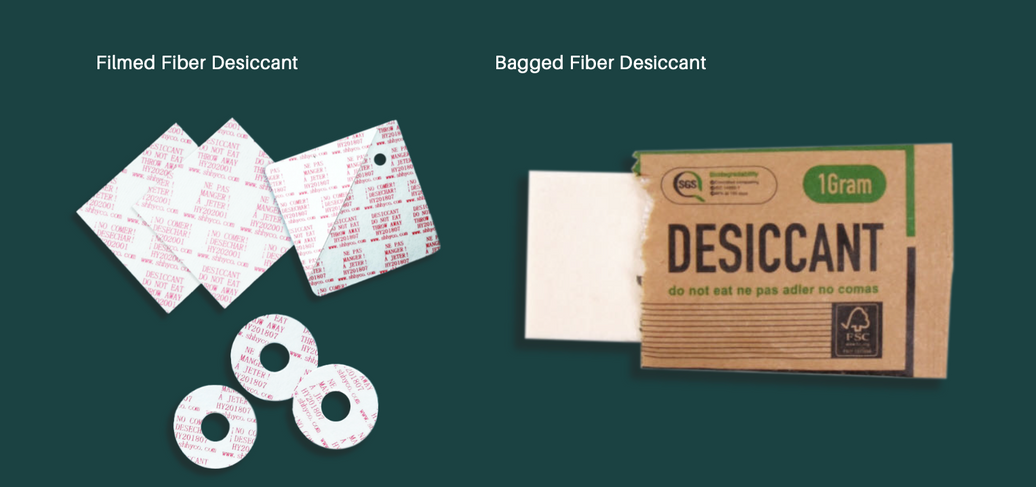
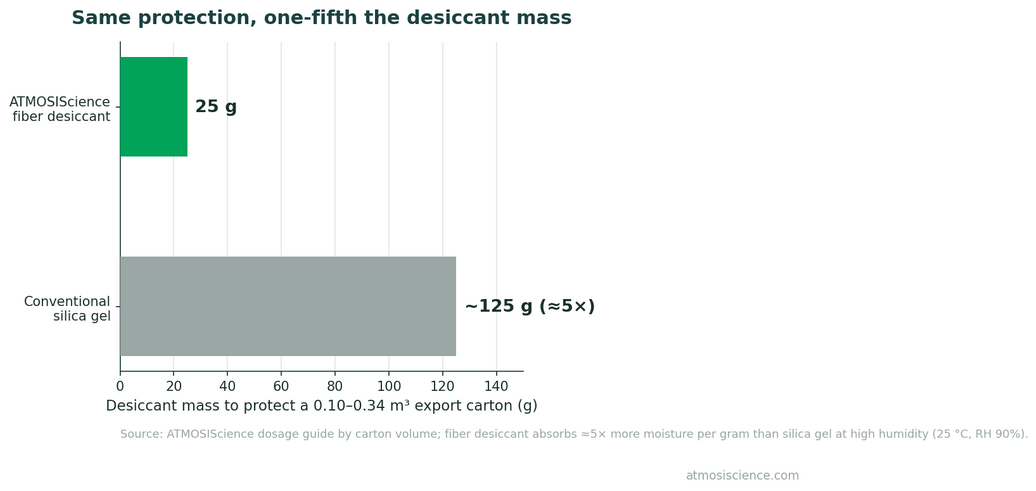
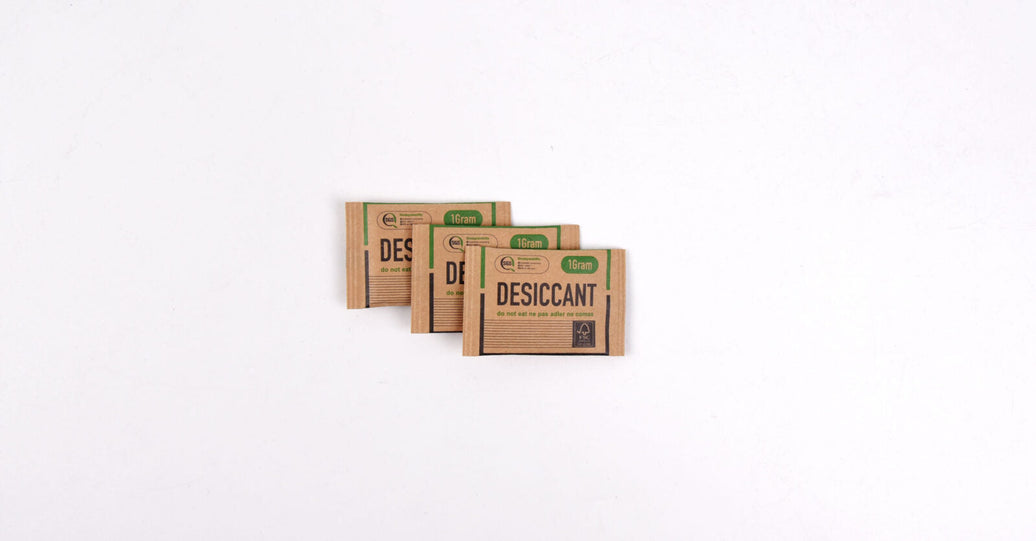
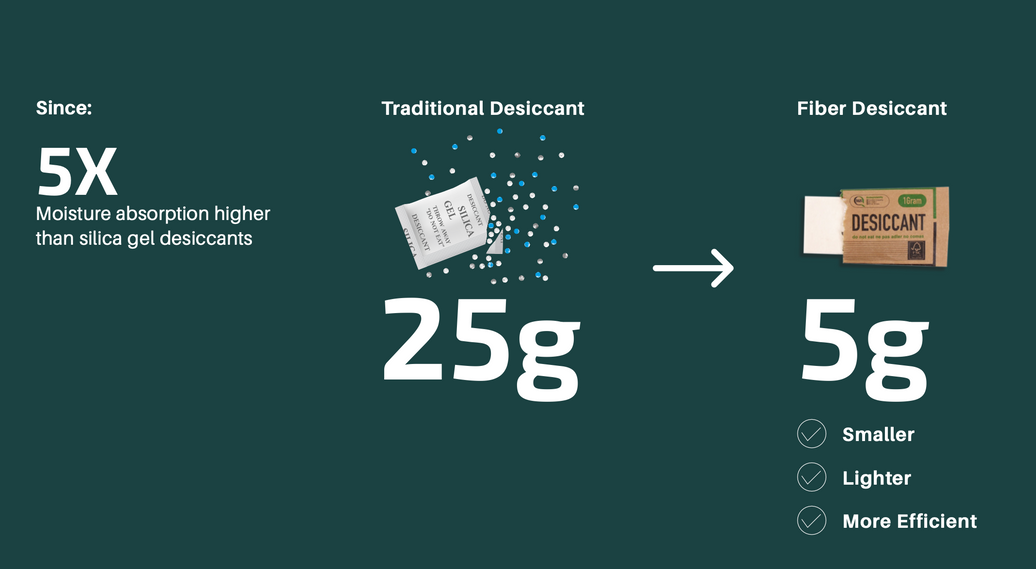
On the ATMOSIScience fiber platform, the adsorption substrate is natural plant fibre and is 100% degradable, while the pouch film complies with ASTM D6400 and EN 13432. The measured performance sits above silica gel across the working range: over 10% of own weight at RH20, over 35% at RH50, over 70% at RH90 at 25°C, with saturated adsorption above 100% of own weight and loss on drying below 10%.
The carbon side has been quantified rather than asserted: 1.44 kg CO₂e per kg for fiber desiccant against 1.89 for silica gel, verified to ISO 14067. Detail: the ISO 14067 carbon footprint.
Claim language that survives review
Sustainability claims are now actively policed, and vague ones are the ones that get challenged. Three rules hold up well:
- Name the standard and the scope. "Pouch film certified to EN 13432" is defensible. "Eco-friendly desiccant" is not.
- Do not let a component claim imply a pack claim. A compostable sachet does not make the whole package compostable.
- Keep the certificate current and on file. Expired certification is treated as no certification.
More on the exposure: compostable desiccant and the Green Claims Directive.
Frequently asked questions
Can silica gel go in the compost bin?
No. It will not break down and will be screened out as inorganic residue, or remain as visible contamination in the finished compost.
Is silica gel recyclable?
Not in practice. Kerbside and commercial streams treat small mixed-material sachets as contamination. Silica gel is technically an inert mineral, but no meaningful recovery route exists for sachet-scale quantities.
Is silica gel harmful to the environment?
It is chemically inert and not classified as an ecotoxic substance. The environmental issue is persistence and volume rather than toxicity — it accumulates without breaking down, and it adds fee-bearing, non-recyclable weight to every package it ships in.
What about the "do not eat" warning?
That warning covers choking hazard and, on some products, an added moisture indicator. It is not a statement about environmental hazard. Background: the "do not eat" label explained.
Does a biodegradable desiccant work as well?
On the fiber platform, better across the ambient and high-humidity range where most packaging actually sits — over 70% of own weight at RH90 against roughly 30% for common silica gel. Molecular sieve still wins where the specification demands ultra-low humidity.
Get the certification pack before you make the claim
ATMOSIScience supplies ASTM D6400 and EN 13432 documentation, the ISO 14067 carbon footprint report and food-contact evidence for review by your compliance team.
Prefer email? info@atmosiscience.com