For brands shipping into Europe, moisture control is no longer the only question a desiccant has to answer. From 12 August 2026, the EU Packaging and Packaging Waste Regulation (PPWR, EU 2025/40) binds every business placing packaged products on the EU market — and it treats auxiliary packaging like desiccant sachets as in scope. A non-compliant sachet is now a market-access, fee, and greenwashing problem, not just a packing detail.
This guide explains what the PPWR means for desiccant choices, the timeline that matters, and how a certified-compostable fiber desiccant removes the risk by design.
EU compliance pack — one request: EN 13432 compostability certificate · ISO 14067 carbon footprint · REACH SVHC + RoHS. Request the pack ↓
Compliance library: FDA 21 CFR · HACCP · Reading a COA · PFAS-free · US EPR · Green Claims

What changed: from guidance to binding regulation
The European Green Deal commits the EU to a fully circular economy, with packaging named as a priority sector. Since 2025 that consensus has become binding law. The PPWR entered into force on 11 February 2025 and applies from 12 August 2026, replacing the older Packaging Directive 94/62/EC. Crucially, its requirements extend to secondary and auxiliary packaging — the category a desiccant sachet falls into.
The timeline brands are now on
| Milestone | Requirement |
|---|---|
| By 2030 | All packaging must be "designed for recycling" — including auxiliary packaging such as desiccant sachets. |
| By 2035 | Packaging must be designed for recycling AND actually recycled at industrial scale, with demonstration required. |
| By 2040 | Per-capita packaging waste must drop 15% versus a 2018 baseline (−5% by 2030, −10% by 2035). |
| Continuous | Extended Producer Responsibility (EPR) fees become "eco-modulated" — hard-to-recycle or contaminating components pay materially higher fees than certified-compostable formats. |
Why a silica-gel sachet is now a liability
A conventional silica-gel sachet in non-compostable plastic now carries three compounding costs under the PPWR regime. First, an EPR-fee penalty, because eco-modulated fees punish hard-to-recycle, multi-layer, or contaminating components. Second, a retailer-compliance risk, as European retailers screen packaging against their own circular-economy targets. Third, a greenwashing exposure: under the EU Policy Framework on biobased, biodegradable and compostable plastics, compostable claims must be substantiated by certification (typically EN 13432) or they fall foul of the Green Claims Directive.
The EU framework is explicit that compostable plastics are appropriate exactly where they deliver genuine benefit — and a desiccant sachet that ends up mixed with food waste is a textbook fit.
How certified-compostable fiber desiccant removes the risk
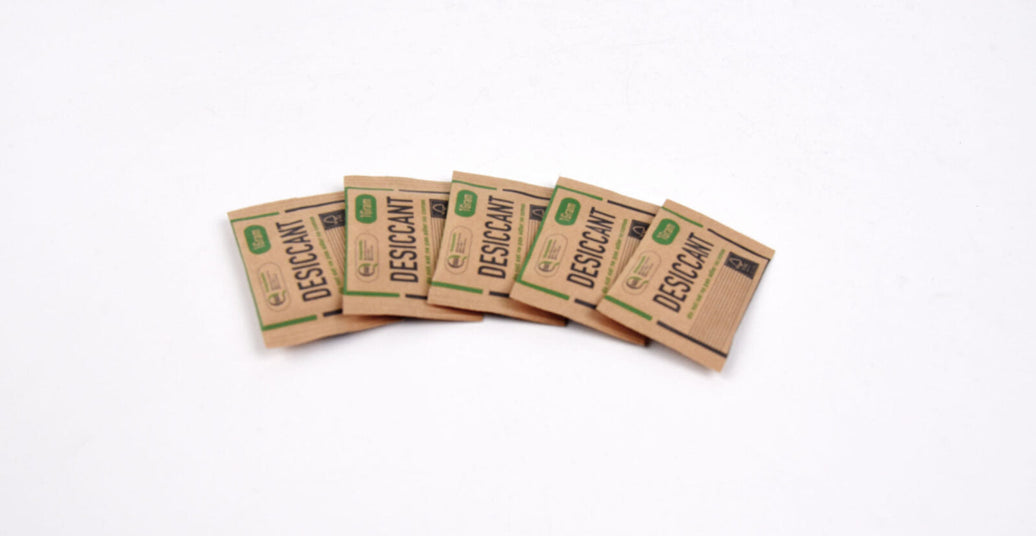
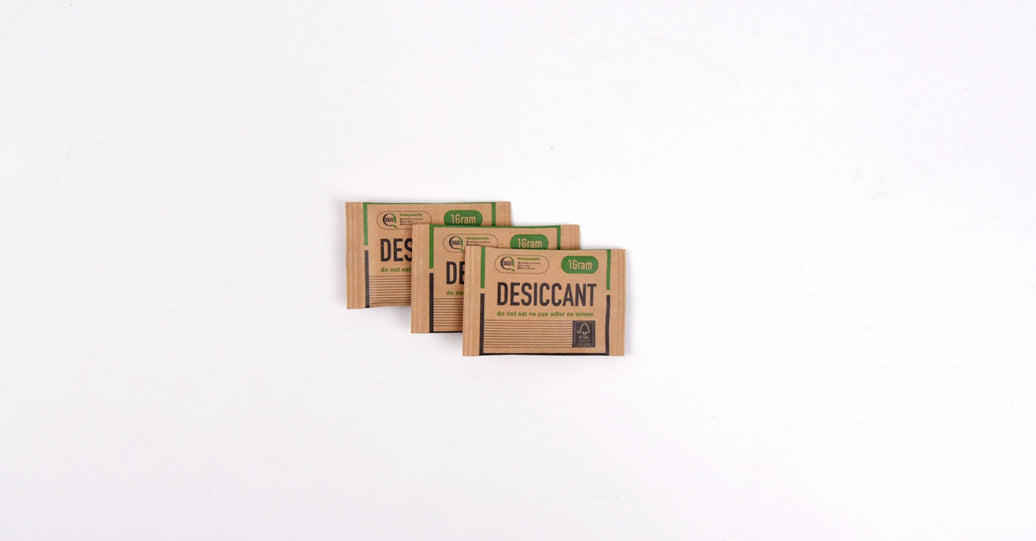
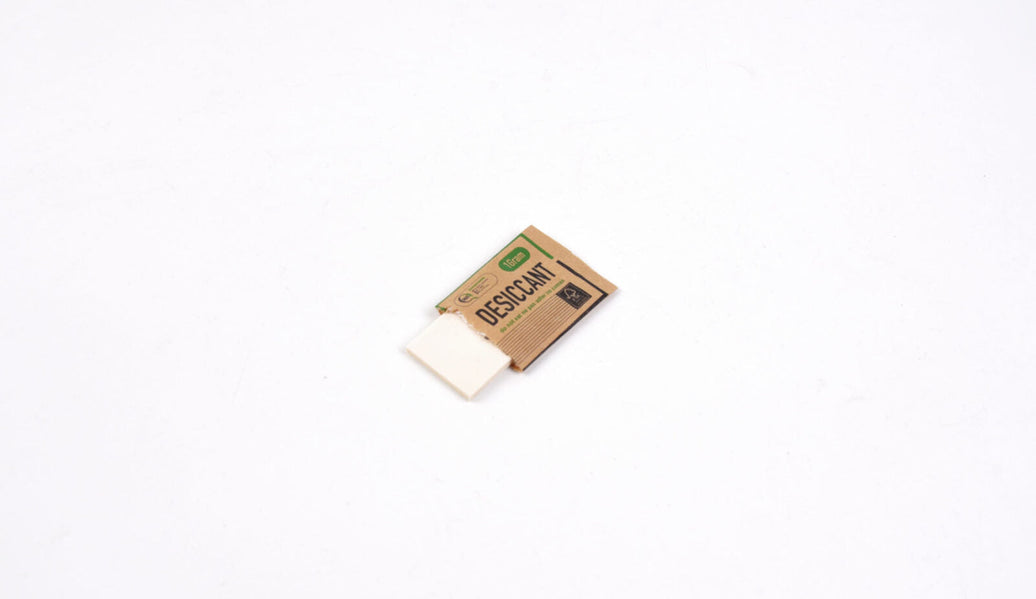
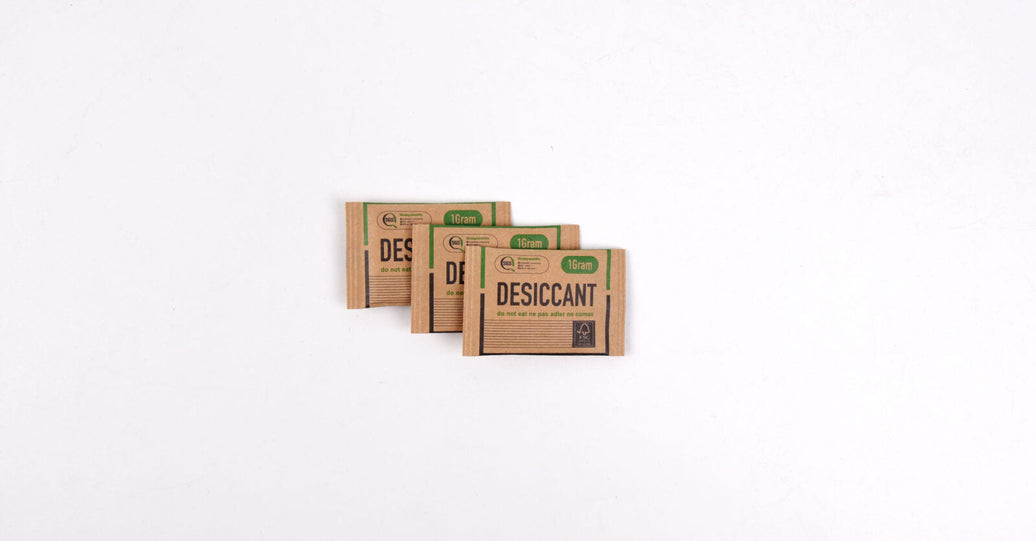
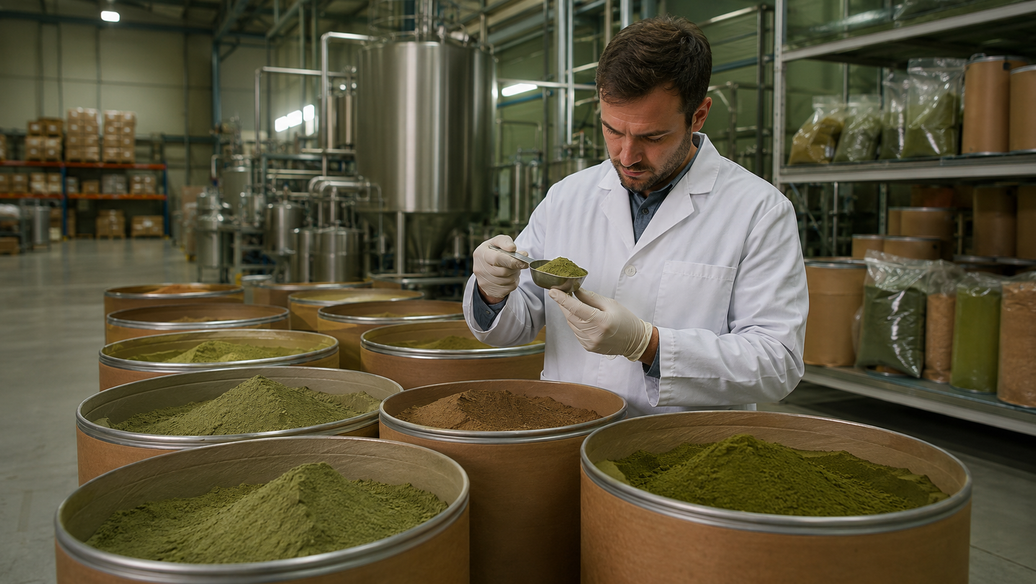
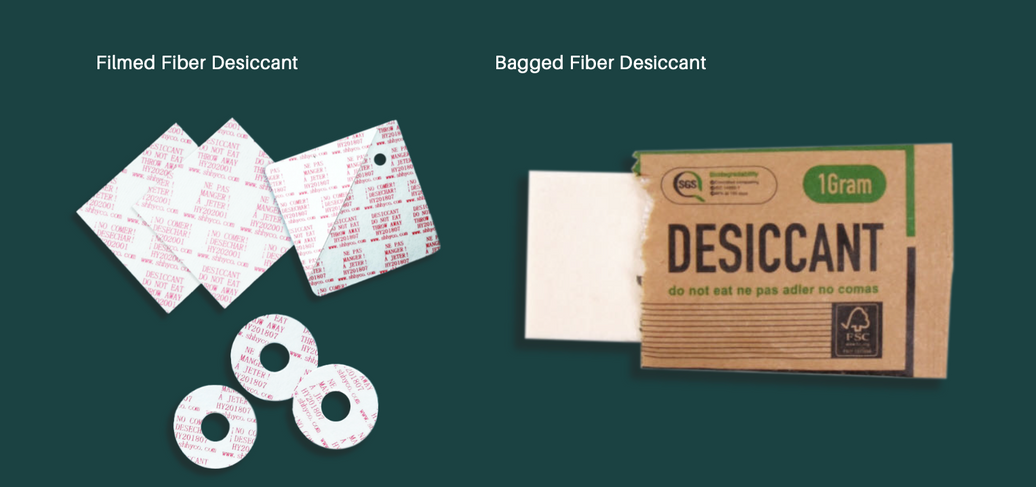
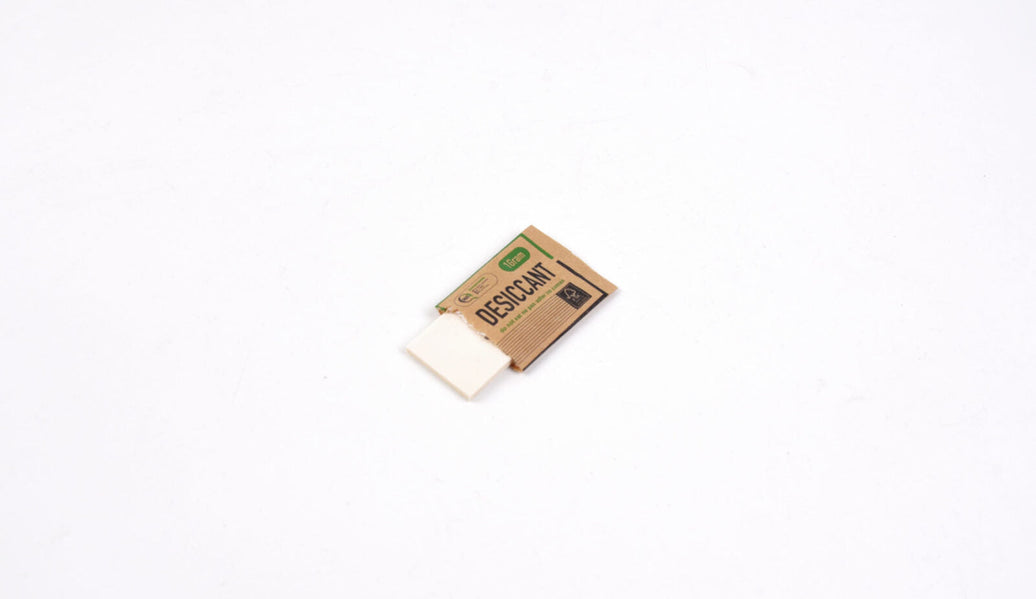
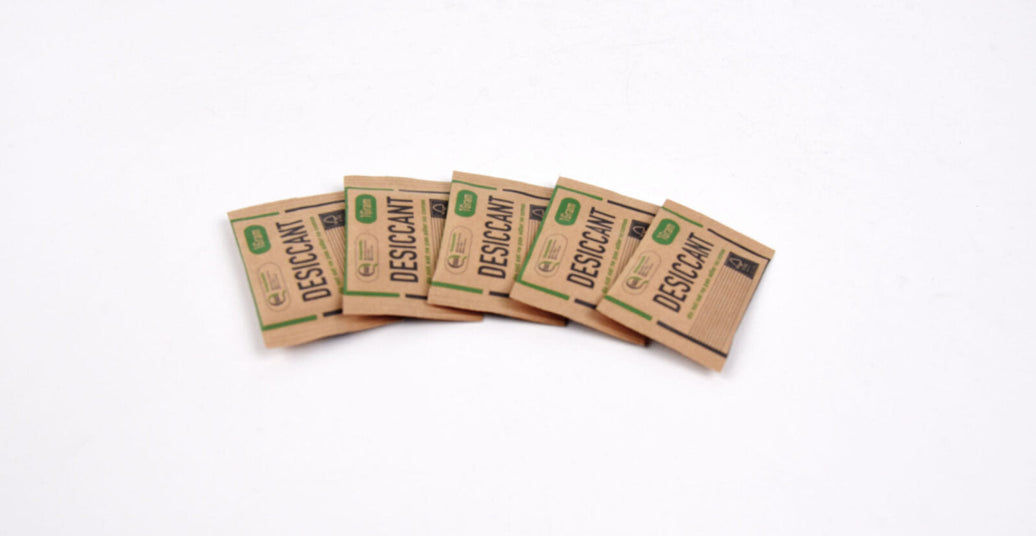
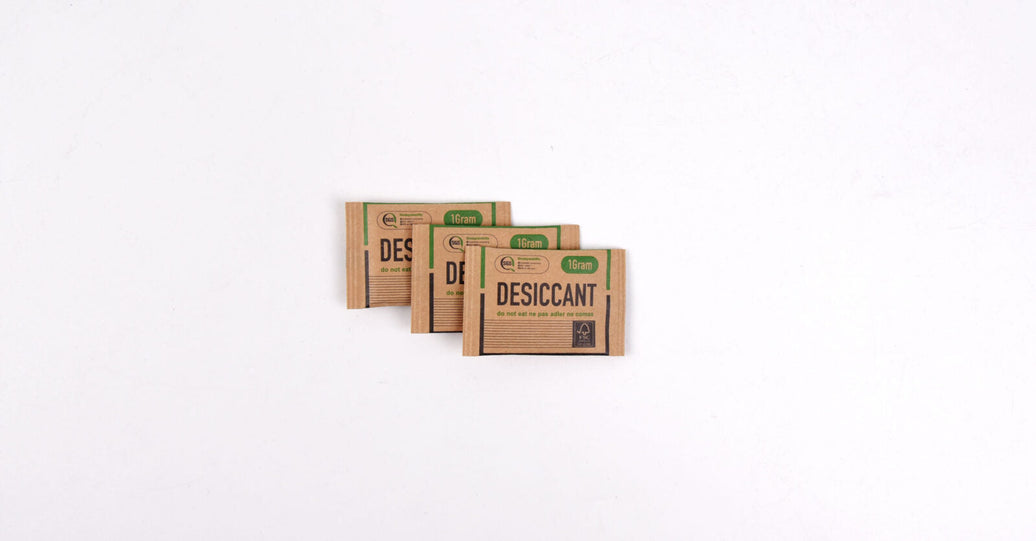
ATMOSIScience fiber desiccant is engineered to satisfy the PPWR by design. It binds calcium chloride into a lignocellulose fiber matrix — a plant-fiber active rather than a mineral one — wrapped in a certified-compostable bag. It carries the full EU compliance stack: SGS Compostable (EN 13432), ISO 14067 Product Carbon Footprint, SGS REACH SVHC, SGS RoHS (EU 2015/863), and SGS Anti-mould.
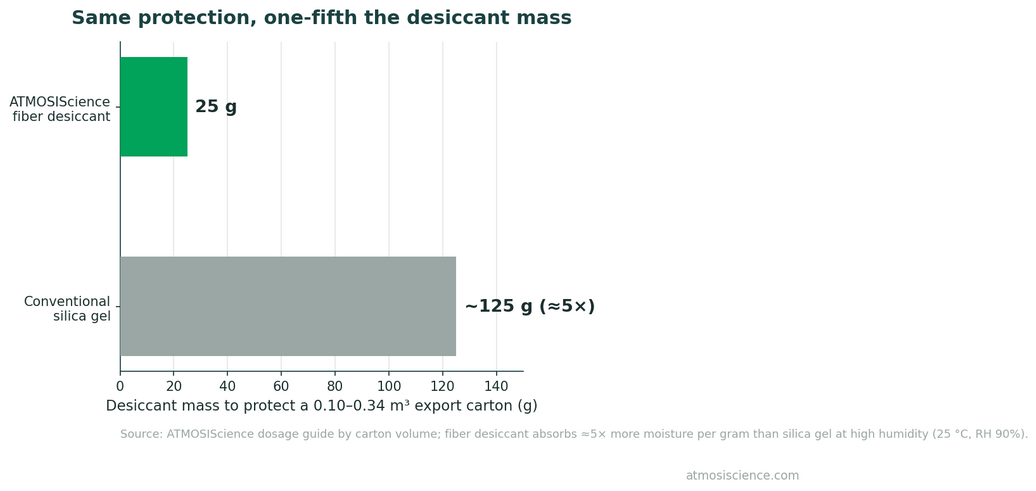
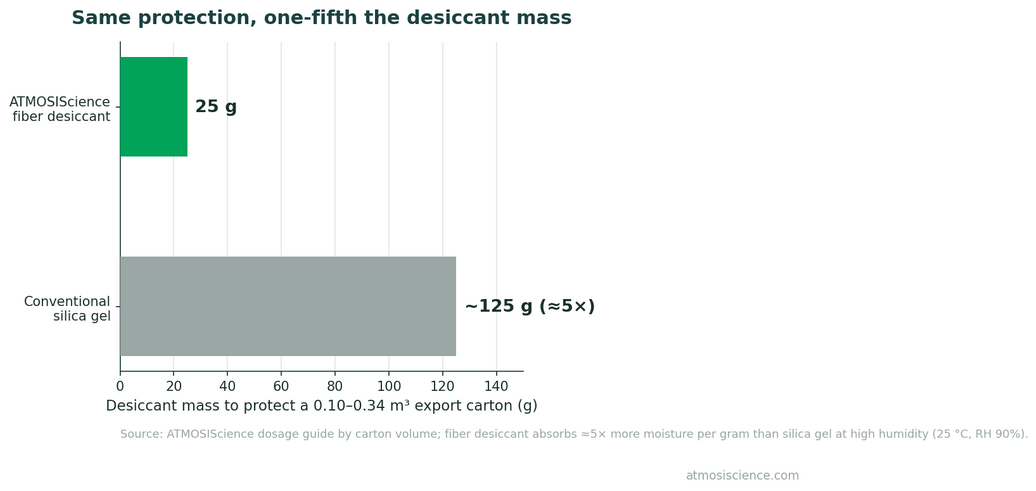
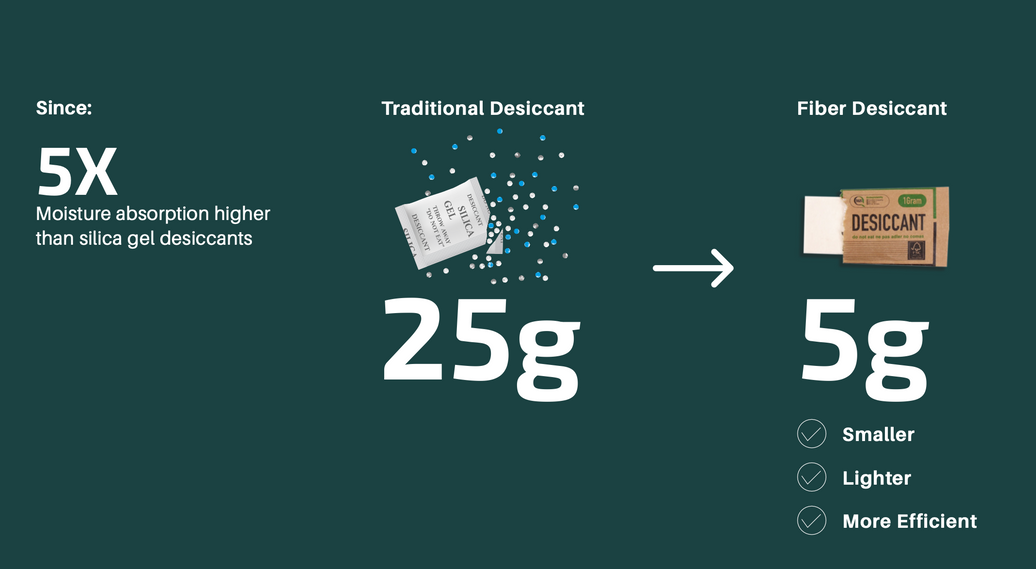
And it does this without the usual sustainability-versus-performance trade-off. The bagged FPH-1 format absorbs over 100% of its own weight — three to five times silica gel — at a 31.25% lower carbon footprint (1.44 kg CO₂e/kg versus roughly 2.10 for silica gel). The compliant choice is also the higher-performing one.
What brands should do before August 2026
Audit every auxiliary packaging component, including desiccant sachets, for EN 13432 compostability certification. Request the certificate and number from the supplier, not a logo. Confirm the active ingredient and bag material are both documented. And model the eco-modulated EPR fee difference between a non-compostable silica-gel sachet and a certified-compostable format across annual volume — the gap compounds quickly at scale.
Frequently asked questions
Does the EU PPWR apply to desiccant sachets?
Yes. The PPWR covers secondary and auxiliary packaging, which includes desiccant sachets. From 12 August 2026, they must meet design-for-recycling and, increasingly, compostability expectations.
What certification proves a desiccant is PPWR-friendly?
EN 13432 compostability certification is the key reference, ideally backed by ISO 14067 carbon footprint and REACH/RoHS documentation. Always request the actual certificate.
Will a silica-gel sachet cost more under EPR?
Likely yes. Eco-modulated EPR fees charge hard-to-recycle, non-compostable components materially more than certified-compostable formats — a recurring penalty on every unit shipped.
Is a compostable claim alone enough?
No. Under the Green Claims Directive, a compostable claim must be substantiated by certification such as EN 13432, or it risks being treated as greenwashing.
This article is general information, not legal advice. Verify current PPWR obligations and certifications against your own products and counsel.
Get ahead of the August 2026 deadline
ATMOSIScience supplies certified-compostable fiber desiccant carrying the full EU compliance stack — EN 13432, ISO 14067, REACH, and RoHS — with higher absorption than silica gel.
Request the EU certificate pack and bulk pricing on our desiccant solutions page, evaluate the material via the Fiber Desiccant, or contact our team.
Related reading: US Packaging EPR Laws & Your Desiccant · Compostable Desiccant & the Green Claims Directive
Get a desiccant spec & bulk quote for your product
Tell us about your packaging needs, and our sales team will respond with a customized fiber-desiccant solution, supporting certificates and competitive bulk pricing.