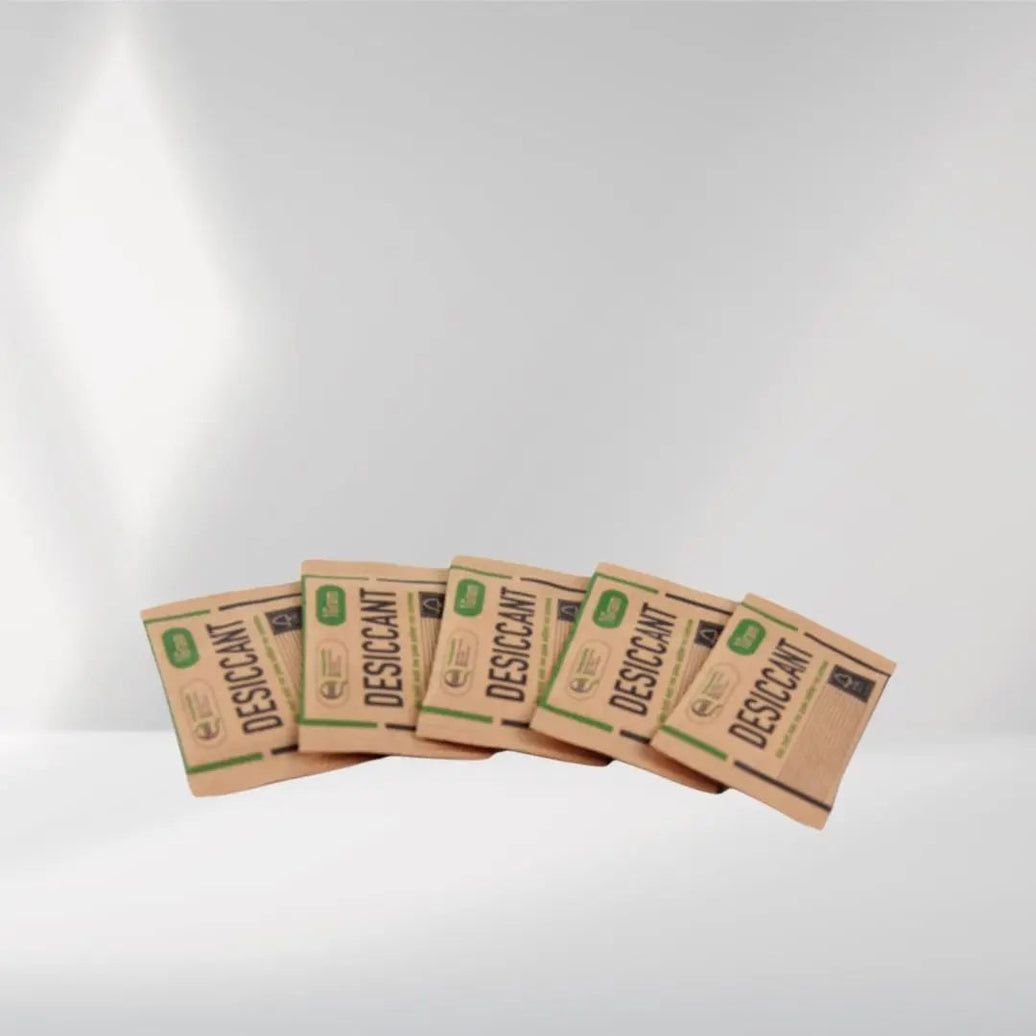
Quick answer: The six realistic silica gel alternatives are bentonite clay, molecular sieve, calcium chloride blends, plant-fiber desiccant, loose mineral powders, and, for a different job entirely, oxygen absorbers. Only two of them beat silica gel on adsorption capacity per gram: molecular sieve at very low humidity, and plant-fiber desiccant at ambient and high humidity. Fiber desiccant adsorbs more than 70% of its own weight at 25 °C and RH90, against roughly 30% for common silica gel, which is why the same protection usually needs far less material.
Buyers rarely go looking for a silica gel replacement because silica gel stopped working. They go looking because something around it changed: an extended-producer-responsibility invoice arrived, a customer asked for a compostability certificate, a QA auditor flagged loose beads on the contamination register, or freight on a 20-gram-per-carton dosage stopped making sense.
This page compares the six options that actually get specified, on the criteria procurement teams are measured against: capacity, dosage mass, documentation, and what happens to the sachet after the customer opens the box.
Why buyers start looking for an alternative
Four triggers account for most of the enquiries ATMOSIScience receives on this topic.
- Regulatory cost. US packaging EPR programmes in California, Oregon, Colorado, Maine and Washington fee packaging by weight and by recyclability. Silica gel is neither light nor recyclable in practice. The hidden EPR fee on desiccant is now a line item, not a rounding error.
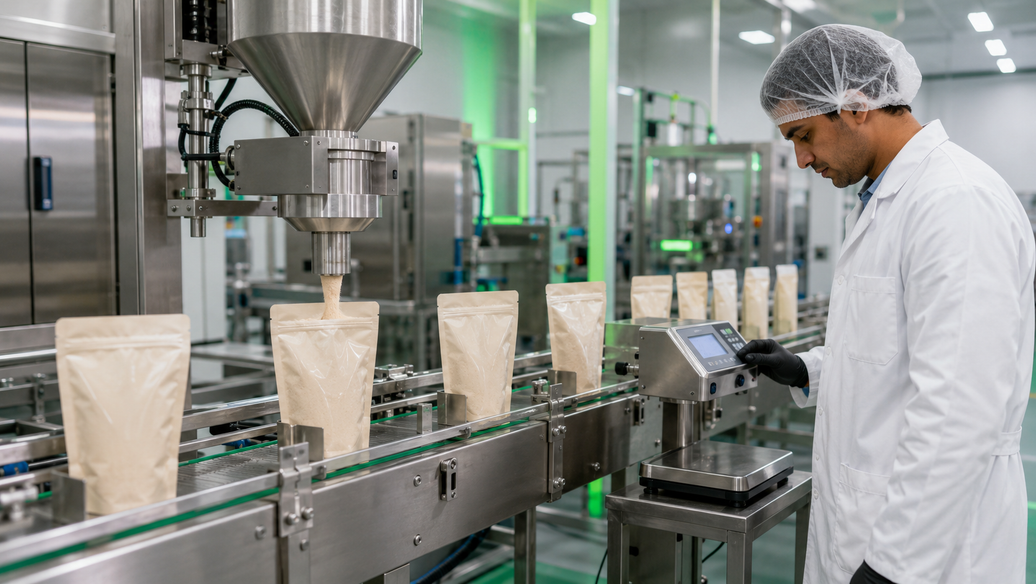
- Contamination risk. Loose-fill beads behave like powder the moment a sachet abrades or a seam fails. Every loose-fill format is a standing item on the QA contamination register.
- Freight and carbon. Desiccant mass ships at the same rate as product. Cutting dosage cuts both freight and reported packaging weight.
- Claims. A compostable pouch with a non-compostable sachet inside it is a greenwashing exposure, not a sustainability story.

The six alternatives, compared
1. Bentonite clay
Cheapest per kilogram and genuinely mineral-derived, which makes it read as the natural option. Capacity is the problem: clay typically adsorbs less than silica gel at the same conditions, so dosage rises. It is also a loose granular fill with the same dust profile. Detailed comparison: bentonite clay vs. fiber desiccant.
2. Molecular sieve
The right answer when the specification genuinely demands ultra-low humidity: pharmaceutical vials, some electronics, certain aerospace parts. Molecular sieve holds a tight grip at very low RH where everything else has already released moisture. It is also the most expensive option and will over-dry products that need a humidity floor. See when ultra-low humidity is worth paying for.
3. Calcium chloride blends
Very high total capacity, because calcium chloride deliquesces: it dissolves into the water it captures. That is exactly why it needs containment engineering. Unbound calcium chloride in a food or supplement pack is a leak waiting to happen. In bound form, inside a fiber matrix, it is a different proposition. Procurement view: calcium chloride vs. silica gel vs. fiber.
4. Plant-fiber desiccant
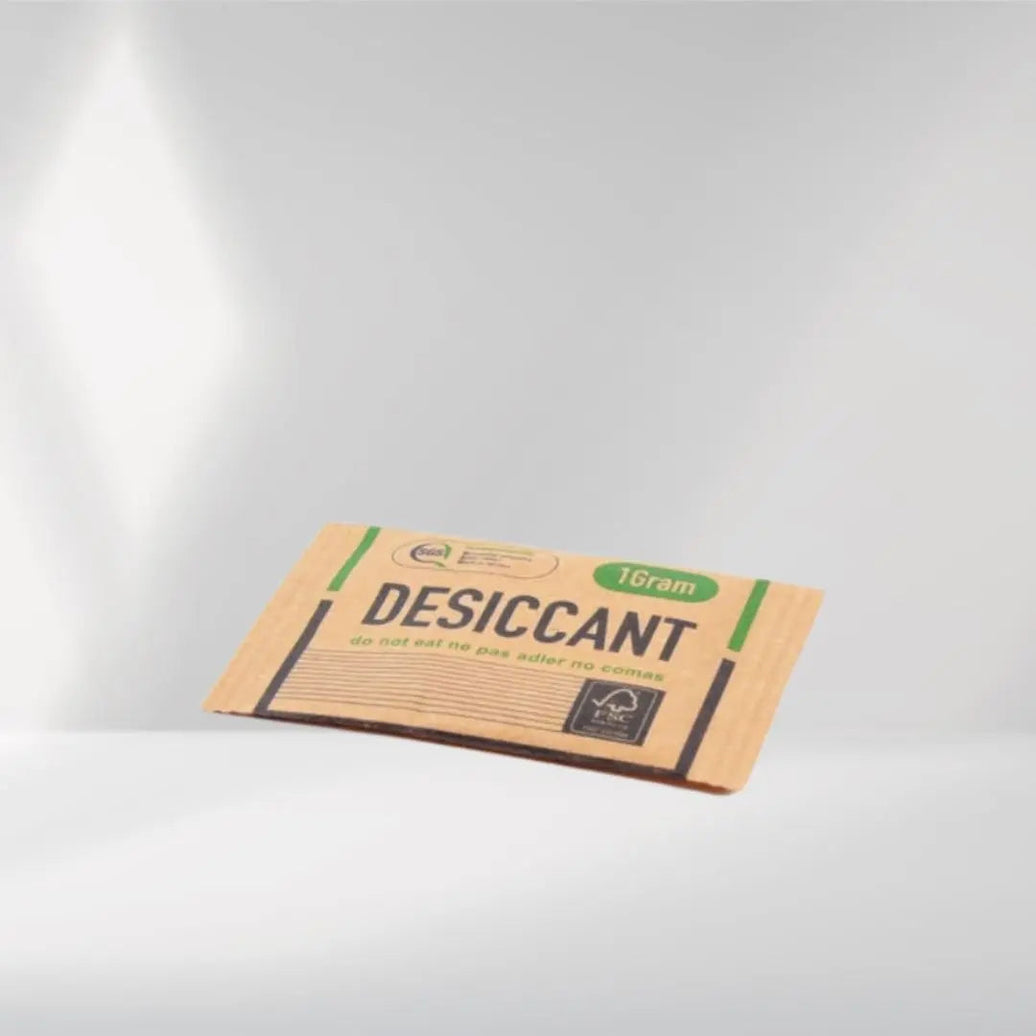
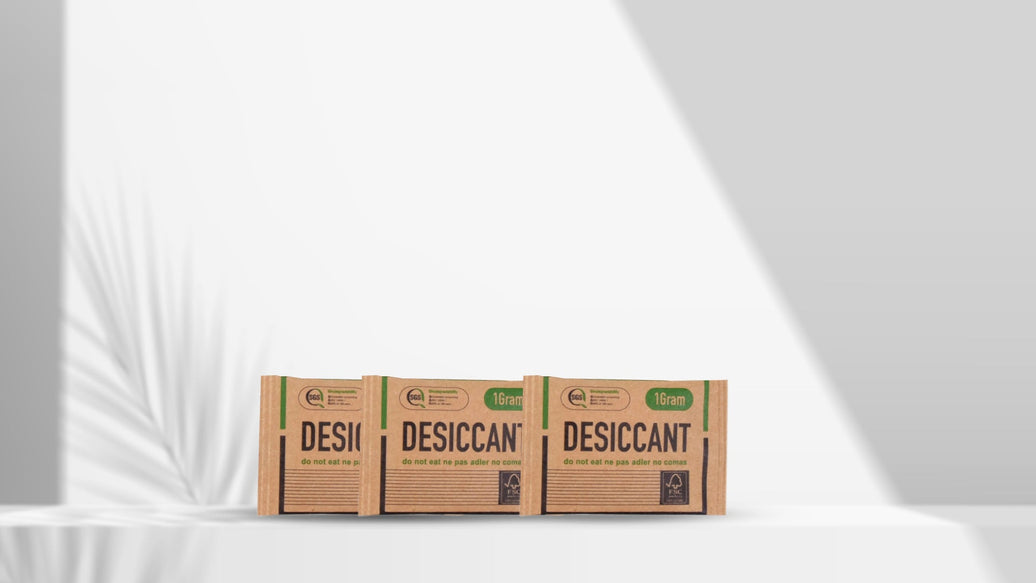
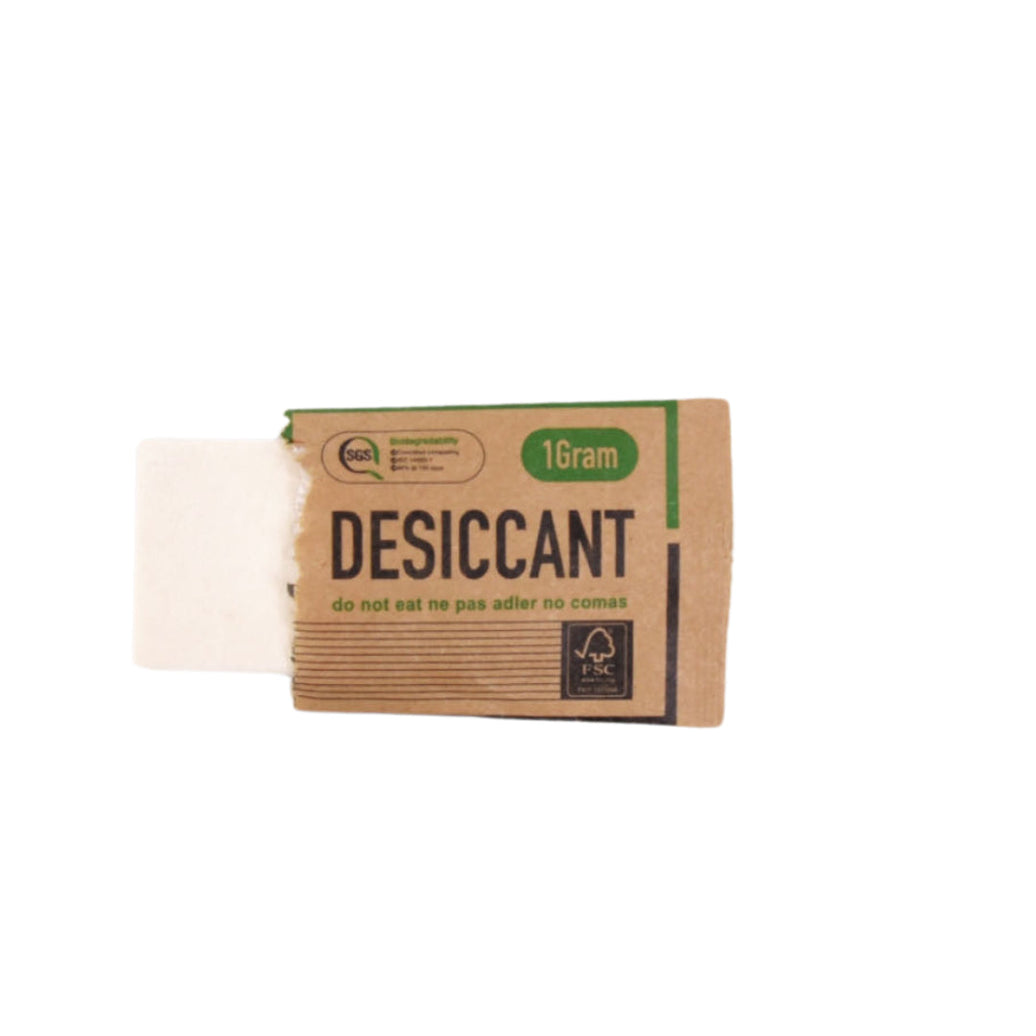
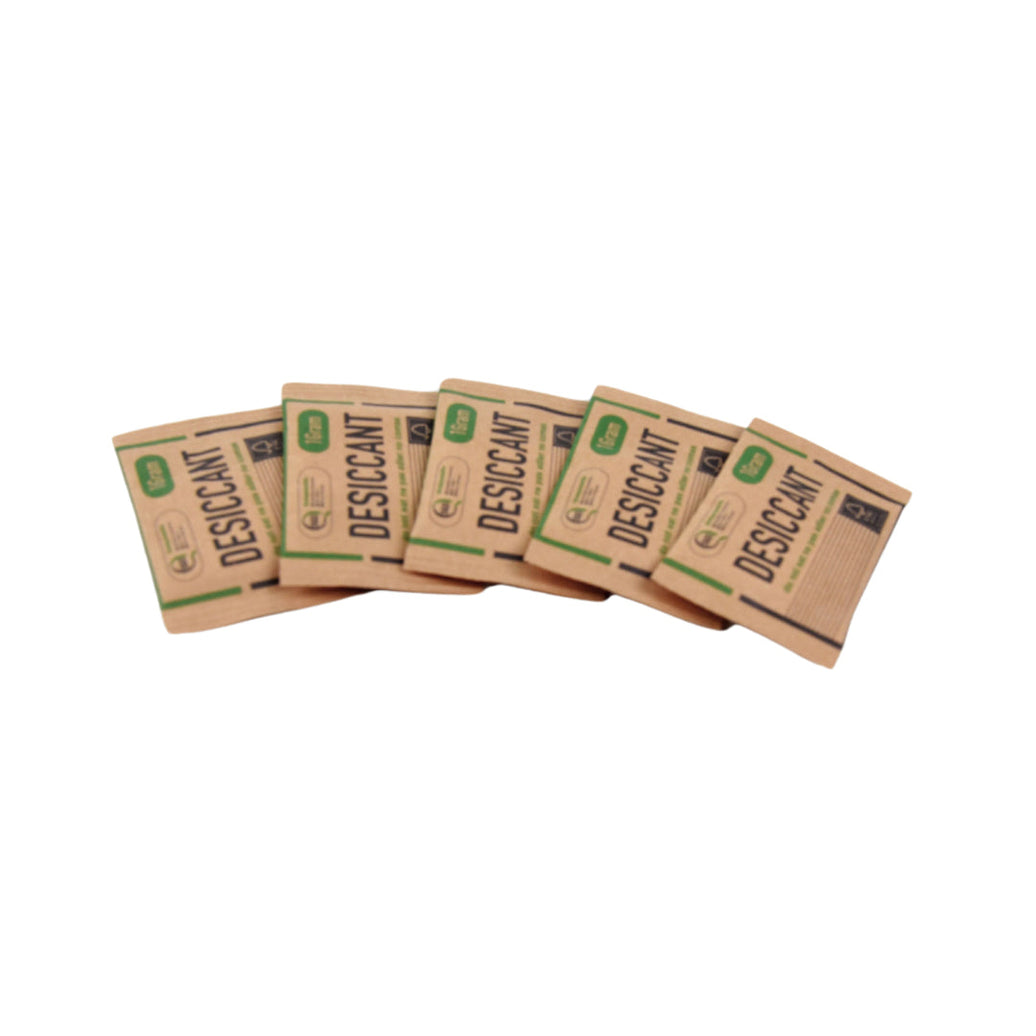
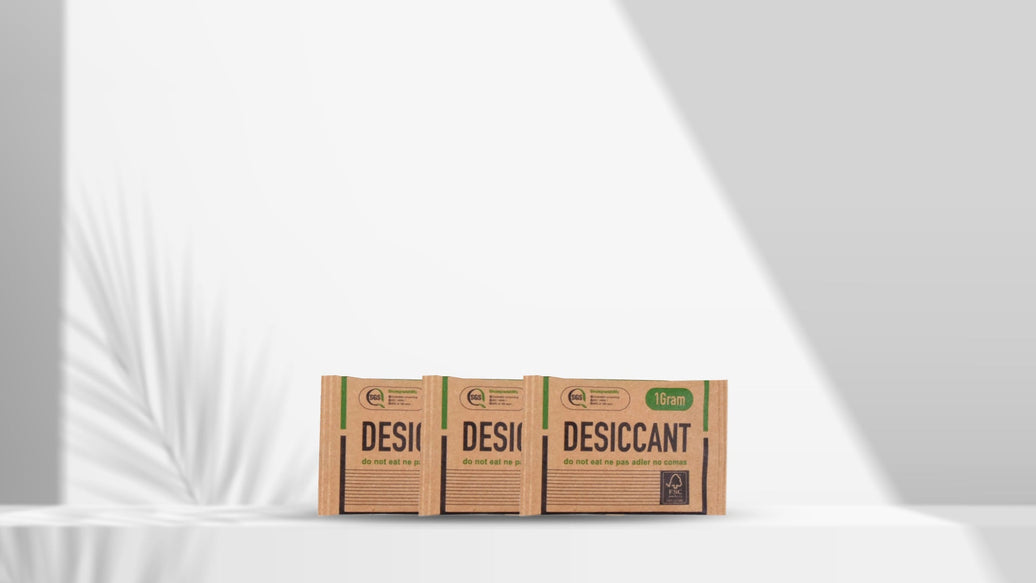
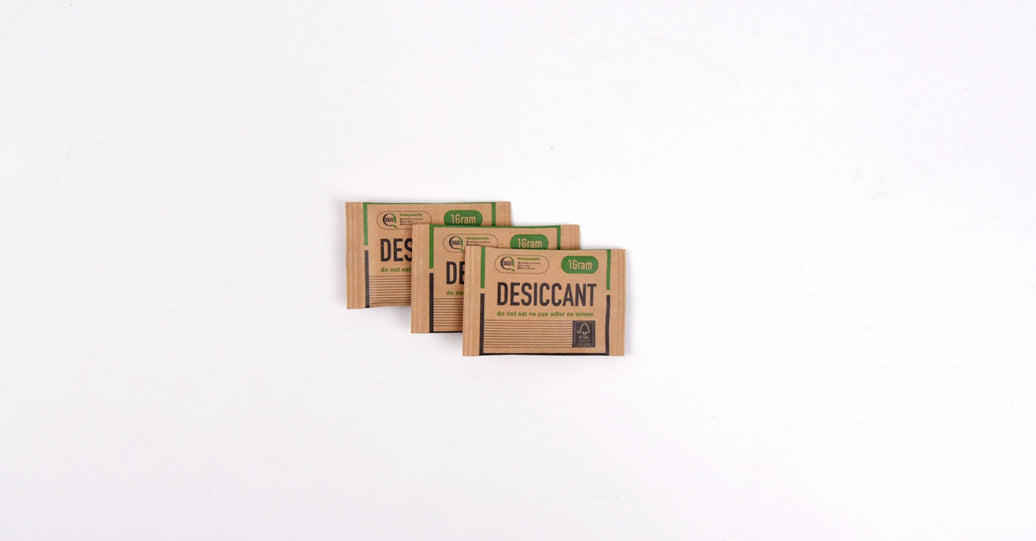
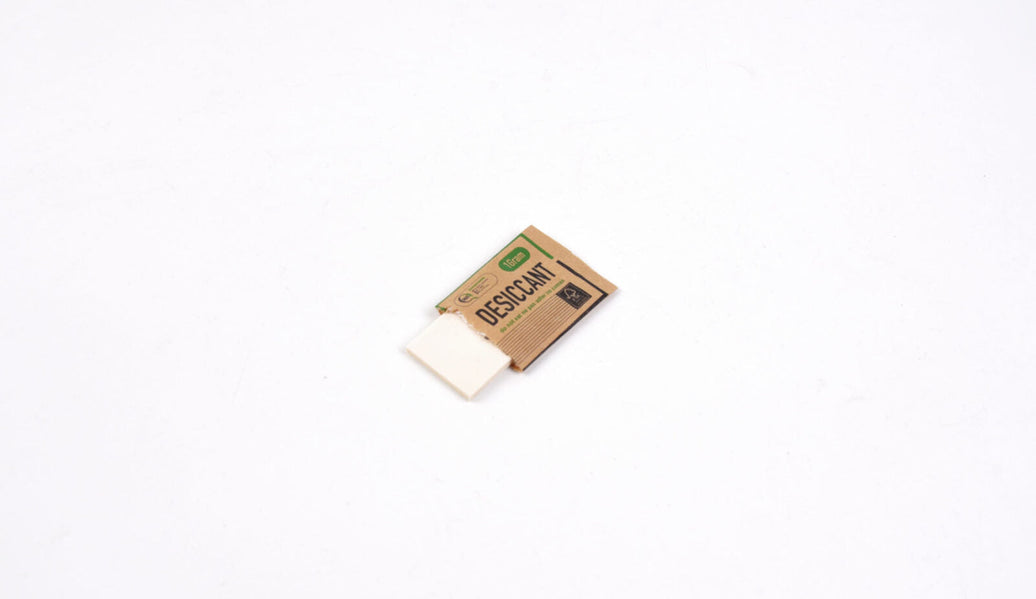
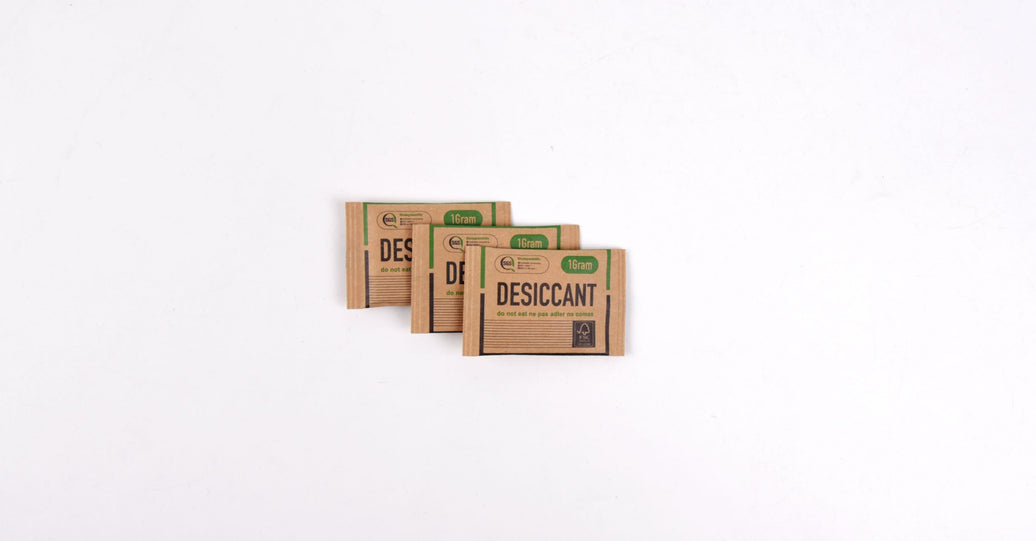
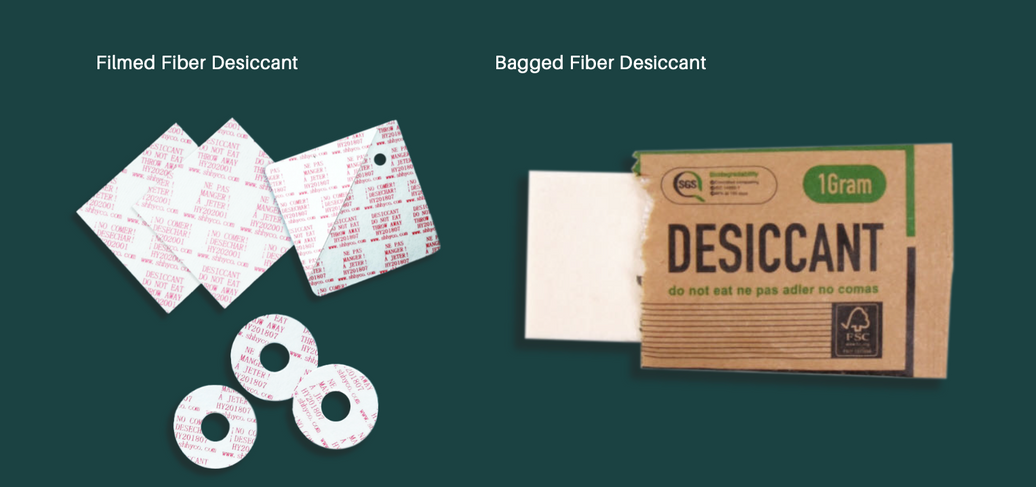
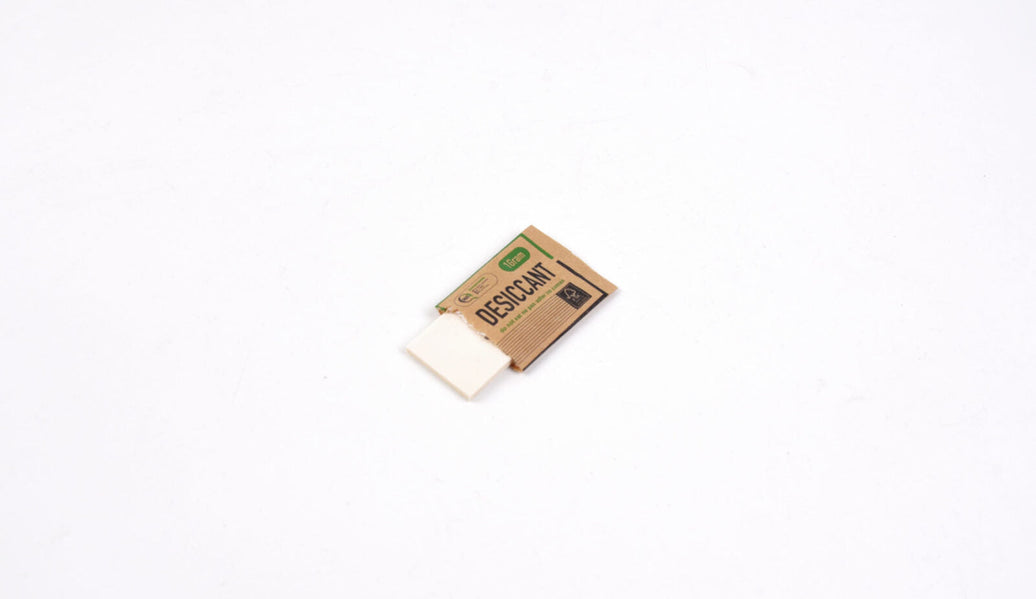
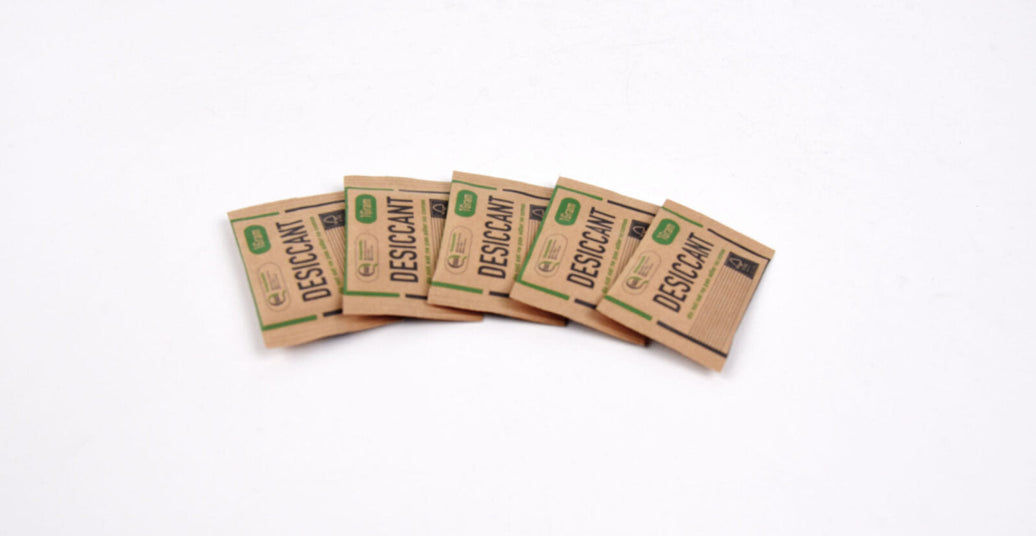
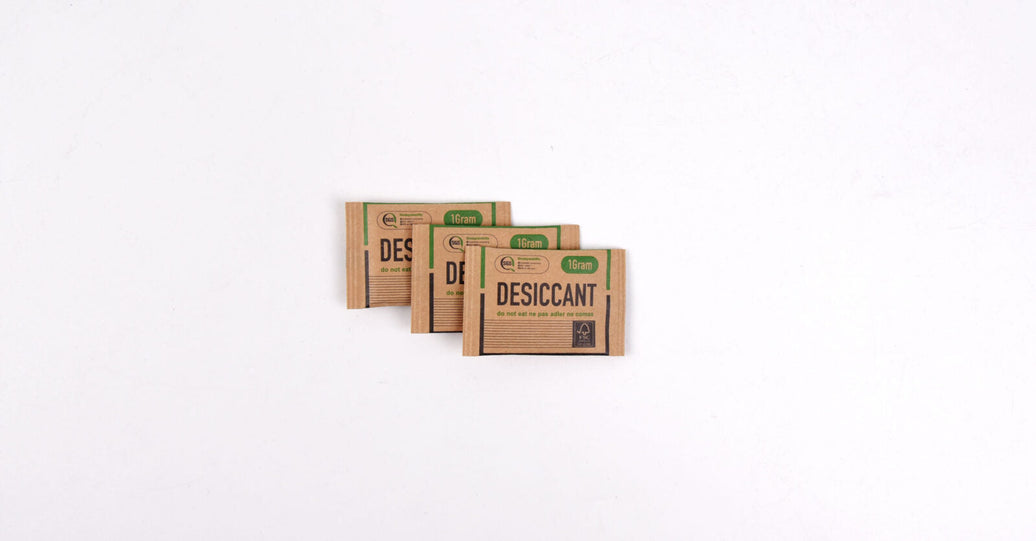
Natural plant fibre as the adsorption substrate, with the pouch film certified industrially compostable. Verified performance: loss on drying under 10%; adsorption above 10% of own weight at RH20, above 35% at RH50, above 70% at RH90 (25 °C); saturated adsorption above 100% of own weight for the bagged format. It is dust-free by construction, because the adsorbent is a bound pad, not a loose fill. It is a one-way desiccant: it removes moisture and holds it, so size it for the humidity band your product needs rather than for maximum dryness.
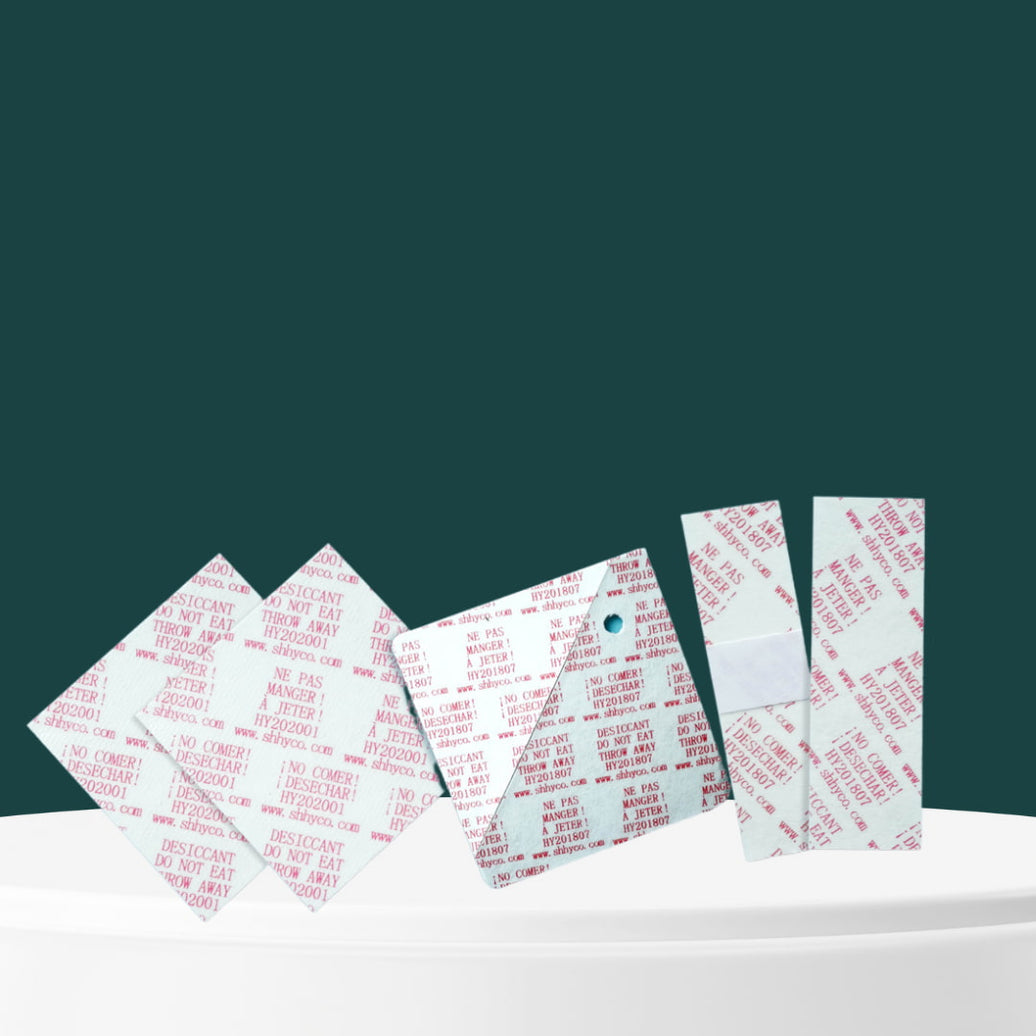
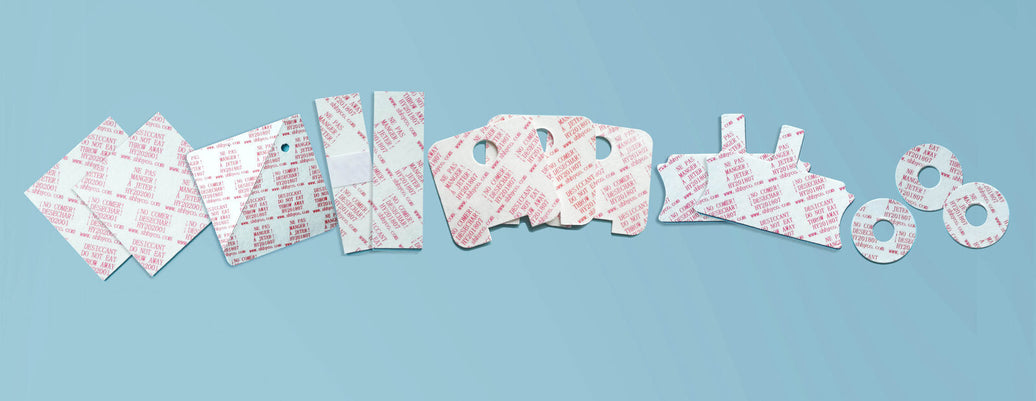
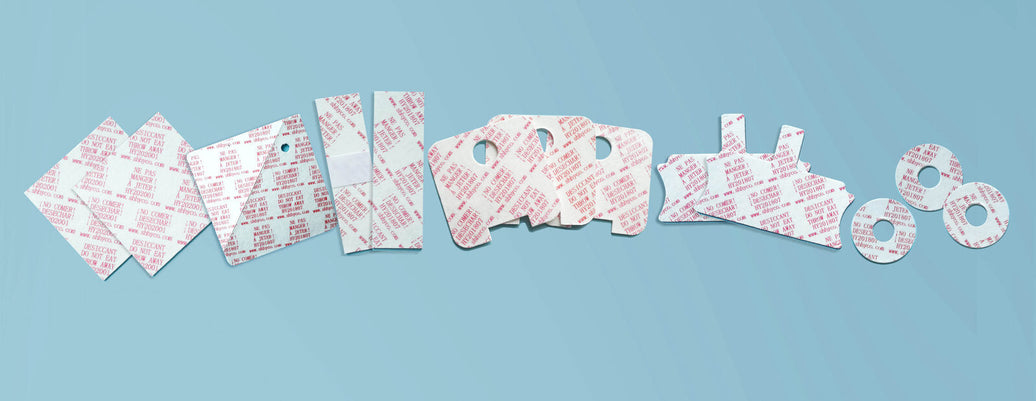
Format matters as much as chemistry here. The same material comes as a bagged sheet or as Fiber Card, a flat, printable paper desiccant card that sits along a wall, under a lid or in a cap without adding bulk.
5. Rice, salt and other improvised fills
Rice appears constantly in search data as a desiccant. It is not one, in any commercial sense. Rice equilibrates at a moisture content far too high to protect a hygroscopic powder, contributes its own microbial load, and has no documentation package. It has no place inside a sealed commercial pack. Context: natural desiccants compared.
6. Oxygen absorbers: a different job
Frequently proposed as a substitute and almost never one. Oxygen absorbers address oxidation, rancidity and colour loss. They do not control relative humidity, and several chemistries need some moisture to function. If a powder is caking, an oxygen absorber will not stop it. See desiccant vs. oxygen absorber vs. nitrogen flush.
Where the mass actually goes
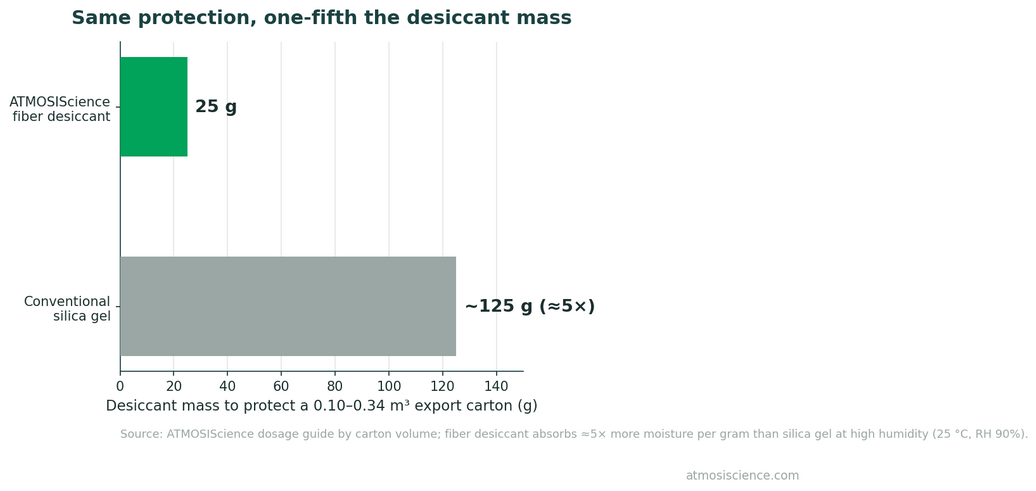
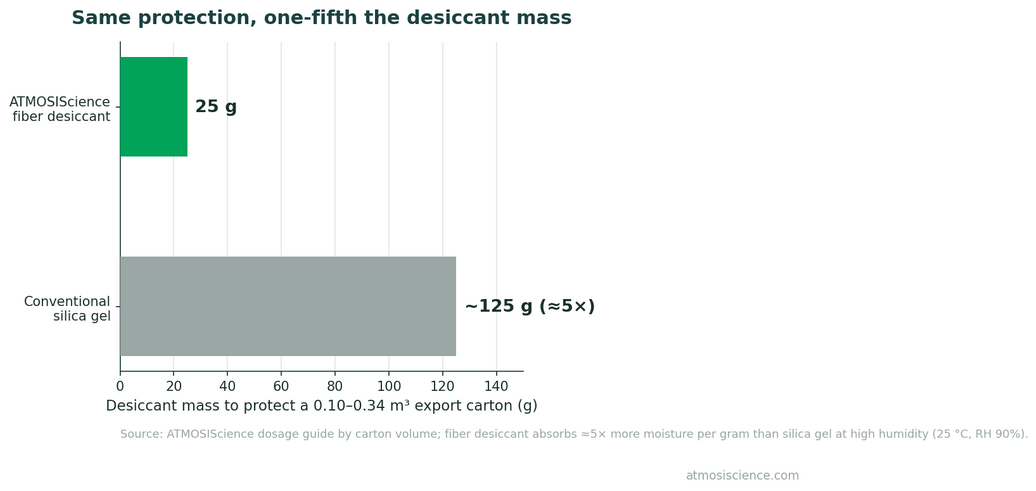
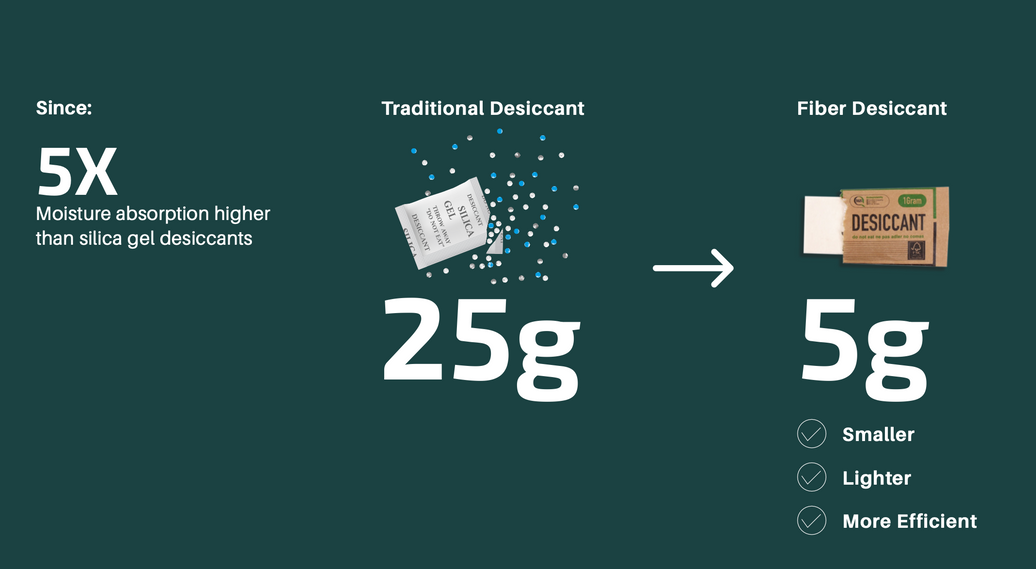
Capacity per gram is the number that decides dosage, and dosage is the number that decides freight, EPR weight and headspace. By the MIL-D-3464E desiccant unit, about 18 g of fiber does the work of about 30 g of silica gel. On our measured curve, fiber holds about 2 times what silica holds per gram in the dry 20 to 40% RH band and about 3 times at high humidity. So a carton that takes 25 g of fiber would typically need roughly 50 to 75 g of silica gel, depending on the humidity it sees.
At the unit level the same pattern shows up in the Fiber Card range. The FF-3 card weighs 0.15 g and is rated at about 0.5 g of silica gel; FF-6 weighs 0.35 g and is rated at about 1 g; FF-15 weighs 1.0 g and is rated at about 2.5 g. Full working: silica gel equivalency by grams.
How to run the swap without re-qualifying everything
- Match the target band, not the material. Write the specification as an RH range the pack must hold for a stated shelf life. Materials then compete on evidence.
- Test at worst case, not at ambient. A 30-day sealed-pack trial at your hottest, wettest lane tells you more than a datasheet. Protocol: the worst-case test protocol.
- Pull the document pack before the trial. COA, food-contact documentation, RoHS report, compostability certification and ISO 9001 evidence should all be in hand before you commit line time.
- Check the dispenser. Card stiffness and sachet dimensions decide whether an automated inserter runs at speed or jams. This kills more swaps than performance does.
Frequently asked questions
What is the best silica gel alternative for food packaging?
For food-contact use the shortlist is short: the alternative needs documented food-grade status, a dust-free construction, and a capacity that lets you keep dosage low. Plant-fiber desiccant meets those three. Clay and loose calcium chloride generally do not clear the dust requirement.
Is there a silica gel alternative that composts?
Yes. Fiber desiccant uses a plant-fibre substrate with pouch films certified industrially compostable. Silica gel itself does not compost. Certification detail: which compostability certification you actually need.
Can I swap one-for-one by count?
Not by count, by capacity. Replacing a 1 g silica sachet with a 1 g fiber sachet over-specifies; the correct swap is by adsorption requirement at your target RH, which typically reduces mass substantially. Method: silica gel equivalency.
Is silica gel actually being banned anywhere?
No. No jurisdiction has banned silica gel. What is changing is that packaging is being priced and graded by weight, recyclability and end-of-life, so silica gel gets progressively more expensive to keep rather than illegal to use.
Does a lower-mass desiccant protect for less time?
Not if the capacity math is done properly. Service life is a function of total adsorption capacity against total moisture ingress, not of gross weight. A lighter, higher-capacity charge can hold the same band for the same duration.
Compare a silica gel alternative against your own pack
Send the pack format, target RH band and shelf life. ATMOSIScience returns a dosage recommendation, the matching document pack and a sample for worst-case testing.
Prefer email? info@atmosiscience.com