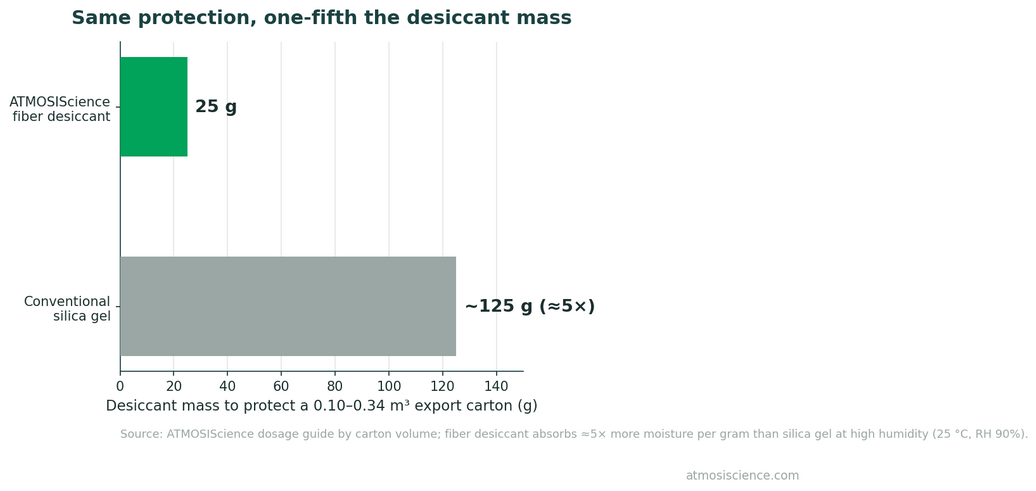
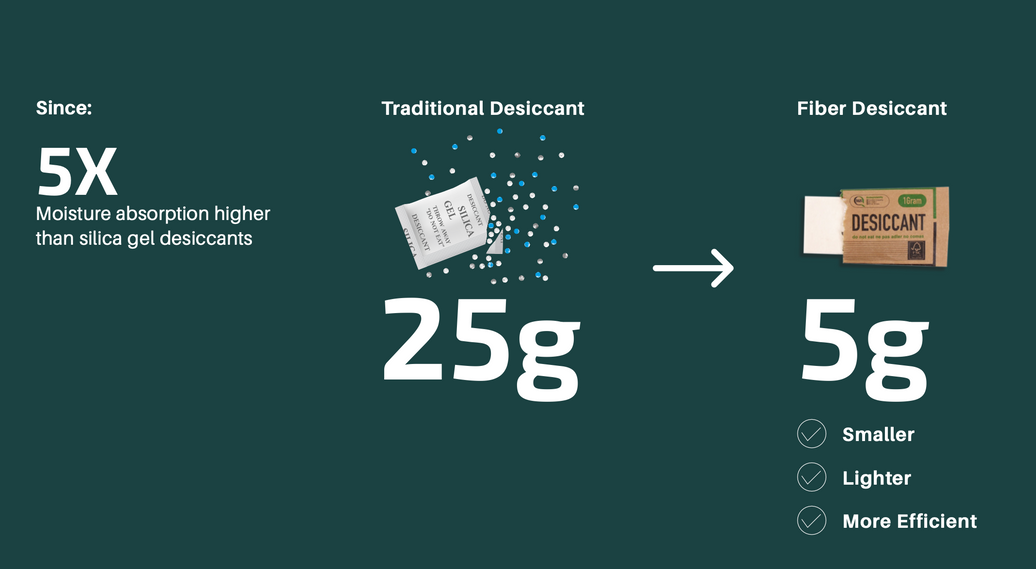
Quick answer: Choose by target humidity. Molecular sieve earns its premium only when the pack must sit at very low RH (roughly below the 10–20% class) or must not release moisture back during heat swings — effervescent tablets, diagnostic strips, some APIs, battery-adjacent materials. Silica gel is the general-purpose default. Fiber desiccant carries the highest capacity per gram at mid-to-high humidity (adsorbing >35% of its own weight at RH50 and >70% at RH90) plus food-contact and compostability documentation. Most products fail from RH50–70 exposure, not RH10 — which means many buyers paying sieve prices are buying protection their product cannot feel.
The calcium-chloride-vs-silica comparison is one of the most-read pages on this blog, and the follow-up question buyers send is consistently about the third name on their quote sheet: molecular sieve. Here is the decision logic ATMOSIScience uses when a buyer asks which class their product actually needs.
What each material is
Molecular sieve — synthetic zeolite with uniform pores that grip water molecules tightly. It pulls RH extremely low and holds moisture even as temperature climbs. That grip is the product: near-zero equilibrium RH and no rebound.
Silica gel — amorphous silicon dioxide, the broad-range workhorse: predictable, inert, moderate capacity across the RH range.
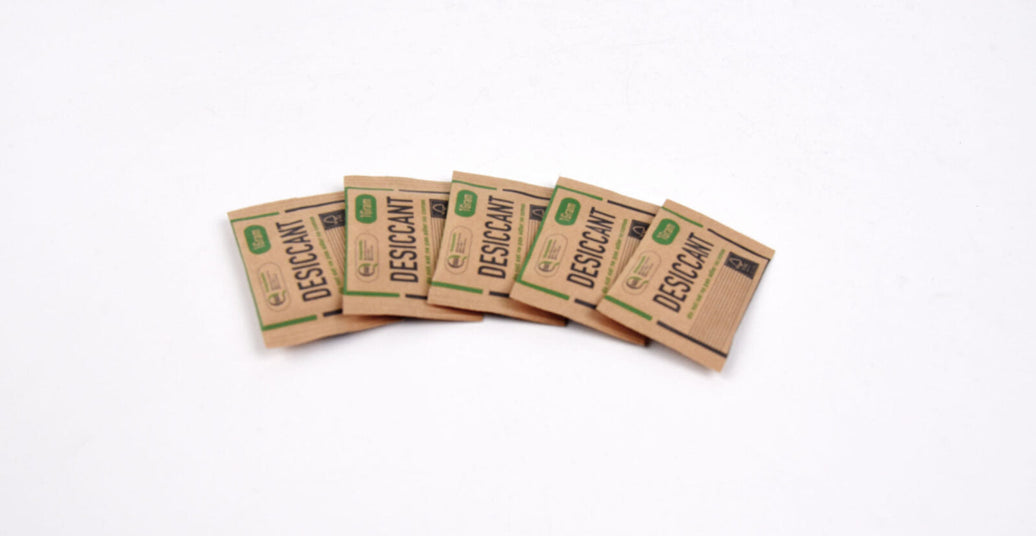
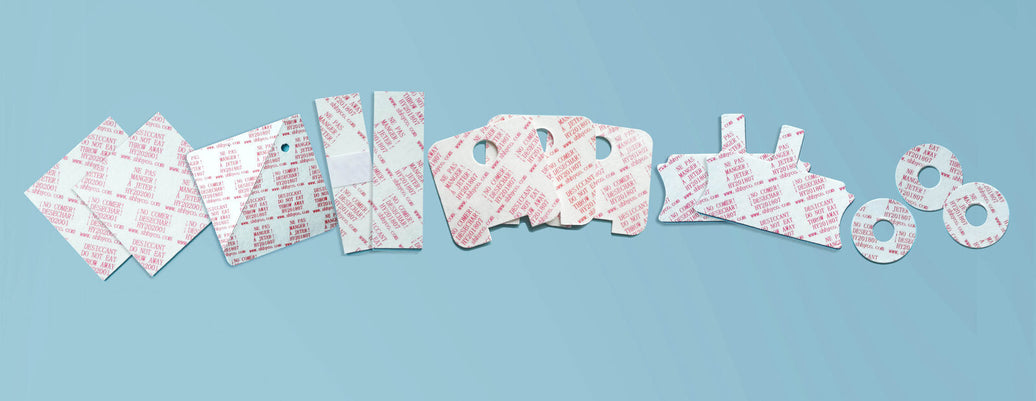
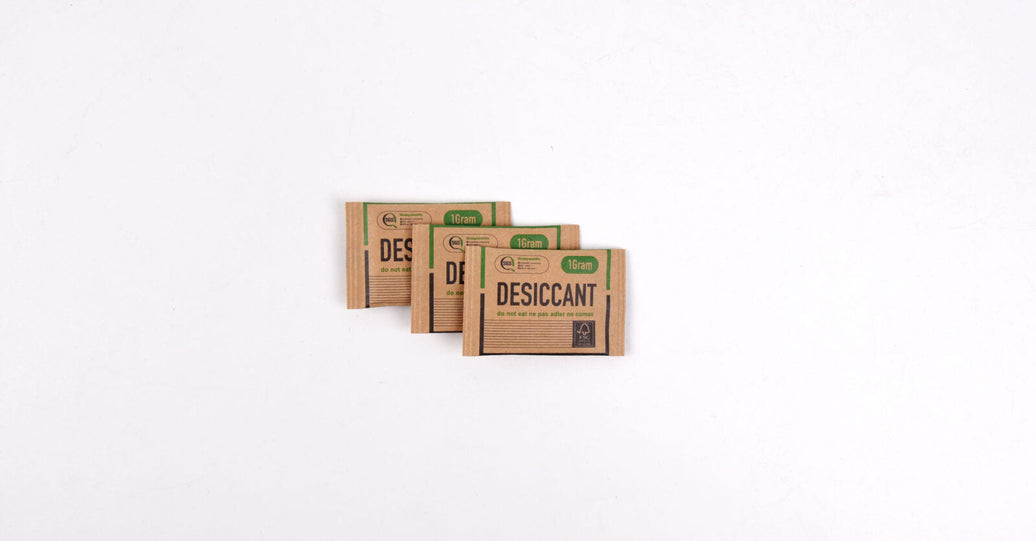
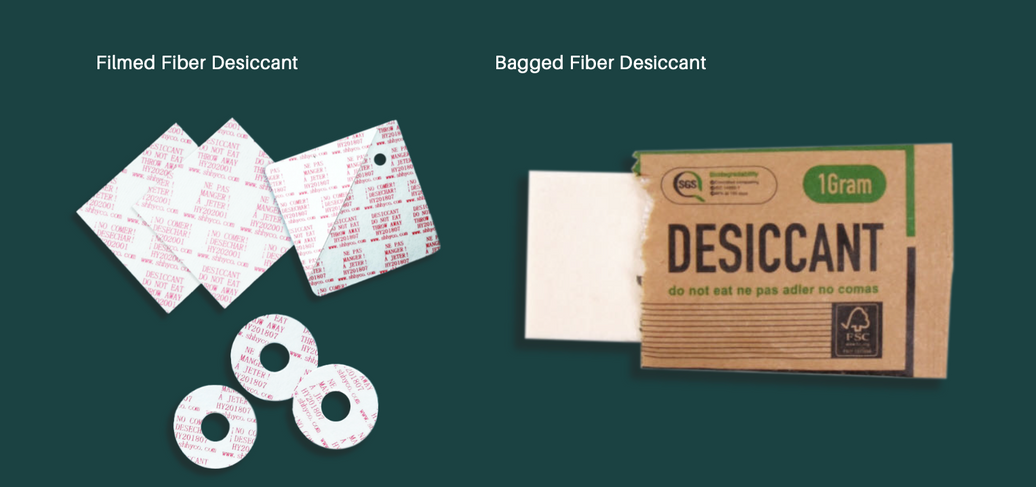
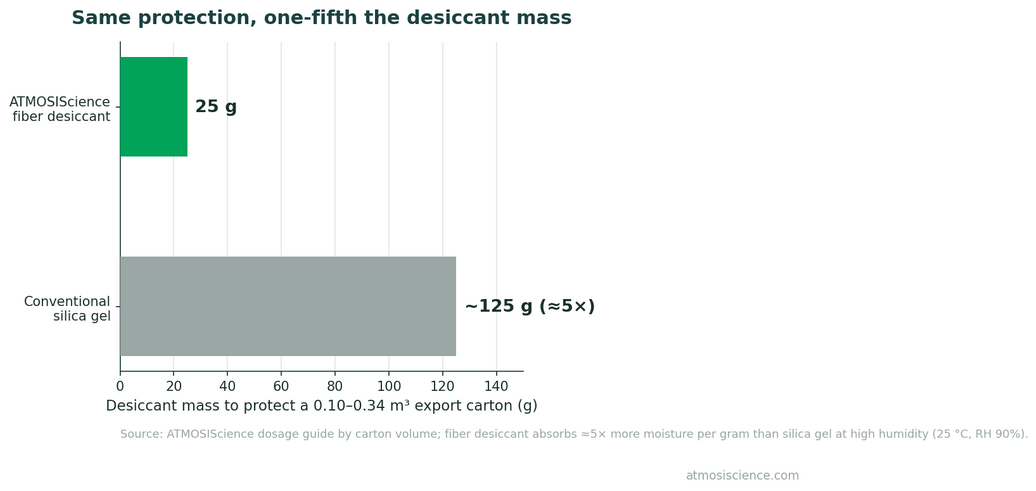
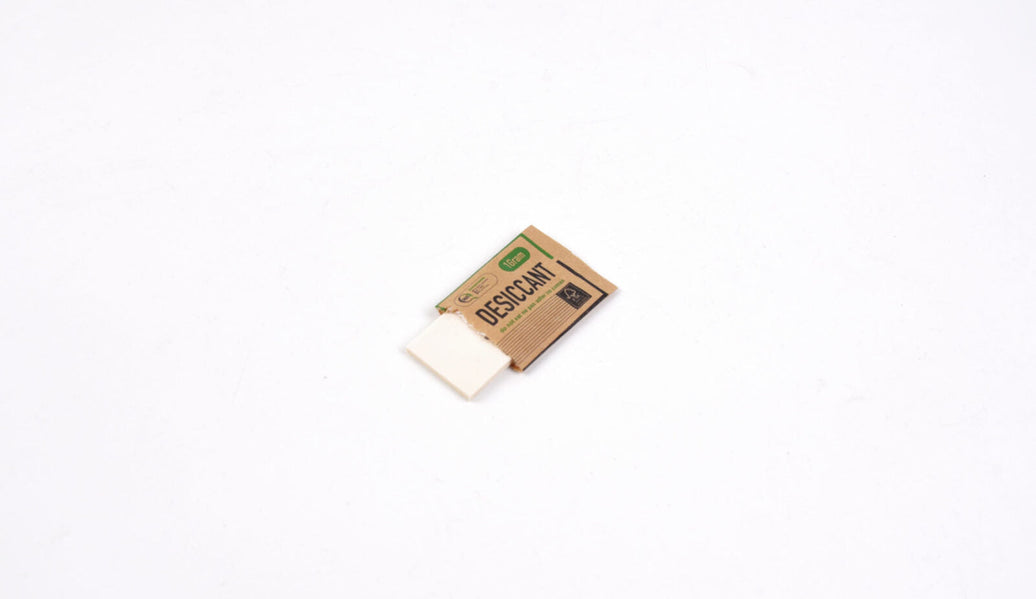
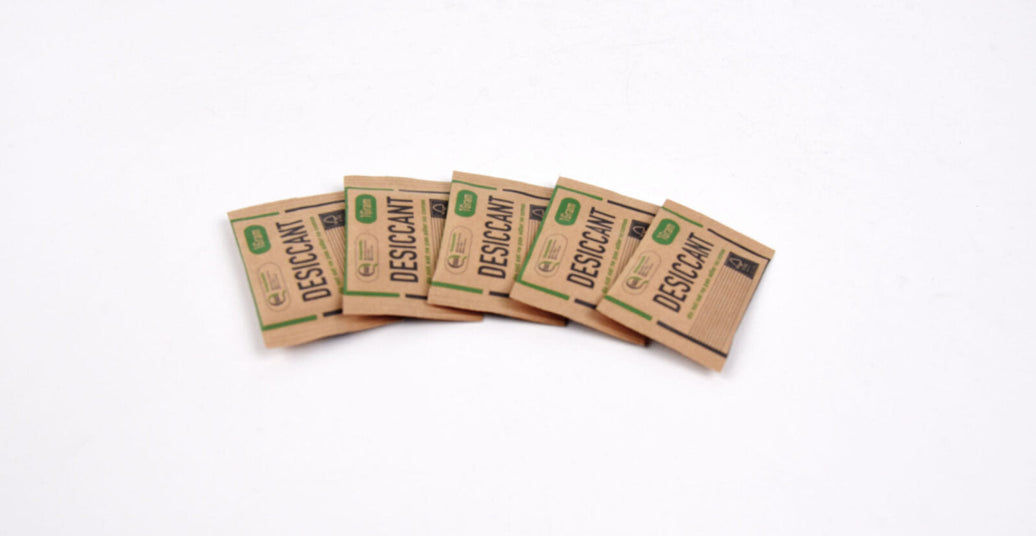
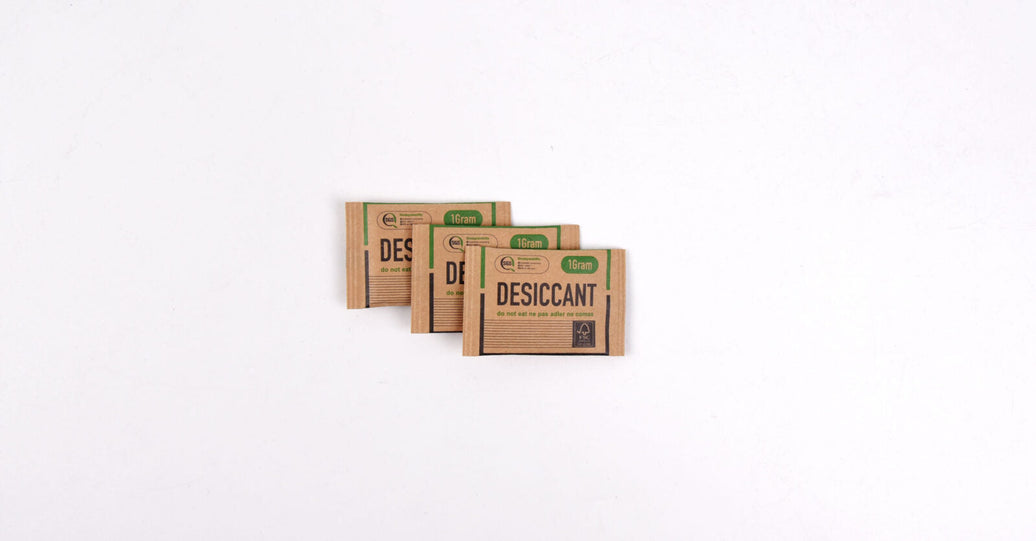
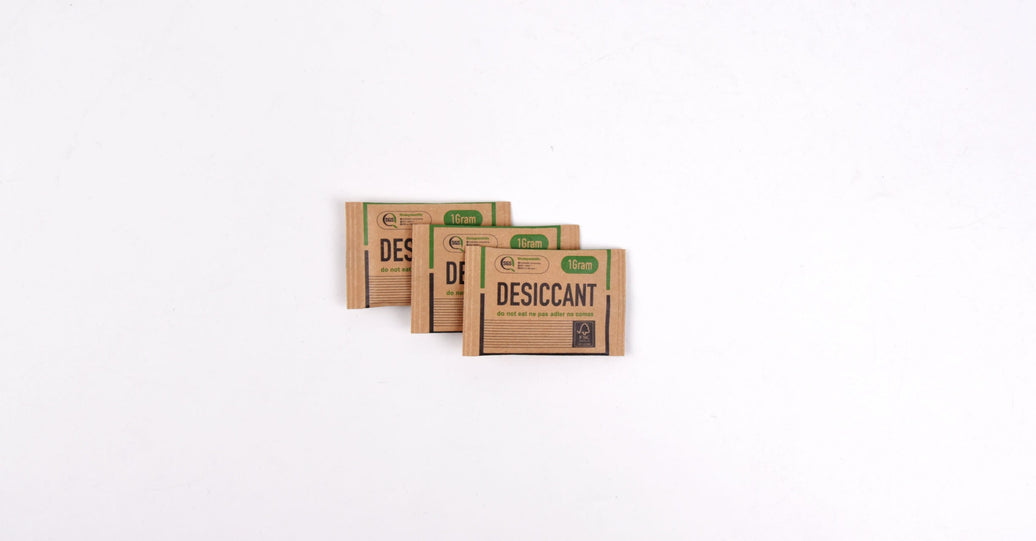
Fiber desiccant — plant-based cellulose matrix engineered for high capacity where real supply chains live: >10% of own weight at RH20, >35% at RH50, >70% at RH90 (25°C), saturating above 100%, with FDA 21 CFR 175.300 food-contact documentation and compostable-certified films (ASTM D6400 / EN 13432).
The decision variable: target RH, not habit
Every desiccant pulls the enclosed air toward its own equilibrium behavior. The question is what the product requires. Effervescent tablets begin reacting with trace moisture; lateral-flow diagnostics drift; those genuinely need the ultra-dry floor a sieve provides — the application detail is in the effervescent guide and the diagnostic test-kit guide. But most powders cake, clump and cap-lock from sustained RH50–70 exposure. For them, the spec that matters is capacity at the humidity they actually face — the comparison table across all four classes is in Desiccant Capacity Compared.

Temperature swings: the sieve's second honest use case
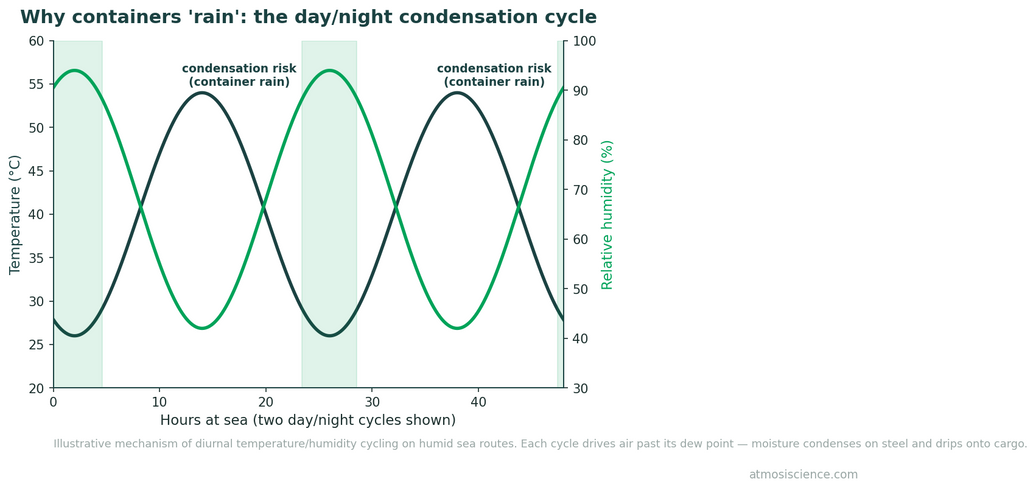
Silica and clay can release adsorbed moisture back into the pack as temperature rises — a real problem for goods that cycle warm-cold through uncontrolled logistics. Molecular sieve holds on. If the route includes repeated thermal cycling and the product is moisture-critical, that retention justifies the premium. For products that need a stable mid-band rather than a desert — instruments, botanicals, anything with a target range — the two-way fiber platform solves rebound differently: it re-releases moisture by design, toward a setpoint, the principle explained in Why 'Drier Is Better' Is Wrong.
Cost logic: overspec is a quiet tax
Sieve is the most expensive mainstream desiccant class per unit of capacity. Paying that premium to protect a protein powder whose caking threshold sits far above sieve territory buys nothing the product can feel — while adding cost on every unit shipped. The buying pattern ATMOSIScience recommends: specify the product's moisture threshold first (isotherm or water-activity testing), then choose the cheapest class that reliably holds the pack below it with margin. Ultra-dry environments like battery-material handling remain sieve-and-dry-room territory — context in the battery-materials guide.

Decision checklist
Ask four questions in order. What internal RH does the product require — measured, not assumed? Does the route include heat swings that would make silica or clay give moisture back? Does the pack need food-contact documentation or a compostability story? What does each candidate cost per protected unit at the gram weight the math requires? Sieve wins on question two for moisture-critical goods and on ultra-low floors; fiber wins on capacity-per-gram at real-world humidity plus documentation; silica wins when “adequate and cheap” is the whole brief.
FAQ
Is molecular sieve better than silica gel?
At very low RH and under heat, yes — that is what it is engineered for. As a general-purpose protector it is usually overspec: more cost per unit of protection the product never uses.
What RH does molecular sieve achieve in a sealed pack?
Correctly dosed, it pulls the enclosed air toward the very dry floor — the reason effervescents and diagnostics specify it. Fiber and silica equilibrate higher, which is desirable for most products.
Can fiber desiccant replace molecular sieve?
Not for genuine ultra-low-RH requirements. It replaces silica and clay in the mid-to-high-RH mainstream — at lower gram weights per carton and with compostable end-of-life.
Which desiccant for a mixed product line?
Segment by threshold: sieve for the few moisture-critical SKUs, fiber or silica for the rest. One-class-fits-all is how overspec creeps into the BOM.
Not sure your product needs ultra-low RH? Send the spec
Share the product type, target shelf life and route. The team maps your moisture threshold and answers with the cheapest class that holds it — even when that answer is not fiber.