Quick answer: Battery materials — cathode precursors, lithium salts and electrode powders — are among the most moisture-sensitive powders in any supply chain, with tolerances far tighter than food products. Dry rooms protect them during production, but transit and warehousing are the exposed gap. The packaging fix is a dust-free, high-capacity desiccant sized to the route and container, plus humidity monitoring for storage. ATMOSIScience supplies dust-free fiber desiccant (ROHS-tested, 1–1,000 g formats) used across electronics and industrial supply chains.
The battery sector buys moisture control differently from every other powder industry. A protein-powder buyer worries about clumping; a battery-materials buyer worries about chemistry. That difference changes what to put in the box.

Why battery powders are moisture-critical
Three well-documented failure modes drive the spec:
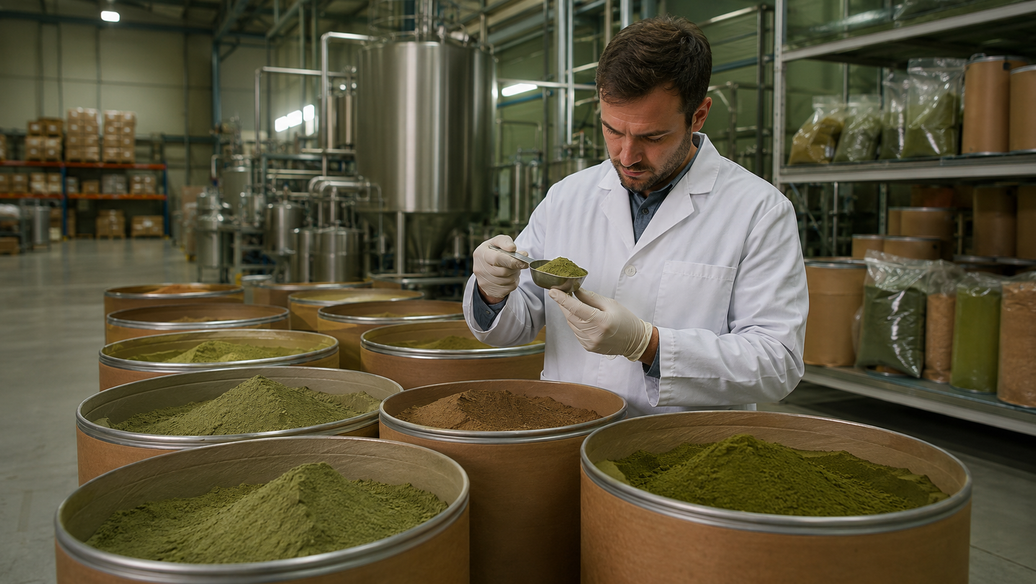
- Hygroscopic precursors and salts. Nickel-manganese-cobalt (NMC) precursors, lithium hydroxide and lithium carbonate pick up ambient moisture during handling and transit. Absorbed water changes downstream slurry behavior and can degrade active material performance.
- Electrolyte salt hydrolysis. Lithium hexafluorophosphate (LiPF6) reacts with water to form hydrofluoric acid — a safety and quality problem at even trace moisture levels. Packaging for electrolyte salts is engineered around keeping water out.
- Electrode coating defects. Moisture carried into the coating and calendering steps shows up later as gassing, capacity fade and inconsistent cell quality. Cell makers run dry rooms precisely because ambient humidity is the enemy.
The exposed gap: between factories
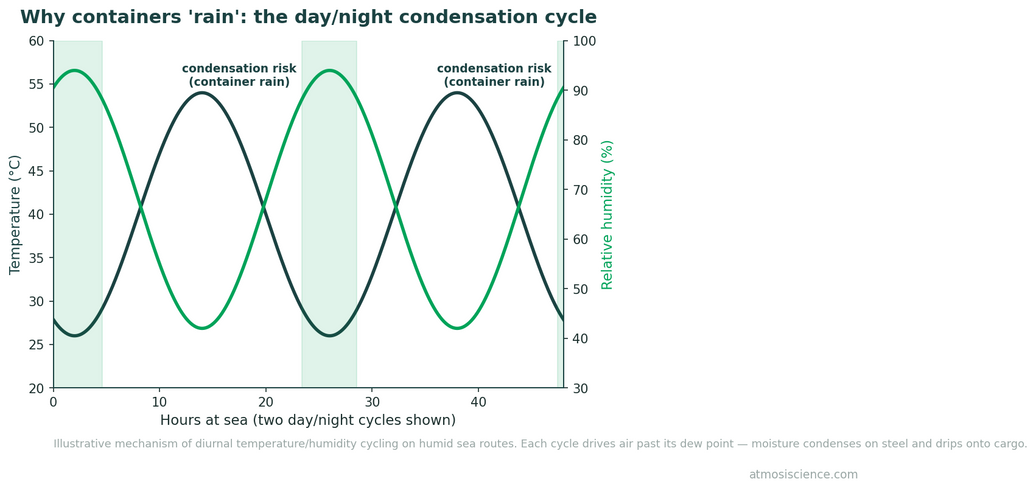
Dry rooms cover production. The gap is everything in between: sea freight from precursor plants, port dwell time, regional warehouses, and the loading dock where drums and FIBCs wait. On Asia–US and intra-Asia routes, containers cycle through daily temperature swings that push relative humidity toward saturation — the same mechanism that causes container rain.
ATMOSIScience partners in electronics report the same pattern the battery sector sees: the product ships dry, and arrives wet enough to fail incoming QC.
What to spec for battery-adjacent powders
1. Dust-free construction is non-negotiable
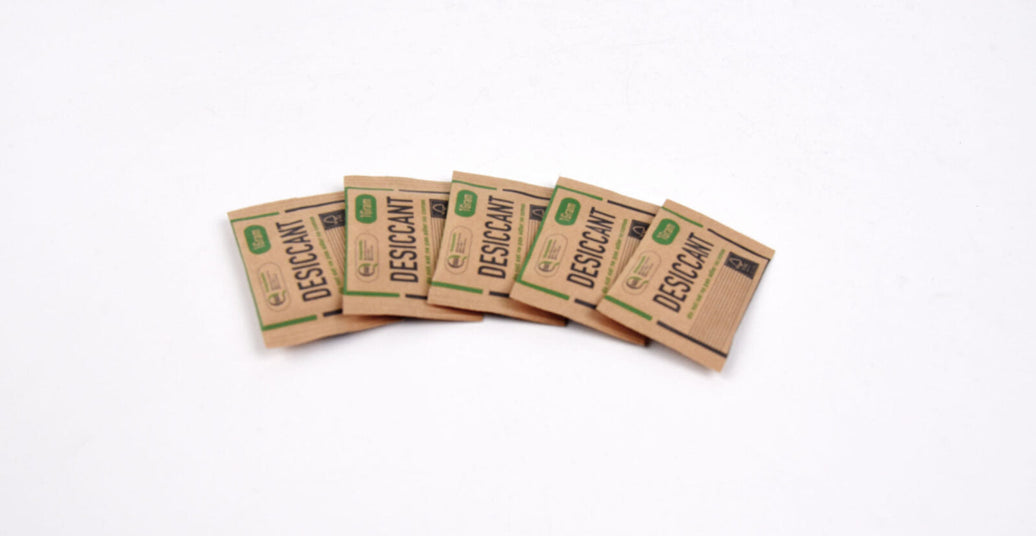
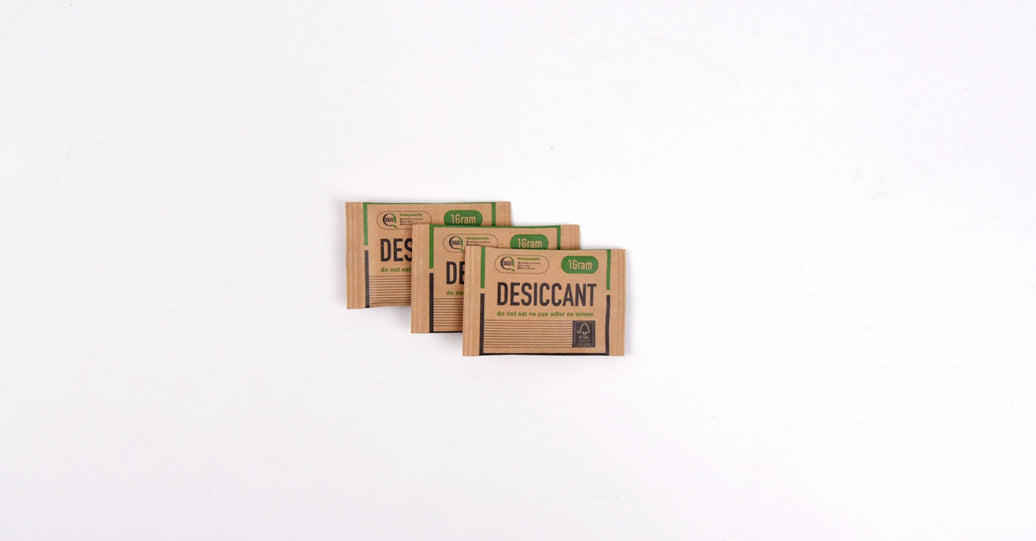
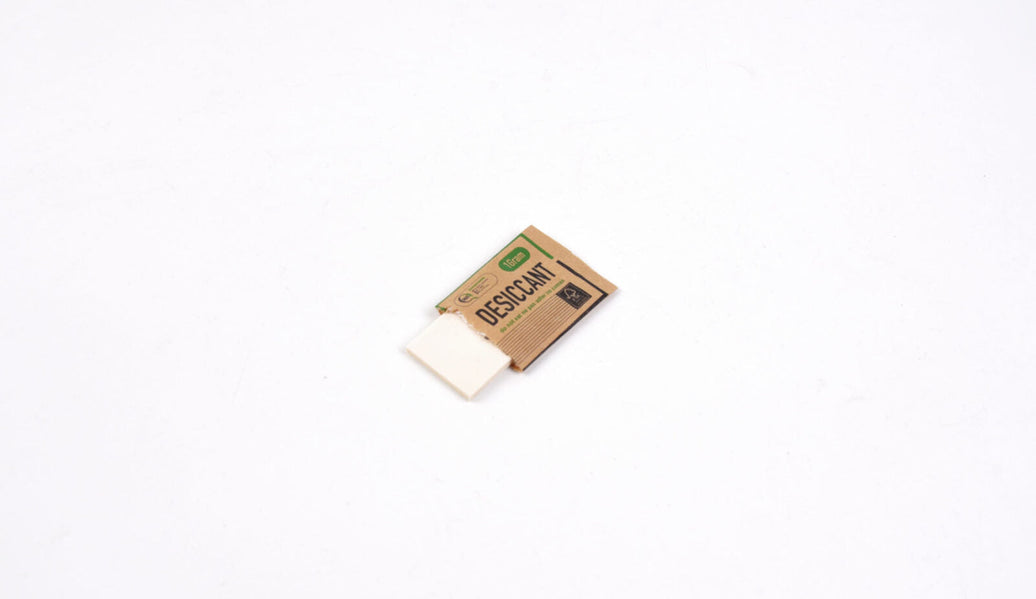
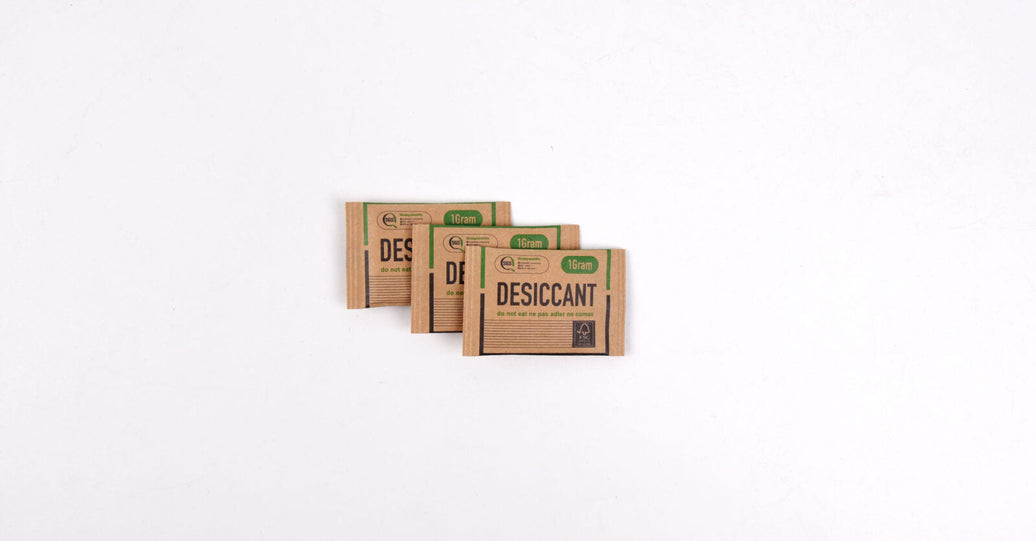
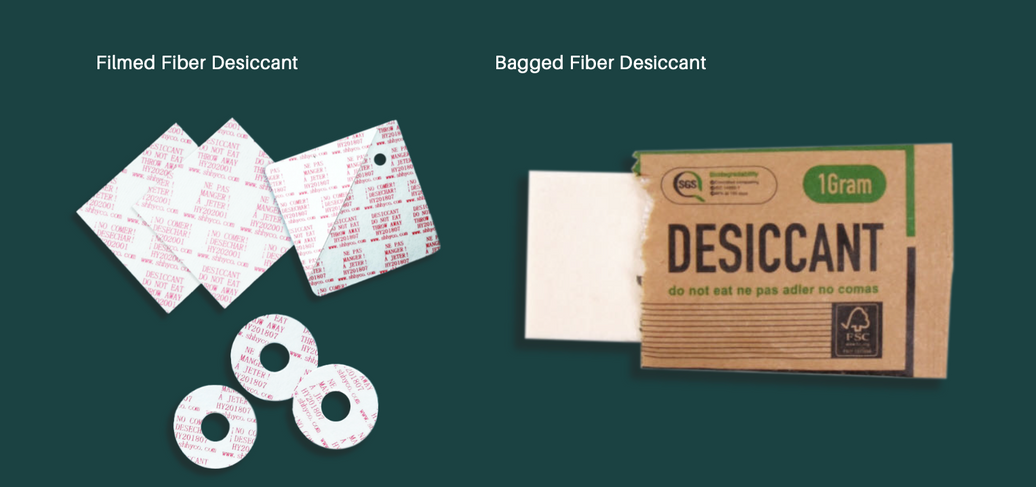
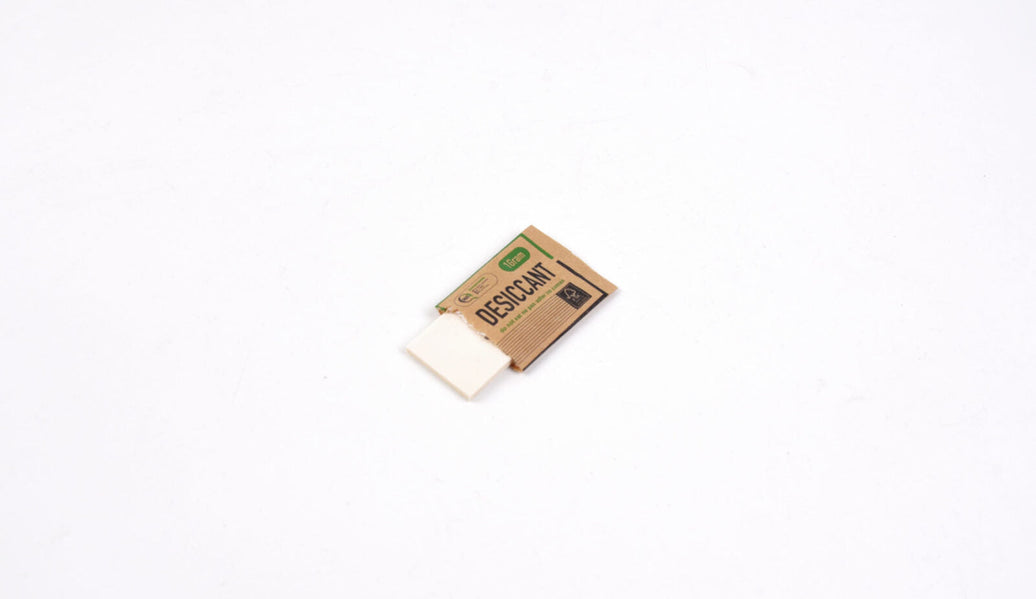
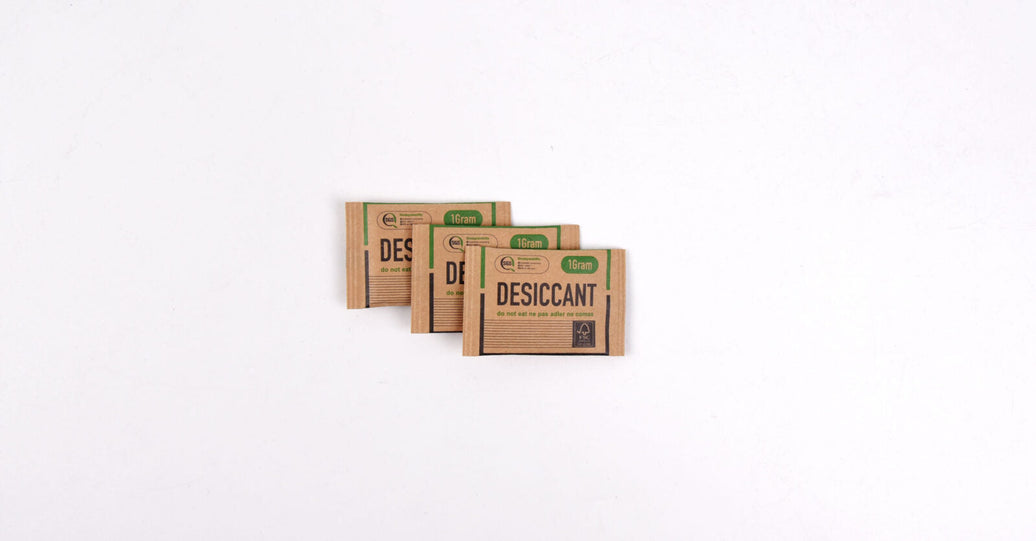
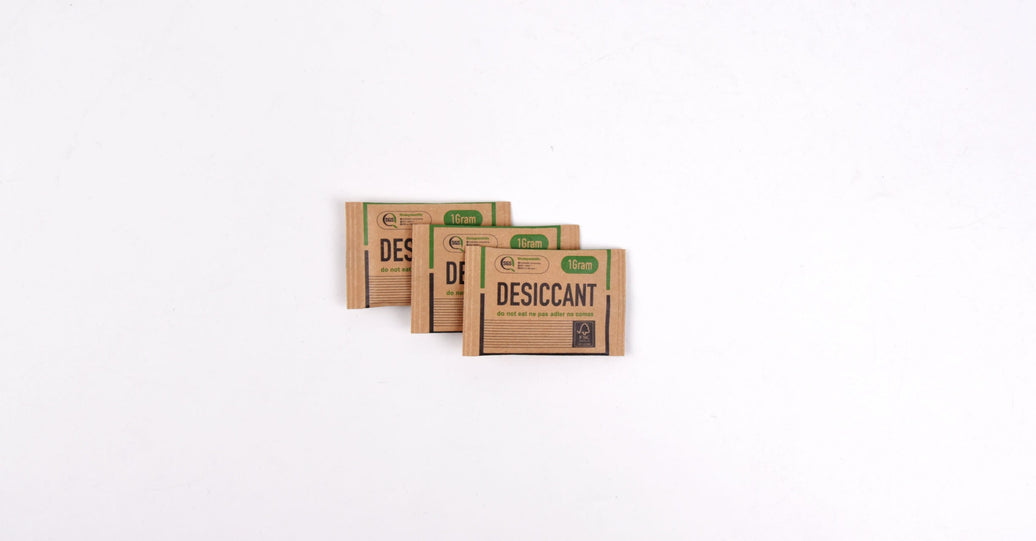
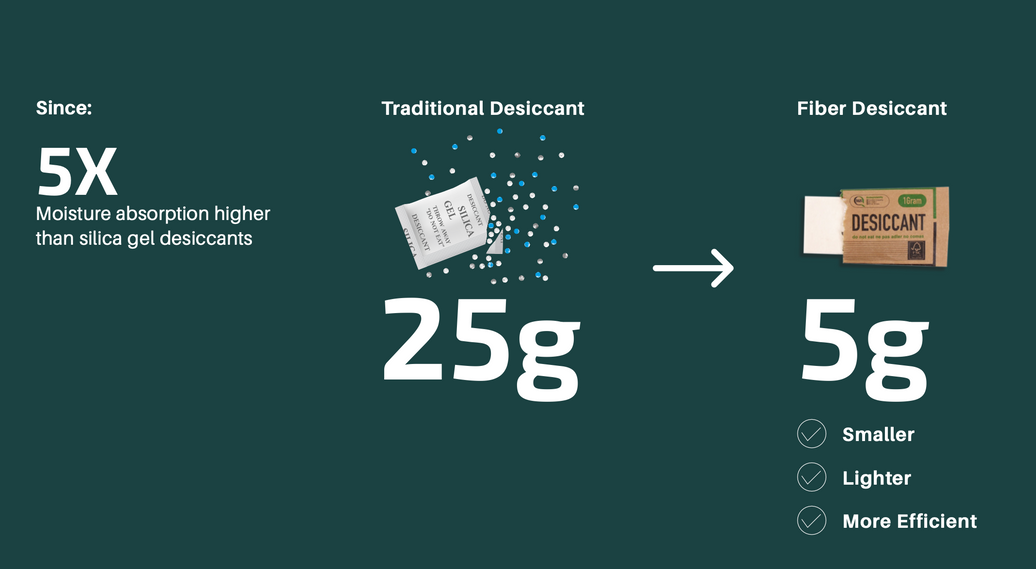
Loose silica beads and clay granules shed dust. In cell production, particulate contamination is a defect vector, so QA teams increasingly reject desiccant formats that can leak fines into the packaging environment. ATMOSIScience fiber desiccant is a bonded substrate sealed in a pouch — no loose fill, no dust.
2. Capacity tested at stated conditions
The ATMOSIScience fiber substrate publishes adsorption rates by humidity band: more than 10% of its own weight at RH 20%, more than 35% at RH 50%, and more than 70% at RH 90%, with saturated adsorption above 100% of its own weight. Low-RH performance matters here: battery packaging often starts dry, so the desiccant must keep pulling moisture at the low humidity levels other materials ignore.

3. Right-sized formats
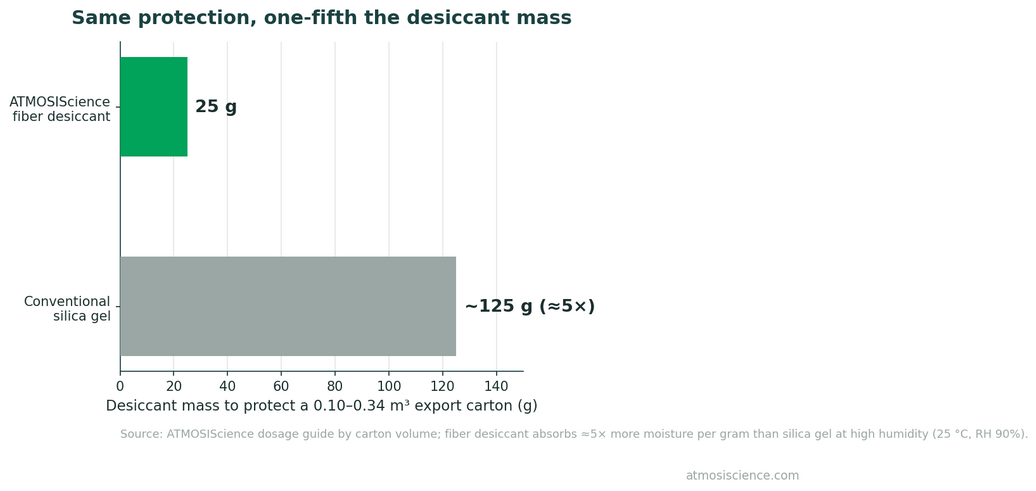
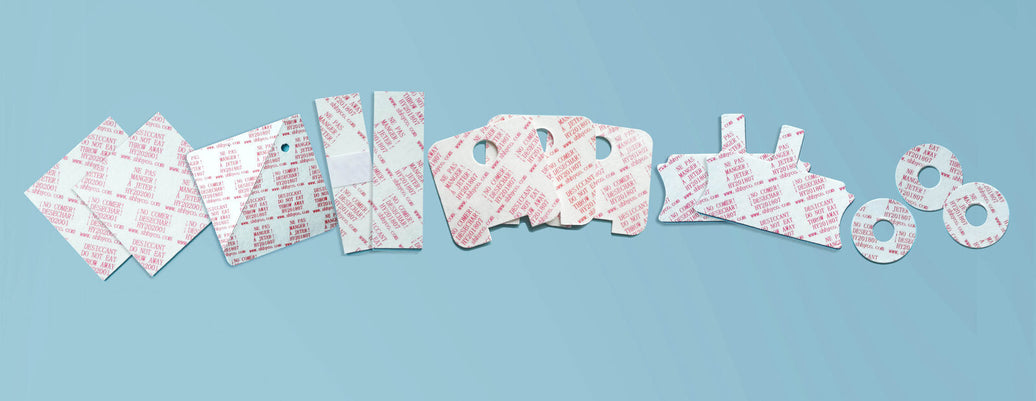
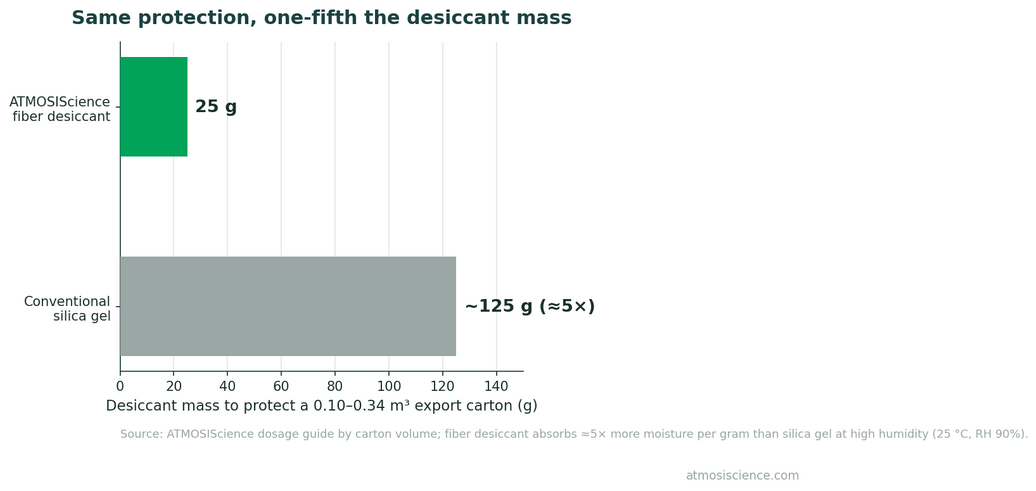
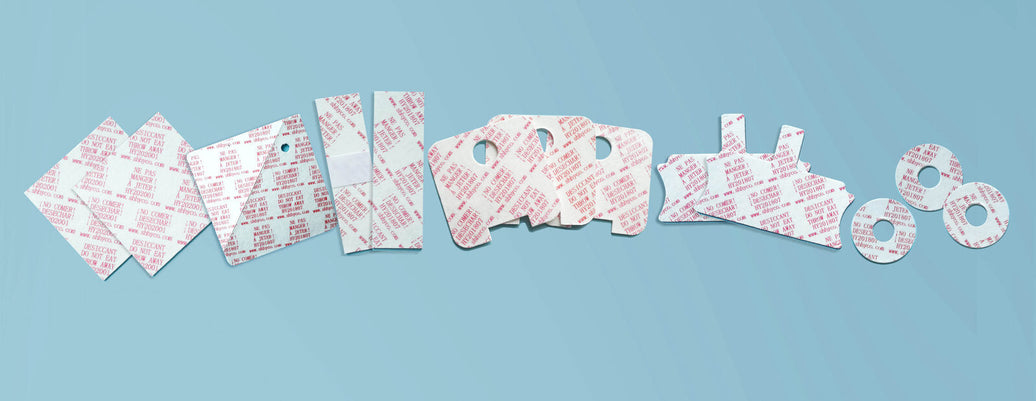
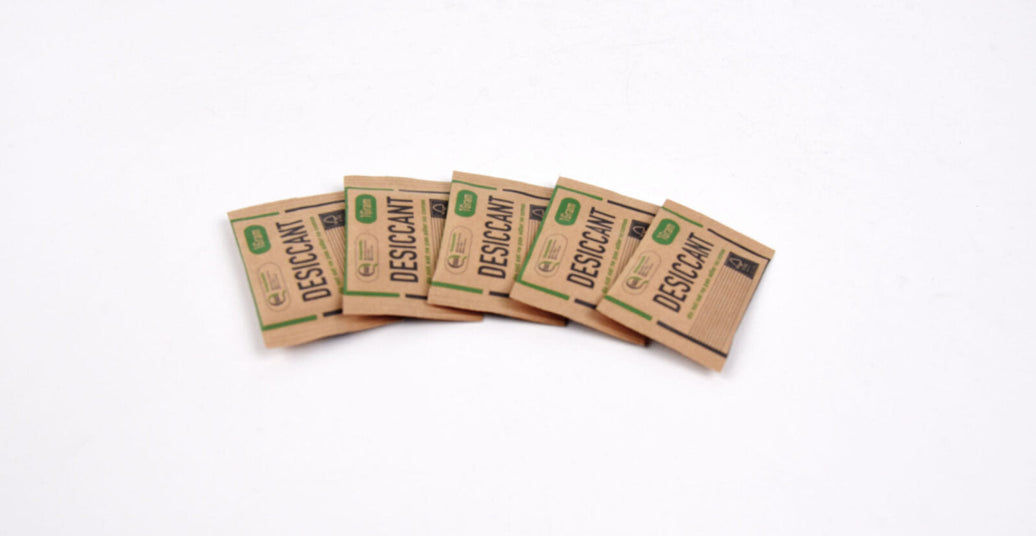
Pouches run from 1 g to 1,000 g, so the same substrate scales from a component tray to an FIBC liner or container application. Dosage math follows the same logic as any sealed volume — see the dosage guide by carton volume — with tighter targets.
4. Documentation for supplier qualification
Battery-sector procurement is qualification-shopping, not price-shopping. Expect to be asked for spec sheets, test reports and compliance statements; ATMOSIScience fiber humidity-control material has been ROHS-tested, and the standard document set is described in the supplier qualification pack.
5. Monitor, don't assume
For warehousing and staging areas, packaging-level desiccant pairs with environment-level monitoring. ATMOSIScience's temperature & humidity management platform (HaaS) adds IoT sensors and cloud reporting, so storage excursions show up as data instead of as failed lots.
FAQ
Can a desiccant replace a dry room?
No. Dry rooms control production environments; desiccants protect sealed packaging in transit and storage. The two cover different links of the same chain.
What RH should battery material packaging hold?
Tolerances vary by material and process — electrolyte salts are far stricter than precursor powders. The honest engineering answer: define the ceiling with your cell-maker's incoming spec, then size the desiccant with worst-case transit assumptions. A worst-case sample evaluation validates the choice before scale-up.
Why fiber instead of molecular sieve everywhere?
Molecular sieves hold very low equilibrium RH and suit sealed electrolyte-salt drums. For the wider logistics problem — drums, FIBCs, trays, export cartons — high-capacity, dust-free fiber formats deliver the protection at packaging-line-friendly cost, without loose media.
Spec moisture control for battery materials
Send the material, pack format and route. The team responds same day with a recommended format, dosage math and the documentation pack.