Quick answer: A plant-fiber desiccant is made in six stages — beating, dilution, mixing and reaction, fiber shaping, soaking with the humidity-control solution, and drying — followed by cutting and packing in a controlled environment. Six in-process controls hold it in specification: raw fiber water content, grammage, raw fiber adsorption rate, workshop relative humidity, exposure time during packing, and finished-bag appearance. Coating method is chosen by substrate thickness, and drying is done by microwave rather than hot air for speed and uniformity. Every one of those controls has a matching line you can put on your own incoming specification.
Most desiccant qualification stops at the datasheet. Adsorption at stated conditions, loss on drying, dimensions, a certificate or two, purchase order raised.
That is enough to know whether one lot works. It is not enough to know whether the next hundred lots will work the same way, and consistency is what actually costs money when it goes wrong — a shifted grammage that changes your sachet weight, a wetter-than-usual batch that arrives with part of its capacity already spent, a wrapper that seals differently on the inserter.
Consistency is a property of the process, not of the specification. So here is the process.
What goes in
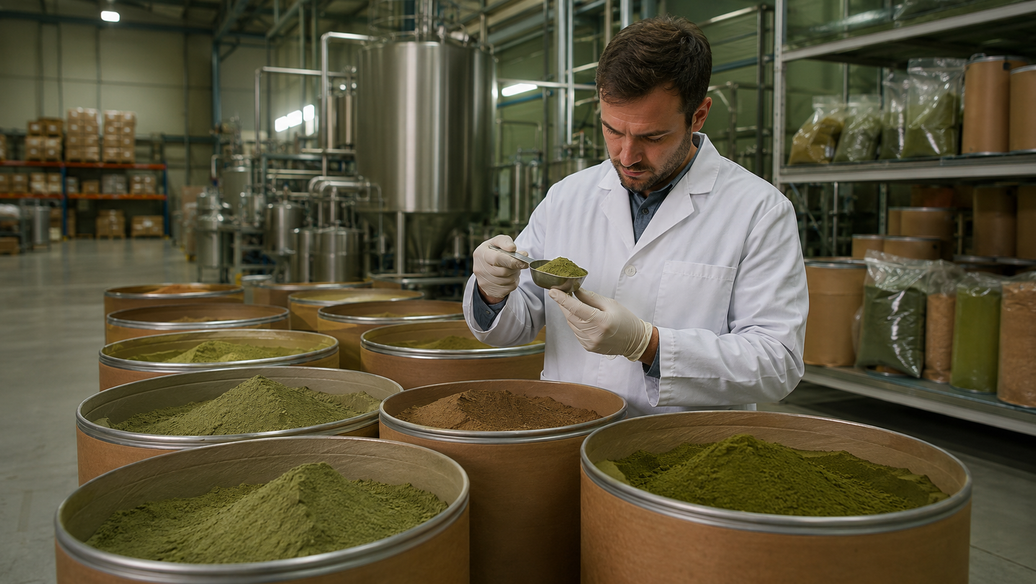
Two raw material streams.
The substrate is plant fiber — wood pulp and cotton. The functional chemistry is a polymer carrying nitrogen-functional groups (–Cl, –OH, –NH2 among them) on hydrocarbon chains, together with the humidity-control solution itself: calcium and sodium salts in aqueous solution. The safety data sheet puts plant fiber above 90% by weight and the salts below 10%.
That two-part construction is why the material behaves the way it does, and it is covered in more depth in what is actually inside a fiber desiccant and the two mechanisms it uses.
Stage by stage
1. Beating and dilution
Pulp goes into a beating machine and then a dilution pool. This is conventional papermaking territory: mechanical refining of the fiber to develop the surface area and bonding that the finished sheet will depend on, then dilution to the consistency the forming stage needs.
Refining is where a great deal of the eventual sheet character is decided. Over-refine and you get a dense, slow sheet; under-refine and you get a weak one.
2. Mixing and reaction
The polymer chemistry is introduced and reacted with the fiber. This is the step that turns cellulose from a passive carrier into a functionalised substrate — the difference between paper that happens to get damp and a sheet engineered to hold and release water vapour reversibly.
3. Fiber shaping
The sheet is formed. Grammage — grams per square metre — is set here, and it is one of the six controls for a reason: everything downstream is per unit area. A sachet filled by area rather than by weight inherits its capacity directly from this number.
Thickness is set here too, and it is not a cosmetic choice. Research on this material found that, at constant area, the speed at which a fiber humidity-control sheet reaches adsorption–desorption equilibrium is inversely proportional to thickness. Thinner substrate means greater specific surface area, faster response, and better reversibility between adsorption and desorption cycles.
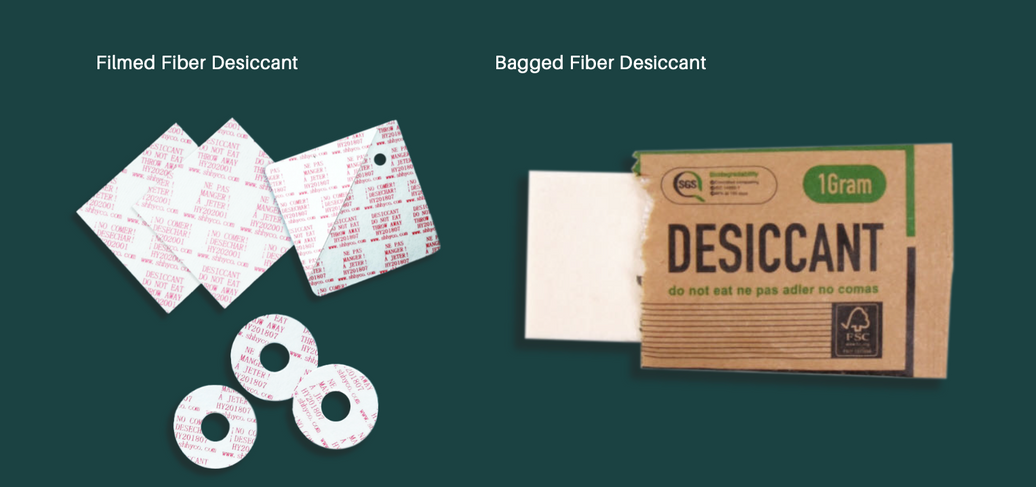
Which is why the product exists in distinct thicknesses — roughly 0.5 mm and 1.0 mm for die-cut filmed cards, around 2.5 mm for bagged sachet substrate — rather than one universal sheet. The design consequences are in how 0.5, 1.0 and 2.5 mm change your packaging design.
4. Soaking — where the coating method is chosen
The formed substrate takes up the humidity-control solution. There are two ways to do it, and the choice is made by thickness against a threshold the R&D work identified as the standard B08 substrate grade:
- Below B08 thickness — roller coating. Solution is metered onto a thin substrate that would not tolerate immersion well.
- Above B08 thickness — dip (impregnation) coating. The substrate is immersed so the solution reaches through the full cross-section.
Inside that step sits the central process trade-off. Raising solution viscosity, wet-strength agent content or fiber thickness all increase the wet strength of the substrate — and all decrease the speed at which it takes up liquid. Solution temperature, interestingly, has little effect on either.
Wet strength is what stops the sheet falling apart in handling and in service once it is loaded with water. Uptake speed is what governs throughput and how evenly the solution distributes. You cannot maximise both, which is why coating parameters are set per product rather than per factory.
5. Drying — microwave, not hot air
Trials on the two standard substrates (B08 and B20) with an RH 70% humidity-control solution established microwave drying as the production method. Compared with hot-air drying it is faster, gives more uniform product quality, raises production efficiency and reduces labour.
Uniformity is the one that matters to you. Hot air dries from the outside in, which on a salt-loaded sheet invites migration of the solution toward the drying face. Microwave energy deposits through the thickness. A sheet that dries evenly carries its chemistry evenly, and a sheet that carries its chemistry evenly performs the same wherever you cut a piece out of it.
The material is also sterilised at high temperature as part of manufacture, which is what sets the low starting bioburden behind its mould-growth result.
6. Cutting, packing and the environment it happens in
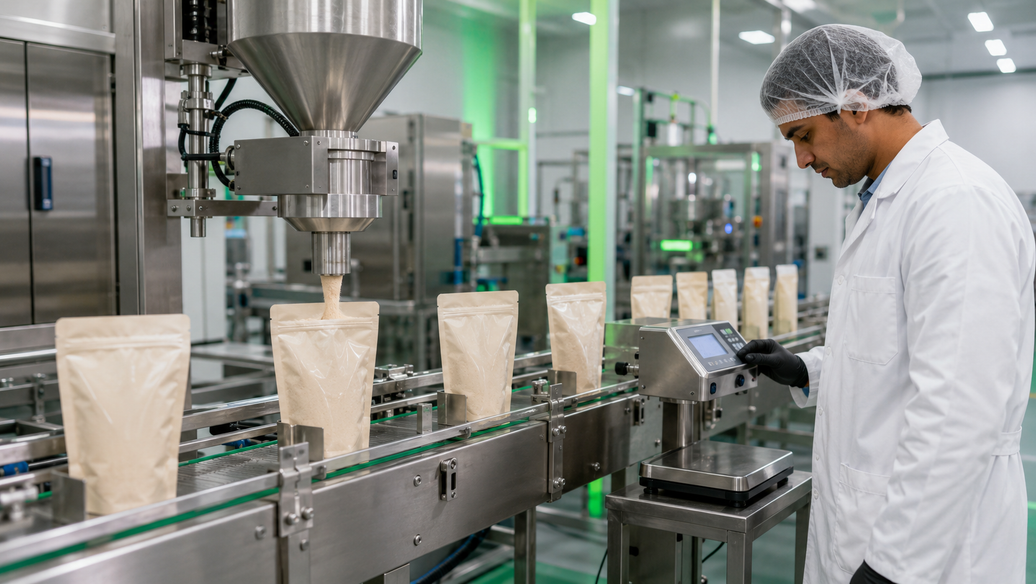
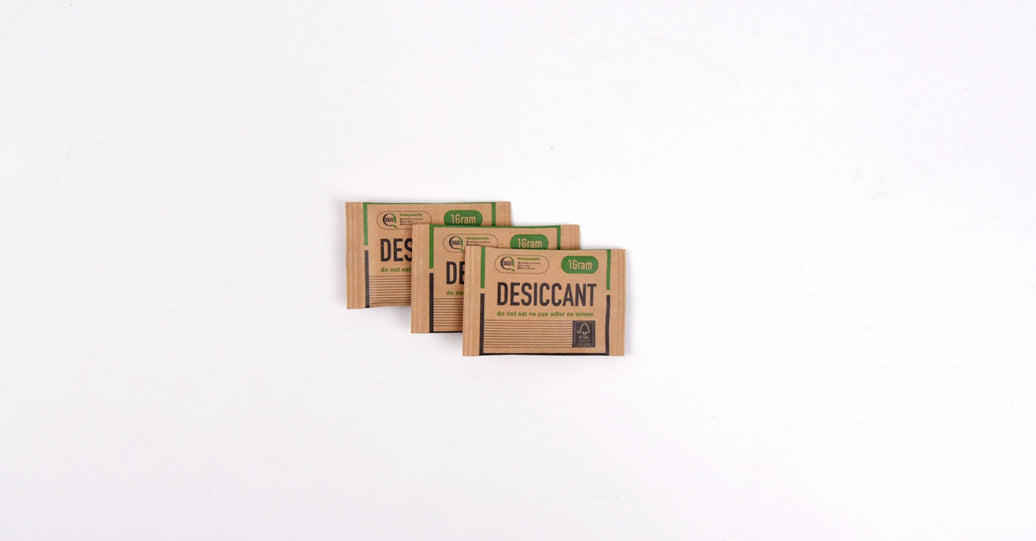
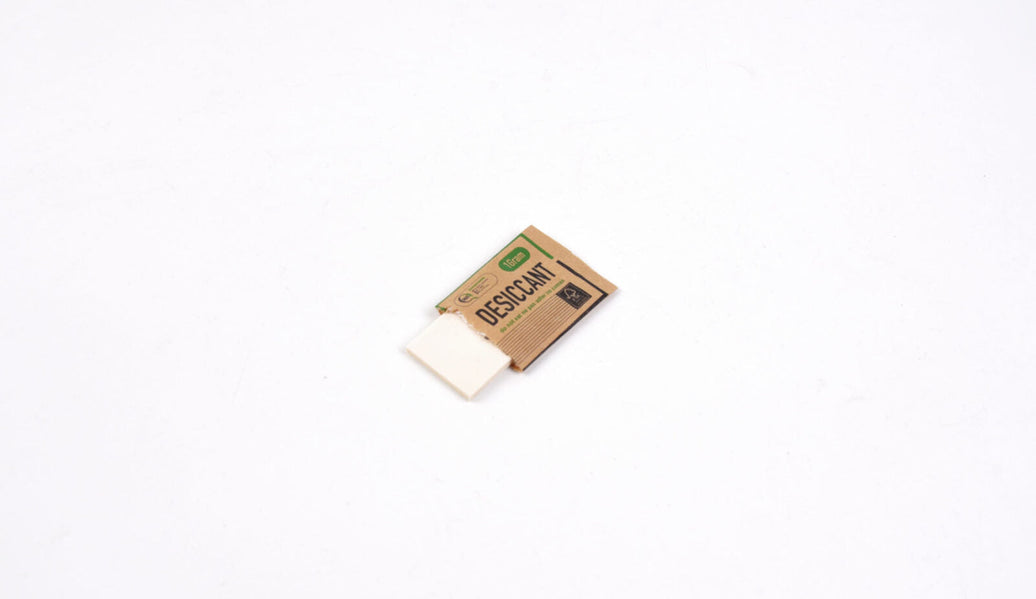
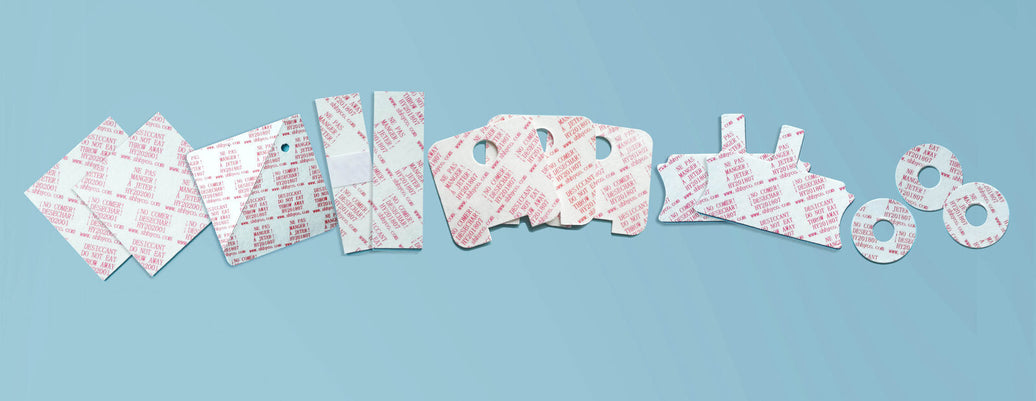
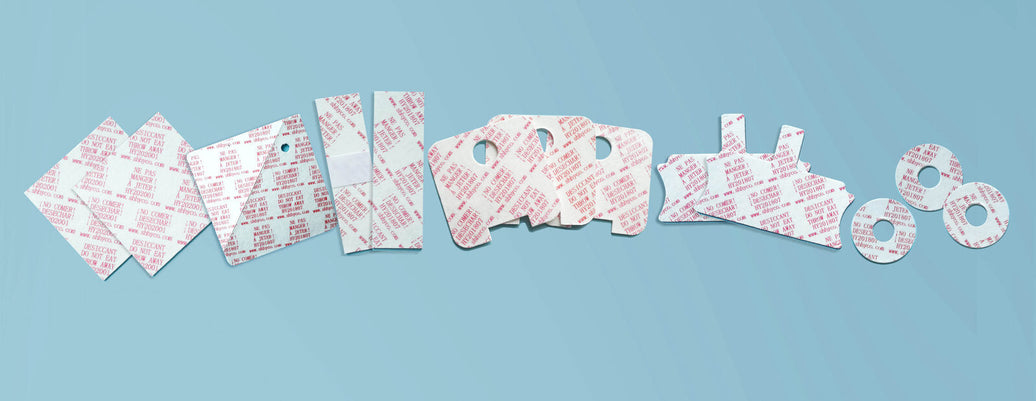
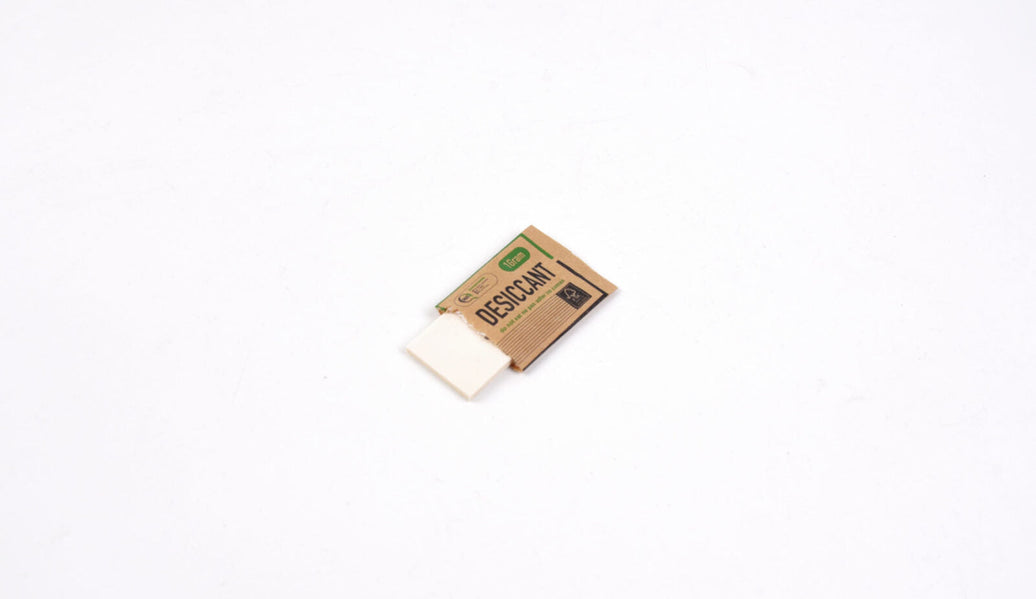
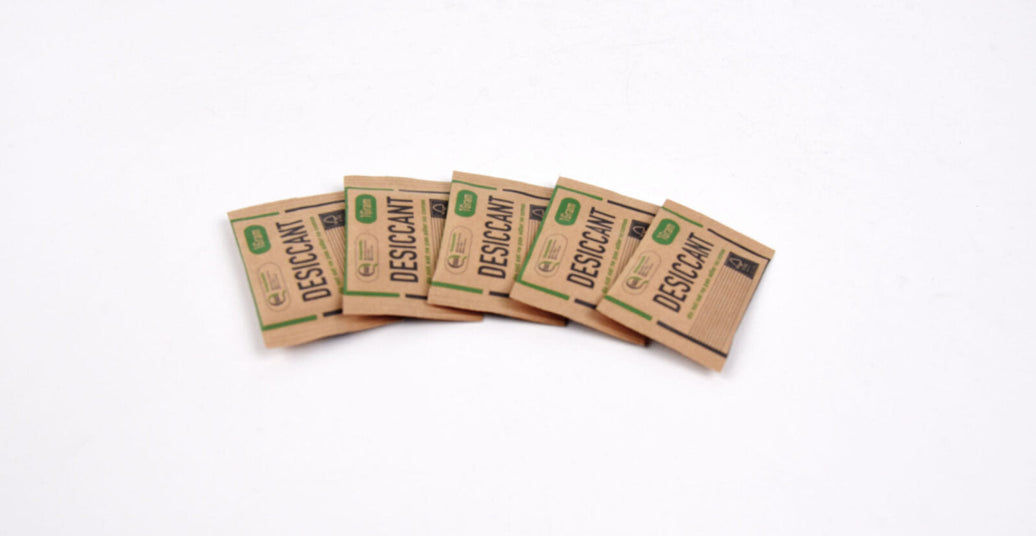
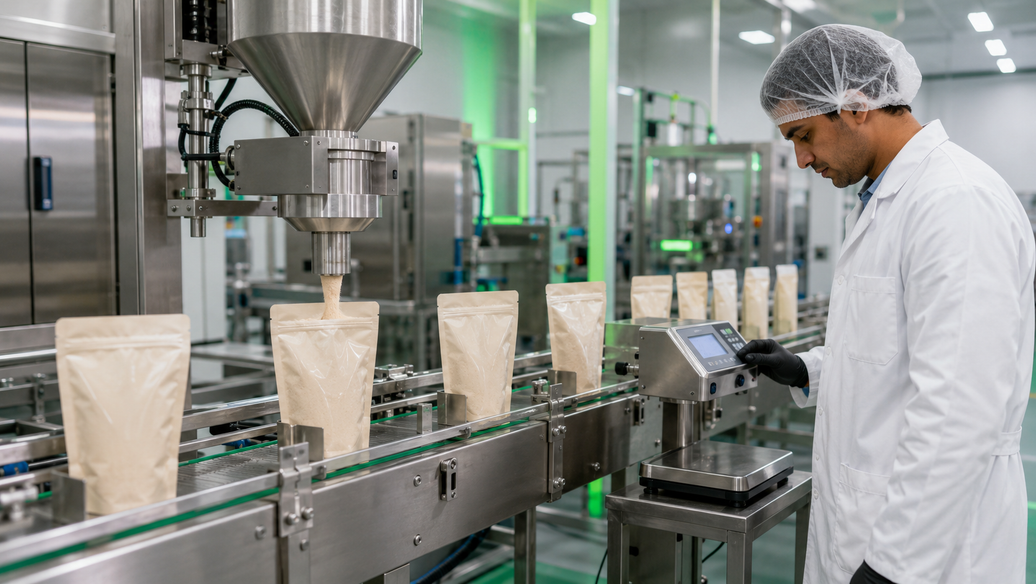
Sheet is cut to format — square, circle, custom die-cut — or filled into a wrapper. From the moment the dried sheet exists it is an active desiccant sitting in room air, which makes the packing environment part of the product.
The production areas are qualified as a Grade D cleanroom, with air changes above the 15-per-hour requirement, settle-plate counts below limit, and production-area conditions held around 22–23 °C and 50–52% RH.
The six controls, and the incoming spec each one gives you
| In-process control | What it protects | Your matching incoming line |
|---|---|---|
| Water content of raw fiber | Starting capacity; coating uptake | Loss on drying ≤ 10% on the finished product |
| Grams per square metre | Capacity per unit area; sachet weight | Unit mass with a stated tolerance |
| Adsorption rate of raw fiber | The substrate before chemistry is added | Adsorption at named RH and temperature on the COA |
| Workshop relative humidity | Capacity spent before the pack is sealed | Cleanroom report with recorded RH per area |
| Exposure time during packing | Same — the clock, not the room | Documented packing SOP with a time limit |
| Finished-bag appearance | Seal integrity; leakage; print | AQL inspection standard agreed in writing |
Two of those — workshop RH and exposure time — are the same control applied from opposite ends, and together they are the most commonly missing item in a supplier’s documentation. A desiccant that sat open in a humid room before sealing arrives with part of its working capacity already used, and the only thing that catches it on receipt is loss on drying. The line-side version of the same problem is covered in the 30-minute rule.
The design decision that outranks the process
One finding from the R&D work deserves to sit above everything above, because it changes what you should be specifying in the first place.
In real application, the main determinant of adsorption and desorption speed is the air permeability of the wrapper — not the intrinsic rate of the substrate.
Read that again if you have ever compared two desiccants on their substrate adsorption curves. The wrapper is the rate-limiting step. A fast substrate inside a low-permeability film behaves like a slow desiccant; a moderate substrate inside a highly permeable wrapper behaves like a fast one.
The practical consequence: a speed requirement is met by pairing substrate thickness with wrapper permeability, not by hunting for a faster fill material. That is why wrapper selection is an engineering decision rather than a cost decision, and why a supplier who lets you choose substrate and wrapper independently is giving you a genuinely different tool from one who sells a fixed sachet.
Six questions for a supplier audit
- Which coating method is used for the grade I am buying, and why that one?
- How is drying done, and what evidence do you hold that the sheet dries uniformly?
- What grammage tolerance do you hold, and how is it measured in-process?
- What is the maximum exposure time between drying and sealing, and where is it written down?
- What are the recorded temperature and RH in the packing area, and when were they last qualified?
- Which of these six controls appear on the certificate of analysis for each lot, and which are type-tested once?
Question six is the one that separates a manufacturer from a trader, and the rest of that conversation is in eight questions that separate a supplier from a reseller.
Frequently asked questions
Does the process differ between a filmed card and a bagged sachet?
The wet end is the same. They diverge at thickness, coating method and finishing: a die-cut card is laminated and cut to shape, while a bagged product is filled into a wrapper. Both end in the same controlled packing environment.
Why does grammage matter more than thickness for capacity?
Capacity tracks the mass of active material present, and grammage is mass per unit area. Thickness principally drives speed and reversibility. Two sheets can share a thickness and differ in capacity, or share a grammage and differ in response time.
Is microwave drying a marketing claim or a real difference?
It was selected against hot-air drying on four measured grounds: speed, uniformity of product quality, production efficiency and labour. Uniformity is the one that shows up in your incoming inspection as lot-to-lot consistency.
Can I get the substrate uncoated, or in a custom grammage?
Grammage, thickness, shape and wrapper are all specifiable. That is the point of a stepwise process — the formula, the substrate and the wrapper are three independent choices. Tell us the cavity and the service life and we will work backwards.
How much of this should I verify before switching suppliers?
Enough that you are not revalidating in production. The sequence is set out in switching desiccant suppliers without restarting validation, and the lot-level evidence to insist on is in how to read a desiccant COA.
Auditing a desiccant supplier?
Send us the questions your QA team is required to close out. We will answer them against our own process documentation and tell you plainly where a record does not exist.
Prefer email? info@atmosiscience.com