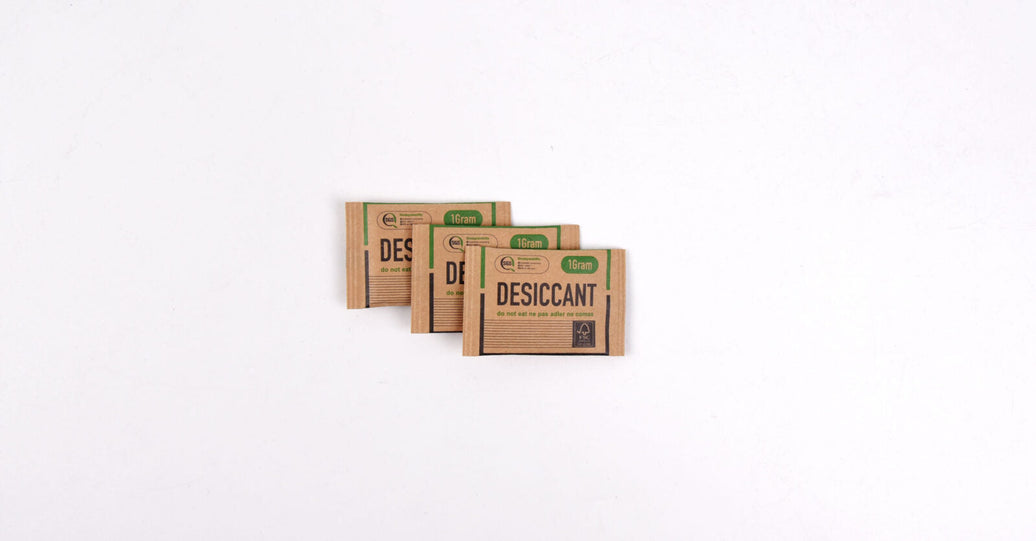
Quick answer: The ATMOSIScience fiber desiccant safety data sheet states the material is not dangerous cargo, with an instruction to keep it separated from foodstuffs in transit. It records that no labelling is required in accordance with the EEC directives, references TRGS 900 for atmospheric threshold values, records a water pollution class indicating the material is not harmful to water, and states there are no handling restrictions and that regulations on flammable liquids do not apply. The product is also recorded as not combustible. Classification is always product-specific — use the actual SDS for the material you are shipping, not a generic answer.
This question arrives from three directions and each one wants a slightly different answer. A freight forwarder wants to know whether to raise dangerous-goods paperwork. A warehouse wants to know whether the material affects a storage permit or an insurance condition. A customer’s compliance team wants a document for a file.
All three are answerable from sections 14 and 16 of the safety data sheet — the sections most people never scroll to.

Transport: not dangerous cargo
Section 14 of the fiber desiccant SDS states the material is not dangerous cargo, and adds one operational instruction: keep it separated from foodstuffs.
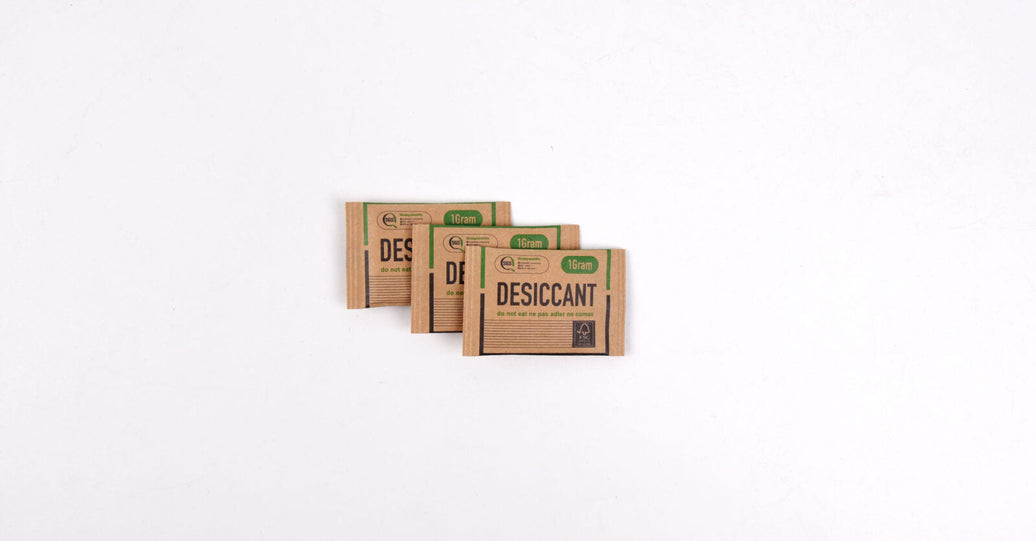
That second clause confuses people, so it is worth unpacking. It is not a contradiction of the product’s food-contact suitability. It is a standard stowage instruction for bulk cargo — a pallet of unpacked desiccant should not be co-stowed with open foodstuffs in a hold. It says nothing about a sealed, food-contact-documented sachet inside a finished pack, which is a different situation entirely. See FDA 21 CFR food contact for desiccants.
Fire and combustibility
Section 7 states the product is not combustible and places no restriction on extinguishing media in a fire situation. No special risk is identified from the substance, its combustion products or gases produced. Firefighters are advised to wear self-contained breathing apparatus — standard practice for any warehouse fire, not a product-specific hazard.
For warehouse and insurance questionnaires that ask about flammability classification, section 16 states that regulations on flammable liquids are not applicable.
Labelling and threshold values
Section 16 records two things a European importer will be asked for:
- No labelling is required in accordance with the EEC directives. The material does not trigger hazard labelling under that framework.
- TRGS 900 is referenced for atmospheric threshold values — the German technical rules for occupational exposure limits. Its presence tells a health-and-safety reviewer where to look for workplace air limits, which is a fair question anywhere dust can be generated.
Section 8 records no specific exposure controls or personal protection requirements, while section 8 of the accidental-release guidance advises avoiding the formation of dust and siphoning off locally where necessary. Read together: no mandated PPE, but sensible dust management in bulk handling.
Environmental and end-of-life status
Three lines cover it:
- Water pollution class: not harmful to water, with an instruction to observe national regulations.
- Ecological information: no potential for bioaccumulation; residues and decomposition behave the same as natural plant fibre.
- Disposal: reuse unused material if possible; may be disposed of in approved landfills provided local regulations are observed.
Note what that last line is not. “May be landfilled” is a disposal permission, not a recyclability or compostability claim. Those are separate assessments requiring separate test evidence on the assembled article — see what a recyclability score measures and the sustainable desiccant guide. Conflating a disposal statement with an environmental claim is a common and avoidable error.
Storage conditions the SDS actually specifies
Section 9 gives two instructions, and warehouses break both routinely:
- Avoid wet or high-humidity storage locations.
- Do not leave packed materials in an open state.
These are performance instructions dressed as safety ones. A desiccant stored in a humid warehouse is consuming its own capacity. That shows up later as a failed incoming test — see loss on drying.
What to send a freight forwarder
Four items usually close the question in one email:
- The current safety data sheet, complete — not an extract.
- The commercial invoice description and the tariff classification you are declaring. See HTS codes and landed cost.
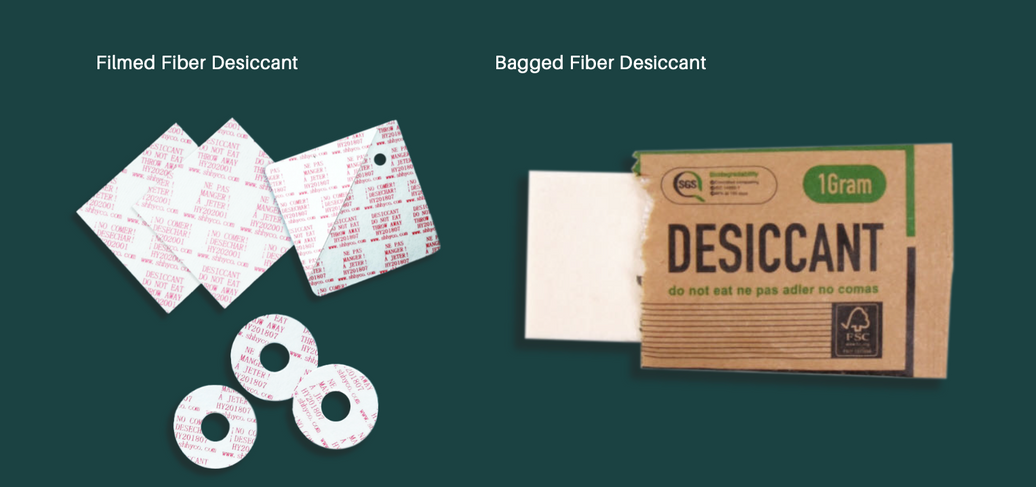
- Packing details: pouch or card, gram weight, cartons per pallet.
- Any destination-market document the importer needs — see export documentation.
Frequently asked questions
Does desiccant need a UN number?
This SDS classifies the material as not dangerous cargo, which means no dangerous-goods declaration on that basis. Other desiccant chemistries can be classified differently — always work from the SDS for the material actually being shipped.
Can desiccant travel by air?
A material classified as not dangerous cargo does not attract dangerous-goods handling on that ground. Carriers set their own acceptance conditions, so confirm with the airline or forwarder for the specific consignment.
Is a safety data sheet required if the product is not hazardous?
Even where a formal SDS is not strictly mandated, customers and forwarders expect one, and supplying it is faster than arguing about whether it is required.
What does the water pollution class tell us?
It is a German classification indicating hazard to water bodies. This SDS records the material as not harmful to water, with an instruction to observe national regulations — relevant to spill procedures and disposal permits.
Does “keep separated from foodstuffs” mean it is not food safe?
No. It is a bulk-transport stowage instruction. Food-contact suitability of a finished format is established by separate food-contact documentation.
Get the shipping document set
Tell us the destination market and the format you are shipping. The ATMOSIScience team will send the current safety data sheet and the supporting documents your forwarder and importer will ask for.
Prefer email? info@atmosiscience.com